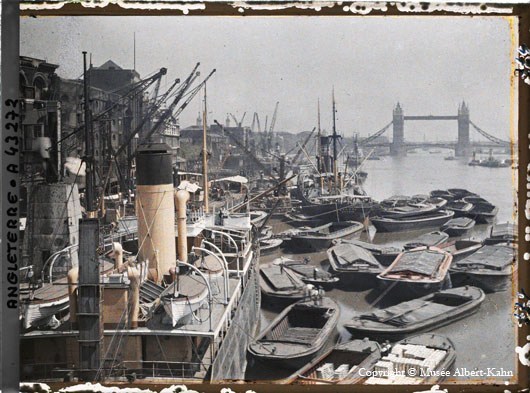
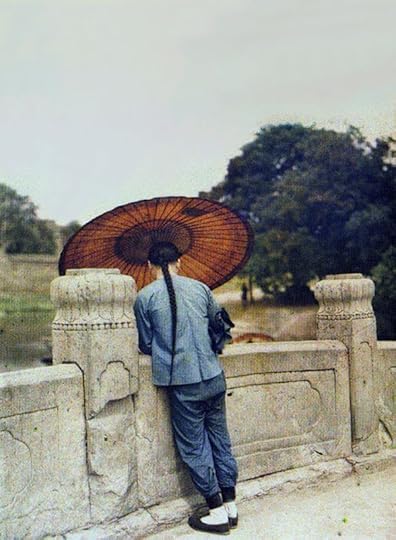
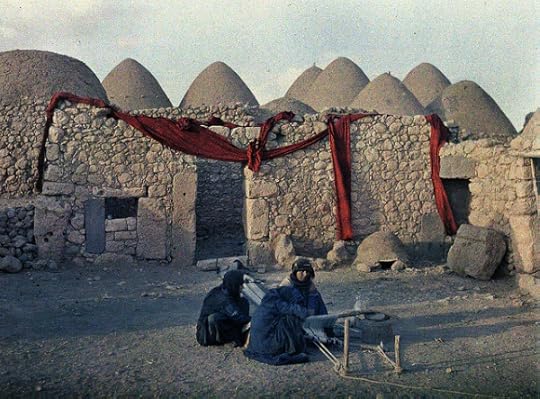
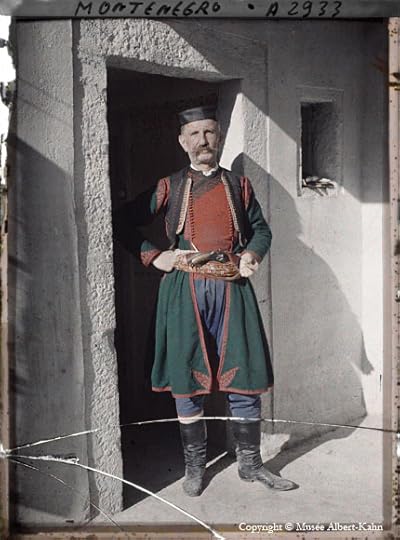
In 1909 the French banker and philanthropist Albert Kahn launched a monumentally ambitious project: to produce a color photographic record of human life on Earth. An internationalist and pacifist, Kahn believed that he could use the new autochrome—the world's first portable, true-color photographic process—to create a global photographic archive that would promote cross-cultural understanding and peace. Over the next twenty years, he sent a group of photographers to more than fifty countries around the world, amassing more than 72,000 images. Until recently his collection was all but forgotten. Now, a century after he began his "Archives of the Planet" project, this book—richly illustrated in color throughout—and the BBC series it follows are bringing Kahn's dazzling early twentieth-century pictures to a wide audience for the first time, and putting color into what we usually think of as a monochrome world.
Kahn's photographers captured times, places, and people we simply do not expect to see in color photographs. They documented age-old cultures on the brink of being changed forever by war, modernization, and Westernization, recording the last years of Ireland's traditional Celtic villages and the late days of the Austro-Hungarian and Ottoman empires. They photographed First World War soldiers in their trenches as well as the postwar celebrations in London. In the course of their travels, they also took the earliest color photographs in countries as varied as Vietnam and Brazil, Mongolia and Norway, Benin and the United States.
After being financially ruined in the Great Depression, Kahn was forced to bring his project to a premature end, but today his collection of early color photographs is recognized as one of the world's most important. The Dawn of the Color Photograph makes it easy to see why.
Autochrome plates, patented by the Lumière brothers in 1903, were one of the first successful forms of color photography. That is, the first form that was sufficiently easy or affordable that it saw widespread use; it combined on a single plate what had taken earlier color photographers such as John Joly multiple plates and steps. The Lumière technology employed relatively inexpensive ingredients: colored potato starches were dusted onto a plate coated with a mixture of gelatine and glycerine, fixed in place by a fine black powder (possibly powdered charcoal or soot) and then coats of first waterproof lacquer and then a gelatine and silver-bromide emulsion were applied. But this was all done in production so that the plates were, in effect, ready to use on the spot. The exposure time was significantly longer than contemporary monochrome silver-halide plates for black-and-white photography, but relatively reliable as long as the subject was stationary.
In 1909 French banker and philanthropist Albert Kahn began an enormous project to create a color photographic record of all the peoples of the world. In addition to wishing to document the traditional ways of life that were fast disappearing, Kahn hoped to promote peace and international understanding. One of the richest men in Europe until the Wall Street Crash of 1930, Kahn employed numerous photographers and sent them to over 50 countries.
The styles of the different men varied quite a bit, with some taking more workman-like, documentary images, and others (most famously Leon Busy) trying for more artistic and painterly effects.
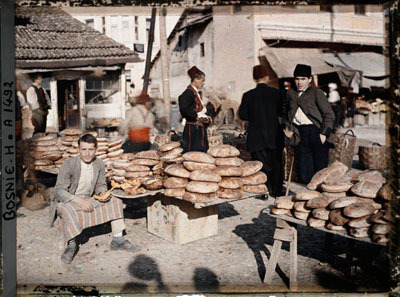
They captured significant events and important individuals, but also everyday life in the areas they visited.
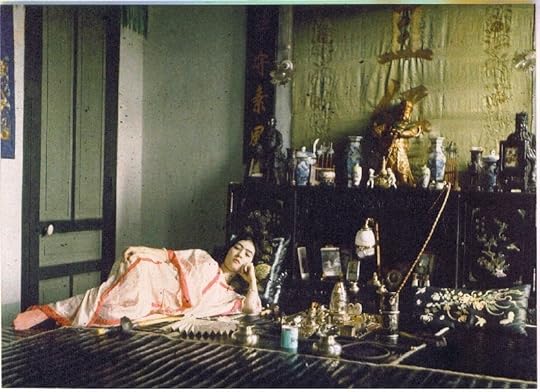
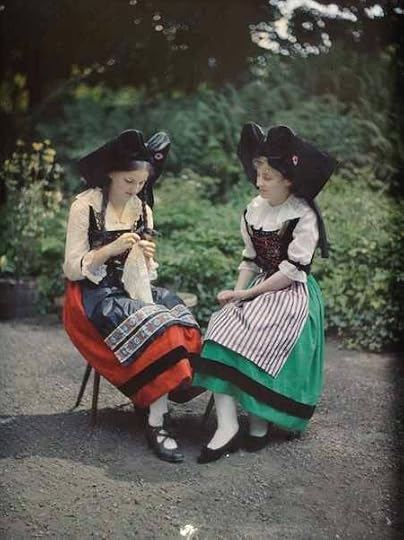
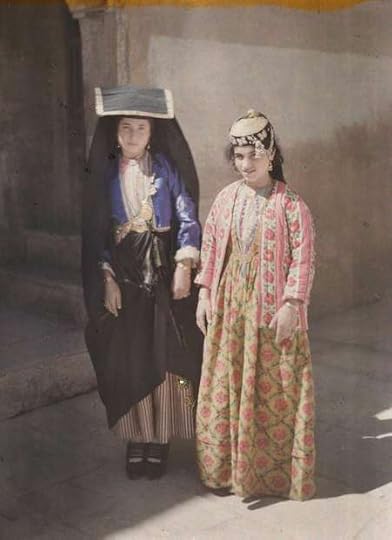
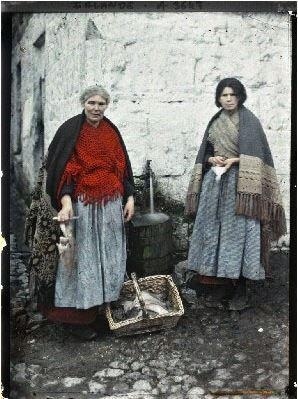
The project documented traditional regional clothing and practices
Mesdemoiselles Helene and Denise Lauth of Massevaux in Alsace, France, on 6 July 1918
Christian women in Iraq, 1927
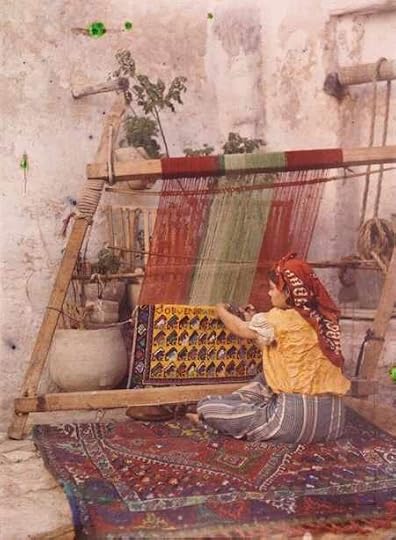
and methods of farming, textile production, etc
Algeria, 1909 (Note the word in the carpet!)
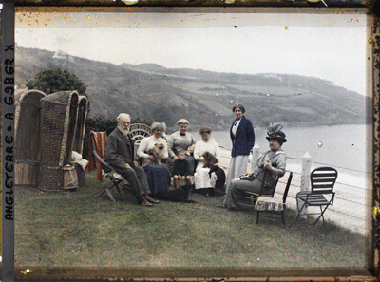
Kahn was also a keen photographer himself, although he did not like having his picture taken, and took portraits of the numerous and varied array of people who visited his homes. Here are some guests of his in Cornwall in 1913:
In addition to the historical and aesthetic interest of the images, I found the text here excellent. Some of Kahn's photographers made interesting notes, and Okuefuna has done a great job researching the images and their context. Many of the autochromes are available online, but I highly recommend reading the book as well. There is also a BBC publication The Wonderful World of Albert Kahn: Colour Photographs from a Lost Age in Books that I haven't read yet; the sample pages looked as if there was not as much text.
For those lucky enough to find themselves in the Paris area, his home in the Boulogne-Billancourt suburb is now a museum.
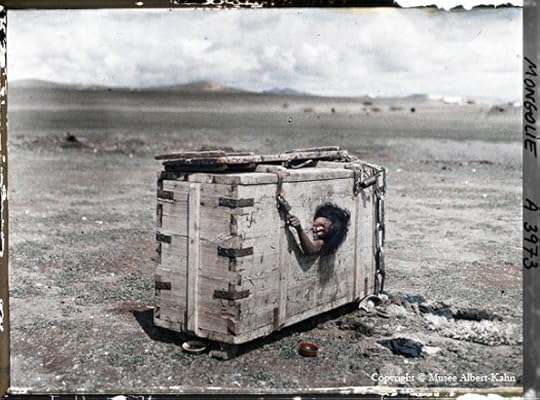
Wonderful photographs (autochromes) of the first 3 decades of 20th century - rich history. I thought it would be easy to glace through the book pretty fast. I am wrong. Some of the pictures were thought provoking - especially those depicting the punishments in Mongolia. I tried to compare the places in the photographs with Google maps/street views and map-photos. It is interesting to think about - how the inhabited landscape changes. Also happy to notice some of the old structures that exists still. Great job by Albert Kahn and the group of people who preserve the resources.
In the summer of 1907 Auguste and Louis Lumiere demonstrated a startling new technology, the autochrome--a way of making true color images on glass. One of those struck by the potential of the new autochrome technology was a banker and philanthropist, Albert Kahn. On a trip around the world in 1909 he devised his plan to create what he called his Archives of the Planet--a photographic record of human life on earth. He would devote the next 22 years of his life and his fortune to the project, sending photographers and equipment to Asia, Africa, the Americas, Europe and the Levant.
There is poignancy to these photographs--these compelling, almost hypnotic images of times lost, cultures and ways of life that have vanished forever.
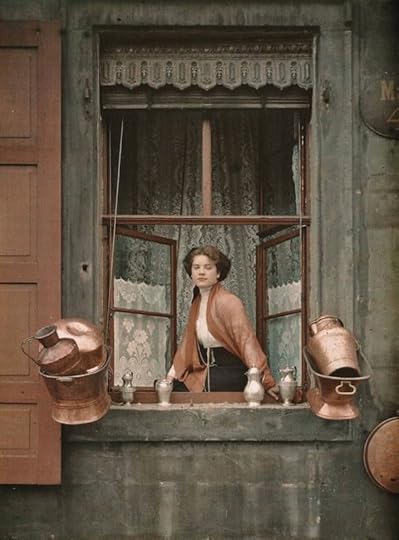
Some of the photographs, like this one from 1912 of a young woman in Bayreuth, Germany, use color and framing so masterfully that they are true works of art.
Many of the images were both lyrical and exquisite, yet mysterious, filled with unknowable secrets…
Others are shocking. This one of an imprisoned Mongol woman will haunt me always.
They document poverty and proud struggles for survival…
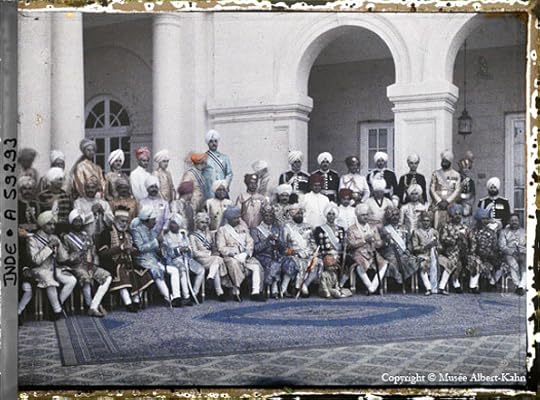
…but also great wealth and privilege—much of which would prove ephemeral.
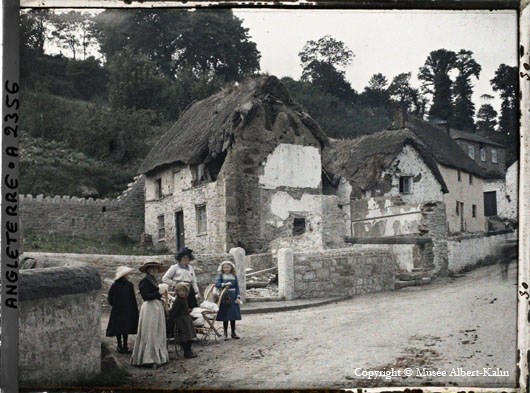
There are scenes of rural life…
…and bustling industry.
The images show us people who would soon face revolution, war or exile...
And document folkways that could never really survive the glittering, hopeful lure of city life.
Each photograph holds a little world. The commentary gives us some clues about the people who fill these pages, but I found myself making up stories to go with each one, imagining their lives and futures. Somehow, looking back from the twenty-first century, many of the images seemed shadowed, not by the flaws in the autochrome plates, but by my knowledge of horrors that would sweep these worlds in the decades to come.
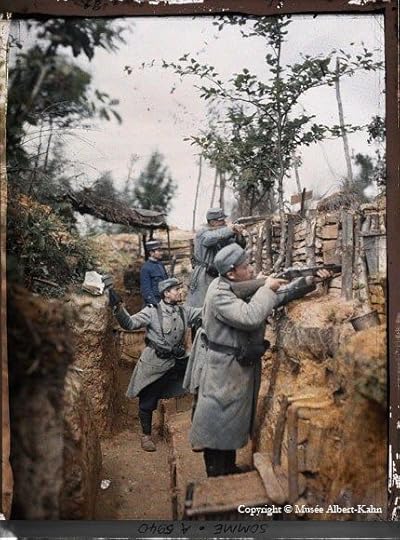
Albert Kahn was a devout pacifist who longed to open our eyes and hearts to the humanity of the world’s many peoples. But, sadly, some of the archives most striking images are those shot at the front lines during World War I.
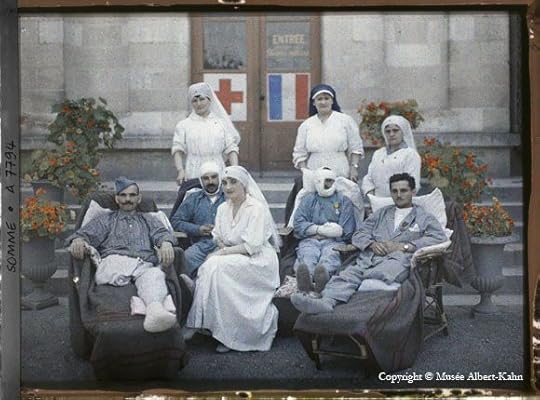
…or in the hospitals with their thousands of wounded young men
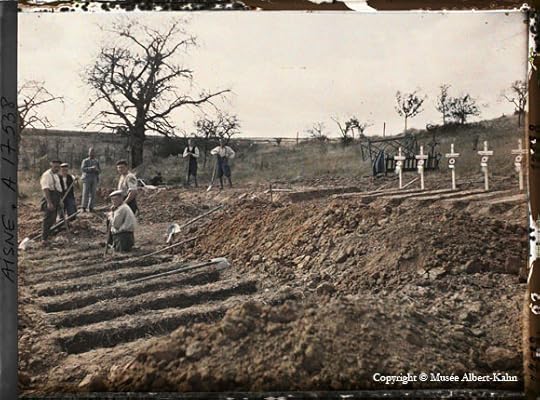
… or in the aftermath as millions of bodies were buried.
Others can be seen at periodic exhibits and at the Musee Albert Kahn in Boulogne-Billancout. It’s just west of Paris and you can get their by Metro line 10. But if you can’t visit Paris, you won’t regret buying this book—it’s a beautiful treasure and a thought-provoking journey to another time--a recherche du temps perdu.
In the early 20th Century, the French philanthropist Albert Kahn sent a flock of photographers to all corners of the world to document the everyday lives of average people. What these photos capture is a lost world of local cultures: cooks, beggars, nuns, grape pickers and mussel harvesters throughout Asia, Africa, the Middle East, Europe and the Americas. Their rare or extinct ways of life are captured in beautifully-composed, vivid color (developed under Kahn's watch by the Lumière brothers).
We miss something when we limit our learning to words. I'm trying to stretch my brain by learning from visual and aural cues: "The Dawn of the Color Photograph" is a good example of visual history. Each of the hundreds of images in this book contains a seed of insight into human life.
Albert Kahn the color-photography supporter is not to be confused with Albert Kahn, the German-born but American-bred Jewish architect who built the best of Detroit. One of his gems: the Fisher building on Detroit's north side.
If you are interested in Photography or History or the history of photography then this eloquent book is a must read. Times long gone forever are reanimated in incredible colour.
Fabulous book. Love the photos of course, but the whole idea behind Albert Kahn's grand idea is terrific. And successful. David Okuefuna's text gives readers an insight into world events at the time these photos were taken and some insight, where possible, into the photographers and Kahn themselves. Excellent book to dip in and out of.
I absolutely adored all the photograph in here and I loved the concept behind it. The historical explanations at the beginning of each section was a bit dry and hard to get through. Overall, definitely worth the look!
really fantastic record of so many places from the early 20th century. Khan's project left us with a great survey of a world in the midst of incredible change.
Apart from the precious autochrome photos taken in the 1906 to 1927 covering different continents including places in Europe, Americas, Far East, Middle East and Africa ... one can find many are the earliest know color photographs eg Taj Mahal, Pyramid of Khufu. Other than just photos, the book is rich in text describing the places and people which the pictures contain. I enjoy poking around the book for photos of places unknown to me, then with the help of Google search and Wiki to look up more information of such so as to enrich my knowledge on those countries history and culture.
One hundred years ago, the French banker and philanthropist Albert Kahn began funding a project called the Archives of the World to photograph different peoples from around the world in order to understand and document the many unique cultures that were on the cusp of being forever changed by globalization as well as to foster world peace among them. This was done through an early form of color photography known as autochrome and thus presents an unusual opportunity for us today a unique and radiant view into this world. Despite his hopes for peace, the project was interrupted by World War One and this collection therefore contains many color war photos of the effect of that event on France and Europe as well. I recommend this book to anyone with an interest in these subjects. In addition, I recently visited the Albert Kahn museum outside Paris which is on the site of his former home as well as his gardens of plants from around the world which also continue to be maintained.
This book (with its companion documentary), The Sixth Extinction, and Walkable City are my three most eye-opening reads of the past year. The ten part documentary: The Wonderful World of Albert Kahn.