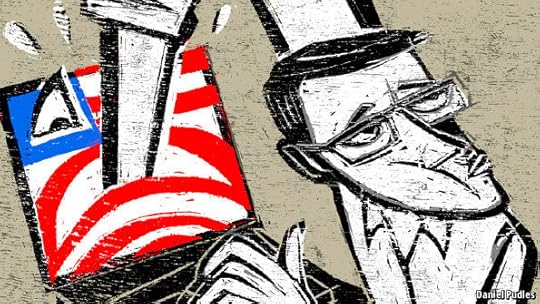
A groundbreaking expose that convincingly challenges the popular image of Edward Snowden as hacker turned avenging angel, while revealing how vulnerable our national security systems have become--as exciting as any political thriller, and far more important. After details of American government surveillance were published in 2013, Edward Snowden, formerly a subcontracted IT analyst for the NSA, became the center of an international controversy: Was he a hero, traitor, whistle-blower, spy? Was his theft legitimized by the nature of the information he exposed? When is it necessary for governmental transparency to give way to subterfuge? Edward Jay Epstein brings a lifetime of journalistic and investigative acumen to bear on these and other questions, delving into both how our secrets were taken and the man who took them. He makes clear that by outsourcing parts of our security apparatus, the government has made classified information far more vulnerable; how Snowden sought employment precisely where he could most easily gain access to the most sensitive classified material; and how, though he claims to have acted to serve his country, Snowden is treated as a prized intelligence asset in Moscow, his new home."
Edward Jay Epstein (born 1935) was an American investigative journalist and a former political science professor at Harvard, UCLA, and MIT. While a graduate student at Cornell University in 1966, he published the book Inquest, an influential critique of the Warren Commission probe into the John F. Kennedy assassination. Epstein wrote two other books about the Kennedy assassination, eventually collected in The Assassination Chronicles: Inquest, Counterplot, and Legend (1992). His books Legend (1978) and Deception (1989) drew on interviews with retired CIA Counterintelligence Chief James Jesus Angleton, and his 1982 book The Rise and Fall of Diamonds was an expose of the diamond industry and its economic impact in southern Africa.
I'm aware that critics have cast doubt on one of Epstein's claims (about Snowden's whereabouts during his first days in Hong Kong). But that claim isn't central to Epstein's thesis: that Snowden, in fact though (apparently) not in intention, was and is an espionage source for Russia and China. This thesis is virtually indisputable, and is a major corrective to the received narrative about Snowden as a "whistle blower." That latter label, of course, is what Snowden wants us to believe, and he has had ample help spreading this version through Oscar- and Pulitzer-winning film and journalism. Upon reflection, those auteurs are little more than stenographers in the Court of Snowden, hagiographers for a modern cult of sainthood--or, to put it another way, propagandists. Epstein, by contrast, may need to put out a revised edition with a few corrections, but at least has done his research and written a defensible work of investigation and analysis.
Snowden bought stock options so that makes him a gambler. His girlfriend had naked pictures and that makes her a whore. I read 20% and that makes me a fool. DNF.
Blurb:THE effects of Edward Snowden’s heist of secrets from America’s National Security Agency (NSA) in 2013 can be divided into the good, the bad and the ugly, writes Edward Jay Epstein in a meticulous and devastating account of the worst intelligence disaster in the country’s history, “How America Lost Its Secrets”.
Epstein presents a largely evenhanded account of Edward Snowden's theft of over 1.7 million files from the intelligence community of the USA. Snowden gets credit for exposing domestic surveillance abuses relating to data collection, but beyond that he's ultimately portrayed as an assiduous liar and an accomplished thief. Largely evenhanded? Yes. The evidence is damning and is presented with impressive thoroughness.
Fans of Edward Snowden should skip this book altogether. Haters should find it very satisfying. This is a worthwhile source for anyone else interested in the subject matter but note that the book suffers a bit from repetitiveness and the author is left to speculate about Snowden's motives and methods (Snowden declined an interview with the author). The portions I've highlighted should give a good sense of how you'd feel about the book.
You should read this book for the facts in it, not for the author's very judgemental interpretations & simplistic assumptions because they are clearly biased by the view he wants to prove. Right from the onset Epstein insinuates guilt and crime. His stance is not neutral, and he repeatedly tries to shove his view down your throat. This irritated me a lot.
Throughout the book this attitude is very annoying, particularly his lack of thoroughness in his critical statements. For example, he limits himself to citing only two alternatives where three or more are possible. It often seems he only mentions the scenarios that would fit the bill of what he wants to "prove". And to make matters worse, sometimes he goes on daisy-chaining such limited assumptions.
Other than that, the storytelling/narrative is suspenseful and the revealed facts are interesting. A passionate read, definitely not just about Snowden, but also the NSA, Russia, spy stories, history, China. Read this book to learn facts you won't find anywhere else, but make sure you separate the facts from the author's conclusions. I'm not saying he's wrong (nor that he is right), just that given the facts it is not possible to conclude certain things. The additional facts however help you open your perspective on the possible existence of alternative truths, and thereby be more critical on this whole, very important episode in history.
As an investigative journalist, I was expecting the author to give me the facts in an engaging but generally unbiased way. Or, if he was going to try to prove a point (i.e. Snowden is a traitor and not a whistle blower) and then back it up with information, I would have accepted that as well. Instead, the author never tells you his intentions and in lieu of doing his job as an investigative reporter, attacks people's characters rather than their actions.
He essentially calls Lindsay Mills a slut throughout the book (Who cares what kind of photos she posted on her blog?! What does that have to do with the theft?!) and consistently refers to Chelsea Manning as "he" and "Bradley". If this author can't even put aside his transphobia long enough to use the correct pronoun, how can I trust him to present Snowden and the others in a believable light?
I was disappointed by this book. It raises some interesting questions, but the author is blatantly biased and pushes his viewpoint without any counterpoints throughout the entire book. Additionally, I found his research questionable. For one of the people he spoke to, Epstein’s background info on the person was attributed to Wikipedia. In another instance he referenced ModelMayhem as a modeling agency that assigns photographers and models, which anyone who visits the website would see it obviously isn’t. These are very minor points in the book, but if these small things were researched so callously I have a hard time putting any credence in the other information Epstein presents. Especially since so little is attributed and many parts that are are taken from other articles or interviews without context, or attributed anonymously...again without context. I was hoping for an objective study of the Snowden case, this wasn’t it.
A detailed and well-researched look at Edward Snowden's crimes.
Gives insights into Snowden's motivations and how his claims don't fit up to the reality of his crimes.
Snowden took far more material than was required just to be a whistle blower. Much of the material he took hurt U.S. intelligence gathering and lead to the deaths of innocent people.
Full Fancy Well-Written Award Eligible Version of this review available on RunSpotRun.com, for which I received an ARC of this book.
Very engaging read, worthwhile questions asked, but the author presents his answers/theories with dubious logical techniques and petty, smug character assassination smears that only highlight the far-fetchedness of his claims.
I never bought into the fake narrative that Mr Snowden was just a whistle blower and this book reinforced this view. What I didn't know is how many secrets he stole that didn't pertain to whistle blowing. I also didn't know Mr Snowdens full background like this book provides.
I wish Amazon could let me rate things by half stars as I would've given this 4.5 stars and not just 5. The author repeats himself and also seems to wander a bit, however the point is made.
I would recommend reading this book to learn more about the spy Edward Snowden
A very well written account of how Snowden took classified government documents and gave them to the country's enemies, while pretending to be a concerned US citizen. Guaranteed to open your eyes to real damage Snowden has done to our country and how he has drastically hindered the fight against terrorism.
Lots and lots of supposition built in to a reasonably consistent story. It did change my view of Snowden a bit but I can imagine other reasonably consistent stories for the facts we have. Some of the statements quoted in the book could support the exact opposite story. In the end you're still going to have to make up your own mind.
The biography of Edward Snowden, the infamous thief of the secret agency community, is quite interesting. As it is not in a normal biography form, it is very new to read just plainly from a journalist's perspective. Rather than plainly learning about a person who made an impact, it is more interesting to learn with the author.
Brilliant book! A must-read for anyone trying to understand the implications of Edward Snowden's actions when he stole documents from the NSA. This book does a fine job of addressing the privacy and intelligence effects of Snowden's actions.
A great contrast to some of the other readings I've done on Snowden. Epstein is very thorough about how the theft unfolded leaving one with the impression that Snowden was not acting alone. If that is the case then what one makes of Snowden the man becomes pretty irrelevant. But there is much in here to make Snowden out to be more inclined towards grandiose vanity than the stoic truth-telling for which many celebrate him.
The story that I would like to see is one that actually evaluates the efficacy of surreptitious surveillance in comparison to more transparent police/intelligence work. The degree of usefulness seems contingent on who you are listening to from i.e. General Mattis to LTG Flynn and their divergent views on enhanced interrogation. It is likely that such a study will remain behind close doors for a century before we can actually look back and track whether or not the intricate state surveillance apparati were worth it.
I think I'm still neutral about whether or not this information should ever have been leaked but fortunately this is now an irrelevant question. Perhaps a better question is whether or not the capability of PRISM or XKEYSCORE should have ever existed in the first place. Snowden believed that there was no way of addressing concerns of conscience within the intelligence community. However I'm not sure that disclosing the information to foreign journalists was the right way to go about things given that Glenn Greenwald (who I have read and respect) was pretty partisan against the NSA. What I do know is that Snowden definitely violated the terms of his security clearance and this is a clear crime. While the intelligence community certainly warrants a great deal of oversight, potentially only by rotating panels of those with TS clearances, but to think one individual knows what is better for the American public over the various congressional and intelligence officers who put rules in place has a strong reek of arrogance and recklessness.
Some people are quick to draw comparisons between Snowden and Daniel Ellsberg who released the Pentagon Papers. I don't think history is ready to put these two in the same category.
I listened via Audible. The narrator's voice makes the whole work sound like a conspiracy.
This is not going to be the definitive book on Edward Snowden, but it is a timely release that helps to dispel a lot of the media created myths regarding Snowden. The myths pertain to Snowden being seen as a whistleblower who only cared about transparency, and put his own well-being at risk to give the world this information. The reality of what Snowden actually did compared to the myth is deeply concerning. Epstein does a wonderful job of parsing out everything Snowden said, and then comparing it with his actions. What we get instead is the picture of a man who while having an agenda, had an agenda that ran contrary to all public statements. In my estimation, it becomes extremely difficult to defend a man who stole documents/data that went well beyond the sort of things a whistleblower would do. I think it is best if a reader comes to their own conclusions about what Snowden did as they read the case and facts presented by this author. I certainly went from thinking Edward Snowden should have been pardoned prior to this book, to believing that he should be tried for treason. Others may not share that viewpoint. The only complaints I have about this book pertain to the parts when Epstein tries to draw his own conclusions about behaviors and thoughts of Snowden and others without any proof. It shows his narrative at its weakest at these points as it is just hypothetical thought on his part, and it doesn't fit what the book is trying to set out to do; show what Snowden actually did and the impact of his actions on the United States. The second thing is not the author's fault because he did try but was unable to obtain an interview with Edward Snowden due to the latter's refusal to grant it. I would have loved to had heard Snowden's responses to some of the questions Epstein brings up throughout the book such as how he was able to access the NSA computers in Hawaii without being a systems admin and not having access to the passwords. Overall a good read, and will be interesting to see if anything ever ultimately happens from Snowden from a legal perspective.
I am by no means an Edward Snowden fan. My inclination is to believe that he gave secrets to Russia and also I do not think it is a good thing for the information he released to have been released. Rather, I think that he only encouraged more people to suffer from the same dangerous delusion that the government, rather than mostly being a beurocracy that doesn't intend to cause harm, is a sinister force out to get you. This kind of paranoia leads to Trumpism. Why was Snowden so convinced that it is sinister for the government to routinely record who texted or called whom and when, and for that information to be available by subpoena? To me, that sounds like a pretty good thing for solving crimes and so forth. I'm not bothered by it at all. Also, if the government wasn't monitoring Edward Snowden before he stole classified information and released it, even though he worked somewhere where he had access to NSA data and was also both posting online about his dislike of the NSA and also hosted an anti-NSA conference, how can you be seriously afraid of government surveillance? If the government is surveilling people, they're doing a terrible job, having failed to notice this guy.
But that doesn't make this a reliable book. Although it's possible that one or more of the times the author says "it's possible that" or "it could be that" those things are actually the case, I have no way of knowing. Also, after reading a review of this book published by The Nation, I am convinced that the author purposely misleads readers in at least two places and that is unacceptable, even if your premise agrees with my own thoughts. Therefore, I only gave this book 2 stars.
"How America lost its secrets" by Edward Epstein. Is covers the history of how Ed Snowden gained access and stole over a million pages of secrets from the NSA. A large number of them were Level 3 documents which is the most secret and cover how the NSA gained intelligence in Russia, N. Korea, Iran and China.
I'm about 3/4 through the book but one thing is clear is that Snowden, while claiming to be a whistle blower (which has a bit of truth), became the biggest US spy for Russia, in history. Of course, China has it own operations that stole secrets about US stealth planes and nuclear MIRV war heads. In the book (page 234) it states that in August of 2014, China launch a single ICBM missile from a submarine that traveled 4400 miles and hit twelve targets all within one foot of the designated spots. This was using stolen US tech.
I don't know if the book tells how Snowden was able to obtain the passwords for 24 top secret, air gaped computers to download secrets at the NSA, yet. He didn't have any passwords given to him because he was not cleared to that level. So far, there is suspicion that he had unknown help on the inside of NSA. This is a great book and Snowden certainly should never be given amnesty. It all goes much deeper in the book and should be read by everyone. The hero part of Snowden melts away once you realize the damage he has done to America.
I held a conflicted view re Snowden, and oftentimes wondered if he had done us a favor. After reading Edward Jay Epstein's How American Lost Its Secrets, which is excellently researched, I fear Mr. Snowden not a pure altruistic soul as he represented. He took other documents that had nothing to do with his original expose. I find the man written about in these pages to be duplicitous, and that is quite sad. Yes, the world abounds with these types, but they don't always get away with deceitfulness.
The writing was mediocre and the author seemed too focused on impugning Snowden's character. His near continuous attempts to discredit Snowden undermined his arguments in favor of the NSA programs and against their revelation. While many other works are far too one-sided in favor of Snowden's actions, this took the opposite approach and came off just as unbelievable. In short, the truth is always somewhere in the middle, but I don't believe it's in this book.
Edited on 02/06/2024 for spelling mistake. Content unchanged.
Interesting compilation of facts regarding Snowden’s motive. While persuasively written, I’m still not convinced about what his motive was. He may have just panicked and grabbed everything because it was faster than painstakingly picking a and choosing while he was stealing. What I am totally convinced of is that he is more traitor than whistleblower. Whether he meant to be more traitor than whistleblower is a different question.
This reads like a spy novel. A lot of interesting insights as to how the intelligence services operate and an overview of the damage caused by Ed Snowden. I didn't believe he was a "hero" before I read this book and I still feel the same. His supporters will call this "fake news" but if your not sure, read this book and decide for your self.
In June 2013, a computer system administrator named Edward Snowden leaked classified documents to several media outlets showing that the U.S. National Security Agency (NSA) had been spying on Americans' phone calls and e-mails, when by law the NSA was supposed to spy only on non-Americans. Snowden, who was a contractor working for the NSA in Hawaii, had made copies of thousands, possibly hundreds of thousands, of classified documents from NSA computers and taken them to Hong Kong. He claimed to be a whistle-blower, but within a few weeks he had travelled to Russia and been granted asylum there. If he gave even a fraction of those files to the Russians, files about how the NSA spies on Russia and other nations, it would be the greatest setback to American intelligence operations ever.
In this book, investigative journalist Edward Jay Epstein tries to determine whether Snowden was a true whistle-blower, a traitor, or perhaps even a spy. That is, was Snowden actively working for a foreign government to steal American secrets? The book tackles this question in several major parts.
The first part traces Snowden's life and activities up to his flight to Russia, and is the weakest part of the book. Epstein is clearly anti-Snowden and uses a tone and a vocabulary that belittles Snowden and more or less accuses him of high treason against the United States. Part two tries to tackle how Snowden managed to steal files to which he did not have access when, in Epstein's opinion, Snowden is an incompetent blowhard with irrational libertarian views. In part three, Epstein discusses in a broad way the "game of nations" and the history of state-sponsored espionage and the spy-vs.-spy world of American, Chinese, and Russian intelligence tactics. By this point, Epstein is becoming a little more thoughtful and less strident. Part four sees Epstein travelling to Russia in the hopes in interviewing Snowden directly. Epstein also meets with a few retired Russian spies to ask them about defectors and secret agents. Finally, in part five, Epstein tries to form some meaningful conclusions. Those conclusions are more nuanced and less objectionable than the earlier tirades, but still hang mostly on conjecture and inference. There is little hard fact about the how and why of Snowden's actions, but it is probably safe to say that whatever the real reasons behind Snowden's actions, those actions dealt a serious blow to American intelligence.
This was an excellent compilation of facts and gives educated and informed options to fill in the unknowns. You can decide on your own what you think happened but you are presented with the information that is known and unknown. The technical information is presented in a consumable manner and is not overwhelming or confusing. I found this fascinating. While it isn't the end all be all for what happened, I really enjoyed it. This inspires me to read more about the Snowden case and get more information and investigate more opinions on what really happened.
Epstein starts off giving a background on Edward Snowden, his various jobs that gave him access to the sensitive and highly classified information that he should have never had access to. I know how security clearance investigations work, and to find out that pretty much none of Snowden's information was ever validated and he was still granted top secret clearance that granted him access to the people, spaces, and data to steal the data blows my mind. While I'm sure that Snowden would have ended up as a hacker in some capacity or another given his talents with software, the fact that not one of his employers checked on his education or credentials is ridiculous. It angers me on so many levels.
Epstein goes on to give the timeline of how Snowden built his plan and moved from job to job to gain access to the various files he took. How he released the files under the guise of a whistle-blower and gained notariety as a hero in some camps by exposing the government and the NSA for tapping phone calls and collecting data on unsuspecting people. He then goes on to paint the timeline displaying Snowden as a spy as Snowden flees the US for Hong Kong and then Russia. We'll never know Snowden's true intent because we will never know what he told the truth about and where his moral compass points. Epstein leans a bit toward Snowden being a spy and working with Russia, and I kind of have to agree so I don't really mind the bias there. Then again I'd be open to fact based discussion and other opinions.
I do think in addition to the Snowden information Epstein provides alot of great additional historical information in regards to national security, the evolution of cyber crimes, and the history ofnstant sleeper agents that the US and every other country in the world namely Russia had infiltrate each others securiy agencies since the beginning of time. I learned quite a bit from this book. The narrator was excellent as well.
Egads, it is so hard to make sense of anything when it comes to America's intelligence community.
I think Epstein has made an honest attempt to bring some clarity to the events that surround Edward Snowden and his making off with data from NSA. Now, how to internalize all that - assuming one could do so. Or, are we all playing roles in some grand double-cross pulled on us by the very agency that was supposedly exposed by Snowden's theft. I have read a couple different books by former NSA directors and wonder, myself, why they are not serving time for having violated all manner of US law in doing things that they have done. Now, along comes Snowden, who professed to being a whistleblower in the grandest sense, only wishing to protect American's from its own spy agency(ies). I am sympathetic to his case.
On the other hand, Epstein would like us to see that America has been damaged at a fundamental level by Snowden's thievery, being somehow less safe because NSA had made us safer against the schemes of some terrorists. That case also has merit. Of course, if one buys that argument entirely then you may as well give up any thought of every being safe from our own government in you daily privacy from all manner of eavesdropping by the full force of the intelligence community - they read, store, and listen to every digital bit you have ever composed. Frightening.
But Epstein didn't get everything right. He poses that the USG has contracted out too much of its work in the areas of computers and data. He seems to believe that putting a stamp of government employment on this would somehow make it better - a sentiment I find almost laughable. The government could not afford all the direct hire employees that would be required. And if we came close to an appropriate number of direct hires to do the job I fear they would all be far from competent in carrying out what is needed - I have little respect for the efficacy of GS employees, or whatever schedule they would end up on.
There are no secrets. The NSA could not keep its secrets hidden from Edward Snowden and any of us are foolish if we expect that even the most trivial of information about us can be hidden from the determined investigator. The only thing that protects most of our secrets from discovery is that those secrets are of little interest to anyone else. Snowden has presented himself to the world as a hero for revealing how our own government has been spying on us and this is true, but it is hardly surprising. Google, et al, can obviously follow everything we do on line, Verizon can do the same with our phone calls and any of our smart phones can be used as microphones to listen in to any of our "private" conversations. But even my wife is barely interested in most of the things I have to say. Why should I worry about the rest of the world? What this book demonstrates, through endless analysis of every detail of Snowden's escapades, is that the secrets that Snowden revealed go far beyond the fact that our government was spying on us. Much of what he revealed may also have made it, temporarily at least, much more difficult for us to figure out what potential terrorists are planning before they are able to execute those plans. Was Snowden a hero or a traitor? Epstein says "Yes."
Documented interviews with those involved and research that is clear - Snowden was a high school drop out who wanted to be important but wasn’t persistent or hard working enough to get that for himself. An easy target for our adversaries in espionage.
I don’t doubt the likelihood of “deep state activities” from time to time in our country and others. Anything involving people and power has that temptation. People that deny the facts because they want a hero on a pedestal as their proof of this are a sad testament to the sensationalism news has come to rely upon for ratings. Humans don’t need fantastic action/adventure elements to know something is true.
Snowden could not have cracked open access to the hundreds of thousands of documents classified so far above his access without help. Face it - he fled to Russia and his leaks to press were only those docs he stole before his most recent job as an NSA contractor. He gained that job for the docs Russia and China wanted. He’s a traitor plain and simple.
This is a very interesting look at the Snowden leaks that takes a nuanced view of the event and provides a clear-headed and thorough analysis of the situation leading up to the leak, the leak itself, and the methods and motivations associated with the event. I found myself very much in line with the author's final conclusion - while there was a great deal of good that came from Snowden's disclosures, he appears to have deliberately gone far beyond what he needed to do to be an effective whistleblower and instead moved quite clearly into the realm of spy. By exposing authorized and legal intelligence methods, he made stopping terrorist activities more difficult. He also, almost certainly, got played by foreign intelligence services who more than likely had (probably have) at least one person within the NSA who helped Snowden acquire his information.
Snowden may view himself as a hero striking a blow for liberty. In reality, he was a dupe doing the dirty work for the Russians.
It’s more likely that Snowden was a disgruntled whistleblower that morphed into a traitor and here are all the reasons why…
-the author
First 1/10 of the book was weird. A docent of a bunch of bad decisions by both Snowden and his acquaintances. Some of the prominent hurrible reviews that DNF stopped here and in a way they’re right. They’re also very much wrong IMO. This part definitely drew parallels to Bowe Bergdahl, deflecting criticism from the government… or something.
The middle of the book detailed Snowden’s heist. The how and his reconstructed arc of how he did it. This definitely brought up a lot of good questions. Pretending Snowden is just a whistleblower is removing a lot of context from his arc. It’s unlikely that that is the case.
The last third of the book explored possible explanations for the timeline of the heist. Where, when and how long. The author also explained a lot about the state of the world in terms of geopolitics and basically an Allies vs Axis type dichotomy. Great insight.
The world is a scary place mostly out of any one individuals control. If you align yourself with the Allied conglomerate, Snowden is a traitor.