A beautifully illustrated graphic novel that tells the story of Simón Radowitzky (1891-1956), a gentle soul caught up in a cruel world. The author/illustrator is an Argentinian living in Spain where the book was first published in 2016. His tumultuous life begins with his immigration from Ukraine to Argentina, followed by his assassination of Colonel Falcon (who presided over the slaughter of 100 workers) in 1909. Banished to a penal colony, he escaped, was recaptured and tortured, serving a total of twenty years. Upon release he joined the Spanish Revolution, after which he decamped for Mexico, where he died in 1956 while employed at a toy factory. Stuart Christie, author of Granny Made Me an Anarchist, introduces the AK Press edition.
“While Radowitzky’s story has been told … it has never been told in quite the way Agustín Comotto tells it. Through a series of flashbacks [Prisoner 155] examines the agonies and survival of an exceptional individual.” —Guardian
“Comotto’s Prisoner 155 is, in my view, a truly great work, comparable to Art Spiegelman’s Maus and Marjane Satrapi’s Persepolis, rich with complexity and ambiguity, and whose shy and sensitive central character, a committed humanist imbued with a deep sense of justice who never expressed regret for the two lives he took, remains an enigma. He was one of countless men and women, the salt of the earth, most of them anonymous, who chose to resist against an unjust, class-ridden society in the hope of building a better world for humanity.” —Stuart Christie, from the foreword
Es argentino, le gusta escribir y también ilustrar sus libros en los que suele experimentar con todo lo que tiene a mano: tizas, acrílico, cera, carbón, etc. Sobre su temprana pasión por la ilustración, cuenta: “a veces pienso que en lugar de aprender a escribir, de niño, aprendí a dibujar las letras. Nunca tengo claro si las ideas me vienen como un dibujo o una palabra. En realidad a esta altura me da igual”. El libro La selva azul, publicado por Ediciones Ekaré, le vino a la cabeza una tarde en que jugaba con su sobrino Lucio.
Un cómic para que se parta el corazón: la biografía de Simón Radowitzky, anarquista, relegado durante 21 años a la durísima prisión de Ushuaia, quien no sólo logró escaparse (aunque fue recapturado), le sobró compromiso y vida para luego del indulto, ir a combatir a la Guerra Civil española. El trabajo de Comotto, aparte de muy bien documentado, sin que resulte excesivamente didáctico; es muy sutil al momento de transmitir las sensaciones que experimenta el protagonista, sobre todo cuando está al fin del mundo siendo sólo el prisionero 155.
Very difficult to read on a Kindle, but even harder to find a copy in print, at least in the libraries I frequent. Set in the early 20th century, this is a biography of Simon Radowwitzky, an anarchist Jew who fled the czar's Cossacks in the Ukraine, becoming estranged from his immediate family and separated from his girlfriend. He ended up in Argentina, where he assassinates Colonel Falcon, who order the slaughter of protesting works, subsequently spending 20 years being tortured in prison. Pressure from fellow citizens eventually secured his release, and he emigrated to get involved in the Spanish Civil War. I liked the darkness of the artwork because it was so appropriate, and Simon's imagined consultations with his girlfriend in prison (to remain sane), but struggled with the story itself and skipping timelines. While Simon was portrayed as a friend of the worker, I did not see much to substantiate his idealistic views on anarchy.
There was a time when Radowitzky may have been the most famous anarchist in the world, as there was a huge international campaign for his release. A Ukrainian Jew who fled the czar's Cossacks and ended up in Argentina, he assassinated the murderous chief of the Buenos Aires police and spent years tortured in a grim prison in Tierra del Fuego. Immense pressure from the working classes finally secured his release, and he promptly went to participate in the Spanish Civil War. A man of action dedicated to the Idea, this touching and carefully researched book shows he was also a gentle soul.
Una loable empresa el poner en viñetas la vida de Simon Radowitzky, anarquista ruso que tuvo una vida durísima y un sentido de la justicia implacable. Si no le pongo más estrellas es porque no es mi tipo de cómic (no eres tú, Agustín Comotto, soy yo).
De toda la novela gráfica, lo que se me queda grabado es la viñeta en la que Sofiya, mujer de uno de los compañeros anarquistas de Radowitzky les dice: «Vayan. Vayan a defender obreros mientras yo coso para las putas».
Overall I really liked this book. Slow-moving and bleak, but an appropriate setting and pace for Simon Radowitzky's life (childhood pogroms, 20+ years in prison, over a decade in solitary, war). I also appreciated the artwork: black and white images with the occasional, well-used, dramatic red. Knowing very little about Radowitzky, I feel like I learned a good chunk about him, especially the cross-pollination of different radical scenes and geographies. I'd like to see more anarchist/ radical history presented this way!
One criticism (*spoiler*) below: . . . . . . . . . . . Something that was hard for me was how much Radowitzky pined for Lyudmyla, a dedicated revolutionist and youthful influence/ crush of Radowitzky who he spends a good deal of the book narrating to. Part of me was like, ok he's really going headlong into the whole sad-lonely-boy-pines-for-mythologized-girl-of-his-dreams, but another part of me was like, ok dude spent over a decade in solitary confinement, was regularly abused and beaten, you do what you have to to survive. Radowitzky is also of a completely different place and time of me, so that relationship is something that is maybe real, and a radical historian can play with, subvert, or use to point out a shortcoming of an era, scene, or individual.
But then, in the afterward, Agustín Comotto reveals that there's no basis for Lyudmyla. At best, she becomes an unnecessary/ outdated trope, at worst some weird creation or fantasy of Comotto. It really rubbed me the wrong way. I wish an editor had challenged Comotto more on this!
Fascinating vignette into someone who went into for bringing the people's justice to a murderous cop and came out with an even deeper commitment to fight for a better world.
El nombre de Simón Radowitzky es uno de esos que para esta altura del Siglo XXI suenan conocidos, como un eco de otro mundo, de otra vida. Personas reales que el tiempo y la distancia las ha vuelto personajes míticos. Seres míticos. Individuos que no vivieron la historia sino que eran la historia. Leyendas, en una palabra. ¿Y que mejor lenguaje para ilustrar las leyendas que el de la historieta? Ese medio donde los límites entre lo real y lo ficticio tienen permitido difuminarse, donde importa tanto el relato histórico de lo que se cuenta como la manera en que se lo cuenta. La historieta ha aportado grandísimas obras que ayudan a conocer, difundir y recrear a estas leyendas de los primeros años del Siglo XX. Allí está la magnífica "Modotti" de Ángel de la Calle (que reconstruye la vida de Tina Modotti) o "Los surcos del azar" de Paco Roca (la historia de los veteranos republicanos que pelearon en la WWII) para rescatar las historias menos conocidas, los personajes oscuros, los protagonistas de un siglo que quizá, sólo quizá, no entraron los libros de Historia con mayúscula. Y a esas obras notables se suman ahora "155" del argentino Agustín Comotto. El número que da nombre al libro es la identificación como preso que Simón Radowitzky usaba en el penal de Ushuaia -una de las peores cárceles del mundo- donde purgaba cadena perpetua por el atentado que le había costado la vida al jefe de policía de Buenos Aires, Ramón Lorenzo Falcón (responsable de la brutal represión del 1 de mayo de 1909, que se conoció luego como La semana roja). Simón pasa años y años -21 en total- en las peores condiciones, apaleado y torturado periódicamente, pero dueño de un espíritu indomable, no se rinde y reconstruye para nosotros su vida desde su infancia en Rusia, su emigración desde su pueblo escapando a los pogromos cosacos, sus inicios anarquistas en la ciudad de Ekaterinoslav, su huída ya como perseguido político a Argentina y así. La elección de Comotto es tradicional, narrativamente hablando -dos líneas narrativas, el presente y el pasado, que avanzan correlativamente- pero muy adecuada para desarrollar la historia. Porque el artista argentino -quien hace su debut como historietista con esta obra, a sus 47 años de edad- cuenta con un gran ancho de espadas: la historia de Simón Radowitzky es una de esas que vale la pena ser contada. Apasionante, trágica, abnegada, con el objetivo de luchar por sus ideas a por un mundo mejor, la vida de Simón da material como para varios libros o al menos para esta extensa novela gráfica de Comotto que es imposible largar una vez uno empieza a leerla, pero a la que hay que procesar despacio, dejando calar los datos. Abundantes datos, por que Simón Radowitzky viajó mucho, participó de muchas contiendas, militó en variados lugares y su vida, sus aportes, forjaron de cierto modo el Siglo XX y el reconocimiento público que el anarquismo pasó a tener desde entonces. Acaso si se puede objetar -ya entrando en lo puramente historietístico- que por momentos la narrativa del Comotto dibujante es algo limitada (un atisbo del libro a color -su tapa y contratapa- dan la idea de que esa elección artísitica antes del blanco y negro con rojo del interior hubiera sido más eficaz) pero eso nunca es impedimento, tan poderoso es lo que cuenta, para disfrutar esta gran reconstrucción biográfica de la vida de Simon Radowitzky, y conocer -o repasar- la vida de uno de los personajes históricos más apasionantes del siglo pasado.
Agustín Comotto’s comic 'Prisoner 155: Simón Radowitzky’ is an unbelievably beautiful and passionate depiction of the incredible life of Simon Radowitzky. Comotto’s uses some literary license in retelling the life of Radowitzky changing some details, which he explains in the post script. More importantly, most to the story is true and Comotto spent a lot of time researching the book including digging in archives and conducting interviews. This is a powerful look at Radowitzky’s life and the historical moments and moments he played a part in and moved through. Likewise, its a wonderful depiction of one anarchists resolve made possible by the strength of the collective anarchist struggles happening around the world at the time.
4.75/5 ⭐ Una novela cruda, que nos muestra la vida de un personaje muy importante para los anarquistas. Simón Radowitsky hizo justicia, no mereció la mayoría de las cosas que le sucedieron. El trabajo del autor es fantástico, en cuanto a las ilustraciones y la investigación que hay por detrás de todo el libro. Cuando lo termine me dieron ganas de continuar leyendo sobre la vida de Radowitsky. Por otro lado, algo que no me gustó mucho fue que si o si tenes como que tener una base de información para poder entender correctamente la novela, pero que luego página a página todo se vuelve más claro y entendés todo muy bien.
An excellent look into one radical's life. Radowitzky is portrayed absolutely heroically here, and given the work he did all his life, it isn't undeserved. The art is lovely and expressive, and I love the mood the images make. Some panels that provide context can get a little heavy on the text, which can break up the action, but it does help your understanding of how one thing relates to the next.
Una historia increíble de un mito argentino-ruso aunque la narrativa del cómic no es impresionante, es la paleta de colores y manchas lo que te lleva a vivir el contexto histórico.
This was a very moving and beautiful graphic novel of the renowned Russian anarchist Simon Ratowitsky. It traces his life as a boy just narrowly being killed by Cossacks because he was Jewish, to his early days in the anarchist movement, to his exile in Argentina and assassination of the Buenos Aires Chief of Police, to his later years during the Spanish Civil War and exile in Mexico. Throughout it all are scenes from Ratowitsky's imprisonment. The harsh treatment, his improbably escape and recapture, and most of all his love for his mentor back in Russia Lyudmilla.
It's not surprising that an anarchist gets sympathetic treatment from a book published by an anarchist press, but Ratowitsky was something of a cause celebre in the 1920s, and the official he assassinated was cruel and despotic. Ratowitsky remains a brave and principled character from boy to old man, exhibiting great courage in the face of much hardship.
This is AK Press's first foray into graphic novels, and here's hoping they continue to publish them if they're all as engaging as this book was.
This was a fascinating tale of a moderately well known anarchist from the early 20th century. I personally did not know of him, or his life as a political agitator, and I was very happy to have this graphic introduction to a fascinating human being. The cartooning is quite gripping; the construction of the book gives it a strong direction. The only true complaint I have is that there is no real visual or textual clue when the story switches time periods. Close reading of the art provides the answer, but I would have appreciated a different shading or framing style for quick comprehension. Recommended.
A sad tale of an important individual/anarchist. I'm glad his tale was made into a graphic novel, and I hope, like myself, that more people learn of him.
"Fear, which I no longer had within me, makes you feel grounded."
"Son of the people, smothered by chains, this injustice cannot go without end. If your existence is a world of despair, better to die than live as a slave. Bourgeois, so selfish, thus despise mankind, they'll be swept aside by anarchists crying freedom and liberty for every one."
Biografía del anarquista Simón Radowitzky, un luchador nato con una vida de película. Comienza con su internamiento en la cárcel de Ushuaia con flashbacks a su juventud y acaba con su liberación y su participación en la guerra civil española y su internamiento y fuga del campo de concentración francés de Saint Cyprien.
Quizás la primera parte peca de un poco de lentitud, pero el conjunto es muy bueno.
Something about Russian-related graphic novels just draws me in. Especially those based on true stories.
Let me start by saying it took me a second to really notice the black and white, subtly splashed with red. And then I was like, "Oh shit, this is going to be good."
There were a lot of people looking over my shoulder as I read this on public transport.
What a tragic story. But what a beautiful story as well. I really felt for this guy.
Art is stylized and appropriate to the material - 3.5 stars. Story - 3 stars (Might have gotten 3.5 is it didn't have so much fictionalized material. I get the need, the narrative needed filler - I am just a stickler when it comes to histories and biographies).
Incredibly well put together. Beautiful storytelling of a figure in anarchist history & beautiful illustrations to accompany. The work that went into getting these stories together can be felt.
Generally I’m not a fan of anarchism or the soviet revolution, but bringing the story to the micro level of a true believer (not a hypocrite who only wants control) the book makes you feel for the protagonist. A worthy read.
Genial historieta que cuenta parte de la vida de una de los presos más famosos del penal de Ushuaia, Simón Radowitzky. Tanto la narrativa como el dibujo son geniales. Una obra maestra para descubrir la vida de un anarquista que peleó por lo que creyó era correcto.
Captivating story and wonderfully detailed illustrations, but a bit of a disappointment that the author felt the need to invent a couple of key characters. Radowitzky's life is interesting enough without them.
A masterpiece. A beautiful comic book. Were explains the life of Simon Radowitzky and his continues struggle against power and authority. I keep it in a special place at my shelf
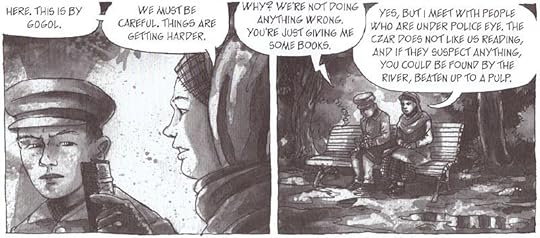
Wat een leven... van opgejaagd in de Oekraïne (want joods en dus regelmatig progroms), zonder kans op goed onderwijs, maar wel dol op boeken:
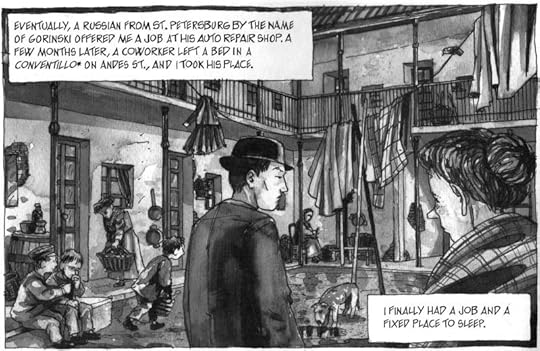
Al vrij jong op de vlucht (want gezocht omdattie aangesloten is bij anarchisten, bij stakingen aanwezig is, en (dus) 'verkeerde' vrienden heeft. En joods is. En, zoals zovele anderen, gaat hij naar Argentinië... waar het leven hem ook al niet omarmt. Hoewel het even wel zo lijkt te zijn:
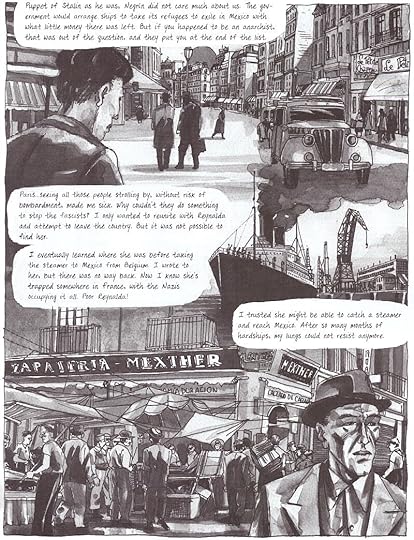
Maar ja, als je vervolgens een gruwelijke fascist ombrengt, omdat deze honderden mensen afgeslacht en je poging om jezelf om te brengen mislukt, dan vind je jezelf terug in een gruwelijke gevangenis ergens in het uiterste zuiden van Argentinië. Na twintig jaar mag je die vrieskist vol met knuppelende bewakers verlaten, word je uitgezet naar Uruguay waar ze je weer vastzetten omdat ze je niet vertrouwen. Je slaagt erin af te reizen naar Spanje om tegen de fascisten te vechten. Loopt helaas (ook al) niet zoals je gehoopt had, en dus vlucht je naar Frankrijk en komt terecht in een 'opvangkamp', waaruit je ontsnapt. Volgende stop: Parijs:
En dan ... Mexico. Lekker rustig, duiven, werken, praten. Maar wel alleen, zonder Lyudmylla, zonder Reynalda.
L'incroyable destin de cet militant juif anarchiste qui a traversé les pires moment de l'histoire du début du XXème siècle. Du mythe à la normalité, un fascinant exemple de résilience, de courage et d'humanité.