

What do you think?

Ramrod
"Complete and unabridged"
288 pages, Paperback
First published January 1, 1943
About the author
Luke Short
129 books37 followersLuke Short (real name Frederick Dilley Glidden) was a popular Western writer.
Born in Kewanee, Illinois Glidden attended the University of Illinois at Urbana-Champaign for two and a half years and then transferred to the University of Missouri at Columbia to study journalism.
Following graduation in 1930 he worked for a number of newspapers before becoming a trapper in Canada then later moved to New Mexico to be an archeologist's assistant.
After reading Western pulp magazines and trying to escape unemployment he started writing Western fiction. He sold his first short story and novel in 1935 under the pen name of Luke Short (which was also the name of a famous gunslinger in the Old West, though it's unclear if he was aware of that when he assumed the pen name.)
After publishing over a dozen novels in the 1930s, he started writing for films in the 40s. In 1948 alone four Luke Short novels appeared as movies. Some of his memorable film credits includes Ramrod (1947) and Blood on the Moon (1948). He continued to write novels, despite increasing trouble with his eyes, until his death in 1975. His ashes are buried in Aspen, Colorado, his home at the time of his death.
Born in Kewanee, Illinois Glidden attended the University of Illinois at Urbana-Champaign for two and a half years and then transferred to the University of Missouri at Columbia to study journalism.
Following graduation in 1930 he worked for a number of newspapers before becoming a trapper in Canada then later moved to New Mexico to be an archeologist's assistant.
After reading Western pulp magazines and trying to escape unemployment he started writing Western fiction. He sold his first short story and novel in 1935 under the pen name of Luke Short (which was also the name of a famous gunslinger in the Old West, though it's unclear if he was aware of that when he assumed the pen name.)
After publishing over a dozen novels in the 1930s, he started writing for films in the 40s. In 1948 alone four Luke Short novels appeared as movies. Some of his memorable film credits includes Ramrod (1947) and Blood on the Moon (1948). He continued to write novels, despite increasing trouble with his eyes, until his death in 1975. His ashes are buried in Aspen, Colorado, his home at the time of his death.
Ratings & Reviews
Friends & Following
Create a free account to discover what your friends think of this book!
Community Reviews
Displaying 1 - 20 of 20 reviews

September 26, 2016
*I received this book from NetGalley and Open Road in return for a fair review.*
It’s 1943 and the world is in the middle of a war, a war that does not appear to have an end in sight; war, death, rationing and into this mix comes a book by 35 year old Luke Short. No this is not the same Luke Short who was a real life gunman, gambler, and friend of Doc Holliday and Wyatt Earp. No this would be Frederick Dilley Glidden’s pen name (Glidden apparently hadn’t heard of Luke Short before taking the name as his own).
Glidden, in addition to being an author, had been a journalist, a trapper in Canada, an archaeologist’s assistant, and, during the same time period this book appeared, he had been working for the Office of Strategic Services (OSS).
The book is about a drifter in the old west, a man known in the town he is currently residing in as a drunk. A drifter, otherwise known as Dave Nash, who gets tangled up with a woman and her troubles. A woman named Connie Dickason.
Connie grew up under the stubborn thumb of her father, Ben Dickason, owner and operator of the large D Bar cattle ranch. She’s briefly escaped from him and from Frank Ivey by setting up with Walt Shipley (owner and operator of tiny Circle 66). Ivey, beyond a seemingly lifetime pursuit of Connie to make her his wife, is also the head and operator of the Bell cattle ranch – the other big cattle company in the area.
Frank and Ben drive Walt out of the area as the book opens, but Connie is as stubborn as her father. She’s going to make a go of Circle 66 by herself if she has to.
Frank has run off all but one of Walt’s employees, so Connie is entering into those ‘fight’ with just one man. That same town drunk, Dave Nash. Nash, though, is on his way out. He paid what he thinks he has to pay, and is going to drift. Until certain words are exchanged, and he changes his mind. He’s going to stay and help Connie as her foreman.
Nash, as foreman, sets up to get together a crew that can stand against the big boys. He first gets his friend Bill Schell to join, then delegates the task to rounding up the rest of the gang to Schell. With the idea that they are going to ‘get’ Ivey.
Two more people round out the larger players in this drama, Jim Crew, sheriff of this small town, and Rose Leland, a business owner in Signal (the town I haven’t named yet; she owns a dress outfitters – okay, she takes stuff and turns them into dresses).
Westerns, the films at least, of a certain era have a relatively simple set up. There are those who wear black hats (and are therefore ‘the bad guys’), and those that wear white hats (and are therefore ‘the good guys’). At least around the time this book came out. A relatively simplistic view of those westerns, and a relatively simplistic story line.
While things seem to be set up to showcase certain people in certain roles, when you look closer, you see mostly a sea of grey hats. There are about three people who do not fall into this ‘grey hat’ simplification. The sheriff, Jim Crew, wears the whitest hat of the bunch, though he has been a long time law man and is something of a strong man (as in he is capable of doing his job not in that he is a ‘strong man’ as in some kind of dictator). Rose Leland, if she wore a hat (and she might), would also wear something close to or off-white (the only real ‘mark’ against her is a certain reputation that she might be a little too wild and free with men (whether or not that reputation has any basis in reality is up to the reader to decide). Lastly we have one Virg Lea. Not much is known about him, and I’m not sure he even said a single word in the book, but his hat would be the blackest of black (mostly because of his actions, unmixed with any other characterization).
The rest? Wear grey. Dave’s a drunk (for reasons), and is the best of the lot that remain with Circle 66 after Walt is run off – the rest are not ‘trash’, or ‘black hats’, but are there to ‘get’ Ivey because they hate him. Not exactly great men. As a reader will learn, Connie is a tough strong woman, with a streak of stubbornness that matches her fathers, and a certain tendency to . . . well, complicate things.
Frank? Well, a real macho man, strong, determined, big man on the ranch and the territory. He’s been set up as the ‘bad guy’ of the story, but ‘set-up’ is the right phrase to use. His hat isn’t as black as it might seem. Though don’t go mistaking my words. His grey hat is darker than some. Lea is one of Frank’s men.
Ben? His greatest flaw is stubbornness and an inability to ‘work with’ a strong stubborn daughter. He does employ one guy, though, who seems to be the kind who wouldn’t necessarily mind wearing a black hat. Red, the foreman of D Bar.
The book did not unfold the way I expected. It was a lot more complicated, detailed, and wide spread than I thought I was getting myself into. Mind you, there were things easily foreseen – but then we are talking about a western, not a mystery novel.
I’ve never seen the film version of this novel, so I cannot comment on it or any kind of comparison between the two. The book, though, was quite good and entertaining. I plan to read more by this author. I’d probably rate that book something close to 4.55 stars.
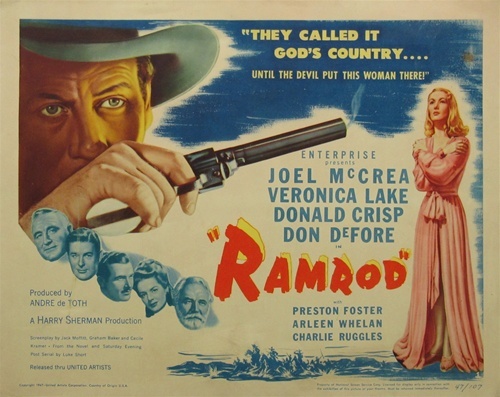
Veronica Lake played Connie in the film. Joel McCrea played Dave Nash. Preston Foster played Frank Ivey. I do not know the film well enough to know if the others listed are small or big parts of the film. I do notice that Lloyd Bridges is in the film – as Red Cates.
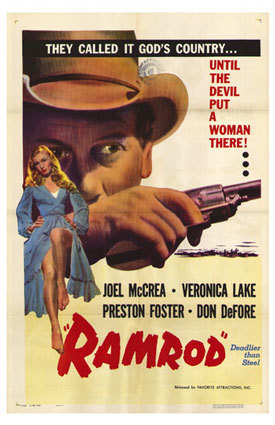
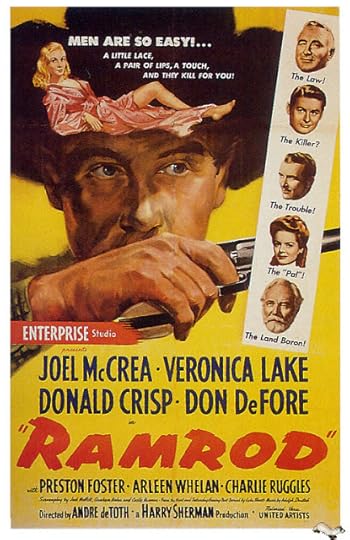

Last thought: The women in this book were, to a certain extent, a lot stronger people than I kind of expected. None were wilting flowers, damsels in distress, or – for that matter, prostitutes.
September 26 2016
It’s 1943 and the world is in the middle of a war, a war that does not appear to have an end in sight; war, death, rationing and into this mix comes a book by 35 year old Luke Short. No this is not the same Luke Short who was a real life gunman, gambler, and friend of Doc Holliday and Wyatt Earp. No this would be Frederick Dilley Glidden’s pen name (Glidden apparently hadn’t heard of Luke Short before taking the name as his own).
Glidden, in addition to being an author, had been a journalist, a trapper in Canada, an archaeologist’s assistant, and, during the same time period this book appeared, he had been working for the Office of Strategic Services (OSS).
The book is about a drifter in the old west, a man known in the town he is currently residing in as a drunk. A drifter, otherwise known as Dave Nash, who gets tangled up with a woman and her troubles. A woman named Connie Dickason.
Connie grew up under the stubborn thumb of her father, Ben Dickason, owner and operator of the large D Bar cattle ranch. She’s briefly escaped from him and from Frank Ivey by setting up with Walt Shipley (owner and operator of tiny Circle 66). Ivey, beyond a seemingly lifetime pursuit of Connie to make her his wife, is also the head and operator of the Bell cattle ranch – the other big cattle company in the area.
Frank and Ben drive Walt out of the area as the book opens, but Connie is as stubborn as her father. She’s going to make a go of Circle 66 by herself if she has to.
Frank has run off all but one of Walt’s employees, so Connie is entering into those ‘fight’ with just one man. That same town drunk, Dave Nash. Nash, though, is on his way out. He paid what he thinks he has to pay, and is going to drift. Until certain words are exchanged, and he changes his mind. He’s going to stay and help Connie as her foreman.
Nash, as foreman, sets up to get together a crew that can stand against the big boys. He first gets his friend Bill Schell to join, then delegates the task to rounding up the rest of the gang to Schell. With the idea that they are going to ‘get’ Ivey.
Two more people round out the larger players in this drama, Jim Crew, sheriff of this small town, and Rose Leland, a business owner in Signal (the town I haven’t named yet; she owns a dress outfitters – okay, she takes stuff and turns them into dresses).
Westerns, the films at least, of a certain era have a relatively simple set up. There are those who wear black hats (and are therefore ‘the bad guys’), and those that wear white hats (and are therefore ‘the good guys’). At least around the time this book came out. A relatively simplistic view of those westerns, and a relatively simplistic story line.
While things seem to be set up to showcase certain people in certain roles, when you look closer, you see mostly a sea of grey hats. There are about three people who do not fall into this ‘grey hat’ simplification. The sheriff, Jim Crew, wears the whitest hat of the bunch, though he has been a long time law man and is something of a strong man (as in he is capable of doing his job not in that he is a ‘strong man’ as in some kind of dictator). Rose Leland, if she wore a hat (and she might), would also wear something close to or off-white (the only real ‘mark’ against her is a certain reputation that she might be a little too wild and free with men (whether or not that reputation has any basis in reality is up to the reader to decide). Lastly we have one Virg Lea. Not much is known about him, and I’m not sure he even said a single word in the book, but his hat would be the blackest of black (mostly because of his actions, unmixed with any other characterization).
The rest? Wear grey. Dave’s a drunk (for reasons), and is the best of the lot that remain with Circle 66 after Walt is run off – the rest are not ‘trash’, or ‘black hats’, but are there to ‘get’ Ivey because they hate him. Not exactly great men. As a reader will learn, Connie is a tough strong woman, with a streak of stubbornness that matches her fathers, and a certain tendency to . . . well, complicate things.
Frank? Well, a real macho man, strong, determined, big man on the ranch and the territory. He’s been set up as the ‘bad guy’ of the story, but ‘set-up’ is the right phrase to use. His hat isn’t as black as it might seem. Though don’t go mistaking my words. His grey hat is darker than some. Lea is one of Frank’s men.
Ben? His greatest flaw is stubbornness and an inability to ‘work with’ a strong stubborn daughter. He does employ one guy, though, who seems to be the kind who wouldn’t necessarily mind wearing a black hat. Red, the foreman of D Bar.
The book did not unfold the way I expected. It was a lot more complicated, detailed, and wide spread than I thought I was getting myself into. Mind you, there were things easily foreseen – but then we are talking about a western, not a mystery novel.
I’ve never seen the film version of this novel, so I cannot comment on it or any kind of comparison between the two. The book, though, was quite good and entertaining. I plan to read more by this author. I’d probably rate that book something close to 4.55 stars.
Veronica Lake played Connie in the film. Joel McCrea played Dave Nash. Preston Foster played Frank Ivey. I do not know the film well enough to know if the others listed are small or big parts of the film. I do notice that Lloyd Bridges is in the film – as Red Cates.
Last thought: The women in this book were, to a certain extent, a lot stronger people than I kind of expected. None were wilting flowers, damsels in distress, or – for that matter, prostitutes.
September 26 2016
December 23, 2015
An excellent western by one of our great forgotten writers: Luke Short. Man gets involved in a range war working for a devious woman while she is fighting her former fiance, who is an out-and-out bully. This was made into a movie in the forties starring Joel MCrea and Veronica Lake. The movie was good, but I believe the book is better. Recommended to fans of classic westerns.
May 20, 2009
Very good Western with a noirish femme fatale.

October 16, 2014
REREAD: October 2024

November 20, 2017
This review originally published in Looking For a Good Book. Rated 3.0 of 5
I think I am a member of a dying breed ... a reader of 'western' fiction. There are very few new westerns being published (believe me, I've been looking), though there are a few, the majority of the westerns that I've been seeing are reprints of classic works. Ramrod, by Luke Short, is one such reprint.
First published in 1943, Ramrod tells the story of Dave Nash the ranch foreman (a 'ramrod') who will do anything for his boss, Walt Shipley, because Shipley took a chance on him and gave him a job when no one else would. But what Dave doesn't expect to have to face off against is ... a woman.
Connie Dickason is a strong, seductive woman and Shipley has his mind set on marrying her. When Shipley is driven out-of-town by a range war, Dave and Connie have to fight together to save the ranch and the ramrod discovers just how strong and determined Connie can be.
This book was made into a movie of the same title, starring Joel McCrea and Veronica Lake.
I've only read one other Luke Short novel (which I have already reviewed). That other book, I felt, rambled too much - it didn't present a very straight-forward story. This book, on the other hand, is pretty clear-cut. The story is set up very well right from the start and it drives forward without much deviation (not a lot of sub-plot here).
Unfortunately, I found it just a little bit dull.
While Dave was a character that I could see, follow, and understand right from the get-go, Connie was a bit of an enigma for me. I didn't understand her motivations, though I think Luke Short tried to get it across.
This is not what many people expect when they think of a 'western' - it's not a big shoot-'em up. It's also not really a romance in the sense of 'boy-meets-girl-tries-to-woo-girl'. This tends to have characters who are a little more 'real.' They aren't obvious good or bad characters ... just regular people trying to make a go of their every-day lives.
But 'real' people trying to live their everyday lives can be a bit dull if you are reading about them.
Once again I can see some real strengths in Luke Short's writing and story-telling, but this one just doesn't strike a powerful chord with me.
Looking for a good book? Luke Short's western tale, Ramrod, has some very real characters but the story is just a bit on the dull side.
I received a digital copy of this book from the publisher, through Netgalley, in exchange for an honest review.
I think I am a member of a dying breed ... a reader of 'western' fiction. There are very few new westerns being published (believe me, I've been looking), though there are a few, the majority of the westerns that I've been seeing are reprints of classic works. Ramrod, by Luke Short, is one such reprint.
First published in 1943, Ramrod tells the story of Dave Nash the ranch foreman (a 'ramrod') who will do anything for his boss, Walt Shipley, because Shipley took a chance on him and gave him a job when no one else would. But what Dave doesn't expect to have to face off against is ... a woman.
Connie Dickason is a strong, seductive woman and Shipley has his mind set on marrying her. When Shipley is driven out-of-town by a range war, Dave and Connie have to fight together to save the ranch and the ramrod discovers just how strong and determined Connie can be.
This book was made into a movie of the same title, starring Joel McCrea and Veronica Lake.
I've only read one other Luke Short novel (which I have already reviewed). That other book, I felt, rambled too much - it didn't present a very straight-forward story. This book, on the other hand, is pretty clear-cut. The story is set up very well right from the start and it drives forward without much deviation (not a lot of sub-plot here).
Unfortunately, I found it just a little bit dull.
While Dave was a character that I could see, follow, and understand right from the get-go, Connie was a bit of an enigma for me. I didn't understand her motivations, though I think Luke Short tried to get it across.
This is not what many people expect when they think of a 'western' - it's not a big shoot-'em up. It's also not really a romance in the sense of 'boy-meets-girl-tries-to-woo-girl'. This tends to have characters who are a little more 'real.' They aren't obvious good or bad characters ... just regular people trying to make a go of their every-day lives.
But 'real' people trying to live their everyday lives can be a bit dull if you are reading about them.
Once again I can see some real strengths in Luke Short's writing and story-telling, but this one just doesn't strike a powerful chord with me.
Looking for a good book? Luke Short's western tale, Ramrod, has some very real characters but the story is just a bit on the dull side.
I received a digital copy of this book from the publisher, through Netgalley, in exchange for an honest review.

December 9, 2025
A Classic Western Novel!!!
I’ve read at least a half-dozen of Luke in Short’s westerns, and “Ramrod” qualifies as one of this best. First, Short doesn’t pull any punches in this gritty often violent frontier tale that pits cattlemen against cattlemen. When Connie, the scheming daughter of a rancher, decides to start her own ranch after her ex-boyfriend who wanted to raise sheep against the wishes of Connie’s father, hightails it out of the territory, she takes possession of his ranch. When a lone cowpoke named Dave Nash, who had ridden for Connie’s boyfriend, agrees to serve as her foreman, all Hades breaks loose. At this point, another greedy cattleman Frank Ivy enters the fray, and he burns down Connie’s new ranch and turns loose one of his drovers to beats one of Connie’s ranch hands to a bloody pulp. Eventually, the battered cowboy dies.Meantime, Dave Nash sets out to ensure that they buy enough steers for Connie’s ranch. He hires an unscrupulous cowpoke to help him brand their cattle. Meantime, Connie dreams of being married to Nash, but our protagonist is more interested in a woman named Rose who lives in town and makes dresses for women. Connie has concocted a scheme to eliminate an antagonist cattlemen, Frank Ivey, who not only wants to stop her from running cattle but also wants her to be his wife. Connie hates Frank with a vengeance and tries to incriminate him for rustling not only her cattle but also running them off a trail to plunge to their demise in a canyon. Frank sends out two of his riders to bushwhack Dave, but the gunmen he dispatches to kill Dave die. However, one of the two shoots our hero and he finds himself out of action and confined to a bed while he recuperates from a gunshot wound in his shoulder. In the middle of this fracas is a veteran, old school lawman, Jim Crew, who is lied to about the theft and destruction of Connie’s cattle. Witnesses say Frank ordered the cattle destroyed, and Crew sets out to arrest Frank, but Frank’s men kill the badge man. Eventually, Nash recuperates from his clash with one of Frank’s men. When he learns Connie had her own cattle destroyed so she could blame the loss on Frank, the action intensified with Frank determined to kill Dave. Our hero proves elusive. Short does an excellent job of orchestrating scenes of violence with a modicum of romance.
I’ve read at least a half-dozen of Luke in Short’s westerns, and “Ramrod” qualifies as one of this best. First, Short doesn’t pull any punches in this gritty often violent frontier tale that pits cattlemen against cattlemen. When Connie, the scheming daughter of a rancher, decides to start her own ranch after her ex-boyfriend who wanted to raise sheep against the wishes of Connie’s father, hightails it out of the territory, she takes possession of his ranch. When a lone cowpoke named Dave Nash, who had ridden for Connie’s boyfriend, agrees to serve as her foreman, all Hades breaks loose. At this point, another greedy cattleman Frank Ivy enters the fray, and he burns down Connie’s new ranch and turns loose one of his drovers to beats one of Connie’s ranch hands to a bloody pulp. Eventually, the battered cowboy dies.Meantime, Dave Nash sets out to ensure that they buy enough steers for Connie’s ranch. He hires an unscrupulous cowpoke to help him brand their cattle. Meantime, Connie dreams of being married to Nash, but our protagonist is more interested in a woman named Rose who lives in town and makes dresses for women. Connie has concocted a scheme to eliminate an antagonist cattlemen, Frank Ivey, who not only wants to stop her from running cattle but also wants her to be his wife. Connie hates Frank with a vengeance and tries to incriminate him for rustling not only her cattle but also running them off a trail to plunge to their demise in a canyon. Frank sends out two of his riders to bushwhack Dave, but the gunmen he dispatches to kill Dave die. However, one of the two shoots our hero and he finds himself out of action and confined to a bed while he recuperates from a gunshot wound in his shoulder. In the middle of this fracas is a veteran, old school lawman, Jim Crew, who is lied to about the theft and destruction of Connie’s cattle. Witnesses say Frank ordered the cattle destroyed, and Crew sets out to arrest Frank, but Frank’s men kill the badge man. Eventually, Nash recuperates from his clash with one of Frank’s men. When he learns Connie had her own cattle destroyed so she could blame the loss on Frank, the action intensified with Frank determined to kill Dave. Our hero proves elusive. Short does an excellent job of orchestrating scenes of violence with a modicum of romance.
This entire review has been hidden because of spoilers.
August 9, 2023
Great Story
I have seen the movie based on this book several times and can say that the movie is true to this story. I never read this book before now and could just kick myself for that. This is true a great story. Now I don't know if you would call this the plot of it the story of the theme of the story, but like a lot of the Western that I have you have a rich rancher, who to borrow a phrase from the story thinks he is god. Then you have an average cowhand, who doesn't think the rich rancher is right. The hero of this tale is Dave Nash and the villain is a man named Frank Ivey and a woman named Connie Dickason. The other characters in this story are as well written as the hero and the villains. I will say that this is going to be one of my all time favorite Western story. If you do read this book, which I highly recommend, then try and catch the movie of the same name and see why I say this is a great story.
I have seen the movie based on this book several times and can say that the movie is true to this story. I never read this book before now and could just kick myself for that. This is true a great story. Now I don't know if you would call this the plot of it the story of the theme of the story, but like a lot of the Western that I have you have a rich rancher, who to borrow a phrase from the story thinks he is god. Then you have an average cowhand, who doesn't think the rich rancher is right. The hero of this tale is Dave Nash and the villain is a man named Frank Ivey and a woman named Connie Dickason. The other characters in this story are as well written as the hero and the villains. I will say that this is going to be one of my all time favorite Western story. If you do read this book, which I highly recommend, then try and catch the movie of the same name and see why I say this is a great story.
August 7, 2024
A Tense And Gripping Western
Ramrod is a well-written and well-plotted novel that quickly gets and then holds your attention. It’s essentially a love story, as cowboy Dave Nash has two women vying for his attention - Rose, the town seamstress, and Connie, the ranch owner’s daughter who wants to start her own ranch. Dave works for Connie as they fight off her father and another rancher who want to stop her from starting a ranch. This leads to lots of bloodshed, deception and good old fashioned western excitement. Luke Short does a great job of balancing the action and the character development, never getting bogged down too much in the latter but offering just enough to make the characters real for the reader. An excellent western all around.
Ramrod is a well-written and well-plotted novel that quickly gets and then holds your attention. It’s essentially a love story, as cowboy Dave Nash has two women vying for his attention - Rose, the town seamstress, and Connie, the ranch owner’s daughter who wants to start her own ranch. Dave works for Connie as they fight off her father and another rancher who want to stop her from starting a ranch. This leads to lots of bloodshed, deception and good old fashioned western excitement. Luke Short does a great job of balancing the action and the character development, never getting bogged down too much in the latter but offering just enough to make the characters real for the reader. An excellent western all around.

January 9, 2023
Ramrod is a traditional western with a heavy dose of Hard-Boiled Noir. The first thing the I notice is how complete and complex the characters are, men and women are not stereotypical one-dimensional, but full fledge people. Luke Short is a good writer and a better storyteller, This story is more drama than action fest, but when the action occurs, it is sudden and quite exiting. I can easily see why Luke Short is regarded as one of the great western writer and Ramrod is the first novel I read from him but it won't be the last.

December 23, 2021
I haven't read a Western this good in a long time. Maybe ever. The character development and character revelation was excellent. The plot was feasible and the author avoided the typical macho, lone wolf, archetypal hero. I really appreciated the subtleties in this book and the only reason I didn't give it 5 stars is the ending seemed a little rushed after the well wrought build up. Really it's 4.5 stars. If you've never read a Western this is a good place to start.

June 24, 2020
This is an absorbing western with writing that provides vivid scenes. This is an engaging page turner about the consequences of words and actions. The characters chose sides early, and then the story enfolds with the consequences of misperceptions, stubborn mindsets, and the changing dynamics of the individual relationships.

August 21, 2021
Western books written in the 40’s. The story takes you on a wild adventure of gun slinging and revenge. Short and sweet simple to the point. I enjoy taking a detour on my normal reading patterns and Luke Short delivers a compelling story.
February 21, 2020
One of Luke Short’s best books. A good solid story with a decent underlying current running through it of the importance of character, perseverance, loyalty, love, and integrity.
Read
December 23, 2020a really good western with good guys and bad guys and some interesting thoughts about land ownership and women.
August 4, 2022
Good book
December 19, 2023
Great Read!
Lots of action with some twists and turns. Good guys, bad guys and beautiful gals.The characters are very well designed.
Lots of action with some twists and turns. Good guys, bad guys and beautiful gals.The characters are very well designed.

August 1, 2024
Ramrod!! lol
A good classic western.
A good classic western.

January 20, 2026
One of the best westerns I've read in a while. A genre piece, for sure, but well written.

October 24, 2018
Mettez de côté l'image "romans de gare" ou "pulp" que vous avez des westerns car la collection de Bertrand Tavernier ne vous propose que du bon, du lourd, du profond, à la limite d'un roman noir hard-boiled.
D'ailleurs, il y a des airs d'hard-boiled dans le fait que le lecteur soit plongé directement dans l'action, sans savoir ce qu'il s'est passé avant.
Luke Short porte bien son nom car en peu de mot, en très court, il vous présente le panel de personnages qui vont vous accompagner au fil de cette lecture des plus passionnantes.
Oubliez aussi les personnages féminins aussi limpides qu'un café raté et insipides que de l'eau de vaisselle après un banquet.
L'auteur nous présente des femmes fortes, des héroïnes qui en ont dans la culotte, qui savent ce qu'elles veulent et qui, de par leurs actions, sauveront des vies ou en propulseront d'autres dans la merde. Même l'épouse du médecin en a une solide praire dans la robe !
Les autres personnages ne se dévoileront qu'au fur et à mesure de l'histoire et au début, c'est peine perdue que de se dire qui seront les Gentils et les Méchants car tout le monde peut basculer des deux côtés, devenir meilleur, devenir de vrais salauds, se racheter, s'enfoncer, utiliser les méthodes perfides des autres… et je suis allée de surprise en surprise, changeant mon fusil d'épaule quelques fois.
Pas de manichéisme, pas de tout Blanc ou de tout Noir, nous sommes loin du western traditionnel avec la belle héroïne que le Gentil cow-boy solitaire loin de chez lui va vouloir sauver des vilaines griffes des très Méchants vilains pas beaux.
Et c'est pareil du côté masculin avec des personnages qui vont évoluer selon les événements, faire des conneries, mal juger les autres, se racheter, ou rester sur leur ligne de conduite, tel le shérif, le seul qui restera égal à lui même.
Au départ, une querelle entre une fille et un père, entre cette fille et l'homme que l'on voulait qu'elle épousât et un très gros problème d'ego de tous les côtés. C'est cet ego, ces ambitions, cette volonté d'écraser l'autre qui fera que tout partira en couille et en sang versé.
Le jeu en valait-il la chandelle ? À mon sens, non, mais sans cela, nous aurions eu droit à une histoire insipide ou lieu d'un café noir très serré additionné de poudre de revolver et de whisky bien tassé. Cocktail explosif et bien dosé, c'est du brutal et on ne sentait pas la pomme, ni la betterave.
Si vous aviez besoin d'une illustration de libéralisme forcené, ne vous gênez pas, prenez le roman en exemple car c'est tout à fait ça dans le fait que Frank Ivey, patron du ranch Bell, veuille à tout prix acquérir toutes les terres aux alentours, quitte pour cela à donner des coups de poignard dans le dos des autres.
Coups sous la ceinture que les autres ne se priveront de donner, eux aussi, car dans ce roman, tout le monde peut virer du côté obscur de la Force et devenir aussi noir que Ivey, le grand salaud du coin car on a soit même engagé des durs à cuire ivres de vengeance et qu'il va falloir canaliser ces chiens fous.
Et puis, si on applique le "C'est pas moi qui a commencé, m'dame, c'est Frank !", on peut se dire que les premières répliques (tirer profit du Homestead Act) n'étaient que rendre la monnaie de sa pièce à un type qui s'était cru plus malin que vous.
Un grand western noir qui n'emprunte pas vraiment ses codes car l'auteur était déjà au-delà du western traditionnel, empruntant plus les codes des romans noirs afin de nous proposer un western pur et dur, profond, réaliste, humain, violent.
Une montée en puissance de deux ego démesurés qui sont prêt à tous les sacrifices pour écraser l'autre, pour lui faire rendre gorge, pour le faire plier, que ce soit l'homme qui n'accepte pas qu'une femme dirige un ranch et veuille le dépasser ou que ce soit une femme qui n'accepte pas que des hommes lui dictent sa vie et qui ne rêve que de devenir aussi puissante qu'eux…
Et au milieu de tout ça, des autres personnages qui vont se retrouver au milieu des tirs et tenter de régler tout ça de la manière la plus sage possible, même si cela est difficile.
Un western avec des personnages bien campés, réalistes, profonds, humains, avec leurs failles, leurs erreurs, leurs actes de courage, leur ego et un lecteur qui devra se faire sa propre opinion sur qui mérite la rédemption ou pas et sur qui était le plus salaud dans tout ça. Ils étaient plusieurs et leur ambition, leur entêtement, leur a fait commettre bien des erreurs qui se sont payées cash…
D'ailleurs, il y a des airs d'hard-boiled dans le fait que le lecteur soit plongé directement dans l'action, sans savoir ce qu'il s'est passé avant.
Luke Short porte bien son nom car en peu de mot, en très court, il vous présente le panel de personnages qui vont vous accompagner au fil de cette lecture des plus passionnantes.
Oubliez aussi les personnages féminins aussi limpides qu'un café raté et insipides que de l'eau de vaisselle après un banquet.
L'auteur nous présente des femmes fortes, des héroïnes qui en ont dans la culotte, qui savent ce qu'elles veulent et qui, de par leurs actions, sauveront des vies ou en propulseront d'autres dans la merde. Même l'épouse du médecin en a une solide praire dans la robe !
Les autres personnages ne se dévoileront qu'au fur et à mesure de l'histoire et au début, c'est peine perdue que de se dire qui seront les Gentils et les Méchants car tout le monde peut basculer des deux côtés, devenir meilleur, devenir de vrais salauds, se racheter, s'enfoncer, utiliser les méthodes perfides des autres… et je suis allée de surprise en surprise, changeant mon fusil d'épaule quelques fois.
Pas de manichéisme, pas de tout Blanc ou de tout Noir, nous sommes loin du western traditionnel avec la belle héroïne que le Gentil cow-boy solitaire loin de chez lui va vouloir sauver des vilaines griffes des très Méchants vilains pas beaux.
Et c'est pareil du côté masculin avec des personnages qui vont évoluer selon les événements, faire des conneries, mal juger les autres, se racheter, ou rester sur leur ligne de conduite, tel le shérif, le seul qui restera égal à lui même.
Au départ, une querelle entre une fille et un père, entre cette fille et l'homme que l'on voulait qu'elle épousât et un très gros problème d'ego de tous les côtés. C'est cet ego, ces ambitions, cette volonté d'écraser l'autre qui fera que tout partira en couille et en sang versé.
Le jeu en valait-il la chandelle ? À mon sens, non, mais sans cela, nous aurions eu droit à une histoire insipide ou lieu d'un café noir très serré additionné de poudre de revolver et de whisky bien tassé. Cocktail explosif et bien dosé, c'est du brutal et on ne sentait pas la pomme, ni la betterave.
Si vous aviez besoin d'une illustration de libéralisme forcené, ne vous gênez pas, prenez le roman en exemple car c'est tout à fait ça dans le fait que Frank Ivey, patron du ranch Bell, veuille à tout prix acquérir toutes les terres aux alentours, quitte pour cela à donner des coups de poignard dans le dos des autres.
Coups sous la ceinture que les autres ne se priveront de donner, eux aussi, car dans ce roman, tout le monde peut virer du côté obscur de la Force et devenir aussi noir que Ivey, le grand salaud du coin car on a soit même engagé des durs à cuire ivres de vengeance et qu'il va falloir canaliser ces chiens fous.
Et puis, si on applique le "C'est pas moi qui a commencé, m'dame, c'est Frank !", on peut se dire que les premières répliques (tirer profit du Homestead Act) n'étaient que rendre la monnaie de sa pièce à un type qui s'était cru plus malin que vous.
Un grand western noir qui n'emprunte pas vraiment ses codes car l'auteur était déjà au-delà du western traditionnel, empruntant plus les codes des romans noirs afin de nous proposer un western pur et dur, profond, réaliste, humain, violent.
Une montée en puissance de deux ego démesurés qui sont prêt à tous les sacrifices pour écraser l'autre, pour lui faire rendre gorge, pour le faire plier, que ce soit l'homme qui n'accepte pas qu'une femme dirige un ranch et veuille le dépasser ou que ce soit une femme qui n'accepte pas que des hommes lui dictent sa vie et qui ne rêve que de devenir aussi puissante qu'eux…
Et au milieu de tout ça, des autres personnages qui vont se retrouver au milieu des tirs et tenter de régler tout ça de la manière la plus sage possible, même si cela est difficile.
Un western avec des personnages bien campés, réalistes, profonds, humains, avec leurs failles, leurs erreurs, leurs actes de courage, leur ego et un lecteur qui devra se faire sa propre opinion sur qui mérite la rédemption ou pas et sur qui était le plus salaud dans tout ça. Ils étaient plusieurs et leur ambition, leur entêtement, leur a fait commettre bien des erreurs qui se sont payées cash…
January 17, 2018
A Luke Short western about a man who is given a job who knows when He is hired that he rides for the brand. The Boss loves a very crafty woman who will stop at nothing to get what she wants. She wants the Shipley ranch. This was adapted for the screen starting Joel McCrea and Veronica Lake. This is an excellent read for the genre.....DEHS
Displaying 1 - 20 of 20 reviews