Following his nation's defeat in the Pacific War, Kuki Kyuzo, a Japanese youth, struggles to return home to Japan from Manchuria. What follows is a wild journey involving drugs, smuggling, chases, and capture. Kyuzo finally makes his way back to Japan but finds himself unable to disembark. His nation remains inaccessible to him, and now he questions its very existence. Beasts Head for Home is an acute novel of identity, belonging, and the vagaries of human behavior from an exceptional Japanese modern author.
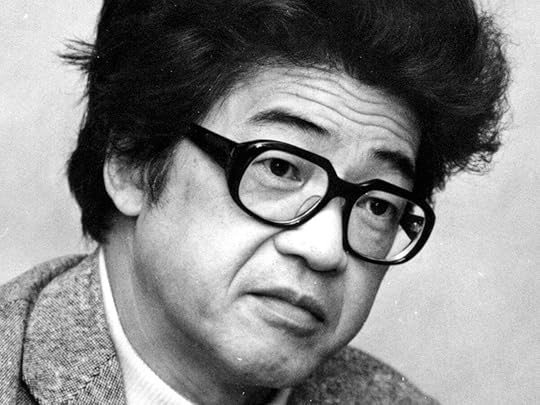
Kōbō Abe (安部 公房 Abe Kōbō), pseudonym of Kimifusa Abe, was a Japanese writer, playwright, photographer, and inventor.
He was the son of a doctor and studied medicine at Tokyo University. He never practised however, giving it up to join a literary group that aimed to apply surrealist techniques to Marxist ideology.
Abe has been often compared to Franz Kafka and Alberto Moravia for his surreal, often nightmarish explorations of individuals in contemporary society and his modernist sensibilities.
He was first published as a poet in 1947 with Mumei shishu ("Poems of an unknown poet") and as a novelist the following year with Owarishi michi no shirube ni ("The Road Sign at the End of the Street"), which established his reputation. Though he did much work as an avant-garde novelist and playwright, it was not until the publication of The Woman in the Dunes in 1962 that he won widespread international acclaim.
In the 1960s, he collaborated with Japanese director Hiroshi Teshigahara in the film adaptations of The Pitfall, Woman in the Dunes, The Face of Another and The Ruined Map. In 1973, he founded an acting studio in Tokyo, where he trained performers and directed plays. He was elected a Foreign Honorary Member of the American Academy of Arts and Sciences in 1977.
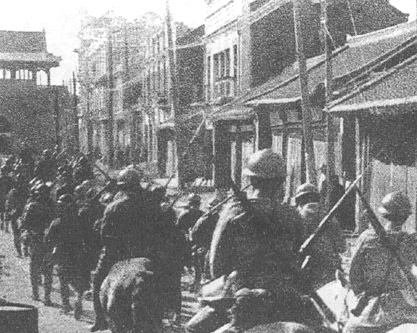
After Japan's surrender in World War II, 4 million Japanese in China’s Manchuria province were basically left stranded. This is the story of one young Japanese man, fatherless, who was born and raised in Manchuria. A stray bullet killed his mother and he was adopted as a ‘houseboy’ by Russian military men.
Russian military in China? I found the story confusing at first until I looked up information about the end of WW II, and yes, Russia, then allied with the Western powers, sent troops to China to help fight against Japan after Germany surrendered.
The boy has lived all 20 years of his life in Manchuria in what appears to be a Japanese housing project. All the other Japanese have fled or been taken away.
Although he has never been to Japan, somehow he feels he has to get there. His thoughts as the story progresses become a meditation on ‘what is home?’ Is it simply a comfortable space that fulfills human needs? Is it being with family? – If so, he has none. Is it the place where you grew up? He can’t stay there. Is it simply being among smiling people who speak your language?
He flees from the Russian army post and heads south toward Japan, initially on a train. All the people on the train are Chinese, but he meets a man who is Japanese. The man says he is a reporter, but the boy is savvy enough not to believe him. He carries a pistol, wears a bullet-proof vest and goes by several names. The boy thinks he might be a spy.
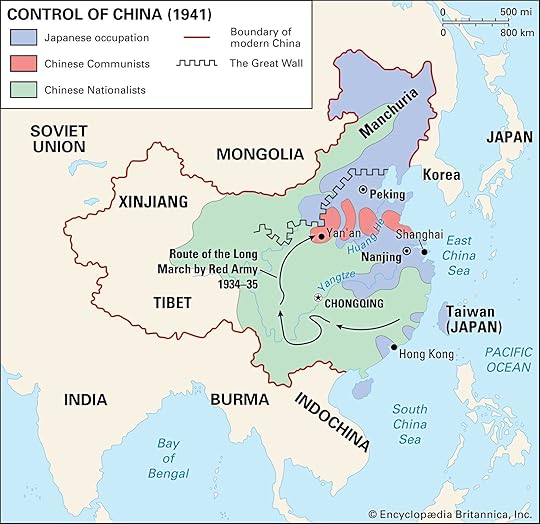
The train is attacked and burned. I don’t know who attacked it or why since Japan had surrendered by this point and it wasn’t a ‘Japanese’ train. Apparently it was related to fighting between the Chinese Nationalists and the Chinese Communists.
The man and the boy flee across the countryside. It’s a frozen swamp with few trees, no inhabitants or roads or any signs of civilization, and nothing to eat. They travel for 10 days melting ice for water and sucking tree bark. The book becomes a “two men in the wilderness survival” story. I’m reminded of The Road by Cormac McCarthy and of Sleepwalking Land by Mia Couto set in Mozambique.
The ‘beasts’ of the title comes to mean being outside the wall of civilization. The two men fear the Chinese people, especially the Chinese army. Even when they eventually encounter civilians they keep their distance. They survive and “they savor the wonderful taste of being alive.” But we are also told that when the boy ate in the Russian army barracks before he fled that it was “…his last meal that was humane and satisfying for years.”
There’s a bit in the book about the racial distinctions between Chinese and Japanese people. When the boy is on the train, assuming everyone else is Chinese, and the man starts speaking to him in Japanese “…the features of a Japanese person rose to the surface on the man’s face.”
Here’s a quote I liked “Hope was written on the front of the door, but perhaps despair had been written on the back. This was perhaps the nature of doors.”
The author was born in Japan but grew up in Manchuria. He is known for his surreal stories such as this one. Although he is probably best known for his surreal and nightmarish novel which I enjoyed, Woman in the Dunes. I much prefer that book to Beasts.
Here are links to my reviews of other books I read by Kobo Abe:
1945. Japan surrenders. Four million Japanese soldiers and civilians remain unrepatriated . Kuki Kyuzo, a Japanese teenager was born and raised in Manchuria due to his father's employment. Mother and son were able to remain in Manchuria for nineteen years despite his father's early death. But now, Kyuzo's world is topsy-turvy. New borders are being drawn. Kyuzo, however, has the right of return. His journey to Japan will be a difficult one.
Kyuzo's trip preparation includes packing a waterproof blanket filled with stolen items....foodstuffs, a military map, a long,heavy rare knife and a silver spoon with a naked woman engraved on the handle. He leaves before dawn, defying Martial Law, in an attempt to jump a departing train heading south. He is able to obtain a special travel certificate allowing him to travel in any liberated area. The journey is heart-wrenching because the train is set afire. Kyuzo, befriended by Mr. Wang, a train passenger himself, set off on foot, journeying to Japan. Mr. Wang, an unsavory character, is neither friend nor foe. Kyuzo would be wise to conceal his belongings. Mr. Wang sends up constant smokescreens. He confesses that his new name is Ko Sekito. Emotions run rampant. The frozen, barren, unforgiving land provides no shelter or sustenance. Kyuzo experiences delusional dreams and exhibits bizarre behavior. He dreams of turning into an insect and walking across a map. He prowls around a fire like a caged beast. Both Kyuzo and Ko experience fear which changes to despair then morphs into self loathing and outward anger. What will tomorrow bring? Will there be a tomorrow?
"Beasts Head for Home" by Kobo Abe is an excellent character study showcasing the naivete of Kyuzo versus the manipulation of Ko. Are they friends or enemies? What is the cost of self preservation? The struggle to return "home" is palpable. Anti-Japanese sentiment made it difficult for the characters to determine who was trustworthy. Kudos to Kobo Abe for a thought provoking, well written tome.
Thank you Columbia University Press and Net Galley for the opportunity to read and review "Beasts Head for Home".
I believe this is the earliest of all Kōbō Abe's novels available in English translation, written or published around 1957, and markedly different from the rest. Taking place a couple years after the end of the Pacific War, it concerns a young Japanese man raised in his country's former territory of Manchukuo (now Manchuria) and his arduous, nightmarish trek to return to his "homeland." That's in quotes for a reason. Knowing the history of this time and place will be helpful in fully comprehending the events portrayed. Upon finishing the book yesterday, I was stunned wordless and have been contemplating what to communicate in this review for 24 hours. I still haven't figured that out. "Beasts Head for Home" is, in one word, traumatic.
Kuki Kyuzo was born and raised in Manchuria, the son of Japanese workers sent to establish and operate a factory. He and his parents have always lived in the same small city, and they have always lived with other Japanese workers in a special residence. He's gone to school, and can speak Chinese as well as Japanese.
But there's a war. Kyuzo knows about the war, but it's something far away and removed from his life until, suddenly, there are Russians bossing people around, the factory closes, and his mother is injured (his father had passed awhile before). The Russians regard him as a sort of office boy, and he's aware that his Chinese neighbors don't like him much.
and Manchuria is invaded by not one but two warring Chinese armies. Kyuzo, a kid, isn't up to date on these two warring armies -- they both hate the Japanese -- and he can no longer be in his home town. The Russians give him papers and money and get him on a train that will take him toward Japan.
The rest of the book is, quite simply, horrible. He travels with a mysterious guy who's exploiting all sides, it seems, and, when the train is blown up, they travel by foot over hundreds of miles of the Mongolian steppe. In winter. Starvation, hallucinations, fear of both Chinese and Russian soldiers, and weather below zero degrees. No food. No clothes. Wild animals.
A man who is not a part of anything or anyplace. who has no one to trust. who's not sure who or what he is, really..
"Beasts Head for Home" is a historical fiction. It tells the story of a young Japanese man along with a shady character named "Ko" and their struggles to escape China and return to Japan after the end of WWII. It is a beautiful story of survival, friendship, and betrayal. It deserves five stars, if not for the abrupt and disappointing ending.
This was one of the earliest Kobo Abe works. It is very unusual in that it is vastly different from the typical absurd and erotic fiction that Mr. Abe is known for. For a moment I thought there was a mistake. If you have read any of his later works, you would hardly believe this was a work by the same Abe who wrote The Box Man and Woman in the Dunes. If you have read Murakami's Wind Up Bird Chronicles, you will notice similarities in style and narration between the parts where Murakami talked about Manchuria and this work. I would not be surprised if this work had an influence on Murakami's own work.
This novel just embodies the epitome of timeless literary fiction, complete with dramatic historical parallels. Abe Kobo captures the human spirit with these extremely determined characters.
Kuki Kyuzo, a young Japanese man, has been born and raised in the puppet state of Manchuria/Manchukuo, and is one of the many Japanese left behind there when it fell to the Soviet army at the end of WWII. He decides to make his way back to his fatherland, a country he has never seen, but which feels like home. He sets off on a long and perilous journey. On this basic level the book is very much an adventure story as we follow Kuki and his enigmatic travelling companion as they battle their way through many dangers and hardships into an uncertain future. On a deeper level the novel explores issues of identity, what it means to be Japanese, loyalty and treachery, colonialism and the brutality of war. It helps to understand at least a little of the historical and political background, and the introduction is relatively helpful on that point, but overall this is one of the worst introductions I’ve ever read as it is so academic and abstruse that I found it almost impenetrable. Nevertheless, it probably is worth ploughing through for a more nuanced reading of the book. The novel itself is a powerful and compelling one, with the outcome always uncertain, and the descriptions vivid and atmospheric. I’m not sure I fully engaged with Kuki but I was pleased to have accompanied him on his nightmarish journey.
Manchuria falls to the Soviets in 1945. Teenager Kyuzo, whose father died when he was just a child... and his mother, accidentally hit by a stray bullet, has no one. All the other Japanese locals relocate and Kyuzo wants to leave, but he loses his chance. He is somewhat taken in by two Soviet soldiers, he has become their servant. although they don't really watch him, and are fairly nice to him. He escapes and is intending repatriation in a Japan he wants to know. He is caught hiding in a rail car by the two Russians, but instead of punishment or taking him back, they give him currency and a pass. So he is on the train with numerous people of undetermined nationalities. The train is derailed and the people that can make it off run away. So Kyuzo is determined to find his way to a Japan that he has only read about in textbooks. So starts his harrowing journey to get back to a different Japan.
You worry so much for Kyuzo, even for his shady traveling companion Ko. They travel through a frigid winter, ice, snow, little food, so much cold. A sad story for Kyuzo, who only wants a home. Seems like he has never had anybody, which makes even Ko a possible friend.
I read this directly after FIRES ON THE PLAIN by Shohei Ooka, and there are obvious parallels. Abe's book is equally psychological, and the protagonist Kuki Kyozo is equally hungry. The novel is a a threnody to the idea of a home, one in this case destroyed from the start, although Kuki Kyozo doesn't realize it. His innocence propels the action, both internally and externally, across the shattered landscape of post-WWII China. The naive belief of the homeless that strangers will help is repeatedly crushed, and yet Kuki goes on from start to finish in his voyage to Japan.
Abe shows particular attention in this novel to smoke as it rises from fires -- the forms and shapes it assumes based on wind and atmosphere. Thus, another reflection of Ooka's earlier work.
Ostensibly pretty far from my interests—and it is, at least for a while—but somewhere in between the amputation (a moment that made me squirm more than anything else I've read (nothing visceral, to be clear, but any reaction in that regard is quite significant)) and Kyuzo's wanderings between this world and the next it became clear I was wrong in my initial assessment. I imagine the stuff from Abe that is more obviously geared toward me will knock my socks off, but this crept up on me in a way that didn't seem possible from the outset. In particular, the casual weaving of dreams into what's left of Kyuzo's consciousness is pretty remarkable, and all the more so given it isn't introduced until about halfway through.
I believe this is the earliest of all Kōbō Abe's novels available in English translation, written or published around 1957, and markedly different from the rest. Taking place a couple years after the end of the Pacific War, it concerns a young Japanese man raised in his country's former territory of Manchukuo (now Manchuria) and his arduous, nightmarish trek to return to his "homeland." That's in quotes for a reason. Knowing the history of this time and place will be helpful in fully comprehending the events portrayed. Upon finishing the book yesterday, I was stunned wordless and have been contemplating what to communicate in this review for 24 hours. I still haven't figured that out. "Beasts Head for Home" is, in one word, traumatic.
A pretty depressing read. Somehow I couldn't help thinking about Empire of Sun when I was reading this; besides the obvious connection that they were both about identities in regard to the Japanese Empire, the two books shared a similar gloomy, detached, impersonal style, merely showing you how far humans could sink in a desperate time with neither judgment nor excuses extended to the characters.
However, I'd argue that Beasts Head for Home is more depressing than Empire of Sun in that literally all characters in it are selfish, cold, and desperate; one of the kindest gestures any character has done for the protagonist is this character stealing the protagonist's bags without stripping the protagonist bare in the winter of Manchuria.
While I do feel like the POVs of the characters seem to hop around a bit, I'm not sure how much of it is the writer's problem, the translator's problem, or just the style of Japanese literature. Regardless, the succinct writing in general still builds up the tension well and is quite suitable for the gritty setting, or it might just be because I've always preferred less wording in terms of writing.
This is a brutal novel. The protagonist suffers from bitter cold, starvation, betrayal and human cruelty almost continuously throughout. The instinct to survive, despite all of this, is quite amazing (and a little exhausting). A few years after WWII ends, 19-year-old Kyuzo is trying desperately to go to a Japan he has never known. His parents were immigrants to Manchuria, which is now being fought over by the Chinese Communists and the Nationalists. He puts his faith in people along the arduous journey to the sea only to be used by each of them in turn. The ending to this beautifully written book is heartbreaking.
Can’t really judge if this is “good”, even though I love Kobo Abe, because the translation is atrocious. It reads like a police blotter or a doctor’s report and sentences are rapid fire and factual. I get that this was translated by the same guy who translated Kobo Abe’s academic lectures but like, given how eerie the rest of his work is and how hints of that push through here I can only assume that something went awry in the process of translating the book into English. Snore.
I’m not sure where I’d put this amidst Abe’s other works I’ve read. It isn’t as wild, but it is more tangible and still good. It’s still enigmatic, but in a more hidden way. I’d put it somewhere in the middle for what I’ve read of Abe.
Sadly didn't find this one compelling enough to finish. I'm a big fan of Abe but I have come across a few of his books that didn't do it for me and this is one of them. The story didn't pull me in and while the characters were interesting I found myself after a while deciding that I was done.
I read this novel for a Japanese Lit class. It was unexpectedly really captivating! It was really interesting to see Kyuzo's relentless motivation to get to a country he's never been before especially as the task was slowly causing him to lose his mind and his perceived humanity.
This book was hard to put down once I got into the story. I really felt for the main character and it seemed no matter what he did, his situation grew worse and worse. Still, I enjoyed the book and would be interested in reading more from Abe Kobo in the future.