What do you think?
Rate this book


Since the days of conquistador Hernán Cortés, rumours have circulated about a lost city of immense wealth hidden deep in the Honduran interior. Indigenous tribes speak of ancestors who fled there to escape the Spanish invaders, and warn the legendary city is cursed: to enter it is a death sentence. They call it the Lost City of the Monkey God. In 1940, swashbuckling journalist Theodore Morde returned from the rainforest with hundreds of artifacts and an electrifying story of having found the City – but then committed suicide without revealing its location.
Three quarters of a century later, bestselling author Doug Preston joined a team of scientists on a groundbreaking new quest. In 2012 he climbed aboard a single-engine plane carrying a highly advanced, classified technology that could map the terrain under the densest rainforest canopy. In an unexplored valley ringed by steep mountains, that flight revealed the unmistakable image of a sprawling metropolis, tantalizing evidence of not just an undiscovered city but a lost civilization.
To confirm the discovery, Preston and the team battled torrential rains, quickmud, plagues of insects, jaguars, and deadly snakes. They emerged from the jungle with proof of the legend... and the curse. They had contracted a horrifying, incurable and sometimes lethal disease.
Suspenseful and shocking, filled with history, adventure and dramatic twists of fortune, THE LOST CITY OF THE MONKEY GOD is the absolutely true, eyewitness account of one of the great discoveries of the twenty-first century.
337 pages, Kindle Edition
First published January 3, 2017


"People need history in order to know themselves, to build a sense of identity and pride, continuity, community, and hope for the future."The White City (aka the Lost City of the Monkey God) was a legend...until now.


People need history in order to know themselves, to build a sense of identity and pride, continuity, community, and hope for the future.
The White City, the City of the Monkey God, Kaha Kamasa -
There was once a great city in the mountains struck down by a series of catastrophes,
after which the people decided that the gods were angry and left, leaving behind their possessions.
Thereafter it was shunned as a cursed place,
forbidden, visiting death on those who dared enter.
This description evoked the retro adventures of Indiana Jones. I had listened to the audiobook, and the narrator tried to foster that essence with a slightly breathless delivery as though the speaker was rapt with wonder.
Perhaps I've read too many mysteries and thrillers during my life. Because as much as I enjoy travel adventures, I couldn't get swept up in this Mesoamerican puzzle of a practically unknown civilisation that had "vanished into the jungles" in the 1500s, leaving behind only fables of abandoned riches.
I believe that part of my response to this nonfiction account was because it felt so self-consciously styled to mimic the movie magic of an Indiana Jones adventure. There were colorful characters that I'd expect from the thriller genre. The ex-British SAS Andrew "Woody" Wood with his squinty gaze was introduced early on. Woody's job was simple - "to keep us alive." The shady mercenary-for-hire rogue was Bruce Heinicke, who may have resembled Jabba the Hut but whose past as a drug smuggler and artifacts looter made him an indispensable "fixer."
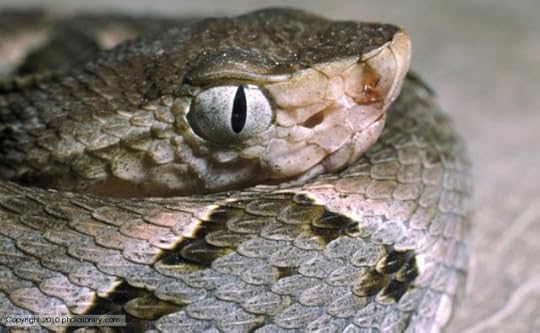
Challenges were, of course, numerous and came from both nature and man. The most prominent creepy crawler was the fer-de-lance, a yellow-beard snake that could squirt its lethal venom more than 6 feet and whose fangs could pierce practically any snake gaiters on the market. The rainforest was so dense that one could just wander 10 feet from others and become disoriented and lost. The threat from man came not from politicians but from narcotics traffickers. Even the bland language in the US State Department travel advisory couldn't disguise the fact that the Honduran government had no control over huge portions of their country.
With all these promising elements, Preston presented a colorful tale of intrepid film makers and archaeologists who discovered a never before excavated site deep in La Mosquitia. Their massive site wasn't found by happenstance but by expensive lidar (light detection and radar) technology. Surprisingly, the expedition had even received government support. The newly installed President wanted something that would not only attract tourist business but could help forge a Honduran national identity.
But then after recounting the actual visit to the "lost city" site (which was only about one-sixth of the book), at the two-thirds marker of the book, Preston detoured into leishmaniasis. This is a parasitical tropical disease, also known as white leprosy, which eats away at one's flesh. Half of the expedition team and its accompaniment of Honduran soldiers had contracted leishmaniasis after copious sand flies had fed upon them. The final chapter was filled with occasionally erroneous or inchoate musings, among which was the irony of their "Old World" selves from the "First World" getting afflicted by the dreaded "Third World" disease that had originated in the "New World." I didn't care for the patriarchal ramblings. Preston concluded his book with drama commensurate with its beginning:No civilization has survived forever. All move toward dissolution... None, including ours, is exempt from the universal fate.
Cue the music - dun, dun, dun.