NOMINATED FOR THE CRIME WRITERS OF CANADA ARTHUR ELLIS AWARD FOR BEST FIRST NOVEL.
Jane Bow covered the trial of Rodger Pearse Brown, and this novel is the fictionalized result of that experience and of the many hours spent with the accused. Dead and Living is a compelling examination of the Canadian justice system, the effects of such a trial on the accused?s family, and the timless power of guilt and the human spirit.
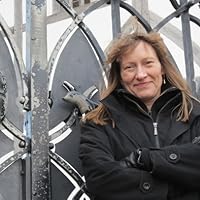
Cally's Way, my third novel, set in Crete, is now on sale in both North America and Europe! I've been a novelist most of my life and growing up in Canada, the U.S., Spain, England and the Czech Republic during the Cold War years has given me lots to write about. Love, and its power in times of historical conflict, is a theme in all my books, whether it's during the Nazis' brutal World War II occupation of Crete, or the post war gold rush in northern Ontario, Canada, or the ongoing, 295-year old, multi-million dollar hunt for treasure on Oak Island, off Canada's east coast. Dead And Living, my first novel, was shortlisted for a Canadian Arthur Ellis Award, and selected for a university course. The Oak Island Affair, just released as an ebook by Iguana Books,was a 2008 U.S. Indie Book Award finalist. My blog and a summary of Cally's Way, with news & reviews, are posted at www.janebow.com Happy reading!
Imagine a trial for a murder in which the accused turned himself in to police 25 years after the fact, but cannot remember whether or not he committed the crime. He hopes that the court will be able to hash out all the details and provide him with the magic, shining truth once and for all. Sounds like an unlikely set of circumstances, doesn't it? But unlikely or not, it is the premise of this novel by Jane Bow, and further, it is based on a true story that the author covered as a young journalist.
On one drunken night near present day Thunder Bay in 1947, Rodger Pearse Brown took a train ride, a car ride, and perhaps a cab ride with two similarly inebriated French Canadians and woke up in Ottawa to read in the newspaper that their cab driver had been murdered. He tries to reconstruct his memories of the previous night: their had been a gun, he remembers holding it, he remembers a car ride--there was so much blood, and so much alcohol. So he keeps the secret to himself for 25 years, torturing himself with guilt and recrimination, constantly having nightmares, and breaking up two marriages as a result, until his conscience finally forces him to seek justice, at any cost.
But what he and the young reporter find in court is that prosecution, defense, and judges are less interested in The Truth than they are in the admissable, the provable, and the precedents.
"If the judge decides that the statements meet the court's rules and allows the jury to hear them, they'll call him 'Guilty.' If the judge doesn't accept the statements there will be no evidence. He'll be found 'Not Guilty.'
"Not 'Innocent,' just not guilty. Because that's as far as justice goes."
As a courtroom drama, this is a gripping novel, and a fascinating story. But it is also an intriguing portrait of guilt and love and a thoughtful analysis of the Canadian justice system and its limitations--complete with a recommendation by lawyer Edward Greenspan on the dust jacket. All the characters are fully explored both in and out of the courtroom and are all very compelling. What makes it a good book is that it acknowledges both sides of the issue and doesn't paint comic book villains, but real human beings, with strengths and failings, so that the drama of the story comes from our identification with the characters and the fact that we care what happens. There is no "magic truth", only real life.
Dead and Living is based on the trial of Vancouverite Rodger Pearse Brown. In 1971, Brown contacted the RCMP. Dogged by guilt, he said he might have killed a cab driver in Ontario in 1947, but he did not know for sure. He was with a couple of other drifters and they had all been drinking heavily. The police reopened the case and charged him with murder. The author of the novel is a journalist who reported on Brown’s 1972 trial. The book contains true portions of the trial interspersed with fictitious flashbacks through Brown’s life. The author cleverly juxtaposes the two to study the relationship between truth and justice. Brown expects the trial to tell him what he does not know—did he do it? Brown wants the truth about what happened 25 years earlier. The trial shows the prosecutor trying to discharge his duty, which is not to convict, but to see that justice is done through a fair trial on the merits. Sometimes, though, he does not act as fairly and dispassionately as he should in an ideal world. The defence lawyer shows his role is less concerned with Brown’s guilt or innocence than it is with testing the reliability of evidence. The author throws some light on the role lawyers play in protecting individual rights and freedoms in a democratic society. Brown learns that criminal trials are not strictly a search for the truth: “And he sees now that the courtroom is only a kaleidoscope: one of the lawyers makes a pattern of the truth emerge so clearly. Then the other lawyer twists the lens, shifting all the colours and shapes into another clear pattern of the same truth… ‘There is no such thing as absolute truth, Mother. There’s only justice, creating a kind of order out of all the mess. Laws made by men in the name of justice tell us what ‘murder’ is, and [the prosecutor] and [the defence lawyer] argue about whether the evidence matches the definition. Mix and match, that’s all there is to the Queen’s justice. No one tries to understand…any more than you do.’” In the end, Brown learns that the verdict—‘Not Guilty’—is not the same as ‘innocent.’ I recommend this book. The bizarre but true trial provides a good framework for relating law to life.