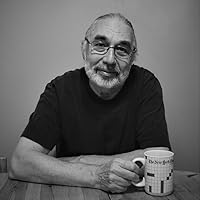
Михаэль Вик выжил дважды: в Кёнигсберге во время и после Второй мировой войны. Для нацистов он был немецким юношей еврейского происхождения, для советских военных - просто немецким юношей, а значит, в обоих случаях лишним. Михаэль испытал на себе ненависть и жестокость; взрослел, находя убежище в детских воспоминаниях, игре на скрипке и чтении философских книг. В 1948 году с семьёй уехал в Берлин. Стал профессиональным скрипачём. В 1980-е написал "Закат Кёнигсберга" - не дневник, не воспоминания, а именно свидетельство, где нет врагов и союзников, вместо них - память и рассудительность.
The English reader knows the book as A Childhood Under Hitler and Stalin: Memoirs of a 'Certified Jew'. In the Russian edition, the book is named The Dawn of Königsberg.
As a half-Jew during WW2 (his mother was Jewish, and his father was an Aryan), Michael Wieck went through oppression, starvation, and the threat of death. All his schoolmates, teachers, even the first girl he loved, and many of his relatives from the Jewish part of the family died in concentration camps. The situation didn't improve with the capture of Königsberg by Russian forces because then he was considered a German, an enemy. Barely escaping death several times, he and his family finally made it to Germany in 1948.
The book is not only a straightforward memoir but a philosophical essay on human nature. Michael, a teenager during the war, had to adapt his views to the plain logic: the fittest survives. While music has always been his haven, cruel reality dictated its rules. Michael stole everything he could get his hands on and improvised as he could, for example, disconnecting wires in an electrical panel and then putting them back together for a fee. His mother exchanged stolen goods for food on the black market.
On the other hand, Michael's father thought himself to be above stealing, yet he wanted to eat no less than Michael, for his Aryan blood had saved the family. So, in his book, Michael Wieck often ruminates about the clash of ideals and reality and how these two could co-exist in the 'jungle' of starving Königsberg. He also talks about Jewish God and atheism, good versus evil, and lessons we should remember from WW2. His attitude toward the Red Army, namely his acceptance that it had the right to do what it did, looted and r'ped, is perhaps the reason the book was published in Russia, which heavily protects the memory of WW2.
Michael Wieck was born in 1928, the child of a “mixed marriage.” His mother was Jewish, and he was registered as a Jew at birth, which made him a “certified Jew” in the Nazis’ race-based classification system. If he had been registered as German, he would have been classified as a “Mischling” (mixed race).
The fact that his father was Aryan is the reason Wieck managed to live through to the end of the Second World War and ultimately write this compelling and harrowing memoir. It is the survivors who are left to bear witness to the trauma of war and genocide; only they can speak for the countless others whose voices were snuffed out—those whose stories died with them. Of all the Jews who remained in Königsberg in 1942 (after which there was no further hope of emigration) only a handful survived. Michael Wieck was one of them.
Wieck’s memoir is the story of his childhood in the historic, culturally rich city of Königsberg in East Prussia, a corner of Europe that was German for six centuries, and then given to the Soviet Union and Poland after the war. His heritage, on his father’s side at least, was educated and sophisticated. A street in Berlin was named for his grandfather and Brahms was a frequent guest at the elder Wieck’s home in Berlin. Nearby was the villa of the Mendelsohn family. A cousin, Dorothea Wieck, was a popular movie star in the 1930s who had, on occasion, dined with Hitler. It was a family of privilege where, in Wieck’s somewhat acerbic assessment, “…you didn’t need to first wonder if you had ability or talent. Whoever belonged to such a family was called to something higher, no matter what.”
Both of Michael Wieck’s parents were classical violinists, and young Michael also studied violin and later became a celebrated musician in his own right. His childhood was rich in music and the arts, and his memories of those early years are pleasant: Chanukah celebrations, Easter egg hunts and summer holidays to the Courland Spit on the Baltic Sea. Of these vacations, which he considered to be among his loveliest childhood memories, he writes: “Most assuredly they enabled me never to lose hope and always to love life. In my darkest hours these memories were a source of comfort and courage.” It would not be long before those dark hours would descend upon him, his family and his beloved city of Königsberg.
The Nazis came to power in 1933, when Michael was just four years old. Their antisemitic measures were imposed incrementally but, thanks to his father’s status as an ethnic German, Michael and his family suffered fewer hardships than many of their Jewish friends and relatives, who were not so lucky. Still, young Michael experienced the stigma of being Jewish during the Nazi era. In the first grade, he was sent to a German public school, seemingly at the behest of his father, where it was his misfortune to have an intensely antisemitic teacher who humiliated him daily and made his life hell.
The following year he attended the Jewish school in the beautiful Königsberg Synagogue. This was, in contrast, both a salvation and an awakening; he remembers fondly the rich spiritual, intellectual and cultural life there, musing: “…I must say looking back that my young soul was so nourished in the years from 1936 to 1938 by what I experienced and dreamt. It is only now that I’m aware of how my whole life—especially my inner life—was formed in those years.”
But that year—1938—marked the beginning of the end for this relatively untroubled phase of Michael’s young life. On Kristallnacht—November 9 and 10—Nazis torched the synagogue, and the antisemitic program was turned up another notch, with the requirement to wear the yellow Star of David, the myriad prohibitions, even a law forbidding sympathy toward Jews. The Wiecks sent Michael’s sister Miriam to relatives in Scotland for her safety. He would not see her again for ten years. Then, less than a year later, the war began, and with it the arrests and deportations of Jews, including the Wiecks’ relatives and friends, all of whom were never to be seen or heard from again. Looking back on this moment—the onset of his personal nightmare—Wieck wonders: “How could the ill-will—as I would define anti-Semitism—that one encountered on occasion grow to be so great an individual hatred, a psychosis of hatred?” It is a question he wrestled with throughout his life, never finding a wholly satisfactory answer.
As bad as Michael’s situation was under the Nazis, it got much worse after the Soviet Red Army rolled into East Prussia and Königsberg—at least what was left of it. In late August 1944, the stately city was virtually obliterated by British bombs. Purportedly a trial run for the napalm-like incendiary explosives later used in Dresden, the new bombs were a resounding success: Königsberg’s historic buildings and their inhabitants were reduced to a smouldering ruin of ash and rubble.
From the onset of the war in 1939, through the heightened antisemitism and deportations of the early 1940s, through the destruction of Königsberg, the four month-long siege and finally the Soviet occupation with its rampage of looting, rape and murder, Michael Wieck describes the experiences of one who, by luck, ingenuity, resilience and a tenacious spirit, manages to survive where many others did not. When the Russians entered Königsberg in April 1945, Michael and the other remaining Jews did not remove the yellow stars from their clothing, hoping the Soviets would recognize them as victims of the Nazis and provide them with food and shelter. They were sadly mistaken. It quickly became apparent, Wieck recalls, that the people of Königsberg, Jew and Gentile alike, “…were all without distinction for the Russians; we were all despised Germans.”
The arrival of the Russians that spring marked the beginning of three hellish years for Michael, his parents and the remaining population of Königsberg. A case of mistaken identity landed Michael in the Red Army’s Rothenstein concentration camp, where conditions were appalling and the dead were thrown onto a heap every morning. Finally, near death himself, Michael was fortuitously assigned to a work detail in Königsberg, collecting corpses and throwing them into bomb craters for burial. The gruesome faces of the victims and their charred, decomposing bodies remained etched in his memory.
In the chaos of the occupation, he managed to reunite with his parents and begin months of scrabbling to survive by any means possible: scavenging, stealing, even burgling the houses which Russian civilians began to occupy as the occupation went on, all in an atmosphere of extreme fear and risk. The Russians, revengeful over the German invasion of the Soviet Union and the massive casualties that resulted, were quick to shoot anyone suspected of theft. Alternatively, the suspect would be sentenced to a minimum of seven years in a Soviet labour camp, where most died within the first year.
The brutality of Russian soldiers toward the Germans, particularly women, affected Michael deeply. “Rapes,” he writes, “had become commonplace. And as before, we heard the piercing screams. At night, the sounds were arias from hell. […] Russians swore in loud voices, yelled, and threatened. Then, pistol shots, howling dogs, wailing, pleas, entreaties, sustained whimpering. It was ghastly, a nightmare; and it was our bitter reality.”
In one of his many reflections on the moral dimensions of the war and the crimes committed by the Nazis, Wieck worries that the egregious crimes of the Russians against German civilians would shift the focus away from the guilt of the Nazis. “I most deeply regret,” he states, “that because unutterable atrocities were committed…by the Russians, many Germans deem it unnecessary to reflect on our own guilt or at least to feel some regret about the wrongs inflicted on others.“
Whether by murder, starvation, neglect or deportation to concentration camps, the Soviets continued to reduce the population of Königsberg, already decimated by the bombings of the previous summer. “The Russians,” Wieck recalls, “apparently wanted us all to starve, die, or disappear. It was their intention that East Prussia become forever Russian and Polish.” The total body count, by his estimates, was massive. “All the hardships and misery that reduced the population by more than 80 percent,” he reflects, ”are beyond the power of words to describe.” Nevertheless, Wieck looks for reasons that might underlie the Russians’ lust for revenge. “I only want to understand,” he writes, “not excuse them.”
It was not until 1948, three years from the onset of the Russian siege of Königsberg, that the nineteen-year-old Michael and his parents finally made it to Berlin, where they began to reassemble their lives.
Michael Wieck’s memoir of his young life is far more than a recounting of the tragic and horrific events that he experienced. Interwoven in his narrative are the reflections of a sensitive soul trying to comprehend the incomprehensible—the hatred, the barbarism, the cold-blooded disdain for human life that boiled to the surface during that calamitous era. It is, in many ways, a perceptive study of human nature by one who has seen first-hand its darkest side.
As he attempts to navigate a path through the dissonance and myriad contradictions that confronted his experience in the cataclysmic human drama that engulfed him as a child, Wieck continually examines his experiences with honest introspection. The brutality and callousness of the Soviets is counterbalanced by the kindness of several Russian soldiers. One Soviet soldier—a Jew— who arrests Michael is harsh and contemptuous as he hauls him down to the station, but then another Russian officer lets him off with a warning. “Human kindness in a military police officer,” he writes, “hatred in a Jewish officer—to comprehend such things wasn’t easy for me.”
As a youngster, he followed the German invasion of Russia closely, putting pins in a map, then later wonders: “Now why did I do that?” His half-brother Peter was a Nazi and decorated officer. During a visit Michael secretly admired himself wearing Peter’s officer’s hat. “We weren’t, after all,” he discerns, “as different as the Iron Cross and Star of David were supposed to indicate.” He remembers the courage and defiance of his neighbour Klaus and his parents, Germans who maintained a cordial, albeit cautious, friendship with the Wiecks even after contact with Jews was strictly forbidden by the Nazis.
Ultimately, Wieck distills his experience into a personal philosophy and worldview that seems to find a degree of balance between the depths to which he knows humans can descend and the transcendent potentiality in each of us. For him, this potential manifests as a passion for music and a spirituality that eclipses religion or any conventional concept of God. He concludes that humans are, in essence, more or less the same. “What had been a belief of mine for a long time,” he writes, “became…a certainty: all people, be they musicians or politicians, Germans or New Zealanders, Jews or Christians, the persecutors or the persecuted, are frighteningly the same irrespective of different temperaments, ideals, and conventions. In all of us resides the potential for every possible action, even those actions born out of hatred.”
This well-written and insightful book is certainly deserving of the bestseller status it achieved in Germany when it was first published there in 1989. As I read it, I found myself thinking of Michael Wieck as someone I would like to meet and with whom I might have a stimulating discussion. Unfortunately, he died in February of 2021, but, thanks to his articulate and thoughtful chronicle, the world is left with one more unique story added to the many others that bear witness to that dark era of history—one more reminder of how quickly and easily humanity can slide into hatred, savagery and war.
More than once, Wieck refers to his fascination with the philosophy of Spinoza, and he cites the following passage from his treatise Ethics, perhaps a fitting encapsulation of Michael Wieck’s outlook: “Hatred is increased by being reciprocated, and can on the other hand be destroyed by love.”
Это - шедевр. Простой язык, увлекательный сюжет, разбитый талантливым автором на темы-главы. Слово увлекательный - не в качестве "развлекательный", а в качестве "затягивающий" автора и не отпускающий его. Само повествование - ад. И самое страшное, что этот ад гениально описан ярким языком от имени еврейского мальчика - самого автора. Эту книгу надо преподавать в школах. Эту книгу надо экранизировать. Это должен прочитать каждый. Чтобы не повторять. Чтобы у настоящего поколения появилось шестое чувство - чувство "вето" на любое действие против любого другого человеческого существа. Ибо любой геноцид - это болезнь хуже чумы. Читайте! И да спасет господь ваши души и семьи от такого опыта, который описан в книге!
Niezwykłe życie i niezwykła książka. Na każdy czas, bo jak już wiemy, historia ludzi niczego nigdy nie uczyła i nadal nie uczy. O czym pisze Wieck, powtarza się od kilku miesięcy pod naszym bokiem. Przecież „raszyzm” czy „ruski mir”, to stare, sprawdzone nazistowskie recepty… dyktatura, propaganda, wróg, wojna - w końcu eksterminacja. Królewiec, Mariupol… co dalej?
Ta bardzo trudna emocjonalnie lektura to absolutne pamiętnikarskie arcydzieło. Trudność w czytaniu polega na tym że to relacja z tego co się naprawdę wydarzyło,. Już samo zdanie sobie z tego sprawy uderza czytelnika obuchem. Autor wyciąga również daleko idące, bardzo słuszne wnioski na temat historii, polityki, teologii. Książka napisana jest świetnym racjonalnym językiem, choć muszę przyznać że i ten język mnie pod koniec zmęczył ze względu na pokaźną długość tych wspomnień. Ale warto dojechać do końca, poczytać o wnioskach, rozważaniach. Polski czytelnik ma jeszcze swoją własną perspektywę, z pewnością w Polsce odbiór tej książki będzie ciut inny. Ja kupiłem książkę gdyż chciałem zblizyć się jakoś do Królewca. Dostałem bardzo dużo więcej niż się spodziewałem. Chodząc niedawno po cmentarzu żydowskim we Wroclawiu zdałem sobie sprawę że wiele grobów pochodzi nawet z roku 1941 albo 1942. Zastanawiałem się co czuli żydowscy mieszkańcy we Wrocławiu w 1942 roku. Te królewieckie wspomnienia zaspokoiły moją ciekawość i odpowiedziały na wiele pytań. Ciekaw też byłem jak sowieci zachowywali się w Prusach Wschodnich po ucieczce armii hitlerowskiej. Michaeł Wieck odpowiada na to pytanie bardzo szczegółowo i tej odpowiedzi nie da się szybko zapomnieć.
Niezwykła książka, w której czasem okazuje się, że los Niemca uznanego za Żyda w czasach hitlerowskich mógł być nawet łatwiejszy niż Żyda uznanego za Niemca w epoce stalinowskiej. I smutny obraz zagłady Królewca, sprowokowanej niejako przez samych jego mieszkańców.
Книга подкупает своей честностью и, несмотря на то, что написана не профессиональным писателем, держит внимание похлеще иного детектива. На последних страницах приведены списки переименований, что позволяет читать эту книгу с картой в руках - одно из моих любимых занятий!