Jump to ratings and reviews
Rate this book

Child of all Nations

Rate this book
Book by IRMGARD KEUN

195 pages, Hardcover

First published January 1, 1938

41 people are currently reading
1374 people want to read

About the author

Irmgard Keun

27 books149 followers
Irmgard Keun (1905 – 1982) was a German novelist. She is noted for her portrayals of the life of women in the Weimar Republic as well as the early years of the Nazi Germany era. She was born into an affluent family and was given the autonomy to explore her passions. After her attempts at acting ended at the age of 16, Keun began working as a writer after years of working in Hamburg and Greifswald. Her books were eventually banned by Nazi authorities but gained recognition during the final years of her life.


Ratings & Reviews

What do you think?
Rate this book

Friends & Following

Create a free account to discover what your friends think of this book!

Community Reviews

5 stars
198 (17%)
4 stars
466 (41%)
3 stars
338 (30%)
2 stars
90 (8%)
1 star
19 (1%)
Displaying 1 - 30 of 150 reviews
Profile Image for Lisa.
1,108 reviews3,290 followers
April 19, 2020
Children speak truth to power and power remains deaf.

Power, to a child, can be anything from an irresponsible parent to an oppressive state.

Powerlessness is expressed by various things:

The lack of money to pay for dinner or the lack of citizenship to be welcome in a country.
The closed borders between a child in winter and the child's winter coat at a pawnbroker's in Salzburg. The difficulties of marriage as seen through the lens of the child depending on both parents to survive in globetrotting exile.
The ever-changing scenes of life after normalcy was suspended for the family when the happy-go-unlucky father had to leave Nazi Germany for speaking and thinking and writing against agenda.

Not every life in exile is heroic though.

Some people are good-for-nothings even though they "are on the right side", and Kully's father is one of them. Charming and careless, he imposes an impossible life style on his wife and daughter, moving from one country to the next, from hotel to hotel, where bills can't be paid and life has no tomorrow. From the standpoint of Kully, everything she sees and hears is equally strange, and she can comment freely on things grownups don't even dare to whisper about.

The inner child inside Irmgard Keun felt a special affinity to the naive voices of children experiencing the impossible, and she delivers a verdict on the world that remains quite true:

Children shake their heads at the foolishness and childishness of adult behaviour!
Profile Image for Manybooks.
3,816 reviews101 followers
November 8, 2025
When one commences reading Irmgard Keun's Kind aller Länder (Child of All Nations in English translations), one is struck almost immediately with and by the exquisite and evocative narrative voice of ten year old Kully. In many ways delightful and always simplistically approachable, Kully tells her story of basically being a "child of all nations" and thus never really at home anywhere with both natural and childlike innocence and with an astute power of observation that is not only interesting and educational but also often rather frightening and disconcertingly powerful and astounding for one so young (but for all that, author Armgard Keun also and thankfully never does slip into the danger of having Kully appear as an artificial child, read as an adult masquerading as a child, as no matter what Kully describes, no matter what she observes and presents to us as readers, she is always remains a ten year old with the attitudes and desires of a child).

Now considering the main thematics of Kind alter Länder, Kully's innocent narration does on the one hand somewhat mitigate the seriousness of the presented topics, namely the daily life, but mostly the often constant and serious financial struggles of a German artist/intellectual and his family in exile from the Nazis during the pre war period of the Third Reich (as Kully' father is a writer with strong political philosophies who has decided that it would be prudent to leave Germany after the National Socialists burned his books and imprisoned some of his friends). On the other hand however, Kully's unadorned and straight-forward simple observational skills also and often point out with incredible and simple clarity that especially with regard to her family, while the main or rather the underlying causes for the exile and resulting woes and problems are indeed the National Socialists' rise to power in Germany, there is also much over which to be both massively annoyed, frustrated and indeed infuriated with regard to especially and particularly the father's general carelessness and lack of even the most basic sense of responsibility.

For as much as Kind aller Länder is truly intriguing, informative and historically relevant, and as much as Kully's personality and observational acumen does brightly shine, I for one also tend to find this novel rather somewhat if not actually even majorly depressing and saddening, and the casual, often entitled selfishness of especially the father and the generally and for all intents and purposes annoyingly, absolutely submissive character of the mother to said selfishness and indifference at times nigh impossible to stomach, and really in at least some ways almost as infuriating and as anger producing as the fact that Kully and her family have been forced into exile by the Nazis, that they have been basically almost mandated (forced) into a bohemian life of uncertainty simply because her father's writing has made him, has made the family by extension, enemies of the state (at least according to the National Socialists and their acolytes and supporters).

And that Kully's father actually and indeed even generally seems to act more immature and childish than his ten year old daughter (but that he also hypocritically and strangely often rather harshly disciplines Kullly when she acts her age, when she acts as a child would or at least likely could act), that he regularly and with scant regret abandons his wife and daughter at the hotels where they had been staying whenever money becomes tight (having them face the wrath of the hotel management when payments cannot or can no longer be made), that the father also and often is more generous towards his many friends than to his nearest and dearest, all this and more leave a rather bitter taste in my mouth and certainly make me much less sympathetic towards especially the father as a person (and while I do much and certainly understand and appreciate the specific political and social reasons why Kully's family has had to leave Germany, why the family is in exile from the Nazis, much of the father's behaviour and his general careless and selfish attitudes towards life and towards his family do leave rather much to be desired, at least for me personally).

And although one can definitely see that Kully intensely loves her parents (both her mother and yes also her father), and would more than likely have been devastated had they followed her grandmother's advice and left Kully in her care when the father decided to leave Germany, to escape from the Nazis' reach, in some ways, when one considers the father's general rather laissez-faire attitudes and careless lack of foresight, the grandmother actually had legitimate reasons for wanting her granddaughter, for desiring Kully to remain with her and in her care (although considering what the Nazis are like, the Gestapo might well have decided to get hold of, to arrest Kully and her grandmother if they wanted her father and could no longer nab him because he had left Germany).

Now all the above having been said, I actually do very much appreciate how Irmgard Keun has both structured and conceptualised Kind aller Länder. The basic and root causes of Kully's and her family's exile (the reasons why they have had to leave Germany) are clearly, realistically delineated and presented (and are definitely portrayed as being first and foremost due to National Socialism and the fact that many many artists, intellectuals etc. along with their families, were suddenly and in some cases almost overnight so to speak no longer personae gratae in Germany).

But nevertheless, the author also and much appreciatively never loses sight of the salient and somewhat uncomfortable truth that while Kully's father, while Kully's family are indeed to be regarded as victims of the Nazis, Kully and her mother are also and indeed victims of the father's general and all encompassing casual and careless selfishness and immaturity, his general lack of will and that he is seemingly both unwilling and unable to provide even a modicum of an ordered and acceptable existence for his wife and daughter (and not really all that interested either). Highly recommended (and even with my four star rating, a well deserved spot on my "favourites" shelf, and a novel that I actually am already planning to reread sometime very soon), however basic fluency in German is strongly suggested (and while Kind aller Länder has been translated into English, I have, to date, only read the German original and thus cannot and will not provide any comments on the possible qualities of the English translations that are currently available).
Profile Image for Steven Godin.
2,782 reviews3,390 followers
April 28, 2021

I can't say I've ever read a novel narrated by a nine-year-old girl before. And while she, and her mother's tears - she seemed to spend half the novel crying - did become irritating at times, there is no doubt that Kully's innocence, amusing inquisitiveness, and small incidences: like wondering why her guinea pigs aren't having babies, gave the authentic feel that we truly are seeing the world through the eyes of a child. Under normal circumstances a grand tour of Europe taking in countries like Poland, Belgium, Netherlands, France & Italy sounds great, but for Kully and her dysfunctional parents it's an enforced one; a journey of constant money worries, sometimes near starvation, expiring visas, and the looming threat of war. Kully's father, Peter, is a heavy drinking writer - likely a fictional version of Keun's lover Joseph Roth - who travels widely, looking for advances from publishers, humbly trying to get cash hand-outs from the rich, and, when desperate, pawning various family possessions, while wife & child live out of hotel rooms waiting for news. In a way, he is nothing short of a con man. Despite Kully not fully understanding the world around her; the constant moving; the fearful apprehension, the strength of the novel still lies in that of the émigré, and of a tension filled pre-war Europe. 3.7/5
Profile Image for Steve.
441 reviews582 followers
Read
September 15, 2018


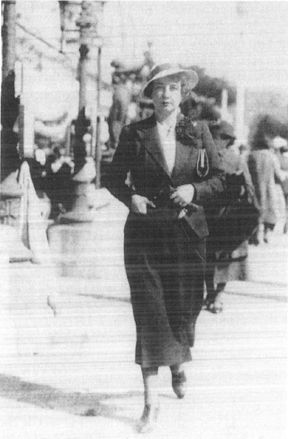
Irmgard Keun (1905-1982) in Nice, 1938


After another lengthy absence from this bug-infested marketing platform for Jeff Bezos' Amazon-Moloch(*) - complete with blinding video-ads that I now suppress with Opera's excellent ad-blocker (recommended to all and sundry) - it is again a novel by Irmgard Keun that motivates me to reach for my electronic quill and parchment: Kind aller Länder (1938, available in English translation under the title Child of All Nations). Her works banned by the Nazis, Keun fled her homeland in 1936 and began four years of increasingly precarious wandering throughout Europe (along with a few months in the USA) as the host countries became less and less hospitable and her financial situation more and more exiguous. The first two years of this peregrination were spent in the company of her lover, the journalist, author and fellow alcoholic Joseph Roth, and these were the years whose experiences are fictionally transformed in Kind aller Länder.

I have read some splendid books evoking the dismal life of the refugees flooding from one corner of Europe to another in the 1930's,(**) but Kind aller Länder is notably unique in two significant respects: the choice of narrator and the tragi-comic manner of presenting that dismal life. Let me explain.


Max Ernst,
Europe After the Rain II (1940-42)


The three previous novels Keun wrote in exile were set in Nazi Germany, and the vituperative criticism of the Nazi regime and its fellow travelers welling from those books was unlikely to disturb the foreign governments whose forbearance she desperately needed. But in 1938 she wanted to portray the life of the emigrants, so she was faced with the problem of how to do that honestly without getting on her hosts' bad side. Her solution was neat but risky: tell the story from the point of view of a ten year old emigrant girl, Kully. Keun could avoid the direct criticism of the emigrants' host countries a mentally functioning adult would certainly utter and yet indirectly adumbrate the actual situation through a character who doesn't judge, just observes and wonders.

Of course, such a choice is fraught as one risks becoming maudlin or saccharine, or - as happens often enough - the character turning out so un-childlike that the reader is ejected from the story. Though I am no expert on ten year old girls, Keun's Kully was convincing, even touching as the reader reinterprets her slender grasp of the larger events that chased Kully and her parents through all of Germany's neighboring countries in steadily tightening financial and legal straits, as well as her natural inclination to put a positive spin on her father's irresponsible profligacy that left Kully and her mother penniless, hungry and ashamed for weeks and months on end, imprisoned in expensive hotels whose mounting charges they could not possibly pay, while the author father hastened through the capitals of Europe - purportedly raising money from editors and publishers for articles, plays and novels that never quite came into being.

This father is the second singularity I spoke of. Though the problems with visas, police and local predators seeking easy prey that were (and are) faced by most refugees play a role in this narrative, Kully's father's idiosyncrasies soon take center stage. Peter is apparently a well known author taken seriously by many, but he is also a con man who immediately gives away the money he cons to more needy persons and then spends the rest on luxurious food, drink, clothes and hotels, quickly colliding with the need to find another admirer or even a hotel doorman to sponge off of. Some kind of intense restlessness drives him from place to place, often dragging his hapless family with him (as mentioned, it is even worse for them when he leaves them behind) and exhausting them into illness. Of course, Kully just accepts that this is the way it is. She doesn't judge, just observes and loves her father. But this reader, at least, was squirming with particular discomfort when, just as his family had found a nest in Nice in which they could be happy, Peter drags them off to America (through his renommé this man has no problem getting a visa to America - the fervently desired goal of most of the other refugees). The subsequent comedy of errors leaves me speechless.

Like Das kunstseidene Mädchen, Kind aller Länder is left open-ended, without resolution - a section is cut out of life and presented in an unforgettable voice: the eighteen year old, working class Doris in the former and the ten year old Kully in the latter. I was very sorry to see each of them go.


(*) Thousands of his full time employees are paid so poorly that they qualify for the federal food stamp program. Needless to say, employee unions are not welcome on the Moloch's property...

(**) I am thinking particularly of Anna Segher's Transit, and Die Nacht von Lissabon and Arc de Triomphe by Erich Maria Remarque.

Profile Image for Noam.
248 reviews36 followers
March 23, 2025
'Ich kann ja überall herumspringen und lustig sein, dazu brauche ich kein Geld. Aber Erwachsene brauchen Geld, wenn sie lustig sein wollen. Darum haben sie es viel schwerer als ein Kind.' p.74
What do you do when you cannot afford a house? You live in… hotels!
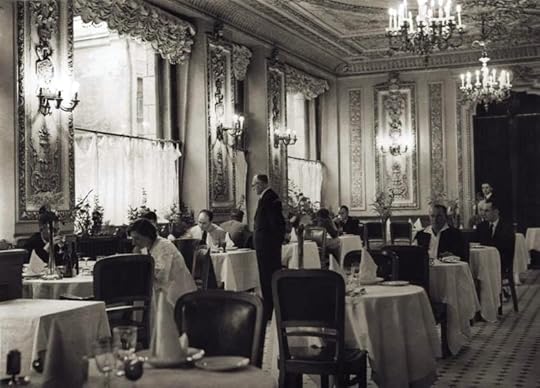
 Hotel Savoy Moscow, 1930’s, via Wikimedia Commons
Hotel Savoy Moscow, 1930’s, via Wikimedia Commons

At least that’s what happened to Kully, a 10 years old girl and the protagonist of this 1938 novel. Kully and her parents had to flee Germany because, as she says, her father was a writer and a journalist. They wander from country to country, from city to city. Amsterdam, Oostende, New York, Nice… They don’t have a choice: They don’t have the needed visas or money to stay longer in one place. Father is always traveling; hoping to get some royalties for his previous work or an advance for a new commission, even though the circumstances obviously don’t offer him the needed peace of mind to write. Mother makes desperate attempts to take care of Kully and offer her stability. Obviously, that’s impossible. Hotels give Kully and her mother a place to stay and some food till father eventually will return with enough money to pay the hotel bill. Since they don’t have a cent to buy an apple at the nearby shop, the only choice they have is to eat in their expensive hotel. After all: You don’t want the personnel to suspect you don’t have enough money; something which they obviously all know. Kully and her mother are the hotel’s guarantee for payment.

Kully is the one who can always adapt to the constantly changing circumstances. She is actually the one who takes care of her parents, instead of the other way around. While they are traying to hide from her the difficulties of their lives, Kully is wise enough to understand very well what’s going on, in her own childish way.

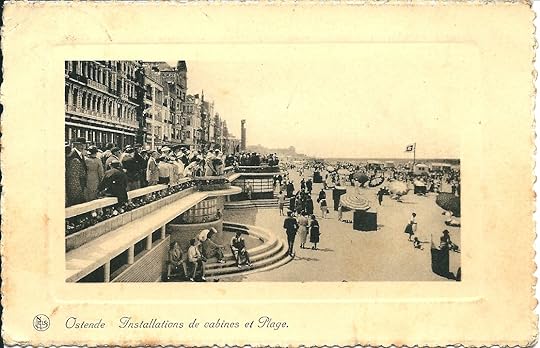
Ostende Plage 1936
Ostende Plage 1936

Irmgard Keun wrote quite a few wonderful books about life in Europe at that time. What’s unique about this novel is that the story is being told by a child. Keun succeeded wonderfully in capturing the right tone, the right voice and way of thinking of a 10 years old child.

Another reason why this book is unique is that Keun, who was an exile author herself, writes about the life of an exile author. No one could have better described it than she. Keun left Germany in 1936 and lived during this period mainly in Belgium and the Netherlands, actually in some of the places she describes in this book. She had contact with other exile authors, such as Stefan Zweig and Heinrich Mann, while she shared her life with another wonderful exile author, Joseph Roth. Not having any other option, she returned to Germany in 1940 and lived there during the war under a false name.

Keun became a mother many years after the war, in 1951. Did she write this novel thinking of the child she didn’t have and maybe wanted to have at that time? Or maybe as a reminder for herself why she shouldn't have a child at the moment? Was it more her need to take a look at the completely insane reality of that time form a point of view of a child? After all: What’s the point of growing up in such a world? This novel shows her great empathy for children, for their optimism and resilience.

The total chaos was normal for Kully. She didn’t have a choice but to survive, hoping for better times. She is the child of all nations (Child of All Nations is the English name of this novel), since she’s been all over Europe and the U.S. and since she was not the only child in these circumstances at that time. And yet she is the child of no nation at all… There’s no ‘Home’ for Kully…

I always loved reading exile literature of that time and place. Now I realise it may be because of ominous atmosphere which one can feel nowadays too. We share the fear of what is yet to come.

It’s astonishing that while I was reading this book I read in a Dutch newspaper about people living in hotels in the U.S. because poverty doesn’t allow them to have a house. Monica Strømdahl’s documentary film ‘Flophouse America’ is the story of Mikal, a 12 years old child growing in such circumstances, even without a war. It’s devastating…

Yes, this book touched my heart. It’s the most beautiful and amusing heart-breaking tragedy I ever read. ‘Kind aller Länder’ is a dazzling road novel which brings Europe of the 1930’s back to life. Read it to make sure this will never happen again!

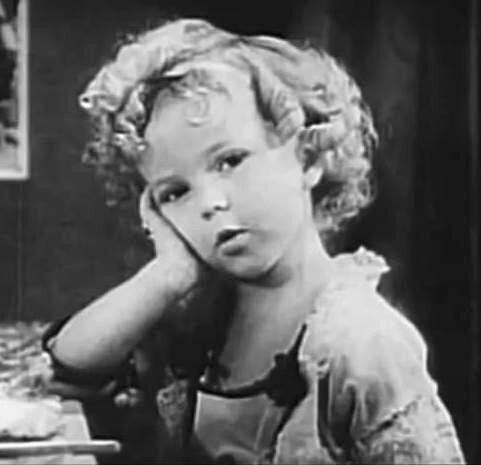
Shirley Temple in the film ‘Glad Rags to Riches’ (1933) via Wikimedia Commons. Kully went to see her films
Shirley Temple in the film ‘Glad Rags to Riches’ (1933) via Wikimedia Commons. Kully went to see her films.

Quotes:
’In den Hotels bin ich auch nicht gern gesehen, aber das ist nicht die Schuld von meiner Ungezogenheit, sondern die Schuld von meinem Vater, von dem jeder sagt: Dieser Mann hätte nie heiraten dürfen.' p.5

"Das hat aber alles ein Ende, wenn mein Vater fortfährt, um Geld aufzutreiben, und meine Mutter und ich allein zurückbleiben müssen, ohne dass bezahlt worden ist. Wir bleiben als Pfand zurück, und mein Vater sagt: wir hätten einen höheren Versatzwert als Diamanten und Pelze.' p.5

'Ich wusste gar nicht mehr, was ich tun sollte. Wie lange muss ein Kind still sitzen, damit eine Rechnung bezahlt ist?' p.15

‚Ein Visum ist ein Stempel, der in den Pass gestempelt wird. Man muss jedes Land, in das man will, vorher bitten, dass es stempelt. Dazu muss man auf ein Konsulat. Ein Konsulat ist ein Büro, in dem man lange warten und sehr still und artig sein muss. Ein Konsulat ist das Stück von einer Grenze mitten in einem fremden Land; der Konsul ist der König der Grenze.' p.33

'Ein Visum ist auch etwas, das abläuft. Zuerst freuen wir uns immer schrecklich, wenn wir ein Visum bekommen haben und in ein anderes Land können. Aber dann fängt das Visum auch schon an, abzulaufen, jeden Tag läuft es ab - und auf einmal ist es ganz abgelaufen, und dann müssen wir aus dem Land wieder 'raus.' p.34

'Meine Mutter und ich sitzen oft auf einer Bank. Dann machen wir den Mund auf, sodass die Sonne hineinscheint; dann essen wir Sonne und fühlen in unserem Bauch ein warmes glückliches Leben.
Mein Vater wollte keine Sonne essen. Er wollte lieber im Café Bazar sitzen und Sliwowitz trinken, weil er davon wär mer wird als von der Sonne.' p.74

'Der Kellner, der uns morgens immer das Frühstück bringt, hat auch gesagt, er habe keine Angst, es würde auch keinen Krieg geben.
Und wenn es Krieg geben würde und wir in ein Lager kämen, dann würde er uns immer Essen bringen.' p.94

'Einmal sagte mir ein älterer Junge: Du bist ja gar keine richtige Emigrantin, ihr seid ja noch nicht mal Juden, ihr seid Luxus-Emigranten.' p.154

"Was ist Ihr Lieblingsbuch?", fragten die Männer.
"Ein Scheckbuch."
"Was ist Ihr Lieblingssport?"
»Amoklaufen", sagte mein Vater und lief wirklich fort.' p.160

'Der Jugendfreund beneidete meinen Vater, weil er so ein berühmter Schriftsteller geworden sei und so viel Geld und ein interessantes Leben haben müsse. Er war stolz auf meinen Vater und hatte allen Bekannten von ihm erzählt und auch ein Buch von ihm gelesen.
Das Buch war aber nicht von meinem Vater.' p.176
This entire review has been hidden because of spoilers.
Profile Image for Alwynne.
941 reviews1,604 followers
September 21, 2020
Published in the mid-1930s, Irmgard Keun’s book charts the precarious existence of German political refugees through the eyes of nine-year-old Kully. Kully, father Peter and mother Annie are adrift in Europe, the outcome of Peter’s vociferous criticism of the Nazi regime. Annie’s a shadowy figure, Peter dominates the family’s mood and prospects even though he’s absent for much of the action. Kully’s commentary suggests her father’s a man of contradictions: charming but brooding, a heavy drinker, continually hustling to pay their way but spendthrift when he’s in pocket. Kully describes day after day of waiting for her father, keeping up appearances in a series of lavish hotel rooms, running up bills they can’t pay, while he pursues his latest money-making scheme. On one level Kully’s a typical child narrator, naïve, acutely aware of her surroundings and the behaviour of adults but she’s equally tough and oddly world-weary. Her vivid imagination projects a stream of striking images, a traffic policeman’s a lion in disguise, Peter’s destination’s a fairy-tale castle. But her observations also reveal an unsettling fascination with death, an underlying sense of the macabre which finally erupts when Peter returns,

“Sometimes there’s a bang on the street, but I can’t tell if it was a gunshot or an exploding tyre, because I’ve never heard a gunshot. My father has a revolver he can shoot with. If we’re ever really stuck, he’ll shoot us with it. Then at least nothing more can happen to us. Probably you smell bad when you’re dead, just like my dead sea creatures did, but that doesn’t matter because we won’t be able to smell ourselves.”

Peter’s reappearance marks a shift in the pace of Keun’s narrative, moving from stifling and near-static, a convincing portrayal of the refugees’ isolation, anxiety and boredom, to something frenetic bordering on frenzied. There are repeated reports of friends’ suicides, Hitler’s “horrible yelling” on the radio, and an overwhelming feeling of desperation. Lack of money sealing off the family’s escape routes.

Keun’s depiction of rootless exiles builds on personal experience, after her own writing was banned and she fled Germany. There’s speculation that Peter’s a version of her lover, fellow author Joseph Roth. If that’s the case then it’s a far from flattering portrait although it allows for an additional exploration of issues of gender and power or powerlessness. Abandoning a conventional, autobiographical approach in favour of Kully’s voice, delivered in light, deft prose, works brilliantly to portray this particular historical moment removing the need for extensive political or historical exposition, so that Keun can focus on a direct response which captures both the irony and the absurdity of the time.
Profile Image for JoBerlin.
359 reviews40 followers
February 29, 2016
Die zehnjährige Kully ist wahrlich ein Kind aller Länder, sie reist mit ihren Eltern durch Tschechien, Österreich, Polen , Frankreich, Belgien, Holland, die Familie ist auf der Flucht aus Nazideutschland, Vaters Bücher wurden dort verbrannt. Die Reise und die vielen Hotelaufenthalte sind schwierig zu bewerkstelligen, man hat keine Pässe, es fehlt an Geld. Der Vater ist ständig auf Beschaffungstour, Mutter und Tochter lässt er meist im Hotel zurück. In diesem unsteten, ständig Alkohol trinkenden Mann ist unschwer Joseph Roth zu erkennen, der Geliebte Irmgard Keuns.

Nun ist die Geschichte der Reise durch viele Länder aus Sicht und mit Sprache der Kully einfach und schnell zu lesen, sie schreibt, kurzweilig und amüsant, allerdings ist dabei immer die starke Verunsicherung durch Geldmangel und des Vaters Leichtsinn zu erkennen. Die Einblicke in das unsichere Leben deutscher Flüchtlinge im Europa der dreißiger Jahre sind eindrucksvoll, ja bewegend. Mir jedoch geht das Gleiten durch diese gewollt kindliche Darstellung ein wenig zu reibungslos und an manchen Stellen merkt man doch Irmgard Keuns bemühtes Streben nach kindgemäßen Sentenzen.

Um die Schriftstellerin und ihre eigene Flucht aus Deutschland - ihre Bücher wurden 1933 beschlagnahmt - richtig erfassen, richtig würdigen zu können, ist nach meiner Meinung weiterführende Lektüre nötig.
Ich empfehle hierzu Volker Weidermanns „Ostende 1936“ und „Verbrannte Bücher“ sowie von Irmgard Keun „Nach Mitternacht“. „Nach Mitternacht – ein Leben“ ist übrigens auch der Titel der Keun-Biografie von Katja Kulin.
Profile Image for Liviu.
2,520 reviews705 followers
July 23, 2014
This is a book I found about here at Goodreads after reviewing some recent translations; a check of the sample and the first few paragraphs were just irresistible for me and I bought and read the book in an evening.

"I get funny looks from hotel managers, but that’s not because I’m naughty; it’s the fault of my father. Everyone says: that man ought never to have got married.

At first they treat me as if I was a rich lady’s Pekinese. The chambermaids make kissy mouths at me and little mwah mwah noises. The maître d’ slips me postage stamps, which I save, because I might be able to sell them later. The man in the lift lets me press the button to our floor, and he doesn’t interfere, much. And the waiters brandish table-napkins at me in a friendly sort of way. But all that comes to an end when my father has to leave to raise money, and my mother and me are left behind, and the bill still hasn’t been paid. We are left behind as surety, and my father says we’ve got as much riding on us as if we’d been fur coats or diamonds.

Then the waiters in the hotel restaurant no longer brandish their napkins in that jolly way; instead they flick them at our table. Mama says they do it to clear the crumbs away, but it looks to me more like what you do to keep away pesky cats that have their eyes on the roast."

And so it goes and Kully's narration of her European and later even American wanderings interspersed with quotes and letters from her father continue at a fast clip in the same funny, somewhat ironic style which shows the insecurities of the child that has no home and the despair of the exile grown-up artist and writers who paradoxically have only reputation to sustain them so they need to live expensively to maintain their credit, while scrambling to pay their latest bills and staying just ahead of the creditors on scarcer and shorter temporary visas.

No wonder that for most suicide became the only rational option - a little research about the book and the people hinted at during Kully's narration shows that clearly - and death is always accompanying Kully who for the most part makes a game about it. But not always as the following paragraph shows:

"Grown-ups were trying to tell me how it’s possible to go to heaven. I hate it when people have such a low opinion of children that they think they’ll believe anything they’re told. What person in their right mind would stay in the world with worries and strife if he could be in heaven instead, and it not even cost any money?

Nor do I believe that bad people go to hell. Bad people are much too canny to do bad things if they knew they would go to hell as a result."

Like EM Remarque better known novels of exile, this novel had a visceral appeal to me and that trumped the occasional niggles - the narrative stalls here and there and Kully's voice seems a bit too "wise" on occasion.

Noting that the book was written in 1938, there clearly could not be any definite ending to it, but still as we turn the last pages we are left with the hope that somehow Kully and her family will find their safe "port", though we rationally know that their travails are only beginning as Hell is just getting unleashed in its full dimension across most Europe.

Highly, highly recommended
Profile Image for Val.
2,425 reviews88 followers
August 19, 2018
I first heard of Irmgard Keun from Summer Before the Dark: Stefan Zweig and Joseph Roth, Ostend 1936 by Volker Weidermann. She is one of a group of authors and intellectuals whose books have been banned in Germany and who are living in exile. (Unlike some of them, Keun is not Jewish.)
Authors out of favour with the Nazi regime and exile from Germany feature in this novel, as does a summer spend in Ostend. The narrator is a nine to ten-year-old child, whose father is such a banned author. The family travel from country to country, staying as long as their visas allow, or sometimes a little longer if they can't find anyone to help them pay the hotel bill. The author often goes on other travels, usually looking for money from publishers who might pay an advance, magazine editors who might commission an article or two, distant family members and similar sources. He leaves his wife and daughter behind in hotels, but with no money at all. The family's problems are compounded by the author drinking too much, plus some womanising and misplaced generosity.
I am not usually a fan of child narrators, but this one is well imagined. The level to which she understands her family situation and the wider political situation feels about right. The choice of narrator means that the author can cover serious subjects with a certain lightness of touch, which does not lesson the seriousness of the subjects, but does make reading about them a more enjoyable experience.
Here is a sample (from early in the book, so as not to spoil anything):
"...in Germany, before, I did go to school, and that’s where I learned to read and write. Then my father didn’t want to be in Germany any more, because the government had locked up friends of his, and because he couldn’t write or say the things he wanted to write and say. I wonder what the point is of children in Germany still having to learn to read and write?"
Profile Image for Isobel.
385 reviews35 followers
June 14, 2018
Kully is ten years old, the daughter of an eccentric writer and his long suffering wife. As the second world war becomes imminent, the family move from hotel to hotel all around Europe, trying to negotiate visas that keep them away from Germany where her father is wanted for writing things against the government.

The terror experienced by the adults, the erratic lifestyle and struggle is all fun and games to the fearless Kully. Her father frequently abandons her and her mother as he tries to charm money out of people to fund their extravagant accommodation and drinking arrangements.

Though it deals with serious subject matter, the book is so much fun; hugely entertaining even while the sadness of the adults that Kully does not understand is evident. For her it is all just a big adventure, with a wide range of interesting characters, which I loved reading about. A bravery inspiring book.
Profile Image for Kirsty.
2,788 reviews189 followers
February 7, 2017
I absolutely adored Irmgard Keun's Gilgi which I read at the back end of last year, and purchased Child of All Nations upon the strength of it. Our child narrator, Kully, roams all over Europe with her nervous mother and impoverished father, a writer who is always flitting from one city to the next when he runs out of money, and thinks he can borrow some from So-and-So or Such-and-Such.

First written in 1938 and translated by Michael Hoffman, Child of All Nations is eminently readable. Kully has such a captivating and believable narrative voice. Her naiveties are heartfelt, and sometimes quite comical. A fantastic novel, which I didn't want to end.
Profile Image for divayorgun.
186 reviews30 followers
September 3, 2024
Çevirisi Zehra Aksu imzalı olan Yersiz Yurtsuz Bir Çocuk ortalama bir kitap. İkinci Dünya savaşı öncesi 10 yaşındaki küçük bir çocuğun gözlerinden o dönemin Avrupasını ve Nazi Almanyasını okuyoruz.

Kolay okunan ve çevirisi iyi bir kitap zaten yazarın da biyografisini bakınca sağlam bir yazarlık kariyerinin olduğunu,kadınların kendi ayakları üzerinde durmasını istediği ve bunu inatla savunduğu için dışlandığını, Nazi karşıtlığı yüzünden çok fazla acı çektiğini ve kariyerinin en parlak döneminde öldüğünü de yazılanlardan okuyoruz.
Profile Image for Yosum.
247 reviews6 followers
February 9, 2025
Irmgard Keun’un Yersiz Yurtsuz Bir Çocuk adlı romanı, sürgünde geçen bir çocukluk hikâyesini anlatan, otobiyografik izler taşıyan bir eser. 1938’de yayımlanan bu roman, Keun’un Nazi Almanyası’ndan kaçış sürecindeki gözlemlerine dayanıyor.

Roman, dokuz yaşındaki Kully adlı bir çocuğun bakış açısından anlatılıyor. Keun’un sade ama keskin gözlem gücüne dayanan anlatımı, çocuksu bir sesle yansıtılan yetişkin dünyasını ele alıyor. Kully'nin çocuk gözüyle gördüğü ve anlattığı olaylar insanı zaman zaman güldürse de olayların dramatik yönlerini daha çarpıcı hale getiriyor.
Keun, savaş öncesi Avrupa’daki politik ve sosyal atmosferi eleştirirken, özellikle sanatçılar ve entelektüellerin sürgündeki hayatlarına dair keskin gözlemler sunuyor.
Profile Image for Hester.
649 reviews
January 24, 2025
Meet Kully .You will adore her . 10 years old and scooting about Europe in exile with her mother in the gathering storm of war . They lurch from one first class hotel to another as hostages to credit, penniless but relying on the hope and occasional earnings that their dissident German father ,a writer scrambles between one good lead and another , one publisher and another , one relation and another , always with the promise of return .

Kully is observant , self reliant and adaptable and like any child , immensely curious about everything she sees . Her parents are distracted , chaotic , quixotic . Her dad drinks heavily . Her mother weeps and lies in bed for days . Kully gets lost a lot . She has two tortoises and a kitchen playset . She likes playing and thinks her mother needs to play more as it's fun .

There's no real plot but , as the months go by, Kully notices her parents becoming more labile .There's more moving about from country to country and a desperate need to find a benefactor. She develops her own concepts of borders , passports , credit , porters , maids , visas, heaven , hell , death and embassies and has techniques to invent reassuring fantasies when she needs consoling .

This novel is still so fresh on the page it's hard to believe it was written as Keun herself was traipsing Europe about in a similar fashion , desperate and penniless , having become a personna non gracia in her native Germany. . It's a small masterpiece as, by taking a child's view, It foregrounds both the absurd dependency and the anarchic desperation of exile and poverty without anger or judgement . Truths are told by children . By stripping away blame and context we are exposed to the bare bones of the experience. All human vices and virtues are revealed but within a framework of naive wonder and optimism.

It should be as well known as any novel written about being stateless as , sadly, it speaks to the many Kullys living right now Everyone deserves to meet Kully . She has so much to tell us .
Profile Image for Friederike Knabe.
400 reviews188 followers
October 13, 2011
Ten-year old Kully is an unusual girl and she tells her story in a curious, conversational way. Combining childlike naiveté and playful innocence with an exceptionally astute ability for observation and deduction, she interprets and records life around her as she sees it. Irmgard Keun uses a young girl's point of view with great skill to portray a reality that may have been too painful to address in depth through an adult voice. This way, Kully's limited yet realistic perception of traumatic daily life of an émigré family on the run to escape German authorities, allows the author to keep a hopeful and optimistic tone in her descriptions of circumstances and people. Whether Kully expresses her deep love for her parents, comments on her parents' political and financial woes or describes her physical surroundings in the hotels where she stays, her sharp-witted comments make you laugh and cry at the same time. Reading this brief intense novel now, more than seventy years after it was first published in 1938, we can place the girl and her story into a broader historical context. With hindsight, we can read between the lines, finish her sentences and re-interpret her thoughts and shake our head in wonder how she and her family even managed to survive.

Rarely have I heard a ten-year old speak so much and in such apparently light-hearted way about death, lack of money, alcoholism or homelessness. Kully feels happiest when traveling with both her parents on a train between destinations on their constant escape from creditors or border controls. Too often, she stays behind with her mother while her father is off to another "project" to raise money, sell one of his book manuscripts or at least an article... or give in to his many weaknesses. They stay in the best hotels in the Capitals of Europe and usually have to overstay their welcome because there is no money to pay the bill. Her father, writer with strong political views that forced them to leave Germany, is the most generous person who, as soon as he has a few pieces of money, invites his friends or helps them out. Her beautiful mother, Kully notes, is reluctant to ask for advances from the various friends, publishers or admirers. Somehow, however, money always turns up at the last minute.

Irmgard Keun was a very popular German author in the early thirties. Her second novel, "The Artificial Silk Girl", was a huge success in Germany when it was published in 1932 and immediately translated into English. However, already in 1933, her books were banned and destroyed and she left Germany in 1935 and did not return, under false identity, until 1940. Prior to this novel the author published in 1937 "Nach Mitternacht" (AFTER MIDNIGHT) that is now available in English for the first time, translated by the excellent Anthea Bell. It is an 'adult' look at life of simple people under Nazi rule. Among more recent novels two *) come to my mind that are narrated also from a child's perspective, and, interestingly, describe the child's family and their life under a totalitarian regime. In particular, Jenny Erpenbeck's The Book of Words (New Directions Paperbook) shows certain parallels in language and tone in which the child interprets and misinterprets what it sees or hears, such as, for example comparing gun fire with "exploding tires". A CHILD OF ALL NATIONS is, for me at least, still a very worthy, if somewhat irreverent and highly unusual, voice to highlight the precarious fate of refugees and émigrés, escaping from Nazi Germany in the mid-thirties.

*) Jenny Erpenbeck, BOOK OF WORDS (2004/2007)
Marcelo Figueras, KAMCHATKA (2004/2011)
Profile Image for Ana.
468 reviews1 follower
August 21, 2013
I adored this book.
A tale of travel and displacement told solely from the point of view of Kully, a 9-year-old German girl, with the occasional descriptive letter from her father included for a dose of adult speak.

Kully's dad is a more or less successful writer. Successful in that he manages to get published by seemingly everyone in western Europe, but less so because all of the monies earned seem to evaporate into the ether as soon as he gets them, sometimes even before so. If the small family managed to stay put, even if outside of Germany, they'd get by alright. But her father always insists that they stay at the most expensive hotels and order the finest of foods. After all, what would the waiters and hotel managers think otherwise?
Her mother grows depressed, Kully spends her time acquiring various menageries, and her dad skips and hops across nations and borders as if World War II wasn't about to take off.
Kully's voice rings true and original and you'll never think of mercury in a thermometer the same way again.
And Irmgard Keun is quickly becoming one of my favorite writers.
Profile Image for latner3.
281 reviews13 followers
August 13, 2015

" Down on the street,a man was whistling a tune.My mother trembled.'Did you hear that?Did you hear that whistling?That was the Horst Wessel Song that someone was whistling here in the street-here in Amsterdam. I don't know the song she means,but i wonder why it would make my mother so frightened and sad."

This is a child's-eye view of Europe on the brink of World War II. Compelling and poignant.

In 1933/34 all of Irmgard Keun's books were confiscated and forbidden by the Nazis.Child of all Nations was written in 1938 in exile.
Profile Image for Friederike Knabe.
400 reviews188 followers
May 21, 2012
Ten-year old Kully is an unusual girl and she tells her story in a curious, conversational way. Combining childlike naiveté and playful innocence with an exceptionally astute ability for observation and deduction, she interprets and records life around her as she sees it. Irmgard Keun uses a young girl's point of view with great skill to portray a reality that may have been too painful to address in depth through an adult voice. This way, Kully's limited yet realistic perception of traumatic daily life of an émigré family on the run to escape German authorities, allows the author to keep a hopeful and optimistic tone in her descriptions of circumstances and people. Whether Kully expresses her deep love for her parents, comments on her parents' political and financial woes or describes her physical surroundings in the hotels where she stays, her sharp-witted comments make you laugh and cry at the same time. Reading this brief intense novel now, more than seventy years after it was first published in 1938, we can place the girl and her story into a broader historical context. With hindsight, we can read between the lines, finish her sentences and re-interpret her thoughts and shake our head in wonder how she and her family even managed to survive.

Rarely have I heard a ten-year old speak so much and in such apparently light-hearted way about death, lack of money, alcoholism or homelessness. Kully feels happiest when traveling with both her parents on a train between destinations on their constant escape from creditors or border controls. Too often, she stays behind with her mother while her father is off to another "project" to raise money, sell one of his book manuscripts or at least an article... or give in to his many weaknesses. They stay in the best hotels in the Capitals of Europe and usually have to overstay their welcome because there is no money to pay the bill. Her father, writer with strong political views that forced them to leave Germany, is the most generous person who, as soon as he has a few pieces of money, invites his friends or helps them out. Her beautiful mother, Kully notes, is reluctant to ask for advances from the various friends, publishers or admirers. Somehow, however, money always turns up at the last minute.

Irmgard Keun was a very popular German author in the early thirties. Her second novel, The The Artificial Silk Girlwas a huge success in Germany when it was published in 1932 and immediately translated into English. However, already in 1933, her books were banned and destroyed and she left Germany in 1935 and did not return, under false identity, until 1940. Prior to this novel the author published in 1937 Nach Mitternacht (AFTER MIDNIGHT) that will be available in English for the first time in May 2011, translated by the excellent Anthea Bell. It is an 'adult' look at life of simple people under Nazi rule. Among more recent novels two *) come to my mind that are narrated also from a child's perspective, and, interestingly, describe the child's family and their life under a totalitarian regime. In particular, Jenny Erpenbeck's The Book of Words (New Directions Paperbook) shows certain parallels in language and tone in which the child interprets and misinterprets what it sees or hears, such as, for example comparing gun fire with "exploding tires". A CHILD OF ALL NATIONS is, for me at least, still a very worthy, if somewhat irreverent and highly unusual, voice to highlight the precarious fate of refugees and émigrés, escaping from Nazi Germany in the mid-thirties.

*) Jenny Erpenbeck, BOOK OF WORDS (2004/2007)
Marcelo Figueras, KAMCHATKA (2004/2011)
Profile Image for Eleanor Toland.
177 reviews31 followers
June 16, 2015
"What I do know is that Hitler belongs to the Germans, but the Italians have one of their own, called Mussolini. The Germans in our Italian pension were forever praising and admiring Mussolini. In return, the Italians praised and admired Hitler. My mother sometimes praises the children of other mothers, and in return the other mother have to praise me. They usually manage, but I know they often don't like me much."

Kully is the nine-year-old daughter of a writer exiled from Germany for penning novels critical of the Nazis. She and her family lead a precarious existence flitting between hotels in various European countries, at the whim of visas and borrowed money. Their life is one of extremes: the father disappears to the other side of Europe while mother and daughter survive on a one meal a day and sew their own clothes in their hotel room. A few weeks later, he's back and the family are eating bouillabaisse in Paris. Kully survives the chaos while trying to breed guinea-pigs in her hotel room and learn as many languages as she can.

Irmgard Keun's writing style is vastly improved since her first novel Gilgi. Kully is a brilliant character who really carries the book. Her first person voice is engaging and fluid, the perfect combination of naive and cynical. She's jaded before she's even a teenager, but innocent enough to ask her father why her mother (scared of the dark) doesn't share a bed with his male friend while he's away. She's also a force of piercing honesty in a continent of adults who can't stop lying. When her father tries to fob off his publisher, the aptly named "Herr Krabbe" by telling him he's finished his novel but doesn't have the manuscript on him, she cheerfully blabs that he still has 200 pages to wite.

Despite the young protagonist, Child of All Nations is no children's book. In addition to the dozens of ironies best appreciated by an adult audience, there's some really dark material in this short novel. Kully's family associate with émigrés and exiles like themselves, and the desperation in such people's lives is overwhelming, even filtered through Kully's naivety. Kully's father succumbs to alcoholism and 'jokes' about committing family suicide if his situation doesn't improve, and her mother constantly teeters on the brink of a nervous breakdown. The threat of war looms over everything (Child of All Nations was published in 1938) and there's a really creepy scene where Kully and her mother wake up in the middle of the night to hear the Horst Wessel Song on the streets of Amsterdam.

The plot is episodic and ultimately inconclusive, but such a narrative choice befits the life story of a wandering exile and the uncertainty of the time the novel was written and published in.

There's only one detail that bothers me:
Profile Image for Meredith.
430 reviews
February 11, 2016
A darkening time seen from a child's viewpoint....it made me laugh.

Kully on:

Borders
My mother read to me from the Bible. It says there that God created the world, but it doesn't say anything about borders....I always wanted to see a border properly for myself, but I've come to the conclusion that you can't....a border has nowhere for you to set your foot. It's a drama that happens in the middle of a train, with the help of actors who are called border guards.

Marriage
I would really like to be married to the Maharajas. They are so lovely and brown, naturally brown, even in the middle of winter. To get like that, other people have to lie down in the burning sun for months. ... It seems a Maharaja has several wives, which I think is a good thing. That way when he has to leave, I won't be alone but will be able to turn to the other wives for comfort. I don't know whether it's allowed to marry several Maharajas. Obviously that would be the best. Then, if a couple of them travel to Poland, I'd still have a few more to hand. My mother is a great example of how difficult it is for a woman who has to get by on just one man.

Heaven
Grown-ups were trying to tell me how it's possible to go to heaven. I hate it when people have such a low opinion of children that they think they'll believe anything they're told. What person in their right mind would stay in the world with worries and strife if he could be in heaven instead, and it not even cost any money?

Personal Appearance
In America I met women who wanted me to look like Shirley Temple, and always have clean fingernails. But it's not possible for me to look as nice as little girls in films. And my nails get dirty absolutely by themselves. I really don't get them like that on purpose or because I'm naughty.

Profile Image for Benny.
679 reviews114 followers
February 4, 2017
Irmgard Keun was een literaire hit in Duitsland in de vroege jaren dertig, maar nadat haar boeken door de nazi’s werden weggezet als “asfaltliteratuur met anti-Duitse strekking” ging ze op de dool. Zo belandde ze in Oostende, waar ze de minnares werd van Joseph Roth. In die hoedanigheid speelt ze een prominente rol in Volker Weidermanns Zomer van de Vriendschap. Maar is dat voldoende om nu ook haar boeken te gaan lezen?

Kind van Alle Landen verscheen in 1938 en is een schets van een schrijversgezin op de vlucht. Keun schrijft vanuit het standpunt van Kully, de tienjarige dochter. Dat vertelstandpunt is zowel het sterke als het zwakke punt van dit boek.

Enerzijds leidt dit tot enkele heerlijk naïeve passages, bijvoorbeeld over zin en onzin van paspoorten, die stempelboekjes die voor de volwassenen blijkbaar zo belangrijk zijn. Kully is te jong om echt door te hebben wat er gebeurt. Hitler is iemand waarover volwassenen geheimzinnig fluisteren. Het geeft een originele en confronterende inkijk op de gruwel van het tijdsgewricht.

Helaas slaagt Keun er maar ten dele in om dit standpunt helemaal geloofwaardig te brengen. Ze doet haar best inzake stijl en woordkeuze, maar de volwassen schrijfster blijft over de schouder meekijken, dat voel je en daardoor boet het boek aan overtuigingskracht in.

Uiteindelijk is het boek vooral boeiend omdat de vaderfiguur op Joseph Roth gebaseerd is. Keun biedt zo een intieme, maar misschien ook bedrieglijke inkijk in de leefwereld van deze auteur. Wel een beetje kinky omdat vanuit het standpunt van een tienjarig meisje te doen, niet?

Na de breuk met Roth (ook in 1938) vluchtte Keun terug naar Keulen, waar ze onder een onechte naam de oorlogsjaren zou doorkomen. In de herfst van haar leven zou ze als schrijfster herontdekt worden.
Profile Image for Overlook.
19 reviews130 followers
Read
August 21, 2014

In this utterly enchanting novel, some of the great themes of 1930's Europe are refracted through the eyes of a child who is both naive and wise beyond her years.

Kully knows some things you don't learn at school. She knows the right way to roll a cigarette and pack a suitcase. She knows that cars are more dangerous than lions. She knows that you can't enter a country without a passport or visa. And she knows that she and her parents can't go back to Germany again - her father's books are banned there. But there are also things she doesn't understand, like why there might be a war in Europe - just that there are men named Hitler, Mussolini and Chamberlain involved. Little Kully is far more interested in where their next meal will come from and the ladies who seem to buzz around her father. Meanwhile she and her parents roam through Europe. Her mother would just like to settle down, but as her restless father struggles to find a new publisher, the three must escape from country to country as their visas expire, money runs out and hotel bills mount up.

Irrepressible Kully, her charming, feckless father and her nervy, fragile mother are brought to life through Irmgard Keun's fast-paced prose.

"Hugely engaging...breathes compassion...[has] room for everything–shrewdness, forgiveness, wit and loneliness–while love makes all its hopeless deals with hope."–Anne Michaels, bestselling author of Fugitive Pieces
Profile Image for Kathrin Passig.
Author 51 books475 followers
February 1, 2023
Weil ich beides kurz nacheinander gelesen habe, kommt mir das hier wie die Horrorvariante von "Als Hitler das rosa Kaninchen stahl" vor. Die Erzählerin ist etwas jünger und erzählt alles in einem "Der kleine Nick"-Stil ("ich weiß auch nicht, warum sich schon wieder alle so aufregen"), aber gleichzeitig ist das, was da erzählt wird, grausig. Und noch nicht mal aus Nazigründen (nur indirekt).

Gegenwartskompatibilität: Einige Seiten sind voll mit dem N-Wort, und das Problem ist hier nicht nur ein Wort, das sich leicht durch ein anderes ersetzen ließe.
Profile Image for _nuovocapitolo_.
1,106 reviews34 followers
January 16, 2024
Kully, figlia di tutti i Paesi di Irmgard Keun è l’ultimo romanzo dell’autrice tedesca che L’orma editore ha tradotto, grazie a lavoro di Stefania De Lucia. Una storia in sé molto semplice, quella di una bambina che gira il mondo insieme al padre scrittore e alla madre depressa mentre l’Europa si prepara alla guerra e la Germania pretende che nei libri si scrivano solo determinate cose.

Girare il mondo, vivere in hotel, bazzicare i locali notturni, entrare nel “club degli intellettuali”, non è forse il sogno di molti? Può darsi, fintanto che puoi scegliere di non farlo. Ma se la tua vita dovesse diventare solo quello: spostarsi continuamente, non avere una casa, mangiare solo al ristorante, lasciare gli affetti lontani, be’, forse dopo un po’ la magia sparirebbe.

È così che si sente Anni, anche se la sua malinconia possiamo solo intuirla dal momento che la voce che ci guida in questa storia è quella di Kully, una bambina di dieci anni che conserva ancora negli occhi la magia e ci racconta un mondo a tratti fiabesco, dove gli adulti sono delle strane creature difficili da capire, con i loro sottotesti, i non detti e l’ironia.

"Io posso salterellare e stare allegra dappertutto, e per farlo non ho bisogno di soldi. Ma agli adulti, invece, i soldi gli servono se vogliono stare allegri. Perciò per loro la vita è molto più difficile di quella di un bambino."

Kully vive tutto come un gioco, i continui spostamenti, la mancanza di soldi, l’assenza di un padre stravagante che accumula debiti e amanti, incapace di far fronte alle responsabilità della vita adulta, la madre spesso triste, sola, coperta di vergogna e umiliata dalle scelte del marito, le occhiatacce dei camerieri e il biasimo dei tanti, troppi sedicenti amici a cui il padre chiede continuamente soldi.

Ma Kully è anche Irmgard Keun stessa, costretta dal regime nazista ad abbandonare il suo Paese e a viaggiare in un lungo e in largo per l’Europa, privata della libertà e allo stesso tempo proprio per questo libera. Così come parte della scrittrice si ritrova nel padre, Peter, scrittore dedito all’alcol e alla soddisfazione del proprio narcisismo, e nella madre, Anni, che la situazione obbliga a venir meno al suo ruolo.

Kully, figlia di tutti i Paesi è un romanzo pieno di passaggi ironici e irriverenti, la protagonista ha infatti la sfrontatezza dell’infanzia e la profondità di coloro che riescono ad attraversare le avversità della vita con leggerezza. E proprio per questo leggere il romanzo di Irmgard Keun è un piacere, una coccola da godersi pagina dopo pagina.
Profile Image for Peyton.
206 reviews34 followers
September 9, 2021
Everything that’s wrong with the world begins with fear. I don’t see why people have to think of God as a modern dictator […] All that mess in Germany could only result because the people there have lived in fear for ever.

The brilliantly titled book Child of All Nations is about a young girl named Kully who travels across Europe during the years between Hitler’s rise to power as a dictator and the outbreak of World War 2. Kully’s father is a writer and political dissident who struggles to help his wife and daughter emigrate from Germany and to make enough money to support them, and consequently they are almost always homeless. It is difficult for Kully to differentiate between the regular limitations and frustrations of childhood and the . She experiences her travels as a sort of vacation or adventure, while maintaining an awareness of her mother’s desperation. As the beautiful cover of this edition suggests, Child of All Nations is a book to read during the summer. Much of the storyline takes place at the beach, where Kully spends her days playing and waiting for her father. Despite some drier moments, I ultimately found in Child of All Nations the subtly and cleverly philosophical outlook that I so enjoyed in The Artificial Silk Girl and have come to expect from Keun.
Profile Image for Merve.
517 reviews10 followers
February 2, 2024
Bir yere bağlı kalmadan ne kadar uzun süre yaşayabilir insan, ne kadar gezgindir ne kadar göçebe?
Kully ve ailesinin hayatı tam.olarak bu gocebelikten geçiyor, sürekli olarak şehir ve ülke değiştirerek yaşıyorlar. Sebebi babasının yazar olması ve Alman hükümeti hakkında muhalefet görüşleridir. Biz de bu konar göçer yaşama bir cocugun, Kully'nin ağzından tanıklık ediyoruz.
✓ kitaba başladığımda çok sevdim, ama neden bilmem okurun çocuk olduğu pek inandırıcı anlatılmamış yazar tarafından. Yani o çocuk masumiyeti ya da farklılığını ben hissedemedim. Onun dışında sürekli olarak aynı döngüde dönmesi de akıcılığını ve ilgi çekiciligini kaybetti benim için. Hele sonu, çok hızlıydı. Yine de farklı ve güzel bir hikaye olsa da benim için eksik kaldı 🌀🥺
Profile Image for Leonie.
57 reviews3 followers
September 2, 2025
Das war wirklich total rührend!!
Die zehnjährige (?) Kully nimmt uns mit durch ihre ewige Emigration. Ihr Vater ist Schriftsteller und kann/will unter den Nazis nicht mehr in Deutschland leben. Also reisen Mutter, Vater, Tochter und Schildkröte durch die Weltgeschichte, immer in Geldnöten. Mir ist nicht ganz klar, über welchen Zeitraum der Roman spielt, das tut aber nichts zur Sache. Kully erzählt uns immer wieder Erinnerungen aus ihrem Leben. Die Sprache ist einfach aber klar und selbstbewusst, als würde man sich mit einem Kind unterhalten. Das hat mich besonders abgeholt. Denn wir bekommen die Realität dieses Kindes vermittelt. Manche Dinge ergeben für uns keinen Sinn, für ein Kind aber schon, wenn Mutter und Vater nun mal gesagt haben, dass es so ist. Das Buch lässt sich sehr gut lesen – Empfehlung!
86 reviews1 follower
June 25, 2018
Hum. Tough one. If this was written now, it would be ball-achingly dull and using a gun to hammer a nail. But it wasn't. So yeah? Perspective. Hell of a thing.
3.timely/5
Profile Image for tortoise dreams.
1,235 reviews59 followers
April 21, 2020
A young girl and her dysfunctional parents, driven out of Germany by the Nazis, are on the run through Europe.

Book Review: Child of All Nations was written after the Nazis took power, but before the war. It's a first-hand account of those years when people knew war was coming, but could do nothing to stop it. The small family makes a desperate journey, together and apart, through Belgium, the Netherlands, Poland, Italy, France, and Austria (I may've missed a country in there). For various reasons, often lack of money, they're unable to put down roots anywhere. Told by preteen Kully, her innocent eyes often see more clearly than the adults around her. Cleverly and humorously narrated, Kully is both younger and older than her years. I expected the novel to be more of a diatribe against the fascist regime that banned her books and drove Irmgard Keun (1905-82) from her homeland. She's first and most interested, however, in telling an engaging story about a pretty mother, an alcoholic father, and a child too often on her own. She succeeds. I don't usually enjoy adult books with child narrators, as when genuinely child-like they're not all that interesting, and if too precocious they're either insufferable or more of a literary device and stand-in for the author. In Child of All Nations Keun has done a remarkable job of threading the needle: Kully is wisely naive in just the right measure: "It annoys me when people don't hand over their money when they have it and we need it. Why do they suppose we go to the trouble of asking?" In her first two books (popular novels of the "modern woman making her way," Gilgi, One of Us (1931) and The Artificial Silk Girl (1932)) Keun unwittingly revealed the Nazis early efforts to take power. In After Midnight (1937) and this novel she deliberately gives the contemporary account of a Germany possessed by the fascists and a Europe poised on the brink of war. While still telling an enjoyable story. All Keun's novels are worth reading, with another being translated to English this year. My only (small) complaint about Child of All Nations is that the ending was somewhat abrupt and not wholly satisfying. But then again, there was no proper ending for this story in 1938. [4★]
Profile Image for Rick.
200 reviews23 followers
April 28, 2020
Our narrator is Kully, a nine year old girl - headstrong and precocious, she lives like a pauper in the grand hotels of Europe, with her mother, in the main, whilst, her father engages in an endless journey abroad, in pursuit of "travelling money", which allows his wife and child to stay. Kully knows everything one needs to know about visas, passports and currency exchange, things they don't teach you in school. Not that Kully attends school, her mother fulfills that function with an idiosyncratic curriculum.

Kully's father is a celebrated German author, who is no longer celebrated in his homeland, from which he has fled, not being totally in agreement with Adolf Hitler. His job now is getting advances from publishers for work that will never appear, or at best is half-finished, and if he can stay sober and pull an all-nighter, might be finished. The money also has to be filtered through his alcoholism and womanizing. This precarious existence - constantly begging for money - is only made possible by staying at the best hotels and travelling first class - no one will extend credit to you, if you look poor and so, an illusion of opulence must be upheld. That is life for these exiles.

There is a surface humour to this novel which is hard to resist but this is a serious view of individuals trying to come to terms with exile, the anxiety and depression of not being in control of one's own life, mourning a home that one can no longer love.
Displaying 1 - 30 of 150 reviews

Can't find what you're looking for?

Get help and learn more about the design.