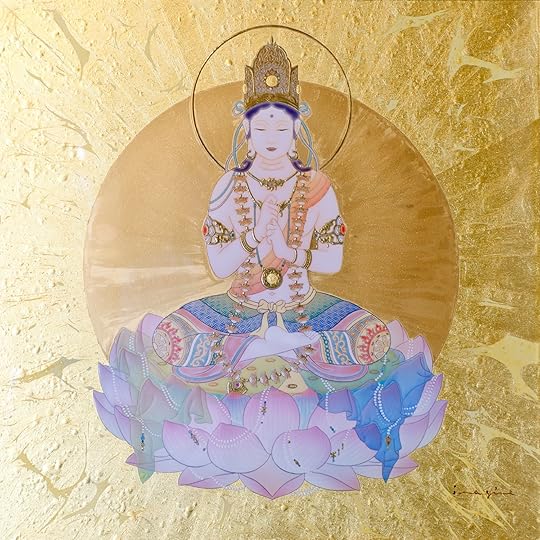
This book is one of the most esoteric treatises in the world. It will show you the way to become more than the body and the way to bloom - how not to remain a seed but to become a golden flower. What, in India, they call the one thousand-petalled lotus, in China they call the golden flower. It is a symbol that represents perfection, totality. Moreover, the flower represents the actualisation of the potential - the beauty, the grandeur, the splendour of being.
This treatise, The Secret of Secrets, is very ancient - possibly one of the most ancient treatises in the world - at least twenty-five centuries old. But twenty-five centuries can be traced back very easily. And this treatise is also, uniquely, a great synthesis of all the great religions. The Bible belongs to the Christians, the Talmud belongs to the Jews, the Vedas belong to the Hindus, the Dhammapada to the Buddhists, the Tao Te Ching to the Taoists. But this small book, The Secret of Secrets, belongs to no one in particular, or it belongs to all.
It is heavily based on Taoist teachings, a flowering of the Taoist approach to life and existence. But it is not only that - Zarathustra has played a role; his teachings are incorporated within it. Buddhist teachings have also been integrated, and a certain esoteric school of Christians, the Nestorians, have played their part. It is one of the most synthetical approaches.
Rajneesh (born Chandra Mohan Jain, 11 December 1931 – 19 January 1990) and latter rebranded as Osho was leader of the Rajneesh movement. During his lifetime he was viewed as a controversial new religious movement leader and mystic.
In the 1960s he traveled throughout India as a public speaker and was a vocal critic of socialism, Mahatma Gandhi, and Hindu religious orthodoxy.
Rajneesh emphasized the importance of meditation, mindfulness, love, celebration, courage, creativity and humor—qualities that he viewed as being suppressed by adherence to static belief systems, religious tradition and socialization.
In advocating a more open attitude to human sexuality he caused controversy in India during the late 1960s and became known as "the sex guru".
In 1970, Rajneesh spent time in Mumbai initiating followers known as "neo-sannyasins". During this period he expanded his spiritual teachings and commented extensively in discourses on the writings of religious traditions, mystics, and philosophers from around the world. In 1974 Rajneesh relocated to Pune, where an ashram was established and a variety of therapies, incorporating methods first developed by the Human Potential Movement, were offered to a growing Western following. By the late 1970s, the tension between the ruling Janata Party government of Morarji Desai and the movement led to a curbing of the ashram's development and a back taxes claim estimated at $5 million.
In 1981, the Rajneesh movement's efforts refocused on activities in the United States and Rajneesh relocated to a facility known as Rajneeshpuram in Wasco County, Oregon. Almost immediately the movement ran into conflict with county residents and the state government, and a succession of legal battles concerning the ashram's construction and continued development curtailed its success.
In 1985, in the wake of a series of serious crimes by his followers, including a mass food poisoning attack with Salmonella bacteria and an aborted assassination plot to murder U.S. Attorney Charles H. Turner, Rajneesh alleged that his personal secretary Ma Anand Sheela and her close supporters had been responsible. He was later deported from the United States in accordance with an Alford plea bargain.[
After his deportation, 21 countries denied him entry. He ultimately returned to India and a revived Pune ashram, where he died in 1990. Rajneesh's ashram, now known as OSHO International Meditation Resort and all associated intellectual property, is managed by the Zurich registered Osho International Foundation (formerly Rajneesh International Foundation). Rajneesh's teachings have had a notable impact on Western New Age thought, and their popularity has increased markedly since his death.
This is one of the most important books every published about spiritual life. It reveals the really quite secret methods of an obscure volume on Taoist yoga that is pretty much inaccessible unless you have guidance from a Master of the technique. Fortunately, Rajneesh is up to the task.
Following the method revealed in this book brought me to an amazing Enlightenment experience. Rajneesh revealed the teachings of the Buddha, Taoism and Tantra in a fresh new way, revealing many unsuspected dimensions. He was speaking from his personal realization, not just from a book or tradition. I gradually detached myself from my previous spiritual beliefs and practices, and began to see myself as a meditation student of Rajneesh.
I let go of my business affairs in California and moved to Portland to be close to the Rajneesh commune. I met many sannyāsins and visited ‘The Ranch’ several times. I also became a sannyāsin with the name Deva Atiharsha (god of original joy).
I was never very close to Rajneesh or his organization. I was already familiar with the problems of spiritual organizations, and I could see much the same nonsense I had experienced in ISKCON developing in Rajneesh’s commune. So I kept mostly to myself, studied Rajneesh’s many books and lectures, and meditated. My quiet life gave no indication that I was soon to have an experience that would change my life forever.
I lived for some time in Portland, Oregon, working as a technical writing contractor. After my project was finished, I had some time remaining on the lease of my apartment and nothing to do. I had been studying Taoism and especially, The Secret of the Golden Flower, an esoteric text on meditation. My apartment was very quiet. I had the time and the place to do some nice meditation.
So I took several months off and simply sat, starting with about 3-4 hours a day. I have always had trouble with my legs falling asleep while sitting. So I would sit for 20-30 minutes at a time, get up and walk around for a few minutes, and sit down again. I made a very comfortable sitting place with a raised seat, which helped me stay sitting longer.
What did I do? Nothing. I sat and waited. I watched my breath, my mind and my heart, and my energy. Soon I realized that even without doing anything, even without thinking, there is a lot going on. There is no need for TV, no need to be bored, ever. Inside of us there is a very entertaining display of energy and motion. All we have to do is sit down, shut up and watch.
I sat every day like that for 10 weeks or so, gradually working my way up to 12–18 hours daily. Then on December 21, 1984 I sat for the morning as usual, then had some whole-wheat ramen noodles for lunch. After lunch I rested for a few minutes, then got up and prepared to sit again. Suddenly I felt that someone else was in the room—a distinctly feminine presence. After meditating so much, I had become very sensitive to people’s energy. I looked around the apartment but nobody was there.
Then I felt a soft tap on my forehead.
Energy rushed up my spine and out the top of my head. Suddenly I was overwhelmed by a spiritual vision. I could see conscious spiritual energy everywhere, in everything. I felt totally ecstatic. I saw the same thing everywhere I looked: luminous, conscious spiritual energy pulsing and coursing through everything, like an all-pervading ocean of milk.
The experience lasted for hours. After four hours of unrelenting bliss, I decided to take a reality check; I visited a local tea house. As I walked in, the potted plants greeted me happily—but the humans ignored me completely. They were so dead they may as well have been cardboard cut-outs. At first, I got in the line like everyone else. After some time of being completely ignored, I decided to test the boundaries.
I cut through the line, grabbed a cup, filled it with hot water, dumped in a tea bag and some honey. Looking around, everyone was still studiously ignoring me. Pushing it to the limit, I took my hot cup of tea, sauntered towards the door and walked out without paying.
Silence. No response at all. This experience revealed an interesting aspect of the mass hallucination in which most humans live. They hate happiness and avoid ecstasy so much that if someone is truly happy or ecstatic, they behave as if he isn’t there. Denial is a powerful drug.
In the days and weeks that followed, all I had to do to repeat the ecstatic experience was sit down and take a deep breath. More experiments with people showed beyond a doubt that whenever I was in an ecstatic state, I was effectively invisible.
فوق العاده عالی! هر صفحه این کتاب رو باید زندگی کرد:
بخشی از کتاب، ترجمه سوامی محسن خاتمی (بهترین مترجم اشو):
در ناامنی زندگی كن! در انقلاب زندگی كن! یك عصیانگر باش، ریسك كن، زیرا در زندگی هرگز چیزی بدون ریسك به دست نخواهد آمد. هرچه بیشتر مخاطره كنی، به خداوند نزدیكتر خواهی بود. وقتی بتوانی همه چیز را به مخاطره بیندازی، همه چیز از آن تو است.
هذا الكتاب كان له اثراً كالسحر في كل مرة اقلب صفحاته بين يدي اجد ما يلائم أفكاري تمااما .. اجد شيئا مذكورا يتحدث إلّي وكأنه يعرف انني كنت افكر فيه طوال اليوم ولم اجد من يحدثني عنه فافتح الكتاب لأجد الاجابات تاتيني منه تباعا .. لم تكن صدفة اعلم ذلك ... ولكنها كانت متكررة بشكل يصعب تصديقه ؟! اوشو جعلني ارى ما لم اكن قد رأيت من قبل ليس بالبصر وانما بالبصيرة الحدس التفكر التأمل والاحساس .. جعل مني شخص اكثر تساؤلا واكثر بحثا واكثر ايمانا ... اعترف انني اقرأ هذا الكتاب ببطئ شديد لانني لا اود له ان ينتهي حبي له غريب ولذيذ ومختلف عن باقي الكتب التي من بعده لم تعد مؤثرة كما قد فعل بي هو ... لا اخفي اننا جميعا يجدر بنا ان نتحرى ما نقرأ وهذا ما اجد.نفسي تلقائيا افعله لكن مع اوشو اصبح شعوري بالتحري اقوى لانه يخاطب احساسك الداخلي ك روح صافية بعيدا عن كل معاني التفرقة والعنصرية والتمييز والطائفية ... كان قريبا من القلب ووجدت فيه معاني دفينة خاطبتني دوما ولم اكن اجد طريقا ل اسمعها فيني حتى اتى هذا الكتاب واخرجها على السطح امامي باوضح صورة
ليس بكتاب سهل ويحتاج منك التعمق والابحار اكثر من مرة بالجمل والمعاني لانها ليست بمتناول ايدي الجميع ..هو استثناء وابداع من طراز لا يفقهه من يعيش دوما على سطح الاشياء .. هو لا يخاطب من يكترث بالحياة المادية البحتة ولا الاشخاص العاقلين ايضا ... يحتاج اشخاص متعطشين للحياة التي لم نعيشها داخل هذه الحياة .. يخاطب من يكترث بالقيم العُليا بدءا من كينونته وانتهاءا بالثقوب السوداء
جريء وصريح لا مفر من الصراحة مع اوشو .. صراحة تكاد تقتلع عقول المجتمعات المنومه مغناطيسيا تجاه الحقائق التي لطالما اخفتها ولا تزال تخفيها عنا الحكومات والدول في ما هية الفرد والانسان ومن هو ولماذا يعيش واين يجدر به ان يكون ولمن يقتات وعلى ماذا يستند ول حساب من يعمل ..!
وبالنهاية احب ان اقول خذ ما تشعر به ف صوتك الداخلي لن يخطؤك و اترك ما لم يناسبك من افكار و قناعات لنفس الشخص ... هذا لا يعيبنا ك اشخاص ف لكل منا دائما جانب مظلم بجوار كل جانب منير ..
The Secret of Secrets is a Taoist tour de force. Here Osho delves deep into the teachings of Lu-tsu’s text, The Secret of the Golden Flower. He covers a lot of ground in this massive tome, and it certainly requires patience to get through, but there are many rewarding moments along the way. Ultimately, I think you will find much wisdom and enlightenment contained herein.
The book’s length is perhaps its greatest drawback, and portions of it could have been edited down to create a more focused approach—there are many question and answer sessions with Osho’s sannyasins, some relevant, others not so much. But in any case, the entirety of these talks appears to be presented here, so at times you may have to seek out what is most valuable to you. I especially enjoyed Osho’s discussions of meditation, breathing, and living in this moment—dying to the past.
While The Secret of Secrets may not be the best book to read for someone new to Osho, if you have read some of his other works and are interested in learning more about the Tao, you will probably find this one enjoyable, despite its length. You could even see its long and meandering nature as a metaphor for the slow, natural watercourse way that is the essence of Taoism.
Osho in fact teaches us that Tao is the way of gradual growth rather than instant enlightenment: “Sow the seeds in time and wait, and the spring comes as it has always been coming. And when the spring comes there will be flowers.”
Osho expresses his ideas poetically, what philosophers say in tedious prose. Much of what he says is common sense though except for some odd admonishments such as the end of the institution of marriage. This set of lectures is 5% about the original text secret of the Golden Flower and 95% of it is his own exposition- it is all interesting though. Some of it is mysticism as in the differences he alludes to between the senses of seeing and hearing. Clarity comes from the eye, understanding comes from the ear. Hearing is feminine, Seeing is masculine. He ends the book with a clarion call for living a authentic life. He writes, "Don't compromise, Don't live in hypocrisy. As the seed in the mud contains the flower in it, so does sex contain the power of the super consciousness. Don't follow any ideology, any religion- rather become religious. Love of the country, of any religion is just foolish. It has to come from and pertain to the individual. Be a rebel, drop all taboos, risk it all by entering the unknown, the uncharted. Society gives you security, I give you consciousness. Live life in insecurity, as an adventure." It is 55 hours of loving poetry, more than prose or philosophy. Here is one of my favorite lines: The sensuous person blooms. In each experience he becomes it. Seeing a sunset he becomes a sunset, in seeing a flower he becomes one. In the morning he becomes light. Listening to music he becomes music.
Reading Osho is reading poetry. It is a sheer joy. The way he interrelates and marries opposite forces in this dualistic universe is a work of art. At once a genius in the learned scholarly realm of information and a mystic of the deepest existential mysteries, Osho himself is a marriage of dualities which makes him so appealing to people of all ages and backgrounds. His work will continue to arouse and inspire people for centuries. So long as there is an interest in knowing, whether in the higher intellectual pursuits of the outside world, or the inner workings of the soul, Osho has a way of capturing one's attention and fascination. What he does from there is the work of a true Master. What he gives you with one hand, he takes away with the other. By and by listening to Osho, he leaves you utterly naked, standing on nothing but your own innermost emptiness - the true function of a buddha. 5 stars for Osho!
يشعر الشاعر بالغباء والدونية امام نفسه وعدم الاحترام لذاته لانه لايستطيع ان يكون رجل اعمال ناجح. هو يحاول النجاح في العمل لكنه يخفق في ذلك. على الشاعر أن يؤمن انه شاعر وانه لم يخلق ليكون رجل اعمال وعليه ان ينجح كشاعر وسيثمر في هذا الطريق ليس عليه ان يقلد أي شخص غيره ربما لن يسانده المجتمع في هذا الامر، لانه ما من حاجة للشعر بقدر ماهناك حاجة للقنابل وليس هناك حاجة للحب بقدر ماهناك حاجة للكراهية.
لهذا مسموح بارتكاب الجرائم في الافلام وغير مسموح ممارسة الحب ان هذا المجتمع يعيش على الكراهية ولا يعيش عبر الحب ان طعنك شخص ما بخنجر في قلبك وانفجر الدم من جسدك فهذا تصرف مقبول ولكن ان عانقت او قبلت من تحب .. هنا يخاف المجتمع
Alternating chapters between: commentary on an ancient, esoteric text by Lao Tsu - and a wide ranging Q+A format from the audience of his ashram.
The commentary talks about confirmatory signs of progress with meditation, what it means to be prayerful, how to live a life of balance, and many other things. This version is light years ahead of C.G. Jung's commentary of The Secret of the Golden Flower, in my opinion.
Sprinkled in the text are sublime takes on the culture, society, history and religion. Osho's interpretation of the life of Christ, the cross, The Buddha, and what it means to be truly "religious" are revolutionary. Both superbly clear and comprehensive.
One wonders how Osho will be looked at hundreds of years from now. I am looking forward to reading his commentary on Christ's words "I Say Unto You" in the very near future.
"The Secret of Secrets: The Secret of the Golden Flower" are Taoist Teachings of life and existence presented by one of the most controversial and provocative spiritual teachers of our time. Osho interprets this book as the essence of Taoism which may be described as a synthesis of Buddhism, Zen and Yoga. Osho also states that Taoism is the core of all religions and spiritual paths and that Taoism is the philosophy of growth and not of one of instant enlightenment. Osho is very critical of traditional religion and, where among other things, emphasizes meditation, breath control and fasting. As aforementioned Osho is viewed as a very controversial figure whose views are out of the mainstream and may be viewed as radical and offensive by some readers. However, although his philosophy may be described as provocative, his teachings present a different approach to reality, are inspirational and offer new insights to other disciplines of Eastern philosophy. I would highly recommend this book.
Phew, this book was too long for me to listen. I guess no other book took this time for me to finish. Osho would challenge your thoughts and you cannot beat his philosophy with logic. A must read for people who want to challenge there intellect.
Like a node in Indra's net reflects any other node, like in a hologram, each book by Osho reflects all the others, which is to say there is no one book you can read to get what he tries to say, because they are not written to be consumed as books; they are assortments of his discourses, which when spoken to an audience used to bring out everything in his head in the most coherent monologue possible, but in a set context - and that is what differentiates all his books: wealth of sometimes similar sounding ideas, for different contexts.
You may or may not agree with him, but there is in Osho a joy of discovery, as with this book, which not only talks about Tao alone, but a lot more, even politics, and it drives home the fact that the world manifests itself in duals: good/bad, ugly/beautiful, happiness/sadness, black/white, and it is wise to not ask for (or run away from) one thing alone. It is wise to accept the world in its totality, with all its freak-shows and wonders, so that when you are angry at your partner you express that anger honestly (that you understand it and control it eventually with every such expression is a supplementary idea - but it comes later, only after the anger is expressed the way it is). An anger that remains can peek now and then in quieter moments as a passive aggressive streak, as sarcasm, and nothing hurts a beloved more than sarcasm; genuine anger can be forgiven, not sarcasm. And when anger has been expressed, allow love to also emerge out of the silence anger has left behind, and express that also in complete honestly... that is how, like in a see-saw, Osho says, one can live "totally" instead of always seeking to be happy in vain. Off course, this is only one example out of hundreds in this massive book about different such aspects of life. In any case, if you have to get the point at all, you will get it in the first few pages.
My fav quotes (not a review): "A married couple went to the parish priest for marital counselling. In the course of the conversation which was serious at first, the priest commented on the number of good-looking girls in the parish. ”Father,” said the husband, ”you surprise me.” ”Why?” he asked, ”just because I am on a diet does not mean I can’t look at the menu.”" "One law is the law of gravitation: it pulls you down. I call the other law the law of grace; it pulls you up." "”Amazing!” gasped the journalist. ”I’d like to meet your father.” ”Can’t right now. He’s in El Paso standing up for Grandpa. Grandpa is getting married tomorrow. He’s a hundred and fourteen.” ”Your family is simply unbelievable,” said the newspaperman. ”Here you are, a rodeo champion at sixty. Your father is a football player at eighty-six. And now your grandfather wants to get married at a hundred and fourteen.” ”Hell, mister, you got that wrong,” said the Texan. ”Grandpa does not want to get married. He HAS to.”" "A woman went to one of those health clinics where they have about seven doctors. After twenty minutes in one doctor’s office she ran screaming down the hall. Another doctor who finally got the story out of her called the first doctor. ”What is the idea of telling that patient she is pregnant? She is not! You nearly frightened her to death.” ”I know,” the first doctor said, ”but I cured her hiccups, didn’t I"
I first discovered Osho's talks two decades ago when I bought his discourses on Jesus's parable of the mustard seed in a secondhand bookshop in south London. The insights he presented on the parable had a major impact on my spiritual journey, and in particular, my perspectives on how to strive to live a "Christlike" life in the modern world. These discourses on the Taoist classic "the Secret of the Golden Flower" now have had a similar impact. This is a classic that I know I will return to often in the future. Highly recommended! https://en.m.wikipedia.org/wiki/Parab...
It is a collection of live discourse sessions by Osho. Listening right from the orator makes this more valuable. The sessions are on an avg 90 mins long. They have a certain poise, credit to Osho. Too much information to gather and process. However, for me, there were a few lines, which were life-changing. Every time you will listen to it, you will absorb a distinct message. Having said that, it is a task to stick to it and complete the entire book. Some areas might not feel relevant, depending upon the level of knowledge, self-awareness, and interest. But it is a great value add in every sense. Recommended.
“Just look around! This immense universe is functioning so perfectly well that nothing can be added to it. It needs no improvement. Seeing this, one relaxes. If stars can go on dancing and flowers can go on blooming and birds can go on singing, why not you? You also belong to this universe. You are part of it. In fact, you are the most valuable part of it, the greatest flowering is going to happen in you—the flowering of consciousness, the golden flower of being.”
― Osho, The Secret of Secrets: Talks on the Secret of the Golden Flower
currently going through this on audible and it's 54 hours long. and i'm only about 6 hours in. looking through his discography and seeing the sheer amount of work taht he did it's just overwhelming it's insane. what i notice the most is how dense and yet somehow so simple and light his work is. and i am so greatful to hear the narration from his own voice. and then the more i listen the more i feel the sense of gratitude that someone like him walked this planet and left behind so much of his findings for us. truely one of the most extraordinary and special beings to ever live. i just felt grateful for it and wanted to express that somewhere.
This is my first encounter with Osho's writings, and I am truly captivated by his profound insights. After years of searching for the right way to meditate, I finally found the answer through his teachings. Osho has taught me how to meditate effectively, transforming my practice from merely sitting with closed eyes to a deeper, more meaningful experience.
Yes, I think it is possible to get a deep impact on one's perspective.
Will it happen to me?
Lets wait and find out...
Till than I am contemplating upon the buzzing noise that the laptop cooling pad's fan is making while working on office reports and collaborating with colleagues on MS Team...
Words will fall short while trying to describe the profundity of the book. Osho beautifully synthesizes multiple schools of thought- Taoism, Tantrism, Buddhism, Christianity, Vedanta etc. Fiery & unapologetic, his words can ruffle up some feathers. But for a genuine open minded seeker, Osho will definitely open up some possibilities that other gurus might fail to.
In The Secret of Secrets, Osho taught me that nothing should be forced. Awakening is not reached through struggle, but through letting go. Like a leaf carried by the wind, one learns to trust the flow of life, to release control, and allow consciousness to unfold from within. The true path is not about doing, but about silently observing and letting the essential reveal itself.
هذا الكتاب العجيب القريب .. هو من اختارني واختار وقته ! من الغريب أن تتفق الظروف والأحداث ومعهم كتاب أو كُتب على ايقاظك وخلق منعطف خطير وجذري ومصيري في حياتك ! هذا الكتاب فعل ولن يكون الأول والأخير في رحلتي مع أوشو والاستنارة ويستحق هذا الكتاب بالتأكيد قراءة ثانية وثالثة وعلى مهل في كل مرة .،
Couldnt complete the book. Somehow I wasnt able to connect well with Osho and his style of teachings. He sounded very arrogant and preachy throughout! So simply couldnt afford to spend 50+ hrs listening to this.
So greatfull for your teachings master. As sad as I am not living in your Era and being able to meet you in person I’m kind of even happier cause technology kept so much of your beautiful and peaceful teachings for generations to come ❤️🙏
Au début le format et le discours sont surprenants, mais j'ai de plus en plus aimé et été de plus en plus d'accord avec plein de trucs. Donc une lecture intéressante.