

What do you think?
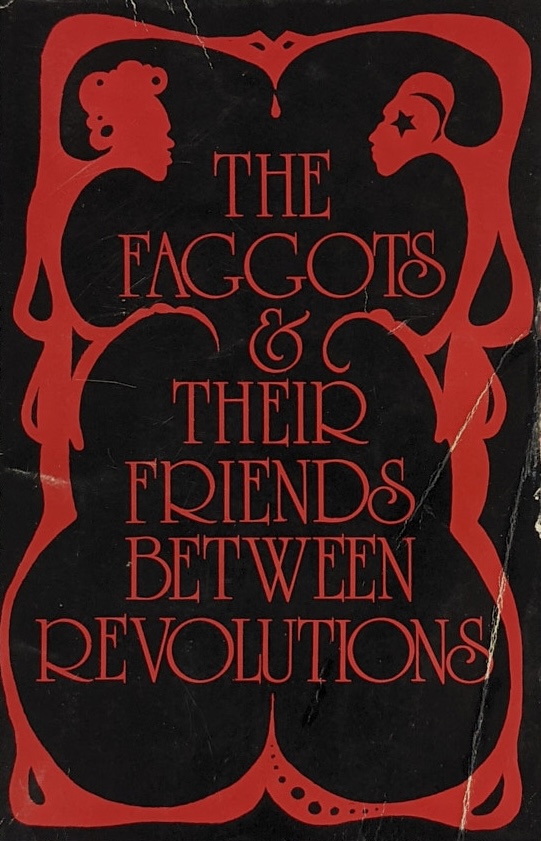
The Faggots and Their Friends Between Revolutions
The Faggots and Their Friends Between Revolutions is a beloved queer utopian text written by Larry Mitchell with lush illustrations by Ned Asta, published by Calamus Press in 1977. Part-fable, part-manifesto, the book takes place in Ramrod, an empire in decline, and introduces us to the communities of the faggots, the women, the queens, the queer men, and the women who love women who are surviving the ways and world of men. Cherished by many over the four decades since its publication, The Faggots and Their Friends Between Revolutions offers a trenchant critique of capitalism, assimilation, and patriarchy that is deeply relevant today. This new edition will feature essays from performance artist Morgan Bassichis, who adapted the book to music with TM Davy in 2017 for a performance at the New Museum, and activist filmmaker Tourmaline.
114 pages, Paperback
First published January 1, 1977
About the author
Larry Mitchell
6 books41 followersLarry Mitchell (1939 – December 26, 2012) was an American author and publisher. He was the founder of Calamus Books - an early small press devoted to gay male literature - and the author of fiction dealing with the gay male experience in New York City during the 1970s and 1980s.
With Terry Helbing and Felice Picano, he cofounded Gay Presses of New York in 1981. His book of short stories My Life As a Mole won the 1989 Small Press Lambda Literary Award. Mitchell's novel The Terminal Bar, published in 1982, is considered to be the first book of fiction to address HIV/AIDS. The feature film Acid Snow (1998) directed by Joel Itman is based on Mitchell's novel of the same name.
He died on December 26, 2012 in Ithaca, New York after a battle with pancreatic cancer. [wikipedia]
With Terry Helbing and Felice Picano, he cofounded Gay Presses of New York in 1981. His book of short stories My Life As a Mole won the 1989 Small Press Lambda Literary Award. Mitchell's novel The Terminal Bar, published in 1982, is considered to be the first book of fiction to address HIV/AIDS. The feature film Acid Snow (1998) directed by Joel Itman is based on Mitchell's novel of the same name.
He died on December 26, 2012 in Ithaca, New York after a battle with pancreatic cancer. [wikipedia]
Ratings & Reviews
Friends & Following
Create a free account to discover what your friends think of this book!
Community Reviews
Displaying 1 - 30 of 1,769 reviews

September 2, 2019
A pre-AIDS fable of queer solidarity and anti-patriarchal, anti-capitalist communal praxis, dyke and trans inclusive, ft a cast of characters named Heavenly Blue, Loose Tomato, and the like. Whimsical, charming, dead serious. A gift.

August 15, 2012
A must read. It is sad that so many of us younger queers lost these nuggets to AIDS and heterosexual assimilation tactics.

January 28, 2021
In the shadow of structural abandonment, political alienation, family rejection, chronic illness, state violence, and medical neglect, queer friendship saves us.
Ostensibly this book is about the so-called Lavender Hill commune established in 1973 in West Danby, New York by “a motley group of young writers, artists, political activists and recent college graduates”, according to the 2013 documentary short directed by Robert Thomas Hazen. Yes, the adjective ‘motley’ does mean ‘incongruously varied’, but there is definitely a sense of a value judgement here about this ‘difference’ or ‘disparateness’ somehow being unsavoury or unwholesome.
Just two years later in 1979, Samuel R. Delany would publish his own account of his six-month stint in the Heavenly Breakfast commune, also in New York. This was a ‘warts-and-all’ insider look at the commune experience, where the main source of income was dealing drugs, where the average number of people co-habiting at any one time was at least 16 and where, perhaps most importantly for the prurient reader, “Sex, for all practical purposes, was perpetual, seldom private, and polymorphous, if not perverse.”
However, Delany was also very much interested in the sociological imperatives behind the commune movement, an interest that would inform his own fiction like ‘Dhalgren’, not to mention his perennial fascination with thinkers like Spinoza, whose moral philosophy was “centred on the control of the passions leading to virtue and happiness,” according to the Stanford Encyclopaedia of Philosophy.
Well, there was certainly not much control exerted in Heavenly Breakfast, which seemed to vacillate permanently between utter chaos and random abandonment. Delany comments that: “Since there was no permanent, externally agreed-on social organisational structure, it’s accurate to say that everything that happens in the commune was because of ‘your’ or ‘my’ whim.”
“A commune?” Brother Francis asked. “Now what, exactly, is that?”
“Well,” Coca-Cola said, “it’s sort of…well, like a monastery. But it’s not religious. We live together, share things, take care of one another. We live – well, differently from the people around us.”
(If you’re wondering about the moniker ‘Coca-Cola’, the dude really has a passion for the soft drink.) Delany also debates the difference between a ‘commune’, a ‘collective’ and a ‘cooperative’. Unsurprisingly, the former is not particularly democratic, let alone an ideal platform for asserting one’s own identity.
While Delany does remark that he “learned to move within the circle of other’s people desire, and be at ease as I generated my own”, he adds: “If you’ve ever indulged the fantasy of being invisible, you’d probably like commune life.” This seems to be the central conundrum or contradiction of the commune in a nutshell.
A ‘collective’ and a ‘cooperative’ are much more like college fraternities in their social rigidity and adherence to heteronormative mores (and prohibitions). The commune wears its badge proudly as a ‘crash pad’, a ‘den of iniquity’ and a ‘rat hole’. I for the life of me cannot figure out why the bath was in the middle of the kitchen, but apparently this was a feature of East End apartments at the time.
Therefore it is perhaps inevitable that an essential aspect of communes is what Delay refers to as their ‘impermanence’. At Heavenly Breakfast, not a single organisational meeting was ever held. The centre cannot hold, to quote Yates, especially when there is no centre.
It is a remarkable experience to read ‘Faggots and their Friends’ and ‘Heavenly Breakfast’ as part of a larger dialectic about the commune experience and its lasting impact as a social movement. While the Delany book is ultimately a cautionary tale rooted in socio-political and psychological reality, Mitchell’s take has been memorably described as a ‘fairytale-cum-manifesto’.
It is difficult to even begin to describe the text, which initially started out as a children’s book, hence the fairytale nature. This bedtime story though is about a mythical kingdom called Ramrod, “an empire in decline ruled by the cruel patriarch, Warren-and-His-Fuck-pole.”
It is a series of allegorical vignettes where the titular ‘faggots’ live like the crowd in Heavenly Breakfast, with the aim to “produce art, have sex, and await the next revolution.” Mitchell’s take on the importance of dialectical history in the ongoing struggle for gay rights (yes, even in our own supposedly enlightened world) is really what makes this book so fascinating (and so endearingly funny):
The queer men continue to hope that the men will stop caring so much about who is or who is not sucking cock. If the men would stop caring so much, the queer men could then be men, only men who suck cock. They could eliminate the life that is despised and fugitive.
Delany’s only brush with a larger political context in ‘Heavenly Breakfast’ is his opening explanation of the title, a counter to the phrase the ‘Summer of Love’ (just as the commune itself is a counter to the concept of the ‘nuclear family’). It was a remarkably volatile period, marked by the assassination of Martin Luther King, Robert Kennedy and the shooting of Andy Warhol.
I think Delany deliberately chose to set ‘Heavenly Breakfast’ in a kind of socio-temporal bubble, with a granular focus instead on the day-to-day living and breathing of the commune itself. ‘Faggots and their Friends’ exists in a different kind of stasis. The fairytale nature adds a kind of timelessness (and surprising wistfulness) to the book. Together with friend and illustrator Ned Asta, Mitchell set out to record a decade of experimentation in what Morgan Bassichis calls in his introduction “radical communal living and queer friendship” from the 1960s to the 1970s.
Interestingly, Delany quite clearly emphasises the bisexuality of the Heavenly Breakfast commune as its main middle-finger gesture to the mainstream, instead of positioning it exclusively as a gay social experiment. This is probably what makes the Delany book the more nuanced and astute of the two. The Mitchell book is genuinely so weird that it seems to have been beamed in by rainbow from an alternate, deliriously gayer reality:
The faggots outstretch an invitation to us all to be a freak or a fairy, to snuggle and guzzle the cum of our friends, and be in the tender care collective of moonbeam and lilac and pine tree, hollyhock and loose tomato. I hope you’ll join me there.
Ostensibly this book is about the so-called Lavender Hill commune established in 1973 in West Danby, New York by “a motley group of young writers, artists, political activists and recent college graduates”, according to the 2013 documentary short directed by Robert Thomas Hazen. Yes, the adjective ‘motley’ does mean ‘incongruously varied’, but there is definitely a sense of a value judgement here about this ‘difference’ or ‘disparateness’ somehow being unsavoury or unwholesome.
Just two years later in 1979, Samuel R. Delany would publish his own account of his six-month stint in the Heavenly Breakfast commune, also in New York. This was a ‘warts-and-all’ insider look at the commune experience, where the main source of income was dealing drugs, where the average number of people co-habiting at any one time was at least 16 and where, perhaps most importantly for the prurient reader, “Sex, for all practical purposes, was perpetual, seldom private, and polymorphous, if not perverse.”
However, Delany was also very much interested in the sociological imperatives behind the commune movement, an interest that would inform his own fiction like ‘Dhalgren’, not to mention his perennial fascination with thinkers like Spinoza, whose moral philosophy was “centred on the control of the passions leading to virtue and happiness,” according to the Stanford Encyclopaedia of Philosophy.
Well, there was certainly not much control exerted in Heavenly Breakfast, which seemed to vacillate permanently between utter chaos and random abandonment. Delany comments that: “Since there was no permanent, externally agreed-on social organisational structure, it’s accurate to say that everything that happens in the commune was because of ‘your’ or ‘my’ whim.”
“A commune?” Brother Francis asked. “Now what, exactly, is that?”
“Well,” Coca-Cola said, “it’s sort of…well, like a monastery. But it’s not religious. We live together, share things, take care of one another. We live – well, differently from the people around us.”
(If you’re wondering about the moniker ‘Coca-Cola’, the dude really has a passion for the soft drink.) Delany also debates the difference between a ‘commune’, a ‘collective’ and a ‘cooperative’. Unsurprisingly, the former is not particularly democratic, let alone an ideal platform for asserting one’s own identity.
While Delany does remark that he “learned to move within the circle of other’s people desire, and be at ease as I generated my own”, he adds: “If you’ve ever indulged the fantasy of being invisible, you’d probably like commune life.” This seems to be the central conundrum or contradiction of the commune in a nutshell.
A ‘collective’ and a ‘cooperative’ are much more like college fraternities in their social rigidity and adherence to heteronormative mores (and prohibitions). The commune wears its badge proudly as a ‘crash pad’, a ‘den of iniquity’ and a ‘rat hole’. I for the life of me cannot figure out why the bath was in the middle of the kitchen, but apparently this was a feature of East End apartments at the time.
Therefore it is perhaps inevitable that an essential aspect of communes is what Delay refers to as their ‘impermanence’. At Heavenly Breakfast, not a single organisational meeting was ever held. The centre cannot hold, to quote Yates, especially when there is no centre.
It is a remarkable experience to read ‘Faggots and their Friends’ and ‘Heavenly Breakfast’ as part of a larger dialectic about the commune experience and its lasting impact as a social movement. While the Delany book is ultimately a cautionary tale rooted in socio-political and psychological reality, Mitchell’s take has been memorably described as a ‘fairytale-cum-manifesto’.
It is difficult to even begin to describe the text, which initially started out as a children’s book, hence the fairytale nature. This bedtime story though is about a mythical kingdom called Ramrod, “an empire in decline ruled by the cruel patriarch, Warren-and-His-Fuck-pole.”
It is a series of allegorical vignettes where the titular ‘faggots’ live like the crowd in Heavenly Breakfast, with the aim to “produce art, have sex, and await the next revolution.” Mitchell’s take on the importance of dialectical history in the ongoing struggle for gay rights (yes, even in our own supposedly enlightened world) is really what makes this book so fascinating (and so endearingly funny):
The queer men continue to hope that the men will stop caring so much about who is or who is not sucking cock. If the men would stop caring so much, the queer men could then be men, only men who suck cock. They could eliminate the life that is despised and fugitive.
Delany’s only brush with a larger political context in ‘Heavenly Breakfast’ is his opening explanation of the title, a counter to the phrase the ‘Summer of Love’ (just as the commune itself is a counter to the concept of the ‘nuclear family’). It was a remarkably volatile period, marked by the assassination of Martin Luther King, Robert Kennedy and the shooting of Andy Warhol.
I think Delany deliberately chose to set ‘Heavenly Breakfast’ in a kind of socio-temporal bubble, with a granular focus instead on the day-to-day living and breathing of the commune itself. ‘Faggots and their Friends’ exists in a different kind of stasis. The fairytale nature adds a kind of timelessness (and surprising wistfulness) to the book. Together with friend and illustrator Ned Asta, Mitchell set out to record a decade of experimentation in what Morgan Bassichis calls in his introduction “radical communal living and queer friendship” from the 1960s to the 1970s.
Interestingly, Delany quite clearly emphasises the bisexuality of the Heavenly Breakfast commune as its main middle-finger gesture to the mainstream, instead of positioning it exclusively as a gay social experiment. This is probably what makes the Delany book the more nuanced and astute of the two. The Mitchell book is genuinely so weird that it seems to have been beamed in by rainbow from an alternate, deliriously gayer reality:
The faggots outstretch an invitation to us all to be a freak or a fairy, to snuggle and guzzle the cum of our friends, and be in the tender care collective of moonbeam and lilac and pine tree, hollyhock and loose tomato. I hope you’ll join me there.

June 21, 2022
5 / 5 stars
Queer history is incredibly valuable. Through every generation, queer people have existed and adapted to a hateful world, and these past practices have lead modern queer life to where it is now, flaws and all. Remembering resistance, joy, and pain are vital to future progress.
This work stands between the Stonewall riot and the AIDS epidemic. A cherished time in queer history that is often skipped to study more monumental occasions. But the importance of history does not only lie in the well-known experiences of past queers; it still holds value in the grey areas of time.
So I celebrated intercommunal worshipping between many subsects of the queer community and straight women, all who face extreme abuse under the patriarchy. It connects, feminism, queer activism, homophobia, misogyny, and toxic masculinity into an intersectional song of protest. They celebrate each other and create a marginalized community that provides a safe space, a utopia marginalized people today still dream of.
Aside from it being a testament to queer strength, the stories themselves are accompanied by beautiful artwork that thematically connect to ideas modern activists are still actualizing.
These visions from the past for the future are heartbreaking and complex. There is work to be done and healing to begin, but taking this message is to know that progress cannot be done alone.
Queer history is incredibly valuable. Through every generation, queer people have existed and adapted to a hateful world, and these past practices have lead modern queer life to where it is now, flaws and all. Remembering resistance, joy, and pain are vital to future progress.
This work stands between the Stonewall riot and the AIDS epidemic. A cherished time in queer history that is often skipped to study more monumental occasions. But the importance of history does not only lie in the well-known experiences of past queers; it still holds value in the grey areas of time.
So I celebrated intercommunal worshipping between many subsects of the queer community and straight women, all who face extreme abuse under the patriarchy. It connects, feminism, queer activism, homophobia, misogyny, and toxic masculinity into an intersectional song of protest. They celebrate each other and create a marginalized community that provides a safe space, a utopia marginalized people today still dream of.
Aside from it being a testament to queer strength, the stories themselves are accompanied by beautiful artwork that thematically connect to ideas modern activists are still actualizing.
These visions from the past for the future are heartbreaking and complex. There is work to be done and healing to begin, but taking this message is to know that progress cannot be done alone.

July 16, 2020
i love faggots & dykes :-)

June 29, 2021
“The fairies knew that the earth will not tolerate the men much longer. The earth, scarred and gouged and stripped and bombed, will deny life to the men in order to stop the men. The fairies have left the men’s reality in order go destroy it by making a new one.” :’)
Love that this was originally planned to be a children’s book but has faggots in the title and features phrases like “tasty orgasm juice.”
Also Tourmaline’s preface in this 2019 edition is really beautiful and got me so excited to read the book!
Love that this was originally planned to be a children’s book but has faggots in the title and features phrases like “tasty orgasm juice.”
Also Tourmaline’s preface in this 2019 edition is really beautiful and got me so excited to read the book!

August 11, 2023
surprisingly whimsy tale of queers coming together to attempt to build a utopia in the middle of rubbish. i honestly haven’t seen anything close to this in modern queer books which is sad because while yes, cookie cutter romcoms can be fun, books like this that at its heart are so QUEER as a revolutionary act are soooooo important to morale and as a guide.

Read
October 4, 2025I enjoyed this. It was fun to listen to in the mornings when I sit at the park and drink my matcha (my life is so wholesome honestly). Will definitely re-read when I want something cozy. I love my gay little life.

June 6, 2022
"The strong women told the faggots that there are two important things to remember about the coming revolutions. The first is that we will get our asses kicked. The second is that we will win."
HAPPY PRIDE MONTH. this book is an incredible fable of gay resilience and happiness, and tells of scenes that are familiar to me and my friends. it is written in an exceedingly charming style, and i think about the kind-of-utopia it describes and cannot help smiling. the illustrations are beautiful. a must-read!
HAPPY PRIDE MONTH. this book is an incredible fable of gay resilience and happiness, and tells of scenes that are familiar to me and my friends. it is written in an exceedingly charming style, and i think about the kind-of-utopia it describes and cannot help smiling. the illustrations are beautiful. a must-read!

February 28, 2021
I love this book. From the 70s yet so fresh. It could replace the Bible? A history of faggots, fairies, queens, women, and patriarchy boiled down into fable and manifesto. Everything's said so succinctly, I find the present reality completely transformed. I love how there are sections called Women Wisdom, and the faggots learn from the women. In a note at the end, the author says he was originally trying to write a children's book. I'm mad this wasn't read to me as a child.
"All the men could be faggots or their friends. They once were. There still exists a faint memory of the past when the faggots and their friends were free. The memory lives in the faggots' bones. The memory appears at night when the bones are quietest. In darkness the faggots remember that once they lived in harmony with each other and their world."
"All the men could be faggots or their friends. They once were. There still exists a faint memory of the past when the faggots and their friends were free. The memory lives in the faggots' bones. The memory appears at night when the bones are quietest. In darkness the faggots remember that once they lived in harmony with each other and their world."

August 15, 2023
complètement grandiose et fantasque et enchanté, des petites pépites comme on n'en lit que rarement, qui font méditer et soupirer et prendre conscience de l'ampleur de nos histoires et de nos luttes
je l'ai lu en anglais, et ça a du sens de le préciser car jusqu'à il y a peu ça n'aurait pas été un choix mais une obligation étant donné que ce texte a dû attendre CINQUANTE ans pour être traduit en France mais que désormais il l'est et ça c'est SUPER, donc n'hésitez plus soutenez ces initiatives éditoriales géniales et le courage des travailleureuses du texte qui déterrent ainsi des textes pépites cachées et les rendent accessibles au grand public bravo !!!
mais de quoi ça parle alors ? c'est, tout simplement, un conte merveilleux (dans les deux sens du terme, tant dans le genre littéraire que dans la littérale merveillosité), écrit en 1973 si je ne dis pas de bêtises, c'est-à-dire à une époque où le VIH n'était pas encore apparu, où il n'avait pas encore marqué la communauté LGBT dans sa chair, où on n'avait pas encore connu ce grand basculement vers la honte, la mort et le silence.
et ça se sent.
ce conte, que Larry Mitchell avait à la base pensé écrire pour des enfants mais dont il s'est rendu compte à peu près page 4 que c'était en fait totalement pour des adultes, est imbibé d'une joie, d'un émerveillement, d'une malice, d'une irrévérence, d'une douceur qu'on a mis des années à reconquérir en tant que communauté après l'évidente et nécessaire colère militante qu'il a fallu déployer durant l'épidémie pour littéralement sauver les vies des nôtres. et c'est doux, et c'est beau de goûter à ça, à cette époque qui était loin d'être parfaite mais qu'on n'a pas pu connaître. ça raconte, à travers le filtre du merveilleux, de la magie et de l'anodin, des dynamiques sociales que l'on connaît encore aujourd'hui, de violence, de sexisme, d'homophobie, bien sûr, mais aussi et surtout, d'amour entre gays et lesbiennes, de solidarité intracommunautaire ET intercommunautaire, et tant d'autres échanges, relations et émotions qui ne sont ici pas labellisés par des grands mots théoriques à la con comme "intercommunautaire" mais tout simplement racontés comme les belles histoires qu'ils sont, et ça fait du bien. c'est magique et bizarre, c'est génial et très rare, ça ne ressemble à rien d'autre, ça nous fait nous dire qu'on a quand même beaucoup, beaucoup de chance d'être qui on est, ça mêle la rage à la joie, le combat au plaisir - et ça nous rappelle qu'il est temps de commencer à préparer cette fameuse troisième révolution.
je l'ai lu en anglais, et ça a du sens de le préciser car jusqu'à il y a peu ça n'aurait pas été un choix mais une obligation étant donné que ce texte a dû attendre CINQUANTE ans pour être traduit en France mais que désormais il l'est et ça c'est SUPER, donc n'hésitez plus soutenez ces initiatives éditoriales géniales et le courage des travailleureuses du texte qui déterrent ainsi des textes pépites cachées et les rendent accessibles au grand public bravo !!!
mais de quoi ça parle alors ? c'est, tout simplement, un conte merveilleux (dans les deux sens du terme, tant dans le genre littéraire que dans la littérale merveillosité), écrit en 1973 si je ne dis pas de bêtises, c'est-à-dire à une époque où le VIH n'était pas encore apparu, où il n'avait pas encore marqué la communauté LGBT dans sa chair, où on n'avait pas encore connu ce grand basculement vers la honte, la mort et le silence.
et ça se sent.
ce conte, que Larry Mitchell avait à la base pensé écrire pour des enfants mais dont il s'est rendu compte à peu près page 4 que c'était en fait totalement pour des adultes, est imbibé d'une joie, d'un émerveillement, d'une malice, d'une irrévérence, d'une douceur qu'on a mis des années à reconquérir en tant que communauté après l'évidente et nécessaire colère militante qu'il a fallu déployer durant l'épidémie pour littéralement sauver les vies des nôtres. et c'est doux, et c'est beau de goûter à ça, à cette époque qui était loin d'être parfaite mais qu'on n'a pas pu connaître. ça raconte, à travers le filtre du merveilleux, de la magie et de l'anodin, des dynamiques sociales que l'on connaît encore aujourd'hui, de violence, de sexisme, d'homophobie, bien sûr, mais aussi et surtout, d'amour entre gays et lesbiennes, de solidarité intracommunautaire ET intercommunautaire, et tant d'autres échanges, relations et émotions qui ne sont ici pas labellisés par des grands mots théoriques à la con comme "intercommunautaire" mais tout simplement racontés comme les belles histoires qu'ils sont, et ça fait du bien. c'est magique et bizarre, c'est génial et très rare, ça ne ressemble à rien d'autre, ça nous fait nous dire qu'on a quand même beaucoup, beaucoup de chance d'être qui on est, ça mêle la rage à la joie, le combat au plaisir - et ça nous rappelle qu'il est temps de commencer à préparer cette fameuse troisième révolution.

September 3, 2019
A book that seems to reignite a new generation of queer readers with every reprint, Larry Mitchell's unmistakably significant book "The Faggots and Their Friends Between Revolutions" is the queer beginnings story that all queer people need.
A fantastical tale that tells the origin stories of queer people and projects a utopian ideal for how we can fight back against heteropatriarchy, this book truly is a book for our times. I find that the political time in which we are currently living often leaves us fretting about the future - often times even refusing to think or consider what it might look like - because of just how bleak it appears.
Mitchell challenges this and instead projects for us a future in which queer people, women, and other marginalized people can finally live in peace - free from the constricting gazes, policies, and ideas of those who hold power. This book reminds us that new futures are attainable and beautiful and worth fighting for even in the face of bleak and dark realities.
A fantastical tale that tells the origin stories of queer people and projects a utopian ideal for how we can fight back against heteropatriarchy, this book truly is a book for our times. I find that the political time in which we are currently living often leaves us fretting about the future - often times even refusing to think or consider what it might look like - because of just how bleak it appears.
Mitchell challenges this and instead projects for us a future in which queer people, women, and other marginalized people can finally live in peace - free from the constricting gazes, policies, and ideas of those who hold power. This book reminds us that new futures are attainable and beautiful and worth fighting for even in the face of bleak and dark realities.

April 30, 2025
Thank you god for making me gay 🙏

Read
June 10, 2018I read this last summer and regret not collecting/ sharing my thoughts sooner when they were fresher....
What a gem that's been polished and brought back to us! The reprinting of this is one of the strongest and best characteristics of small, radical presses: unearthing, reproducing, and distributing incredible, forgotten texts.
Something that really struck me while reading The Faggots was the use of identity, specifically idealized identity. At best, it can be a casual, playful, energizing idea that gives us strength and encouragement--definitely a lot of that in The Faggots (fueled by the various revolutions still playing out in the 1970s, I imagine!) At worst though, identity can be this ideal we're forced to live up. There was some throw away line at some point about how Faggots must always fulfill the sexual needs of each other (yikes!) that points to this slippery slope of when radical ideas and behavior become prescribed.
At the same time, The Faggots was filled with so many amazing observations (specific to the time it was written, and in that sense a invaluable window into the past, but also in general) and so many wonderful quotes! Like, just so many of them.
Glad to see this back in print!
What a gem that's been polished and brought back to us! The reprinting of this is one of the strongest and best characteristics of small, radical presses: unearthing, reproducing, and distributing incredible, forgotten texts.
Something that really struck me while reading The Faggots was the use of identity, specifically idealized identity. At best, it can be a casual, playful, energizing idea that gives us strength and encouragement--definitely a lot of that in The Faggots (fueled by the various revolutions still playing out in the 1970s, I imagine!) At worst though, identity can be this ideal we're forced to live up. There was some throw away line at some point about how Faggots must always fulfill the sexual needs of each other (yikes!) that points to this slippery slope of when radical ideas and behavior become prescribed.
At the same time, The Faggots was filled with so many amazing observations (specific to the time it was written, and in that sense a invaluable window into the past, but also in general) and so many wonderful quotes! Like, just so many of them.
Glad to see this back in print!

January 9, 2026
A razor-sharp diagnosis disguised as a poetic, hilarious utopia. This queer-empowerment manifesto is still terrifyingly relevant nearly fifty years after 1977, and yes, it’s an instant favourite.

July 2, 2021
a beautiful, affirming, breath of fresh gay air !!!

December 2, 2023
WOMEN WISDOM
The strong women told the faggots that there are two important things to remember about the coming revolutions. The first is that we will get our asses kicked. The second is that we will win.
The faggots knew the first. Faggot ass-kicking is a time-honored sport of the men. But the faggots did not know about the second. They had never thought about winning before. They did not even know what winning meant. So they asked the strong women and the strong women said winning was like surviving, only better. As the strong women explained winning, the faggots were surprised and then excited. The faggots knew about surviving for they always had and this was going to be just plain better. That made ass-kicking different. Getting your ass kicked and then winning elevated the entire enterprise of making revolution.
*
The faggots cultivate the most obscure and outrageous parts of the past. They cultivate those past events which the men did not want to happen and which, once they did happen, they wanted to forget. These are the parts the faggots love the best. And they love them so much that they tell the old stories over and over and then they act them out and then, as the ultimate tribute, they allow their lives to re-create those obscure parts of the past. The pain of fallen women and the triumph of defeated women are constantly and lovingly made flesh again. The destruction of witty faggots and the militancy of beaten faggots are constantly and lovingly made flesh again. And so these parts of the past are never lost. They are imprinted in the bodies of the faggots where the men cannot go.
The men want everyone to remember and commemorate only their moments of victory and plentitude. The men hope that only they have such moments. So history becomes a chronicle of wars and brutality and state splendor. Art attempts to transform men’s brutishness into men’s benevolence. The faggots know better. They know that one man’s victory means the defeat of others and that some men’s plentitude means that others go hungry. The faggots refuse to celebrate the men’s lies.
*
The men spread disease among the faggots, one of the things they love most to do to those they despise. The men will only cure diseases they themselves suffer from.
Once the faggots were overtaken by a new mysterious weak feeling. They could hardly leave their houses, they turned a bright yellow, they became unhappy and death seemed near. The men called it a name, but refused to help anyone who had this state. The men said this state arose from an overuse of the cock, which the faggots knew was a lie.
So the faggots stayed in their beds in their houses, reading the classic love texts, dreaming of a soulful revolution, drinking the potions that the strong women made for them until they were cured.
The strong women told the faggots that there are two important things to remember about the coming revolutions. The first is that we will get our asses kicked. The second is that we will win.
The faggots knew the first. Faggot ass-kicking is a time-honored sport of the men. But the faggots did not know about the second. They had never thought about winning before. They did not even know what winning meant. So they asked the strong women and the strong women said winning was like surviving, only better. As the strong women explained winning, the faggots were surprised and then excited. The faggots knew about surviving for they always had and this was going to be just plain better. That made ass-kicking different. Getting your ass kicked and then winning elevated the entire enterprise of making revolution.
*
The faggots cultivate the most obscure and outrageous parts of the past. They cultivate those past events which the men did not want to happen and which, once they did happen, they wanted to forget. These are the parts the faggots love the best. And they love them so much that they tell the old stories over and over and then they act them out and then, as the ultimate tribute, they allow their lives to re-create those obscure parts of the past. The pain of fallen women and the triumph of defeated women are constantly and lovingly made flesh again. The destruction of witty faggots and the militancy of beaten faggots are constantly and lovingly made flesh again. And so these parts of the past are never lost. They are imprinted in the bodies of the faggots where the men cannot go.
The men want everyone to remember and commemorate only their moments of victory and plentitude. The men hope that only they have such moments. So history becomes a chronicle of wars and brutality and state splendor. Art attempts to transform men’s brutishness into men’s benevolence. The faggots know better. They know that one man’s victory means the defeat of others and that some men’s plentitude means that others go hungry. The faggots refuse to celebrate the men’s lies.
*
The men spread disease among the faggots, one of the things they love most to do to those they despise. The men will only cure diseases they themselves suffer from.
Once the faggots were overtaken by a new mysterious weak feeling. They could hardly leave their houses, they turned a bright yellow, they became unhappy and death seemed near. The men called it a name, but refused to help anyone who had this state. The men said this state arose from an overuse of the cock, which the faggots knew was a lie.
So the faggots stayed in their beds in their houses, reading the classic love texts, dreaming of a soulful revolution, drinking the potions that the strong women made for them until they were cured.
September 13, 2008
This is possibly the sweetest gay fantasy book written during the magical post-Stonewall, pre-AIDS epoch. It's a series of poems/stories about fairy men living in a community, spending time together, wearing spangles, and mocking straight society.
February 5, 2025
definitely an interesting read! grateful that my friend gigi lent me their copy :-}
it was so crazy to read this book at this specific time in history, a time where the US president and members of the government are actively trying to reverse trans rights and erase trans identity. reading passages like “ACTION: BOLD AGAINST THE MEN,” “SURVIVAL: STRATEGY,” and “THE FAGGOTS ARE ALWAYS IN SOME KIND OF TROUBLE” reminded me yet again that the playbook of the current president isn’t new. no, it’s a borrowed playbook passed down by generations of fascistic tyrants, from hitler to reagan. the tactics of these men have always prioritized doing whatever possible to render trans and queer people (along with whatever other identities are on the chopping block) invisible and completely marginalized: “Once the men tried to stop the queens. First they declared them non-existent. If they did not exist no man could be punished for harming them since they did not exist” (from SURVIVAL: STRATEGY).
it’s so important to turn to foundational texts like this one, especially during times where the contents of said text are currently on the congressional table. i would LOVEEE to read a modern take/re-telling of faggots that centers/includes people of color, trans people, and trans lesbians, as the first iteration was most definitelyyyyy made by wealthy white liberals who had enough money to move to a commune together and evade work and taxes. while queer communal life does sound like a dream, this was just not possible for most queer people at the time nor is it possible now, especially trans people and people of color.
nevertheless, everyone should read this book!
it was so crazy to read this book at this specific time in history, a time where the US president and members of the government are actively trying to reverse trans rights and erase trans identity. reading passages like “ACTION: BOLD AGAINST THE MEN,” “SURVIVAL: STRATEGY,” and “THE FAGGOTS ARE ALWAYS IN SOME KIND OF TROUBLE” reminded me yet again that the playbook of the current president isn’t new. no, it’s a borrowed playbook passed down by generations of fascistic tyrants, from hitler to reagan. the tactics of these men have always prioritized doing whatever possible to render trans and queer people (along with whatever other identities are on the chopping block) invisible and completely marginalized: “Once the men tried to stop the queens. First they declared them non-existent. If they did not exist no man could be punished for harming them since they did not exist” (from SURVIVAL: STRATEGY).
it’s so important to turn to foundational texts like this one, especially during times where the contents of said text are currently on the congressional table. i would LOVEEE to read a modern take/re-telling of faggots that centers/includes people of color, trans people, and trans lesbians, as the first iteration was most definitelyyyyy made by wealthy white liberals who had enough money to move to a commune together and evade work and taxes. while queer communal life does sound like a dream, this was just not possible for most queer people at the time nor is it possible now, especially trans people and people of color.
nevertheless, everyone should read this book!

May 29, 2022
There still exists a faint memory of the past when the faggots and their friends were free. The memory lives in the faggots’ bones. The memory appears at night when the bones are quietest.
this whole thing feels like healing

April 12, 2022
This collection of fable-like prose poems functions as a time capsule of ideas from the radical gay communes of the 1970s. The through-line is the conflict between "The Men," exemplars of toxic masculinity, and proponents of the coming (nonviolent) revolution, "The Strong Women," "Faggots," and "Faeries," who, along with people of color and various other sub-categories of what we now call "Queer," are committed to creating an anti-patriarchal, egalitarian, and eco-friendly society. I found the us vs. them dichotomy of this mythos unrealistically tidy, and its utopian vision is too hazy to act as a guide or blueprint. That said, the book's rather poetic description of life on the queer, countercultural margins is charming and rings true, while much of the wisdom imparted within its pages is timelessly apt.

July 3, 2026
Great utopian text of the 70s. I enjoyed the fable-like tone, the focus on solidarity and art and beauty and community. Made me sad thinking about what came next (the AIDS crisis) and how so many revolutionaries were lost. This lil book discusses the distinction between what it is to be gay and what it is to be queer - the challenging of norms. It also questions the idea of work for work's sake.
Really runs away with that Leonard Nimoy quote: 'The miracle is this - the more we share, the more we have.'
Happy to have experienced this (as an audiobook). It won't be for everybody, because it's not a narrative per se, more of a dramatization of an essay or a manifesto.
Really runs away with that Leonard Nimoy quote: 'The miracle is this - the more we share, the more we have.'
Happy to have experienced this (as an audiobook). It won't be for everybody, because it's not a narrative per se, more of a dramatization of an essay or a manifesto.

June 10, 2025
50 piges pour qu'on se décide enfin à traduire ce texte ????
fable où les ped*les côtoient les Reines, les fées, les femmes qui aiment les femmes, les tordus et se battent contre les hommes qui aiment les femmes.
c'est génial, l'édition est dingue avec les dessins d'origine, c'est joyeux, engagé et militant dans CHAQUE phrase. tout fait référence, même aujourd'hui, même si l'auteur et la communauté n'avaient pas encore connu le Sida et l'épidémie.
y'a une insouciance et une magie que l'on a perdu, puis retrouvée et dernièrement je me demande si elle est toujours là, la magie du collectif, les jours de paix, les soirées de danse et d'allégresse. est ce que l'entre-revolution n'est pas finie? ne devrions nous pas armer nos fées à nouveau ?
fable où les ped*les côtoient les Reines, les fées, les femmes qui aiment les femmes, les tordus et se battent contre les hommes qui aiment les femmes.
c'est génial, l'édition est dingue avec les dessins d'origine, c'est joyeux, engagé et militant dans CHAQUE phrase. tout fait référence, même aujourd'hui, même si l'auteur et la communauté n'avaient pas encore connu le Sida et l'épidémie.
y'a une insouciance et une magie que l'on a perdu, puis retrouvée et dernièrement je me demande si elle est toujours là, la magie du collectif, les jours de paix, les soirées de danse et d'allégresse. est ce que l'entre-revolution n'est pas finie? ne devrions nous pas armer nos fées à nouveau ?

January 28, 2026
But the men's viciousness will grow as their panic increases. They carry with them the knowledge always that there are enemies. And even when the men have trouble seeing the enemies clearly, they do not stop punishing. To punish, at random if necessary, is believed effective against the enemies.
Offers up a kind of anthropology, a kind of genealogy for power which I could construe as misconstrued if I was in the kind of tonality of the soul that howls for critique. But this is a parable, and a needed myth for what was, and for what is — I check my watch, and see it, for all that I long to not count up the half-life of isotopes, and weigh up survival in molar proportions — a time between revolutions, a monsters' hour, a monstrous time, a death-watch for another empire.

June 27, 2019
Reading this inviting little faggot time capsule made me yet again contemplate and appreciate the power of unabashed fantasy – a word I choose over the utopia/dystopia binary. It's a slender volume comprised of connecting vignettes, each only a page or three long. The perspective is outside/adjacent to violent/oblivious straight society. All sorts of fags and trans people make an appearance, and there is not a mention that I can recall of sickness, plague, or AIDS. It really makes me wonder how the contemporaries of the author received this book, compared to how we in 2019 receive it. (I'm especially curious with regard to the depictions of the street queens and trans women...)
I first read this book thanks to a friend who lent me their copy, put out by Contagion Press, which "faithfully reproduces the long out of print edition by Calamus Books." As I write this, a new edition has been produced by Nightboat Books with essays and some other bonus material not in the original, and I see many people on social sharing their photos of the new red cover book. This book is also available in its entirety in PDF format.
Since the release of the Nightboat edition, I've seen many of my contemporaries posting about it on social media, and not a soul mentioning the Contagion edition. This makes me contemplate just how many important and historic bodies of writing are out there, which we just don't know about until someone makes the effort to uplift it, and how often people and their creative works are lost and forgotten to time/history.
I first read this book thanks to a friend who lent me their copy, put out by Contagion Press, which "faithfully reproduces the long out of print edition by Calamus Books." As I write this, a new edition has been produced by Nightboat Books with essays and some other bonus material not in the original, and I see many people on social sharing their photos of the new red cover book. This book is also available in its entirety in PDF format.
Since the release of the Nightboat edition, I've seen many of my contemporaries posting about it on social media, and not a soul mentioning the Contagion edition. This makes me contemplate just how many important and historic bodies of writing are out there, which we just don't know about until someone makes the effort to uplift it, and how often people and their creative works are lost and forgotten to time/history.

July 30, 2021
Queer theory and fable stories... does it get better than that? Reading this was just so much fun. The paragraphs were decorated with illustrations, but the actual content of them was even better. This was a really short read, so if you’re interested in queer studies, please read this!!
We’re in a fantastical world of queens, f*ggots, fairies, and women who love women (these are the literal titles of each of these groups of people) who express themselves through love and friendship and protect each other against the harmful powers of the men. I’d like to say this is a children’s book for adults, which is an idea that popped into my head before reading the author’s note, where Mitchell writes that he intended it to be a children’s book at first.
While creating a magical world, Mitchell provides lovely commentary on the restrictions of the patriarchy, the necessity of communist ideals, and the importance of a f*ggot’s comfort in his identity. The best way for queer people to thrive in today’s world is to be who you are (for your prideeee!) and watch for those around us. Recommend!!!
We’re in a fantastical world of queens, f*ggots, fairies, and women who love women (these are the literal titles of each of these groups of people) who express themselves through love and friendship and protect each other against the harmful powers of the men. I’d like to say this is a children’s book for adults, which is an idea that popped into my head before reading the author’s note, where Mitchell writes that he intended it to be a children’s book at first.
While creating a magical world, Mitchell provides lovely commentary on the restrictions of the patriarchy, the necessity of communist ideals, and the importance of a f*ggot’s comfort in his identity. The best way for queer people to thrive in today’s world is to be who you are (for your prideeee!) and watch for those around us. Recommend!!!

August 14, 2024
Had Alfred Jarry and Jean Genet (with Alasdair Gray illustrating) collaborated on a fable-manifesto with a touch of the science fictional, it may have looked not unlike this slice of Utopianism. A lovely little thing.

October 30, 2024
I actually finished this book a few days ago, but didn’t have a clue how to form a mini review of it. This should be mandatory lit for queers. It blew my mind and felt comforting/like home at the same time. Thank you to the publisher for my gifted copy— it means so much!
A true queer classic.
A true queer classic.

March 8, 2024
To be a faggot means to take care of your brothers and sisters. I hope when I'm gone that's how I'm remembered.

Read
February 8, 2025disruptive, whimsical, subversive, glamorous, inspiring ... en wondermooie illustraties! <33
Displaying 1 - 30 of 1,769 reviews