

What do you think?

Empires of the Indus: The Story of a River
One of the largest rivers in the world, the Indus rises in the Tibetan mountains, flows west across northern India and south through Pakistan. For millennia it has been worshipped as a god; for centuries used as a tool of imperial expansion; today it is the cement of Pakistans fractious union. Five thousand years ago, a string of sophisticated cities grew and traded on its banks. In the ruins of these elaborate metropolises, Sanskrit-speaking nomads explored the river, extolling its virtues in Indias most ancient text, the Rig-Veda. During the past two thousand years a series of invaders Alexander the Great, Afghan Sultans, the British Raj made conquering the Indus valley their quixotic mission. For the people of the river, meanwhile, the Indus valley became a nodal point on the Silk Road, a centre of Sufi pilgrimage and the birthplace of Sikhism. Empires of the Indus follows the river upstream and back in time, taking the reader on a voyage through two thousand miles of geography and more than five millennia of history redolent with contemporary importance.
366 pages, Hardcover
First published November 11, 2008
About the author
Alice Albinia
6 books128 followersAlice Albinia read English Literature at Cambridge University. After graduating, she moved to Delhi, where she worked for the next two a half years as a journalist and editor for the Centre for Science & Environment, Biblio: A Review of Books, Outlook Traveller, and several other Indian newspapers and magazines.
It was during this time, as she travelled around the country writing articles and features, that she had the idea to write a history of the River Indus.
In 2002, she moved back to London to take an MA in South Asian history at the School of Oriental and African Studies, where she researched the religious and political history of the Indus region.
It was during this time, as she travelled around the country writing articles and features, that she had the idea to write a history of the River Indus.
In 2002, she moved back to London to take an MA in South Asian history at the School of Oriental and African Studies, where she researched the religious and political history of the Indus region.
Ratings & Reviews
Friends & Following
Create a free account to discover what your friends think of this book!
Community Reviews
Displaying 1 - 30 of 279 reviews

January 22, 2017
In this book, the Indus River is travelled in the reverse of its flow, from the delta in Sindh, Pakistan to its source in the mountains of Tibet, travelling throughout Pakistan, (two side trips into Afghanistan, although the Indus does not!), India and China. It is an epic and incredible journey, travelling by many means, even walking a large section following the footsteps of Alexander. In Pakistan Albinia spends time in Sindh, Punjab, the northern Tribal lands and Kashmir. Indian Ladakh, and Tibetan China are the other destinations that the Indus takes her.
This author writes very well, almost beyond her young years (she is twenty-nine). Albinia writes as she travels - with a passion for her task. The author is clearly a very capable traveller, displaying self-reliance, balanced with measure and being prepared to take advise where sensible. Travelling alone, she picks up local support in the form of guides, and as a guest is passed from a friend in one village to a friend in the next. It is no surprise to anyone who has any knowledge of Pakistan how much hospitality is afforded to guests and strangers.
The book balances well the history, the historic travel, the contemporary travel, the culture, the religions and beliefs of the people, and the environment and ecology of the Indus itself. It does not indulge in self importance, or give too much weight to any other element of the book.
The author deals with the many varied cultures - patiently explaining, making clear other peoples research and conclusions where they are separated by their own. Every timeframe relevant is examined, from Mughal rule to Buddhist empires and Vedic period to neolithic times, British Rule and the partition of India. Cultural icons such as the Bamiyan Buddhas (Afghanistan), the Maitreya Buddha (in the Swat Valley), ecological issues such as pollution and dams, and cultural suppression such as Tibet and the Chinese influence there now all feature. Probably the thing the author captures best, and is able to present in a readable way as the history, culture, beliefs and way of life of the people she encounters - Mohana, Pashtun, Sikh, Sheedi, Ladakhi, Dards, Kalash (perhaps the original Aryans), Gujar, Drokpa - I am sure I missed some. Many of these she examines and explains in great depth.
Perhaps the only disappointment for me in this book was the photographs. There are 35 provided in the book, but I felt they didn't match up to the authors enthusiasm in describing the places and people. Many of those provided were good, but there were a lot spent on historic artwork, mostly of Alexander (who in the book is somewhat belittled compared to his portrayal in modern literature). There could have been more - although the author does break both her cameras at one point - perhaps this was the outcome.
Four stars without doubt. Pushing towards five.
This author writes very well, almost beyond her young years (she is twenty-nine). Albinia writes as she travels - with a passion for her task. The author is clearly a very capable traveller, displaying self-reliance, balanced with measure and being prepared to take advise where sensible. Travelling alone, she picks up local support in the form of guides, and as a guest is passed from a friend in one village to a friend in the next. It is no surprise to anyone who has any knowledge of Pakistan how much hospitality is afforded to guests and strangers.
The book balances well the history, the historic travel, the contemporary travel, the culture, the religions and beliefs of the people, and the environment and ecology of the Indus itself. It does not indulge in self importance, or give too much weight to any other element of the book.
The author deals with the many varied cultures - patiently explaining, making clear other peoples research and conclusions where they are separated by their own. Every timeframe relevant is examined, from Mughal rule to Buddhist empires and Vedic period to neolithic times, British Rule and the partition of India. Cultural icons such as the Bamiyan Buddhas (Afghanistan), the Maitreya Buddha (in the Swat Valley), ecological issues such as pollution and dams, and cultural suppression such as Tibet and the Chinese influence there now all feature. Probably the thing the author captures best, and is able to present in a readable way as the history, culture, beliefs and way of life of the people she encounters - Mohana, Pashtun, Sikh, Sheedi, Ladakhi, Dards, Kalash (perhaps the original Aryans), Gujar, Drokpa - I am sure I missed some. Many of these she examines and explains in great depth.
Perhaps the only disappointment for me in this book was the photographs. There are 35 provided in the book, but I felt they didn't match up to the authors enthusiasm in describing the places and people. Many of those provided were good, but there were a lot spent on historic artwork, mostly of Alexander (who in the book is somewhat belittled compared to his portrayal in modern literature). There could have been more - although the author does break both her cameras at one point - perhaps this was the outcome.
Four stars without doubt. Pushing towards five.
June 3, 2012
Alice Albinia’s book is one of the best book in the travel literature genre that I’ve read in recent times.
Wanderlust, astonishing sense of adventure, and a never-ending hunger to gather little known facts and the history of every place she visits is what makes her such a brilliant travel writer. A lot of research has gone into the making of the book, and it is evident from the numerous journals, books and ancient scripts she quotes to emphasize her findings. It’s the best kind of book with such a delightful mixture of travel, descriptions of the people, the culture, the history, the flaws, the merits, the geography, the architecture, the political scenario, quaint facts and trivia about every place she sets foot on while tracing the course of the Indus river.
She traces the Indus from it’s delta in Sindh, Pakistan and reaches up to it’s source in the mountains of Tibet, travelling through Afghanistan, India and China. I won’t mention the details of the exhaustive list of facts she unearths during her travels, but here is a glimpse of few intriguing facts that the book describes.
1. Pakistan’s current socio-political and cultural scenarios,an in-depth view of the delta region to swat valley,the various tribes...Sheedis in particular, who claim to be descendants of Bilal, an Ethiopian who was Prophet Mohammed’s follower.
2. She traces and co-relates the origin, rise or fall of various religions on the banks of the Indus. Hinduism, Islam, Buddhism, Sikhism, and Christianity, all evolved through centuries and highly influenced by invasions and pilgrimages on the Indus valley. Hinduism proliferated during the early eleventh and tenth century A.D. and has persisted through the centuries despite invasion by Muslim rulers in the Indus Valley. She describes the Sadhubela temple in Pakistan, the Hindus worshipping Uderolal or Jhule Lal, the river God of Indus who travels on four palla fish. And then there was the spread of Buddhism mainly by King Asoka as far as the borders of Afghanistan. The Buddhist stupas, the Bamiyan Buddha, the Buddhist people of Ladakh and Tibet, Chinese pilgrims tracing the routes of spread of Buddhism centuries ago…everything comes alive in Albinia’s descriptions. Then Islam came with Sultan Mahmud of Ghazni, whose plundering of the famed Indian treasures is a historical legend. Mughals followed but with varying tolerance for other religions, from Emperor Akbar’s exemplary tolerance to Aurangazeb’s zilch religious tolerance.
Then Sikhism started out in 15th century, with Guru Nanak’s birth on the Indus valley, and the spread of Sikhism throughout the centuries by the rest of the ten Gurus, Maharaja Ranjit Singh’s rule, and the holy place Nankana Sahib still in Pakistan. She also visits the Golden Temple in Amritsar, on the banks of the tributaries of the Indus. Christianity came late with the British invasion of India, and it’s spread by Christian missionaries. The influence of British on the people and the customs of this region, the tactics followed by the British to spread their empire are wonderfully detailed too. Right up to the Independence of India.
3. She deals with the Partition of India, the after-effects, the large-scale migration, and the horrible massacres in the name of religion and the geographical boundaries which were peacefully cohabited by the same people for ages. The “divide and rule” policy of British culminating in the Partition of India, the thoughts and arguments of the Indian and Pakistani politicians who witnessed, welcomed or argued this change…a valuable insight is provided by the book.
4. She also describes the people and their varying customs in every place with perfect detailing; the Pashtuns, the Sheedis, the Ladakhis, the Dards, the Kalash being the most interesting. The Kalash have their own religion, resides in mountainous Northern Pakistan, a community whose customs have remained unvaried through thousands of years, believed to be the original Aryans, has the custom of burying people in open coffins, and the women enjoys the kind of freedom which is rare in the country. She also writes about the polyandrous communities of Ladakh and Tibet, where women have dominated men throughout the centuries. The polyandry is more out of necessity than personal choice, the limited resources makes traditional marriages a no-no because inheritance problems will arise in the little provisions the families have.
5. Architecture and heritage sites are a prominent feature in this book. The Harrapan and Mohenjo-Daro civilizations, the Buddhist statues and stupas, the numerous caves and stone circles populating the Indus banks, the temples and mosques dating back thousands of years, and stone carvings some dating back to 80,000 years, she encounters them all. But is dismayed by the indifference these architectural jewels are treated by people and little has been done for their preservation by the archaeological societies.
6. Albinia writes beautifully about her final and highly adventurous journey to the source of Indus in Tibet. But she’s in for a terrible shock when she realizes that the Chinese had dammed the Indus a few months ago and she had actually been following the tributaries of Indus all along. The construction of dams altering the course of a river, that originated far earlier than humans arrived on this Earth and had flowed without anyone disturbing it’s course, for purposes like generating electricity and irrigation has altered the entire geography and as a result the lives of the people inhabiting that region. Poorly planned and injudicious construction of dams by all the countries through which the Indus flows is highly condemned in the book. BY construction of the dams in India and Pakistan, Punjab has the best irrigated fields but the people of the delta have to drink diluted sewage water or the highly saline water. Agriculture is impossible and only fishing in the ocean remains the only source of livelihood there. The aquatic animals have suffered too, by dams blocking their routes of migration.
7. She describes the Indian and Pakistani border military camps, the Kargil war, the sentiments of the people involved, Kargil now, and the issue of Kashmir, the object of dispute since Partition.
I’ve left out a million details, but I highly recommend this book to everyone if history and travel even remotely intrigues you.
Wanderlust, astonishing sense of adventure, and a never-ending hunger to gather little known facts and the history of every place she visits is what makes her such a brilliant travel writer. A lot of research has gone into the making of the book, and it is evident from the numerous journals, books and ancient scripts she quotes to emphasize her findings. It’s the best kind of book with such a delightful mixture of travel, descriptions of the people, the culture, the history, the flaws, the merits, the geography, the architecture, the political scenario, quaint facts and trivia about every place she sets foot on while tracing the course of the Indus river.
She traces the Indus from it’s delta in Sindh, Pakistan and reaches up to it’s source in the mountains of Tibet, travelling through Afghanistan, India and China. I won’t mention the details of the exhaustive list of facts she unearths during her travels, but here is a glimpse of few intriguing facts that the book describes.
1. Pakistan’s current socio-political and cultural scenarios,an in-depth view of the delta region to swat valley,the various tribes...Sheedis in particular, who claim to be descendants of Bilal, an Ethiopian who was Prophet Mohammed’s follower.
2. She traces and co-relates the origin, rise or fall of various religions on the banks of the Indus. Hinduism, Islam, Buddhism, Sikhism, and Christianity, all evolved through centuries and highly influenced by invasions and pilgrimages on the Indus valley. Hinduism proliferated during the early eleventh and tenth century A.D. and has persisted through the centuries despite invasion by Muslim rulers in the Indus Valley. She describes the Sadhubela temple in Pakistan, the Hindus worshipping Uderolal or Jhule Lal, the river God of Indus who travels on four palla fish. And then there was the spread of Buddhism mainly by King Asoka as far as the borders of Afghanistan. The Buddhist stupas, the Bamiyan Buddha, the Buddhist people of Ladakh and Tibet, Chinese pilgrims tracing the routes of spread of Buddhism centuries ago…everything comes alive in Albinia’s descriptions. Then Islam came with Sultan Mahmud of Ghazni, whose plundering of the famed Indian treasures is a historical legend. Mughals followed but with varying tolerance for other religions, from Emperor Akbar’s exemplary tolerance to Aurangazeb’s zilch religious tolerance.
Then Sikhism started out in 15th century, with Guru Nanak’s birth on the Indus valley, and the spread of Sikhism throughout the centuries by the rest of the ten Gurus, Maharaja Ranjit Singh’s rule, and the holy place Nankana Sahib still in Pakistan. She also visits the Golden Temple in Amritsar, on the banks of the tributaries of the Indus. Christianity came late with the British invasion of India, and it’s spread by Christian missionaries. The influence of British on the people and the customs of this region, the tactics followed by the British to spread their empire are wonderfully detailed too. Right up to the Independence of India.
3. She deals with the Partition of India, the after-effects, the large-scale migration, and the horrible massacres in the name of religion and the geographical boundaries which were peacefully cohabited by the same people for ages. The “divide and rule” policy of British culminating in the Partition of India, the thoughts and arguments of the Indian and Pakistani politicians who witnessed, welcomed or argued this change…a valuable insight is provided by the book.
4. She also describes the people and their varying customs in every place with perfect detailing; the Pashtuns, the Sheedis, the Ladakhis, the Dards, the Kalash being the most interesting. The Kalash have their own religion, resides in mountainous Northern Pakistan, a community whose customs have remained unvaried through thousands of years, believed to be the original Aryans, has the custom of burying people in open coffins, and the women enjoys the kind of freedom which is rare in the country. She also writes about the polyandrous communities of Ladakh and Tibet, where women have dominated men throughout the centuries. The polyandry is more out of necessity than personal choice, the limited resources makes traditional marriages a no-no because inheritance problems will arise in the little provisions the families have.
5. Architecture and heritage sites are a prominent feature in this book. The Harrapan and Mohenjo-Daro civilizations, the Buddhist statues and stupas, the numerous caves and stone circles populating the Indus banks, the temples and mosques dating back thousands of years, and stone carvings some dating back to 80,000 years, she encounters them all. But is dismayed by the indifference these architectural jewels are treated by people and little has been done for their preservation by the archaeological societies.
6. Albinia writes beautifully about her final and highly adventurous journey to the source of Indus in Tibet. But she’s in for a terrible shock when she realizes that the Chinese had dammed the Indus a few months ago and she had actually been following the tributaries of Indus all along. The construction of dams altering the course of a river, that originated far earlier than humans arrived on this Earth and had flowed without anyone disturbing it’s course, for purposes like generating electricity and irrigation has altered the entire geography and as a result the lives of the people inhabiting that region. Poorly planned and injudicious construction of dams by all the countries through which the Indus flows is highly condemned in the book. BY construction of the dams in India and Pakistan, Punjab has the best irrigated fields but the people of the delta have to drink diluted sewage water or the highly saline water. Agriculture is impossible and only fishing in the ocean remains the only source of livelihood there. The aquatic animals have suffered too, by dams blocking their routes of migration.
7. She describes the Indian and Pakistani border military camps, the Kargil war, the sentiments of the people involved, Kargil now, and the issue of Kashmir, the object of dispute since Partition.
I’ve left out a million details, but I highly recommend this book to everyone if history and travel even remotely intrigues you.

June 29, 2014
So let man consider of what he is created:
He is created of water pouring forth. ~ Qur'an
This piece of text above from a religious scripture is but a reverberation of an undeniable fact that life began in water and that is sustained by water. Most creation myths and the science behind evolution also nod their heads in assent about these seemingly god like powers of this confluence of two atoms of hydrogen and one of oxygen. It was then only natural that the first forms of human habitation took root near large water bodies. The much touted civilizations of legend all had their roots planted firmly near rivers or lakes and oceans. This is the story of one such river that could have boasted of some of the earliest civilizations being its offspring, had it a tongue ! But the river's lack of communication skills is solved with this amazing travelogue by Alice Albinia.
While I did call this a travelogue in my earlier sentence, it would be narrowing this book down to almost nothing which is an insult to the book. The travel part of it is perhaps the background of a series of chapters that cover history, archeology, politics and the havoc humans unleash on nature. The one factor that felt the most effective was the way the chapters were constructed. The author travels backward in time from the river's end point to its source as she tells us the story of this mighty river. This is a storyline that extends from 1947 to 50 million years ago. As we travel back through the river we witness the freedom of India and Pakistan from the British, the ensuing communal riots, Pakistan's current state of affairs, Afghanistan and its relation with the Taliban and as we near the source, Alice takes us into Tibet and the Chinese effect on it. In a space of almost 300 pages, the author travels almost all of Asia's most important nations. The characters we meet are equally maginificient : We travel through Pakistan to understand the myth of Muhammad Ali Jinnah and the impact it has had on the nation, get to know the first river conquests of the British East India company which led them to the conquest of India, meet Sufis, understand African inclusions into the population of Pakistan, meet Guru Nanak and witness the emergence of the Sikhs, hear the Pathans and the legends of the Khyber Pass, the rise and fall of Buddhism, following the footsteps of Alexander The Great, comprehend the roots of the Rig Veda, ponder over the civilizations of Mohenjedaro and Harappa and finally nearing the source of the Indus we meet the neolithic and paleolithic humanoids. It is a journey across the length and breadth of human history and in her simple, efficient prose Alice Albinia captures the soul of this river and these legends that surround it.
It is rather ironic to know that India derives its name from the river Indus which is now almost completely in Pakistan : the uneasy relation of neighbors with a long history behind them. What I found most alluring in way of the author's writing was her dispassionate approach to history and religions which lay a lot of facts bare that are otherwise enshrouded in a lot of religious paraphernilia.
There are two images that will stay with me for long from this book. The first is about a statue. This is one of a Maitreya Buddha which stood on a lonely,wooded hillside in the Swat area of Pakistan. With minimalistic prose, the author tells us of the beauty of this serene image on the mountainside. It is only later that we know that in 2007, extemists dynamited this statue and drilled away its head and shoulders. An artifact that had stood untouched since before the time of Prophet Muhammed was thus reduced to dust in a few hours.
The second is the river Indus itself. A massive body of water that has withstood countless years is now slowly but surely deformed by man made incursions. Another example of our single minded march to make more space for the forthcoming waves of population that weakens the foundations of Earth itself. The author sums it up best by saying :
I feel sad for the river: for this wild and maginificient, modern, historic, pre historic river; for this river which was flowing for millions of years before humans even saw it; for this river which has nurtured the earth since the land rose from the ocean.
Very highly recommended for the travel enthusiasts and the history buffs. I am floored !
He is created of water pouring forth. ~ Qur'an
This piece of text above from a religious scripture is but a reverberation of an undeniable fact that life began in water and that is sustained by water. Most creation myths and the science behind evolution also nod their heads in assent about these seemingly god like powers of this confluence of two atoms of hydrogen and one of oxygen. It was then only natural that the first forms of human habitation took root near large water bodies. The much touted civilizations of legend all had their roots planted firmly near rivers or lakes and oceans. This is the story of one such river that could have boasted of some of the earliest civilizations being its offspring, had it a tongue ! But the river's lack of communication skills is solved with this amazing travelogue by Alice Albinia.
While I did call this a travelogue in my earlier sentence, it would be narrowing this book down to almost nothing which is an insult to the book. The travel part of it is perhaps the background of a series of chapters that cover history, archeology, politics and the havoc humans unleash on nature. The one factor that felt the most effective was the way the chapters were constructed. The author travels backward in time from the river's end point to its source as she tells us the story of this mighty river. This is a storyline that extends from 1947 to 50 million years ago. As we travel back through the river we witness the freedom of India and Pakistan from the British, the ensuing communal riots, Pakistan's current state of affairs, Afghanistan and its relation with the Taliban and as we near the source, Alice takes us into Tibet and the Chinese effect on it. In a space of almost 300 pages, the author travels almost all of Asia's most important nations. The characters we meet are equally maginificient : We travel through Pakistan to understand the myth of Muhammad Ali Jinnah and the impact it has had on the nation, get to know the first river conquests of the British East India company which led them to the conquest of India, meet Sufis, understand African inclusions into the population of Pakistan, meet Guru Nanak and witness the emergence of the Sikhs, hear the Pathans and the legends of the Khyber Pass, the rise and fall of Buddhism, following the footsteps of Alexander The Great, comprehend the roots of the Rig Veda, ponder over the civilizations of Mohenjedaro and Harappa and finally nearing the source of the Indus we meet the neolithic and paleolithic humanoids. It is a journey across the length and breadth of human history and in her simple, efficient prose Alice Albinia captures the soul of this river and these legends that surround it.
It is rather ironic to know that India derives its name from the river Indus which is now almost completely in Pakistan : the uneasy relation of neighbors with a long history behind them. What I found most alluring in way of the author's writing was her dispassionate approach to history and religions which lay a lot of facts bare that are otherwise enshrouded in a lot of religious paraphernilia.
There are two images that will stay with me for long from this book. The first is about a statue. This is one of a Maitreya Buddha which stood on a lonely,wooded hillside in the Swat area of Pakistan. With minimalistic prose, the author tells us of the beauty of this serene image on the mountainside. It is only later that we know that in 2007, extemists dynamited this statue and drilled away its head and shoulders. An artifact that had stood untouched since before the time of Prophet Muhammed was thus reduced to dust in a few hours.
The second is the river Indus itself. A massive body of water that has withstood countless years is now slowly but surely deformed by man made incursions. Another example of our single minded march to make more space for the forthcoming waves of population that weakens the foundations of Earth itself. The author sums it up best by saying :
I feel sad for the river: for this wild and maginificient, modern, historic, pre historic river; for this river which was flowing for millions of years before humans even saw it; for this river which has nurtured the earth since the land rose from the ocean.
Very highly recommended for the travel enthusiasts and the history buffs. I am floored !

August 10, 2026
Bulgarian review first, followed by the English translation below
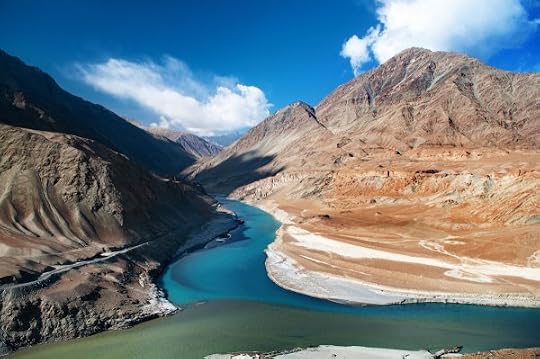
Империите на Инд се простират във времето и пространството, застъпват се, отдръпват се, поглъщат се - или просто тихо изчезват в мъглите на паметта.
Пътешествието на Алис Албиния от делтата на река Инд при Карачи до извора ѝ в Тибет е не само през ислямизиран Пакистан с неговите ограбени, индоктринирани или изоставени на произвола на племенното право жители. А и през различните - методично унищожавани от радикалните ислямисти - пластове история. От времето на далеч по-благоустроения от днешните пакистански селища древен Мохенджо Даро (3000 г. пр.н.е.), през отгласа от арийските нашествия, пътя на будизма, похода на Александър Велики, битките на моголите, английският колониализъм - чак до кървавото Разделение на Индия и Пакистан през 1947 г.
Алис Албиния смесва история и пътепис, винаги нащрек за нюансите. Познанията ѝ по урду и хинди ѝ позволяват да общува далеч по-пълноценно от масов турист с фотоапарат. Симпатията ѝ към тежката реалност на днешен Пакистан същевременно е смесена с остри наблюдения на теченията и факторите, които превръщат живота в непреодолима трудност за мнозина или пък в удобен за всякаква употреба цитат, научен в медресето по средновековен тертип.
Красотата на една от свещените реки и нейното влияние върху митология, култура, история е навсякъде из страниците. Придружена от призрака на пресушаването ѝ заради вечната човешка алчност.
Култури са оцелявали и загивали заради вода. Албиния е очертала и съвременните линии на властта, упражнявана чрез водата и конфликтите за нея по протежението на Инд.
4,5⭐️
4,5⭐️
Империите на Инд се простират във времето и пространството, застъпват се, отдръпват се, поглъщат се - или просто тихо изчезват в мъглите на паметта.
Пътешествието на Алис Албиния от делтата на река Инд при Карачи до извора ѝ в Тибет е не само през ислямизиран Пакистан с неговите ограбени, индоктринирани или изоставени на произвола на племенното право жители. А и през различните - методично унищожавани от радикалните ислямисти - пластове история. От времето на далеч по-благоустроения от днешните пакистански селища древен Мохенджо Даро (3000 г. пр.н.е.), през отгласа от арийските нашествия, пътя на будизма, похода на Александър Велики, битките на моголите, английският колониализъм - чак до кървавото Разделение на Индия и Пакистан през 1947 г.
Алис Албиния смесва история и пътепис, винаги нащрек за нюансите. Познанията ѝ по урду и хинди ѝ позволяват да общува далеч по-пълноценно от масов турист с фотоапарат. Симпатията ѝ към тежката реалност на днешен Пакистан същевременно е смесена с остри наблюдения на теченията и факторите, които превръщат живота в непреодолима трудност за мнозина или пък в удобен за всякаква употреба цитат, научен в медресето по средновековен тертип.
Красотата на една от свещените реки и нейното влияние върху митология, култура, история е навсякъде из страниците. Придружена от призрака на пресушаването ѝ заради вечната човешка алчност.
Култури са оцелявали и загивали заради вода. Албиния е очертала и съвременните линии на властта, упражнявана чрез водата и конфликтите за нея по протежението на Инд.
4,5⭐️

Empires of the Indus stretch through time and space, overlapping, receding, engulfing one another—or simply fading quietly into the mists of memory.
Alice Albinia’s journey from the Indus Delta near Karachi to its source in Tibet traverses not only through an Islamized Pakistan, with its disenfranchised, indoctrinated, or abandoned inhabitants left to the mercy of tribal law. It also moves through layers of history that are being methodically erased by radical Islamists. From the era of ancient Mohenjo-daro (3000 BC)—far better urbanized and ordered than today’s Pakistani towns—through the echo of Aryan invasions, the path of Buddhism, the campaign of Alexander the Great, the battles of the Mughals, and the British colonialism, all the way to the bloody Partition of India and Pakistan in 1947.
Alice Albinia blends history and travelogue, always attuned to nuances. Her proficiency in Urdu and Hindi allows her to connect far more meaningfully than a average tourist with a camera. Her empathy for the harsh realities of present-day Pakistan is blended with sharp observations on the forces and dynamics that turn life into an insurmountable struggle for many, or reduce it to a convenient quote memorized medieval-style in a madrasa.
The beauty of one of the sacred rivers and its profound influence on mythology, culture, and history permeates every page—accompanied by the haunting specter of its drying up due to eternal human greed.
Cultures have survived and perished over water. Albinia has also outlined the contemporary lines of power exercised through water and the conflicts surrounding it along the course of the Indus.
4,5⭐️

July 4, 2019
Writing a travel log about the sub-continent is one thing. To write an anthropological or archaeological essay is another, especially a protracting challenge if you are a westerner. It would be unfair to analyse the culture, psyche and thought patterns of India and Pakistan, with a western eye. After reading works of William Dalrymple, Mark Tully etc., this book unfortunately in my opinion, falls flat on its face.
The author after briefly reading some English commentary on the Rig Veda in her hotel room embarks on the voyage in search of the river, many a times misquoting from the scripture (e.g. Aditi as dawn), taking a complete wrong turn by disregarding the Zend Avesta in her research, or not understanding the sub-continental mindset of leaving the people, their culture and their relics unhindered.
In her defence though, I would say it is not such a bad book on travel journalism, for a westerner visiting the subcontinent purely for tourism.
The author after briefly reading some English commentary on the Rig Veda in her hotel room embarks on the voyage in search of the river, many a times misquoting from the scripture (e.g. Aditi as dawn), taking a complete wrong turn by disregarding the Zend Avesta in her research, or not understanding the sub-continental mindset of leaving the people, their culture and their relics unhindered.
In her defence though, I would say it is not such a bad book on travel journalism, for a westerner visiting the subcontinent purely for tourism.

June 1, 2008
This is a wonderful book, a triumphant mix of history and travel told in a very engaging way. Alice Albinia takes us upstream along the ancient river Indus, from the Arabian Sea in Pakistan to the river's source in Tibet, and back in time to prehistory. The rich historical evidence is explored in person through some highly adventurous forays into tribal badlands and numerous illegal border crossings, and I found it a gripping read. She is an engaging travelling companion, and writes beautifully, making this a stimulating, touching and inspiring book.

December 6, 2010
(Letter to the Author)
Hi Ms. Albinia,
I just wanted to thank you so much for writing "Empires of the Indus". I picked it up from my local Barnes & Noble a few days ago and I absolutely loved it. As an American of Pakistani & Kashmiri descent who has traveled to (and briefly lived in) Pakistan and India, your weaving of personal narrative with history was fascinating and truly enlightening. I have recommended my family members read your book as well. I hope you continue to write on the subject of the Indus River and Pakistan as it is needed now more than ever for Pakistanis to understand their history and identity beyond the religious fundamentalism they have increasingly been indoctrinated with. All the best!
Yousef M.
Hi Ms. Albinia,
I just wanted to thank you so much for writing "Empires of the Indus". I picked it up from my local Barnes & Noble a few days ago and I absolutely loved it. As an American of Pakistani & Kashmiri descent who has traveled to (and briefly lived in) Pakistan and India, your weaving of personal narrative with history was fascinating and truly enlightening. I have recommended my family members read your book as well. I hope you continue to write on the subject of the Indus River and Pakistan as it is needed now more than ever for Pakistanis to understand their history and identity beyond the religious fundamentalism they have increasingly been indoctrinated with. All the best!
Yousef M.

May 28, 2025
ஒரு குறிப்பிட்ட சமூகம் அல்லது நிலப்பரப்பைப் பற்றிய அல்புனைவு எழுத்து என்பது அரசியல், கலாச்சார வரலாறு மற்றும் சமகால நிகழ்வுகள், நேரடி கள அனுபவங்கள் எனப் பலதளங்களில் பயணிக்க நேர்கிறது. அதனால் இப்படிப்பட்ட படைப்புகளுக்கு மாறுபட்ட, பன்முகத் திறன் கொண்ட படைப்பாளிகள் தேவைப்படுகிறனர். அதே சமயம், பலநேரங்களில் அப்படிப்பட்ட படைப்பாளிகள் அது தொட்டுச்செல்லும் எல்லா துறைகளிலும் திறன் கொண்டவர்களாக இருப்பதில்லை என்பதும் ஒரு சிக்கல். அப்படி அனைத்திலும் தேர்ந்தவர்களாக இல்லாதவர்கள் கூட சற்று தடுமாறும் ஏதோ ஒரு பரிமாணத்தை தங்கள் சுவாரசியமான கதையாடல்களால் இட்டு நிரப்பி வாசகர்களின் கவனம் சிதறாமல் தக்க வைத்துக்கொள்ளும், கெட்டிக்காரத்தனம் கொண்டவர்களாக இருக்கின்றனர்.
ஆலிஸ் அல்பினியா, அப்படி ஒரு கெட்டிக்காரர். அடிப்படையில் அவர் ஒரு இலக்கிய மாணவர். கேம்பிரிட்ஜ் பல்கலைக்கழகத்தில் ஆங்கில இலக்கியம் பயின்ற அவர், தனது இளங்கலை பட்டத்திற்கு பின் நேரடியாக இந்தியாவில் பத்திரிக்கையாளராக பணிபுரிய ஆரம்பித்தார். பிறகு தென் கிழக்கு ஆசிய வரலாற்றில் பட்டம் பெற்றிருந்தாலும், பத்திரிக்கையாளராகவே தொடர்ந்தார். அதனால் வரலாற்று பயிற்சி இருந்தும், வரலாற்று ஆசிரியராக அவரை எடைபோடுவதை விட, ஒரு பத்திரிக்கையாளராக எடை போடுவதே சரியாக இருக்கும் எனது தோன்றுகிறது. அதே முறையில் அவருடைய "Empires of the Indus: The Story of a River" என்ற இந்தப் படைப்பை ஒரு பத்திரிக்கையாளர் எழுதிய பயணக்கட்டுரைகளின் தொகுப்பாகவே கருதவேண்டும்.
அந்த வகையில் இது மிக சிறப்பான படைப்பு என்றே தோன்றுகிறது. அவருடைய நேரடி பயண அனுபவங்களின் வழியாக பாகிஸ்தானில் உள்ள சிந்து நதியின் கழிமுகத்தில் ஆரம்பித்து, சீனத்தில் உள்ள தோற்றப்புள்ளி வரை செய்த பயணத்தின் மூலம், காலத்தில் முன்னும் பின்னுமாய் சென்று மனிதனின் காலடித்தடங்களை கொண்டு அவர் வடித்திருக்கும் சித்திரம் மிக சுவாரசியமானது. அத்தோடு உலகின் பல பகுதிகளுக்கும் சென்று, பார்த்து, உணரும் வாய்ப்பு கொண்ட இந்தியர்களுக்கு, அப்படி ஒரு வாய்ப்பு இனி எப்போதும் கிட்டாத பகுதியான தற்கால பாகிஸ்தானின் பல்வேறு பகுதிகளையும் மிக அருமையாக அறிமுகம் செய்து வைக்கிறார். இன்றைய பாகிஸ்தானின் பல பகுதிகள் இந்திய சரித்திரத்தில் இடம் பெற்றிருந்த போதும், பிரிவினைக்குப்பின் அவை அனைத்தும், நம் பொது புத்தியில் இருந்து சுத்தமாக மறைந்தே போயின. அப்படி அழிந்து போன தடங்களை திரும்ப கொண்டு வரும் முயற்சிதான் இந்தப் புத்தகம். இந்த புத்தகத்துக்காக "The Society of Authors" வழங்கும் இளம் எழுத்தாளர்களுக்கான "Somerset Maugham Award" என்னும் விருது 2009 ஆண்டு வழங்கப்பட்டது.
இந்த புத்தகத்தில் உள்ள கட்டுரைகள் வழியாக சிந்து நதியின் கரையில் உள்ள பல்வேறு சமூகங்களின் இருப்பு, அவர்களின் தற்கால பிரச்சினைகள் என அனைத்தையும் பூதக்கண்ணாடி கொண்டு நமக்கு காட்டுகிறார் ஆலிஸ். அப்படி வரையப்படும் சித்திரம் பல புதிய புரிதல்களை அளிப்பதோடு, ஏற்கனவே பொதுப் புத்தியில் இருக்கும் பல கருத்துக்களையும் புரட்டிப்போடுகிறது.
சூஃபி மதத்தின் தற்கால திரிந்த நிலை, மற்ற இனக்குழுக்களின் மீதான பஞ்சாபியரின் அடக்குமுறை மற்றும் சுரண்டல், நகரங்களில் இருக்கும் - குறிப்பாக இந்து தாழ்ந்த சாதியினராக கருதப்படும் சமூகத்தினர், கிறிஸ்துவர்கள் மற்றும் ஆப்பிரிக்கர் வழி வந்து, இன்று பொது நீரோட்டத்தில் கலந்து விட்ட சித்திகள் மீதான - சாதிய மற்றும் மத ரீதியான சுரண்டல்கள், மூட நம்பிக்கைகள் என பாகிஸ்தானிய தற்கால சமூகத்தின் மீதான மிகக் கூர்மையான பார்வையை, தனது நேரடியான கள அனுபவங்களின் வழியாக காட்சிப்படுத்துகிறார் ஆலிஸ்.
அவர் சறுக்குமிடம், வரலாறு என்ற ஒற்றைப் புள்ளிதான். பல இடங்களில் அவருடைய வரலாற்றைப் பற்றிய மேலோட்டமான குறிப்புகள் பல்லிளிக்கின்றன. உதாரணமாக காலம்காலமாக பாகிஸ்தானில் தங்கள் அடையாளத்தோடு போராடும் சித்திகள் சமூகத்தைப் பற்றிக் குறிப்பிடும் போது, தென்னிந்திய வரலாற்றில் பாமினி சுல்தான்களில் கறுப்பின அடிமையாக இருந்து அரசாட்சிக்கு வந்த மாலிக் ஆம்பரைப் பற்றி அவரை அக்பரின் எதிரியாக குறிப்பிடுகிறார். உண்மையில் அவர் ஜஹாங்கிர் மற்றும் ஷாஜகானின் காலத்தவர். அதே மூச்சில் திப்பு சுல்தானைப்பற்றிக் குறிப்பிட்டு அவரும் ஒரு ஆப்பிரிக்கர் என அடித்து விடுவது நிறடுகிறது. சமூக வலைத்தளங்களில் பலகாலமாக திப்பு திப் எனப்படும் டான்ஸானிய கொள்ளைக்காரனின் புகைப்படத்தை வைத்து திரிக்கப்பட்ட வதந்திக் கயிறுதான் இது. அதை அடிப்படையாக வைத்து அடித்துவிடுவது ஆலிஸின் சிறப்பான இந்தப் படைப்புக்கு ஒரு கரும்புள்ளிதான். தனது ஒன்று விட்ட சகோதரரும், முன்னணி இந்திய வரலாற்று ஆசிரியருமான, வில்லியம் டால்ரிம்பிளிடம் இதை சொல்லியிருந்தால் கூட அவர் இது போன்ற அடிப்படை தவறுகளை திருத்தியிருப்பாரே!
இதையெல்லாம் தாண்டி, மிக அபாயகரமான பகுதிகள் எனக் கருதப்படும் வஸீரிஸ்த்தான், பலுச்சிஸ்தான் போன்ற பகுதிகளிலும், சீனாவின் உள்ளே சென்று திபெத்திலும் அவர் நிகழ்த்தும் பயணங்கள், மிக சுவாரசியமாக இருப்பதோடு, இதுவரை அறியாத பல நுணுக்கமான உண்மைகளையும் முன்னிறுத்துகிறது.
மொத்தத்தில் இந்த வருடம் இதுவரை வாசித்தவற்றிலேயே இந்த புத்தகத்தை குறிப்பிடத்தக்க ஒன்றாக என்னைக் கருதவைக்கிறது.
ஆலிஸ் அல்பினியா, அப்படி ஒரு கெட்டிக்காரர். அடிப்படையில் அவர் ஒரு இலக்கிய மாணவர். கேம்பிரிட்ஜ் பல்கலைக்கழகத்தில் ஆங்கில இலக்கியம் பயின்ற அவர், தனது இளங்கலை பட்டத்திற்கு பின் நேரடியாக இந்தியாவில் பத்திரிக்கையாளராக பணிபுரிய ஆரம்பித்தார். பிறகு தென் கிழக்கு ஆசிய வரலாற்றில் பட்டம் பெற்றிருந்தாலும், பத்திரிக்கையாளராகவே தொடர்ந்தார். அதனால் வரலாற்று பயிற்சி இருந்தும், வரலாற்று ஆசிரியராக அவரை எடைபோடுவதை விட, ஒரு பத்திரிக்கையாளராக எடை போடுவதே சரியாக இருக்கும் எனது தோன்றுகிறது. அதே முறையில் அவருடைய "Empires of the Indus: The Story of a River" என்ற இந்தப் படைப்பை ஒரு பத்திரிக்கையாளர் எழுதிய பயணக்கட்டுரைகளின் தொகுப்பாகவே கருதவேண்டும்.
அந்த வகையில் இது மிக சிறப்பான படைப்பு என்றே தோன்றுகிறது. அவருடைய நேரடி பயண அனுபவங்களின் வழியாக பாகிஸ்தானில் உள்ள சிந்து நதியின் கழிமுகத்தில் ஆரம்பித்து, சீனத்தில் உள்ள தோற்றப்புள்ளி வரை செய்த பயணத்தின் மூலம், காலத்தில் முன்னும் பின்னுமாய் சென்று மனிதனின் காலடித்தடங்களை கொண்டு அவர் வடித்திருக்கும் சித்திரம் மிக சுவாரசியமானது. அத்தோடு உலகின் பல பகுதிகளுக்கும் சென்று, பார்த்து, உணரும் வாய்ப்பு கொண்ட இந்தியர்களுக்கு, அப்படி ஒரு வாய்ப்பு இனி எப்போதும் கிட்டாத பகுதியான தற்கால பாகிஸ்தானின் பல்வேறு பகுதிகளையும் மிக அருமையாக அறிமுகம் செய்து வைக்கிறார். இன்றைய பாகிஸ்தானின் பல பகுதிகள் இந்திய சரித்திரத்தில் இடம் பெற்றிருந்த போதும், பிரிவினைக்குப்பின் அவை அனைத்தும், நம் பொது புத்தியில் இருந்து சுத்தமாக மறைந்தே போயின. அப்படி அழிந்து போன தடங்களை திரும்ப கொண்டு வரும் முயற்சிதான் இந்தப் புத்தகம். இந்த புத்தகத்துக்காக "The Society of Authors" வழங்கும் இளம் எழுத்தாளர்களுக்கான "Somerset Maugham Award" என்னும் விருது 2009 ஆண்டு வழங்கப்பட்டது.
இந்த புத்தகத்தில் உள்ள கட்டுரைகள் வழியாக சிந்து நதியின் கரையில் உள்ள பல்வேறு சமூகங்களின் இருப்பு, அவர்களின் தற்கால பிரச்சினைகள் என அனைத்தையும் பூதக்கண்ணாடி கொண்டு நமக்கு காட்டுகிறார் ஆலிஸ். அப்படி வரையப்படும் சித்திரம் பல புதிய புரிதல்களை அளிப்பதோடு, ஏற்கனவே பொதுப் புத்தியில் இருக்கும் பல கருத்துக்களையும் புரட்டிப்போடுகிறது.
சூஃபி மதத்தின் தற்கால திரிந்த நிலை, மற்ற இனக்குழுக்களின் மீதான பஞ்சாபியரின் அடக்குமுறை மற்றும் சுரண்டல், நகரங்களில் இருக்கும் - குறிப்பாக இந்து தாழ்ந்த சாதியினராக கருதப்படும் சமூகத்தினர், கிறிஸ்துவர்கள் மற்றும் ஆப்பிரிக்கர் வழி வந்து, இன்று பொது நீரோட்டத்தில் கலந்து விட்ட சித்திகள் மீதான - சாதிய மற்றும் மத ரீதியான சுரண்டல்கள், மூட நம்பிக்கைகள் என பாகிஸ்தானிய தற்கால சமூகத்தின் மீதான மிகக் கூர்மையான பார்வையை, தனது நேரடியான கள அனுபவங்களின் வழியாக காட்சிப்படுத்துகிறார் ஆலிஸ்.
அவர் சறுக்குமிடம், வரலாறு என்ற ஒற்றைப் புள்ளிதான். பல இடங்களில் அவருடைய வரலாற்றைப் பற்றிய மேலோட்டமான குறிப்புகள் பல்லிளிக்கின்றன. உதாரணமாக காலம்காலமாக பாகிஸ்தானில் தங்கள் அடையாளத்தோடு போராடும் சித்திகள் சமூகத்தைப் பற்றிக் குறிப்பிடும் போது, தென்னிந்திய வரலாற்றில் பாமினி சுல்தான்களில் கறுப்பின அடிமையாக இருந்து அரசாட்சிக்கு வந்த மாலிக் ஆம்பரைப் பற்றி அவரை அக்பரின் எதிரியாக குறிப்பிடுகிறார். உண்மையில் அவர் ஜஹாங்கிர் மற்றும் ஷாஜகானின் காலத்தவர். அதே மூச்சில் திப்பு சுல்தானைப்பற்றிக் குறிப்பிட்டு அவரும் ஒரு ஆப்பிரிக்கர் என அடித்து விடுவது நிறடுகிறது. சமூக வலைத்தளங்களில் பலகாலமாக திப்பு திப் எனப்படும் டான்ஸானிய கொள்ளைக்காரனின் புகைப்படத்தை வைத்து திரிக்கப்பட்ட வதந்திக் கயிறுதான் இது. அதை அடிப்படையாக வைத்து அடித்துவிடுவது ஆலிஸின் சிறப்பான இந்தப் படைப்புக்கு ஒரு கரும்புள்ளிதான். தனது ஒன்று விட்ட சகோதரரும், முன்னணி இந்திய வரலாற்று ஆசிரியருமான, வில்லியம் டால்ரிம்பிளிடம் இதை சொல்லியிருந்தால் கூட அவர் இது போன்ற அடிப்படை தவறுகளை திருத்தியிருப்பாரே!
இதையெல்லாம் தாண்டி, மிக அபாயகரமான பகுதிகள் எனக் கருதப்படும் வஸீரிஸ்த்தான், பலுச்சிஸ்தான் போன்ற பகுதிகளிலும், சீனாவின் உள்ளே சென்று திபெத்திலும் அவர் நிகழ்த்தும் பயணங்கள், மிக சுவாரசியமாக இருப்பதோடு, இதுவரை அறியாத பல நுணுக்கமான உண்மைகளையும் முன்னிறுத்துகிறது.
மொத்தத்தில் இந்த வருடம் இதுவரை வாசித்தவற்றிலேயே இந்த புத்தகத்தை குறிப்பிடத்தக்க ஒன்றாக என்னைக் கருதவைக்கிறது.

March 30, 2014
Springing from deep in the earth in the mountains of Tibet, the river Indus, which gave the Indian subcontinent it's name, it's life, it's majority religion and it's primary culture would seem a vast subject for a first book by a young author. Rivaling one of my all-time favorite books, The Black Sea by Neal Ascherson, Alice Albinia deftly weaves together the story of the Indus river in a lively, personally engaging account of her journey from the environmentally threatened delta in today's Pakistan, to its source beyond Mount Kailash in Tibet.
We meet contemporary fisherfolk of the delta who's livelihood is threatened by the rapidly changing climate brought about by over-irrigation begun during the Raj. From a series of illegal border crossings between Afghanistan and India we meet members of the Kalash and Dard minority peoples struggling to maintain their unique culture, language and religion in the face of regional modernization. The role of the river is highlighted in the longstanding conflict between India and Pakistan.
Where the author really shines though is bringing to life the northern Indus River valley which gave birth to the hymns of the Rig Veda. Rounding a corner she'll see the rushing current and spontaneously break into hymn. Finding a Paleolithic rock painting as yet unseen by archaeologists we are brought back in time. Truly a wonderful synthesis of travel, adventure, culture, religion, geography, politics and ecology, Alice Albinia, makes a lasting contribution to Indus River scholarship.
We meet contemporary fisherfolk of the delta who's livelihood is threatened by the rapidly changing climate brought about by over-irrigation begun during the Raj. From a series of illegal border crossings between Afghanistan and India we meet members of the Kalash and Dard minority peoples struggling to maintain their unique culture, language and religion in the face of regional modernization. The role of the river is highlighted in the longstanding conflict between India and Pakistan.
Where the author really shines though is bringing to life the northern Indus River valley which gave birth to the hymns of the Rig Veda. Rounding a corner she'll see the rushing current and spontaneously break into hymn. Finding a Paleolithic rock painting as yet unseen by archaeologists we are brought back in time. Truly a wonderful synthesis of travel, adventure, culture, religion, geography, politics and ecology, Alice Albinia, makes a lasting contribution to Indus River scholarship.

January 2, 2025
This one can be a bit patchy but when its good, its a really good travelogue combining the an audacious adventure with fascinating local history of the areas abutting the Indus. The chapter about the trip to the source of the Indus is great and I learned that the centre of Sikh culture is in current day Pakistan.

March 12, 2018
Amazing book. So many things are there in details. Will love to read it again. This book is more like history and travelogue.

June 14, 2012
I am showing signs of travelogue addiction, and this is the kind of book that creates it! It's not just the content of the book, which is marvelous and makes for a treasure trove of information, but the sheer tenacity and guts the author displays, that has made me a fan. Spanning four countries, this book is the story of the river Indus, from its source to its destination, though not in a linear way. What it succeeds in doing, like the best travelogues do, is to also allow us to travel through time, in this case, even to the time before man existed. From Hindu mythology to the Harappa civilisation to Partition and the Kargil conflict and China's occupation of Tibet, the book is not just the story, but the history of a subcontinent (at least a part of it) and the civilisations that rose and fell.
The preface gives us an idea of the expanse of the river through its various names, given across lands and by everyone from Greek soldiers to Sufi saints.
There are nuggets everywhere right from the beginning - the comparison of the arrangements of the Quran and the Rig Veda, the integrity shown by a citizen in the early days of Pakistan's formation, a modern day citizen blaming Jinnah for the country's authoritarian culture, a nation's search for identity, and the vision of its founder, who was only human. The first chapter 'Ramzan in Karachi' is a book in itself, and this can be said of all the chapters! 'Conquering the classic river' is a slice of the Company's India exploits, 'Ethiopia's first fruit' shows the amazing 'presence' of Africa in the subcontinent's history and present, and the facets of their absorption into the mainstream. 'River Saints' is about Sufism and its modern day remnants who are not beyond politics, religious conflicts and feudalism.
'Up the Khyber' is about the exploits of Mahmud of Ghazni, the sexual preferences in the frontier province, and the beginning of the author's more difficult challenges as she zigs and zags through Taliban and smuggler territory. 'Buddha on the Silk Road' is an awesome chapter on the meeting of 3 great religions - Hinduism, Islam and Buddhism and how they influence each other in the area, down to the destruction of the ancient Bamiyan statues more recently. In 'Alexander at the outer ocean', the author stubbornly walks, despite very serious hardships, the route that the Sikunder-e-azam took.'Indra's Beverage' takes us back to Rig Veda times, the Aryans and ancient Stonehenge like relics that survive to this day, along with the Kalash tribe, which follows a religion that goes back beyond Hinduism. Some areas, as the vivid prose describes them, seem to exist the same way they did in Rig Vedic times. The incredibly advanced Harappa civilisation is showcased in 'Alluvial Cities', though the reason for their fall is still contested. Kashmir's archaeological treasures are the focus in 'Huntress of the lithic' and it's interesting to see how the same 'painting' has been reinterpreted across time by various people to suit their needs. In the final chapter, the author captures the startling contrast of man's attempts to conquer nature and at the other end of the scale, his ever decreasing ability to live in harmony. This chapter is also a testament to her commitment to the book, and the mentions of Kailash and the possibilities of Meru were extremely interesting to someone like me, who is interested in Hindu mythology. The book's final words, which makes us wonder how long the river which spawned civilisations will be around, is a melancholic gaze into the future.
At 300 odd pages, every page of this book is packed, and there is no respite. But it's completely worth it!
The preface gives us an idea of the expanse of the river through its various names, given across lands and by everyone from Greek soldiers to Sufi saints.
There are nuggets everywhere right from the beginning - the comparison of the arrangements of the Quran and the Rig Veda, the integrity shown by a citizen in the early days of Pakistan's formation, a modern day citizen blaming Jinnah for the country's authoritarian culture, a nation's search for identity, and the vision of its founder, who was only human. The first chapter 'Ramzan in Karachi' is a book in itself, and this can be said of all the chapters! 'Conquering the classic river' is a slice of the Company's India exploits, 'Ethiopia's first fruit' shows the amazing 'presence' of Africa in the subcontinent's history and present, and the facets of their absorption into the mainstream. 'River Saints' is about Sufism and its modern day remnants who are not beyond politics, religious conflicts and feudalism.
'Up the Khyber' is about the exploits of Mahmud of Ghazni, the sexual preferences in the frontier province, and the beginning of the author's more difficult challenges as she zigs and zags through Taliban and smuggler territory. 'Buddha on the Silk Road' is an awesome chapter on the meeting of 3 great religions - Hinduism, Islam and Buddhism and how they influence each other in the area, down to the destruction of the ancient Bamiyan statues more recently. In 'Alexander at the outer ocean', the author stubbornly walks, despite very serious hardships, the route that the Sikunder-e-azam took.'Indra's Beverage' takes us back to Rig Veda times, the Aryans and ancient Stonehenge like relics that survive to this day, along with the Kalash tribe, which follows a religion that goes back beyond Hinduism. Some areas, as the vivid prose describes them, seem to exist the same way they did in Rig Vedic times. The incredibly advanced Harappa civilisation is showcased in 'Alluvial Cities', though the reason for their fall is still contested. Kashmir's archaeological treasures are the focus in 'Huntress of the lithic' and it's interesting to see how the same 'painting' has been reinterpreted across time by various people to suit their needs. In the final chapter, the author captures the startling contrast of man's attempts to conquer nature and at the other end of the scale, his ever decreasing ability to live in harmony. This chapter is also a testament to her commitment to the book, and the mentions of Kailash and the possibilities of Meru were extremely interesting to someone like me, who is interested in Hindu mythology. The book's final words, which makes us wonder how long the river which spawned civilisations will be around, is a melancholic gaze into the future.
At 300 odd pages, every page of this book is packed, and there is no respite. But it's completely worth it!

August 25, 2020
I’ve never seen a finer piece of travel journalism. Albina just moves through the countryside living with locals and learning their folklore. She enters communities and conveys their experiences all the way up the Indus from Karachi to Tibet: survivors of the Pakistan/India partition, the descendants of Black slaves, the Sikhs, the Pashtuns, the locals of the militarized boundaries with India, the “people of the Rig Vedic Aryans,” the somewhat matriarchal Ladakhis, and the Tibetans under Chinese administration. She seems endlessly curious, tracking down and getting translations of local manuscripts or trekking to canyons engraved with Palaeolithic-age rock art. Almost all of the journey is fascinating, the only real flaw being an overly detailed report of a long cross-country walk to trace the route of Alexander the Great. Through it all, Albinia shows how people experience the destruction of the river: how it is drained, diverted, dammed by upstream nations to a point close to death.

October 31, 2021
It is a masterpiece by Alice Albinia. Fits right up there with Sapiens, Silk Roads and some of the finest works of History I've read, although limited in scope compared with the other two that I've mentioned. But this is a must-read for all South Asians. Loved every bit of it.

August 16, 2020
I spent an entire week on a book that part aggravated and part fascinated me. The Empires of the Indus by its back cover summary alone is supposed to be a journey upstream on the river from the Delta in Sindh to its source Mount Kailash in Tibet. It is also supposed to be a journey from present day all the way back into 50 million years covering the empires this river birthed, nourished and destroyed.
Incredible premise so far right? Anyone would be keen to pick this book.
Reading this book, I was surprised to find it was not a 100% historical account of the river. It was a travelogue of a British author who was journeying along the river while liberally throwing in equal parts history and personal experiences/narrative.
Alice speaks some Urdu and clothed in local attire she looks Afghani or Pashtun which allows her to blend in (in her own words). She undertakes a journey in several parts as she travels upstream indus while steadily writing about the empires of the past - the timeline stretches backwards as she moves up further north. The river takes her through Sindh, Frontier, Afghanistan, Baltistan, Ladakh and Tibet. The history she narrates covers the Colonial efforts to conquer this river by overthrowing the the ruling elites in Sindh, the Sindhi saints like Uderolal who brought faiths together, the Sikh gurus, Buddhism on the banks, Aryans, Alexander, Alluvial Cities all the way to the neolithic and paleolithic cities and cultures in Ladakh and Tibet. The history is incredible and it underwrites that, like Nadeem Farooq Paracha said, Pakistans Identity is a convergence of multiple points of entry in history.
(if you want you can quit reading here-on - because rest is all all criticism)
This would have been a very enjoyable read if the author had not decided to narrate in a complete biased, condescending and censorious manner. Alice represents the worst of western travel writers who come to Pakistan to exploit its hospitality, not bother to learn about its cultures or customs (especially then they’re so different from theirs) and neatly package their narrative to serve western audiences. From time and again she shows up on door steps of locals who take her in without question (because that is how hospitality works here) while she lambastes their culture and practices in her writing. In KPK particularly when she wants to hike through mountains, she disrespects her hosts opinions and fears by laughing in their face pg188 and writes about their warnings as “the horror stories started again” pg196. She does illegal border crossings multiple times wearing a burqa and based on the tone of her writing expects the reader to give her a medal for it. She dubiously quotes people that borderline Raj Nostalgia - Sikh individual is quoted “still today every Sikh would lay their lives for the Britishers” pg124 and a Sindhi is quoted “things were so much better during British time”. Ill not lie - these made me sick.
She never stays in a place long enough to understand it or its cultural nuances but uses a shitload of second hand opinions (likely from some armchair commentators she stayed with in Islamabad and Delhi) to paint the customs, people and geopolitics in terrible light. Her present day knowledge is half baked and inaccurate- some examples are: fair and lovely made in swat pg174, Alexanders story is written in the Quran pg215, Prophet avowed to invade India pg136, Sohni from Sohni Meharwal drowned in Indus pg90, Prophet in his last sermon said no white has [priority] over black except in righteousness pg56 to quote a few. She makes dangerous and offensive generalization and judgements like: Pashtuns in KPK and Afghanistan are child molesters and homosexual pg142 , Pakistanis are inherently paranoid because of dictatorship pg192, Going up Khyber is a hackneyed rite pg140. Pakistanis secretly pine for India pg117 (no, we pine for peace and I am sure the folks across border wish the same), She quotes convenient history - i.e where there are multiple sources and theorie for something she sticks with the ones she prefers instead of being objective - for example she writes: Sehwanistan derives form Sivistan city of Shiva pg97, Ismailis hail Hazrat Ali as the 10th Avatar of hindu God Vishnu pg95 (I had to ask a few Ismaili friends about this one).
I read somewhere that this book helps in realizing that Pakistan is not the monolithic country people outside have come to believe but Alice through her narrative reinforces over and over again that while the history may be vibrant the current state is along the lines of the same monolithic narrative that is spewed everywhere.
If you can manage to separate the authors personal narrative from the history this book is a good read - other wise I’ll conclude with this: One of the dangers of ignorant writing is that it engenders and re-enforces ignorant opinions. We already see when some folks skewed perspective of Afghanistan is fleshed out through Khalid Hossieni’s writings.
(Maybe one day may re-read it)
Incredible premise so far right? Anyone would be keen to pick this book.
Reading this book, I was surprised to find it was not a 100% historical account of the river. It was a travelogue of a British author who was journeying along the river while liberally throwing in equal parts history and personal experiences/narrative.
Alice speaks some Urdu and clothed in local attire she looks Afghani or Pashtun which allows her to blend in (in her own words). She undertakes a journey in several parts as she travels upstream indus while steadily writing about the empires of the past - the timeline stretches backwards as she moves up further north. The river takes her through Sindh, Frontier, Afghanistan, Baltistan, Ladakh and Tibet. The history she narrates covers the Colonial efforts to conquer this river by overthrowing the the ruling elites in Sindh, the Sindhi saints like Uderolal who brought faiths together, the Sikh gurus, Buddhism on the banks, Aryans, Alexander, Alluvial Cities all the way to the neolithic and paleolithic cities and cultures in Ladakh and Tibet. The history is incredible and it underwrites that, like Nadeem Farooq Paracha said, Pakistans Identity is a convergence of multiple points of entry in history.
(if you want you can quit reading here-on - because rest is all all criticism)
This would have been a very enjoyable read if the author had not decided to narrate in a complete biased, condescending and censorious manner. Alice represents the worst of western travel writers who come to Pakistan to exploit its hospitality, not bother to learn about its cultures or customs (especially then they’re so different from theirs) and neatly package their narrative to serve western audiences. From time and again she shows up on door steps of locals who take her in without question (because that is how hospitality works here) while she lambastes their culture and practices in her writing. In KPK particularly when she wants to hike through mountains, she disrespects her hosts opinions and fears by laughing in their face pg188 and writes about their warnings as “the horror stories started again” pg196. She does illegal border crossings multiple times wearing a burqa and based on the tone of her writing expects the reader to give her a medal for it. She dubiously quotes people that borderline Raj Nostalgia - Sikh individual is quoted “still today every Sikh would lay their lives for the Britishers” pg124 and a Sindhi is quoted “things were so much better during British time”. Ill not lie - these made me sick.
She never stays in a place long enough to understand it or its cultural nuances but uses a shitload of second hand opinions (likely from some armchair commentators she stayed with in Islamabad and Delhi) to paint the customs, people and geopolitics in terrible light. Her present day knowledge is half baked and inaccurate- some examples are: fair and lovely made in swat pg174, Alexanders story is written in the Quran pg215, Prophet avowed to invade India pg136, Sohni from Sohni Meharwal drowned in Indus pg90, Prophet in his last sermon said no white has [priority] over black except in righteousness pg56 to quote a few. She makes dangerous and offensive generalization and judgements like: Pashtuns in KPK and Afghanistan are child molesters and homosexual pg142 , Pakistanis are inherently paranoid because of dictatorship pg192, Going up Khyber is a hackneyed rite pg140. Pakistanis secretly pine for India pg117 (no, we pine for peace and I am sure the folks across border wish the same), She quotes convenient history - i.e where there are multiple sources and theorie for something she sticks with the ones she prefers instead of being objective - for example she writes: Sehwanistan derives form Sivistan city of Shiva pg97, Ismailis hail Hazrat Ali as the 10th Avatar of hindu God Vishnu pg95 (I had to ask a few Ismaili friends about this one).
I read somewhere that this book helps in realizing that Pakistan is not the monolithic country people outside have come to believe but Alice through her narrative reinforces over and over again that while the history may be vibrant the current state is along the lines of the same monolithic narrative that is spewed everywhere.
If you can manage to separate the authors personal narrative from the history this book is a good read - other wise I’ll conclude with this: One of the dangers of ignorant writing is that it engenders and re-enforces ignorant opinions. We already see when some folks skewed perspective of Afghanistan is fleshed out through Khalid Hossieni’s writings.
(Maybe one day may re-read it)

September 15, 2023
I bought this book on an impulse browsing through a bookstore. It turned out to be a great decision! I love the narrative and writing style with the combination of travelogue interspersed with history, geography and politics. The author’s sense of humour appealed to me; pithy and frank, which I found refreshing and not at all condescending as some foreign authors tend to be. I admire the author’s courage and initiative to travel in those parts of the World alone relying on government, quasi-government, local volunteers, their friends and friends of friends. Overall a great read that I wholly recommend.

September 22, 2021
Apart from a few historical inaccuracies and misrepresentations, this is a great read on the mighty Indus and South Asian history in general.

September 26, 2016
3.5★ for this incredibly detailed and interesting journey up the length of the Indus and back in time.
I have seen this - upriver and back in time - done before and probably more engagingly in Simon Winchester's book, The River At The Centre Of The World, written 10 years earlier about the Yangtze, but that doesn't diminish my admiration for what this Brit journalist achieved as a 29yo solo, female traveller in a part of the world where you would not expect smooth sailing (pun intended). At times the history defeated me, as I lost track of the who, the where and the when, so on the whole I would say I enjoyed the parts of the book that described Albinia's contemporary journey more.
There are a couple of maps and a few photographs (of dubious value in my ebook edition), but Albinia's writing was enough for me to get the mental picture:
There are mountains of warty rocky outcrops, with abrasions all over the surface, like the rough skin on an elbow. There are fields of rubble in which every stone is a different colour: orange, red, white, grey, blue, brown; and every one a different consistency: flecks of crystal, brushstrokes of colour on a white or black base, hollowed out like honeycomb, smooth and polished, speckled, ringed like Saturn.
Her objective was to reach the source of the Indus, which she did, but it's clear she wasn't convinced at the time.
we follow the stream up to the top of this gentle hill and there it ends, in a pale rock face at the foot of which water bubbles up from the mossy earth.
This is by no means a travelogue in the usual sense, but still I think it gives a good sense of what it was like to travel through Pakistan/Afghanistan/India/Tibet in the mid-noughties.
I have seen this - upriver and back in time - done before and probably more engagingly in Simon Winchester's book, The River At The Centre Of The World, written 10 years earlier about the Yangtze, but that doesn't diminish my admiration for what this Brit journalist achieved as a 29yo solo, female traveller in a part of the world where you would not expect smooth sailing (pun intended). At times the history defeated me, as I lost track of the who, the where and the when, so on the whole I would say I enjoyed the parts of the book that described Albinia's contemporary journey more.
There are a couple of maps and a few photographs (of dubious value in my ebook edition), but Albinia's writing was enough for me to get the mental picture:
There are mountains of warty rocky outcrops, with abrasions all over the surface, like the rough skin on an elbow. There are fields of rubble in which every stone is a different colour: orange, red, white, grey, blue, brown; and every one a different consistency: flecks of crystal, brushstrokes of colour on a white or black base, hollowed out like honeycomb, smooth and polished, speckled, ringed like Saturn.
Her objective was to reach the source of the Indus, which she did, but it's clear she wasn't convinced at the time.
we follow the stream up to the top of this gentle hill and there it ends, in a pale rock face at the foot of which water bubbles up from the mossy earth.
This is by no means a travelogue in the usual sense, but still I think it gives a good sense of what it was like to travel through Pakistan/Afghanistan/India/Tibet in the mid-noughties.

January 22, 2013
This is a complex, beautiful book by a bright, young-at-the-time writer. Albinia structures this combined history / travel book as a trip up the Indus from its mouth to its headwaters, and through its history from the present back to geological time. She researched the river's history and prepared for her trip for a year before going, and that investment shows: she journeys to truly obscure places, and knows what to look for when she gets there, so the account is rich. Other reviewers have described her as fearless; she travels through parts of Pakistan where most Europeans would fear to tread, and with only one or two local contacts as an escort. On the other hand, her own personality is unobtrusive; her narrative keeps the spotlight on the people she meets, the land, and the history.
Overall, it is a fascinating but not cheerful book (although you can sense the pleasure she takes in the people she meets). The Indus, most of which is now in Pakistan, has a rich, complex history, and one of the main themes of the book is the way different cultures and traditions have shaped each other over the years - and before modern times, co-existed. Another theme is the degree to which modernity, in the form of religious fundamentalism and economic pressures, is sweeping away many of the cultural, archeological, and ecological relics of the Indus' long past. Albinia's approach to her material is analytical, poised, and fiercely intelligent, but by the end of her travels she seems on the verge of an emotional crash. She speculates that this is in part a reaction to high elevation, but it may also be the result of engaging with cultures on their own terms while simultaneously maintaining a wry, critical eye that doesn't look away from the squalor and injustice she encounters. Overall, this is a fantastic book to deepen one's understanding and appreciation of Pakistan and the Indus valley, if not to give much hope for its future.
Overall, it is a fascinating but not cheerful book (although you can sense the pleasure she takes in the people she meets). The Indus, most of which is now in Pakistan, has a rich, complex history, and one of the main themes of the book is the way different cultures and traditions have shaped each other over the years - and before modern times, co-existed. Another theme is the degree to which modernity, in the form of religious fundamentalism and economic pressures, is sweeping away many of the cultural, archeological, and ecological relics of the Indus' long past. Albinia's approach to her material is analytical, poised, and fiercely intelligent, but by the end of her travels she seems on the verge of an emotional crash. She speculates that this is in part a reaction to high elevation, but it may also be the result of engaging with cultures on their own terms while simultaneously maintaining a wry, critical eye that doesn't look away from the squalor and injustice she encounters. Overall, this is a fantastic book to deepen one's understanding and appreciation of Pakistan and the Indus valley, if not to give much hope for its future.

September 2, 2010
British journalist Alice Albinia, in her first book, follows the Indus River from its mouth in the Arabian Sea, through Pakistan and finally to its source in Tibet. In the process, she introduces us to people on the way and tells of the history of the regions along the Indus. And there is a lot of history, indeed.
Albinia seems to be not only a historian and journalist but more than capable as a geologist, archaeologist, anthropologist, linguist and explorer. And an adventurer -- she makes Indiana Jones seem rather dull by comparison.
On a couple of occasions, she enters Afghanistan, even though the Indus doesn't. She does this the first time to follow the story she's telling. The second time she does it because she didn't get her passport properly stamped the first time -- so she needs to re-enter Afghanistan in order to legally travel in Pakistan.
You learn just about everything you need to know about Albinia in one sentence, on Page 145:
"My companions on this trip are two anxious young Afghan men, Najib and Hamad, whom I met the previous evening."
This isn't a trip around the block; it's the aforementioned trip from Afghanistan into Pakistan. And she chooses to travel with two men she met the night before.
And this was sometime around 2005, when if there was any country more dangerous to travel in than Afghanistan, it was Pakistan.
There's adventure around every corner in this book, told eloquently, but with typical British understatement. I liked it very much, and I'm looking forward to reading whatever Albinia writes about next.
Albinia seems to be not only a historian and journalist but more than capable as a geologist, archaeologist, anthropologist, linguist and explorer. And an adventurer -- she makes Indiana Jones seem rather dull by comparison.
On a couple of occasions, she enters Afghanistan, even though the Indus doesn't. She does this the first time to follow the story she's telling. The second time she does it because she didn't get her passport properly stamped the first time -- so she needs to re-enter Afghanistan in order to legally travel in Pakistan.
You learn just about everything you need to know about Albinia in one sentence, on Page 145:
"My companions on this trip are two anxious young Afghan men, Najib and Hamad, whom I met the previous evening."
This isn't a trip around the block; it's the aforementioned trip from Afghanistan into Pakistan. And she chooses to travel with two men she met the night before.
And this was sometime around 2005, when if there was any country more dangerous to travel in than Afghanistan, it was Pakistan.
There's adventure around every corner in this book, told eloquently, but with typical British understatement. I liked it very much, and I'm looking forward to reading whatever Albinia writes about next.

November 23, 2010
Quite well-written -- I'd be interested in reading more books by this author. I've always found narratives of travel in Kashmir confusing, even with a map provided, and the final chapter on the headwaters of the Indus in Tibet seemed an anti-climax to me, but I highly recommend the book to those interested in the region, especially stories of solo female travelers.

March 24, 2013
This books takes you on a long deep journey of civilization of the greater Sindhu. its simply owsome. jeay sindh (indus)
December 13, 2020
You can't get much more off the beaten track than Alice Albinia's travels from the Arabian Sea up the Indus River, through Pakistan, Baluchistan, the Punjab, Afghanistan, Jammu & Kashmir, Baltistan and finally Tibet. I've read rows of travelogues by women sojourners, ranging from those who travel with camel trains of guides and supplies, others with just a companion or two and a donkey cart, but none who has ventured into such treacherous terrain or politically dangerous sites alone, and I mean alone. There's hardly a mention of a sleeping bag; a cooking stove was a luxury only purchased on the upper heights of Tibet; and if mountaineering boots were in her backpack, she forgot to mention them. I wish she had included a list of the contents of her backpack as an epilogue; this woman knew how to travel light.
As we follow her across muddy plains and snow-covered mountains, she relates the stories that have brought her to the region--of past kings and warriors, prophets and outlaws in the Urdu she has learned that enables this lone western traveller to be accepted. She buys a burqa to cover herself when she needs to (trying on several to find one that covers yet allows movement), but pulls on flowery shalwar kameez when using her feminine wiles to convince military guards and other gatekeepers to let her visit otherwise forbidden sites. Despite travelling through some of what is labelled as the most dangerous terrain in the world, I only remember two instances of when she was afraid, and one was when a stray village dog barked and she picked up a stone to defend herself if needed. This was one gutsy traveller; the traveller many of us would like to be but wouldn't dare. The traveller who manages on old military and survey maps, depends on strangers' hospitality for a roof over her head at night and a warm cup of tea in the morning., and ruminates as she walks on the "separatist sentiments that have ruled over hundreds of years of shared culture."
Alice Albinia's book is a page-turner, a rare travelogue of a place few of us will ever travel (or ever thought we would want to travel), told by someone with the self-assurance of an intellectually curious optimist. I've read enough histories of this part of the world to be fairly familiar with both its ancient roots, epic tales, religious sects and history right up and through the 1947 Indian-Pakistan partition, but few have that spark of personal involvement that Empires of the Indus has that keeps you up at night reading page after page. By the last chapter I was in tears (spoiler alert) along with her as, at the end of her trail, she looks across at the 'source of the indus', no more, dammed up into oblivion to generate hydro-electric power for China.
As we follow her across muddy plains and snow-covered mountains, she relates the stories that have brought her to the region--of past kings and warriors, prophets and outlaws in the Urdu she has learned that enables this lone western traveller to be accepted. She buys a burqa to cover herself when she needs to (trying on several to find one that covers yet allows movement), but pulls on flowery shalwar kameez when using her feminine wiles to convince military guards and other gatekeepers to let her visit otherwise forbidden sites. Despite travelling through some of what is labelled as the most dangerous terrain in the world, I only remember two instances of when she was afraid, and one was when a stray village dog barked and she picked up a stone to defend herself if needed. This was one gutsy traveller; the traveller many of us would like to be but wouldn't dare. The traveller who manages on old military and survey maps, depends on strangers' hospitality for a roof over her head at night and a warm cup of tea in the morning., and ruminates as she walks on the "separatist sentiments that have ruled over hundreds of years of shared culture."
Alice Albinia's book is a page-turner, a rare travelogue of a place few of us will ever travel (or ever thought we would want to travel), told by someone with the self-assurance of an intellectually curious optimist. I've read enough histories of this part of the world to be fairly familiar with both its ancient roots, epic tales, religious sects and history right up and through the 1947 Indian-Pakistan partition, but few have that spark of personal involvement that Empires of the Indus has that keeps you up at night reading page after page. By the last chapter I was in tears (spoiler alert) along with her as, at the end of her trail, she looks across at the 'source of the indus', no more, dammed up into oblivion to generate hydro-electric power for China.

February 3, 2018
Pakistan for dummies
E' il sesto stato del mondo per popolazione, apprendiamo che ci sono passate un po' tutte le civiltà, il paesaggio varia dalle vette himalayane fino alle spiagge di mangrovie; tuttavia tra le mie conoscenze non ne trovo uno che ci sia mai stato.
Che impressione se ne ricava da questo reportage? un disastro demografico, che ha prodotto un disastro economico, che a sua volta ha generato un disastro ambientale, e poi un disastro politico, sociale e interreligioso, con tutti i presupposti per un disastro nucleare.
Peraltro la cosa avrebbe anche una sua estetica, visto che tutto pare essere cominciato proprio qui, a partire dal sanscrito e, ancora indietro, alla fantomatica civiltà indoeuropea.
Incrociamo le dita e stiamo a vedere...
E' il sesto stato del mondo per popolazione, apprendiamo che ci sono passate un po' tutte le civiltà, il paesaggio varia dalle vette himalayane fino alle spiagge di mangrovie; tuttavia tra le mie conoscenze non ne trovo uno che ci sia mai stato.
Che impressione se ne ricava da questo reportage? un disastro demografico, che ha prodotto un disastro economico, che a sua volta ha generato un disastro ambientale, e poi un disastro politico, sociale e interreligioso, con tutti i presupposti per un disastro nucleare.
Peraltro la cosa avrebbe anche una sua estetica, visto che tutto pare essere cominciato proprio qui, a partire dal sanscrito e, ancora indietro, alla fantomatica civiltà indoeuropea.
Incrociamo le dita e stiamo a vedere...
October 22, 2021
3.5/5 I was reminded of A Strange Kind of Paradise: India Through Foreign Eyes - both books are cross-genre - travelogue + history. This one focuses on the River Indus and starting from Karachi where the river meets the Arabian sea, the author journeys upstream to the "Lion's mouth" in Tibet where the river originates. It is mostly set in Pakistan.
Along the way, she keeps going back in history and a range of topics are discussed - Partition and the plight of minorities and Dalits in Pakistan, dominance of Punjab over Sindh, Guru Nanak, Alexander, Sufism, Taliban, Buddhism, Aryans, Kashmir+Ladakh+Baltistan, Indus Valley civilisation - and maybe I have missed a few ! The writing style was quite engaging.
Once again, it took a perceptive foreigner to write a good travelogue on the region !
Along the way, she keeps going back in history and a range of topics are discussed - Partition and the plight of minorities and Dalits in Pakistan, dominance of Punjab over Sindh, Guru Nanak, Alexander, Sufism, Taliban, Buddhism, Aryans, Kashmir+Ladakh+Baltistan, Indus Valley civilisation - and maybe I have missed a few ! The writing style was quite engaging.
Once again, it took a perceptive foreigner to write a good travelogue on the region !

sospeso-non-finito
September 5, 2021Non riesco a andare avanti. Pensavo di leggere un libro simile a "Il Grande Gioco", o un libro di viaggio, mi sembra invece un manuale di storia. Non ho abbastanza testa, o voglia? per proseguire. Cmq è lì, mica lo butto via, magari prima o poi o a spizzichi...

August 4, 2009
Somewhere in the middle of September 2009, was when I started reading this book. As I went through the early pages, I slipped into a comfortable and complacent state - I would finish reading Empires of the Indus: The Story of a River in a few of days; I'll cruise through it, I told myself.
It wasn't to be so.
The history of the river and of the 'empires' and the folklore and the community that laces this river challenged my curiosity as I, now, slowly made through the pages. The excitement that the author causes as she takes you, deftly through the caves and waterways and tunnels of 19th century history, folk-tales, social issues and right up to history that occurred a few thousands year ago - is a wonderful ride.
Your affinity for history will be of some importance as you read this book. First, because though it is on my history bookshelf, I would not classify this as a 'history' book as such. The other option is travel - but it does not sit snugly in that bookshelf, either.
To my mind, it is a biography - of a geographic feature. There is research there - loads of it - as becomes evident when you read through - yet the book is not blemished with distracting footnotes.
The writing is straightforward, simple and inviting; to participate in her adventure. And never a dull moment in that adventure (I must say warn, you have to have that streak of historic curiosity to some extent). The content very easily incorporates facts, whole stories, references, extreme emotions, and a sense of belonging. It has been a while, since I have enjoyed reading non-fiction history.
So after having started it in September 2009, I reached 2/3rd of the book by January of 2011. I cannot read books on history without context - I need maps, some background to an event, and an overview of the chronology. The book is now full of post-its and notes. For various reasons, I did not read the book after that. When I picked up the book again, earlier this month, I obviously could not recall the adventure earlier. Back to page 1. Thankfully my notes allowed me to cruise through, the pages I had read.
Pithy observation and insightful comments mark the book in equal measure. I loved the book!
It wasn't to be so.
The history of the river and of the 'empires' and the folklore and the community that laces this river challenged my curiosity as I, now, slowly made through the pages. The excitement that the author causes as she takes you, deftly through the caves and waterways and tunnels of 19th century history, folk-tales, social issues and right up to history that occurred a few thousands year ago - is a wonderful ride.
Your affinity for history will be of some importance as you read this book. First, because though it is on my history bookshelf, I would not classify this as a 'history' book as such. The other option is travel - but it does not sit snugly in that bookshelf, either.
To my mind, it is a biography - of a geographic feature. There is research there - loads of it - as becomes evident when you read through - yet the book is not blemished with distracting footnotes.
The writing is straightforward, simple and inviting; to participate in her adventure. And never a dull moment in that adventure (I must say warn, you have to have that streak of historic curiosity to some extent). The content very easily incorporates facts, whole stories, references, extreme emotions, and a sense of belonging. It has been a while, since I have enjoyed reading non-fiction history.
So after having started it in September 2009, I reached 2/3rd of the book by January of 2011. I cannot read books on history without context - I need maps, some background to an event, and an overview of the chronology. The book is now full of post-its and notes. For various reasons, I did not read the book after that. When I picked up the book again, earlier this month, I obviously could not recall the adventure earlier. Back to page 1. Thankfully my notes allowed me to cruise through, the pages I had read.
Pithy observation and insightful comments mark the book in equal measure. I loved the book!

January 7, 2018
Little known and so intriguing facts and the history of every place Alice visited is what makes this book so brilliant! It is obvious a lot of research has gone into the writing of the book, evident from the numerous ancient scripts she quotes to emphasise her findings.
She travelled the Indus River in the reverse of its flow, from the delta in Pakistan to its source in the mountains of Tibet, even walking a large section following the footsteps of Alexander. Every timeframe relevant is examined, from Mughal rule to Buddhist empires and Vedic period to neolithic times, British Rule and the partition of India.
However, there is a continuous sense you get while reading, her research has been bent upon deciphering Pakistan through the lens of its popular perception in west - giving weight only to religious, ecological issues such as pollution and dams, and social and cultural suppression. How much hospitality is afforded to guests and strangers in Pakistan, for instance got o acknowledgment, though one can see while reading she might have received that staggeringly in her traveling.
Her impressions of Pakistan seems opinionated on quite thin grounds - quoting problems and challenges of some specific underprivileged and problematic segments of Pakistan.
As much as I support that she highlighted the concerns of those whose heart wrenching stories are often mum in Pakistan, being grown in Pakistan you can tell where her research lacked depth. At times it seems her narrative got influenced by quotes of one or two people and she could not back it up with a decent and inclusive research that could involve common people.
She travelled the Indus River in the reverse of its flow, from the delta in Pakistan to its source in the mountains of Tibet, even walking a large section following the footsteps of Alexander. Every timeframe relevant is examined, from Mughal rule to Buddhist empires and Vedic period to neolithic times, British Rule and the partition of India.
However, there is a continuous sense you get while reading, her research has been bent upon deciphering Pakistan through the lens of its popular perception in west - giving weight only to religious, ecological issues such as pollution and dams, and social and cultural suppression. How much hospitality is afforded to guests and strangers in Pakistan, for instance got o acknowledgment, though one can see while reading she might have received that staggeringly in her traveling.
Her impressions of Pakistan seems opinionated on quite thin grounds - quoting problems and challenges of some specific underprivileged and problematic segments of Pakistan.
As much as I support that she highlighted the concerns of those whose heart wrenching stories are often mum in Pakistan, being grown in Pakistan you can tell where her research lacked depth. At times it seems her narrative got influenced by quotes of one or two people and she could not back it up with a decent and inclusive research that could involve common people.

February 23, 2013
I'll sum up in one word - 'Amazing'. Really relished every bit of it.
The author takes the reader on a geographical-historical journey upstream along the mighty Indus. Starting from the mouth of the Indus & its delta abutting the Arabian Sea, the path traverses Sindh, Punjab, the historically unruly tribal North-west, Afghanistan, Kashmir and into Tibet via Ladakh. As the landscape changes, so does the context - from partition to British Raj, Mughal rule to Buddhist empires and Vedic period to neolithic times, the text winds its way backwards through time. Well-researched, the reader is virtually transported in space & time to witness history-changing events & face mind-boggling facts. A 'must-read' & highly recommended.
The author takes the reader on a geographical-historical journey upstream along the mighty Indus. Starting from the mouth of the Indus & its delta abutting the Arabian Sea, the path traverses Sindh, Punjab, the historically unruly tribal North-west, Afghanistan, Kashmir and into Tibet via Ladakh. As the landscape changes, so does the context - from partition to British Raj, Mughal rule to Buddhist empires and Vedic period to neolithic times, the text winds its way backwards through time. Well-researched, the reader is virtually transported in space & time to witness history-changing events & face mind-boggling facts. A 'must-read' & highly recommended.

March 7, 2011
A brilliant travel book blended with history and what makes it good is the wonderful storytelling style. It takes us by surprise to know that a woman chose to travel in the war-trodden country to trace the foot trails of ancient kings and warlords and as well as common people. We are also feeling sad at end with the author when the mighty river once flowed through history witnessing invaders and saints is no more mighty but a slow running stream. Water is precious. For someone it is sacred.
Displaying 1 - 30 of 279 reviews