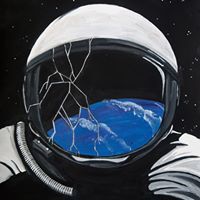
When an asteroid out of nowhere threatens to hit Earth, a space shuttle is sent to nudge it into a safe orbit. Venturing to the surface, three crew members become trapped as the asteroid suddenly leaves orbit, transporting them to a strange planet light years away. To find their way home, the intrepid explorers must embark on a dangerous archaeological adventure in this tale of galactic intrigue and suspense.
Bestselling science fiction writer Alan Dean Foster was born in New York City in 1946, but raised mainly in California. He received a B.A. in political science from UCLA in 1968, and a M.F.A. in 1969. Foster lives in Arizona with his wife, but he enjoys traveling because it gives him opportunities to meet new people and explore new places and cultures. This interest is carried over to his writing, but with a twist: the new places encountered in his books are likely to be on another planet, and the people may belong to an alien race.
Foster began his career as an author when a letter he sent to Arkham Collection was purchased by the editor and published in the magazine in 1968. His first novel, The Tar-Aiym Krang, introduced the Humanx Commonwealth, a galactic alliance between humans and an insectlike race called Thranx. Several other novels, including the Icerigger trilogy, are also set in the world of the Commonwealth. The Tar-Aiym Krang also marked the first appearance of Flinx, a young man with paranormal abilities, who reappears in other books, including Orphan Star, For Love of Mother-Not, and Flinx in Flux.
Foster has also written The Damned series and the Spellsinger series, which includes The Hour of the Gate, The Moment of the Magician, The Paths of the Perambulator, and Son of Spellsinger, among others. Other books include novelizations of science fiction movies and television shows such as Star Trek, The Black Hole, Starman, Star Wars, and the Alien movies. Splinter of the Mind's Eye, a bestselling novel based on the Star Wars movies, received the Galaxy Award in 1979. The book Cyber Way won the Southwest Book Award for Fiction in 1990. His novella Our Lady of the Machine won him the UPC Award (Spain) in 1993. He also won the Ignotus Award (Spain) in 1994 and the Stannik Award (Russia) in 2000.
Za početak čisto da kažem da sam veliki fan ove igre tako da sam se baš radovao ponovnom vraćanju ovom univerzumu. I BAM koji šamar... Jasno je meni da knjiga ipak mora malo da se razlikuje pošto je skroz drugi medij ali ovo...
Sama knjiga bi mogla pre da se nazove inspirisana igrom pošto je promet ton, atmosfera a i sami likovi se skroz drugačije ponašaju. U osnovi priča je ista ali nedostaje magija, misterija i sve ostalo što je igru činilo interesantnom.
Ako čitate knjigu bez poznavanja igre možda budete imali drugačije mišljenje ali meni je očajna.
P.S. Čisto da bih proverio da li su mi sećanja poogrešna otiša i lepo skino igru sa GOG-a i jedva sam se skino sa nje u 2 ujutro. Tako da knjiga je loša.
Once upon a time, Steven Spielberg had an idea for a sci-fi film that was thought to be so prohibitively expensive, no studio would buy it. But Spielberg's friend George Lucas had a video game company, and so they turned his concept for "The Dig" into a point-and-click adventure game. There was, apparently, a tie-in novel - from which then came this audiobook.
While the Lucasarts game The Dig has a wealth of issues (including mostly terrible dialogue and some dreadfully flat voice acting), the world they built is this brilliant gem of potential. It could have been so much more. Michael Land's fantastically atmospheric score brings depth to the alien scenery, its queues perfectly pitched. The Creator is a fascinating, if short-lived, character—a glimpse at what could have been.
Finding the audiobook on YouTube, I decided to give it a listen, thinking maybe, at the least, some plot holes in the game would be explained. While there was some explanation to how some of the alien tech worked, and some nonsensical parts of the game were cut out, the book itself was less than I'd expected, even with low expectations.
The reader, John Shea, did a good job with what he was given—his reading of Boston Low was very close to the game's version. But I found the sound effects added at certain points throughout to be distracting - and they often drowned out Shea's voice, making it hard to understand the words.
The story itself is not well written, either. I'm not a fan of Alan Dean Foster's writing, and I felt a better author could have done The Dig better justice. He uses huge, "five-dollar" words where a simpler one would do, which I think he chose to do to make the text sound more "science fiction" but only serves to make it sound pretentious or like he's trying too hard. (Honestly, what editor would think "the denoumention of intensity" was acceptable? Or circumnavigating a device rather than just walking around it?) The dialogue is boring, ultimately, and characters often become cliche-spouting cardboard cutouts, which is only a little better than Orson Scott Card's dialogue in the game, in my opinion. (Seriously, people don't talk that way.)
I was probably most disappointed with the conversation with the Creator. In the game, he is this unfathomable creature, who speaks in metaphor and philosophic tones even in "translation" (part of the wonder of him is due to the voice actor, too). In the book, he is merely a bored-sounding device for spouting essential plot information. The mystery and majesty of him (and, consequently, his people) is entirely lost and easily forgotten.
I cannot recommend this in lieu of the game. While the game has its issues, it still had something purely Spielberg that we catch glimpses of here and there beyond the veil of mediocrity. Do you remember that moment in the film Jurassic Park, when Grant and Sattler see the live dinosaurs for the first time? And you, the audience, is right there with them, marveling at the towering Brachiosaurus? That feeling of wonder? There is nothing so grand in the game, but there is the hinting of it, that you can hear in the score, and feel running deep somewhere beyond the terrible voice acting and sometimes frustrating puzzles. The book strips that wonder and potential of the game entirely, presenting a ho-hum adaptation that could have been far better, and far more compelling, than the game ever was.
I have played through this game so many times and it is one of my absolute favourites - so how happy was I when I managed to find this in a charity shop!
The book is so much more detailed and engaging than the game, even though the game is also amazing, I am so happy I got to learn more about this story!
I loved the game which inspired this novel. The Dig was a popular game back when there were no fuss about GPU or any high tech computing power; it was just plain old mind teasing puzzle game. You use your brain to the best of your ability to work through the story while enjoying exploring new areas revealed in the game as a reward of solving tough puzzles. Although the game was tough and I only managed to complete it with the aid of walkthroughs, I was still superbly satisfied with the story. I was not aware that there was a novel that depicted the game, until I accidentally found this book in a used book store.
In itself, the whole story of The Dig is not unlike what archaeologists did even though this is a space adventure. Archaeologists work with ancient civilization with little or no knowledge of how the latter's world worked, so they have to rely on guesswork and clues to understand the behavior and life of that civilization. On the other hand, archaeologists can work on mummified ancients for centuries while to the 3 protagonists, they had to work through within days to secure their survival and way home by analyzing the alien civilization's abandoned structures and technologies, with little or no clue what they were facing.
Even though I had finished the game well before I had read this novel, the novel still proved to be a fresh view of the story that is The Dig. The game thrived on puzzle solving, which obviously the novel could not duplicate, so it provided its own narrative and explored some other elements that is not within the game, such as creating the Cocytans' thoughts and points of view to invoke an air of mystery on what really happened to the Cocytans.
This book was written around the concept of the PC game of the same name. Interestingly, the author was quite eloquent and articulate and had very little trouble disguising his plugs from the game in a shroud of well written descriptions and dialogue. This did much to carry this novel to its own very solid presentation and delivery. The story centers around a trio of individuals who find themselves transported to an abandoned alien civilization. They wander and search for a way back home in the ruins of a civilization so far beyond them that figuring out how to open doors is in itself a massive endeavor. Each of the characters grows and develops on their own although the main protagonist displays the only truly focused perspective. Some of the character decisions and actions do feel a little contrived at times, and there are a few emotional developments that feel a little rushed. The overall story is clean of stretchy foolishness as the author didn't seem to stretch his own imagination to involve the video game origin, but instead embraced the story as his own and wrote it as such. Some disappointing resolutions towards the end will do a little to pull down the overall effect and could leave a reader feeling frustrated. Otherwise, this piece was well written and an interesting experience.
The Dig is a treasured LucasArts adventure game from my youth, and while it has a lot of writing and story problems (not to mention a high difficultly in regards to puzzles), the atmosphere and the narrative really grabbed me.
It was originally conceived as a film project for Steven Spielberg before people realised it was just too big and complicated to make. Instead, it became a point-&-click adventure game and a novel. These two things follow the same characters and same plot, but differ greatly in their execution.
To put it bluntly, the book does not live up to the game and does not tell the story very well. It's poorly written. I've always thought of Alan Dean Foster as someone who has written some of the great classic novelisations, but if I look back I have to admit that his Star Wars and Alien film tie-ins were ponderous and difficult to read, rarely translating the scripts into the epic adventure or horror that appeared on screen. Here, he chooses to use flowery words where simple ones would have worked far better. He doesn't distinguish between whose point of view a scene is from and will suddenly change mid-paragraph without warning (and this is continuous throughout the book). In some cases this happens between different locations or even different planes of existence.
It also doesn't treat the characters very well, although I have to admit the game didn't do this either. In that medium they are sarcastic and dour throughout whereas here they seem to just go through the motions and proceed from one place to the next.
The book isn't completely terrible and provides some nice exposition and backstory that the game didn't. It's very much an oddity and collector's item for fans of the game rather than a book to recommend in its own right, but if you did love the game then this is a good companion piece for it.
Prior to reading "The Dig" I hadn't ever done two things. I had never read a book by Alan Dean Foster before and I had never read a book derived from other media. Of course I have read books BASED on movies, videogames and the like, but stories that exist in other media first and are subsequently novelized were new to me. Having said that. Alan Dean Foster is an enjoyable writer who did pretty well with the novelization of one of my all time favorite point & click adventure games. Though I noticed it was hard to convert the grandeur of Lucasarts' classic into words, I certainly enjoyed it for what it was. However, something that actually annoyed me to no end was the fact that on more than one occasion the author seemed to have trouble keeping up with the continuity of the story. I can't go much further without spoiling, but let's just say that at certain moments dialogue seems to have been severely cut to the point that conversations between the protagonists seem stale, alien (haha) or simply nonsensical. Another example was that I had to read a few pages back and forth a couple of times to double and triple check if the author did indeed mix up some of the locations in the book (he did).
Safe for the cut-up dialogue, the book does in fact do the game justice, but it is just way too short and sometimes just plain sloppy (was there a pressured deadline for this thing, I wonder?). I would always recommend the Point and Click masterpiece above this novelization.
The book is based on a LucasArts game that was, in turn, based on a Stephen Spielberg concept. When I heard about the game as a kid, it was pitched to me as a game that was made because they didn't find enough interest in making it into a movie.
In short, an asteroid appears out of nowhere that's going to enter a decaying orbit around earth. Humanity launches a mission to use nukes to stabilize the orbit. In the process, they discover the asteroid is or has artificial components.
So I recommend the book if you've been meaning to play the game but didn't. That's how frew suggested I read the book, when I downloaded the Steam version of the game...
But if you've never heard of the game before, the book's probably not for you.
A classic work of exploration and first contact. I first read it as a 10yr old kid and it was the best ever. Now I see its limitations and would like more but still quite enjoyed it. It was a great introduction to the genre and lead to a great many more such works for a young boy.
This book was just awful. As a fan of both the original video game and the sci-fi genre of books, I had to pick this up when I found it for cheap in a thrift store. It is clear to me that the author held no passion for this project. It reeks of a get-it-done-then-move-on money-grabbing scheme.
The author follows the game's story to the fault. For all who don't know: The Dig is a point-and-click puzzle game, and in the nature of most puzzle games, puzzles are mostly one-screen affairs with little to to with each other or with the overarching story. The author describes every single puzzle as if it were the most important thing to happen yet, then he's done with it, goes on, and never mentions it again; on to the next puzzle. It's dry as sand. The whole thing reads like a fifth grade book report: "This happened, then this happened, then that happened."
Between chapters, the protagonists are being watched by disembodied aliens. These parts never add anything new to the story and are riddled with repetition. In fact, they are so utterly interchangable that you could take a pair of scissors, cut all of these pages out, give them a thorough shuffle and then insert them back into the book. It would make no difference at all to the story.
If you come over The Dig, save yourself the trouble and leave it on the shelf. Or better yet, save someone else the trouble; buy it and chuck it in the bin.
I wish I had got this back in 1996, a really enjoyable read and I think, a better book than game. The game was a point and click adventure, when they were still pretty decent to play. I do remember playing it for a long time and not finding the solution to a puzzle. I can't honestly say if I completed it or not. I've watched a play through on YouTube and I suspect I didn't. There were some pretty hard puzzles in it.
Fast forward nearly 30 years and I see that there was a book published at the same time. Never knew and I wish I had. It doesn't give any clues, as far as I can work out but it does a great job of making a very entertaining book. 3 humans find themselves in a strange world and have to explore it. It doesn't drag and it doesn't meander aimlessly, like I did when I played the lead character Boston Low. A straight forward astronaut that is the backbone character. Brink and Maggie both play important roles to.
The alien world is very well explained and fleshed out. Playing the game helped my brain create the world, as I had visited it before on a PC. It isn't a necessity to have played it though and going in without knowing the game isn't a hindrance to enjoying the book. I'd highly recommend it to any science fiction readers, as it is a really enjoyable read.
I’d only recently played The Dig for the first time, after wanting to for years, and really enjoyed it, so when I discovered there was a novelisation of the story, I was keen to read it.
It was a decent read that kept me engrossed throughout. It follows the game’s story loosely, which did disappoint me slightly as I would have liked more of the original scenes included. That said, I can understand why some of the gameplay elements might not have translated well onto the page, especially going from location to location trying every item until something finally solved a puzzle! However, it was interesting to see how events played out in this version and where it differed from the game.
I didn’t completely love the writing style, which felt a bit over-elaborate at times and occasionally went over my head. It also wasn’t always clear when the perspective shifted between characters, and some extra spacing on the pages might have helped.
Overall though, I’d recommend it to anyone who’s played the game, and it works well enough as a companion piece.
The premise was interesting, and the writing held my interest, but the story has plenty of flaws. Fully a third of the book was spent setting up the main plot, and the transition from setup to main story leaves some major characters hanging (literally, for a couple of them); the book never returns to them. My biggest problem with the rest of the story was that three characters stranded on an alien, sometimes hostile planet would split up so often, for pretty flimsy reasons; this made the characters, which were interesting otherwise, less believable. There is a big dose of deus-ex-machina (almost literally) at the end. The god-like possibilities were present throughout the story, so the ending did not feel like a cheat, but it was not fully satisfying all the same.
The beginning of this book is excellent; it hooks you right from the start. But when you get into it, you don't know where the boredom comes from. I was listening to the audio version, and I must say I liked the beginning. But beyond that, no. It doesn't hold your attention as it promises and becomes lackadaisical. Well, give it your try; you might like it.
When an asteroid out of nowhere threatens to hit Earth, a space shuttle is sent to nudge it into a safe orbit. Venturing to the surface, three crew members become trapped as the asteroid suddenly leaves orbit, transporting them to a strange planet light years away. To find their way home, the intrepid explorers must embark on a dangerous archaeological adventure in this tale of galactic intrigue and suspense.
this was my first Alan Dean Foster read, and it was kind of a slow starter for me, but once it got going I really enjoyed it. I'm glad I stuck with it, the premise isn't that unusual: three astronauts are sent to an asteroid which is set to collide with earth, but as soon as they arrive, they discover that it might not be there by accident. The story really opens up after their arrival on the asteroid, and the characters really come into their own.
The story had plenty of unexpected twists and plot devices, but I found the ending missing something. I won't say any more, but I recommend giving this one a read if you're a science fiction fan.
Sono sempre stato scettico riguardo alle novelization (questa è in assoluto la prima che leggo) e continuo a esserlo. Preferirei rigiocare a The Dig piuttosto che rileggere questo libro: non che sia *brutto*, ma non aggiunge niente alla bellissima esperienza che è stato - ed è tuttora, nonostante i più di vent'anni di età - il gioco. / I have always been skeptical of the entire novelization concept (this is my first one ever) and I still am. I'd rather play The Dig another time than re-read this book: it's not *bad*, but it doesn't add anything particularly valuable to the wonderful experience that the game has been - and still is, the 20+ years of age notwithstanding.
I've never played, or previously even heard of the video game. So that might have affected my judgement of this. But honestly, I thought it was a fun little sci-fi adventure with some cool ideas, but not without it's faults. The language was a bit long-winded sometimes, with a lot of really big, unnecessary words. Not that I normally have a problem with big words, but sometimes the book read like a dictionary of obscure terms that society hasn't used in over a century. The world-building was pretty cool though for such a short story, with plenty of atmosphere, cool alien tech, and some interesting otherworldly entities. I think I'll try and track down a copy of the game now..
3 astronauts accidentally activate an asteroid space craft that brings them to an alien world where they have to survive and figure out how to get home. All while being watched by ghost aliens. Based on a computer game I played WAY back when this book is clunky, full of POV changes (in mid paragraph sometimes), and really not much more than a series of fetch quests. It does an okay job of translating the graphic adventure form LucasArts were known for, but it’s not a great story in a different medium. If you’ve played the game or remember it fondly it’s a passable read, but nothing worth tracking down otherwise.
This is my favorite fiction book. I have a deep love for the "stranger in a strange land" story and this one cranks that up to 11 by making it "strangers in a strange galaxy", stranded on a seemingly empty tomb world, surrounded by unimaginable knowledge they have no way to understand.
It's fun, its pacing is great (once they get off of terra firma), the characters are good, and I am absolutely entranced every single time I open this book. The ending sneaks up on you, and not in a good way, but that's the only part of the book I roll my eyes at. Excellent sci-fi fiction to fill a couple empty afternoons.
I've never played the video game from 1995 associated with this book, but it sounds like fun. I might see if I can get a retro copy somewhere. I only read the book because it was Alan Dean Foster. It was a relatively fast read, descriptive action, to the point. On a mission to prevent an asteroid hitting earth, the adventurers are whisked away to a strange land where they must not only find a way home, but survive the attempt. They meet various problems along the way. Rather standard, but not bad for a few hours escapism if you like adventure stories.
Just to clarify, the two stars aren’t for Alan Dean Foster. After watching gameplay footage on YouTube for The Dig, I can see he did the best he could with the story and characters LucasArts gave him. Due to those constraints, this book reads like the play-by-play narration of a character being railroaded through a linear video-game adventure—which consequently caused me some kind of unpleasant mental claustrophobia. Foster’s written much better media tie-ins, likely because he was allowed more creative freedom with those works.
You cannot compare the novel with the game. They are two different forms. Having said that, Foster loves to use "$5 words". He's always had. Even with Splinter of the Mind's Eye. And I do enjoy how he explains what the "ghosts" are from the game, and it includes parts that aren't in the game and removes some of the tediousness that the game had. I thoroughly enjoyed the game, and I thoroughly enjoyed the book. But, in the spirit of sci-fi, I read it as an alternate dimension version of the game. Haha. Definitely worth the read if you can separate book from game.
Skip to chapter 5. The dialogue is super boring, and I say that as a person who enjoys dialogue. The rest of the book is entertaining. It does develop very similarly to a puzzle adventure game; the characters explore a finite space, picking up objects and opening doors. It was still genuinely satisfying though. I wanted to playthe game again, but then the characters had to run back and forth a few times so that I decided it must be in the game and that didn't seem fun anymore.
It took 22 books to get to a 5 but on the 23rd of 2020, I finally read one. Note that you can read my review system on my page.
Alan Dean Foster has written an entertaining page-turner, one that I couldn't put down. It probably really ranks a 4.5 to 4.75 but it is the first book this year that really captured me so I am rounding up. This one was entertaining, fun, all the way to the fourth dimension.
I first read this book about 20 years ago, and I still think of it as one of the coolest sci-fi books I ever read. I love the idea of a mysterious spaceship, an alien planet, and supposed ghosts that turn out to be not what you think. It's an interesting perspective, or thought, about what the difference between science and magic is, and maybe an explanation for so-called supernatural occurrences that are just things we don't yet understand.
I previously tried the PC game but could not tolerate the nearly nonsensical puzzles, so I thought this book would give me closure in the story.
The concept of the book is interesting, but it’s bogged down by cliche characters, sometimes clunky prose, a slow pace, and an ending that renders most of the story pointless. The alien tech and society was the only part that had my attention, and why I powered through to the end, but it likely won’t be worth it for you. Skip this book.
Mer en långnovell än en roman. Spelet som är förlaga betyder mycket för mig så det är svårt att leva upp till den förväntningen, men det behöver den inte. Nästan glad att den skilde sig så mycket från spelet, eftersom karaktärer och dialog var ganska svaga. Helt okej som novell alltså, men trean är svag.
Worthwhile read. The book reads as a mystery novel of exploration. It becomes somewhat philosophical towards the second half. There are three main characters who interact with different backgrounds, sometimes clashing even thou they represent the same "team". As in all good SciFi.... there are some plot twists and unexpected turns in the story making the story interesting.