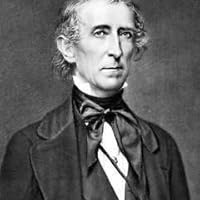
ژان پل سارتر در ۱۵ آوریل ۱۹۸۰ در هفتاد و پنج سالگی درگذشت و گفتگویی که بنی لِوی، فیلسوفی جوان، گستاخانه و در عین حال دوستانه با او کرده است و در سه شمارهٔ پیاپی مجلهٔ لو نوول ابسرواتور در مارس ۱۹۸۰ پس از مرگ سارتر به چاپ رسیده است، به احتمال قوی، آخرین سخنانی است که از وی به یادگار مانده است. استـاد در این گفـتگوی بیپرده، در همـهٔ مفاهیمی که خود باب کرده و چندین نسل روشنفکر و سیاستمدار و میلیونها خواننده را تحت تأثیر قرار داده است، چون و چرا میکند و همه را به پرسش میگیرد، چنان که گویی آخرین حرفش را هنوز نزده است و آنچه گفته است، به مثابهٔ وحی منزل نیست.
Jean-Paul Charles Aymard Sartre was a French philosopher, playwright, novelist, screenwriter, political activist, biographer, and literary critic, considered a leading figure in 20th-century French philosophy and Marxism. Sartre was one of the key figures in the philosophy of existentialism (and phenomenology). His work has influenced sociology, critical theory, post-colonial theory, and literary studies. He was awarded the 1964 Nobel Prize in Literature despite attempting to refuse it, saying that he always declined official honors and that "a writer should not allow himself to be turned into an institution." Sartre held an open relationship with prominent feminist and fellow existentialist philosopher Simone de Beauvoir. Together, Sartre and de Beauvoir challenged the cultural and social assumptions and expectations of their upbringings, which they considered bourgeois, in both lifestyles and thought. The conflict between oppressive, spiritually destructive conformity (mauvaise foi, literally, 'bad faith') and an "authentic" way of "being" became the dominant theme of Sartre's early work, a theme embodied in his principal philosophical work Being and Nothingness (L'Être et le Néant, 1943). Sartre's introduction to his philosophy is his work Existentialism Is a Humanism (L'existentialisme est un humanisme, 1946), originally presented as a lecture.
Our petty world is a fatally fractured one. The light of Being, which once upon a time irradiated the enthusiasm of the Ancients, has now been fractured by the unending grubbiness of buying and selling into jarring, jagged fragments of meaninglessness. So say Sartre and Beauvoir.
They are partially right. Yet we have no choice but to live in this world. How we decide to live, says W.H. Auden, will decide the world's true meaning.
Leading a virtuous life leads back to the light.
But the world's meaning - which for Sartre and Beauvoir could be reckoned only through our own blood, sweat and tears (and they were right) - will seal the permanence of Being in its pristine purity, for us Christians.
An unattainable and unwanted summit for them.
Both balked adamantly at the word "virtue.' They found their truth in angry activism and bohemian sexuality. Christians don't buy that, thank heaven.
The way, truth and light remain undiluted for those of us who, using the same gritty determination as they did, have added Hope to the mix - a hope they refused - and we are now assured of eternal rest.
A blessed assurance, indeed!
I read this one in the early nineties; and my wife read it at the same time in the original French. Browned off by our draconian workspaces, we almost bought into it. Almost.
You know, despair is a lot like a toothache. It doesn't go away until you get the tooth yanked.
But Sartre and Beauvoir refused to yank out their despair through hope.
We refused NOT to hope.
So a caveat to those nowadays who moil in an identical slough of despond:
I have always been of two minds about French philosopher Jean-Paul Sartre. On one hand, he is the author of a number of philosophical works I see as being essentially unreadable. (That's why I downgraded Conversations with Jean-Paul Sartre to three stars: When the questions turn to philosophy, I sense a growing queasiness.) On the other hand, when he talks about literature or feminism (with no less than his consort Simone de Beauvoir) or politics, his thinking is more directly and cogently expressed.
This book consists of three interviews from the 1960s and 1970s. Subjects included feminism, American imperialism (during the time of the Viet Nam Conflict), Sartre's writing plans, and a large dollop at the beginning of philosophy using philosophical language that vaguely resembles human discourse.
If one skips through the turgidity at th beginning, this book has a lot to offer. I have always thought that Sartre's philosophy is best expressed in his novels such as Nausea and The Age of Reason; his plays, such as No Exit; and his autobiography The Words.
However great a literary figure he was, I could never forgive him for kissing Stalin's arse when he knew damned well what was going on in Russia at the time. I guess that's what philosophy can do to you: Hide the infamy behind a curtain of bland terminology.
I have read a fair amount of Sartre, but mostly his earlier works such as No Exit, The Flies, Being and Nothingness, etc. In short, the main works that pre-date his embrace of Marxism and amphetamine addiction. These interviews were originally published between 1967 and 1975. Its jarring to read one of the post-war's great iconoclasts say "When I discovered the class struggle, this was a true discovery, in which I now believe totally, in the very form of the descriptions which Marx gave to it." Marxism seemed to be the call of sirens to so many intellectuals of his vintage. Its hard now to see how it held so many in thrall, not in the sense that Marxism is absurd or ridiculous, but rather how those intellectuals accepted the dogma (and the show trials). These interviews in themselves offer very little, but he does make a few clarifications to his earlier works, e.g., he accepts that there just might be a subconscious after all. His discussion with de Beauvoir about feminism is cringe-worthy. He may have been progressive for his time, but he still comes across as unapologetically sexist and condescending, engaging in a text book example of mansplaining. For completists only.
A short book and in all honesty, one in which I didn’t understand all concepts. I wondered what he would have said about the current state of the world; class and feminism struggle; about America today; Palestine; and more. He’d be turning over in his grave. These conversations occurred in the late 1960s and in all honesty, absolutely nothing of what he believed we could be as a society has turned out. In fact, it’s worsened.
“We must visualise our struggle, in the context of a durable American hegemony. The world is not dominated by two great superpowers, but by one. Peaceful coexistence, despite its very positive aspects, serves the interests of the United States.” …. “This present hegemony of the United States does not, however, exclude a certain vulnerability. In default of a direct confrontation with the socialist camp - too seriously divided - the solution could come from the weariness of the mass of Americans and from the disquiet of Washington’s leaders at the growing disproval of the entire world, and in particular, their allies.”
😆
See? Nothing has changed.
On a positive note, he’s inspired me to read Flaubert.
My book had the book stamp from Shakespeare and Company in Paris. It was the first time I saw such a stamp in a book and it made me look into buying my own custom rubber stamp for marking my own books. I’m seriously considering holding onto this book rather than giving it away just because of its stamp from this famous bookstore in Paris. After all, Hemingway may have read books with such stamps so in a way, it’s my small connection to him too. Or so I think. A tenuous link but humour me. 😆
pertama, i don't really think I fathomed it wholly. kedua, mengenai feminisme aku rasa opininya sedikit biased, knowing the fact that they both are fiancées. tapi, kembali ke poin pertama, ak rasa lebih baik aku diam daripada didemo 😇🙏🏻
I really really enjoyed this one and it was so satisfying about my curiosities about Sartre's intellectual and private life.
In his first interview, he talked about his views on Freud, Psychoanalysis, Marxism, Flaubert, History of individuals, France University systems and Chinese Cultural Revolution. I just felt like i am interviewing with him. Great questions asked. Sartre's humble accepts in topics he ain't know so clearly made him more enjoyable for me. Also you can easily see how clever he is. His opinions and answers about Cultural Revolution, these are not questions that everyone can handle.
Second Interview with Castor, is about Women and Feminism (as you can expect) You can read Sartre's attitudes in his private life by directly from him and his closest spectator Castor. His approach to both sexes should be a worldwide example. Also his takes on women struggle is so accurate. I think women still can't find a synthesis between their gender and class struggles.
Third Interview is about Sartre's mission after Vietnam War. In Bertrand Russell Court he took judgeship. He said that it is important to figure out these war politics can be considered real crimes legally. You can see how his conscience and sense of justice acts in this one.
I found the book i looked for About him i guess...
Sartre ile yapılan üç tane röportajdan oluşan bir metin. İlki daha edebi kişiliği ve eserlerine dair, ikincisi Simone De Beauvoir ile feminist hareket üzerine tartışma. Sonuncusu da emperyalizm üzerine. Üç farklı metin Sartre'ın dünyaya, edebiyata ve toplumsal hayata bakışını anlamak içi mini bir özet gibi düşünebiliriz. "Geliştirmekten hiç vazgeçmediğim düşünce, bir insanın, neticede onu insan yapan şeylerden daima sorumlu olduğudur - bu sorumluluğu üstlenmek dışında elinden bir şey gelmese bile. Zira insanın kendisini oluşturan koşullardan daima başka bir şey çıkarabileceğine inanıyorum. Bugün özgürlüğe tanıdığım sınır budur: bütünüyle koşullanmış bir sosyal varlığın, bu koşullanmanın ona verdiklerine bütünüyle riayet etmemesini sağlayan küçük hareket."
What becomes a legend the most? In the case of Jean-Paul Sartre asking him savagely critical questions on his attitude towards women, in his private and public life, how he feels about young people taking his books to the barricades ("Sartre is a funny fellow" one Parisian student mused, "too serious for politics") and what role intellectuals can and should play in revolutionary times. These candid interviews were conducted by acolytes but not sycophants, Perry Anderson to Simone De Beauvoir, Sartre's "Castor" and remain timely in any discussion of philosophy, art, and the last musings of the man De Gaulle called a modern Voltaire.
The vibe was completely off in the first fifty pages of Conversations with Jean-Paul Sartre, and I almost quit. Glad I didn't. Once Jean-Paul Sartre stops setting the table and lets the main characters actually collide, it takes off, and the argument in the kitchen is one of the best scenes I've read this year. Pacing is uneven, but the payoff is worth it. For readers who'll give a slow burn a real shot. Not for anyone who needs a hook on page one.
I finished Aus Gesprächen mit Jean-Paul Sartre and spent the next hour telling my roommate about it, who did not ask. Simone de Beauvoir has a knack for planting ideas that keep growing after the last page. The pacing sags in the middle, but the payoff is real. Perfect for talkers and thinkers, not great for anyone who wants to read and move on.
Ortadaki feminizm kısmı hariç bence oldukça geride kalmış fikirler içeren bir kitap, okumaya degmeyebilir. O feminist kısım da sadece Simone'un sorulari için okunabilir. Camus'un Ikinci Cins'i ağır eleştirmiş olması beni çok şaşırttı ayrıca...
''Freud'a dönersek , yine söylemem gerekir ki onu anlama kapasitesine sahip değildim, çünkü ardında sağlam bir kartezyen geleceği olan bir Fransızdım. Belli bir rasyonalizmle aşılanmıştım ve dolayısıyla bilinçdışı fikri beni şoka uğratmıştı.'' Sartre
Aus Gesprächen mit Jean-Paul Sartre reminds us that Simone de Beauvoir sees right through the theatrical debate stage to the shared elite interests operating quietly behind the scenes.
Conversations with Jean-Paul Sartre cuts through the noisy headlines to show how Jean-Paul Sartre tracks the steady erosion of personal privacy under the guise of public protection.
in den gesprächen geht es ums Lesen, Schreiben, Reisen und den Mond.
die dynamik in den gesprächen war zum teil etwas merkwürdig, es waren keine natürlichen gespräche, sondern sdb hat jps interviewt. aber ich habe einige eindrücke gewonnen von ihrem leben. ich glaube es war hilfreich das ich vorher bereits die autobiografie "in den besten jahren" von sdb gelesen hab, da ich dadurch hintergrundwissen zu namen und ereignisse hatte und sie so besser einsortieren konnte.