

What do you think?
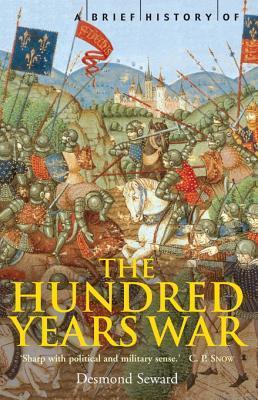
A Brief History of the Hundred Years War
For over a hundred years England repeatedly invaded France on the pretext that her kings had a right to the French throne. France was a large, unwieldy kingdom, England was small and poor, but for the most part she dominated the war, sacking towns and castles and winning battles - including such glorious victories as Crecy, Poitiers and Agincourt, but then the English run of success began to fail, and in four short years she lost Normandy and finally her last stronghold in Guyenne. The protagonists of the Hundred Year War are among the most colourful in European for the English, Edward III, the Black Prince and Henry V, later immortalized by Shakespeare; for the French, the splendid but inept John II, who died a prisoner in London, Charles V, who very nearly overcame England and the enigmatic Charles VII, who did at last drive the English out. Desmond Seward's account traces the changes that led to France's final victory and brings to life all the intrigue and colour of the last chivalric combats as they gave way to a more brutal modern warfare.
320 pages, Paperback
First published March 27, 2003
About the author
Desmond Seward
59 books63 followersDesmond Seward was an Anglo-Irish popular historian and the author of over two dozen books. He was educated at Ampleforth and St, Catherine's College, Cambridge. He was a specialist in England and France in the Middle Ages and the author of some thirty books, including biographies of Eleanor of Aquitane, Henry V, Richard III, Marie Antoinette and Metternich.
Ratings & Reviews
Friends & Following
Create a free account to discover what your friends think of this book!
Community Reviews
Displaying 1 - 30 of 33 reviews

May 7, 2016

Given that before I finished the book some Friends were already asking me how good was it on its topic, I think I should address just that in my review.
This is not my first book on the Hundred Years War, so it has helped me clarify ideas that were already moving around, in a somewhat muddled manner, in my head. But even if the material was not completely new to me, this could be a very good first book on this medieval English-French war.
I have also read The Age of Plantagenet and Valois and A Distant Mirror: The Calamitous 14th Century, and a few biographies (The Perfect King: The Life of Edward III, Father of the English Nation, Richard II, Les Grands ducs de Bourgogne). The first assumed one was more familiar with the material than I was; Tuchman’s is a brilliant account but goes beyond the war; the biographies function like close ups. I still needed something that would pull everything together. This book did exactly this.
Now I have the four main phases better delineated:
Those led by Edward III who the English on top);

then the effective recovery by the French Charles V;
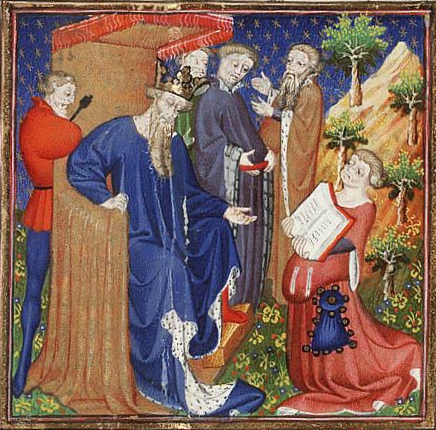
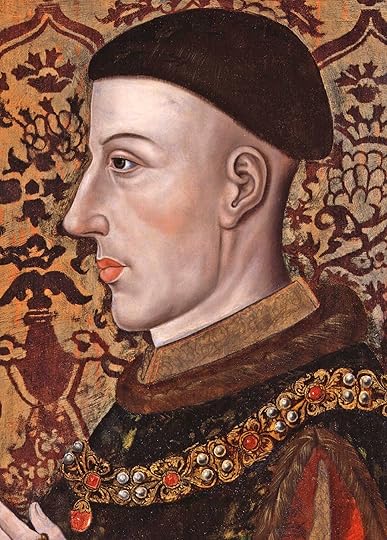
then the English go on the offensive again with Henry V;
and finally, to everyone’s surprise (except may be for the illuminated Joan of Arc), the final victory by the French under the King from whom no one, not even himself, expected much – Charles VII.

This book also leads you naturally to follow the drama in England with the War of the Roses, and I plan to use Seward’s account - The Wars of the Roses: Through the Lives of Five Men and Women of the Fifteenth Century
*****************************
What I enjoyed in Seward’s account:
He writes very clearly. And his choice of a chronological order is entirely fitting for the subject.
The very neutral viewpoint he maintains. Although he is possibly a bit harsher with the English side. This is accompanied with what seems a very judicial assessment of the characters of the various personalities.
Some aspects, like the nature of the chevauchées are very well explained. And these suck out any romanticism from this extremely violent war. The crucial differences in the functioning, limitations and effectiveness of the crossbow versus the long bow are also very well described.
He also includes ample accounts of the finances of the war. So that it becomes clear that for England this was a very attractive war. They could reap considerable profits from looting, plunder and ransoming. Large estates and houses and castles were built or purchased with these benefits. Seward names many of these. One such is Sir Rowland Lenthall’s Hampton Court in Herefordshire, financed with the ransoms obtained during Henry V’s campaigns.

A different look into the great Duchy of Burgundy. Seduced by all the art they patronised, I have a particular interest in this clan. With Seward I came to realise that these Dukes were horrible, and dangerous, men.
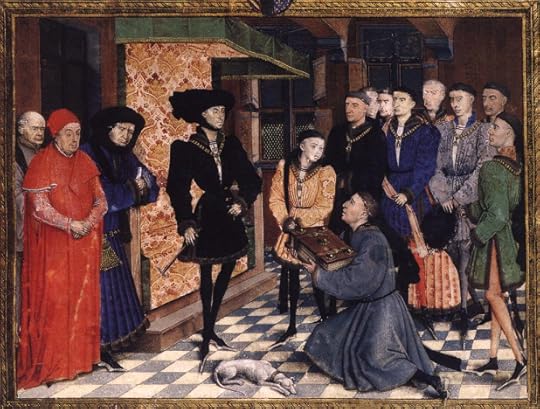
I spite of coming with a wealth of facts, there are many shrew observations. One of them pertains precisely the Burgundy house. Seward concludes that their big mistake was to abandon the English and switch to the Valois side, since that would eventually bring their own demise.
I also enjoyed greatly the way he brings Shakespeare in, since I plan to tackle his historical plays soon. The best of these was the tracking of the deeds of Sir John’s Fastolf – Falstaff.
It comes illustrated, with many maps and battle diagrams, and with a few genealogical trees .
So, to go back to the questions in the Comments: Yes, great book on The Hundred Years War.


May 3, 2013
Good stuff, potentially actually worthy of four stars, but since I read it right after Wars of the Roses, I was feeling some English-history fatigue. Plus, it doesn't have quite the same sense of focus as Wars of the Roses did, as there are no anchor figures to orient you. I mostly just love Seward's use of adverbs in describing random stuff people did, e.g. "the Council coolly informed King So-and-So that they would be having no more of his shenanigans" (paraphrasing, though he actually DID describe the English Council doing something coolly - I picture them discussing matters of state while sporting the Maroney "not impressed" face) and "Queen Isabeau cheerfully proclaimed her son Charles [some number or other] to be a bastard by one of her many lovers" (seriously, "cheerfully" is the word he used - Queen Isabeau sounds like kind of a broad, though not as badass a broad as Margaret Beaufort or Queen Margaret of Anjou. Maybe if her name had been Margaret?).
Hokay, time for a break from the land of late medieval history before I pass out from knights-and-castles overload.
Hokay, time for a break from the land of late medieval history before I pass out from knights-and-castles overload.

August 21, 2021
As a historical book that records the Hundred Years' War, this book is too thin. However, due to the intricate relationships that emerged during the Hundred Years' War, this book is too thick for readers who do not want to go into details.
The writing method of this book is worthy of the name of a brief history, and most of the events that took place in the Hundred Years' War have been described as superficially. The disadvantage is that there are too many other incidents away from the main line of the war, and too many names of people appear, and it is often embarrassing to flip over and forget who the name is. Moreover, most of the characters appearing in the book are titles of titles, which can be hereditary, resulting in situations where the same titles are actually different names, making it more difficult to remember.
The book has a more detailed description of the life of key figures in the Hundred Years War and the ins and outs of key battles, which are well received.
I think the cause of the Hundred Years' War can be traced back to a woman during the Crusades in the 12th century, that is, Eleanor of Aquitaine. This French Duchess and wife of King Louis VII married King William II of England after her husband participated in the Crusades, and brought a valuable dowry to the United Kingdom-the Duke of Aquitaine. The authority of the British king can cross the strait. The wealthy Aquitaine has also brought a lot of income to the United Kingdom, and it has also made Britain's appetite even greater. Britain believes that they are not a barren and weak island country in the eyes of Europeans. The French royal family, who was angry and unreasonable, was waiting for the opportunity to avenge it.
In 1328, King Charles IV of France died of illness. Since he did not give birth to a male heir, the throne passed to Philip VI of the Valois family. On the other hand, the son of Charles IV’s sister, Edward III, who has also become the King of England, claimed that he had the right of succession to the King of France in order to avenge the collusion between France and Scotland in the north of England. Both sides are doing their best to prepare for the war, and the Hundred Years' War will officially begin.
At the beginning of the war, Europe was not optimistic that poor Britain could defeat France, the strongest and richest in Europe. However, the British fleet won the Sluis naval battle under the inferior force and took the initiative in the war. In 1346, Edward III opened up a multi-line battlefield and took advantage of the English longbow to resist fifteen assaults by the main French forces in Crecy and achieved a crucial victory. Subsequently, the British seized Calais, the nearest port city on the other side of the Strait, as an important node for future invasion of France.
Next, under the command of the Prince of Wales, the eldest son of Edward III and the "black prince" Edward, the English army launched a "riding and plundering" operation against the Brittany collars in northwestern France. At that time, Philip VI was dead, and the unlucky John II succeeded him, leading the main force of the French army to stop the black prince who burned and looted all the way in Poitiers. However, luck is on the side of England. After a bloody and cruel battle with a close win rate, John II and his son were captured. The black prince demonstrated chivalry and put John II under house arrest in England with the courtesy of the king. In 1360, France was forced to sign the "Pact of Bretini." Later, in order to pay the ransom of John II, a lot of effort was spent in France. In the end, John II also died in England, and his body was returned to France for burial.
The successor of France, King Charles V, adopted a new tactic of standing strong and clearing the country, and achieved results, leaving England no longer a chance for "riding and plundering". The already wealthy France slowly regained its strength, and Edward III and the black prince never gained much benefit. After the black prince died of illness, Edward III also died of illness. Three years later, in 1380, Charles V, who led France to success gradually, also passed away. England and France ushered in a brief period of peace.
The sons of the black prince Richard II and Charles VI each succeeded to the throne. Richard II was committed to peace, but because he was unpopular, he was overthrown by Henry of Bolingbrook for Henry IV. In response to domestic calls, Henry IV actively prepared for war again, but died of illness in 1413 and Henry V succeeded to the throne. France at this time was caught in a civil war between the Duke of Burgundy and the Armagnac faction. Henry V seized the opportunity, and the war started again.
First, Henry V captured Avrell, a port more suitable than Calais as a base for invasion of France. Later, Henry V was intercepted by an army sent by the Crown Prince while leading his troops to Calais, but he defeated more enemies in Agincourt. Since then, the Crown Prince's faction has no strength to stop the British army. In 1421, the British had already controlled the entire territory of Normandy with a little force and entered Paris. Unfortunately, Henry failed to wait for the coronation of the King of France and died in 1422. His young son became Henry VI of England and Henry II of France.
The Duke of Bedford was regent, and he was in charge of French affairs. He tried to control the entire territory of France and defeated the Crown Princes again in Villeneuil. England declared its peak and was considered almost invincible. At this time, Joan of Arc from Dom Remy changed the situation. Joan, who claimed to have received the will of God, volunteered at the crown prince and led an army to break the siege of Orleans and became the "saint" of the French population. The legitimacy of the British in war was questioned, and they began losing streak in consecutive wars, which also shook the Duke of Burgundy, who was allied with England. With the help of Joan of Arc, the crown prince was successfully crowned in Reims for King Charles VII. However, after Joan of Arc was accidentally captured, Charles VII did not make any attempt to rescue Joan, allowing Joan to be convicted in London and burned to death.
Although Joan is dead, the result of the Anglo-French war is a foregone conclusion. The British army was retreating steadily, and after the death of the Duke of Bedford, it was a thousand miles away, and Normandy and Havrell were lost. The Duke of Burgundy also defected to join the French king, and soon after, the British fell in Bordeaux, the last French territory. In 1453, the British sent an expeditionary force to make the final attempt. Once they regained Porto, they were defeated by Biro's artillery at Castillon, and the British tactical advantage had disappeared. The Hundred Years' War between Britain and France ended with the loss of all of its territory in France.
The entire Anglo-French Hundred Years' War was a tactical spiral process, and it was also a process in which Britain used various factors to defeat France, which was richer and more numerous than itself. After the Hundred Years' War ended, Britain fell into a civil war called the "War of the Roses." It can be said that there was no victor in this war, but it changed the course of history throughout Europe.
A history lover from mainland China is also a Chinese art youth who likes reading and playing table tennis very much. He hopes to use books as a link to strengthen new friends around the world. Don't worry, I am very democratic and have an independent mind. Anything can be private letter chat with me, I believe I can answer all the Chinese obscure history and secret Chinese culture for you.
The writing method of this book is worthy of the name of a brief history, and most of the events that took place in the Hundred Years' War have been described as superficially. The disadvantage is that there are too many other incidents away from the main line of the war, and too many names of people appear, and it is often embarrassing to flip over and forget who the name is. Moreover, most of the characters appearing in the book are titles of titles, which can be hereditary, resulting in situations where the same titles are actually different names, making it more difficult to remember.
The book has a more detailed description of the life of key figures in the Hundred Years War and the ins and outs of key battles, which are well received.
I think the cause of the Hundred Years' War can be traced back to a woman during the Crusades in the 12th century, that is, Eleanor of Aquitaine. This French Duchess and wife of King Louis VII married King William II of England after her husband participated in the Crusades, and brought a valuable dowry to the United Kingdom-the Duke of Aquitaine. The authority of the British king can cross the strait. The wealthy Aquitaine has also brought a lot of income to the United Kingdom, and it has also made Britain's appetite even greater. Britain believes that they are not a barren and weak island country in the eyes of Europeans. The French royal family, who was angry and unreasonable, was waiting for the opportunity to avenge it.
In 1328, King Charles IV of France died of illness. Since he did not give birth to a male heir, the throne passed to Philip VI of the Valois family. On the other hand, the son of Charles IV’s sister, Edward III, who has also become the King of England, claimed that he had the right of succession to the King of France in order to avenge the collusion between France and Scotland in the north of England. Both sides are doing their best to prepare for the war, and the Hundred Years' War will officially begin.
At the beginning of the war, Europe was not optimistic that poor Britain could defeat France, the strongest and richest in Europe. However, the British fleet won the Sluis naval battle under the inferior force and took the initiative in the war. In 1346, Edward III opened up a multi-line battlefield and took advantage of the English longbow to resist fifteen assaults by the main French forces in Crecy and achieved a crucial victory. Subsequently, the British seized Calais, the nearest port city on the other side of the Strait, as an important node for future invasion of France.
Next, under the command of the Prince of Wales, the eldest son of Edward III and the "black prince" Edward, the English army launched a "riding and plundering" operation against the Brittany collars in northwestern France. At that time, Philip VI was dead, and the unlucky John II succeeded him, leading the main force of the French army to stop the black prince who burned and looted all the way in Poitiers. However, luck is on the side of England. After a bloody and cruel battle with a close win rate, John II and his son were captured. The black prince demonstrated chivalry and put John II under house arrest in England with the courtesy of the king. In 1360, France was forced to sign the "Pact of Bretini." Later, in order to pay the ransom of John II, a lot of effort was spent in France. In the end, John II also died in England, and his body was returned to France for burial.
The successor of France, King Charles V, adopted a new tactic of standing strong and clearing the country, and achieved results, leaving England no longer a chance for "riding and plundering". The already wealthy France slowly regained its strength, and Edward III and the black prince never gained much benefit. After the black prince died of illness, Edward III also died of illness. Three years later, in 1380, Charles V, who led France to success gradually, also passed away. England and France ushered in a brief period of peace.
The sons of the black prince Richard II and Charles VI each succeeded to the throne. Richard II was committed to peace, but because he was unpopular, he was overthrown by Henry of Bolingbrook for Henry IV. In response to domestic calls, Henry IV actively prepared for war again, but died of illness in 1413 and Henry V succeeded to the throne. France at this time was caught in a civil war between the Duke of Burgundy and the Armagnac faction. Henry V seized the opportunity, and the war started again.
First, Henry V captured Avrell, a port more suitable than Calais as a base for invasion of France. Later, Henry V was intercepted by an army sent by the Crown Prince while leading his troops to Calais, but he defeated more enemies in Agincourt. Since then, the Crown Prince's faction has no strength to stop the British army. In 1421, the British had already controlled the entire territory of Normandy with a little force and entered Paris. Unfortunately, Henry failed to wait for the coronation of the King of France and died in 1422. His young son became Henry VI of England and Henry II of France.
The Duke of Bedford was regent, and he was in charge of French affairs. He tried to control the entire territory of France and defeated the Crown Princes again in Villeneuil. England declared its peak and was considered almost invincible. At this time, Joan of Arc from Dom Remy changed the situation. Joan, who claimed to have received the will of God, volunteered at the crown prince and led an army to break the siege of Orleans and became the "saint" of the French population. The legitimacy of the British in war was questioned, and they began losing streak in consecutive wars, which also shook the Duke of Burgundy, who was allied with England. With the help of Joan of Arc, the crown prince was successfully crowned in Reims for King Charles VII. However, after Joan of Arc was accidentally captured, Charles VII did not make any attempt to rescue Joan, allowing Joan to be convicted in London and burned to death.
Although Joan is dead, the result of the Anglo-French war is a foregone conclusion. The British army was retreating steadily, and after the death of the Duke of Bedford, it was a thousand miles away, and Normandy and Havrell were lost. The Duke of Burgundy also defected to join the French king, and soon after, the British fell in Bordeaux, the last French territory. In 1453, the British sent an expeditionary force to make the final attempt. Once they regained Porto, they were defeated by Biro's artillery at Castillon, and the British tactical advantage had disappeared. The Hundred Years' War between Britain and France ended with the loss of all of its territory in France.
The entire Anglo-French Hundred Years' War was a tactical spiral process, and it was also a process in which Britain used various factors to defeat France, which was richer and more numerous than itself. After the Hundred Years' War ended, Britain fell into a civil war called the "War of the Roses." It can be said that there was no victor in this war, but it changed the course of history throughout Europe.
A history lover from mainland China is also a Chinese art youth who likes reading and playing table tennis very much. He hopes to use books as a link to strengthen new friends around the world. Don't worry, I am very democratic and have an independent mind. Anything can be private letter chat with me, I believe I can answer all the Chinese obscure history and secret Chinese culture for you.

January 27, 2011
It's a bit TOO dense compared to sister books in this series...even the text is smaller and compacted together in a less than pleasant manner. Some of the writing style tends to be too dry for its own good...even around subjects as epic and exciting as Joan of Arc. Another edit wouldn't have gone amiss...
June 21, 2026
3.5
The battle maps are a bit confusing
The battle maps are a bit confusing

November 18, 2019
Following on the heels of reading Froissart's Chronicles, I thought I'd better get some perspective and an overview of the Hundred Years War.
I was a little reluctant about the 'A Brief History Of...' series, perhaps because it seemed, without having actually read any of them, a bit shallow end. In this case I needn't have worried overly much. Once I twigged that Desmond Seward was the author of a book I had already read and liked, I knew I was in safe hands.
Having said that, it was pretty much as described, a brief history, with a little room for analysis on the military side. My knowledge and reading of the Middle Ages is patchy and largely done on a whim, so basic books like this one can sort out my overview. It also frames some of the books I have in waiting, being more or less related to the Hundred Years War, which, as Seward rightly calls out early on, was nothing more than military adventurism on the part of England, and what we would call War Profiteering these days. The more we read about the Middle Ages, the more we're reminded of how good we have things these days. And also the more we're reminded that the same organised impulse goes on in slightly different guises and justifications in our own times too.
I can't think of anything obvious that would turn this from a 4 star to a 5 star rating, except that it was a bit light on historical analysis. But it does rather indicate in the series title that that was likely going to be the case. The salient point I took away from this history, if we are to reduce it as such, is that military technology gave England the edge in the longbowmen for most of the war, and cannon and the nascent small arms industry gave it back to France at the end. That could perhaps have been fleshed out a little more but again, the key word 'brief' keeps rearing its head.
I was a little reluctant about the 'A Brief History Of...' series, perhaps because it seemed, without having actually read any of them, a bit shallow end. In this case I needn't have worried overly much. Once I twigged that Desmond Seward was the author of a book I had already read and liked, I knew I was in safe hands.
Having said that, it was pretty much as described, a brief history, with a little room for analysis on the military side. My knowledge and reading of the Middle Ages is patchy and largely done on a whim, so basic books like this one can sort out my overview. It also frames some of the books I have in waiting, being more or less related to the Hundred Years War, which, as Seward rightly calls out early on, was nothing more than military adventurism on the part of England, and what we would call War Profiteering these days. The more we read about the Middle Ages, the more we're reminded of how good we have things these days. And also the more we're reminded that the same organised impulse goes on in slightly different guises and justifications in our own times too.
I can't think of anything obvious that would turn this from a 4 star to a 5 star rating, except that it was a bit light on historical analysis. But it does rather indicate in the series title that that was likely going to be the case. The salient point I took away from this history, if we are to reduce it as such, is that military technology gave England the edge in the longbowmen for most of the war, and cannon and the nascent small arms industry gave it back to France at the end. That could perhaps have been fleshed out a little more but again, the key word 'brief' keeps rearing its head.

November 27, 2022
A very interesting and understandable explanation of the series of battles and truces that reshaped "national" borders several times, giving birth to ancestral hate and antagonism that still affects our lives today between the peoples of the lands disputed and exchanged over the roughly hundred years that the war lasted. That sense of opening the shutters in the morning to see whose flag was flying, who was ruling now, the unease lived by several generations of not knowing if the grain you planted would be reaped by you or laid waste, whether your children would die at the hands of the enemy or at the hands of brigands are made evident. The changes of allegiance and political oportunism get a bit confusing, but then the times were confusing. The unnecessary waste of human lives, the hardship visited on the lands of France by the heirs of the very Normans that invaded England in 1066, and the beginning of the civil wars that came to be known as the Wars of the Roses right when war with France was finally concluded give food for thought.

October 14, 2018
A Brief History of the Hundred Years War is what it says on the tin - a run through, from start to finish, of the major events and battles of the Hundred Years War, from the death of Charles IV to the last defeats inflicted on the English which pushed them entirely out of France around 120 years later.
The book is a great initial read on the period it relates - clear, concise, fairly well-written and containing lots of interesting details which add flavour and colour to the time. The information ranges from the descriptions and characters of kings, to the mechanisms of the weaponry used, to the tactics of the battles fought.
The book is a useful tool for those new to the Hundred Years War: it sets out all relevant information, contains useful maps - all handily in one spot, even if that is at the back of the book - and is clear and well-written.
There are some problems, of course - much of the information goes by too quickly to take in clearly, with some times and dates confused and the dozens of titles and estates often confusing.
Overall this is a good book for finding out about the period, both interesting and informative.
The book is a great initial read on the period it relates - clear, concise, fairly well-written and containing lots of interesting details which add flavour and colour to the time. The information ranges from the descriptions and characters of kings, to the mechanisms of the weaponry used, to the tactics of the battles fought.
The book is a useful tool for those new to the Hundred Years War: it sets out all relevant information, contains useful maps - all handily in one spot, even if that is at the back of the book - and is clear and well-written.
There are some problems, of course - much of the information goes by too quickly to take in clearly, with some times and dates confused and the dozens of titles and estates often confusing.
Overall this is a good book for finding out about the period, both interesting and informative.

October 16, 2025
It's often said that being misinformed is worse than not knowing at all. I'm not saying this book has misinfomation, but the trap of many "brief history of" books is that it cuts out so much to make it brief, it can lose context of certain events; and if you're reading a intro book like this, you probably don't know when you are missing context. I find material like this a good way to get an overview of something and a way to give you an idea if you want to research it in more detail.
Some of the reviews for this book often call it dry, I didn't really find that and absolutely rip to those people if they actually want to read a more serious or academic work. I will say this books could have gone through editing at least one more time, changes from past to present tense and some unneeded and weird descriptions of some individuals, (although "encouraged in pleasure by his beautiful and sluttish wife", is real fuckin funny to read in a history book).
It would have also been good it if it was fully chronological, it will occasionally tangent and jump back and forth through the years, which can be a little confusing when already taking in so much condensed information.
Some of the reviews for this book often call it dry, I didn't really find that and absolutely rip to those people if they actually want to read a more serious or academic work. I will say this books could have gone through editing at least one more time, changes from past to present tense and some unneeded and weird descriptions of some individuals, (although "encouraged in pleasure by his beautiful and sluttish wife", is real fuckin funny to read in a history book).
It would have also been good it if it was fully chronological, it will occasionally tangent and jump back and forth through the years, which can be a little confusing when already taking in so much condensed information.

January 8, 2023
Condensing so much history, more than a hundred years worth of military campaigns, battles, sieges, treaties, ransoms and court intrigues into less than 270 pages (plus bibliography, notes and index) is an impressive feat. Seward's accessible, readable, and even sometimes gossipy account of England's on/off/on/off invasion, war and occupation of large chunks of France gives an excellent overview of the conflict, tracing events from a string of English successes (and some eye-watering atrocities), including the near-miraculous victory at Agincourt to eventually being thrown out of France by Charles VII. Seward's narrative is clear throughout and makes for a great starting point for learning about one of the defining, transformative conflicts of Medieval Europe.

October 4, 2020
This is an excellent, relatively-short guide to the Hundred Years War that I enjoyed very much. Inspired by the amazing historical fiction of Sharon Kay Penman, I wanted to learn some more about this era of European history (I have a very good grasp of modern Europe, but medieval, not so much). This book did a great job laying the foundation, discussing the battles, all the interesting dynastic and marital alliances, even down to the nitty gritty of how crossbows and longbows are made and used. I didn’t want to get bogged down in some 800-page tome, so this book was just perfect for me. I highly recommend it for anyone needing a similar overview.

March 31, 2023
Condensing a densely political and tumultuous period in just under 300 pages would be a challenge. However, Seward has given an excellent introduction to this period which I only knew fragments of. This sets me up nicely for further reading and I'll definitely start with Froissert's chronicles. It's been fascinating to find out about the causes, the people and the politics behind this infamous period and to know how merciless the English were is food for thought. Definitely a good starting point for those new to this subject like me.

March 5, 2019
I knew virtually nothing about the subject til I read this book and gained a good understanding from it. Concise, but not lacking in detail and emphasizes the huge cost-to the English in maintaining armies on foreign soil, never certain of the loyalty of the territory they controlled, and to the French the immense destruction and economic loss. Well worth reading

September 29, 2020
Fine narrative overview of the wars between Edward III claiming the French throne, and the losing of nearly all possessions in France under Henry VI. It is quick to dispel nationalist myths ("the Agincourt campaign decided nothing"; "It was not the Maid [Joan of Arc] who ended English rule in France"), while still being traditionally political and military in scope.
November 26, 2021
A Useful Summary of the 100 Years War
A straightforward account of the war. What is surprising is the political ineptness of the English who could have taken the French throne without a fight .
A straightforward account of the war. What is surprising is the political ineptness of the English who could have taken the French throne without a fight .

April 20, 2025
A compelling and surprisingly easy read. The key figures and battles are described in a narrative way. However, the political and financial minutiae of the later years of the war were reviewed in a difficult-to-untangle process.

November 30, 2018
A compact overview of the time. Besides getting a better knowlwdge of history it also makes one think how pointless all this war and plunder has been with no-one actually winning anything.
August 23, 2020
A brief and potted history that doesn't get too bogged down in fact and figures.

July 1, 2021
除了在军事战略与装备技术上叙述较详尽之外确实就是一本简史,放在《金雀花王朝》之后和《空王冠:玫瑰战争与都铎王朝的崛起》之前算是复习+预习+补充,不过从它跟前者的重合度来看,读中间几章也就够了。
January 11, 2025
Needed to have a map handy when listening to the book- LOTS of French names not Anglisized.
Fascinating information about the people involved with judgements about capabilities based on success.
Fascinating information about the people involved with judgements about capabilities based on success.

February 14, 2026
A concise history of the Hundred Years' War with a remarkably clear narrative thread.

November 21, 2020
确实是“简”史。这既是优点,也是缺点。

June 25, 2015
The book explains the long time rivalry between the English and French. It shows how war was a means of gaining wealth, prestige, and upward mobility in both countries. I am glad my ancestors were not of the nobility. So my ancestors were not participating in the carnage, looting, and complete disrespect of fellow humans. The step ladder to fame and fortune in the 15th century seems to have been through brutal treatment of the common man and woman. It also makes one wonder how the people of the time could ever believe in the divine right of kings. The French and English kings were weaklings and certainly not models of the ideal father figure.

August 9, 2015
This is a readable overview of the English/French conflicts from the start of the 14th century through 1455 or so. I was aware of Crecy, Poitiers & Agincourt, but not so much the rest of the events. This book is a nice summary, and suggests other things to read.
Given its length and the time period covered, there isn't a lot of detail on events outside major battles and sieges, but the various claims to the crowns of England and France, the various factions involved in this long conflict, and the major players are all well summarized. This book makes me want to read more on the topic, which is always good.
Given its length and the time period covered, there isn't a lot of detail on events outside major battles and sieges, but the various claims to the crowns of England and France, the various factions involved in this long conflict, and the major players are all well summarized. This book makes me want to read more on the topic, which is always good.

January 21, 2013
Re-enlist, re-enlist and re-enlist in the hundred years war.... Should have been called the Hundred years looting extravaganza. That aside I really enjoyed this book, whilst it doesn't delve into the depths of over detail, it saves itself from being bogged down by it, giving the reader a shortened yet informative look at the goings on at this point of history.

July 29, 2013
Good general introduction to the Hundred Years War. Left me feeling I knew a little bit but wanted to know more. (In my view precisely what these kinds of books should do.) Have already looked up a couple of other works by this author as an introduction to other bits of history I want to know more about.

August 29, 2012
I have really enjoyed this book. It was a perfect introduction to the 100 Years War. Entertainly written and well paced but still full of fascinating detail it gives a great overview of the campaigns, the main protagonists and most importantly of course the battles. I thoroughly recommend it.
February 24, 2013
A good starter. Felt a rushed though, with little information about the larger contexts of battles, of the war in general, and the players. Summarizing the reprecussions of the entire war in three-four pages, might be way too brief for even a brief history of...

February 10, 2016
Brief, lively, entertaining: an excellent narrative introduction to the subject. Not a substitute for a serious study, but then again it isn't meant to be. A fun read with plenty of characters and detailed descriptions of major battles and the political intrigues and machinations.
January 26, 2016
An easy read that covers a lot of battles, personalities and history.
Displaying 1 - 30 of 33 reviews