

What do you think?

The Kishkindha Chronicles #1
Saraswati's Intelligence
Before the dawn of man, there was Hanuman.
Ancient Kishkindha, the land of Hanuman and his people, is in mortal danger.
The era of peace marked by the parama dharma, a rigorous code that forbids the spilling of blood, seems about to end. A new and deadly race of beings that destroy and devour anything that lives is gathering outside Kishkindha’s northern frontiers, and invasion is imminent.
Hanuman, meanwhile, has been exiled by the intrigues of his aunt, the empress Riksharaja, in order to make way for Vali.
Only his cousin Sugreeva, and wise guru Vishwamitra, can help Hanuman as his destiny takes him onward to face himself and a world no one in Kishkindha has known about until now.
‘The Kishkindha Chronicles’ re-imagines the ancient prehistory of India from a startlingly new perspective that will make us rethink what it means to be human and animal. Saraswati’s Intelligence is the first book in the trilogy.
Ancient Kishkindha, the land of Hanuman and his people, is in mortal danger.
The era of peace marked by the parama dharma, a rigorous code that forbids the spilling of blood, seems about to end. A new and deadly race of beings that destroy and devour anything that lives is gathering outside Kishkindha’s northern frontiers, and invasion is imminent.
Hanuman, meanwhile, has been exiled by the intrigues of his aunt, the empress Riksharaja, in order to make way for Vali.
Only his cousin Sugreeva, and wise guru Vishwamitra, can help Hanuman as his destiny takes him onward to face himself and a world no one in Kishkindha has known about until now.
‘The Kishkindha Chronicles’ re-imagines the ancient prehistory of India from a startlingly new perspective that will make us rethink what it means to be human and animal. Saraswati’s Intelligence is the first book in the trilogy.
263 pages, Kindle Edition
Published January 1, 2017
About the author
Vamsee Juluri
12 books74 followersVamsee Juluri is a professor of media studies at the University of San Francisco. He is the author of three books, the most recent of which is Rearming Hinduism: Nature, Hinduphobia and the Return of Indian Intelligence (Westland ebooks 2014). He blogs at the Huffington Post and is a regular contributor for the Indian Express.
Ratings & Reviews
Friends & Following
Create a free account to discover what your friends think of this book!
Community Reviews
Displaying 1 - 30 of 40 reviews

September 1, 2019
We bookworms are unpredictable, at the time we wanted to read a certain book so much that we spent too much time & money after a book. And some of those books didn't get a chance to get read by us for the next few months or years. One such book was "Saraswati's Intelligence". I had this book for almost 3-4 years, the book belongs to one of my favorite genres of Indian Mythological / Historical fiction. But somehow it reached a place called shelved. Once it reached there I didn't see it till last summer. With guilt feeling, I promised the book that it will be finished by winters. Luckily when I got my Kindle Unlimited membership, it was one of the books that got my interest. As I was having hardcopy but not able to give proper justice, I decided to finish it on Kindle. And now I regret why I have not read it earlier.
You may have read many versions of Ramayana, in some, you will find Ram as a hero where in some you will find Ravana as a hero. You may have read books dedicated to Hanumana, Sugriva or even Vali. But Saraswati has brought a completely new perspective. The story started with Kishkindha (shown as the whole Bharat Varsha) kingdom, which was dominated by Animals, mainly Monkeys, Elephants, etc. They have their languages and can communicate with other animals. Remember there is no sign of men when the story started. Hanuman is our protagonist, who belonged to one of the strongest monkey clan in Kishkindha. His father Kesari was king & Riksharaja (mother of Vali & Sugriva) was queen. All these clans were strictly following Param Dharma, which was broken when Sugreeva met an accident. Laws were so strict that even the son of Queen or King couldn't be barred from it. They went to a Rishi (again a Monkey race) called Vishwamitra, who took them towards north from where Vishwamitra found some troubling signs. He took the help of Elephant clan and reached the point which could have been the root cause of these signs. What they found was so violent & ruthless that they had to break their years of the vow of nonviolence. Read the book to know more.
Talking about the pace, the book started at a slow pace. Later on, it shifted to a medium pace. The pace increased during the war. Later on, it was adjusted back to medium. The book started with cryptic ways, an accident of Sugreeva & usage of "Aparachara" was confusing initially. Later on, it got cleared. I advise you to have patience and keep faith in the story, it will reveal you confusing portions. It happened to me. But I am so awestruck by the imagination of the author that I kept turning pages after pages. The book is full of wonderful life-changing, motivation quotations, conversation & examples. The way animal and their harmony are showed it make us think about what we are doing on the earth in the name of living.
I would say all mythological book lovers must read this book at least once. I don't want to give away the biggest secret but read it and know who is the biggest threat to nature in ancient times & even in the current era.
You may have read many versions of Ramayana, in some, you will find Ram as a hero where in some you will find Ravana as a hero. You may have read books dedicated to Hanumana, Sugriva or even Vali. But Saraswati has brought a completely new perspective. The story started with Kishkindha (shown as the whole Bharat Varsha) kingdom, which was dominated by Animals, mainly Monkeys, Elephants, etc. They have their languages and can communicate with other animals. Remember there is no sign of men when the story started. Hanuman is our protagonist, who belonged to one of the strongest monkey clan in Kishkindha. His father Kesari was king & Riksharaja (mother of Vali & Sugriva) was queen. All these clans were strictly following Param Dharma, which was broken when Sugreeva met an accident. Laws were so strict that even the son of Queen or King couldn't be barred from it. They went to a Rishi (again a Monkey race) called Vishwamitra, who took them towards north from where Vishwamitra found some troubling signs. He took the help of Elephant clan and reached the point which could have been the root cause of these signs. What they found was so violent & ruthless that they had to break their years of the vow of nonviolence. Read the book to know more.
Talking about the pace, the book started at a slow pace. Later on, it shifted to a medium pace. The pace increased during the war. Later on, it was adjusted back to medium. The book started with cryptic ways, an accident of Sugreeva & usage of "Aparachara" was confusing initially. Later on, it got cleared. I advise you to have patience and keep faith in the story, it will reveal you confusing portions. It happened to me. But I am so awestruck by the imagination of the author that I kept turning pages after pages. The book is full of wonderful life-changing, motivation quotations, conversation & examples. The way animal and their harmony are showed it make us think about what we are doing on the earth in the name of living.
I would say all mythological book lovers must read this book at least once. I don't want to give away the biggest secret but read it and know who is the biggest threat to nature in ancient times & even in the current era.

July 19, 2018
Interesting book. It was definitely a different perspective. Starting few pages were confusing for me as story progressed I was hooked. I know the lord Hanuman from Ramayana but this one seems to be before he meets Lord Ram. The story was quite unique. I can see this book is setup for a bigger and more engrossing story. I am definitely looking for 2nd part of this series.
Jai Hanuman!
Jai Hanuman!

March 10, 2021
I've read quite a few mytho-fiction books based on Itihaasa but this one stands completely different from the rest. The series, I guess, intends to have a subliminal message for the human kind in a way. There were moments of confusion for me as I had expected this book to be more like a fictionalized or simplified version of sundara Kanda..however, the book reading pace picked up as I told myself this book talks of something completely different.
Hanuman's character is so loveable and intelligent.
Wish I could enjoy the book as much as I had expected. There were times were I got bored but maybe because this book is completely different.
A good read if you're looking for something unique.
Hanuman's character is so loveable and intelligent.
Wish I could enjoy the book as much as I had expected. There were times were I got bored but maybe because this book is completely different.
A good read if you're looking for something unique.

July 6, 2018
I would have given this book a 4.0 in my reviews but after reading it to the last makes me think on giving it 0.5 more to it.
Nice theme with fit-to-go story-line. Vamsee did a good job and it really hard thing when you choose religion and its teaching along with the mythology part, to take your project for writing a book. It takes a lot for that because the emotions of people are very much connected to every part of their religion and its everything for them.
From starting there was a feeling of fear and something unwanted to get happen in further read. That's what not only attracting more attention and creating interest but also at point seems to be stretched more than it should have to be. That's the only thing that I didn't like about the book (the unnecessary stretching the story part). But with time it started consisting details that happen to be disclosed as were relevant to the original Ramayana. So it made sense at last.
There is one thing which is very much required, is the description of Cast involved in the book, at all the places prior to the initial page (#1). This what I thought is missing and affected a lot while reading any Mythology because when you used to add on some details/Introduction about unsung heroes and their relevant characters in the story; all it required is good and brief Introduction initially. It can be just in one line against each name. I appreciate Amish Tripathi for the same considering his work on Scion of Ikshvaku. Hope I'll find this improvement in the second and third book of this series.
The End of the book is full of twists and Ended much better than expected. Why Lord Hanuman is single?, explained well with all the logic needed in the world.
I really enjoyed the book as I waited long for it to be on my reading list from to-be-read-list since I have received the same from the Author, last year, in Feb'17, for reviewing it.
For me its 4.5/5.0 in all categories, be it, cover, story, content, theme, etc..
Waiting for the upcoming books of the series...
Nice theme with fit-to-go story-line. Vamsee did a good job and it really hard thing when you choose religion and its teaching along with the mythology part, to take your project for writing a book. It takes a lot for that because the emotions of people are very much connected to every part of their religion and its everything for them.
From starting there was a feeling of fear and something unwanted to get happen in further read. That's what not only attracting more attention and creating interest but also at point seems to be stretched more than it should have to be. That's the only thing that I didn't like about the book (the unnecessary stretching the story part). But with time it started consisting details that happen to be disclosed as were relevant to the original Ramayana. So it made sense at last.
There is one thing which is very much required, is the description of Cast involved in the book, at all the places prior to the initial page (#1). This what I thought is missing and affected a lot while reading any Mythology because when you used to add on some details/Introduction about unsung heroes and their relevant characters in the story; all it required is good and brief Introduction initially. It can be just in one line against each name. I appreciate Amish Tripathi for the same considering his work on Scion of Ikshvaku. Hope I'll find this improvement in the second and third book of this series.
The End of the book is full of twists and Ended much better than expected. Why Lord Hanuman is single?, explained well with all the logic needed in the world.
I really enjoyed the book as I waited long for it to be on my reading list from to-be-read-list since I have received the same from the Author, last year, in Feb'17, for reviewing it.
For me its 4.5/5.0 in all categories, be it, cover, story, content, theme, etc..
Waiting for the upcoming books of the series...

March 19, 2017
THE HANUMAN WE NEVER KNEW
In India, since childhood, the mythological stories of Mahabharata and Ramayana are ingrained in us. We have grown up perceiving a certain character in a certain way, without even giving a thought on the facts and fictions. Similarly, we have a traditional image of Lord Hanuman established in our minds; while the author in this book ‘Saraswati’s Intelligence’ has attempted to portray a different picture, unconventionally.
When one talks of Hanuman, we automatically relate it to Ramayana; the mythology sees him as a loyal and close comrade to Lord Ram and a fearless fighter. But was he always as fearless? Was devotion always an essential part of his character? Could the bhramachari hanuman too have a love story?
“Everything you know of Hanuman is about to change”
This mythological fiction ventures into complete different areas. It talks of an unheard story of Hanuman depicting him in a very different light… as the synopsis says ‘before the dawn of man there was Hanuman’.
This mythological fiction is the first in the trilogy and marks the days of a teenage yet determined Hanuman, who along with his guru Vishwamitra and cousin Sugreeva is on an adventurous trail to unearth that deadly race of creatures, which poses severe threat to Kishkindhavasis.
The plot gets interesting when we enter the ‘enemy lines’ or when Hanuman goes in search of the threat which is looming on the heads of kiskindhavasis. Saraswati’s Intelligence is his story of the discovery of the righteous.
Talking about the book, I have to mention that the description of events and scenes is so vivid that I could clearly picturize the beautiful locations described; the musical waterfall and Hanuman slowly gazing at the scenic beauty and enjoying the nature in the troubled times too.
This mythological fiction is essentially different than the others because the essence of that particular era – Satayuga is marvelously retained. It is evident in the thought process of people, which is all about creating and flourishing and not abolishing. The goodness in the people binds them to follow the concept of ‘defeat, not destroy’. The author has carved out a different level of understanding of the ‘pain’ of the antagonist. It’s surprising!
This is not Ramayana, having said that, some of the events do resemble the epic. It will be interesting to wait and watch what the other two books have to offer.
Overall, I feel this book is as good as a brief trip to the Satayuga. You may read this book to discover the story of the Hanuman, we know nothing about.
PS: So Mr. Juluri, I wonder, if the creature mentioned in first book will shape up and becomes humans….curious to read more J
My rating: 4.5 Stars
I would urge that we should not only read this book as a fiction but try and imbibe the good qualities mentioned in it.
In India, since childhood, the mythological stories of Mahabharata and Ramayana are ingrained in us. We have grown up perceiving a certain character in a certain way, without even giving a thought on the facts and fictions. Similarly, we have a traditional image of Lord Hanuman established in our minds; while the author in this book ‘Saraswati’s Intelligence’ has attempted to portray a different picture, unconventionally.
When one talks of Hanuman, we automatically relate it to Ramayana; the mythology sees him as a loyal and close comrade to Lord Ram and a fearless fighter. But was he always as fearless? Was devotion always an essential part of his character? Could the bhramachari hanuman too have a love story?
“Everything you know of Hanuman is about to change”
This mythological fiction ventures into complete different areas. It talks of an unheard story of Hanuman depicting him in a very different light… as the synopsis says ‘before the dawn of man there was Hanuman’.
This mythological fiction is the first in the trilogy and marks the days of a teenage yet determined Hanuman, who along with his guru Vishwamitra and cousin Sugreeva is on an adventurous trail to unearth that deadly race of creatures, which poses severe threat to Kishkindhavasis.
The plot gets interesting when we enter the ‘enemy lines’ or when Hanuman goes in search of the threat which is looming on the heads of kiskindhavasis. Saraswati’s Intelligence is his story of the discovery of the righteous.
Talking about the book, I have to mention that the description of events and scenes is so vivid that I could clearly picturize the beautiful locations described; the musical waterfall and Hanuman slowly gazing at the scenic beauty and enjoying the nature in the troubled times too.
This mythological fiction is essentially different than the others because the essence of that particular era – Satayuga is marvelously retained. It is evident in the thought process of people, which is all about creating and flourishing and not abolishing. The goodness in the people binds them to follow the concept of ‘defeat, not destroy’. The author has carved out a different level of understanding of the ‘pain’ of the antagonist. It’s surprising!
This is not Ramayana, having said that, some of the events do resemble the epic. It will be interesting to wait and watch what the other two books have to offer.
Overall, I feel this book is as good as a brief trip to the Satayuga. You may read this book to discover the story of the Hanuman, we know nothing about.
PS: So Mr. Juluri, I wonder, if the creature mentioned in first book will shape up and becomes humans….curious to read more J
My rating: 4.5 Stars
I would urge that we should not only read this book as a fiction but try and imbibe the good qualities mentioned in it.

March 24, 2017
I was actually looking forward to reading this book and hate myself for DNFing it. I wouldn’t say it is a bad one but just wasn’t for me.
It is the story of Hanuman while he is an adolescent.
He is a smart boy and everyone loves him.
I had a few problems with the narration. Right from the beginning, there is a sense of danger in the book. There is something which is not right from the beginning but it never comes around to completely unveiling itself. It was fine until after some time I got annoyed at the sieved information I was picking up from the book. There are multiple mentions of ‘balance’ in the book. I never understood what it meant. I was trying to decipher it from the structure of the sentence. The fact that it was sprinkled generously over the pages did not help much.
I must say the sentences were beautiful. The story built the suspense but it felt like I was supposed to come with a basic understanding of the myth which I didn’t and thus the book felt alien. Everything felt absurd in the book. The alienation of Hanuman because he saved his brother, the politics even the characters in the book.
I read 100 pages, which is about a third of the book and then decided that there was no point moving further. Either the book was not meant for me or the narration wasn’t clear enough or I am not smart enough for the book, which is quite possible. With my limited knowledge on mythology in fiction, I will not go ahead and say that the book is not worth it. It is just not for me.
It is the story of Hanuman while he is an adolescent.
He is a smart boy and everyone loves him.
I had a few problems with the narration. Right from the beginning, there is a sense of danger in the book. There is something which is not right from the beginning but it never comes around to completely unveiling itself. It was fine until after some time I got annoyed at the sieved information I was picking up from the book. There are multiple mentions of ‘balance’ in the book. I never understood what it meant. I was trying to decipher it from the structure of the sentence. The fact that it was sprinkled generously over the pages did not help much.
I must say the sentences were beautiful. The story built the suspense but it felt like I was supposed to come with a basic understanding of the myth which I didn’t and thus the book felt alien. Everything felt absurd in the book. The alienation of Hanuman because he saved his brother, the politics even the characters in the book.
I read 100 pages, which is about a third of the book and then decided that there was no point moving further. Either the book was not meant for me or the narration wasn’t clear enough or I am not smart enough for the book, which is quite possible. With my limited knowledge on mythology in fiction, I will not go ahead and say that the book is not worth it. It is just not for me.

December 31, 2018
The beauty of any well-written fiction, especially one based on our civilizational epics, is that they bring a wonderfully untouched perspective to the fore. When fiction is done right, the impact of the book lasts a lot longer than the book itself. Long after one is done reading, when the details of the characters and settings begin to fade away from one’s memory, that melancholic rumination remains which takes us deeper into understanding our epics beyond stories, beyond words and beyond our comprehension. This book is one such.
The powerful character of Hanuman, touches some raw strings in one's heart that one didn't even realize existed. It creates a hunger to learn more, to know more. It revives a desire to read the epics once again, to understand the knowledge our ancestors have left for us.
This is the power of this stimulating narration, of this glorious storytelling, that it encourages you to move further in your understanding of the Brahmanda, of Dharma and pulls you back to your roots in ways you didn't think was possible. In a way, it helps clear out the cloud created by dogmatic secular teaching which has trained our minds to believe that there is nothing in these epics except stories, something our hearts never really accepted. Through this book, Prof Juluri reveals that there is so much more, if one just tried to look.
Thank you Vamsee Juluri for revealing Saraswati's intelligence to us. I am forever indebted. Can’t wait to read the remaining books of the series!
The powerful character of Hanuman, touches some raw strings in one's heart that one didn't even realize existed. It creates a hunger to learn more, to know more. It revives a desire to read the epics once again, to understand the knowledge our ancestors have left for us.
This is the power of this stimulating narration, of this glorious storytelling, that it encourages you to move further in your understanding of the Brahmanda, of Dharma and pulls you back to your roots in ways you didn't think was possible. In a way, it helps clear out the cloud created by dogmatic secular teaching which has trained our minds to believe that there is nothing in these epics except stories, something our hearts never really accepted. Through this book, Prof Juluri reveals that there is so much more, if one just tried to look.
Thank you Vamsee Juluri for revealing Saraswati's intelligence to us. I am forever indebted. Can’t wait to read the remaining books of the series!

March 5, 2017
A big thank you to the publishers of this book for sending me a giveaway copy.
This is the first part of a trilogy that takes place in a time 'before the dawn of man', to quote the blurb. The land of Kishkindha seems to consist of the whole of India as per the map shown in the book. The adolescence of the well known characters from Ramayana, namely Vali, Sugreev and Hanuman, sees the signs of a grand disaster that could shatter the peace of the land living in peace for a long, long time. With the guidance of Vishwamitra, the venerated teacher, the impending disaster has to be averted.
The author tries to tell new stories about some events of the great epic, exactly in the same way as the mythological fiction writers are trying to do these days. The novel shows quite some promise, it now remains to be seen how it all pans out in the remaining volumes.
This is the first part of a trilogy that takes place in a time 'before the dawn of man', to quote the blurb. The land of Kishkindha seems to consist of the whole of India as per the map shown in the book. The adolescence of the well known characters from Ramayana, namely Vali, Sugreev and Hanuman, sees the signs of a grand disaster that could shatter the peace of the land living in peace for a long, long time. With the guidance of Vishwamitra, the venerated teacher, the impending disaster has to be averted.
The author tries to tell new stories about some events of the great epic, exactly in the same way as the mythological fiction writers are trying to do these days. The novel shows quite some promise, it now remains to be seen how it all pans out in the remaining volumes.

August 7, 2017
Vamsee Juluri’s Saraswati’s Intelligence takes the liberty of asserting that a story is a story, no matter how entrenched it may be in a culture’s mythology, and thus, open to reinterpretation.
When you first hear about the book and have a peek at the cover page, you’ll know that it’s a book about Hanuman, judging by the picture of a brave monkey. A story on Hanuman must mean the retelling of the whole Ramayana with Hanuman as Rama’s faithful devotee. But, no. This book is different. The excellent book written by Vamsee Juluri is the first book in the trilogy of Hanuman’s life, that he has been writing. Being different and rare from other books about Lord Hanuman’s life, it talks about the whole stretch of time before devoted Hanuman met Lord Rama. It describes the culture of the Kishkindhans, which many books, as far as I’ve read, have failed to do so. Let me start with a short summary of the story, for you to get a general idea.
Who says the sages Vishwamitra and Vashishta can’t be cast as eccentric monkeys with a wry sense of humour, that a possible Ravana can’t be depicted as an anomalous prehistoric creature with a ten-skull necklace rather than ten actual organic heads, or that Hanuman’s fetish for the sun can’t be fuelled by pure non-platonic love? After all, mythology is wasted if it is not reimagined and reinvented to deliver a profound message for the times we live in.
Set presumably in pre-hominid times, the book is centred around the young hero Hanuman (before he ever met another human being, let alone Rama), and his rapid coming-of-age through direct exposure to alienation and war. Despite the third-person narration, the author makes little effort to actually compere the story, instead plunging the reader squarely into the characters’ points-of-view, leaving you to contextualise and deduce things for yourself. This technique does work to intensify the suspenseful tension in the initial chapters, but it also comes off as a coy gimmick as the characters echo rather than alleviate your perplexity — without an impartial narrator to mediate the tale, the early proceedings are likely to strike the reader as a tad ludicrous.
Hanuman looked in disbelief as he saw Sugreeva miss the ledge of the cliff by an inch, and fall to the rocky ground. This was very rare with Sugreeva. Sugreeva could always leap across such ravines with much ease. Hanuman had failed to jump across the ravine due to an unusual sense of fear that had gripped him only recently. Hanuman was born to gentle Anjana and the valiant Kesari, while his cousins Vali and Sugreeva were born to his father’s sister, Riksharaja. They were fast friends and were having a race with a few other Kishkindhan lads, when Sugreeva fell. Vali had landed safely, but not Sugreeva. Parama dharma apchara! Were the words uttered as blood started oozing out of Sugreeva’s wounds. You must be wondering what Parama dharma apchara was. It was the violation of the prime duty. The people in Hanuman’s time believed in Ma Saraswati. She was the one who poured blood into their body when they were born. A single drop of blood was made of the sunlight of one hundred and eight leaves which made it so precious. Parama dharma apchara was when you spilt blood. All the other monkeys witnessing the scene moved back, all except Hanuman. He picked Sugreeva up and decided to take him to Vishwamitra, their guru. The rest of the monkeys ran away with Sugreeva’s own cousin Vali in the lead. Vali and the others narrated all of this to Kesari. He lied that Hanuman jumped first when Sugriva had. With a heavy heart, Kesari had to banish his own son and Sugreeva, with Riksharaja pressing him to do so, due to the parama dharma apchara committed by both. Left alone, they continue their journey and bumped into none other than Vishwamitra. A message was sent to Vali, asking for forgiveness. Vali agreed but the sad news is Hanuman’s parents had left Kishkindha. Not wanting to return home without his parents, he decided to follow Vishwamitra in his journey to uncover hidden secrets in the north, followed by Sugreeva who preferred to accompany Hanuman.
Kishkindha is a peaceful land where barbarism is conscientiously eschewed. But this fanciful utopia is put in jeopardy with the advent of Darwinist creatures that follow evolution’s eat-or-be-eaten way of life. The book raises a fundamental question: “Is hostility the inevitable norm of a diverse society?” But it doesn’t provide a convincing answer, beatifying compassion and vilifying violence instead. Juluri’s tale falls short of convincing you that cruelty isn’t natural and that peace can be achieved by means other than an artificial consensus maintained by the threat of ostracisation. And the all’s-well-that-ends-well resolution undercuts the energetic build-up.
There are profound moments in the narrative, rendered all the more poignant by the characters, simian beings with an endearingly simple-minded sobriety. You just have to get past certain discrepancies — elephants and monkeys can converse articulately simply by virtue of being the good guys, while the primitive villains communicate in screeches and gestures. There is also this undertone of holier-than-thou condescension — the wise and compassionate Kishkindhans regard the nefarious ‘creatures’ with a mix of patronisation, pity and a hint of the white man’s burden.
Hanuman is quite the admirable ideal — chivalrous, valorous, loyal, obedient, humble, energetic, diligent, respectful, and capable of feeling intense righteous anger and pathos. At the start of the book, though, he appears to be enervated and low on drive, for ambiguous reasons — is it simply to endear him to the reader that he is shown as vulnerable and conflicted even with all his strength and fortitude? And this discrepancy stands out all the more when, later in the story, he performs superhuman feats; as he wonders innocently what ‘fear’ means, you feel like reminding him of the time not too many pages ago when he was too afraid to make a routine leap across a ravine.
Juluri’s relationship with his father seems to have seeped wonderfully into his depiction of parent-child dynamics. The strong bond between Hanuman and his parents pulsates through the pages, and its apparent severing spurs him into donning the mantle of a responsible adult. Baby-daddy Kesari’s pining for his exiled son highlights the familial milieu of those whom the ruthless consider ‘food’. And you get the sense family is one idea that can obviate cruelty.
Not that monkeys should have a hard time being funny, but there is a some great light-hearted humour to enjoy in the interactions between Tara and Ruma; Hanuman and Sugreeva; Vishwamitra and… everyone else. Just the notion of the monkey’s tail being referred to as its ‘balance’ is enough to tickle you every time you read mention of it. The blending of Sanskrit words into banter also has a similar effect; sample: “That is not an apachara, Hanuman,” said Sugreeva, “that is my balance.”
The book’s most valuable takeaway, however, is its focus on the role of sentient beings and how they can best fit into nature and Her scheme of things. Certain dialogues beautifully draw our attention to the natural order of the cosmos — the dynamics and laws of nature are but a manifestation of the underlying intelligence of the titular Goddess Saraswati. Far from being fatalistic, this perspective sanitises the Kishkindhans’ puritanical abhorrence of blood, establishing the benefits of restrained pragmatism when it comes to countering violence with violence — defeat, not destroy. The action is also compelling and Juluri’s pacing of the details makes for thrilling sequences. The successful militarisation of a band of monkeys may have been hard to believe in the Ramayana, but the threat to Kishkindhanagara brings out a determined Vanara Sena.
I enjoyed the book thoroughly, though it was slightly slow in the start. His style of writing is intriguing, as in very interesting, and makes you want to read the other two books in the trilogy. He has his own style of writing which is different from other people’s. He knows how to capture the reader’s attention and not make the book boring inbetween. He beautifully describes the story of Hanuman’s life. Through the whole book, he keeps talking about what is Dharma, Parama Dharma, etc. This way he also teaches us more about Indian culture, through a story.
I liked the way he favored Hanuman and told us about his habits, culture, fears and his qualities. He also sympathized Vali as he was almost a servant for his mother Riksharaja. This was one of my favourite books I’ve read so far. One thing I didn’t like a lot in this book was that towards the end, Vamsee Juluri didn’t tell us the whereabouts of Vali after he went to kill the one horned creature.
My favourite character was Hanuman. I learnt more about Hanuman and the difficulties he had to face before he met Lord Rama. In this, the author describes the time before man as a peaceful time. This tells us that it was man, who destroyed the unity of the world by killing and fighting, with the help of other unpeaceful creatures. Trusting that this book made a good impression on me, I hope the other two books in the trilogy appeal to me the way this one did.
So, friends, I sincerely hope you enjoyed this short review I’ve presented before you. In my opinion, it would do you good if you dashed off to the nearest library and grabbed the book ‘Saraswati’s Intelligence’ and the other two books. Wait for me to review the next book. Till then, Jai Siya Ram! Jai Mata Saraswati!
It’s exciting to read of multiple species being mobilised to come fight in defence of the land. But then again, I wish Juluri hadn’t resorted to the ‘othering’ of the violent creatures — at the very least, it would have been very interesting to learn about what caused this deviant species to emerge; perhaps that will be explained in the coming books of the Kishkindha Chronicles Trilogy.
When you first hear about the book and have a peek at the cover page, you’ll know that it’s a book about Hanuman, judging by the picture of a brave monkey. A story on Hanuman must mean the retelling of the whole Ramayana with Hanuman as Rama’s faithful devotee. But, no. This book is different. The excellent book written by Vamsee Juluri is the first book in the trilogy of Hanuman’s life, that he has been writing. Being different and rare from other books about Lord Hanuman’s life, it talks about the whole stretch of time before devoted Hanuman met Lord Rama. It describes the culture of the Kishkindhans, which many books, as far as I’ve read, have failed to do so. Let me start with a short summary of the story, for you to get a general idea.
Who says the sages Vishwamitra and Vashishta can’t be cast as eccentric monkeys with a wry sense of humour, that a possible Ravana can’t be depicted as an anomalous prehistoric creature with a ten-skull necklace rather than ten actual organic heads, or that Hanuman’s fetish for the sun can’t be fuelled by pure non-platonic love? After all, mythology is wasted if it is not reimagined and reinvented to deliver a profound message for the times we live in.
Set presumably in pre-hominid times, the book is centred around the young hero Hanuman (before he ever met another human being, let alone Rama), and his rapid coming-of-age through direct exposure to alienation and war. Despite the third-person narration, the author makes little effort to actually compere the story, instead plunging the reader squarely into the characters’ points-of-view, leaving you to contextualise and deduce things for yourself. This technique does work to intensify the suspenseful tension in the initial chapters, but it also comes off as a coy gimmick as the characters echo rather than alleviate your perplexity — without an impartial narrator to mediate the tale, the early proceedings are likely to strike the reader as a tad ludicrous.
Hanuman looked in disbelief as he saw Sugreeva miss the ledge of the cliff by an inch, and fall to the rocky ground. This was very rare with Sugreeva. Sugreeva could always leap across such ravines with much ease. Hanuman had failed to jump across the ravine due to an unusual sense of fear that had gripped him only recently. Hanuman was born to gentle Anjana and the valiant Kesari, while his cousins Vali and Sugreeva were born to his father’s sister, Riksharaja. They were fast friends and were having a race with a few other Kishkindhan lads, when Sugreeva fell. Vali had landed safely, but not Sugreeva. Parama dharma apchara! Were the words uttered as blood started oozing out of Sugreeva’s wounds. You must be wondering what Parama dharma apchara was. It was the violation of the prime duty. The people in Hanuman’s time believed in Ma Saraswati. She was the one who poured blood into their body when they were born. A single drop of blood was made of the sunlight of one hundred and eight leaves which made it so precious. Parama dharma apchara was when you spilt blood. All the other monkeys witnessing the scene moved back, all except Hanuman. He picked Sugreeva up and decided to take him to Vishwamitra, their guru. The rest of the monkeys ran away with Sugreeva’s own cousin Vali in the lead. Vali and the others narrated all of this to Kesari. He lied that Hanuman jumped first when Sugriva had. With a heavy heart, Kesari had to banish his own son and Sugreeva, with Riksharaja pressing him to do so, due to the parama dharma apchara committed by both. Left alone, they continue their journey and bumped into none other than Vishwamitra. A message was sent to Vali, asking for forgiveness. Vali agreed but the sad news is Hanuman’s parents had left Kishkindha. Not wanting to return home without his parents, he decided to follow Vishwamitra in his journey to uncover hidden secrets in the north, followed by Sugreeva who preferred to accompany Hanuman.
Kishkindha is a peaceful land where barbarism is conscientiously eschewed. But this fanciful utopia is put in jeopardy with the advent of Darwinist creatures that follow evolution’s eat-or-be-eaten way of life. The book raises a fundamental question: “Is hostility the inevitable norm of a diverse society?” But it doesn’t provide a convincing answer, beatifying compassion and vilifying violence instead. Juluri’s tale falls short of convincing you that cruelty isn’t natural and that peace can be achieved by means other than an artificial consensus maintained by the threat of ostracisation. And the all’s-well-that-ends-well resolution undercuts the energetic build-up.
There are profound moments in the narrative, rendered all the more poignant by the characters, simian beings with an endearingly simple-minded sobriety. You just have to get past certain discrepancies — elephants and monkeys can converse articulately simply by virtue of being the good guys, while the primitive villains communicate in screeches and gestures. There is also this undertone of holier-than-thou condescension — the wise and compassionate Kishkindhans regard the nefarious ‘creatures’ with a mix of patronisation, pity and a hint of the white man’s burden.
Hanuman is quite the admirable ideal — chivalrous, valorous, loyal, obedient, humble, energetic, diligent, respectful, and capable of feeling intense righteous anger and pathos. At the start of the book, though, he appears to be enervated and low on drive, for ambiguous reasons — is it simply to endear him to the reader that he is shown as vulnerable and conflicted even with all his strength and fortitude? And this discrepancy stands out all the more when, later in the story, he performs superhuman feats; as he wonders innocently what ‘fear’ means, you feel like reminding him of the time not too many pages ago when he was too afraid to make a routine leap across a ravine.
Juluri’s relationship with his father seems to have seeped wonderfully into his depiction of parent-child dynamics. The strong bond between Hanuman and his parents pulsates through the pages, and its apparent severing spurs him into donning the mantle of a responsible adult. Baby-daddy Kesari’s pining for his exiled son highlights the familial milieu of those whom the ruthless consider ‘food’. And you get the sense family is one idea that can obviate cruelty.
Not that monkeys should have a hard time being funny, but there is a some great light-hearted humour to enjoy in the interactions between Tara and Ruma; Hanuman and Sugreeva; Vishwamitra and… everyone else. Just the notion of the monkey’s tail being referred to as its ‘balance’ is enough to tickle you every time you read mention of it. The blending of Sanskrit words into banter also has a similar effect; sample: “That is not an apachara, Hanuman,” said Sugreeva, “that is my balance.”
The book’s most valuable takeaway, however, is its focus on the role of sentient beings and how they can best fit into nature and Her scheme of things. Certain dialogues beautifully draw our attention to the natural order of the cosmos — the dynamics and laws of nature are but a manifestation of the underlying intelligence of the titular Goddess Saraswati. Far from being fatalistic, this perspective sanitises the Kishkindhans’ puritanical abhorrence of blood, establishing the benefits of restrained pragmatism when it comes to countering violence with violence — defeat, not destroy. The action is also compelling and Juluri’s pacing of the details makes for thrilling sequences. The successful militarisation of a band of monkeys may have been hard to believe in the Ramayana, but the threat to Kishkindhanagara brings out a determined Vanara Sena.
I enjoyed the book thoroughly, though it was slightly slow in the start. His style of writing is intriguing, as in very interesting, and makes you want to read the other two books in the trilogy. He has his own style of writing which is different from other people’s. He knows how to capture the reader’s attention and not make the book boring inbetween. He beautifully describes the story of Hanuman’s life. Through the whole book, he keeps talking about what is Dharma, Parama Dharma, etc. This way he also teaches us more about Indian culture, through a story.
I liked the way he favored Hanuman and told us about his habits, culture, fears and his qualities. He also sympathized Vali as he was almost a servant for his mother Riksharaja. This was one of my favourite books I’ve read so far. One thing I didn’t like a lot in this book was that towards the end, Vamsee Juluri didn’t tell us the whereabouts of Vali after he went to kill the one horned creature.
My favourite character was Hanuman. I learnt more about Hanuman and the difficulties he had to face before he met Lord Rama. In this, the author describes the time before man as a peaceful time. This tells us that it was man, who destroyed the unity of the world by killing and fighting, with the help of other unpeaceful creatures. Trusting that this book made a good impression on me, I hope the other two books in the trilogy appeal to me the way this one did.
So, friends, I sincerely hope you enjoyed this short review I’ve presented before you. In my opinion, it would do you good if you dashed off to the nearest library and grabbed the book ‘Saraswati’s Intelligence’ and the other two books. Wait for me to review the next book. Till then, Jai Siya Ram! Jai Mata Saraswati!
It’s exciting to read of multiple species being mobilised to come fight in defence of the land. But then again, I wish Juluri hadn’t resorted to the ‘othering’ of the violent creatures — at the very least, it would have been very interesting to learn about what caused this deviant species to emerge; perhaps that will be explained in the coming books of the Kishkindha Chronicles Trilogy.

February 4, 2017
Historical fantasy is a historic fiction genre that weaves beautiful visuals to the story spun. Prof Juluri in this work paints a beautiful picture of the life in the Ramayanic Kishkinda, the people and their politics. This volume travels with Hanuman who blossoms from an active, naughty Kishkindavaasi to someone haunted by an accidental Paramadharma Apachaara (breach of a code of conduct) to emerging a superhero, a saviour of the civilization.
The simple Paramadharma Apachaara forms the basis of this volume, taking us through a roller coaster ride, a beautiful one from the moment Sugreeva takes a tumble. Prof Juluri does a beautiful job of making sure all the characters are etched deep into your memory long after you've finished the volume, from a selfish, scheming Risksharaja, the sagely Kesari & Anjana, the wise guru Vishwamitra and Vaishnavi (Suvarchala). The Ganeshas, Jatayus and the rest make this Kishkindan journey a very memorable one. The exchanges between Vaishnavi and Hanuman offer a bit more colour and volume to the narrative.
Overall, this is a great book to read, a story / narrative that stays with you like an Illayaraja BGM. In story telling, Prof Juluri would come a close second to the (fabled & celebrated) grandmothers of India who always had the great knack and ability to weave a bit of fantasy to the Puranic or historic story they narrated.
And yes, this volume is a Ragamaalika of sorts. As you turn the pages you get transported from Adventure to Sentiment to War to Spiritual to Philosophy (in a readable, understandable form !!) to Romance (was it ?).
Fantastic read !! I am looking forward to the next volume.
The simple Paramadharma Apachaara forms the basis of this volume, taking us through a roller coaster ride, a beautiful one from the moment Sugreeva takes a tumble. Prof Juluri does a beautiful job of making sure all the characters are etched deep into your memory long after you've finished the volume, from a selfish, scheming Risksharaja, the sagely Kesari & Anjana, the wise guru Vishwamitra and Vaishnavi (Suvarchala). The Ganeshas, Jatayus and the rest make this Kishkindan journey a very memorable one. The exchanges between Vaishnavi and Hanuman offer a bit more colour and volume to the narrative.
Overall, this is a great book to read, a story / narrative that stays with you like an Illayaraja BGM. In story telling, Prof Juluri would come a close second to the (fabled & celebrated) grandmothers of India who always had the great knack and ability to weave a bit of fantasy to the Puranic or historic story they narrated.
And yes, this volume is a Ragamaalika of sorts. As you turn the pages you get transported from Adventure to Sentiment to War to Spiritual to Philosophy (in a readable, understandable form !!) to Romance (was it ?).
Fantastic read !! I am looking forward to the next volume.
February 13, 2017
he book is a work of fiction; a very interesting, fascinating re-telling of a part of The Ramayan : The Story {fictionalized} of Lord Hanuman. This is the first part of a series; a series which focuses on Lord Hanuman {or someone so closely resembling Hanuman that there can be no doubt who the author is referring to}. This is an important distinction to make – as I connect up in the review portion. The series is around Kishkindha, the Kingdom of King Vali {Bali in the real history of The Ramayan}
The book describes an almost mesmerizing, fantastic and completely believable land of total peace {which one can readily equate to Satyug}; a land in which there is no bloodshed, no evil and total harmony. Fittingly, it becomes clear from literally the first page that the series describes the descent of humanity from that high and haloed perch. Again, this is in keeping with the established history of The Ramayan. The extrapolation from history to recreate that time has been superbly done, making for a really fascinating and captivating read.
Catch the full review here : https://reflectionsvvk.blogspot.in/20...
The book describes an almost mesmerizing, fantastic and completely believable land of total peace {which one can readily equate to Satyug}; a land in which there is no bloodshed, no evil and total harmony. Fittingly, it becomes clear from literally the first page that the series describes the descent of humanity from that high and haloed perch. Again, this is in keeping with the established history of The Ramayan. The extrapolation from history to recreate that time has been superbly done, making for a really fascinating and captivating read.
Catch the full review here : https://reflectionsvvk.blogspot.in/20...
February 16, 2017
Eagerly waiting for the next book of the series. Author has taken great emphasis on building the characters. Hanuman without adventures is impossible to imagine. Prof has rightly balanced the intelligence and adventure spirit of Hanuman. We get a great insights into the dharma through Q & A of Hanuman and his Guru. The name Saraswati's Intelligence is aptly chosen.
January 2, 2017
A take on the anthropocene from the other side
Perhaps like the Kishkindans, we can all start to consider that non violent choices in every aspect of life lead us to a better solution.
This tale is a springboard for the imagination to conjure viable ahimsic life choices.
Perhaps like the Kishkindans, we can all start to consider that non violent choices in every aspect of life lead us to a better solution.
This tale is a springboard for the imagination to conjure viable ahimsic life choices.

February 21, 2017
I have always loved mythology. And specially there are less books about shree hanuman in English literature. Really loved it.

November 12, 2017
I'm no expert in Ramayana bu I liked this fiction weaved around Hanuman, Sugreeva and Vali. I look forward to the next book in series.

December 31, 2017
¡Received the book in a Giveaway!
RATINGS : 4.5
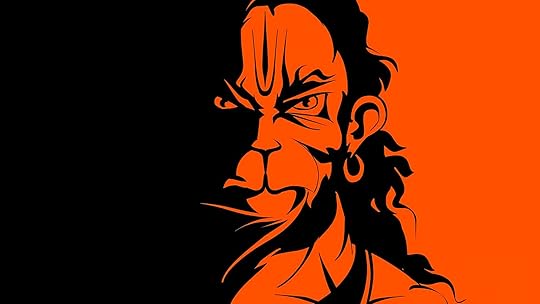
Growing up listening to stories of Hanuman and his heroics, its no wonder that we Indians jump at any and every chance of getting to know more about the legendary figure. And this too was no exception. But what's interesting is that the author has managed to capture an image of Hanuman that is very different from what we have seen or known.
A look into the mythical world, with reinvented storyline and a sense of rightness to the words that builds the story, the journey into what I hope turns out to be a great epic has introduced the author, Vamsee Juluri into a popular segment of mythology that has the likes of Amish Tripathi and Krishna Udayasankar. In all, a must read for all the reinvented mythology lovers out there.
RATINGS : 4.5
Growing up listening to stories of Hanuman and his heroics, its no wonder that we Indians jump at any and every chance of getting to know more about the legendary figure. And this too was no exception. But what's interesting is that the author has managed to capture an image of Hanuman that is very different from what we have seen or known.
A look into the mythical world, with reinvented storyline and a sense of rightness to the words that builds the story, the journey into what I hope turns out to be a great epic has introduced the author, Vamsee Juluri into a popular segment of mythology that has the likes of Amish Tripathi and Krishna Udayasankar. In all, a must read for all the reinvented mythology lovers out there.
February 23, 2017
It's a beautifully written ancient story of kishkindhanagari which is famous in Ramayana for Vali- Vadh. This is first part of trilogy. Main hero of story is Hanuman in his young age who had even forgotten how to leap. With his childhood innocence and leadership qualities (some of them I liked most are of owing things, being responsible for the results of things which you have done; having courage to have your own views and act accordingly), reader falls in love of the character 'Hanuman'. Story also introduces rules and regulations in kishindha which has only one moto : Nonviolence. Everyone should live healthy, happy and without any injury. These laws define their culture, built by Goddess Saraswati. So the optly given name of the story 'Saraswati's Intelligence'. Story also gives hope that if your life is not going on usual way, in your life you are going to do something unusual and important. Hope you will also like the book and enjoy journey with Hanuman and his guru Vishwamitra. Happy Reading.
February 14, 2017
I truly enjoyed Saraswati's Intelligence (The Kishkindha Chronicles, #1) by Vamsee Juluri. Published by Westland, it is the first of a series about the legendary Hanuman. Good cover, paper, font and layout, with British spellings and sentence construction, the narration is mesmerizing, pulling the reader into that era. It tells the story and exploits of Lord Hanuman during his adolescence in Kishkindha, the kingdom of his father Kesari, a land of total peace in which there is no bloodshed, no evil and total harmony. Then evil raises its head, and the time comes for heroes to emerge and for the hermits to create suitable strategies to overpower the carnivore enemies without shedding blood. I would love to read the sequels too.
In my opinion, the negative points are: very long and confusing sentences in some places, trod used instead of tread (P. 70), capitol used instead of capital and so on.
In my opinion, the negative points are: very long and confusing sentences in some places, trod used instead of tread (P. 70), capitol used instead of capital and so on.

January 22, 2017
Mesmerizing! Longer review coming soon.
May 4, 2017
Awesome book. It's been really long since I read something this good.
Detailed review will be published by my husband.
Detailed review will be published by my husband.
January 28, 2021
I read this book as part of my wbtm mix and match challenge.

March 16, 2017
These kind of works are called 'Mythological Fiction', I guess. A lot of novels have been published in this genre lately. Some like the Shiva Trilogy of Amish Tripathi have become very popular. I haven't read them, or any other. In fact, this is my very first.
The story was not paced well, but there were parts that were good. I really liked the description of war, especially the visualization of the 'creatures'. The depiction of Hanuman was interesting - different from what was seen in some popular movies of the last decade (see Hanuman, animated 2005). I am not an expert on the historicity of Ramayana, neither am I a religious person but this book offered an interesting perspective which was new, to me at least.
Some of the themes touched upon in this book that stood out were vegetarianism, animal rights and their confluence with Dharma. I feel that idealism attached to not eating meat was raw (no pun intended), and this I say as a vegetarian. I hope the author will revisit it in his next book in the series. The confrontation between the humanistic animals and the animalistic 'creatures', used as a metaphor for the battle between Dharma and Adharma, was better executed. The eternal dilemma of following the Dharma (which is what exactly?) haunts the characters from the beginning till the end of the story.
Some general observations: A lot like Greek Mythology, Hinduism offers flexibility to create what can best be described as 'fan fiction with gods'. The only difference being that Hinduism is very much alive and has millions of adherents. This kind of liberty is not offered in other major religions and to be frank I like this distinction. There is also a growing market for such works, though it is not as big as that of the content offered by the popular culture machinery. I for one would love to see diversification of this genre in all the branches of multimedia - TV, movies and most importantly Video Games. I would pay good money for a Ramayana or Mahabharata video game, and I am sure that I am not the only one.
The story was not paced well, but there were parts that were good. I really liked the description of war, especially the visualization of the 'creatures'. The depiction of Hanuman was interesting - different from what was seen in some popular movies of the last decade (see Hanuman, animated 2005). I am not an expert on the historicity of Ramayana, neither am I a religious person but this book offered an interesting perspective which was new, to me at least.
Some of the themes touched upon in this book that stood out were vegetarianism, animal rights and their confluence with Dharma. I feel that idealism attached to not eating meat was raw (no pun intended), and this I say as a vegetarian. I hope the author will revisit it in his next book in the series. The confrontation between the humanistic animals and the animalistic 'creatures', used as a metaphor for the battle between Dharma and Adharma, was better executed. The eternal dilemma of following the Dharma (which is what exactly?) haunts the characters from the beginning till the end of the story.
Some general observations: A lot like Greek Mythology, Hinduism offers flexibility to create what can best be described as 'fan fiction with gods'. The only difference being that Hinduism is very much alive and has millions of adherents. This kind of liberty is not offered in other major religions and to be frank I like this distinction. There is also a growing market for such works, though it is not as big as that of the content offered by the popular culture machinery. I for one would love to see diversification of this genre in all the branches of multimedia - TV, movies and most importantly Video Games. I would pay good money for a Ramayana or Mahabharata video game, and I am sure that I am not the only one.
April 24, 2020
The initial 30% of the book is highly confusing. The rest of the book is simply flat. There were some blips of excitements but not enough to be called a good read.
There is no uniqueness about this book. There is no different perspective which this books provide. There didn't came a single moment that made me feel like "wow!! didn't think of that.", Reference to actual Ramayan was made very poorly, to the extent that its absence would have made no difference to the story line or the book.
The book failed both in development of a plot for war, commencement of war, and after war scenarios. And this didn't seem like a book on war, but unfortunately war covers about 50-60% of the book. The remaining portion was supposed to be about Saraswati's intelligence, which I am still trying to figure out.
If we start removing out chapters at random from the book one by one, at no point it would make any difference.
overall - why this book ?
There is no uniqueness about this book. There is no different perspective which this books provide. There didn't came a single moment that made me feel like "wow!! didn't think of that.", Reference to actual Ramayan was made very poorly, to the extent that its absence would have made no difference to the story line or the book.
The book failed both in development of a plot for war, commencement of war, and after war scenarios. And this didn't seem like a book on war, but unfortunately war covers about 50-60% of the book. The remaining portion was supposed to be about Saraswati's intelligence, which I am still trying to figure out.
If we start removing out chapters at random from the book one by one, at no point it would make any difference.
overall - why this book ?

February 8, 2017
Not bad....not bad at all. Hanuman has always been one of my favourites and with a rich world-building happening around this spirited being, the book flows easily. Heavy brushes of spirituality may either appeal or tire the reader. But the characters have been nicely etched and the premise has been laid for future Hanuman-led awesomeness.

April 29, 2021
This book is essential reading for those who want to imagine a world before colonial violence and domination.
It's a slow confusing slog in the beginning but I urge you to keep reading till the end because it's totally worth it. If you need a glossary of terms, it's provided in the sequel. So get the sequel too.
This is the first of what may be a trilogy. The third book is not yet released.
It's a slow confusing slog in the beginning but I urge you to keep reading till the end because it's totally worth it. If you need a glossary of terms, it's provided in the sequel. So get the sequel too.
This is the first of what may be a trilogy. The third book is not yet released.
February 2, 2019
A joy to read.
What a simply written, easy to read, lovely retelling of the Legend of Hanuman. The child in me is singing with joy. I want to read more from this author!
What a simply written, easy to read, lovely retelling of the Legend of Hanuman. The child in me is singing with joy. I want to read more from this author!
December 12, 2020
Wanted to read this book but was skeptical because of the glut of books of this genre in the market and having burnt my fingers (and eyes) in a few! The author has revived my faith in this genre and in parts of the book actually makes you a character in it (a la Chandamama..).
This is the first book in what is a series. It is a fun but filled-with-substance take on Hanuman's life meant for teens, young adults and the rest!!! A lot of thought has gone into bringing out key concepts through the story. To list just a few:
(1) Truth: "Truth, after all was like water. It stayed true only because it could bend "
(2) Nature: Saraswati's form in a waterfall was brilliant
(3) Evolution
(4) Dharma, Devotion: "Tell them to defeat not destroy. Knowing that difference alone is Goddess Saraswati's grace to us"
And so much more... The Kamadenu touch was to good.
Read it and chew on it.
This is the first book in what is a series. It is a fun but filled-with-substance take on Hanuman's life meant for teens, young adults and the rest!!! A lot of thought has gone into bringing out key concepts through the story. To list just a few:
(1) Truth: "Truth, after all was like water. It stayed true only because it could bend "
(2) Nature: Saraswati's form in a waterfall was brilliant
(3) Evolution
(4) Dharma, Devotion: "Tell them to defeat not destroy. Knowing that difference alone is Goddess Saraswati's grace to us"
And so much more... The Kamadenu touch was to good.
Read it and chew on it.

June 10, 2017
I got the book from Goodreads giveaway, in exchange for a honest review.
Within the genre of Indian mythological fiction, this book serves its purpose. It's fun, and it touches up on a lot of topics that would appeal to the mainstream. The pace is slow in the beginning, and uneven thereafter. Some concepts are interesting, but really vegetarianism? I'd argue that nobody was vegetarian 'then', but then I suppose I should accept the cosmos that the author built. I liked the sense of adventure and danger, but some of the other parts seemed like a bit of a stretch. After half the book, I pretty much skimmed through. It's not my cup of tea, and I'll certainly not be looking forward to the sequel. However, if you like Shiva trilogy and such, go for it.
Within the genre of Indian mythological fiction, this book serves its purpose. It's fun, and it touches up on a lot of topics that would appeal to the mainstream. The pace is slow in the beginning, and uneven thereafter. Some concepts are interesting, but really vegetarianism? I'd argue that nobody was vegetarian 'then', but then I suppose I should accept the cosmos that the author built. I liked the sense of adventure and danger, but some of the other parts seemed like a bit of a stretch. After half the book, I pretty much skimmed through. It's not my cup of tea, and I'll certainly not be looking forward to the sequel. However, if you like Shiva trilogy and such, go for it.

July 11, 2022
To be honest I was having a hard time during the first half of this book, because the starting of this book isn't like a book's starting at all. It feels like this book is the second part of some book which doesn't even exist, maybe it was so deep and complex that I couldn't connect. I started enjoying the only after reading almost 10 12 chapters, it has a great storyline the only thing that couldn't make sense at all was the weak starting. The character development of Hanuman and Sugreev is the most clearly visible in the whole book. One of the most interesting thing of this book was the various sections of society shown and depicted. Conflicts between new sections and the old ones was also quite interesting.

October 16, 2017
Mr. Juluri is a revered writer and book a friend recommended this book to me.
First thing first, there's no doubt in writer's knowledge, and his expertise on the subject. But sometimes it doesn't sync well with book writing ,and that's what I observed here. Throughout the book, the reader will realize writer's prowess in Indian mythology(I use mythology because its a fiction), but for me, it failed to create interest.
I didn't like the portrayal of Vishwamitra's character either, it was a big let down. Although the book's second half reads slight better, but the base, the first half was not good enough to engage me.
First thing first, there's no doubt in writer's knowledge, and his expertise on the subject. But sometimes it doesn't sync well with book writing ,and that's what I observed here. Throughout the book, the reader will realize writer's prowess in Indian mythology(I use mythology because its a fiction), but for me, it failed to create interest.
I didn't like the portrayal of Vishwamitra's character either, it was a big let down. Although the book's second half reads slight better, but the base, the first half was not good enough to engage me.
Displaying 1 - 30 of 40 reviews