

What do you think?

The Girl from Simon's Bay
A seashell and a sealed letter form a tenuous connection to a forbidden wartime romance...
Simon's Town is a vibrant seafaring community in a picturesque part of the Union of South Africa. Louise Ahrendts, daughter of a local shipbuilder, nurtures the dream of becoming a nurse amid the unwritten, unspoken rules about colour that might hold her back.
As the port becomes a hub of activity following the outbreak of the Second World War, Louise crosses paths with man she is determined to be with - despite all the obstacles that life and war can throw in their way.
But when a new troubled moment of history dawns, can they find their way back to each other?
Simon's Town is a vibrant seafaring community in a picturesque part of the Union of South Africa. Louise Ahrendts, daughter of a local shipbuilder, nurtures the dream of becoming a nurse amid the unwritten, unspoken rules about colour that might hold her back.
As the port becomes a hub of activity following the outbreak of the Second World War, Louise crosses paths with man she is determined to be with - despite all the obstacles that life and war can throw in their way.
But when a new troubled moment of history dawns, can they find their way back to each other?
416 pages, Paperback
First published January 19, 2017
About the author
Barbara Mutch
6 books93 followersBarbara Mutch is the author of four novels set in South Africa. The Housemaid's Daughter, a tale of love, hope and redemption, is set in the stunning Karoo. The Girl from Simon's Bay follows a forbidden romance in the port of Simon's Town during the 2nd World War. The Fire Portrait traces the life of a young artist in a rural hamlet who survives a fire to raise a child. In The Case Against Fili Du Bois, an adopted child must make her mark amid the joys and challenges of a newly-democratic South Africa.
Visit https://barbaramutch.com for more
Barbara was born and raised in South Africa, and is the granddaughter of Irish immigrants.
Visit https://barbaramutch.com for more
Barbara was born and raised in South Africa, and is the granddaughter of Irish immigrants.
Ratings & Reviews
Friends & Following
Create a free account to discover what your friends think of this book!
Community Reviews
Displaying 1 - 30 of 57 reviews

December 14, 2017
Una historia de amor más allá de los años, la guerra, el racismo y el clasismo. Tan bonita como real y dura.

March 13, 2020
Es una novela inolvidable. Todo este caos de la cuarentena tenía que tener algo positivo y lo he encontrado en esa maravillosa historia de almas gemelas, de espera por el ser amado, de guerra y de verdad. Pero sobre todo, de bondad. De esa bondad que está por encima de la raza, el sexo, religión etc. Me quedo con esta frase de David “cuando uno encuentra el amor hay que hacer lo que sea necesario para conservarlo.”

November 20, 2017
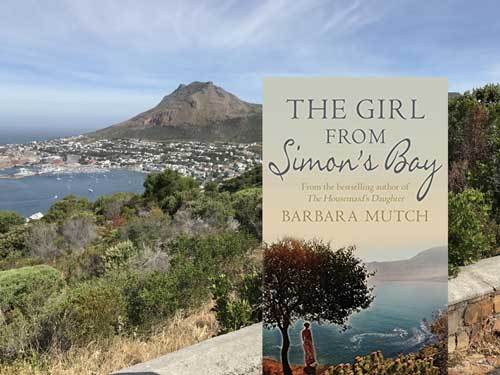
Visit the locations in the novel
Amongst the many stories I’ve read about WW2, there’s not many that I can remember as being told through the eyes of two people, a man and a woman of different status in life as well as a different colour in such a place of Simon’s Town.
There are several threads to this story and the history and the emotions of the people come across loud and clear. Louise’s story builds well and then we meet Lieutenant David Horrocks as her patient, and from that moment on the story really takes off.
I think the edge of this story was that it had so many facets to it, the background was the story as was the location and the people there. The forced evacuations and the shock of the people shoved out of sight were heartbreaking. The senseless state that is apartheid is really shown in all its naked stupidity. Barbara Mutch has clearly done her research and the way she describes and evokes the setting – beauty amidst such horror – is a delicate balance she does really well.
This was an interesting read for me and really opened my eyes to a new part of history and a new angle of it. Simon’s Town is now on my list of interesting places to visit one day, but for now I will simply keep this book to hand and one day hope to see the preserved town that stands today.

March 29, 2018
"Maybe getting older was less about compiling years and more about what you were forced to leave behind."
One of my favorite (bad word choice, but what better to use?) topics in books are WWII, therefore, you learn quite a lot about events during that time. I am a South African and it really is shocking to realize how little I actually know about South Africa during that time period.
The Girl from Simon's Bay shed some light on the navy at Simon's Bay during WWII and the involvement of the local communities. The story doesn't only revolve around the war, but also the years of segregation and apartheid a couple of years later. Overall a beautiful book to read.
"Amos Philander had never bothered with religion of any sort so there was no Imam or Minister that Piet could ask about the difference between right and wrong in an unjust world."
One of my favorite (bad word choice, but what better to use?) topics in books are WWII, therefore, you learn quite a lot about events during that time. I am a South African and it really is shocking to realize how little I actually know about South Africa during that time period.
The Girl from Simon's Bay shed some light on the navy at Simon's Bay during WWII and the involvement of the local communities. The story doesn't only revolve around the war, but also the years of segregation and apartheid a couple of years later. Overall a beautiful book to read.
"Amos Philander had never bothered with religion of any sort so there was no Imam or Minister that Piet could ask about the difference between right and wrong in an unjust world."

January 8, 2020
A lovely story of a forbidden love set mostly during the apartheid era in South Africa. Although the plot is quite simple and a bit predictable it is very believeable and well researched. Having grown up in South Africa (and I have been to Simon's Town) made this book more special to me. The descriptions of the beauty of the Cape were exquisite and brought back many memories and the life and times read very true from what I remember of that period. A solid 4 Stars.

November 20, 2017
No le pongo 5 estrellas porque el final aunque bonito, me ha parecido muy típico de este tipo de historias. El resto, me ha encantado. Desde el tema de la marina en la Segunda Guerra Mundial, la discriminación en Sudáfrica por el color de la piel, el poder trabajar de lo que se quiere sin que el color lo impida....
Una historia que nos muestra una parte de la historia de Sudáfrica
Una historia que nos muestra una parte de la historia de Sudáfrica

November 21, 2017
El comienzo de la historia me atrapó, considero que este tipo de historias me dan algo de respeto por miedo a pasarlo mal ya que no podemos olvidar que transcurre en mitad de una guerra pero a su vez contienen historias tan intensas e inolvidables como esta.
La historia de amor de este libro es tan bonita como dolorosa, encontramos a dos amantes provenientes de sociedades opuestas y el estar juntos no será fácil de conseguir y ello los llevará a una lucha a contracorriente.
Reseña completa: https://atrapadaenunashojasdepapel.bl...
La historia de amor de este libro es tan bonita como dolorosa, encontramos a dos amantes provenientes de sociedades opuestas y el estar juntos no será fácil de conseguir y ello los llevará a una lucha a contracorriente.
Reseña completa: https://atrapadaenunashojasdepapel.bl...
February 24, 2019
The characters stayed with me long after I read the last sentence

January 23, 2018
wonderful book - sensitive, real, easy read and stays with you for weeks afterwards...

April 27, 2018
While the end might be sort of expected, the story has captivated me. A beautiful love and life story amidst soul-crushing situations like war and apartheid.

December 6, 2020
Esta novela es un viaje hasta la Sudáfrica de los años 50 y 60. En ella nos adentramos en una historia de amor prohibido que se desarrolla en medio de la Segunda Guerra Mundial. Un idilio entre dos jóvenes de clases y, sobre todo, de razas y color de piel diferentes. Lo que comenzará de la forma más inesperada continuará durante años. ¿Cuántos? Para saberlo, mejor leerla, pues este dato puede revelar parte de la trama.
En cuanto a los personajes, la protagonista, Louise es una mujer fuerte y valiente, que luchará por defender a su familia, pero también por lograr sus objetivos profesionales y personales. Louise logrará adentrarse en espacios reservados para blancos y demostrar que el color de piel no está asociado con un tipo u otro de aptitudes. Por su parte, David Horrocks es un inglés, teniente de la marina, quien llegará hasta Sudáfrica en uno de sus viajes.
La novela se divide en setenta y seis capítulos bastante breves. Algunos de ellos, los menos, están redactados con formato epistolar, el resto están redactados en primera persona, la mayoría de ellos, por Louise o David. La prosa de la autora es sencilla, pero cautivadora, lo que hace que encuentres citas para enmarcar. Además, sus descripciones nos hacen viajar hasta diferentes rincones de Sudáfrica. Escuchar las olas romper contra las rocas, ver a las aves planeando sobre el mar, oler el agua salada… pero también ver las llamas, oler el humo y sentir el miedo que muchos de ellos sintieron cuando se vieron despojados de todo.
Si soy sincera, ni el título ni la portada me atrajeron, pero el buen recuerdo que tenía de su anterior novela (La hija de la criada) me hicieron hacerme con esta novela. Algo de lo que, evidentemente, no me arrepiento lo más mínimo.
En cuanto a los personajes, la protagonista, Louise es una mujer fuerte y valiente, que luchará por defender a su familia, pero también por lograr sus objetivos profesionales y personales. Louise logrará adentrarse en espacios reservados para blancos y demostrar que el color de piel no está asociado con un tipo u otro de aptitudes. Por su parte, David Horrocks es un inglés, teniente de la marina, quien llegará hasta Sudáfrica en uno de sus viajes.
La novela se divide en setenta y seis capítulos bastante breves. Algunos de ellos, los menos, están redactados con formato epistolar, el resto están redactados en primera persona, la mayoría de ellos, por Louise o David. La prosa de la autora es sencilla, pero cautivadora, lo que hace que encuentres citas para enmarcar. Además, sus descripciones nos hacen viajar hasta diferentes rincones de Sudáfrica. Escuchar las olas romper contra las rocas, ver a las aves planeando sobre el mar, oler el agua salada… pero también ver las llamas, oler el humo y sentir el miedo que muchos de ellos sintieron cuando se vieron despojados de todo.
Si soy sincera, ni el título ni la portada me atrajeron, pero el buen recuerdo que tenía de su anterior novela (La hija de la criada) me hicieron hacerme con esta novela. Algo de lo que, evidentemente, no me arrepiento lo más mínimo.
October 10, 2023
What a beautifully written, emotional, delightful story! I enjoyed the simplicity of the basic story which was brimming with emotion, dealing in dignified ways with war apartheid and simple, good people struggling with their moral beliefs. I found myself crying with emotion often through this book. A very special story!

November 20, 2019
This is a well-researched story with detailed descriptions of Cape Town, in particular the environment of coastal areas around Simon Town. The complicated social (and after the introduction of apartheid) legal structures which influenced the life of coloured people frame a story of determination and love which although somewhat predictable was still touching.
January 21, 2019
Simons town is one of my favourite places that always attracts me with its colourful beauty, wonderful beaches with penguins, interesting old buildings , museums and the harbour. It was real pleasure for me to read that beautiful book with a moving story about great love and life in the area before the apartheid era. Several days, while reading the book, I walked around that amazing places in my mind, almost felt the strong winds and the smell of the ocean. The main characters in the book touched me so deeply and genuinely that I cannot stop thinking about them. Waiting for another book from Barbara Much.

May 19, 2022
What a lovely read! I loved the book because I love visiting Simon’s Town as we spend many happy holidays there and can picture the scenes as described.

December 22, 2022
Romantic story of love against the odds - full review to follow
July 25, 2025
Loved this book. The love story, the twists… the fact that it was set in my own hometown, Cape Town. Offering a personal insight into forced removals that I had not previously thought of in such a way but certainly not the key theme of the book which was a love and life story of a coloured girl - wrapped in history.

March 27, 2017
The Girl from Simons Bay by Barbara Mutch
The narrative takes place in South Africa at the time of WW11 when apartheid was at its worse. Louise was colored and lived in South Africa but always had a dream of becoming a nurse but there had never been a colored student admitted to nursing school. Her father had always told her she could do anything so she was determined to submit her application regardless of the odds. She was pleasantly surprised that after the interview with the hospital matron, she was given a probationary placement. She meets Lieutenant David Horrocks who had been admitted for an emergency appendectomy and there was an instant attraction but there two major problems . . .David was married and white. Reflection of a dark time of forced evacuations. By the author of The Handmaids Daughter and although not as interesting, it is still a good read. 3.8
The narrative takes place in South Africa at the time of WW11 when apartheid was at its worse. Louise was colored and lived in South Africa but always had a dream of becoming a nurse but there had never been a colored student admitted to nursing school. Her father had always told her she could do anything so she was determined to submit her application regardless of the odds. She was pleasantly surprised that after the interview with the hospital matron, she was given a probationary placement. She meets Lieutenant David Horrocks who had been admitted for an emergency appendectomy and there was an instant attraction but there two major problems . . .David was married and white. Reflection of a dark time of forced evacuations. By the author of The Handmaids Daughter and although not as interesting, it is still a good read. 3.8

May 30, 2018
This novel is about a lifelong romance, despite the obstacles of race and war. Louise Ahrendts succeeds in building a career in nursing when girls in her neighbourhood marry and bear children during their teens. She nurses a British naval officer back to health and here starts a love relationship spanning the next forty years.
The atmospheric story is embedded in detailed descriptions of Cape Town, the flora and fauna of its beautiful surrounds, the ever-present sea and the complicated social structures of an era which ended shortly before the end of apartheid in South Africa.
I found the book a comfortable read with characters I came to know well. The author included some interesting details which she’d researched, pertaining to the naval base at Simonstown and the role of the British navy during World War II.
I rate it 3.5 stars.
The atmospheric story is embedded in detailed descriptions of Cape Town, the flora and fauna of its beautiful surrounds, the ever-present sea and the complicated social structures of an era which ended shortly before the end of apartheid in South Africa.
I found the book a comfortable read with characters I came to know well. The author included some interesting details which she’d researched, pertaining to the naval base at Simonstown and the role of the British navy during World War II.
I rate it 3.5 stars.
October 11, 2017
Thank you Goodreads for sending me this book. A really great read and I became totally absorbed in this book. It is a love story between a naval officer and Louise, who is the daughter of a shipbuilder and who lives in South Africa. The two main characters come from completely different worlds and the journeys they take throughout this story are heartfelt and, I felt, totally believable. The descriptions in the book are amazing an, all in all, I would say this is a great read & would highly recommend it.

August 28, 2017
What a beautifully written story of love, hope and loss. A story that is a little too familiar in my own family history.

May 3, 2019
A beautiful story that pulls at your heart strings.

July 29, 2021
The Girl from Simon's Bay can make you closer to a country that was almost unknown to me. South Africa. Barbara Mutch has crafted every single detail with care and respect, with all the pieces from naval knowledge set in the country, details in the landscape and the natural environment that puts you in the scenario, and descriptions that show and not tell, creating a book that, not only shines in creativity but also in the cinematography that generates in your mind, which to me is really important. Mutch has grabbed all the information she could find to create a rich book filled with all the important information, and has created a puzzle which final image is every single scene in this book, from Louise's childhood to the end. I am not a romance reader myself, after all mother was the one who bought this book for herself, but I catched it first. For that i thank her.
Though I can't give it the five stars I wished, and to explain I have to go into spoiler territory. Reader discretion is advised
My pet peeves are personal, and they normally are around the lines of character development and conclusions. And, the first point i want to make is, why did Piet have to die like that?
I hope you understand that I don't expect villains to be redeemed, all the contrary, if that's what he deserved so be it, if that's what Mutch had prepared I can't say anything. But it felt like it was a character that was thrown in the trash when he wasn't convenient. Of course he would have been an obstacle, mostly to the end of the book, who knows what he would have done to Ella and Sam's relationship and his trip to England, but it kinda makes me wonder what his relationship would have been with the apartheid and his constant need of not following the law and ruining Louise's life in any way; though it is sad for her and maybe a repetitive plot but alas it might have given some sort of closure instead of a death by accident. Though it is also realistic, it's just a pet peeve.
The second personal problem is that I lack content between Ella and Sam, just a slight more and how abrupt and quick, though well tied, the ending feels. Do people really act like nothing has happened? Are they that good and forgiving they don't have any shared conflict? Is Mutch saying that, if you hide a secret for too long, with such matter of importance, the one's affected will be fine with it? I'm not saying they must be angry or upset, I'm saying they could be conflicted. Though it has a great message which defends that, with our actions, we are capable of shaping the future of the people that matter to us; and how destiny cannot make mistakes.
It was a refreshing reading, I congratulate the writer on her hard work and how she has made me enjoy romance more, again this is new for me, but I'll make sure to try and find more books by this author. If they have the degree of work this one has had I'm sure they will be as enjoyable and engaging as this one.
Though I can't give it the five stars I wished, and to explain I have to go into spoiler territory. Reader discretion is advised
My pet peeves are personal, and they normally are around the lines of character development and conclusions. And, the first point i want to make is, why did Piet have to die like that?
I hope you understand that I don't expect villains to be redeemed, all the contrary, if that's what he deserved so be it, if that's what Mutch had prepared I can't say anything. But it felt like it was a character that was thrown in the trash when he wasn't convenient. Of course he would have been an obstacle, mostly to the end of the book, who knows what he would have done to Ella and Sam's relationship and his trip to England, but it kinda makes me wonder what his relationship would have been with the apartheid and his constant need of not following the law and ruining Louise's life in any way; though it is sad for her and maybe a repetitive plot but alas it might have given some sort of closure instead of a death by accident. Though it is also realistic, it's just a pet peeve.
The second personal problem is that I lack content between Ella and Sam, just a slight more and how abrupt and quick, though well tied, the ending feels. Do people really act like nothing has happened? Are they that good and forgiving they don't have any shared conflict? Is Mutch saying that, if you hide a secret for too long, with such matter of importance, the one's affected will be fine with it? I'm not saying they must be angry or upset, I'm saying they could be conflicted. Though it has a great message which defends that, with our actions, we are capable of shaping the future of the people that matter to us; and how destiny cannot make mistakes.
It was a refreshing reading, I congratulate the writer on her hard work and how she has made me enjoy romance more, again this is new for me, but I'll make sure to try and find more books by this author. If they have the degree of work this one has had I'm sure they will be as enjoyable and engaging as this one.
This entire review has been hidden because of spoilers.

April 3, 2025
Whispers of a forbidden love
Barbara Mutch, author of The Girl from Simon's Bay, splits her time between Surrey and South Africa, where she grew up. Her profound understanding and compassionate insight into South Africa’s cultural and racial complexities are evident in this elegantly written novel (2017; Allison & Busby).
The story centres around Louise Ahrends, born into the vibrant community of Simon's Town in the 1930s. She spends her childhood combing the beach for shells and swimming at Seaforth Beach. Defying societal expectations for coloured women at the time, Louise perseveres to become a nurse.
When World War II breaks out in 1939, Louise is transferred to the British Navy hospital, situated high on the mountain overlooking the bay. Despite facing discrimination from some superiors, she proves herself an excellent nurse and meets many injured British sailors. Louise falls in love with one of them, and they begin a clandestine correspondence that lasts throughout the war.
As the book concludes, Louise and her family are affected by the Group Areas Act, leading to their forced relocation. Mutch skillfully captures both the emotional pain and practical challenges families faced during this period.
At its core, this book is an engaging love story. For those familiar with the Cape, it's a delight to read about the recognizable landmarks and typical Cape challenges—the South Easter wind, baboons, and wildfires. Mutch masterfully intertwines the political, cultural, and racial challenges that have been very real for South Africans into Louise's narrative. She also explores family roles and expectations.
This book is an absolute pleasure to read. I quickly became invested in the characters' lives and couldn't put it down. Even long after finishing, my mind kept returning to the story and the beautiful setting in which it unfolds.
Barbara Mutch, author of The Girl from Simon's Bay, splits her time between Surrey and South Africa, where she grew up. Her profound understanding and compassionate insight into South Africa’s cultural and racial complexities are evident in this elegantly written novel (2017; Allison & Busby).
The story centres around Louise Ahrends, born into the vibrant community of Simon's Town in the 1930s. She spends her childhood combing the beach for shells and swimming at Seaforth Beach. Defying societal expectations for coloured women at the time, Louise perseveres to become a nurse.
When World War II breaks out in 1939, Louise is transferred to the British Navy hospital, situated high on the mountain overlooking the bay. Despite facing discrimination from some superiors, she proves herself an excellent nurse and meets many injured British sailors. Louise falls in love with one of them, and they begin a clandestine correspondence that lasts throughout the war.
As the book concludes, Louise and her family are affected by the Group Areas Act, leading to their forced relocation. Mutch skillfully captures both the emotional pain and practical challenges families faced during this period.
At its core, this book is an engaging love story. For those familiar with the Cape, it's a delight to read about the recognizable landmarks and typical Cape challenges—the South Easter wind, baboons, and wildfires. Mutch masterfully intertwines the political, cultural, and racial challenges that have been very real for South Africans into Louise's narrative. She also explores family roles and expectations.
This book is an absolute pleasure to read. I quickly became invested in the characters' lives and couldn't put it down. Even long after finishing, my mind kept returning to the story and the beautiful setting in which it unfolds.

March 13, 2017
The Girl from Simon’s Bay is a beautifully written book about love between a British naval office in the Second World War and a coloured girl from Simons Town intent on bettering herself by successfully training as a nurse.
Barbara Mutch’s descriptions of Simons Town, the sea especially at Seaforth Beach, the mountain, fynbos, birds and the wind that blows most of the time are outstanding. She has a wonderful way with words.
The story flows along and though I was concerned that the story might become rather predictable as it developed David and Louise’s relationship, this was not the case. The difficulties of a white man and a coloured girl falling in love produced quite a bit of tension as the increasing curse of racism unfolded, culminating in the terrible apartheid policy of forced evictions of non-whites from Simons Town to other far less attractive areas. Louise’s family and the other coloured people in the community and their relationship with one another are well depicted.
I would however take issue with a couple of points. I understand the need for a fictional civilian hospital in Simons Town to draw Louise into a nursing career in the area but it did jar a little. My main concern though was the lack of real conflict. There was tension but I felt Louise’s relationship with Piet could have been far more confrontational. His knowledge of her affair with David was not totally explored or exploited and his death was rather a non-event, as if his character was no longer needed for the story.
My other concern was the attitude that racism in other countries was hardly an issue in 1960’s. It is true nowhere else institutionalised and legalised it as in South Africa but racism was a huge problem in USA, Australia and in UK during those times. As more black and coloured people arrived in Britain in 1950’s and 1960’s looking for and finding work, there was a lot of social unrest and unpleasantness. The assumption that Sam would fit in well on a country estate in rural Britain during that time is not true. Country folk are notoriously small-minded and would have viewed him with huge suspicion. It took several decades before UK developed into the multi-cultural and far more accepting country that we have today.
However, having said all that, this was a lovely book to read and left a lingering satisfaction of a well-constructed tale of love during the hardest of times of both war and apartheid.
Barbara Mutch’s descriptions of Simons Town, the sea especially at Seaforth Beach, the mountain, fynbos, birds and the wind that blows most of the time are outstanding. She has a wonderful way with words.
The story flows along and though I was concerned that the story might become rather predictable as it developed David and Louise’s relationship, this was not the case. The difficulties of a white man and a coloured girl falling in love produced quite a bit of tension as the increasing curse of racism unfolded, culminating in the terrible apartheid policy of forced evictions of non-whites from Simons Town to other far less attractive areas. Louise’s family and the other coloured people in the community and their relationship with one another are well depicted.
I would however take issue with a couple of points. I understand the need for a fictional civilian hospital in Simons Town to draw Louise into a nursing career in the area but it did jar a little. My main concern though was the lack of real conflict. There was tension but I felt Louise’s relationship with Piet could have been far more confrontational. His knowledge of her affair with David was not totally explored or exploited and his death was rather a non-event, as if his character was no longer needed for the story.
My other concern was the attitude that racism in other countries was hardly an issue in 1960’s. It is true nowhere else institutionalised and legalised it as in South Africa but racism was a huge problem in USA, Australia and in UK during those times. As more black and coloured people arrived in Britain in 1950’s and 1960’s looking for and finding work, there was a lot of social unrest and unpleasantness. The assumption that Sam would fit in well on a country estate in rural Britain during that time is not true. Country folk are notoriously small-minded and would have viewed him with huge suspicion. It took several decades before UK developed into the multi-cultural and far more accepting country that we have today.
However, having said all that, this was a lovely book to read and left a lingering satisfaction of a well-constructed tale of love during the hardest of times of both war and apartheid.
January 1, 2024
A great narrator of the audible version talked me through this book. As I was about to use words like terrific and great I caught myself. There is a lot more in this story that tugs negatively at heartstrings than induces happy claps. The power of this book is that it is so real. Real and fiction don’t seem to fit, but this author has created deep, rounded characters leading lives in a disturbing historical context. As a White South African who lived through apartheid I feel ashamed at my lack of awareness of the impact of Government policies on people like Louise. This story is quite heartbreaking and must have been hard to write. From the horror of the forced removals from homes to the poor treatment of people of mixed race this book hammers home the effects on the lives of individuals - some good people - and some not so good. It personalises apartheid and would do well as a prescribed book in schools to broaden understanding of concepts that are typically summarised in words and phrases that reduce the true impact and meaning of the policies. Just understanding the struggle that Ella and Sam had to simply meet brings the reality to consciousness….it is not comfortable - and shouldn’t be…

July 12, 2025
⭐️⭐️⭐️ // 3 stars
The Girl from Simon's Bay was a beautifully written story, and while I enjoyed parts of it, there were a few things that didn’t fully work for me.
I really liked the writing style—it flowed well and kept me turning the pages. The characters were likable, and the love between them had moments that genuinely touched me. I even came close to crying (and I never cry at books, so that’s saying something)!
But… something about the romance just didn’t fully connect for me. I struggled to believe in the progression of their relationship—it felt a bit sudden at times, especially considering the time period and how little contact they had. It made it harder for me to feel the love, even though their words for each other were beautiful and emotional.
There were also a few decisions the characters made that confused me or felt out of character, and that pulled me out of the story a bit. I think I was just expecting something a little different going in, and in the end, it wasn’t totally my kind of romance.
Keep in mind that I read Booktok books, so this isn't really my vibe, but I wanted to try something new, and I come from South Africa. So this wasn't a bad book, and I would really recommend it if you like historical fiction.❤️🌸
The Girl from Simon's Bay was a beautifully written story, and while I enjoyed parts of it, there were a few things that didn’t fully work for me.
I really liked the writing style—it flowed well and kept me turning the pages. The characters were likable, and the love between them had moments that genuinely touched me. I even came close to crying (and I never cry at books, so that’s saying something)!
But… something about the romance just didn’t fully connect for me. I struggled to believe in the progression of their relationship—it felt a bit sudden at times, especially considering the time period and how little contact they had. It made it harder for me to feel the love, even though their words for each other were beautiful and emotional.
There were also a few decisions the characters made that confused me or felt out of character, and that pulled me out of the story a bit. I think I was just expecting something a little different going in, and in the end, it wasn’t totally my kind of romance.
Keep in mind that I read Booktok books, so this isn't really my vibe, but I wanted to try something new, and I come from South Africa. So this wasn't a bad book, and I would really recommend it if you like historical fiction.❤️🌸

March 19, 2024
Enjoyed this. Not least because I know Simon's Town well; my in-laws lived there. Not my usual reading fare; my wife recommended it.
The story is sad on one level, annoying on another as although it paints a decent picture of the racism so endemic in SA. it didn't go far enough perhaps? The only reason I cannot personally rate this more highly is because i thought this aspect was under-cooked a little. The forced "resettlement" evictions were an international act of extreme cruelty. Legitimised by some of the most ghastly politicians ever to hold positions of legislative authority. Lou, her family and neighbours on "Ricketts Terrace endured one of the worst things that you could possibly endure. The forced eviction and move to "Ocean View" an abomination.
As a fictional love story it was well crafted and ultimately a tragic one. reminded me in some ways of the film version of "Bridges of Madison County".
The story is sad on one level, annoying on another as although it paints a decent picture of the racism so endemic in SA. it didn't go far enough perhaps? The only reason I cannot personally rate this more highly is because i thought this aspect was under-cooked a little. The forced "resettlement" evictions were an international act of extreme cruelty. Legitimised by some of the most ghastly politicians ever to hold positions of legislative authority. Lou, her family and neighbours on "Ricketts Terrace endured one of the worst things that you could possibly endure. The forced eviction and move to "Ocean View" an abomination.
As a fictional love story it was well crafted and ultimately a tragic one. reminded me in some ways of the film version of "Bridges of Madison County".

May 9, 2020
Colored Louise Ahrendts longs to rise above their place in life. By working hard she is able to win herself a position in nursing school - a world reserved for the white citizens. When WWII breaks out and many of the naval ships dock in Simon's Bay, Louise is working at the Royal Navy Hospital where she cares for British patients. David Horrocks was one of those patients. As David recovered, he asks for an opportunity to see Louise. But a relationship between races was forbidden. Would the times and war keep them apart?
Absolutely loved it. It was given to me as a Christmas present the year it was published but I had never taken the time to read it. I was instantly in South Africa of the 1930's and 40's. Although I've never actually been to Cape Town, I feel as if I have from the descriptions and story. This is a keeper.
Absolutely loved it. It was given to me as a Christmas present the year it was published but I had never taken the time to read it. I was instantly in South Africa of the 1930's and 40's. Although I've never actually been to Cape Town, I feel as if I have from the descriptions and story. This is a keeper.
Displaying 1 - 30 of 57 reviews