What do you think?
Rate this book


《月亮和六便士》是英国著名作家、“故事圣手”毛姆最重要的长篇小说代表作之一。小说中的英国画家是以法国后期印象派大师保罗·高更为原型塑造的人物形象;主人公原本是位成功的证券经纪人;人届中年后却迷恋上绘画;像“被魔鬼附了体”;突然弃家出走;到巴黎去追求绘画的理想;并最终选择弃绝文明世界;远遁到南太平洋与世隔绝的塔希提岛;在那里终于找到灵魂的宁静和适合自己艺术气质的氛围;创作出一幅又一幅令后世震惊的艺术杰作。通过这样一个一心追求艺术、不通人情世故的怪才的人生际遇;毛姆深入探讨了艺术的产生与本质、个性与天才的关系以及艺术家与社会、艺术与生活之间的矛盾和相互作用等等引人深思的问题。
206 pages, Kindle Edition
First published April 15, 1919

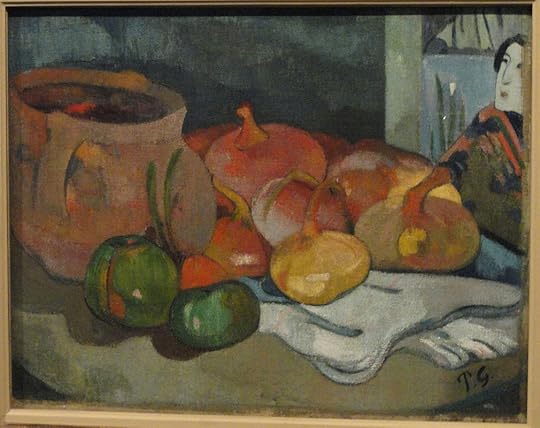
"According to some sources, the title, the meaning of which is not explicitly revealed in the book, was taken from a review of Maugham's novel, 'Of Human Bondage', in which the novel's protagonist, Philip Carey, is described as being "so busy yearning for the moon that he never saw the sixpence at his feet." According to a 1956 letter from Maugham, "If you look on the ground in search of a sixpence, you don't look up, and so miss the moon." Maugham's title echoes the description of Gauguin by his contemporary biographer, Meier-Graefe (1908): "He [Gauguin] may be charged with having always wanted something else."


It’s a preposterous attempt to live only for yourself and by yourself. Sooner or later you’ll be ill and tired and old, and then you’ll crawl back into the herd. Won’t you be ashamed when you feel in your heart the desire for comfort and sympathy? You’re trying an impossible thing. Sooner or later the human being in you will yearn for the common bonds of humanity.
Each one of us is alone in the world. He is shut in a tower of brass, and can communicate with his fellows only by signs, and the signs have no common value, so that their sense is vague and uncertain. We seek pitifully to convey to others the treasures of our heart, but they have not the power to accept them, and so we go lonely, side by side but not together, unable to know our fellows and unknown by them. We are like people living in a country whose language they know so little that, with all manner of beautiful and profound things to say, they are condemned to the banalities of the conversation manual. Their brain is seething with ideas, and they can only tell you that the umbrella of the gardener's aunt is in the house.
Why should you think that beauty, which is the most precious thing in the world, lies like a stone on the beach for the careless passer-by to pick up idly? Beauty is something wonderful and strange that the artist fashions out of the chaos of the world in the torment of his soul. And when he has made it, it is not given to all to know it. To recognize it you must repeat the adventure of the artist. It is a melody that he sings to you, and to hear it again in your own heart you want knowledge and sensitiveness and imagination.
• I have always been a little disconcerted by the passion women have for behaving beautifully at the death-bed of those they love. Sometimes it seems as if they grudge the longevity which postpones their chance of an effective scene.
• Women are constantly trying to commit suicide for love, but generally they take care not to succeed.
• “Women are strange little beasts,” he said to Dr. Coutras. “You can treat them like dogs, you can beat them till your arm aches, and still they love you.” He shrugged his shoulders. “Of course, it is one of the most absurd illusions of Christianity that they have souls.”
The moral I draw is the artist should seek his reward in the pleasure of his work and in the release of the burden of his thought; and, indifferent to aught else, care nothing for praise or censure, failure or success.