Jump to ratings and reviews
Rate this book

Ravenloft #14

Scholar of Decay

Rate this book
A tale of fear from best-selling author Tanya Huff!

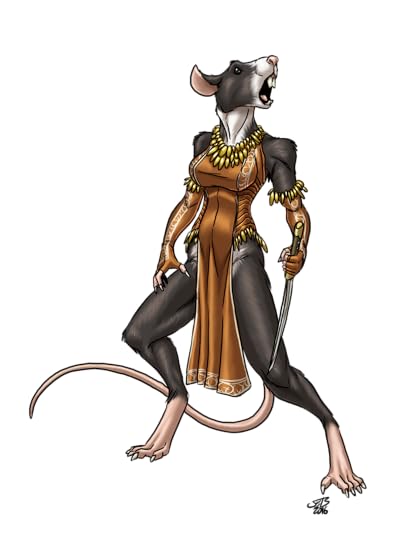
Scholar of Decay is the story of a man driven by love into the darkest corners of the world. When Aurek Nuiken's wife is attacked and made prisoner by an evil mage, he must search the Domains of Dread for the spell that will allow him to free her. But ultimately his wife's freedom - and his own - lies in the hands of a clan of wererats who are not inclined to assist him. Faced with both his own torment and the monsters of the Ravenloft world, Aurek is pushed to the edge of madness and to a choice that no man should ever have to make.

314 pages, Paperback

First published January 1, 1995

13 people are currently reading
635 people want to read

About the author

Tanya Huff

151 books2,444 followers
Tanya Sue Huff is a Canadian fantasy author. Her stories have been published since the late 1980s, including five fantasy series and one science fiction series. One of these, her Blood Books series, featuring detective Vicki Nelson, was adapted for television under the title Blood Ties.

Ratings & Reviews

What do you think?
Rate this book

Friends & Following

Create a free account to discover what your friends think of this book!

Community Reviews

5 stars
91 (21%)
4 stars
121 (28%)
3 stars
156 (36%)
2 stars
48 (11%)
1 star
14 (3%)
Displaying 1 - 22 of 22 reviews
Profile Image for Tim Martin.
873 reviews50 followers
April 7, 2018
This is the second novel I have read in the Ravenloft series of dark fantasy/horror books (which as far as I know are all stand-alone). This particular work had a number of similarities with the other book in the series that I have read so far (_Dance of the Dead_ by Christie Golden); it had non-horror fantasy elements (whether it was the non-horrific pseudodragon and other not-scary creatures in _Dance of the Dead_ or in _Scholar of Decay_, the presence of Dungeons and Dragon style goblins and non-horrific, clearly fantasy wizardly spells), the focus is 90-95% on one particular region in the world of Ravenloft, the reader is treated to extensive scenes with the ruler of that dark domain, with that entity becoming at some point a character, and one clearly good, kind character dies at the end of the story.

The setting of _Scholar of Decay_ is the city of Pont-a-Museau in the country of Richemulot. Pont-a-Museau is an island city, a well described place of canals, smaller islands, decaying old mansions, many abandoned houses, through which a sluggish, somewhat fetid river flows, and with a populace that doesn’t ask too many questions and pretends not to see too many things. The actual or feigned ignorance is wise because a clan of wererats runs the city, lording over the citizens when in human form (not paying for meals, commandeering anything they wish, all of society geared towards getting the wererat clan’s attention and trying to survive that attention), but then these same wererats hunting citizens in bipedal rat form or actual rat form (giant rat form that is) at night or when the mood strikes them (wererats can pass on their condition it appears when they bite people, but are also apparently able to change into human, bipedal, or giant rat form at will, though they prefer during the day to stay in human form and when attending the man balls and parties of Pont-a_Museau stay in human form too).

Though there is an actual mayor in Pont-a-Museau, he is a powerless figurehead. The real ruler is Jacqueline Renier, the largely undisputed head of the wererat clan that runs the city (the lesser wererats in conversations among themselves always refer to Jacqueline as Herself). Though the other lesser wererats scheme and fight one another in their various plans and counterplans, all except one defer to Jacqueline; Louise, Jacqueline’s nearly identical sister, who actively plans to replace Jacqueline as head of the clan and ruler of Pont-a-Museau.

Sadly for Louise, Jacqueline is too physically powerful and has too much support from the other wererats to challenge (or at least challenge and survive), so she schemes behind the scenes, constantly chafing at the petty insults and posturing from her dominant sister.

Things might have stayed that way until two people showed up in Pont-a-Museau. Aurek Nuikin, a scholar from another country, has arrived in Pont-a-Museau to find some lost bit of knowledge or magic to restore his wife to human form. Though it isn’t really detailed well until later in the book (and even then could have been fleshed out a bit better), Aurek’s wife Natalia was somehow in a mishap with a thief in Aurek’s study transformed into a tiny statue. Having exhausted any ways of transforming her back into a human being at home, he has arrived in Pont-a-Museau to seek answers, as the city is known for practically block after block of abandoned buildings, all places that might yield answers for Aurek (the searching isn’t blind, as not only is he in part looking for books, Aurek can from a distance sense objects of magical power).

Accompanying Aurek is a faithful servant Edik and Aurek’s brother Dmitri. Younger than Aurek and his only brother, Dmitri has always wanted to be close to Aurek but has alwasy been unsuccessful in winning Aurek’s admiration and friendship. Even before Natalia’s death (Dmitri is unaware most of the book Natalia was transformed into a porcelain figurine) Dmitri was never able to get close to Aurek as Aurek was always in his study, not wanting to be disturbed in his endless quests for knowledge. After the accident, all Aurek cared about was getting Natalia back, in the process still excluding Dmitri.

Dmitri is a great deal different from Aurek. While Aurek is a scholar, Dmitri is far from it. Aurek is a man of books and papers and scrolls, while Dmitri is accomplished with a sword and very physically fit. Aurek is brilliant and easily figures out what is really going on in Pont-a-Museau. Dmitri, trusting, inexperienced, good-hearted but naïve (and a bit prone to fall prey to femme fatales) has a much harder time of figuring out the truth of Pont-a-Museau.

Aurek’s endless obsession with finding a way to get his beloved Natalia back, the chivalric naiveite of Dmitri, and the estrangement between Dmitri and Aurek, with Dmitri merely wanted to win Aurek’s approval, all of this is gleefully exploited separately by Louise and Jacqueline as each scheme against the other and the other wererats. Interesting parallels exist, as Jacqueline surprisingly identifies with Aurek’s quest for a lost love, having lost one herself, and Dmitri and Louise both suffer from being in the shadow of a dominant sibling (though both ultimately want different things and use entirely different means to try to achieve them). Throw in the scheming and plotting of lesser wererat cousins in the clan and the book is thick with intrigue, subterfuge, and backstabbing.

There was a lot to like about the book. The city was well described and had a good, gothic horror feel. Combat when it occurred was well described and easy to follow. The more obviously Dungeons and Dragons elements were well handled and far from being jarring, made this work more distinctly a dark fantasy instead of a horror novel (or only a horror novel). I liked how Louise and Jacqueline (and at least one of the wererat cousins, a female wererat named Chantel) had significant plot lines and weren’t just opponents but active participants in the story, had their own goals, their own obstacles, and were very layered for Dungeons and Dragons style villains. The intertwining of the goals, trials, and tribulations of Louise, Jacqueline, Dmitri, and Aurek was well done, with often times one plotline fleshing out or impacting another nicely. Edik, Aurek’s servant, could have easily been a throwaway character but surprisingly wasn’t.

There were of course things not to like about the book. There was a bit of headhopping at times, as one paragraph would detail one character’s point of view and then the next would be another character and then it would switch again. I never got confused but I strongly prefer there to be breaks when the point of view changes. Often there were breaks, but not always. I think the subject of Jacqueline’s lost love came very late in the book and was very underdeveloped. Given more space and time to breath it would have really fleshed out her character and deepened the interesting parallels between her and Aurek; to me it was a real missed opportunity. I think Louise’s motivations for manipulating the Nuikins was much clearer to me than Jacqueline’s motivations, though that wasn’t a huge problem. I don’t count this as a problem, but I do wonder about the long-term viability of the city when the wererat clan casually kills so many people for displeasing them. Though clearly the wererats have some understanding that they need servants, people to grow and sell food, maintain buildings, make clothing, etc. they have a lot of impulsive, cruel lesser cousins who don’t always seem to grasp this. Even Louise and Jacqueline would casually kill servants or craftsmen when it suited them. The ending of the book felt, not unfinished, but somewhat unsatisfactory, as I would have liked more development of the main character’s arcs. There was some growth in two of the characters, but I felt more could have been done. Finally, the incident that caused Natalia to be transformed into a statue wasn’t well explained, or at least, the crazy, taunting laughing man who caused the incident to happen wasn’t explained to me at all. I understand the physicality of what happened, I really liked the imagery in Aurek’s head of the vision of this man taunting him (even though he was dead and not undead or anything), but I never quite got any understanding of who he had been or what he really was other than the proximate cause of Natalia’s condition.

A decent book, not a bad entry in the Ravenloft series. Definitely earns points from me for using wererats, not something I have ever encountered in any novel.
Profile Image for Tarl.
Author 25 books81 followers
August 4, 2014
Really, this book hovers somewhere between a 3 and a 4, but since I feel it is closer to 3, I am going to rank it as such.

Wererats in a horror-fantasy setting set in Ravenloft.
It's an interesting idea, and one that Huff pulls off really well. Though you don't see much of the fantasy aspect other than the magic, goblins and bone golem, there still enough that you can tell this is a D&D related novel. Since Ravenloft contains parts of various worlds, the fact that the setting is a bit different than what you would expect for a horror-fantasy isn't as jarring as you may thing. (that is if you actually know anything about Ravenloft, as sadly that game world is but a shadow of its former self)

Huff builds a wonderful blend of social and political intrigue within a wererat family as one twin tries to remove her sister from the equation. This leads to a lot of plots and threads being interwoven between the characters, something that Huff does extremely well, never once making them too hard to follow yet sneaky enough that you want to read further to see what happens.

Not to mention the characters are all handled well, though I feel if the wererats themselves were given far more attention than the protagonist and his brother. In fact, the brothers themselves almost seem cliche in the fact that one is the weak scholar, the other a brawny fighter/party goer. One smart, one less so. Even with Huff's evolution of their characters, they never truly grow by the end of the book. In fact, they are almost right back where they started in the final paragraphs tell us anything. A little wiser, sure, but that's about it.

Oddly, the characters that shine the most in this book are the cousins, more so Chantel. as up until that point, she was one of the most interesting people in the story. Her desire for the younger brother, almost an obsession, could have been explored a lot more than it had been. We spend a significant amount of time in her head, see her grow as a character far more than anyone else, and get invested in her goals and wishes. We see her interactions with her cousins and what drives her as a person. (which feels far more complex than anyone else in this novel.) Yet,

In the end, this was an okay novel. The setting was wonderfully done, the threads of intrigue were handled well, and all in all, it was still enjoyable to read. If someone told me they were going to read the Ravenloft books, this wouldn't be my first choice for them to read, but it also would not be the last. Worth reading if you are a Ravenloft fan or love wererats.
Profile Image for Anna.
304 reviews19 followers
February 16, 2009
The whole story is very, very dark. People are eaten alive by a number of different creatures, there's evidence of blood magic, and drowning innocent people seems to be a favourite pastime of some of the younger wererats. I can't really go into too many details without ruining the ending, but suffice it to say there are no fluffy bunnies in this story. (Or if there were, they'd be eaten by wererats.)

Aurek is an interesting and suitably complex character. Obsessed by the loss of his love and more than a little insane with guilt, he's so single-minded in his goal to find the magical spell he needs that he winds up endangering pretty much everyone around him. Keeping Dmitri in the dark about everything is one part overprotection, one part exasperation with his younger brother's lack of intellect, and one part arrogance, which... pretty much sums up the relationship between the two of them perfectly. And while Dmitri really isn't too bright (he completely misses things that are obvious to everyone around him, like Aurek being a wizard instead of just a scholar, or the fact that the giant freaking rats showing up everywhere look exactly like his new buddies), he's a very likeable character, easy to relate to. The two of them made me want to crack their heads together, being so stubborn in their wilful misunderstandings, but I never stopped rooting for them.

Louise and Jacqueline are perhaps less complex than the Nuikin brothers, and certainly less likeable. They're petty and manipulative, but they know this and make no apologies about it. Some of the best conversations in the book are between the two sisters, who can't stand each other, but are often quite cheerful about their mutual hatred.

As always, Huff gives a mood and setting so well filled in it could almost be another character in the story without going overboard on details. The dark deterioration of Pont-a-Museau is the perfect backdrop for a story involving creepy killer tentacles, a rather horrific bone golem, and countless rats.

Overall, it was a really great story, lots of action in a dark setting with the occasional glimmer of humour. If you're the sort of person who prefers fluffy bunnies and happy ever after, this might not be something to appeal to you. It's a lot darker in tone than most of Huff's other works, but I thoroughly enjoyed it. Sometimes, when the mood hits you, novels are like chocolate: the darker, the better. Scholar of Decay is about as good as it gets.
Profile Image for Mike.
143 reviews4 followers
January 15, 2014

This novel is an entertaining read. The value is mostly in the atmosphere. The novels work when they use the bleak and depressing atmosphere to the best effect. This novel puts its protagonist through the ringer and we follow him every step of the way.


I do have to give you a bit of background, any of the books in the Ravenloft series are bleak and though not always "scary" are always on the dark side of things. Some are darker than others and are for that reason some of these books can very bad.


Unfortunately, this book has a couple of things I had to mark off. It has a few moments of RPG-itis, when the descriptive elements use too many gaming terms or make the action seem a bit too much like a gaming session. In some parts, the plot is fairly thin. I'm not sure the action needs to be too complex, but there were times when it's evident that a scene is only included to move the plot from point A to point B.
Profile Image for Robert.
2,191 reviews148 followers
October 31, 2024
While I give the author a lot of credit for crafting a setting that really felt Ravenloft-y but without the usual ghouls or vamps- kind of an extra squalid combo of New Orleans and Venice, if that makes sense- the absurd thickheadedness of Our Heroes, bickering siblings whose love language seems to be unnecessary resentment and secrecy, and the baffling lack of resolution or explanation about the origin of the titular scholar's quest to revive his poor petrified wife was very frustrating.

On the "plus" side, though- Sexy Wererats!


Squeaking hawt.
Profile Image for Clarissa.
6 reviews1 follower
January 19, 2012
Every character was interesting. Every character pique my interest and would want to read a spin off. Even though I was nearing the last few pages, it felt the story was not about the end. I like the way she moves from one character to another but kept the continuity of the story. I don't think that the ending was predictable. More of typical. I could say that Huff understands the mind of a twisted. I could say the world the characters live in is vivid depiction of dystopia yet colorful in a way that having small semblance of something normal and very human appear to be mournfully beautiful.
Profile Image for Joel.
259 reviews6 followers
October 23, 2016
A thoroughly entertaining window on a very different, definitely interesting, part of the Domain of Dread - complete with vicious wererats, a mage's tragic search for a spell that could save his imprisoned wife, and his brother's seduction by one of two feuding wererat aristocrats. Great fun; highly recommended.
Profile Image for Kathryn.
417 reviews31 followers
July 2, 2011
There really wasn't much reason for me to like this book, other than the fact that it was fantasy. It's the twelfth in a series, and the ONLY one of the series I bothered to read. The story is set in a town of were-rats, which was a concept that seemed pretty silly to me at the time. The town's human population either doesn't notice that they're being ruled by lycanthropes, or they're too stupid to leave. And Dmitri, the brother of the main character, is so AMAZINGLY stupid that most of the story goes right over his head.

And yet I liked it. I liked it a LOT. The villains of the story have a surprising amount of depth for being were-rats. And I ended up having a lot of sympathy for everyone involved at the end. Not a happy book by any means, but still worth reading.
Profile Image for PRJ Greenwell.
748 reviews13 followers
October 29, 2018
This is among the better Ravenloft novels read so far. Most things are done right in this instalment. The lead character is well fleshed out and given a solid three dimensions. The story itself is effective and intriguing, and suitably dark. It's quite a page turner and very entertaining, which is 95% of enjoying a novel.

Things that hold it back are predictable villains, idiotic attendant characters and the idea that a wererat, one of the weaker monsters in the D&D canon, can be something mighty and awe-inspiring. This point never quite gelled as I read on. Still, a good 4/5 effort, and a very good entry in what has been a satisfying series so far.
Profile Image for Ben Lathrop.
Author 3 books8 followers
Read
January 4, 2023
"Dangerous Liaisons" with wererats. I was not expecting to enjoy this one as much as I did. I'd put it in the top tier of the series. Great descriptions of the ruined city and decadent court intrigue.
Profile Image for Mikaël.
184 reviews
January 22, 2024
As a French farmer, this book was doomed from the start; rats aren't appealing, rot and decay isn't appealing, the whole book essentially being a jab at the French isn't appealing, even the story is bland, the characters dumb and unlikeable, and the formatting amateurish

This book just has nothing going for it at all
Profile Image for Nuno.
434 reviews6 followers
February 9, 2025
3.7 stars
It got better for me as it went along - the first third or so before all the characters are introduced has less comedy (yes, comedy...). Once the ruling family of Richemulot is there then it really gets going.
Profile Image for Malum.
2,840 reviews168 followers
May 22, 2025
Pretty good, and you don't see too many books about were-rats. The problem with a lot of these Ravenloft novels is that, by the end, the status quo has to be maintained with the game lore, so you know no major Ravenloft characters are going to die or change in any major way.
Profile Image for Selçuk Gökhan Kalkanoğlu.
129 reviews16 followers
June 3, 2021
EDİT: Aşağıdakileri yazdığımda %54'teydim. 3 yldız vermiştim. Sonra, kitaba bir şans daha vermeyi dendim. Ve...
Ravenloft'a yakışır bir kasvet, hüzün, entrika ve yitiklik var tapta. 4 ile 5 yıldız arasında kaldım ama beşi çaktım. Ne diyebilirim? Okuyunuz okutunuz.

ESKİ YAZI:
Kitabı bitiremedim. Bazı betimlemeleri, mevzuların geçtiği mekanı, karakterlerin düşeceği vaadedilen azabı beğendim. Ama kalanı... Karakterler o kadar aptalca davranıyorlar ki... Mükemmel ilerlemek için çırpınan öykünün çığlıkları içimi kanatıyor. Anlatı, bizzat yazar tarafından boğuluyor.
Ne başlarına gelenler yeterince trajik, ne verdikleri tepkiler trajediyi özümleyebilecek olgunluktaki insanlardan çıkma ne de amaçladıkları şeyler onlara “derinlik” katabilecek kadar özgün.
Üzgünüm ama beğenmedim.
Profile Image for Jillian.
75 reviews8 followers
July 12, 2011
If the cover of the book had said "A tale of fear" like the description here does, I probably would have been less surprised by what I found inside this book. I love fantasy, but I'm very very biased towards happy endings. My impression was that it's part of a collection of stories set in the same place vs. a series, although if it's part of a series that may explain why I couldn't get into. Overall, though, terribly depressing and not very well written. Felt like I had wasted my time in reading it.
Profile Image for Laura Lough.
Author 14 books8 followers
January 17, 2014
I've enjoyed some of Tonya Huff's other series but this was my first from the Ravenloft series. I don't feel the need to seek out the others. The storyline was kind of dumb and felt very drawn out. Its very dark and depressing. Not necessarily a mark against the book, some dark depressing books are great, but in this case I felt like I was slogging through sewers just to get through the book.
Profile Image for Veronica.
31 reviews
Want to read
July 29, 2016
I'm stuck on this one, and I don't know why.

Author I love? Check
DnD background? Check

These two things alone should make me ever so happy, but I find myself putting this down and picking up everything else before I even remember I wanted to read this one. It's been over a year since I started it.

Profile Image for Cupof Tea.
375 reviews38 followers
January 18, 2013
Although these books usually end with much tragedy, I still enjoyed the story. Huff always does a good job of really bringing out the characters in each their own way. I find myself more curious about the history in the Ravenloft series, as this is only the second one I've read.
Profile Image for Chani.
9 reviews
July 23, 2016
This was really hard to get into because I just couldn't bring myself to like any of the characters to the point where I was distracted by it. The setting is well developed and the politics and machinations well handled.
It's just the characters...
Profile Image for Eileen.
336 reviews13 followers
May 30, 2009
It took me a while to get interested but I finally got into it. It was kind of strange. I don't read much fantasy. I did like it and the end was a total surprise.
Displaying 1 - 22 of 22 reviews

Can't find what you're looking for?

Get help and learn more about the design.