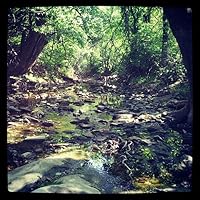
Victoria Chang's collection takes its title from what many call "the worst weed in the world," a plant so rapidly and uncontrollably invasive that it is illegal to sell or possess in the United States. Chang explores this image of vitality and evil in three thematically grouped sections focusing on corporate greed, infidelity and desire, and historical atrocities, including the excesses of the Cultural Revolution in China and the massacre of Chinese people in Nanking by Japanese troops in World War II.
This edgy, fierce subject matter becomes engaging and fresh as Chang applies her powers of imagination to the extraordinary lives of Madame Mao, investment banker Frank P. Quattrone, and others living at extraordinary historical moments. In "Seven Stages of Genocide," for example, the poem's speaker is herded into a death camp along with a neighbor that he strongly "The barbed wire around us forces me / to catch his breath that smells like goose." Chang focuses her attention to occurrences in the world that many poets find too violent or disturbing to write about, thereby making her own distinctive aesthetic from that which is, like Salvinia molesta, both creepy and beautiful.
Victoria Chang's latest book of poems is With My Back to the World (Farrar, Straus & Giroux and Corsair in the UK), which received the Forward Prize in Poetry for the Best Collection. Her most recent book is The Trees Witness Everything (Copper Canyon Press, 2022). Her prose book, Dear Memory, was published by Milkweed Editions in 2021. Her recent book of poems, OBIT, was published in 2020 by Copper Canyon Press. It was named a New York Times Notable Book, as well as a TIME, NPR, Publisher's Weekly, Book of the Year. It received the LA Times Book Prize, the PEN Voelcker Award, and the Anisfield-Wolf Award. It was also a finalist for the Griffin Poetry Prize and the NBCC, and long listed for the NBA. She is the Bourne Chair of Poetry and the Director of Poetry@Tech at Georgia Tech.
I bought this months ago and the other night when I was up in the wee hours with jet lag, I pulled it off the shelf. And it was fabulous. I wondered if it was just my time-warped brain, but I’ve since gone through it sane and it’s really good.
Among the themes are power, love, greed, history, corruption, and the topics include China’s Cultural Revolution, Enron, infidelity, and suicide, as well as salvinia molesta, the fastest-growing weed in the world.
My favorite section is the first, which confronts modern Chinese history, including Mao and his widow, Taiwan, and the Nanking massacre. I am very big on Chinese history and these poems blew me away. I dislike so much political poetry, but these were done well, cooly, without preaching. I thought they were fascinating.
The section starts with the poem “Hanging Mao Posters,”and ends with “After Hanging Mao Posters,” which you can read at this link: http://www.blackbird.vcu.edu/v6n2/poe...
In this section I espcially liked “Jiang Qing” (Mao’s widow), and “Proof -”
"...One day he knelt in the street, sign around his neck
that said: Traitor. Little Red Book spread like wax on his back..."
The second section was good, too, although I preferred the first (and third). It consists of love poems and love/power poems, dominated by one about a professor having an affair with a student. My favorite poem in this section was “Mulberry Tree,” which take Van Gogh as its subject.
At the poet’s website (http://www.victoriamchang.com/), click on “Poems” and you can read “Ars Poetica with Birdfeeder and Hummingbird,” which appears in this section.
The third section is about money and power, and includes a few very interesting poems about Clifford Baxter, an Enron executive who committed suicide. I often shy away from poems on controversial current events because I feel I’m being preached to, but as with the China poems, Chang doesn’t come off that way at all. She’s a poet first.
In this section, my favorite was probably “Distribution,” which inlcudes the lines:
"...The paper dollar on my desk has value because we think it does.
The antelope against the barren hills is running across the field because we think it is."
The poems on the poet’s website (above) also include “How Much,” which is in this last section.
Highly recommended. I am full up with books to read but am thinking about getting her first collection, Circle, too.
Victoria Chang dances with three Muses in her second poetry collection: Clio, the Muse of history; Erato, the Muse of love; and Melpomene, the Muse of tragedy. Though all three hover over every section of the book, each Muse presides over her own section.
The first section deals with Chinese history. It begins with the poem "Hanging Mao Posters" and ends with the poem "After Hanging Mao Posters." The formal gesture (it makes me think of theater banners) prepares the reader for the section's meditation on big themes, such as the Cultural Revolution, the Nanking Massacre, and China-Taiwan relations.
Chang approaches the Cultural Revolution symbolically (a poem about Mao's "Four Pests" campaign against rats, flies, mosquitoes and sparrows), empathetically (a poem speaks in the voice of Jiang Qing, Mao's wife, who committed suicide while under house arrest), and in identification (a poem describes an uncle who "disappeared" after he was shamed for reading foreign books).
Writing an ode to Iris Chang, the author of a controversial book on the Nanking Massacre, Chang makes the lyric mode combative by including the actual writing of a Japanese historian who minimized the horror and meaning of the event. Writing about China-Taiwan relations, she deploys metaphor (two trains colliding), and narrative (a 1947 incident in which Chinese troops killed Taiwanese protesters).
Though the methods vary, the poems cohere in a single vision, suggested in the title of the poem "Ars Poetica as Dislocated Theater." The poems tend to present history as spectacle. While this has the strength of highlighting the display of power, it also has the potential to distance the reader from the events the poems depict. The best poem here, "Proof," is so powerful because the speaker inscribes herself in her poem, in a poignant and humble comparison to her book-loving uncle. Many of the poems in this section are written in couplets. The verse form feels too fragile to bear the burden of witness; the poems can appear thin.
The second section sings of love and its infidelities. "The Professor's Lover," for instance, is an ambitious six-part poem charting an extra-marital affair. Love, in other poems, is sensually compared to plants--magnolia, mulberry, brambles, fig vines--and to food--fava beans, cured tofu, sliced pork, peanut shells, salt, Bundt cake. More originally, in "Love Poem as Eye Examination,"
The room became a raven until a white fire lit the wall. The doctor's breath alarmed
and I was suddenly inside this bird, looking out of its eye.
I've never read or heard an eye examination described like this before. This is wonderful.
The most memorable of the love poems is also one with a real argument. In arguing against its Anne Carson epitaph--"A space must be maintained or desire ends"--Chang's poem "Desire" acquires rhetorical force. The images are no longer merely decorative or empirical, but they carry the burdens of thought and proof. "It is not space I desire," protests Chang, "but a dying. . .
as clothes in a dryer in a laundromat at 3 a.m. might finally stop unclenching and accept their entanglement.
The third section is tragic in a very contemporary sense. The boardroom and the market become the stage for fear and pity. The protagonist here is Clifford Baxter, the Enron executive who committed suicide. He is treated in the fine poem "Collision" with no cover-up but with great sympathy, as a man entangled with his world. Salvinia Molesta is a weed that reproduces so quickly on a pond that it can choke off the pond inhabitants from the sun. If this entanglement with the world proves fatal, to someone like Baxter, it also produces beauty, for the speaker of the love poems.
Chang, who has an MBA and works as a business researcher, reports in a truthful yet poetic fashion from that world. One of the pleasures of the last section is the adroit manner in which she converts the tin of corporate-speak into the bullion of poetry. "How Much" is the best example of this. Its third section, almost presciently, makes of a giddy stock market recovery an existential crisis.
$13 a share. The man on the phone line has a rope in his throat. The closing price is rouged. We can believe in God again. The banks are full. The streets are hungover. The man on my left is rich. The man on my right is a month from dead. The champagne ditches its bottle. The London air free-falls in the hotel-room. There are plates of carved fruit. New York is cheering through the phone. Heaven must be this way. Tomorrow, Germany. Then Paris. Hello. Goodbye. Where's the bathroom? I don't understand. I am lost. How much?
Named after a terribly destructive aquatic weed, because Chang’s poems dive into the terribly destructive, ranging from genocide, a fraught Chinese history, private infidelity, and corporate corruption with a mix of ars poetica and love poems thrown in, because as her epigraph from Virginia Woolf says: “The beauty of the world…has two edges, one of laughter, one of anguish, cutting the heart asunder.”
Linda Gregerson blurbs the back, with a comment I so often feel myself: “How is it, in poems so keenly tuned to history and all its harms, that the reader finds elation?” I didn’t love this collection as much Chang's recent ones (Obit and The Trees Witness Everything), but there’s still the undeniable satisfaction of the way Chang sees the world and tells us about it. Plus, this gorgeous love poem: “where you love the hiss of my atom.”
Chang’s poetry is good— expansive, poignant at times, but I just can’t get into the poems as a whole. There are some striking lines and syntactical gems, but her book titles seem to deviate from the poems drastically. I was expecting to be enveloped by salvinia molesta while reading, as if the weed were to threaten the poems as much as the poems threaten a sort of truth, but really the title is a reference to one poem.
Victoria Chang's poems are hit or miss for me, and that was true for this collection. I liked the first section the most.
Favorites: - Ode to Iris Chang - Cardinal - Ars Poetica as Dislocated Theatre
"Here, madness has no map. Here, god is abridged." (Love Poem with Peanut Shells) "I feed you / as I feed gulls - with my fists." (Epistles) "Near the covered ditches, only / the ocean keeps confessing / starfish to shore." (Seven Stages of Genocide)
I read this book when Victoria was part of my Ethnic Voices Poetry Series at Park University. She is among our best contemporary poets, and a genuinely nice person as well. Her poetry is accessible, lyric, and moving.
Out of all the books I've had to read for college, this one is one of the best. Salvinia Molesta has three sections which center on political evils, love and betrayal, and monetary dangers. The section on love is in the middle, and with the political and monetary pressures squeezing it, transforms into betrayal. As Salvinia Molesta, also known as "the worst weed in the world" grows it also destroys, just like Victoria Chang's topics. One of my favorite quotes comes from the poem Postmortem Examination on the Body of Clifford Baxter, "The head is deformed due to the bullet into/ the right temporal area./ O to be born a bullet, mute for/ most of its life,/ One quick explosive motion/ and pieces stray away,/ search for bodies to embed in,/ to make things beyond recognition./ An abrasion on the left hand and base of second digit./ How the fingers can never again point-/ they are pointless,/ permanent in disgrace, no longer able to insit,/ to begin a list,/ to buttress a kiss." There are many great poems and lines in this book, Victoria Chang is successful in making dark matter shine.
There are a lot of really interesting threads running through this book. I especially liked the 1st and 3rd sections of this book. I got a little drawn out in the middle section though. It gave me the feeling she was very bitter about a past relationship, in a melodramatic and whiney way.
The first section is pretty good, but the second section didn't really keep my attention, and the third section is brilliant. This makes for an uneven rating but the book is definitely worth reading and owning.