Asia Publishers presents some of the very best modern Korean literature to readers worldwide through its new Korean literature series . We are proud and happy to offer it in the most authoritative translation by renowned translators of Korean literature. We hope that this series helps to build solid bridges between citizens of the world and Koreans through a rich in-depth understanding of Korea.
Excerpt: Although Su-hwan spoke like this, he thought that since his illness was extending his denominator to infinity, his value was not only smaller than 1, but also approaching zero. No, it was not even just his illness. Since he had met Yeong-gyeong at the age of forty-three, he hadn’t done anything much for Yeong-gyeong other than piggyback her when she was drunk. Therefore, even before his denominator had begun expanding like this, the value of his numerator had become quite insignificant. But he felt it wise not to say such a thing to Yeong-gyeong now. Su-hwan thought that helping Yeong-gyeong go out now would be a way to increase his numerator, a way to make his value ever so much bigger.
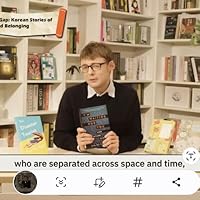
"For #KoreaBookClub, @barrypwelsh reviews "Spring Night," a short story by Kwon Yeo-sun, who wrote the highly acclaimed novel "Lemon." Translated by Jeon Seung-hee, it tells the tragic love story of two patients at a care home and how they got there.#권여선 #봄밤 #KoreanLiterature”
While Lemon shows us some of the uglier sides of humanity, this story is a lot more sympathetic to its characters, who choose to be together despite their terrible circumstances.
This is probably the first book of the series I didn't read in english, all because of the translation quality. I understand a lot of korean words are only now familiar to foreign readers so the awkwardness of "big sister" and "big brother" could be revised in newer editions. But the dialogues are quite weird and mismatched too, almost like someone used the google translator on this thing.
The original is a lovely story, of course. Despite being full of clichés, it feels sincere. Like many other authors showcased in this series, social taboos of the time are brought into focus—that both Youngyeong and Suwhan's first marriage is to scheming opportunists, that their current state is a direct result of their exes' betrayal, that they love each other regardless of their financial and medical problems. I wouldn't call this a retelling of Romeo and Juliet, nor is it so heavily rooted in korean culture that readers all over the world couldn't relate. This is just the love story of two powerless people who have to see the other person slowly die.
Recommended for anyone who likes the romantic genre when it's not childish or superficial.
A modern take on the Romeo and Juliet trope, only here the tragedy isn’t driven by feuding families but by age, illness, alcoholism, and deeply painful pasts. These forces clash and ultimately doom the lovers. Although both main characters are deeply flawed, the author still manages to evoke genuine sympathy for them. I read the story in both Korean and English, though I found the Korean version quite challenging for my language level.
***
"If we think of someone's strong points as the numerator and their shortcomings as the denominator, we can find the value of that person. No matter how great a person's strength is, if his shortcomings are greater than his strengths, then, their value is less than 1, and vice versa."
"분자에 그 사람의 좋은 점을 놓고 분모에 그 사람의 나쁜 점을 놓으면 그 사람의 값이 나오는 식이지. 아무리 장점이 많아도 단점이 다 많으면 그 값은 1보다 작고 그 역이면 1보다 크고."