

What do you think?
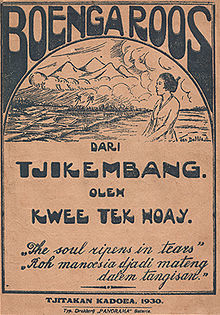
Boenga Roos dari Tjikembang
First published in 1927, "The Rose of Cikembang" is an excellent example of the so-called peranakan literature of the Netherlands East Indies, a literary form that was written in a variant of the Malay language then prevalent in the urban centers of the Indies and a forerunner of today's Indonesian. Peranakan literature was created by writers and publishers of largely Chinese descent and flourished between 1900 and the Japanese Occupation beginning in 1942. "The Rose of Cikembang" was one of the most beloved novels of popular and prolific writer Kwee Tek Hoay. Highly sentimental, this story is rich in many of the often controversial themes he was famous for: interracial love and the lives of its offspring, fate and karma, and mysticism and reincarnation. "The Rose of Cikembang" was reprinted twice and twice made into a movie, including one of the East Indies' first talking picture shows.
Unknown Binding
First published January 1, 2013
Ratings & Reviews
Friends & Following
Create a free account to discover what your friends think of this book!
Community Reviews
Displaying 1 - 6 of 6 reviews

February 26, 2020
Review scheduled for Friday 27th 2020 at 9.00AM at anzlitlovers.com
Will come back here and post the review after that date. Remind me with a 'like' if I forget!
Will come back here and post the review after that date. Remind me with a 'like' if I forget!

January 15, 2018
This read like a folk or fairytale to me, simple and utilitarian prose with themes of karma, destiny, fate, and in that regard I found it very interesting of it's time. However, the idea that two women could be interchangeable based solely on their looks and that a woman's virtues are mainly based on her obedience and subservience to her lover/husband, of course feels extremely outdated and grates against my modern sensibilities.
November 11, 2024
Mungkin penilaian saya akan agak bias, karena saya suka pada sesuatu yang dramatis dan suasana hati sayapun membaca ini dengan rasa sedih pula. Sebenarnya buku ini cukup sulit untuk dibaca karena bahasanya masih dalam ejaan yang lampau sekali, dimana kata-kata seperti "semingkin", "mendoesin", dan "sigrah" bikin bingung. Cuman, diluar dari itu, kisah yang dibawakan kental sekali dengan kesedihan, kesengsaraan, hingga romansa yang dibawakan dengan kata-kata halus. Karakter yang ada disini pun, serta alur yang dibawakan kadang membuat saya berdecak sendiri, kenapa?
Yang pertama, karena kagum dengan ketulusan dan kebaikannya.
Yang kedua, karena iri dan malu pada kesabarannya yang luar biasa.
Karya ini membuat saya memahami bahwa manusia yang berbudi mulia dan berikhlas samudera, walau tubuh fisiknya tak lagi ada di dunia, akan terus mewariskan manfaat pada yang masih hidup.
Yang pertama, karena kagum dengan ketulusan dan kebaikannya.
Yang kedua, karena iri dan malu pada kesabarannya yang luar biasa.
Karya ini membuat saya memahami bahwa manusia yang berbudi mulia dan berikhlas samudera, walau tubuh fisiknya tak lagi ada di dunia, akan terus mewariskan manfaat pada yang masih hidup.

April 19, 2023
"If you've read this story to the end,
Pray do not reflect too deeply,
Let your tears now dry and mend,
And shed them not so carelessly."
Pray do not reflect too deeply,
Let your tears now dry and mend,
And shed them not so carelessly."
Read
January 6, 2014Baca ini gara-gara ikut kuliah Kesustraan Melayu Klasik :)

July 7, 2014
Interesting for its historical perspective but that's about it.
Displaying 1 - 6 of 6 reviews