На этот раз Айзек Азимов предлагает нам обратиться к античной мифологии, чтобы узнать, каким образом проникли в наш язык и бытуют в нем по сию пору такие слова и выражения, как «хаос», «космос», «ахиллесова пята» и многие, многие другие.
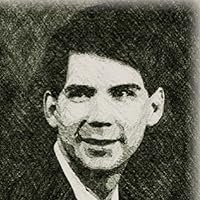
Works of prolific Russian-American writer Isaac Asimov include popular explanations of scientific principles, The Foundation Trilogy (1951-1953), and other volumes of fiction.
Isaac Asimov, a professor of biochemistry, wrote as a highly successful author, best known for his books.
Asimov, professor, generally considered of all time, edited more than five hundred books and ninety thousand letters and postcards. He published in nine of the ten major categories of the Dewey decimal classification but lacked only an entry in the category of philosophy (100).
People widely considered Asimov, a master of the genre alongside Robert Anson Heinlein and Arthur Charles Clarke as the "big three" during his lifetime. He later tied Galactic Empire and the Robot into the same universe as his most famous series to create a unified "future history" for his stories much like those that Heinlein pioneered and Cordwainer Smith and Poul Anderson previously produced. He penned "Nightfall," voted in 1964 as the best short story of all time; many persons still honor this title. He also produced well mysteries, fantasy, and a great quantity of nonfiction. Asimov used Paul French, the pen name, for the Lucky Starr, series of juvenile novels.
Most books of Asimov in a historical way go as far back to a time with possible question or concept at its simplest stage. He often provides and mentions well nationalities, birth, and death dates for persons and etymologies and pronunciation guides for technical terms. Guide to Science, the tripartite set Understanding Physics, and Chronology of Science and Discovery exemplify these books.
Asimov, a long-time member, reluctantly served as vice president of Mensa international and described some members of that organization as "brain-proud and aggressive about their IQs." He took more pleasure as president of the humanist association. The asteroid 5020 Asimov, the magazine Asimov's Science Fiction, an elementary school in Brooklyn in New York, and two different awards honor his name.
Simpático libro de Asimov acerca de la influencia de los mitos griegos y romanos en la etimología de los términos modernos en la ciencia y otros.
Asimov dedico años de su vida a escribir libros de difusión científica y de educación para adolescentes, fue un autor muy prolífico habiendo publicado mas de un centenar de libros. Aunque principalmente se conozca por su obra en el área de la ciencia ficción.
Su estilo es muy sencillo, te hace entender lo complicado con mucha facilidad, enhorabuena por el editor que supo ver eso y aplicarlo en el ámbito educativo.
I really enjoyed Asimov's charting of how Greek and Roman myths influence many of today's words. The book was filled with names and ideas that have evolved over the centuries, many of which I had no idea about. Reading this is a great combination of learning about ancient myths, appreciating today's language, and a little bit of Asimov's recounting of epic tales.
This was truly a great read; quick and engaging, and extremely informative. Asimov seamlessly integrates knowledge of etymology, science, mythology, and more, and makes it interesting to boot. You'll finish the book a smarter person, and eager to learn more - I'm sure Isaac would ask for no higher praise.
It's mannered. It's old-fashioned. The back-flap "about the author" blurb is charmingly cheeky.
But it is chock full of interesting tidbits about the parts of our language that originate in myth. Chock. Full.
We all know why the Achilles tendon is called that but who knew that the word "stentorian" comes from a minor character in Homer, Stentor, who was a herald who was able to rally the army effectively because he had a voice as loud as fifty men? And who knew that there is a one-celled creature called "stentor" because it is shaped like a megaphone?
Why do we sometimes swear "By Jiminy?" Well, because of Castor and Pollux, of course, the twins of Gemini. The Romans respected them and often swore by them. Apparently we still do, too.
This book is 220 pages of "Oh! Really? Wow!" And it only makes it more readable that the style is so proper and mannered yet intimate, like a face-to-face conversation.
This is a book I should read again. And again. And then again once more.
A captivating exploration of how ancient Greek and Roman mythology has shaped the English language. Asimov uses myths to explain the etymology and meaning behind common words and phrases derived from mythological figures and stories. Here are a few that I found interesting:
Cereal from Ceres, goddess of grain. Sisyphean from Sisyphus; a task that is endless and futile. Echo from the nymph Echo, who could only repeat others words. Aphrodisiac from Aphrodite; something that arouses love. Hypnosis from Hypnos, god of sleep. Morphine from Morpheus, god of dreams. Phobia from Phobos, personification of fear. Chronology from Chronos, personification of time. Mnemonic from Mnemosyne, goddess of memory. Volcano from Vulcan, god of fire and metalwork.
la cantidad de cosas que aprendí leyendo este libro, entra fijo en mi top tres de lecturas del año. lo recomiendo mucho si te gusta la mitología griega y te interesa saber la mitología de muchas palabras que usamos cotidianamente.
Azimov is a legend. This simple 134-page book is readable and informative, as one might expect. As a writer, I am often intrigued by the Greek myths, and Azimov offers concise highlights of some of the most endearing and timeless ideas with their roots in the Greek system.
The author’s purpose in writing the book Words from the Myths was to help teach us where we got the names of the planets, stars, constellations, and other words we use in common conversations. Like our word hypnosis comes from the name Hypnos, who is the Greek god of artificial sleep. Also the word morphology is a branch of biology that deals with the structure and form of living things. “Morpheus goes back through Latin to the Greek word for ‘form’ or ‘shape’.” The theme of this book is history never truly goes away. The book explains how we got our words and terms, how the constellations got their names along with planets, and stars. The Olympics come from the ancient “Olympian games”, in which the Greeks had and it then spread throughout the world. Also at the University of California, chemists came up with the elements “neptunium” and “plutonium”. The style of Words from the Myths is exposition because it explained how we got words that we use today. It said that the constellation of the eagle was in honor of Zeus, in which he transformed into to carry Ganymede to Olympus, and is called “Aquila”, which is Latin for “eagle”. The style of the book is very effective. We got the word “cereal” from Ceres or Demeter who is the goddess of agriculture such as grains, wheat, corn, etc. The element “cerium” also came from the goddess Ceres. I liked the book Words from the Myths because I enjoy reading about Greek mythology and how we got the words we still use today. I also like learning about the stars and constellations, so learning that most of them came from Greek mythology is really cool I think. The book was very well put together. There were some words I had trouble pronouncing but I still really enjoyed it.
I have read only a handful of Asimov's hundreds of books. But no matter in which genre he writes, his books are always well written, easily understood and entertaining. He was truly an amazing writer. I'm enjoying this book because etymology has always been interesting to me. In the introduction he explains early cosmology in a way that children can relate to, and goes on to reveal the Greek-myth origins of words like calliope, stentorian, siren, mentor, nestor, and hectering. The rest of the book is divided into chapters based on the most familiar myths. Can't wait to read more.
Awesome book. A good working knowledge of the Greek myths is helpful but not totally necessary. Great vocabulary builder too. This is a must-read for every contemporary Latin teacher, if anyone happens to know any. ;)
Currently in Social Studies, we are studying Ancient Greece. There is a cart of books with the theme of Greece. Among them I found this book, bought by the school back in 1964. When I saw the author, I thought that he sounded familiar. So I did the normal thing, and turned to read the About the Author. But it didn't mention any names of his other work. A quick Google search reminded me that Isaac Asimov is that guy who wrote those books with the bad default covers on Goodreads. The really famous science fiction ones.
Anyways, I only got through the introduction and half of the first chapter, and it was fascinating. I find language fascinating, and I like Greek myths, so it is no wonder I this so interesting. Did you know that the Roman name for Gaia is Terra? That's where we get "terrain" and a bunch of other words from!
I read this at age 8 or 9. I think it's the reason I started teaching myself ancient Greek from a library book in high school and became a Classics major in college. I still use my Greek.
Highly recommended. It introduces the reader to Greek mythology and to etymology at the same time, in a way that makes both very attractive.
Este libro me lo recomendó uno de los primeros profesores de astrología que tuve y debo decir que, por alguna razón, lo estuve posponiendo hasta ahora. Es una lectura ligera, un ensayo en el que Asimov hace un repaso por los mitos más importantes de la mitología griega y por cómo estos han permeado nuestro lenguaje incluso hasta el día de hoy.
Es una lectura ideal para quienes se sienten atraídos por la mitología griega y romana, para quienes tienen un interés genuino por las palabras y la lingüística, y en especial para quienes abordan la astrología desde la mitología griega.
Es un libro que recomiendo si te gustan algunas de las temáticas mencionadas anteriormente y que, sin duda, volvería a leer en un futuro.
Definitely a book that I picked up in grade school and then randomly found on Amazon. The premise is that 50s sci-fi laureate Ray Bradbury riffs on how Greek mythological esoterica worked its way into the English language. I completely knew the bones of this book upon picking it up: If there's any reason I didn't like this, I definitely knew what I was getting myself into. Complaining about the twenty pages of astrological star formations based on giant lions that Hercules hit with a club would be like Ronald McDonald complaining about his eventual angioplasty. It's slightly dry and monotonous read, and space science is the worst, but there's something...cute? almost interesting?...about how one man knew enough about fake Mediterranean gods, linguistics, and science to write 200 pages on it.
A lucid, gripping overview of classical myth, and a look at its impact on the modern English vocabulary, scientific nomenclature and, since this book was written about 40 years ago, certain archaic turns of phrase. Asimov's storytelling skills make his compressed retellings of myths and legends about the gods and heroes of ancient Greece and Rome completely gripping, and the extensive research into word origins throws up interesting webs of allusions, reminders of a time when even scientists, never mind humanities students, were subjected to a thorough classical education. There are a few etymological surprises even for the well-read layperson.
I loved this book. Yes, it’s a little old-fashioned, but really interesting. Isaac Asimov describes the influence of Greek words on modern language. It’s easy to read and you’ll need a couple of hours to do it, because it has only 220 pages.
Fantastic first few chapters. If you’re a word-nerd, pick it up for these pages alone. The last couple of chapters are a review of the myth of Odysseus, and not my cup of tea.
This is another Asimov keeper. It's the sort of book you can pick up any time at all and just read a chapter and feel the wiser for it. There is no pressure to remember all of the words from the myths. There are many more than I imagined, but that makes the stories all the more interesting. Atlantis and Crete, Greece and Rome. The survival of the names and the words that still exist in English today, that have their roots in ancient times. Times so long ago that no real history is known. Even the book itself was written an epoch 60-years-ago! As with other dated literature some of the references appeared to be 1960's sexist, but if you listen to the stories themselves all of that sexism falls away. I also read Ursula LeGuin's Lavinia in the past year. It just goes to show that story tellers do affect the perspective. But as for facts. Asimov is a great reference!
Plot: No, this is not a mythical story of the Greek emperors or the lavish history of Egyptian culture. This is a book full of words. Yes, words. Have you ever thought why we use the word "Chaos" to describe unorganised? Or do you know the word "Cosmetics" came from "Chaos"? Do you know why one of our vertebral bone is called "Atlas" and why does it resembles with Titan God Atlas? You will find all these answers in this book. You will be surprised to know the history of our daily used words.
Reader's Reaction: I loved this book as I am very fond of words and myths all together. Also, Issac did a very good job in researching. The link among some words will wonder you greatly. If you are a fond of Non-fic and Languages, go for it. Give it a shot.
A fascinating review, for an intended audience of boys, of the words in English at his time that were derived from Greek and Roman mythology. It is fascinating for multiple reasons. First, even I, a Classics Ph.D. who teaches classes on the etymology of scientific English, could learn new things (largely about astronomy). Second, it's impressive how many classically-influenced words that he mentions as in active use in 1961 have not been a part of the English written and spoken in my lifetime--and I read very widely. The book is dated and has little hope of appealing to it's intended audience any more; the style is a bit repetitive because of its didactic purpose. However it could still benefit the bookshelves of many people today, especially teachers.
Las palabras y los mitos es una obra de divulgación escrita por Isaac Asimov. En este libro, Asimov explora cómo muchos términos del idioma tienen su origen en la mitología griega y romana, explicando las historias detrás de los nombres y conceptos que todavía usamos en la vida cotidiana.
Con su estilo claro, ameno y erudito, combina etimología, mitología y cultura general, mostrando cómo los mitos antiguos siguen vivos en el lenguaje moderno. A través de dioses, héroes y criaturas legendarias, el autor no solo enseña sobre las raíces de las palabras, sino también sobre el poder duradero de los mitos en la civilización occidental.
Very short and easy. Nothing new, but great for an easy introduction to the legacy of Greek myth found in the English language. Asimov also highlights the replication of those names in chemistry and astronomy, discussing it moreso than other sources I've read.
I think an elementary student could easily enjoy making these connections, even if some of the idioms he cites are outdated by my reckoning.
While I did not use it as such, this is a superb bathroom book. Lends itself more to bits here and there rather than long reads at a stretch. Is exactly what the title says, words in modern day English taken from Greek myths. For example, Romans used to swear by the twins, Castor and Pollux, they became the constellation known as Gemini. Our modern exclamation, "jiminy" is a derivative of that millennia old swear. Pretty cool.
Muy sencillo libro de divulgación científica , en este caso de la etimología de las palabras y la influencia griega y romana que nos llega hasta el presente. Me encanta Asimov, era un genio y tenía una admirable habilidad para explicar cosas difíciles de modo sencillo ( no conozco mejor ejemplo que Asimov, es para estudiar). Este en particular no me encantó pero lo voy a seguir leyendo porque escribió sobre todos los temas.