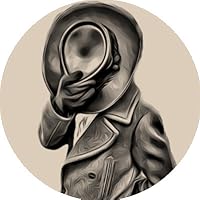
Les lendemains de la Chouannerie. Dans une atmosphère de campagne barbare où interviennent des pâtres jeteurs de sorts et des vieilles femmes hantées par le souvenir de leurs débauches, Jeanne Le Hardouey, une aristocrate claudélienne mésalliée d'âme et de corps à un acquéreur de biens nationaux, est «ensorcelée» par un prêtre, l'abbé de La Croix-Jugan qui a tenté de se suicider par désespoir de la cause perdue et dont le visage monstrueux porte la trace des tortures que lui ont fait subir les Bleus. «J'ai tâché, disait Barbey, de faire du Shakespeare dans un fossé du Contentin.»On trouvera Jeanne noyée dans un lavoir et Jéhoël de La Croix-Jugan sera tué d'une balle inconnue au moment où, relevé d'interdit, il célèbre sa première messe dans l'église de Blanchelande. Au lecteur de découvrir le meurtrier.
Jules-Amédée Barbey d'Aurevilly was a novelist and literary critic at the Bonapartist paper Le Pays who was influential among fin-de-siècle decadents. He specialised in mystery tales that explored hidden motivation and hinted at evil without being explicitly concerned with anything supernatural. He had a decisive influence on writers such as Auguste Villiers de l'Isle-Adam, Henry James and Marcel Proust.
This is the story of the Abbot of La Croix-Jugan, an aristocratic clergyman from Normandy who, back from the Chouans war, steps down from his military leadership.
Grim and stern, Jehoël tries to put an end to his misery with an aptly loaded rifle aimed at his face... but fails. The man who used to be a mighty officer in the counter-revolutionary army is nothing more than the shadow of who he used to embody, a brooding defaced penitent.
Finally, the short novel deals with the macabre fascination trailing after him in Blanchelande, where several gruesome feats are about to unravel.
THE STYLE :
The usual recipe Barbey d'Aurevilly later put to use in Les Diaboliques : The actual events are told in the guise of word of mouth, Chinese-box retellings of the whole matter. To my opinion, the main weakness and strength of this stylistic device is the exposition takes some time to become fully developped. Never being directly taken into consideration only in a few instances, never from the inside, the abbot earns extra consideration from the reader, wondering : what kind of living paradox is this chap?
On the other hand, if you happen to enjoy immensely the care and dedication Barbey d'Aurevilly puts to his pick of words, this is bound to be good news as the story is packed with Normand idiomatisms and an occasional rare word to boot.
----------------------
L'HISTOIRE :
Voilà l'histoire de l'Abbé de la Croix-Jugan. Ancien chef de Chouans en Normandie, la ruine de son parti lui impose de réintégrer la vie civile sous un gouvernement républicain. Il cherche à se donner la mort d'un coup de fusil, il échoue. Il est recueilli, et son visage rafistolé fait figure de massacre.
L'Ensorcelée, c'est une suite de récits gigognes sur les évènements épouvantables qui suivent le retour de l'abbé-soldat au pays.
LE STYLE :
Question style, on retrouve les récits emboîtés qui font la célébrité de Barbey d'Aurevilly ; le goût du mot rare et du dialecte normand aussi. En annonçant tout le terrible du personnage par avance, cette forme allonge la longueur de l'exposition en même temps qu'elle grandit la figure terrible de Jéhoël de La Croix-Jugan, qu'on ne voit que de l'extérieur, lors d'épisodes éloignés dans le temps et toujours au travers de pas moins de trois ou quatre niveaux de récit. Ce procédé échoue rarement, à supposer qu'on ait un minimum de goût pour les racontars dans un style léché :)
Αγαπώ με πάθος τη γαλλική κλασική λογοτεχνία και, παρόλο που δεν ήξερα καν το συγγραφέα αυτόν, η υπόθεση του βιβλίου με τράβηξε αμέσως. "Η μαγεμένη", με φόντο τις διαμάχες των βασιλικών και των επαναστατών στη Γαλλία του 19ου αιώνα, εξερευνά με μοναδικό τρόπο τον ανθρώπινη χαρακτήρα, τα πάθη και τις ανάγκες του. Μιλάει για τη δελεαστική φύση του σκοταδιού (άλλοτε του ψυχικού και άλλοτε του πραγματικού) καθώς και για την ερωτική επιθυμία και απογοήτευσή. Αν και υπήρξαν σημεία που οι αναφορές στα ιστορικά γεγονότα και πρόσωπα με "έβγαζαν" από την ιστορία, η γραφή του Barbey, η ατμοσφαιρικότητα που τόσο αριστοτεχνικά δημιουργούσε, το αίσθημα του επικείμενου κινδύνου που σε διακατείχε καθώς έφτανες στην κορύφωση του δράματος και η εξαιρετική σκιαγράφηση των κύριων χαρακτήρων του έργου, με έκαναν να διαβάσω το βιβλίο απνευστί. Bonus points επίσης για την εξαιρετική έκδοση αυτή των εκδόσεων Printa (όλη η σειρά των κλασικών τους είναι γεμάτη διαμάντια, με απίστευτα προσεγμένες μεταφράσεις και ενδιαφέροντα βιβλιογραφικά στοιχεία των συγγραφέων)
Les mains déchainées qui écrivent ce retour n'ont pour dessein que de transmettre l'admiration que je voue pour Barbey. Essayer de faire valoir son talent serait pure injure, car trop évident, du moins aux yeux d’une minorité que je salue.
Il disait vouloir « faire œuvre Normande », et j'ai l'impression que cette volonté n’est pleinement incarnée que dans L'ensorcelée. N'étant pas avare de beauté, Barbey aime s'étaler en démesure, et ce, à coups de couteau tranchant. Il donna donc vie à une double poésie de la terre et de ses gens : une lande retirée, dont l'aura ténébreuse contamine et influence. Cette lande abrita trois personnages, ou plutôt deux, gravitant autour DU personnage : l'abbé de La Croix-Jugan. Alors voyez, j'ignore ce qui est le plus insolite pour un moine ; le fait d'être ancien chouan et d'en porter les traces sur le visage, ou le fait d'être le plus orgueilleux des hommes. Mieux ! L'auteur déploie autour de lui, le motif du feu sous ses diverses formes, et vient donc accentuer son caractère luciférien, le faisant clair-obscur du sacré et du profane. C’est pourquoi je qualifie ce livre de croisement des contraires, où le romanesque diabolique ne fait qu'un avec les croyances évangéliques, car chez #Barbey, la présence du Malin impose celle du Divin.
Passons aux autres personnages. Jeanne de Feuardent, l'ensorcelée en personne, que la noire passion pour l'abbé hâtera la chute. Et La Clotte Mauduit, comparée à Hérodiade - image renforcée par la présence dans sa chambre, du tableau de Judith décapitant Holopherne, et sur laquelle je ne dirai que deux choses : elle aura rédemption, et elle est au centre d'une des plus violentes et paradoxalement, des plus belles scènes de psychologie de la foule ; pages 238 à 241. (vous me remercierez)
Si vous prêtez attention, j'ai retranscrit les noms dans leur totalité car l'onomastique est assez parlante : « Feuardent » pour passion ravageuse, « Mauduit » pour maudit, et « La Croix » pour cette foi jamais atteinte.
Sachez enfin, que de nombreuses légendes, rehaussées par le patois normand, sont présentes, comme celle des pâtres, ces bergers-sorciers, et confèrent au récit un merveilleux fort appréciable ❤️🔥
C’est du kitsch d’extrême droite, ça vire Tom de Finlande mais avec des Chouans plusieurs fois (pour mon plus grand plaisir) et j’ai ri de bon cœur plusieurs fois face à ce déluge d’esprit camp royaliste.
Ooooh, prêtre Joël, quelle gueuse pourrait résister au magnétisme mâle et profond de votre race de seigneurs, vous êtes un dominant, un aigleeee ! Une petite pensée pour le gars qui a petté son câble sur la punchline ‘lion superbe et généreux’ dans Hernani, c’est la même came mais en mode complètement fêlé et premier degré. Incroyable.
C’est très joliment écrit, sinon, et c’est un texte avec un parti pris esthétique sur les fantômes de la Révolution, ce qui est intéressant. La violence surgit et les vieilles divisions réapparaissent comme si elles possédaient les protagonistes. Le motif de la magie prend alors tout son sens et colore le texte d’accents horrifiques et merveilleux hyper prenants. Les bergers normands qui hantent la lande s’imposent comme une belle traduction française des sorcières écossaises de Shakespeare - et on applaudit !
C’est objectivement plutôt bien - je suis juste incapable de prendre au sérieux ce bon vieux Barbey, j’ai l’impression que c’est mon vieux tonton sénile parce que trop dans le placard, qui se languit sur le parquet en vomissant des lys pailletés.
This would be one of the best stories I've ever read... If the author had not been such an asshole. Jules Barbey D'Aurevilly self-defined himself as an anti-modern (which makes him an asshole) and a baby-eater (which is a joke).
The writing style is truly admirable but difficult to take over for a non-initiated reader. The poetic purity of his style is spoiled all along the novel by stupid and boring political notes from the writer. The story is thrilling and beautiful even if I have to confess my disappoitment concerning the end.
Une écriture un peu exigeante, parfois déroutante, notamment à cause des dialogues retranscrits dans le véritable patois normand. Mais quelle impression ! Barbey d'Aurevilly n'a pas son pareil pour nous plonger dans l'atmosphère sombre et envoûtante des plaines normandes du XIX ème siècle. En toile de fond planent sans cesse les souvenirs des guerres de la chouannerie donnant au récit une tension sourde. Un roman (ou témoignage ?) magiquement envoûtant dont on ressort avec l'impression de pouvoir dépeindre fidèlement les paysages et lieux évoqués et de sentir le poids du mystère qui plane sur les personnages.
Those hoping for a supernatural novel from the pen of the author of ‘Les Diaboliques’ will be a touch disappointed, as although there is indeed some mild supernatural interest in the form of some sinister shepherds (say no more!), this book is perhaps more in the spirit of the Gothic. I suspect that Matthew Lewis’ ’The Monk’ might very well have been an influence.
It gets off to an atmospheric (you might alternatively term this ‘slow’) start as the main tale itself has a framing device two travellers thrown together and chatting as they cross a lonely and treacherous moorland. This takes some time. The story proper concerns the life and fate of the sinister Abbe de la Croix-Jugen, a former soldier and sinner who lived in the locale, and his effect (the bewitchment) on the populace since he returned there in his Abbes robes.
The novel has some serious graphic horror which reads a bit strong for the sensitive soul that is me, but given that is partially located during the period of the (failed) French royalist counter-revolution of 1794-1800- the Abbe being an ex-royalist.
D’Aurevilly was also an arch royalist and one of the main themes of the book is that (aristocratic) ‘blood speaks to blood’. Revolution also divides families and communities and much of the novel's tension turns on these two elements, where simmering loyalties are not far from the surface. This is epitomised by a wise and (sexually) powerful female figure who knew the Abbe in his previous ‘life’ (it would not be D'Aurevilly without a bit of roistering) and who comes to play an important role in the tale as it unfolds.
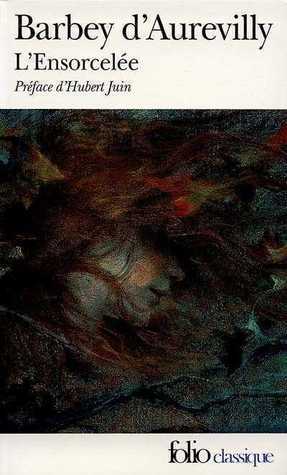
Though I feel I am ‘done’ with Gothic literature and once I got over my disappointment that we were not going to have a Le Fanu type tale, I quite enjoyed this book. Although not quite the calibre of ‘Les Diaboliques’ (a classic book and highly recommended) if you liked that and/or Gothic literature you will quite possibly like this. It is not an uncommon book, and yet it seems to have slipped under the radar of D’Aurevilly readers as I find that I am uploading this book to Goodreads. My copy is the same edition as the one pictured- surely there is a reprint somewhere, perhaps under another title? If not, it would seem overdue to be de-discovered. In any case, it is worth picking up a copy should you locate one.
La scrittura di Barbey d'Aurevilly non è solo affascinante: è perfetta. La traduzione di Alberto Beretta Anguissola le rende giustizia, rinunciando saggiamente a rendere in italiano le espressioni dialettali normanne. "La stregata" è del 1852, tra Romanticismo (passato), Positivismo (presente) e Decadentismo (futuro). Uomo del suo tempo, Barbey gioca a rimescolare le carte e i conti non tornano: ricorre a quello che Praz definiva "il solito pretesto di moralità degli scrittori scabrosi" (la libertà di indulgere a scene di depravazione come modelli negativi) ma nel rievocare le orge del castello di Haut-Mesnil sceglie il punto di vista di chi le rimpiange, ispirando lo stesso sentimento nel lettore. Si maschera da ultimo dei romantici, con il richiamo alle radici popolari normanne e a Walter Scott, ma dei popolani suoi compatrioti sottolinea la forte struttura fisica (come fossero cavalli) e il gretto pragmatismo associato alla superstizione, mentre le fiere lotte per l'indipendenza degli scozzesi celebrate da Scott diventano le rivolte degli Chouans, monarchici controrivoluzionari. Dal positivismo, che aborre, prende l'idea del determinismo del sangue, dell'ambiente, del momento storico, che diventerà la bandiera del Naturalismo; al cattolicesimo, che sposa, guarda come un dandy decadente (Erodiade, Maria Egiziaca, i paramenti sacri, i turiboli carichi d'incenso), come un Des Esseintes (uno dei cui libri favoriti era, non a caso, "Le diaboliche" di d'Aurevilly stesso). Infine, il suo fantastico strizza l'occhio alle atmosfere gotiche d'antan, ma è oltre: satanico e mistico, ma anche ambiguo e sottile (verità o suggestione?); infatti Henry James lo amerà.
Un voyageur doit traverser la lande aride de Blanchelande et son compagnon de route, maître Tainnebouy, lui raconte la légende entourant le mystère des neuf coups « de la messe de l’abbé de la Croix-Jugan ». Dans un récit enchâssé toujours ponctué des dires de Tainnebouy et d’autres habitants dont les anecdotes étoffent la narration, on découvre l’histoire de Jeanne Le Hardouey qui est tombée sous le charme de l’abbé. Ce dernier, pourtant, n’a rien de séduisant : ancien Chouan, il a troqué sa robe contre les armes pendant les chouanneries et, face à la défaite de cette cause, a tenté de se suicider. Son visage porte encore les traces de cette double-faute et l’abbé, défiguré, est muré dans le silence et ne pense que politique. Pour ne pas en dire davantage, la légende de ce qu’il se passe ensuite plane au-dessus de Blanchelande et baigne le village dans une ambiance fantastique et sombre, pétrie de superstitions et d’influences démoniaques.
Toute l’histoire dépend des dires d’autrui, tissée par les commérages. D’ailleurs, chez Barbey d’Aurevilly, les commères contribuent à la petite Histoire, elles la pétrissent en permanence d’anecdotes contées ça et là. Dans ce réseau inextricable de vérité et d’élucubrations de curieux inassouvis, la légende se tisse, toujours plus confuse et toujours plus surnaturelle. À la fin, le lecteur lui-même ne contribue-t-il pas à l’étoffer par les détours de son imagination ?
Encore faut-il passer les 60 premières pages dans lesquelles l’écriture aurevillienne est infestée de virgules intempestives et de phrases à rallonges qui rendent la lecture très pénible. Néanmoins, une fois cet obstacle passé, la légende saura piquer votre curiosité et on peine alors à lâcher ce roman.
Roman aux côtés fantastiques où la campagne du Cotentin se prête parfaitement aux caractères religieux, mystiques et superstitieux de l'aventure. Barbey d'Aurevilly mêle ces éléments dans un style et une ambiance bien à lui, soutenu par une belle littérature.
« Le Temps, qui jette sur toutes choses, grain à grain, une impalpable poussière, laquelle, sans l’Histoire, finirait par couvrir les événements les plus hauts, le Temps a déjà répandu son sable niveleur sur bien des circonstances d’une époque si éloignée, et nous n’avons plus la note juste que donnaient les sentiments d’alors. »
publié en 1852 "La lande de Lessay est d'une des plus considérable de cette portion de la Normandie qu'on appelle la presqu'île du Cotentin, pays de cultures, de vallées fertiles, d'herbages verdoyants, de rivières poissonneuses, le Cotentin, cette Tempé de la France, cette terre grasse et remuée a pourtant comme la Bretagne, sa voisine, la pauvresse au genêt de ces parties stériles et nus ou l'homme passe et ou rien ne vient sinon une herbe rare et quelques bruyères bientôt desséchés."
"La poésie pour moi, n'existe qu'au fin fond de la réalité, et la réalité par le patois"
au menu de ce roman : rédemption, lapidation et suicide
3 raisons de lire ce livre -faire un rêve lucide (on avance sur un fil tendu entre le visible et l'invisible sans vraiment savoir ce qui se passe comme dans un rêve) -Barbey d'Aurevilly ne fait pas peur, il angoisse... (personnages entourés d'un halo maléfique -lecture inquiétante et ensorcelante ) -une poésie symbolique
Source : Le Moment Culture, Le figaro -Alice Develay - 30 mars 2023
J’ai été un petit peu déçue par ce roman. Je m’attendais à lire un roman gothique dans le style du Moine de Matthew Lewis avec une intrigue centrée sur une version plus sombre de la Belle et la Bête. En réalité, l’obsession de Jeanne pour l’Abbé ne représente qu’une petite partie de l’intrigue du roman qui s’intéresse plus aux conséquences des révoltes royalistes de Normandie, menées par les Chouans, pendant la Révolution Française. Certes le sujet est très intéressant puisqu’il met en valeur l’histoire violente et souvent oubliée de l’impact de la Révolution dans les campagnes mais j’ai trouvé l’intrigue un peu trop lente. Le début du roman est pourtant prometteur, l’auteur installe une intrigue mystérieuse dans une campagne recluse qui rappelle celle des Hauts de Hurlevent mais les événements décrits ne sont pas aussi marquants. L’Ensorcelée reste quand même un très bon roman mais un peu trop plat malgré ses thèmes qui appellent généralement plus de complexité et de fascination notamment dans l’évocation de l’obsession qui n’est pas assez mise en valeur.
Style toujours aussi flamboyant et extraordinairement érudit. Que nos écrivains actuels semblent bien pâles à côté d'un Barbey ! Et superbe histoire de meurtre et de sorcellerie dans le Cotentin dans la période post révolutionnaire où traînait encore un vent de Chouannerie... Superbe livre
Ladies and gentlemen, taking advantage of the free time we have and trying not to be defeated by the deadly sin of laziness, your humble servant is preparing to write one of his overdue reviews. We are referring to one of the novels by the French writer Jules Amadeus. Barbey D'Aurevilly is a key figure in Catholic fiction, at least in France. If this author has read my review of " Atala and René," they'll know that there are two Catholic centers in France: one represented by François-René de Chateaubriand , and the other, from which Barbey comes. D'Aurevilly, who is from the school of the very interesting Joseph Le Maistre , who is also one of the voices of French conservatism and a hostile voice against the French Revolution that would end up triumphing in the different decades, especially in the seventies of the 19th century. It has already been mentioned that Joseph Le Maistre , someone very much appreciated by Christopher Dawson, had been key to Sophie 's conversion. Swetchine and, for the conversion of three Russians (see my review of "The Brothers Karamazov " by Fyodor Dostoyevski ) in this case Gagarin, Martinov and Babinov . The figure of Le Maistre is key to the development around him of figures such as Montalembert , Ozanam , Lacordaire or Dupanloup (a real headache for the First Vatican Council). Barbey D'Aurevilly brought dandyism to French literature; in fact, one of his earliest literary works was a biography of the aesthete Beaubrummel, a sort of 19th-century Petronius or Mr. Blackwell . To this he added violence, passion, and stormy tales of his native Normandy . To Barbey Apart from this novel, two other novels have been read by D'Aurevilly . "Les Diaboliques" are wonderful tales of vice, evil, and crime, very much in the vein of the Marquis de Sade , overlooking the sexual depravities of the evil Marquis, but not his philosophy. It is curious whether Chateaubriand was influenced by Rousseau and the enlightened Barbey. D'Aurevilly was influenced by the latter, who was willing to take the ideals of the Enlightenment to their ultimate consequences. An atheistic and amoral society in which the only thing that matters is, like the drow , that stops at nothing to achieve their own happiness or satisfy their basest passions. This is evident in Barbey 's work. D'Aurevilly sometimes wonders why the wicked sometimes prosper while the good suffer and are punished. This is because this world is transitory in order to achieve the great goal of eternal salvation. As the scriptures say, "all flesh is grass," and the wicked must not be forgotten, for they will die. This theme was already raised by Dostoevsky , and we saw its dire consequences in "The Brothers Karamazov ." If God does not exist, everything is permitted. All this was seen with both Verkhovensky and Stravogin in "Demons," and we also saw it with Ivan's amoral philosophy, inciting others to do acts that he surely would not have dared to commit. This is the reality Barbey speaks of. D'Aurevilly, perhaps in one of the best stories of "Les Diaboliques," I refer to the very interesting "Happiness in Crime," with the fascinating Haute Claire, a swordswoman in the style of Madame Maupin who would incite her lover, who possessed the same moral molding, to commit a monstrous act. One of the stories told us about a Don Juan corrupting a girl, the same as the Viscount de Valmont did in "Dangerous Liaisons" by Chardelos de Laclos . But perhaps more interesting, and at least my favorite story of the "Les Diaboliques," is perhaps "Feast of Atheists," because it already deals with the theme of redemption and an approach to religious conversion. In this story, Barbey D'Aurevilly outlines what Nobel Prize winner François Mauriac would later develop in his novels. This story tells of the irreligiousness of the mobs that carried out the French Revolution. Barbey 's stories D'Aurevilly's works are not for a complacent public. Don Juan Manuel de Prada would say they are for a Catholic pompier . Aside from his Catholicism, Barbey D'Aurevilly inherited the hostile spirit toward the French Revolution, being a biologically maladjusted child of his time. In fact, his clothing offers a stark contrast to the era in which he lived. Many of Barbey 's features D'Aurevilly would increase to several exponents with his friend and disciple Leon Bloy ( Barbey D'Aurevilly felt a hatred for the bourgeoisie that grew up with Léon Bloy ). The other novel that was read to him was "The Married Priest" which, like the television series South Park, is capable of bringing opposing people together. This novel, which is in favor of ecclesiastical celibacy and which is a condemnation of non-Christianism and whose priest breaks his vow of celibacy, provoked the indignation of the anti-Christian Emil Zola (who was already mentioned in Robert Hughes 's "Dawn Triumphant"). Benson ) and also aroused the anger and condemnation of Archbishop Darboy of Paris. In this case, it is a story in which moral transgression leads to unremitting punishment. In that vein of exalted violence is "The Bewitched" (it was not mentioned, but it must be mentioned, Barbey 's great problem). D'Aurevilly had grand plans and, despite his long life, was unable to complete them. "Les Diaboliques" was a much more ambitious work, as he was going to write more short stories about lost and sinful women, which would be replicated in a series of stories about holy, pious, and virtuous women. Perhaps like the protagonist of Raoul de Navery 's wonderful "Les Crimes de la Pen" Barbey is incapable of writing about goodness and virtue, even though his religiosity was sincere. This story has a fascinating background because it takes place during the French Revolution, in this case when the troops of the Revolution faced the Chouans . Perhaps the most interesting part of the novel is the preface and prologue written by Barbey. D'Aurevilly compares the good press that the Vendeans have received (see my review of "The Count of Chantelaine " by Jules Verne) with the Chouans , masters of guerrilla warfare, who fought in a more unorthodox and cruel way. They seemed like demons fighting on behalf of angels. The author, who, like Chateaubriand , has no sympathy for Napoleon , quotes him praising the Vendeans, which proves that perhaps Stendhal was not so wrong when he assumed that Napoleon had a certain preference for monarchists. Surely my followers will be able to draw me into the murder of the innocent Duke of Enghien , but the truth is that he followed the doctrine of Caiaphas, which is that it is appropriate for one man to die for the people. Sacrificing one man to save the rest is a terrible sin. In a monarchist conspiracy, he even accused the republicans of having committed it, and I believe he did it on purpose. When he escaped from Elba during the Hundred Days of Reign, he could have finished off Louis XVIII, but he didn't. It's true that perhaps Napoleon only coveted power, but one has the feeling that this power was closer to the monarchy than to the Republic, and that he had only joined it to prosper, just as his Corsican nationalism with Paoli was fake. I've read a few biographies of Napoleon, and perhaps the one that best describes him is an article by @religionenlibertad , which will be shared in my video for this review. Barbey D'Aurevilly will once again portray Napoleon as a psychopath who enjoys making his horse suffer. This is another Barbey megalithic project. D'Aurevilly , which unfortunately remained unfinished. Barbey 's idea D'Aurevilly was to write four novels set in the Chouan War and wrote "The Bewitched", "Le Chevalier des Touches " (which I have the feeling was better than this one. I kept the wrong one) and then there are the unfinished "A Gentleman on the Royal Highway" and "A Tragedy in Vaubadon ". Barbey D'Aurevilly maintained that no one had ever written a history of the Chouans , but the truth is that a novel, "Les Chouans " by Honoré Balzac (very boring, by the way), had also been published in this Austral collection. But Barbey's lofty ambitions are still very interesting. D'Aurevilly with this novel and his historicist projects are not unreasonable. In fact, History as a social science was born due to the passion that Leopold von Ranke felt for the novels of Sir Walter Scott, especially those that featured the Duke of Burgundy, Charles the Bold. When Ranke analyzed the historical documents about Charles the Bold, he realized that he was even more fascinating than his fictional alter ego. And thus, History as a social science was born, although others give the honor to Giambattista Vico and his "New Science," in fact the model that inspired Barbey. D'Aurevilly to write his unfinished tetralogy about the Chouans are the "Chronicles of Canongate ." Jules Michelet himself did not hesitate to praise Alexandre Dumas for fictionalizing the history of France, something he wished he had done in a Spain hijacked by liberalism that had two problems: a rather poor romanticism and, that it was written by people hostile to the history of their country and, through the Enlightenment and liberalism clearly hostile to Spain. It must be said that Barbey 's Prose D'Aurevilly's work is very powerful, and the description of his native Normandy is both grandiose and esoteric. Barbey D'Aurevilly doesn't spare us the horrors of the nobility and clergy of the Ancien Régime, and perhaps most terrifying is the portrayal of his compatriots from his native Normandy, especially the shepherds. Superstition and the demonic are very present in both the setting and the protagonist, Lacroix. They play and the shepherds. This is supposedly a story told by a merchant, Luis Tainnebouy, to the narrator (who we assume is Barbey himself) D'Aurevilly ). He is supposed to go to the well fence, but they have an accident and Tainnebouy believes it is due to the evil eye cast on him by a shepherd ( from an anthropological and ethnological point of view it is interesting). The truth is that it is a shame that despite the fact that Tainnebouy has Chouan ancestors , he barely knows certain anecdotes about an ancestor whose arm was left in an unnatural way by touching too much. However, it is when he tells us the story of the Premonstratensian Abbot of the Croix Jugan that the story begins to take shape. The beginning is fascinating and, in the cruelty of the soldiers of the Revolution, we see what we appreciate in films like "To Win or Die" produced by Philippe de Villiers . The beginning is the best of the novel with the protagonist trying to commit a terrible mortal sin that deforms his face, he is cared for by a peasant woman and then the soldiers of the Revolution arrive, known as the Columns of Hell that despite that opportune collective amnesia fostered by French institutions and although the troops of the Revolution deny it, were responsible for the first modern genocide in this case that of the Vendée . Here we see how they spend their time torturing and, being cruel to the protagonist who by a miracle they do not end up killing. Some time passes and, the heroine of the story appears, Jeanne Labourday, a pious woman married to a husband who has become rich with the Revolution and, is very unpopular and, hated and, then she meets at mass with the former prior of the white lands and, his face is deformed and, asks the blessed Nonon Cocouan who she is and, the information is given to her. Juana returns home and, has some incidents with a pastor who curses her and, the protagonist begins to feel obsessed with the Abbot of Croix Jugan and, the priest tells them more things and, decides to go to the house of a certain Clotilde Matuidis who before the French Revolution was her and, her friends the companies of misdeeds of the corrupt nobility of the place. There is talk of Bishop Talaru . It seems that of all the privileged the most corrupt was Croix Jugan and, Clotilde tells us that his name was Jehoel and, that there was a friend who fell madly in love with him Adelaide to the point of losing her mind. The link between Clotilde and Juana is due to the fact that she was a descendant of the local nobleman and that her mother was called Luisina la del hacha (Louisina la del hacha, la axe) because she supposedly killed some bandits with axe blows, hence the nickname. She later married a certain Lope Feuerdant , and it is from there that Croix Jugan appears when the novel, without being bad, begins to fall apart. I don't know what the author thought. I think that Jehoel , apart from joining the Chouans and trying to commit suicide, is innocent of the protagonist's fate. It talks about a case from the 17th century. This story reminds me a bit of "The Turn of the Screw." I think the tragedy is more a matter of suggestion or that the protagonist is crazy. She becomes obsessed with Jehoel , and it shows us what happens in "The Scarlet Letter" by Nathaniel Hawthorne or, later, in "La regenta." In my opinion, Jehoel does nothing, and everything that happens is the product of either madness or suggestion. A lot of violent deaths begin to occur, and some of them are gratuitous, and some are extremely cruel. The narrator, Tainnebouy, is superstitious, and I don't know to what extent he is a reliable narrator. The novel involves witchcraft, jealousy, hatred, revenge, and an undercurrent of doom due to the failure of the Chouans to defeat the revolutionary soldiers. There is also an element of fate. The ending reminds me a bit of Bécquer 's "Legends," which has the same horror feel. In reality, although the story wasn't idyllic, the revolution hasn't improved things; on the contrary, it has made them even worse. I believe Jehoel is the victim of an unfavorable political situation for him and his social class, as seen in the conversation the narrator has with Countess Jacqueline de Montsurvent , whom the character was visiting. This novel has the same flaw as "Too Many Hearses, " which is that it collapses halfway through, even though the resolution is acceptable. Of the three novels that have been read by Barbey D'Aurevilly is the weakest of all. Therefore, my final score is 2.5/5. Touches 's Chevalier , which will be his next novel, is mentioned and offers more action than this novel, along with the war and adventure one was looking for here and didn't find. Regarding Barbey D'Aurevilly had many disciples, was a friend of Paul Feval , and praised his novels and the stages of his conversion, which he believed were worthy of being offered to God in a golden chest on an altar. Barbey D'Aurevilly was instrumental in the conversions of Charles Baudelaire (whose poetry he praised and said that the only thing left to do was either convert or blow one's brains out), he was also instrumental in the conversion of Joris Karl Huysmans . He was a friend of Villiers de L'Isle Adam and had disciples such as Peladan and Léon Bloy , who was his successor and who presided over Barbey 's funeral. D'Aurevilly, although he fell out with Peladan and Joris Karl Huysmans , and from there comes the group of Maritain , Van der Meer and Bernanos . I don't know when this review will be uploaded to the channel, nor what my next review will be, but I hope it has been tasteful and, hopefully, it will not be the last novel that anyone reads by Barbey. D'Aurevilly because he deserves not to end with this bittersweet taste, because personally Barbey For all he has been in French and Catholic literature, D'Aurevilly deserves a better final grade than a mere passing grade. I'm sure I'll like "The Chevalier des Touches " better, and I hope another review is written to suit whoever reads this one, and I hope this one didn't displease them too much. My next review will probably be "The Hunter's Eye" by Dennis L. McKiernan .
The novel, thoroughly out of its time and out of step with any metropolitan realism, is written in the wake of the 1848 Revolutions in support of reaction, hierarchy, religion and an exhausted royalism. It is folly, writes Barbey, both in the discursive or philosophical opening of the narrative and further on, to suppose that all can govern all; some must govern all, and any injustices incident to that will ultimately be justified by the preservation of order. Set in the Norman Cotentin peninsula at the turn of the nineteenth century, the story concerns the last hopeless embers of Chouannerie, of the Royalist cause driven from la Vendee into Brittany and Normandy, and its appeal to 'race' (the spirit of pride among noble families consigned to marry 'carpetbaggers' or 'procureurs de bien publique'), faith, an antique form of social cohesion and an attachment to place. The central female character, Jeanne de Feuardent, has married shamingly and falls in love with (falls bewitched, falls under the spell of) a disfigured monk, a man of sublime human detachment but suppressed violence, who has profaned his habit by taking up arms. The abbe de la Croix-Jugan, the fourth son of another noble family, and survivor (in one of the few signal episodes recounted) of both an attempt at self-slaughter and the horrid mutilation of five 'Bleus' while recovering on an old countrywoman's pallet, makes use of Jeanne to rally the remnants of his cause at country fairs. With one of her few familiars being the former concubine of a Duke in his debauches, Jeanne implicitly wills her love, and the liaison she carries on behind her husband's back, to be sexual.
Barbey (who can turn a phrase and trace a sentence) customarily overwrites. His mode is the regional and politicised sublime. Stronger spirits, like the abbe's, take possession of souls; this is a witchcraft older, and not alien, to the author, to religion. Nonon, Jeanne's older confidante, 'la Clotte', and Jeanne herself are typically feverish, cataleptic or ineffably elevated. A more potent force than the Catholicism to which Croix-Jugan returns in being allowed to officiate at a last, fatal Easter Mass, is the malign superstition of a body of itinerant shepherds, blond, golden-eyed and not Norman in origin, who cast fates ('sorts') on those who cross them or refuse their impertinent requests for hand-outs. Reduced to desperation, Jeanne begs a calmly vindictive pastoralist for the curse to be lifted, only to insult him with the offer of lumps of lard doled out behind Thomas, the procureur and former peasant's, back. Ultimately, the man of shrewd and crude good sense, Thomas, is also brought to implore the pastoral nomads for their help in dooming the abbot, but they dismiss him in calling his spiritual power superior to theirs. The last seventy pages or so of a 270p. book is taken up with the suite of its first death, of a corpse uncannily smelt by a shepherd beneath by the calm and fresh waters of the laverie. None of the three main characters live in the Cotentin by the end, one having summarily disappeared, and one of the old women, recalled to the church to mourn the old 'lady of the manor', is stoned and stamped in ugly circumstances by a mob of the Republicans that effectively appropriated her.
Alors on ne comprend ni le résumé sur goodreads ni celui en quatrième de couverture, pourtant le livre en lui même est un roman tout à fait compréhensible ???
L’écriture est fluide, on ne croirait pas lire un livre des années 1850, seul le premier chapitre est lourd de trop de descriptions. C’est aussi un livre où les personnages féminins sont développés comme il se doit, je dirais que les rôles sont répartis 50/50 entre hommes et femmes et ça je ne sais pas si c’est si courant. Donc point bonus pour Barbey.
C’est très agréable cette littérature française qui ne se passe pas à Paris, ces livres campagnards, comme La Fortune des Rougon, me font toujours plaisir. De plus pourquoi n’avons nous jamais entendu parler des Chouans? Je trouve tout ça très intéressant et différent, et l’histoire est enveloppée de mystère.
Une fois encore voici un livre dont on se dit qu’il est bien écrit et ponctué de phrases encore plus accrocheuses, par exemple :
« une vieille femme verte et rugueuse comme un bâton de houx durci au feu (et pour elle c’avait été peut être le feu de l’adversité) »
« On disait que c’était un lieu hanté par les mauvais esprits et qu’on y rencontrait parfois de gros chats, qui marchaient obstinément à côté de vous, dans la route, et qui tout à coup se mettaient à vous dire bonsoir avec des airs fort singuliers »
« L’abbé de la Croix-Jugan s’était assis chez Clotilde Mauduit avec la simplicité des hommes grandement nés, qui se sentent assez haut placés dans la vie pour ne pouvoir jamais descendre »
Comme quoi même les livres random peuvent être excellents. Pourquoi ce pauvre bougre de Barbey n’est il pas plus connu ?
Ambientato tra le rovine dell'ancien régime nella sua nativa Normandia, il lavoro di Barbey (di cui ho amato anche "Storia senza nome") si snoda ambiziosamente, stregato dallo spettro di preti morti e da una comunità dilaniata dalla lotta. Ho scoperto quest'autore in biblioteca per caso, ha suscitato in me una affascinante attrattiva.
Tutti gli elementi caratteristici della sua scrittura sono infatti presenti ne "La stregata": il fascino per la liturgia della Chiesa, che rispecchia le stagioni della natura, l'onnipresenza del Diavolo, una dimensione soprannaturale implicita, lo spirito incendiario delle donne (il cognome da nubile di Jeanne è De Feuardent, "fuoco feroce") l' impeto dei contadini, deii popolani, delle famiglie feudali della Normandia, circoscrivendo tradizione e cultura locale.
The Moor of Lessay was treeless and barren, an uncultivated patch of land within the verdant, fertile farming country in the Cotentin Peninsula of Normandy. The moor spoke of melancholy, anxiety and had the reputation of harboring apparitions. On this particular night, a traveler unacquainted with the moors, found it necessary to engage Maitre Tainnebouy. The well-off farmer was returning from the market. Without landmarks and in the darkness, the moor was thought to cast a spell on any traveler who “walked on bad grass”. Tainnebouy the grazer, a witty, albeit uncouth companion, would soon start to weave a tale.
It was discomforting that gypsy shepherds on the moor, who seemed to possess occult powers, might have conjured a spell on Maitre Tainnebouy’s horse, limping without a known cause. Needing to stop for the night, the storyteller introduced a tale of the Abbe de la Croix-Jugan, a leader of the Chouans. This mixed group of peasants and noblemen were counter-revolutionaries who fought against the new order during the French Revolution. The revolutionary government had rejected the autonomy of the French Catholic Church and required all priests to swear an oath of fealty.
The Abbe in question was not meant for the priesthood. As the fourth son of an aristocratic family, it was his duty to serve the church. His anti-modern view of the world encompassed a look back to the past for wisdom, morality and religion. In 1796, he broke his vows, hid his priesthood, and led the Chouans into battle. His heroics on the battlefield were noted. He further sinned by shooting himself in the face, an empty suicide attempt that left his face disfigured.
Maitre Tainnebouy, as narrator, tells of the bells pealing at Blanchelande Church announcing the Mass of the Abbe de la Croix-Jugan: A Mass of the Dead. He is now “an object of horror to men and to himself, and an outcast before God.” Is the story fact or embellishment? Take for instance, the story of Jeanne Le Hardouey, nee de Feuardent. Dressed in a light mantle of cornflower blue, holding a red Moroccan leather prayer book, her attire was indicative of an aristocratic upbringing. Jeanne idolized priests. The Abbe was arrogant, charismatic and so mysterious. “She felt a sensation she could not name…She surrendered to an anguished fascination.”
Jeanne de Feuardent had married beneath her station. As an orphan taken in and raised by the aristocratic Aveline family, she understood that only by the grace of God was she saved from a life of poverty. As a farmer’s wife, she mastered the running of her complex household. She treated people from all walks of life with compassion. She lived comfortably on the ill-gotten gains her husband amassed from the demise of churches during the revolution.
Jeanne’s friend Clotilde Mauduit, a former Chouan, was the only person privy to Jeanne’s emotional descent at the hands of the hideously disfigured Abbe. Jeanne might have stoically kept her feelings hidden, however, her total obsession with the indifferent Abbe started to eat away at her soul causing visible physical manifestations. Even Clotte’s narration of the plight of Dliade Malgy, a prior lover of the Abbe, couldn't bring Jeanne back from the brink. Her husband Maitre Thomas Le Hardouey was bent upon revenge resulting from the havoc caused by the Abbe’s influence and ironclad hold on Jeanne’s emotions.
“The Bewitched” was a perfect fit for this reader. As a lover of historical fiction especially during the time period of the French Revolution as well as a fan of Gothic literature, I was duly impressed. The long flowing prose from translator Raymond N. MacKenzie resonated with me. It was no surprise to discover that MacKenzie has translated Balzac and Flaubert, among others. A highly recommended read.
Thank you Heather Skinner @ University of Minnesota Press for a gifted ARC in exchange for an honest review.
Novela muy interesante. Leída en francés, al principio me costó engacharme a su prosa pues es muy descriptiva de un norte francés que no conozco y que creo que ya no existe. Personajes femeninis muy interesantes y complejos. A pesar de ser un autor conservador se permite temas muy sacrílegos e interesantes que no he leído en otros autores del XIX. Me enganchó mucho todo el nudo y, por mi estado de ánimo personal, no pude acabarlo con muchas ganas, pero es algo muy circunstancial. Las imágenes y fantasía que se crean alrededor de la historia me han hecho adentrarme en el folclore además de en la Historia de una Francia que no conocía.
J'en ai mis du temps à lire ce roman, qui m'a plu pour son ambiance, mais Dieu que sa plume est complexe. Ça a manqué de fluidité pour vraiment m'embarquer, je ne pouvais lire qu'un chapitre à la fois.
Un court roman, pourtant, dans lequel nous découvrons la légende de l'abbé de la Croix-Jugan, un ancien combattant pendant la Chouannerie, un homme blessé et orgueilleux qui revient dans sa campagne normande pour sa charge ecclésiastique. Et une rencontre, celle avec Jeanne de Feuardent, une femme qui porte bien son nom, flamboyante, mais ensorcelée par cet homme sombre et mystérieux. Une femme mariée qui plus est, à un homme plus terre à terre, dans cette Normandie qui rêve encore de sortilèges et de vieilles débauches. J'ai vraiment adoré l'ambiance et c'est une très belle plume, mais j'aimerais découvrir autre chose de lui, peut-être ses nouvelles ?
Une histoire à la limite du fantastique - ou au-delà ? - par un auteur qui s’appuie sur son catholicisme de combat, crânement réactionnaire dans la France bourgeoise du XIXe siècle, pour dérouler un récit terriblement blasphématoire. Les images évoquées sont fortes, portées par un style puissant, précis. Barbey construit une atmosphère dans laquelle les menaces s’accumulent comme de sombres nuées qui finissent par éclater. Le Diable a fait son œuvre.
Dans les premiers chapitres, j'avais surtout l'impression d'un style moins mature que celui de Le Chevalier Des Touches. Puis je me suis laissé gagner par l'intensité romantique, voire wagnérienne, de l'imagination fiévreuse de Barbey, qui a le sens de la légende. Convient bien à l'esprit de novembre.
On a more serious note, I do appreciate the literary value of this text and its uniqueness within French literature as a whole. I just wish the author would have dwelt upon some more important parts of the story instead of describing a random man's appearance for 10 pages.
Great but not GREAT. I have a faint dislike of French books, but this is very enjoyable. More Walter Scott than Hugo. Love, small town gossip, murder, potential witchcraft. The role of superstition in the book is notable.