De verdwenen vaderis het verhaal van een vluchtelingengezin in Duitsland, verscheurd door een geheim dat diep in de Libanese oorlog wortelt. Samir verruilt het veilige Duitsland voor het wankele Beiroet om verleden en heden eindelijk te kunnen verbinden: wat is er gebeurd met zijn vader, die het gezin zo plotseling in de steek heeft gelaten? Het enige aanknopingspunt is een oude foto en de verhaaltjes-voor-het-slapengaan die zijn vader hem vroeger vertelde. Samirs tocht leidt door een verscheurd land, waar men niet zit te wachten op verborgen verledens. En Samir ontdekt welk verwoestend effect een familiegeheim kan hebben.
Pierre Jarawan 1985 wurde als Sohn eines libanesischen Vaters und einer deutschen Mutter in Amman, Jordanien, geboren, nachdem diese vor dem Bürgerkrieg geflohen waren. Im Alter von drei Jahren kam er mit seiner Familie nach Deutschland. 2012 wurde er Internationaler Deutschsprachiger Meister im Poetry Slam. Sein Romandebüt „Am Ende bleiben die Zedern“ (2016), für das er Auszeichnungen und Preise erhielt, war ein Sensationserfolg und ist heute, übersetzt in viele Sprachen, ein internationaler Bestseller. Im März 2020 erscheint sein lang erwarteter neuer Roman „Ein Lied für die Vermissten“. Pierre Jarawan lebt in München.
Pierre Jarawan (1985) woont in München en is het Duitse poetryslam-talent. Hij werd geboren in Jordanië als zoon van een Libanese vader en een Duitse moeder. Toen hij drie was, emigreerde zijn familie naar Duitsland. De zoon van de verhalenverteller, zijn debuutroman, is positief ontvangen. Hij ontving er de Beierse kunstprijs voor.
Het verhaal gaat over: Zijn vader vertelde hem de meest fantastische verhalen voor het slapen gaan, maar als Samir acht jaar is, verdwijnt hij uit zijn leven. Twintig jaar later verruilt Samir het veilige Duitsland voor het wankele Beiroet om verleden en heden eindelijk te kunnen verbinden: wat is er gebeurd met zijn vader, die zijn gezin zo plotseling in de steek liet?
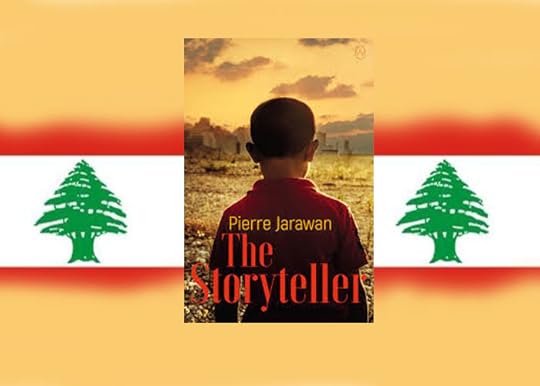
De voorkant van het boek is heel mooi. Een kleine jongen kijkt uit over een stad. Ik neem aan dat het Beiroet is.
Het boek is in een korte proloog, drie delen en epiloog verdeeld. Daarnaast staat er ook nog een overzicht in van de Libanese Burgeroorlog tot 1992. Ik moest er echt even in komen, maar daarna wilde ik alleen maar verder lezen. Het einde is heel verrassend, die zag ik niet aankomen. Ik vond het jammer dat het boek uit was. Ik zat echt diep in het verhaal. Net alsof ik mee op zoek was.
Opening with a dramatic and intriguing prologue, the book is structured in three parts, moving between Lebanon and Germany over a period of more than thirty years. In the first part, the reader experiences firsthand the close relationship between Samir and his father, a man who charmed everyone he met by never forgetting a name, being the life and soul of any party and, most importantly, telling Samir the most wonderful bedtime stories. Along the way, we learn of the family’s flight from war-torn Beirut to Germany in the 1980s along with many other refugees.
However, one night everything changes seemingly as a result of something as simple as a photograph. It leads to Samir’s father’s disappearance, an event which will shape the course of Samir’s life. The dramatic impact of this on young Samir, his mother and sister, Alina, is convincingly conveyed. Eventually, Samir travels to Beirut in search of his father because it seems to be the only way he can move on in his life and settle down to a career and relationship. What he learns will involve long-buried secrets, the complex political history of Lebanon (there’s a useful short history at the end of the book) and explore questions of national identity. And Samir comes to realise that perhaps his father’s imaginative and colourful stories hid the truth all along if he’d only known it.
The theme of storytelling pervades the book, whether that’s something as innocent as bedtime stories or the thrill of telling a story to an appreciative audience. Or the stories that a photograph can reveal, the contested stories a nation tells about itself or the stories of the hidden that don’t get told.
I loved the descriptive writing in the book, skilfully preserved by translators, Rachel McNicholl and Sinéad Crowe. Like this about young Samir’s new home: ‘The smell of fresh paint drifted like a cheerful tune through the rooms.’ The book contains fascinating information about Lebanon: its culture, food, complex politics, turbulent recent history and, of course, the famed cedars of Lebanon. In fact, you could say that, at its heart, The Storyteller is a love letter to Lebanon as much as a story about a young man’s search for the truth about his father. On either count, The Storyteller is a fascinating, intriguing and beautifully written book that I can highly recommend.
“If you think you understand Lebanon, it’s because someone has not explained it to you properly.” Lebanese saying
This is the epigraph to this book. I had never read a book on Lebanon until now. This is a funny thing because I first came into contact with a Lebanon in the 1980s. First, at a restaurant nearby my old work place back then. Mary and Danny. Mother and son who ran a place called The Cedars. Great food. I went there on a weekly basis. I also knew a woman at work during this same time period. Fatima. Thick curly black hair. Nice person. Great colleague. They were hard working people passionate about their homeland.
While reading this book I had flashbacks to those days. I remember hearing the news about the Israeli invasion of southern Lebanon, the assignation of their prime minister Bashir Gemayel, followed by the horrific massacres of Sabra and Chatila refuge camps. All of this happened in 1982. I was flying home after being in London England when I heard of the invasion. I was very shook up.
Why am I telling you this personal story? These stories feature prominently in this book. There is so much hatred in the world. And it has never changed. Yet, this is not a story of hatred. It is about love, the art of story telling and the importance to keep telling these stories alive.
A father loved to tell stories to his son Samir. His parents fled Beirut in 1982, arriving in Germany as immigrants. A tough life but they needed to start over. Along comes Samir, born in Germany, then his sister Alina, almost six years later. Like many immigrants, Samir is raised as a German but thinks a lot about that land of his parents. Is he German or Lebanese or both or neither?
Then one day in 1992, his father goes missing. And his whole world turns upside down.
This book is Pierre Jarawan’s first novel, published in German in 2016 and translated to English in 2019. I heard a podcast interview with him which sparked me reading the tale. It’s remarkably good as it works as a thriller, since Samir wants to find out what happened to his father, while at the same time, it’s a romance as well as an insight into immigrant families. The love-hate issues that they deal with every day.
Of course, we learn a great deal about Lebanon. Sometimes it’s a bit heavy but when I think about all that has happened over the years, it’s important to know. Especially the connections to Syria and how it’s played out with the Syrian conflict, and more recently to Islamic State and even the never ending Palestinian conflict with Israel. Jarawan asks the question, if there are eighteen different religious groups in Lebanon and each one thinks one of the other religions will wipe them out, what can you do? An endless circle of mistrust and violence.
And yet, there is this spark of hope in this book. What does family, friendship and love have to do with such things? Everything. And that really matters.
‘The cedars,’ I say, ‘how far is it to the cedars?’
Pierre Jarawan, was born in 1985 of a German mother and Lebanese father in Jordan, after his parents had fled Lebanese civil war. He moved to Germany aged 3, where he late established himself as a leading slam poet. This was his first novel. The original German title was "Am Ende bleiben die Zedern", which reflects the novel's closing paragraph - In the End, the Cedars will Be There, although the English translation, by Sinéad Crowe and Rachel McNicholl (interviewed here https://lizzysiddal.wordpress.com/201...) has been published by the independent World Editions press under the title The Storyteller.
The novel is narrated by Samir, whose life has some similarities with the author's own, but ultimately is quite different. Samir's parents, both Lebanese and then in their mid 20s, fled Lebanon in 1983 for Germany and a refugee centre, where Samir was born in 1984.
As the novel opens (a short flash-forward prologue aside), it is 1992. Samir is 8 and his family, now with a younger sister, have moved to a larger flat in Germany, part of a close community of Lebanese exiles. Things seem relatively idyllic from Samir's perspective, even the Christian and Muslim exiles get along, despite the bitter divisions from the civil war:
This was our place, our home. Here people helped each other. Here no one needed a compass. All the satellite dishes in our street pointed 26° east. (a reference to the geolocation of the satellite broadcasting Arab TV).
While Samir's mother and his father's Muslim best friend both seem at home in Germany, Samir's father still has a hankering for his homeland, mainly expressed through evocative stories of Lebanon told to Samir:
As a boy, I felt an insatiable longing to see Lebanon. It was like the enormous curiosity inspired by a legendary beauty no one has ever seen. The passion and fervour in the way Father spoke about his native land spread to me like a fever. The Lebanon I grew up with was an idea. The idea of the most beautiful country in the world, it’s rocky coastline dotted with ancient and mysterious cities whose colourful harbours opened out to the sea. Behind them, countless winding mountain roads flanked by river valleys whose fertile banks provided the perfect soil for world-famous wine. And then the dense cedar forests at the higher, cooler altitudes, surrounded by the Lebanon mountains, whose peaks are snowcapped even in summer and can be seen even from an inflatable mattress on the sea far below.
But when Samir's father happens across a photo of himself, dressed in the uniform of a Forces Libanaises Christian militia man, his demeanour changes - he becomes withdrawn, making mysterious calls back to Lebanon, and then one day he disappears from his family's life altogether.
Twenty years later Samir finds that, in order to move on with his own life, he needs to travel back to Lebanon, where he suspect his father went, to try to understand what may have happened and perhaps even find his father.
I had very mixed views of this novel. The atmospheric evocation of Lebanon, and of Beirut (a city I have visited only once and for a few days, over 15 years ago, but which made a strong impression on me) is excellently done, both the ideal Lebanon of Samir's father's stories, and the more confusing and yet still life-affirming reality of the modern city.
But the exposition of Lebanese politics, largely via the lips of other characters who Samir encounters in the country, was heavy-handed. The novel opens with epigraph, which Samir repeats at the novel's conclusion, a Lebanese saying that: if you think you understand Lebanon, it’s because someone has not explained to you properly. But the author decides he will try - and when one character says to Samir I found a few facts and figures. Want to hear them? by heart rather sank. Also while I'm no expert on the country I'm no expert on the country, this all seemed familiar ground and much better covered in books like Pity the Nation: The Abduction of Lebanon, which the author cites as a source. In fiction, I would instead direct readers to the novels of writers such as Elias Khoury.
And for my personal literary taste the mystery/quest element of the novel - what happened to Samir's father - was much less interesting - and the way that the clues were hidden in the Arabian-nights style tales he spun his young son, was layered on a little too thick.
Ultimately I loved die Zedern but was less impressed by the Storyteller.
A novel that I suspect many will love - the publisher's blurb "Pierre Jarawan does for Lebanon what Khaled Housseni's The Kite Runner did for Afghanistan" rather expresses it - but it just wasn't for me.
------------------------------------------------------- This is the latest from the excellent Asymptote Book Club (https://www.asymptotejournal.com/book...), which I would highly recommend: the Asymptote Journal team select a piece of world literature each month from some of the leading independent presses in Canada, the US, and the UK.
Man ļoti, ļoti patika! Ok, ja pavisam godīgi, beigas likās pārāk neticamas, bet tas nesabojāja iespaidu, jo viss stāsts ir uzrakstīts ļoti aizraujoši, izglītojoši un ļoti labā, viegli lasāmā valodā. Neatstāstīšu sižetu, bet - galvenais varonis ir dzimis Vācijā libāniešu bēgļu ğimenē un pieaugot dodas uz Libānu meklēt tēvu un savas saknes. Es neesmu baigi zinoša Tuvo Austrumu tēmās, tāpēc šī grāmata šķita izglītojoša. Un arī ļoti emocionāla. Secinājumi? Libāna nudien izklausās pēc pasakaini skaistas valsts, žēl, ka tik daudzu karu plosīta. Un - kārtējo reizi nākas secināt, ka no reliğijas un fanātisma ir krietni vairāk ļaunuma nekā labuma..
"Ja kāds iedomājas, ka ir sapratis Libānu, viņam tā nav īsti izskaidrota." /libāniešu sakāmvārds/
Kaut kā nebiju sajūsmā par grāmatu, kā visi citi. Uzskaitot labo, grāmata ir labi sarakstīta, orģināls stāsts, varoņi labi atstrādāti, bet no otras puses, man, personīgi traucēja politiskais fons, kas bija pārāk smags ar gariem aprakstiem, kas aizpeldēja prom no galvenā stāsta, man bija bieži jāatgriežas pie iepriekš jau izlasītā, lai atcerētos sižeta līniju. Man arī nepatika, ka autors neatklāja daudzas detaļas uzreiz, bet tad nākamājās nodaļās atkal atgriezās pie iepriekšējās nodaļas līdz galam neizstāstītā un sekoja atbildes, it kā gribētu uzturēt intrigu, bet tā kā grāmata nav domāta kā trilleris vai detektīvs, man tas traucēja.
Schitterend verhaal. In de traditie van 'de vliegeraar'. Redelijk hard bij momenten. Het beeld van de Libanese Cederbossen is onvergetelijk en het liefdesverhaal is zoals ik ze heel graag lees....
“Ja kāds iedomājas, ka ir sapratis Libānu, viņam tā nav īsti izskaidrota,” vēsta libāniešu sakāmvārds. Ko Tu zini par Libānu? Valsti, kas ir teju sešas reizes mazāka par Latviju un robežojas ar Sīriju un Izraēlu. Es zināju diezgan maz, tādēļ grāmata, caur vienas ģimenes stāstu, izcili sniedza ieskatu Libānas vēsturē. Protams, nevaru apgalvot, ka tagad izprotu šis valsts vēsturi, bet esmu guvusi gana labu priekšstatu par tās sarežģīto politisko un reliģisko situāciju un man nav jautājumu, kādēļ libānieši dodas bēgļu gaitās.
Grāmatā minēts, ka Libānai nav vienas visas tautas vēstures grāmatas (fakta patiesumu nepētīju) – tas vienmēr būs kristiešu vai musulmaņu tautas daļas stāsts. Iepazīstoties ar vēsturi vienmēr jārēķinās – jo senāka vēsture pētīta, jo lielāka varbūtība, ka tā būs vēsturnieka interpretācija. Ar jaunāko laiku vēsturi ir vienkāršāk, izņemot, ja izpētes objekts ir noslēgtas un politiski sarežģītas valsts vēsture. Libānā līdzās pastāv kristietība un islāms, kas viens otru gadu desmitiem nežēlīgi iznīcina vienā pilsoņu karā pēc otra, turklāt politika nav vērsta uz pušu dabisku “sajaukšanos”. Gluži pretēji – stingru nodalīšanu.
Samirs dzimis un uzaudzis Vācijā, bet viņa vecāki ir bēgļi no Libānas. Viņš savā bēgļu kopienā,ir laimīgs, jūtas iederīgs, taču aiz bēgļu kvartāla ir Vācija, kur viņš neiederas – ne tādēļ, ka vācieši viņu nepieņemtu, bet tādēļ, ka viņa sirds ir Libānā – valstī, kur dzimuši viņa vecāki un kur bez paskaidrojumiem devies viņa tēvs. Samīrs ir teju apsēsts ar Libānu un,lai dzīvotu tālāk – viņam jādodas tēvu uzmeklēt un noskaidrot, kādēļ viņš devās prom. Stāsts atklās Libānas vēstures sarežģītās un traģiskās lappuses, kas ietekmējušas Samīra un neskaitāmas citas libāniešu ģimenes.
Arī autors ir bēgļu bērns,tādēļ stāsts ir personisks un tā tapšanai viņš iedvesmojies no sava tēva stāstiem, kurš ir libānietis, kas Libānu pameta 1985.g.
Man patika,kā stāsts vijās – caur pagātni uz tagadni. Stāsta atrisinājums bija negaidīts, tomēr man par pasakainu,kas manā skatījumā vienīgais grāmatas trūkums,kas drusku nozaga stāsta ticamības momentu. Visādi citādi – lieliska grāmata,ko iesaku izlasīt vēsturisko zināšanu redzes loka paplašināšanai.
Ein ganz wunderbarer Roman, der mich mit auf eine Abenteuerreise nach Jordanien nahm, ein Land, von dem ich bisher nur den Namen kannte. Ich lese ja gerne Familiengeschichten und diese war so reichhaltig an Charakteren und Geschichten über ein vom Bürgerkrieg gebeuteltes Land, überraschend und lehrreich.
Samir tenía siete años cuando junto a sus padres Brahim y Rana y su hermanita Alina encontraron su lugar en el mundo. Se habían mudado a un barrio céntrico de Alemania, un lugar que, a pesar de ser antiguo, olía a hogar.
Los inicios nunca han sido fáciles y menos en un país que no es el tuyo, Brahim y Rana habían huido de un país en llamas en el que las bombas y los disparos eran su pan de cada día. Pero, ahora, unos años después y con dos hijos a su cargo habían conseguido vivir felices en su país de acogida.
El pequeño Samir había crecido escuchando las historias que su padre le contaba cada noche sobre su hermosa tierra, hasta que llegó la última historia, el último beso de su padre, la última vez que estuvo a su lado…
Veinte años después Samir sigue obsesionado con la desaparición de su padre, ¿Qué sucedió esa noche? ¿Por qué les abandonó? ¿Sigue vivo en algún lugar del mundo? Y decide poner rumbo a sus orígenes para descubrir qué es lo que realmente pasó.
Siempre me ha resultado muy interesante leer sobre otras culturas y otros lugares, cuando descubrí esta historia, a pesar de ser ficción, pensé que era un buen momento para conocer El Líbano y sí, como esperaba, he sufrido mucho. Es muy triste saber que mientras que nosotros tenemos todas las comodidades del mundo y nos preocupamos por tonterías hay personas que solo han conocido el estallido de las bombas. Y sí chicos, aunque no es agradable es muy necesario leer sobre ello.
Pero, el silencio del contador de historias no es solo una novela para descubrir el Líbano y sus conflictos, es mucho más. Con ella he sentido el amor, la amistad, el miedo y el anhelo que sienten los personajes, sobre todo Samir, quien no es capaz de olvidar a su padre aunque su recuerdo cada vez sea más borroso.
El autor narra una historia estremecedora con un cariño y una delicadeza que me ha cautivado. La primera parte del libro es la más lenta, en ella nos acerca a la historia contándonos diferentes momentos de la infancia de Samir y su familia y termina cuando su padre desaparece sin dejar rastro. A partir de la segunda parte se entremezclan capítulos del presente, con un protagonista adulto que busca a su padre en Beirut, con capítulos del pasado, en este momento es en el que la historia comienza a ser muy interesante y el ritmo se agiliza bastante. Eso sí, os aviso de que los capítulos son bastante extensos, a mí personalmente no me desagrada.
En mi opinión lo mejor de esta historia es la ambientación, las reflexiones que aparecen a lo largo de la historia y sobre todo los personajes, me han robado el corazón. Lo que menos me ha gustado han sido las partes en las que se habla de política, son interesantes, pero bastante extensas y en algunos momentos me han sacado de la historia.
Y llegados a este punto solo os puedo recomendar que os aventuréis a leer esta historia tan emotiva que sin duda no os dejará indiferentes.
4.5 stars. "The Storyteller" is the story of Samir, who mostly grew up in Germany after his family leaves war-torn Lebanon. He grows up hearing stories of the family's homeland. His father is especially good at telling these stories. When a mysterious photograph seemingly causes the disappearance of his father, it will eventually send Samir on a journey back to Lebanon, a place where he now feels totally out of place, to search for his father.
Oh man, you all know that I love a good family secret and this book definitely has a huge one. I don't want to give anything away but the mystery of what happened to Samir's father is oh so good and definitely kept me reading to try to figure out what happened. The author does a great job of giving out small hints to keep you wanting to read.
This book also has a really good sense of setting. I loved reading about Germany and Lebanon through the eyes of these characters. We get to see how the family adapts to their new home in Germany and how Samir's father goes out of his way to make conversation with everyone he meets, always making people feel welcome even when their new home is not so welcoming always to his family. I loved reading about Lebanon, both the myth in Samir's father's mind and the reality that Samir experiences when he sees the country for himself.
The writing of this book was so good! The descriptions are almost lyrical and really lovely to read. I especially appreciated the descriptions when reading Samir's father's stories. The descriptions really made the story pop. Overall, this was a great story that will stick with me for a long time!
Synopsis: Main character is Samir, who is of Lebanese origin but was raised in Germany as an immigrant. When he is 8 years old, his father disappears, and the story focuses on the impact of this disappearance on Samir as well as his search to aim to find him.
Pros:
- Lots of history and research done on Lebanon as a country, from many aspects such as politics, culture, and landscapes. - The book seems like a passion project and is written with lots of personal feel to it. - The structure of the narrative keep it exciting over the 450ish page length, flipping to different time periods to bridge past and present - Good depth of characters, and has a really good view of father-son relations - Easy language but avoids being too simplistic
Cons:
- Loses a bit of steam towards the last 50 pages, with an ending that didnt fully convince me (though the journey mattered more imo hence not a major issue, but still hurt the book to some extent) - Main character, while relatable, can sometimes act in ways that make him a bit annoying due to his weakness, was hoping for a bit more strength and decisevness coming intenally from him instead of being influenced by others for the most part
Overall: I loved the deep dive on Lebanon, but also really liked the strong characters and the many good tender moments. If this had a stronger main lead and a better ending would have been an easy 5 star. Still, great read, and would recommend to most character driven readers as well as people interested to learn more about Lebanon.
Kolosāla grāmata, kolosāla valoda un vērtīga viela pārdomām. Ja vien tās beigas nebūtu tik ļoti sačakarētas. Mēģinot pielikt punktu un par visām varītēm atrisināt visus jautājumus, sanāk vairāk brīnumainu sakritību kā tūkstoš un vienas nakts pasakās 🙁
Samir groeit op in Duitsland als zoon van Libanese ouders. De Libanese cultuur speelt een belangrijke rol in zijn opvoeding en in de buurt waarin hij opgroeit wemelt het van migranten van allerlei afkomsten waardoor hij zich met alle schotels, het gevoel van onderlinge saamhorigheid en de culturele verschillen bijna in het bruisende Beiroet waant. Wanneer zijn vader het gezin ogenschijnlijk plotseling verlaat, wordt Samir verscheurd door een enorm verdriet. Waarom liet hij hen achter? De enige aanknopingspunten die hij heeft zijn de verhalen die zijn vader hem vertelde voor het slapengaan. Als Samir in zijn volwassen leven vastloopt op dit grootse gemis besluit hij om het spoor van zijn vader te volgen en vertrekt hij naar Libanon op zoek naar antwoorden.
Ik heb gemengde gevoelens overgehouden aan 'De zoon van de verhalenverteller'. Het openingshoofdstuk vond ik enorm sterk en dit gevoel behield ik tijdens de eerste helft van het boek. Daarna werd het voor mij wat te rommelig. Jarawan maakt gebruik van vele sprongen in de tijd waardoor er steeds meerdere verhaallijnen door elkaar lopen. Op een gegeven moment voelde het voor mij echter alsof hij zelf ook de rode draad uit het oog verloor. Mijn grootste struikelpunt waren toch wel de personages. De Libanese cultuur is een zwijgcultuur, en veel van de personages in dit verhaal hebben traumatische gebeurtenissen meegemaakt, maar in dialoog en beschrijving lijken ze probleemloos het achtsterste van hun tong te laten zien en gevoelens en emoties te uiten. Voor mij klopte dit niet helemaal met de lading van het verhaal en de suggestie die Jarawan probeert te wekken. Mixed feelings: Sterk begin, maar de verdere uitwerking voldeed helaas niet helemaal aan mijn verwachtingen. 😬
Pierre Jarawan war mir bereits durch seine Texte bei zahlreichen Poetry Slams ein Begriff und dementsprechend überrascht war ich, als ich erfahren habe, dass er ein Buch geschrieben hat. Da "Am Ende bleiben die Zedern" von der Kurzbeschreibung her sehr interessant klang, wollte ich seinem Debüt unbedingt eine Chance geben und wurde dabei nicht enttäuscht.
Hierbei ist besonders interessant, dass die Thematik aktueller nicht sein könnte, denn hier geht es um eine Flüchtlingsfamilie, die vom Libanon aus nach Deutschland geflohen ist. Dabei sucht Samir, der in Deutschland aufgewachsen ist, nach seinem Vater und reist dafür in den Libanon, um ihn zu finden, aber auch, um sich selbst und seine Kultur kennenzulernen und um diese besser zu verstehen.
Da der Autor selbst in Jordanien geboren und aufgrund des Bürgerkrieges nach Deutschland geflohen ist, erfährt man hier eine sehr authentische und interessante Geschichte, die zum Nachdenken anregt und so manche Sichtweise durchaus verändern kann. Hier würde mich auch sehr interessieren, wie viel Samir letztendlich mit dem Autor gemeinsam hat.
Sehr schön ist auch, wie ausführlich hier auf die verschiedenen Kulturen und auf die Geschichte des Libanon eingegangen wird. Dabei merkt man auch, wie viel Respekt vor beiden Kulturen vorhanden ist. Die Familiengeschichte, die hier im Vordergrund steht, wird ebenfalls sehr interessant und emotional geschildert, sodass man stets mittendrin ist und als Leser niemals außen vor gehalten wird.
Kurz gesagt: "Am Ende bleiben die Zedern" ist eine berührende und nachdenklich stimmende Familiengeschichte, die von der Thematik her aktueller nicht sein kann. Wer sich für den Libanon und dessen Kultur interessiert, sollte dem Buch unbedingt eine Chance geben.
Ein unfassbar berührendes Buch, das voller Liebe steckt. Pierre Jarawan lässt uns durch seinen Protagonisten Samir an so viel Liebe teilhaben. Der Liebe zur Literatur, der Liebe für den Libanon und seine Menschen, Liebe fürs Menschsein an sich und die Liebe fürs Geschichten erzählen, den Worten, der Poesie.
Die Geschichte ist sehr dicht erzählt, angreichert mit vielen historischen und politischen Fakten über den Libanon, aber immer so, dass es es nie belehrend rüberkommt, da man die Zusammenhänge Stück fürStück vermittelt bekommt. Die Geschichte von Samir und seiner Suche nach seinem Vater geht ans Herz, lässt einen mitfiebern und mitleiden und hat sprachlich als auch inhaltlich unglaublich viel zu bieten. Für mich hatte diese Geschichte alles, was ein gutes Buch ausmacht: Authentische Charaktere, einen tollen Erzählstil, eine runde, in sich abgeschlossene Geschichte, vielschichtige auch kulturelle Themen, Spannung und Emotionen, Träume und Hoffnungen.
Ein beeindruckender Debütroman, von einem Autoren, der erst letztes Jahr mit seinem zweiten Werk "Ein Lied für die Vermissten" gezeigt hat, wie viel Potential noch ihn ihm steckte und der noch weiter gereift ist.
Heel mooi boek. Ontroerend verteld, de zoektocht van Samir naar zijn vader en wie die man was. Rake opmerkingen over migratie en het opvangen van mensen. Met op de achtergrond de woelige geschiedenis van Libanon, het land met 18 gezindheden en fracties, waar het leven allesbehalve makkelijk is, maar mensen blijven hopen en dromen van een vreedzame wereld.
Een boek dat me vanaf de eerste bladzijde meenam in een persoonlijke geschiedenis. Plezierige schrijfstijl in combinatie met een mooie opbouw van de verhaallijn die tot de laatste bladzijde aan toe interessant is. Een boek dat een inkijkje geeft in de in Duitsland geboren generatie van vluchtelingen uit en de recente geschiedenis van Libanon.
'Ik weet nu hoe het verhaal afloopt, schrijf ik Yasmin. Even later licht het display van mijn mobiel op: En ik kijk ernaar uit het te horen.'
Het verhaal begon langzaam, maar eindigde in de ene ontknoping na de andere. Cool om het boek tot zo’n einde te zien komen. Wel vond ik deze ietwat onlogisch of nog niet helemaal klaar...
Desondanks, interessante thema’s en het maakt mijn wens om Libanon ooit te bereizen nog groter. Zin om dit boek te bespreken in de boekenclub!
Pierre Jarawan werd geboren in Amman, Jordanië, zijn vader is Libanees en zijn moeder Duits. Toen hij drie jaar was, vluchtte hij samen met zijn ouders naar Duitsland, weg van de Libanese burgeroorlog. Sinds 2009 heeft hij meerdere prijzen gewonnen in poetry-slams.
Ik heb lang getwijfeld of ik dit boek wel zou lezen. Geprikkeld door de achtergrond van de auteur en het thema was ik enorm benieuwd. Ik heb een grote interesse in het Midden-Oosten en dan vooral voor de regio Libanon, Israël, Jordanië,… Non-fictie over deze gebieden heb ik reeds verslonden. Vandaar mijn twijfels om het boek te lezen, ik verwacht er veel van en zou zo teleurgesteld zijn als het niet aan mijn verwachtingen zou voldoen. Ook zou het een afknapper zijn, moesten bepaalde feiten niet overeenkomen met de realiteit.
Samenvatting
“Wie denkt dat hij Libanon begrijpt is het niet goed uitgelegd’”
1983, Brahim en Rana vluchtten uit Beiroet, weg van de gruwelijke burgeroorlog die zich daar afspeelde. In Duitsland vonden ze hun nieuwe thuis en kregen twee kinderen, Samir en Alina. Ook Hakim en zijn dochter Yasmin zijn gevlucht uit Beiroet. Tussen de beide families groeide er door de jaren heen een sterke band. Tot in 1992 Brahim verdween. Hij liet een enorme leegte achter, waarmee vooral Samir het nu nog moeilijk heeft. Zijn vader en hij hadden een zeer sterke band. Hij probeert weliswaar de draad weer op te nemen, maar zit met veel vragen. Aangezien hij geboren is in Duitsland, maar Libanese ouders heeft, gaat hij zich telkens afvragen waar hij thuishoort, het land waar hij geboren is of het land van zijn afkomst? Maar natuurlijk ook vragen over zijn vader, waar is hij naartoe, leeft hij nog en vooral waarom heeft hij zijn gezin verlaten? Hij begint een obsessieve zoektocht naar zijn vader, maar ook naar zijn eigen identiteit. Volledig ontspoord vindt Yasmin hem terug, wanneer zij na haar studies terugkeert naar de stad waar ze samen met Samir opgroeide. Ze probeert hem te helpen, maar de uiteindelijke oplossing blijkt iets dat Samir zelf moet doen, namelijk naar Libanon gaan om niet alleen zijn vader, maar ook zichzelf terug te vinden. Zal Samir hierin slagen en wat is het familiegeheim dat zijn ouders zo lang voor hem verborgen hebben?
Conclusie Wat een boek! Het heeft over gans de lijn aan mijn verwachtingen voldaan.
Brahim vertelde Samir heel wat verhalen, deze doen me sterk denken aan Sheherazade (Duizend en één nacht). In zijn verhalen hebben dieren menselijke karaktertrekken, maar de verhalen hadden ook een betekenis. En naarmate men verder leest in het boek, komt men steeds meer te weten welke verborgen boodschappen Brahim in zijn verhalen verstopte.
We leren niet alleen de familie van Samir kennen en zijn zoektocht naar zijn vader. Maar ook de gevolgen van de veranderende maatschappij, de scheiding tussen de religies in Libanon, hoe de burgeroorlog is ontstaan, de wederopbouw van het land, … . Non-fictie en fictie wisselen elkaar af. Er komen heel wat geschiedkundige feiten aan bod, die op een zodanige manier zijn verwerkt dat het niet storend is en deze ook het verhaal vervolledigen. Persoonlijk heb ik er een hekel aan wanneer een auteur geschiedkundige feiten in zijn boek verwerkt en deze niet blijken te kloppen. Hier zet Pierre Jarawan alles correct neer, en wat meer is, hij houdt op zijn eigen manier ook rekening met de verschillende standpunten. Gezien de complexiteit van de Libanese geschiedenis en de vele meningen lijkt me dit geen gemakkelijke opgave, maar toch is hij hierin geslaagd. Wie reeds in Libanon is geweest zal heel veel herkennen, de geuren van de cederbossen, het Choufgebergte en natuurlijk Beiroet met zijn vele opgevulde kogelgaten, de Corniche, de Green line, … . Alles wordt precies zoals het is in beeld gebracht.
De personages heel goed uitgewerkt. We zien hoe het is om op te groeien als zoon van vluchtelingen, wat een actueel onderwerp is. Het is niet makkelijk voor kinderen van vluchtelingen om op te groeien tussen twee werelden en niet te weten waar je thuishoort.
De auteur heeft een vlotte pen en je blijft als lezer geboeid tot de laatste pagina. Ook tijdens de stukjes waar hij het over de geschiedenis heeft, blijft men als lezer geboeid verder lezen. Hij schrijft vol symboliek en beeldspraak. De emoties van de personages worden haarscherp in beeld gebracht. Het boek bestaat uit drie delen. In het eerste deel leren we Samir en zijn familie kennen. We zien hoe sterk de band met zijn vader is en hoe belangrijk deze is voor hem. In een tweede deel is Samir volledig de weg kwijt, hij groeit op als tiener zonder vaderfiguur en later zonder moeder. Hij blijft zich afvragen wie hij is, Libanees of Duits, en waarom zijn vader hen alleen gelaten heeft. Uiteindelijk ontdekt hij de waarheid in het derde deel.
Het boek is zeker een aanrader voor wie meer wil weten over Libanon en zijn geschiedenis, maar ook voor wie meer wil weten over hoe vluchtelingen zich voelen (met name de tweede generatie). Zowel omwille van de schrijfstijl en de inhoud geef ik dit boek een dikke 5 sterren.
Neko je napisao da je ovaj čovek ovom pričom puno uradio za Liban. Slažem se sa tim.
Početak priče bio mi je mnogo zanimljiviji nego kraj. Žao mi je što Samir nije uspeo da susretne svoje želje na način na koji je on želeo i duboko verovao.
Das Buch ist unheimlich mitreißend und atmosphärisch geschrieben. Mich hat die Geschichte vom kleinen Samir, der - gefangen zwischen zwei Identitäten - verzweifelt seinen verschwunden Vater vermisst, total mitgerissen. Leider wurde mir das Buch gegen Ende dann zu unrealistisch und verworren, sodass es „nur“ für 4 Sterne gereicht hat. Trotzdem eine dringende Leseempfehlung!
Burvīgs mākslas darbs. Apraksti tik aizraujoši, ka liekas viss notiek manā acu priekšā kā filmā. Autors ir lielisks stāstnieks - "Beirūta, kādreizējā zaigojošā skaistule, pārvilka ar roku pār izpostīto seju un grīļodamās izkāpa no drupām. Pilsēta taustīja savu pulsu."(26.) Un Vācijas televizoru ekrānos bija redzama zeme, kas gan vēl viegli piekliboja, bet jau gāja bez kruķa."(29.) Galvenais varonis "Es, Samīrs, feniķiešu riekstu čaumalu kuģu kapteinis, nezināmā meklējumos"(370.) Tā nezināmā patiesība, kas katrai reliģijai sava, kuras patiesības vārdā slepkavo un aizbildinās ar Dieva varu - tas būtu smieklīgi, ja nebūtu tik aprobežoti un asiņaini. "Tajā slēpjas lielas briesmas: mums ir astoņpadsmit reliģiskas kopienas. Visas grupas cita no citas baidās un uzskata, ka ās grib iznīcināt.[...] Bet kādam taču tām jāpaskaidro, ka visi ir pārcietuši vienādas sāpes. Ka visi , nudien, visi, bijuši iesaistīti."(427.) Un te nu ir tās paralēles ar mūsu valstī mītošajām tautībām ( paldies tam pašam Dievam, mums nav tik daudz reliģiju, tad jau arī asiņu upes būtu platākas!). Pat atbēguši no kara šausmām uz Vāciju , šie mazie cilvēciņi, kuru lielais ego saaudzis kopā ar kādu reliģiju, dara viņus tik aklus, ka pat esot drošībā , dalīja guļasvietas zālē pēc konfesijām - "Tā nu sporta zāle līdzinājās sašķeltās Beirūtas ielām: kreisajā pusē musulmaņi, labajā maronītu kristieši. Un savā situācijā vieni vainoja otrus."(37.) Lasot aprakstus par Libānas karu, par to haosu, liekas, ka elles vārti ir bijuši atvērti gandrīz katrā zemē. "Miers, par kuru tu sapņo, ir tieši tas , no kā visi reliģiskie vadoņi baidās: tikai sašķeltā valstī viņos kāds vēl ieklausās..."(209.) Vēl viens varonis, kas ar savu rīcību "sačakarē" Samīra dzīvi, ir viņa tēvs - "Impulsīvi saredzēt situāciju, ko var izbaudīt. Kad dzīve pavēra iespēju parastu mirkli pārvērst sevišķā, viņam divreiz nebija jāsaka.Tēvu allaž ieskāva palāvības mākonis."[...] jautrībnieku, kas dejo uz dzīves labajām vēstīm, kamēr sliktās viņa dzirdes kanālos nekādi netiek iekšā, it kā to iekļūšana viņa domās kavētu kāds neparasts laimes filtrs.(16.). Halīfs Džibrāns: " Drošsirdis nav tas, kurš nepazīst baiļu, drošsirdis ir tas, kurš bailes pazīdams, tās pārvar. Šis autora terapeitiskais teikums atgādina, ka ņem pagātni azotē un pārveido to par spožu nākotni, neiestriedz pagātnes dūņās, barojos no tām, lai augtu. "Kamēr es gāju uz arhīviem, lai skatītos atpakaļ, viņi meklē pagātni, lai skatītos uz priekšu."(419.) "Bērni, jaunieši, viņi visi aug ar selektīvām atmiņām par pagātni un pārciesto netaisnību. tas noved pie bezierunu identifikācijas ar reliģisko kopienu, kurā viņi dzimuši. Mēs - kristieši, mēs -šiīti, mēs - alavīti, mēs -druzi, mēs - sunnīti. Lai gan vajadzētu: mēs libānieši."(428.) Grāmata, kuru vajadzēja lasīt lēnāk, lai tik ātri nebeidzas! Grāmata, kas uzrāda cilvēka aizspriedumu bezjēdzību, vēl aizvien. Grāmatas, kas pavēsta par man ne tik zināmo pasaules daļu, tās sāpi. Grāmatas beigās pārskats pat Libānas pilsoņu karu līdz 1992.
Het laatste deel was voor mij een beetje een stijlbreuk. Ondanks de trieste momenten soms, zat je in een warm verhaal. Het laatste deel leek mij erbij verzonnen, als een soort 'deus ex-machina', om een oplossing aan te reiken. Het boek had evengoed zonder gekund. Het laatste deel was ook veel chaotischer dan de rest van het boek. Al bij al toch een mooi vertelsel dat meteen duidelijk maakt dat voor migranten, die uit een andere cultuur komen, niet alles 'koek en ei' is en er meermaals trauma's ontstaan. Graag gelezen.
Je ne connaissais ni l'auteur ni le roman, je ne l'ai même jamais vu passer en grand format. Je suis donc très contente d’avoir lu et découvert cet auteur qui m'a emmenée dans un beau voyage au Liban. Je dois bien avouer que je n'avais encore jamais lu de romans avec le Liban en toile de fond, je connais à peu près les conflits qui y règnent, mais pas plus que ça. Ce roman aura au moins eu le mérite de m’éclairer sur le sujet.
On va suivre Amir, un jeune garçon d'origine libanaise. Ses parents sont originaires de ce pays, ils ont fui le Liban juste après leur mariage et se sont installés en Allemagne. Amir à des relations fortes avec son père, qui lui raconte de belles histoires, qui l’emmène partout avec lui. Un jour, ce père qu’Amir vénère, va disparaître sans un mot, sans aucune explication. Il se retrouve seul avec sa mère et sa petite sœur née entre-temps, et leur ami Hakim et sa fille Yasmin, qui a quitté le Liban en même temps que les parents d’Amir. Alors que sa mère et sa sœur se tournent vers l'avenir et se sentent bien en Allemagne, le jeune garçon va grandir avec le souvenir de son père toujours bien présent, même obsédant, et dès qu’il sera en âge de voyager seul, il partira vers ce pays inconnu de lui mais qu'il a tellement l’impression de connaitre par les récits de son père. Et on va suivre Amir dans sa découverte du Liban, et dans ses recherches. Il va faire des rencontres surprenantes là-bas, il va se lier d’amitié, il va aussi se rendre compte des difficultés des Libanais pour vivre dans la paix. Ce qui est loin d’être facile avec toutes les tensions que ce pays connaît avec les Palestiniens, les Syriens, etc…
Je me suis vite attachée à Amir, c’est un garçon très intelligent et fier de ses origines. Son père est tout pour lui, on peut même dire que c'en est assez obsédant pour lui. Il est vraiment tourné vers le passé, et je dois bien avouer que c’est parfois déroutant. Tout ce qu'il fait se comprend, c’est vrai que connaitre ses racines est très important. Par rapport à sa sœur, il a connu son père, a vécu avec lui, il a des souvenirs et il est persuadé qu’il est reparti dans son pays. Là-bas, il va découvrir une autre facette de son père, retrouver d'anciens amis, des parents. Il va suivre sa trace, dans ses anciens boulots, là où il a vécu. Cette quête d’identité ronge Amir et l’empêche de vivre son présent sainement.
Je comprenais sa démarche et en même temps, parfois, j'avais envie de lui dire d'avancer, de ne pas rester toujours dans le passé mais d'avancer, et qu'il risquait de passer à coté de beaucoup de choses dans le présent à force d’être toujours dans le passé. Mais, personne ne peut dire comment on aurait réagi à sa place.
En plus d'une quête identitaire, ce roman est un très beau voyage au pays des cèdres. On entend bien souvent parler du Liban à cause des guerres et des drames qui s'y passent, et ce livre donne une autre vision, celle sur le peuple, sur le paysage, sur les villes, les petits villages perdus dans le sable. L’auteur en parle très justement, il a beaucoup de similitudes avec son personnage masculin, comme lui il est né au Liban et vit en Allemagne, alors il est très bien placé pour raconter ce que vit Amir. On sent qu'il a mis beaucoup de son propre ressenti dans son personnage. Il décrit très bien son pays, ce Liban auquel il est fortement attaché, et il n'y a rien de mieux que découvrir ce pays au travers les yeux de ceux qui l'aiment et le connaissent. Cela donne une autre image que celle que peut nous proposer les médias qui sont toujours dans le scénario catastrophe.
C’est un premier roman pour Pierre Jarawan, et on ne peut qu’être admiratif devant la qualité littéraire de cet écrit. Le style est très bon, les phrases bien tournées. Il y a eu parfois quelques redondances, qui ont provoqué quelques longueurs pour moi. Et je me suis parfois un peu perdue dans les débuts de chapitre, ne sachant pas toujours à quelle période du temps on se trouvait. Car ça ne suit pas un schéma linéaire, allant de la petite enfance à la vie de l'homme au présent. On est parfois dans le présent, on repart ensuite dans l'enfance, pour revenir à des moments au Liban, etc…ça oscille comme ça entre divers périodes et il m'a fallu parfois un petit temps d'adaptation pour me rappeler où et quand on était.
J'ai beaucoup aimé le choix narratif utilisé par l'auteur qui est celui pour lequel je suis la plus sensible. Il a en effet raconté à la première personne du singulier, j’aime beaucoup l'utilisation de ce « je » qui me permet de me mettre complètement dans la peau du personnage principal et ainsi de ressentir la moindre de ses pensées et de ses émotions. J'ai ainsi pu me glisser dans la peau et la tête d'Amir et j'ai pu mieux le comprendre. Et à travers lui, j'ai ressenti également l'auteur et ce qu'il voulait faire passer à travers ses mots. L’écriture a d'ailleurs de beaux accents poétiques. Le final m’a laissée un peu dubitative. Je ne peux rien vous révéler, bien sûr, elle ne m'a pas déçue, c’est juste que je m'attendais à d'autres raisons pour le départ du père. Je me suis un peu retrouvée avec un effet de « tout ça pour ça » ! Je ne peux bien sûr rien dire de plus, ceux qui ont lu le livre comprendront sûrement de quoi je veux parler. Je m’attendais vraiment à d'autres révélations..
J'ai donc passé un bon moment avec ce livre, très complet et qui traite de beaux sujets et transmet de belles valeurs sur les relations filiales, sur la paternité, sur l'attachement à un pays. C’est un livre plein d’espoir pour tous ceux qui ne vivent plus dans leurs pays de naissance. Mais après tout, on peut toujours retrouver ce pays dans sa tête, dans ses souvenirs. Cela fait pareil quand on change de régions, celle qu'on a connu enfant a toujours une place particulière dans nos cœurs.
Je suis très contente d’avoir découvert et lu Pierre Jarawan. J'ai vu qu'il avait écrit un second roman Un chant pour les disparus qui va nous emmener une fois de plus au Liban avec un enfant et une nouvelle quête. À voir comment cela se passe cette fois et si ça ne ressemble pas trop à ce premier roman, vu que les résumés sont très similaires. Mais il y a tellement de choses à dire sur ce pays, il a une histoire tellement chargée, que je suis sure qu'il y a de quoi raconter d’autres histoires. Je lirai en tout cas cet autre roman avec plaisir, maintenant que je connais Pierre Jarawan.
Je ne peux que vous conseiller ce livre, qui est très beau et très instructif. J'aime quand mes lectures ont ce double rôle de me divertir et de m'instruire, ça enrichit énormément
A novel of one man’s search for his father, and of the real Lebanon.
History books tell us about war, politics and upheaval in the Middle East and Lebanon but this novel takes you to the heart of the country and its people. It’s an account of one man’s visit to his parents’s homeland. He assumes it is the paradise on earth he’s always been told it is. Certainly more attractive than the immigrant neighbourhood in Germany where he starts his journey…
The main character therefore is going into Lebanon as blind as the reader and that works really well. I discovered more about this country and its people through his eyes than I ever could have done in a history book. There are snippets of history dotted throughout (and sometimes they can overshadow the plot) but this is mostly an effective mix for showcasing a man’s journey to the homeland he has never known.
Life in Germany is interesting. Samir and his family have good neighbours. Storytellers who help him to build the picture of paradise he will later take with him to Beirut. Brahim, his father tells him the most exotic and fanciful tales and it’s a wonderful part of the novel itself. Images of jewels, deserts, Arabic greats and culture flicker in the readers mind This is the land of Arabic greatness in culture and wealth, language and people, isn’t it? One photo changes everything however as Samir sees a picture of his father in some sort of uniform. It’s not long after seeing the picture and refusing to answer Samir’s questions that he goes missing. Therefore, the search starts and the real journey begins.
There are three main characters in this novel – Samir, his father Brahim and Lebanon itself. What you will learn about this rich, layered country and culture is nothing short of a master storyteller. He is an artist of words who brushes meaning, nuance, history and people to create vivid images of the country concerned. The story of Samir and his father is one of ups, downs , pain and hope but it contrasts well with the stunning setting. Lebanon and its people have so much to offer the world, their country is one of stunning natural beauty and rich heritage. Like a painting , its canvas has been stained with war, violence and politics. Samir wants to find his father and find out about his own life -and it’s when you combine this with the setting of the family’s homeland, that the true message and nuance of The Storyteller really comes out and shines.
Ik herinner me de beelden op tv over de strijd in Libanon en de slachting in 1982. Libanon, het verscheurde land waar christenen tegen moslims vochten, waar de PLO zich had genesteld en vanuit Libanon Israël bestookte. In Nederland vond je stalletjes op straat, vaak met Nederlandse jongeren er achter die geruite Palestijnse sjaaltjes droegen, waar je je handtekening kon zetten om de Palestijnen te steunen. Ik had het niet zo met de Palestijnen. Ook niet met de Israeliërs trouwens. Ik vond en vind de materie complex. Misschien hoopte ik dat dit boek me meer inzicht in de situatie zou geven vanuit de hoofdpersoon in het boek. Dat doet het niet. Het geeft hier en daar een geschiedenislesje maar de informatie is al bekend. Het blijft een beetje een slap verhaal over een zoektocht naar een vermiste vader en iedere keer wanneer je denkt dat het eindelijk wat de diepte in gaat, doet Jarawan weer een stapje terug. Het verhaal komt daardoor nergens echt los van het papier. De personages blijven oppervlakkig en het verhaal ook.
Ik heb me er prima mee vermaakt maar uitzonderlijk vond ik het niet en begrijp ook niet zo goed hoe dit het boek van de maand in DWDD heeft kunnen worden. Misschien waren daarom mijn verwachtingen te hoog gespannen. Twee-en-een-halve ster, afgerond naar boven.
Mijn enige puntje van kritiek op dit boek is dat sommige gebeurtenissen misschien iets te toevallig waren. Echter weerhoudt dit mij er niet van dit boek 5 sterren te geven. De schrijfstijl sprak mij aan, de inhoud was vanaf het begin pakkend en het was mooi hoe alle puzzelstukjes op zijn plek vielen steeds. Ik was betoverd door het verhaal, zo blijkt dus ook de schrijver een uitstekende verhalenverteller ;-)
2,5-3⭐ Dit boek viel mij helaas tegen, het hangt wat mij betreft teveel van toevallige gebeurtenissen aan elkaar. Bepaalde personages hebben ook een heel gekunstelde functie (zoals de chauffeur). De geschiedenis is interessant, maar het verhaal zelf een stuk minder.





![Profile Image for Ieva Strazdiņa [mrs.lasitaja].](https://i.gr-assets.com/images/S/compressed.photo.goodreads.com/users/1659017528i/124023459._UX200_CR0,0,200,200_.jpg)