

What do you think?

The Spoils of Time #1
Ne angelas
Penny Vincenzi trilogija „Laiko pinklės“ – tikras perlas šeimos sagų gerbėjams.
„Ne angelas“ – pirmasis tomas užburiančios knygų serijos apie Litonų dinastijos gyvenimą. Jaudinanti drama ir aistringa meilės istorija, kurioje susipina stiprių asmenybių ambicijos, šeimos ir visuomenės primetamos taisyklės, racionalus protas ir meilės nuotykių troškulys. Spalvingų veikėjų ir įvykių kupinas siužetas veda per Edvardo karaliavimo la belle époque, Pirmojo pasaulinio karo siaubą ir triukšmingą bei kerintį XX amžiaus trečiąjį dešimtmetį.
Selija visada gauna tai, ko trokšta. Nepaisydama tėvų prieštaravimų ji, aštuoniolikmetė aristokratė, išteka už mylimo, bet nekilmingo vyro Oliverio Litono, žinomos Londono leidyklos paveldėtojo. Užsispyrusi, valinga jauna moteris neketina tenkintis ramiu šeiminiu gyvenimu prabangiuose namuose. Nekreipdama dėmesio į konservatyvaus sutuoktinio protestus ji įsidarbina jo valdomoje leidykloje ir netrunka užkopti karjeros laiptais į pačią viršūnę. Selija Liton per gyvenimą žengia aukštai iškelta galva ir priima sprendimus negalvodama apie padarinius, kad ir kokie pavojingi jie būtų. Ji graži, protinga ir drąsi – tačiau tikrai ne angelas.
Selijos poelgiai visiems laikams pakeičia ją supančių žmonių: vyro Oliverio, jo sesers MM, mažos mergaitės iš Londono lūšnynų ir, svarbiausia, jos meilužio, rašytojo Sebastiano Bruko, gyvenimus.
„Ne angelas“ – pirmasis tomas užburiančios knygų serijos apie Litonų dinastijos gyvenimą. Jaudinanti drama ir aistringa meilės istorija, kurioje susipina stiprių asmenybių ambicijos, šeimos ir visuomenės primetamos taisyklės, racionalus protas ir meilės nuotykių troškulys. Spalvingų veikėjų ir įvykių kupinas siužetas veda per Edvardo karaliavimo la belle époque, Pirmojo pasaulinio karo siaubą ir triukšmingą bei kerintį XX amžiaus trečiąjį dešimtmetį.
Selija visada gauna tai, ko trokšta. Nepaisydama tėvų prieštaravimų ji, aštuoniolikmetė aristokratė, išteka už mylimo, bet nekilmingo vyro Oliverio Litono, žinomos Londono leidyklos paveldėtojo. Užsispyrusi, valinga jauna moteris neketina tenkintis ramiu šeiminiu gyvenimu prabangiuose namuose. Nekreipdama dėmesio į konservatyvaus sutuoktinio protestus ji įsidarbina jo valdomoje leidykloje ir netrunka užkopti karjeros laiptais į pačią viršūnę. Selija Liton per gyvenimą žengia aukštai iškelta galva ir priima sprendimus negalvodama apie padarinius, kad ir kokie pavojingi jie būtų. Ji graži, protinga ir drąsi – tačiau tikrai ne angelas.
Selijos poelgiai visiems laikams pakeičia ją supančių žmonių: vyro Oliverio, jo sesers MM, mažos mergaitės iš Londono lūšnynų ir, svarbiausia, jos meilužio, rašytojo Sebastiano Bruko, gyvenimus.
848 pages, Hardcover
First published January 1, 2000
About the author
Penny Vincenzi
71 books949 followersPenny was nine years old when she embarked on her storytelling career. She wrote her own magazine called “Stories”, which she copied out three times on carbon paper and sold for two pence at school. So began a career in writing which has seen 7 million copies sold, and 17 bestselling novels.
After secretarial college, Penny worked as a junior secretary at Vogue and Tatler magazines, before moving to the Daily Mirror as personal assistant to Marje Proops, Britain's legendary agony aunt.
Marje encouraged her to write, and she became fashion editor and beauty writer at the Mirror, working for the women's editor in what was irreverently known as the "fragrant department". Penny’s journalistic career as a celebrated writer and columnist spanned several decades working for many of the leading newspapers and magazines of the time.
She once asked bestselling British author Jilly Cooper for advice on writing a novel while interviewing her for a magazine profile. Jilly put Penny in touch with her own agent, who promptly auctioned off her (then unwritten) first novel. It was quickly snapped up and the rest, as they say, is history.
Penny died in 2018. She was the proud and much-loved mother of four equally proud daughters, and grandmother to nine grandchildren.
After secretarial college, Penny worked as a junior secretary at Vogue and Tatler magazines, before moving to the Daily Mirror as personal assistant to Marje Proops, Britain's legendary agony aunt.
Marje encouraged her to write, and she became fashion editor and beauty writer at the Mirror, working for the women's editor in what was irreverently known as the "fragrant department". Penny’s journalistic career as a celebrated writer and columnist spanned several decades working for many of the leading newspapers and magazines of the time.
She once asked bestselling British author Jilly Cooper for advice on writing a novel while interviewing her for a magazine profile. Jilly put Penny in touch with her own agent, who promptly auctioned off her (then unwritten) first novel. It was quickly snapped up and the rest, as they say, is history.
Penny died in 2018. She was the proud and much-loved mother of four equally proud daughters, and grandmother to nine grandchildren.
Ratings & Reviews
Friends & Following
Create a free account to discover what your friends think of this book!
Community Reviews
Displaying 1 - 30 of 757 reviews
December 30, 2008
I walked into the Corner Bookstore while visiting New York City completely exhausted with aching feet and two cranky kids. While I was sitting in a chair, a lovely woman asked what type of book I was looking for and when I told her about my day, she recommended this book. Within 30 pages I was swept away into another world. It's lovely family saga, the first of three volumes, I like this segment the best, that provides love, tragedy, drama, a bit of history, but most importantly, a vacation from life for the reader.
April 19, 2010
I picked this book from my Mother-In-Law's shelf, out of sheer avoidance of my New Year's resolution to read five classics. I had started Pride and Predjudice and I am so tired from being pregnant that I can't focus and instantly fall asleep. This book, however, kept me not only awake, but awake way past my usual bedtime and on into the night. I love books like these. I think these are the closest thing to a love affair that I could imagine. I would literally wait all day to sneak into bed just to read for hours. I couldn't put it down, couldn't get anything accomplished until it was finished, and when it was, I went straight for the next book in the trilogy. This is half the reason why I haven't been able to focus on my blog. These books are wonderful.
This book takes place in England during the World War I time period. It starts by introducing Celia, the first of many strong and independent women in the book. It follows her through her life as a mother, wife, book publisher, socialite, and secret lover. She is a very complex woman that I want to hate, but I love her for her guts. I love this era and I am always intrigued by anything England, so this was the perfect book for me.
This book takes place in England during the World War I time period. It starts by introducing Celia, the first of many strong and independent women in the book. It follows her through her life as a mother, wife, book publisher, socialite, and secret lover. She is a very complex woman that I want to hate, but I love her for her guts. I love this era and I am always intrigued by anything England, so this was the perfect book for me.

July 8, 2012
If you're missing Downton Abbey (soapy elements and all), this book would be a good choice. It's set in the same time period as Downton Abbey and hits the same historical events: Titanic, WWI, flu epidemic, etc. And they share themes that I suppose any story about the early 1910s-1920s would - how families cope with the war and what happens when all the wounded soldiers return, how class lines began to blur, and how women's roles in society change. I almost always enjoy those types of plots.
What I didn't enjoy so much in the story was the excessive use of manufactured suspense. For example (minor spoilers), we have the main character announcing "I will be leaving to board the Titanic at exactly 10:00! I am so excited for its maiden voyage! I hope nothing happens to stop me at 9:59!" (paraphrased, but barely.) And of course something stops her at 9:59. That kind of thing happens again and again, someone rushing to deliver a vital message moments before a life-changing decision is made, or a character misses an important phone call by mere moments. Since the story focuses on relationships, work, school, and the daily grind, it seems unnatural to squeeze in so many attempts at nail biting moments.
And I had to mention, for a story about a publishing company, with a skilled editor as the main character, there sure were a lot of typos in this book.
Overall, it's fun and thought-provoking, but certainly not perfect. I'll probably take a break before grabbing the next book in the series. Maybe next time I have a long layover.
What I didn't enjoy so much in the story was the excessive use of manufactured suspense. For example (minor spoilers), we have the main character announcing "I will be leaving to board the Titanic at exactly 10:00! I am so excited for its maiden voyage! I hope nothing happens to stop me at 9:59!" (paraphrased, but barely.) And of course something stops her at 9:59. That kind of thing happens again and again, someone rushing to deliver a vital message moments before a life-changing decision is made, or a character misses an important phone call by mere moments. Since the story focuses on relationships, work, school, and the daily grind, it seems unnatural to squeeze in so many attempts at nail biting moments.
And I had to mention, for a story about a publishing company, with a skilled editor as the main character, there sure were a lot of typos in this book.
Overall, it's fun and thought-provoking, but certainly not perfect. I'll probably take a break before grabbing the next book in the series. Maybe next time I have a long layover.

February 5, 2022
4 Stars
Riveting historical family saga. I went through this book in two evenings, eating my dinner while I read, as I couldn't put it down. If you loved the Cazalet Chronicles by Elizabeth Jane Howard you'll love this one too. Now on to the second book!
Riveting historical family saga. I went through this book in two evenings, eating my dinner while I read, as I couldn't put it down. If you loved the Cazalet Chronicles by Elizabeth Jane Howard you'll love this one too. Now on to the second book!

April 11, 2020
“No Angel” is a bit of ‘by the numbers’ Downtonabbeyesque family saga about a woman who generally always gets what she wants.
It’s filled with near-misses, coincidences and last-minute saves. Every chapter ends on a cliff-hanger but it’s easy to identify the characters whom the author will always spare and the stakes never feel very high. It’s kinda fun to read even if the structure is a little repetitive.
The research doesn’t impress with the richness of detail – it seems as if the author just read the Wikipedia articles about the era and then shoehorned them all in, so the characters tick off all the main events: WWI, Titanic, suffragette movement, flu pandemic, first issue of Vogue. It doesn’t seem to really mesh with the story.
When you read a book you want to forget someone made this story up, mapped it on index cards, pieced it together according to the plan. This book does not let you forger that because the seams show. But again, fun, cheap thrills.
It’s filled with near-misses, coincidences and last-minute saves. Every chapter ends on a cliff-hanger but it’s easy to identify the characters whom the author will always spare and the stakes never feel very high. It’s kinda fun to read even if the structure is a little repetitive.
The research doesn’t impress with the richness of detail – it seems as if the author just read the Wikipedia articles about the era and then shoehorned them all in, so the characters tick off all the main events: WWI, Titanic, suffragette movement, flu pandemic, first issue of Vogue. It doesn’t seem to really mesh with the story.
When you read a book you want to forget someone made this story up, mapped it on index cards, pieced it together according to the plan. This book does not let you forger that because the seams show. But again, fun, cheap thrills.

January 29, 2023
The main motto of the book could easily be "Do everything to get your happiness, because it's so hard to find and it's so fleeting"
This book (published in the year 2000) was heavily inspired by the trailblazing for its genre Forsyte saga, that came out between 1906-1921, and it SHOWS. Not to mention the amount of times the phenomenon of the Forsyte saga was addressed by one of the characters here, since they all live around the same time and work in the publishing house.
What I love about the family saga genre as a rule, and here in particular, is how unexpected and unpredictable it is. Yes, you can bet your money on the fact that everything will evolve around one - as a rule, rich - family for generations and that it'll be filled with DRAMA. Everything else is fair game and is everyone's guess. Except for the main character, in this case, Lady Celia Lytton, everyone can be killed off, suffer a disease, have a tragic accident and leave the plot of the book at any given moment.You never know, if the new character you meet will stay with you till the end or if it's just a supporting character. At certain point, even the main character can be disposed of, simply because the new generation is knocking on this door and is ready to rule the plot.
The author writes in a way, that doesn't seem judgmental to one's vices and favorable to the same vices in another person. There are no monsters and heroes here, simply people, who make mistakes, who live their lives, who suffer and find happiness depending on the situation they're in. You will easily love a character for doing A, and then hate the same character for doing B. Although, at times you would wish a little more subjectivity from the author, since all the heroes are flawed, yet every time they get away with it. I will say though, this story is more matriarchal: women tend to be the center of the story, and although the men play an important role, it's the women who run this book and have more "meat" to their stories.
The book is set from 1904 to 1920. Because of that, the characters go through a lot of different situations, that change them, but also it shows how in the end, a lot of stuff stays the same. There would be a chapter, in which one year would pass, and during that time the character would get married, give birth to a child and be utterly unimpressed with it. And there would be MULTIPLE chapters depicting one problem or situation, that happens fairly quickly in time. This made me feel like a spectator or a family friend: getting letters or Instagram updates, only having a vague idea about their lives for years, and then coming to visit them and being present during some dramas, having first row seat to all the tea.
The book mentions certain historical facts all the time: the death of King Edward, Titanic, First World War, women's rights movement, influenza in the 1919/20, the rise of Coco Chanel, jazz music etc. Some of it was rather delicately mentioned, some of it was detrimental to the plot, but other times it was just there for the sake of being mentioned and didn't bring anything to the story. It was as if the author was doubting her ability to transport the reader 85 years in the past, so she peppered us with these little historical facts left and right. It got better near the end, but it almost stopped me from enjoying the book in the beginning.
A few words about Lady Celia Lytton, since she carried this first book on her back. Right from the start I got transfixed by her, because she demonstrated that she could have it all: aristocratic background, affinity to fashion and everything to do with high society, but she went against said society, married (what her parents considered 'beneath her station'), due to quite a scandal, the man she loved. She was ambitious and worked her way up in her husband's publishing house, achieved brilliant success, managed to also have children and combine everything. Yes, she had it easier due to her status, but nonetheless, it was a marvelous achievement in the early 1900s and 1910s. Now, other characters found her at times difficult to deal with, but they also admired her other times. But then, the thing that happens in all family sagas, happened here and it made me so angry at Celia, or the author, or I don't know who even.
SPOILER ALERT ❌❌❌❌❌❌
Celia meets a writer at work, she's transfixed by his looks, charisma and personality, they start a working relationships, which leads to flirtation and then an affair. Now, from the first pages of this book the author writes how Celia discovers of an arrangement between her parents, where he slept with every maid he could get his hands on and her mother had a lover. Celia is shocked, but her older sister jokingly tells her it's nothing out of the ordinary, since everyone does it and she will too, as soon as her marital relationship becomes unsatisfactory. Celia was genuinely horrified and told her sister she would never do it to her husband, and what a prophesy it was. Fast-forward over ten years of marriage, where everyone around her had an affair, since apparently it was a "class thing", and neither the author, nor some characters judge her for starting an affair. But while it was forgivable, even encouraged to have some fun, it was out of the question to ruin the status quo. In other words, as soon as Celia decided to leave her husband, even her supporters turned against said decision. At this point, I was rather rooting for her, whatever she wanted to do. I hate cheating in real life and in romance novels, but since it's neither, more power to you! Plus, I suspected (and was LATER right) that her husband had already cheated on her, so you know...
But then everything had to do with her emotional torture of making a decision: to leave or not to leave. She would find the courage to leave her husband, then change her mind, then find lost courage again, then change her mind again. It was exhausting to read, since frankly, I wasn't invested enough in either relationship to care. When I suddenly realized, that all that confusing back and forth took almost one third of the book, but happend during a month or more, while there were YEARS meshed together in one chapter, I got annoyed. Because really, who wants to read something so pathetic, when we could've had more action packed chapters, as it was in the beginning?
The epilogue to this book could serve as a logical end to the whole thing, but there are two more books. They'll deal more with the kids and their coming into the plot as their own people with set personalities, rather then simply accessories and plot devices in the first book. I already started book 2 and I'm enjoying it more, since I'm more invested in the characters. We saw them from their birth and through their childhood, so the emotional attachment is stronger, then with Celia.
This book (published in the year 2000) was heavily inspired by the trailblazing for its genre Forsyte saga, that came out between 1906-1921, and it SHOWS. Not to mention the amount of times the phenomenon of the Forsyte saga was addressed by one of the characters here, since they all live around the same time and work in the publishing house.
What I love about the family saga genre as a rule, and here in particular, is how unexpected and unpredictable it is. Yes, you can bet your money on the fact that everything will evolve around one - as a rule, rich - family for generations and that it'll be filled with DRAMA. Everything else is fair game and is everyone's guess. Except for the main character, in this case, Lady Celia Lytton, everyone can be killed off, suffer a disease, have a tragic accident and leave the plot of the book at any given moment.You never know, if the new character you meet will stay with you till the end or if it's just a supporting character. At certain point, even the main character can be disposed of, simply because the new generation is knocking on this door and is ready to rule the plot.
The author writes in a way, that doesn't seem judgmental to one's vices and favorable to the same vices in another person. There are no monsters and heroes here, simply people, who make mistakes, who live their lives, who suffer and find happiness depending on the situation they're in. You will easily love a character for doing A, and then hate the same character for doing B. Although, at times you would wish a little more subjectivity from the author, since all the heroes are flawed, yet every time they get away with it. I will say though, this story is more matriarchal: women tend to be the center of the story, and although the men play an important role, it's the women who run this book and have more "meat" to their stories.
The book is set from 1904 to 1920. Because of that, the characters go through a lot of different situations, that change them, but also it shows how in the end, a lot of stuff stays the same. There would be a chapter, in which one year would pass, and during that time the character would get married, give birth to a child and be utterly unimpressed with it. And there would be MULTIPLE chapters depicting one problem or situation, that happens fairly quickly in time. This made me feel like a spectator or a family friend: getting letters or Instagram updates, only having a vague idea about their lives for years, and then coming to visit them and being present during some dramas, having first row seat to all the tea.
The book mentions certain historical facts all the time: the death of King Edward, Titanic, First World War, women's rights movement, influenza in the 1919/20, the rise of Coco Chanel, jazz music etc. Some of it was rather delicately mentioned, some of it was detrimental to the plot, but other times it was just there for the sake of being mentioned and didn't bring anything to the story. It was as if the author was doubting her ability to transport the reader 85 years in the past, so she peppered us with these little historical facts left and right. It got better near the end, but it almost stopped me from enjoying the book in the beginning.
A few words about Lady Celia Lytton, since she carried this first book on her back. Right from the start I got transfixed by her, because she demonstrated that she could have it all: aristocratic background, affinity to fashion and everything to do with high society, but she went against said society, married (what her parents considered 'beneath her station'), due to quite a scandal, the man she loved. She was ambitious and worked her way up in her husband's publishing house, achieved brilliant success, managed to also have children and combine everything. Yes, she had it easier due to her status, but nonetheless, it was a marvelous achievement in the early 1900s and 1910s. Now, other characters found her at times difficult to deal with, but they also admired her other times. But then, the thing that happens in all family sagas, happened here and it made me so angry at Celia, or the author, or I don't know who even.
SPOILER ALERT ❌❌❌❌❌❌
Celia meets a writer at work, she's transfixed by his looks, charisma and personality, they start a working relationships, which leads to flirtation and then an affair. Now, from the first pages of this book the author writes how Celia discovers of an arrangement between her parents, where he slept with every maid he could get his hands on and her mother had a lover. Celia is shocked, but her older sister jokingly tells her it's nothing out of the ordinary, since everyone does it and she will too, as soon as her marital relationship becomes unsatisfactory. Celia was genuinely horrified and told her sister she would never do it to her husband, and what a prophesy it was. Fast-forward over ten years of marriage, where everyone around her had an affair, since apparently it was a "class thing", and neither the author, nor some characters judge her for starting an affair. But while it was forgivable, even encouraged to have some fun, it was out of the question to ruin the status quo. In other words, as soon as Celia decided to leave her husband, even her supporters turned against said decision. At this point, I was rather rooting for her, whatever she wanted to do. I hate cheating in real life and in romance novels, but since it's neither, more power to you! Plus, I suspected (and was LATER right) that her husband had already cheated on her, so you know...
But then everything had to do with her emotional torture of making a decision: to leave or not to leave. She would find the courage to leave her husband, then change her mind, then find lost courage again, then change her mind again. It was exhausting to read, since frankly, I wasn't invested enough in either relationship to care. When I suddenly realized, that all that confusing back and forth took almost one third of the book, but happend during a month or more, while there were YEARS meshed together in one chapter, I got annoyed. Because really, who wants to read something so pathetic, when we could've had more action packed chapters, as it was in the beginning?
The epilogue to this book could serve as a logical end to the whole thing, but there are two more books. They'll deal more with the kids and their coming into the plot as their own people with set personalities, rather then simply accessories and plot devices in the first book. I already started book 2 and I'm enjoying it more, since I'm more invested in the characters. We saw them from their birth and through their childhood, so the emotional attachment is stronger, then with Celia.
March 5, 2021
Na štai išaušo toji diena, kuomet ir aš perskaičiau pirmąją "Laiko pinklių" trilogijos knygą. Tiek gero buvau girdėjusi! Tad nekantraudama pasinėriau į Litonų gyvenimą.
Ši knyga mus nukelia į XX amžiaus trečiąjį dešimtmetį. Selija - ta mergina, kuri gyvenime visuomet gauni tai, ko trokšta. Taip nutinka ir su mylimuoju.. Nors jos tėvai labai prieštarauja, tačiau mergina randa būdą kaip pasiekti savo.
Taip ji išteka už Oliverio Litono, vieno iš leidyklos paveldėtojų. Selija nusprendžia, jog namų šeimininkės vaidmuo jos visiškai netenkina ir ji pradeda kartu dirbti su savo vyru leidykloje. Žinoma, jog iš pradžių Oliveris nelieka sužavėtas tokiu savo žmonos poelgiu, bet laikui bėgant supranta, jog Selija yra tiesiog nepakeičiama..
Net ir sunku nuo kažko pradėti, nes tiek daug visko slypi šioje istorijoje! Tai neįtikėtinai įtraukianti vienos šeimos saga, kuri tikiu, jog mėgstantiems tokias istorijas patiks 🤗 Skaitydama šią istoriją įsitikinau, jog Penny Vincenzi plunksną tikrai įvaldžiusi puikiai. Dinamiškas siužetas, gausybė nenuobodžių personažų, paslaptys, intrigos, meilė, skausmas, draugystė, išdavystė.. Tai tik maža dalelė to, kas Jūsų laukia šioje knygoje. O kur dar darbas leidykloje. Buvo taip įdomu! Nors akies krašteliu pažvelgti į tai, kas dedasi pačios leidyklos viduje..
Ši knyga man tikrai patiko, tik pati istorija artėjant kūrinio pabaigai pasirodė truputį ištęsta.. Bet nepaisant to, tikrai patiko. Ir tikrai skairysiu ir "Pagundų metai" bei "Nepaisant išbandymų" ✨
Ši knyga mus nukelia į XX amžiaus trečiąjį dešimtmetį. Selija - ta mergina, kuri gyvenime visuomet gauni tai, ko trokšta. Taip nutinka ir su mylimuoju.. Nors jos tėvai labai prieštarauja, tačiau mergina randa būdą kaip pasiekti savo.
Taip ji išteka už Oliverio Litono, vieno iš leidyklos paveldėtojų. Selija nusprendžia, jog namų šeimininkės vaidmuo jos visiškai netenkina ir ji pradeda kartu dirbti su savo vyru leidykloje. Žinoma, jog iš pradžių Oliveris nelieka sužavėtas tokiu savo žmonos poelgiu, bet laikui bėgant supranta, jog Selija yra tiesiog nepakeičiama..
Net ir sunku nuo kažko pradėti, nes tiek daug visko slypi šioje istorijoje! Tai neįtikėtinai įtraukianti vienos šeimos saga, kuri tikiu, jog mėgstantiems tokias istorijas patiks 🤗 Skaitydama šią istoriją įsitikinau, jog Penny Vincenzi plunksną tikrai įvaldžiusi puikiai. Dinamiškas siužetas, gausybė nenuobodžių personažų, paslaptys, intrigos, meilė, skausmas, draugystė, išdavystė.. Tai tik maža dalelė to, kas Jūsų laukia šioje knygoje. O kur dar darbas leidykloje. Buvo taip įdomu! Nors akies krašteliu pažvelgti į tai, kas dedasi pačios leidyklos viduje..
Ši knyga man tikrai patiko, tik pati istorija artėjant kūrinio pabaigai pasirodė truputį ištęsta.. Bet nepaisant to, tikrai patiko. Ir tikrai skairysiu ir "Pagundų metai" bei "Nepaisant išbandymų" ✨

October 3, 2012
This book had the potential to be a good book due to the premise/overall concepts that the book was built on.Though there were so many issues I had with this book, that I was forced to not finish the book. The book was EXTREMELY slow moving- and trust me I gave the book a complete chance, hoping that it would improve or the pace of the story would pick up by chapter 8. It just dragged on and added more and more characters to the point where I came close to losing track (this is coming from an avid reader).The author also made the characters seems so emotion-free, once husbands/boyfriends started dying off at war, they all seemed to move forward and cope so easily. It just was not realistic. Along with the obviousness of missing the Titanic, or receiving a letter at just the perfect time- all of these coincidental incidents in the book just made it less believable and less relatable, and more soap opera like. Im confused how someone could enjoy this book, unless this person of course is extremely patient and willing to wait for a climax in a story or is a gullible person that doesnt mind fantasy intertwined with history/reality.
September 28, 2007
This is what I picked up thinking, "Hey, my life isn't boring enough. I need some pallidly romantic, poorly researched, family-saga historical fiction, with love scenes written by someone with no limbic system.[http://www.stanford.edu/.../braintut/...]" That is exactly what I got. I have tried to use this mundane-at-best tome as a sleep aid on multiple occasions, only to be jerked out of a semi-dozing state by Vincenzi clumsily reminding her readers of the time line of the plot. This has caused me to want to get out of bed and launch the book out of the bedroom window.
Examples of such offenses:
Main characters are involved in women's suffrage in the UK
Female Protagonist 1 participates in a women's charity league
Female protagonist 2 (spinster) is dating a socialist and frequently rendezvous with him at dark-alley socialist gatherings.
FP1 illegally adopts daughter of her charity league client
They all catch influenza
FP1 and her husband score tickets for the maiden voyage of the Titanic, but they are saved from having to actually board the doomed vessel by the good luck of the adopted daughter's near death influenza experience.
FP1 & FP2 sig-others join the war.
FP2 finds out she's going to have a socialist baby.
Socialist baby-daddy is gassed to death in France
Vogue magazine is introduced, and FP1 & FP2 casually discuss it.
FP1 expresses that she'd like to give up wearing her restrictive corset.
****
I would like to tell you that the author rallies at some point and delivers a gripping scene of catharsis, but I just don't see it happening.
I feel victimized by this book.
Examples of such offenses:
Main characters are involved in women's suffrage in the UK
Female Protagonist 1 participates in a women's charity league
Female protagonist 2 (spinster) is dating a socialist and frequently rendezvous with him at dark-alley socialist gatherings.
FP1 illegally adopts daughter of her charity league client
They all catch influenza
FP1 and her husband score tickets for the maiden voyage of the Titanic, but they are saved from having to actually board the doomed vessel by the good luck of the adopted daughter's near death influenza experience.
FP1 & FP2 sig-others join the war.
FP2 finds out she's going to have a socialist baby.
Socialist baby-daddy is gassed to death in France
Vogue magazine is introduced, and FP1 & FP2 casually discuss it.
FP1 expresses that she'd like to give up wearing her restrictive corset.
****
I would like to tell you that the author rallies at some point and delivers a gripping scene of catharsis, but I just don't see it happening.
I feel victimized by this book.

June 13, 2025
Stultifying, robotic soap opera. 🤖 I hated everyone & couldn’t care less what happened to them, what with the constant ‘telling’ & long sections of passive voice peppered with equally flat, paint-by-numbers discussions of orgasms, socialism, suffrage, & early 20th-c publishing. (Yes indeed, the scenes where spoiled Edwardian yuppie offspring of rich, powerful, multi-generational aristocrats bang on about how they need to provide the poor & destitute with means to success—so they can truly enjoy lives worth living, y’know?—really soared. 🙄 If these had been ironic, satirical, or just an oblique side-eye at hypocrisy between writer + reader, that’d be one thing…but the socialism aspects come off as entirely sincere on the author’s part, as if these rote babblings are meant to build depth & earn the reader’s admiration. Spare me. I’d have been more impressed if the sex had been decently written, or if Celia gave a rat’s ass about her own kids.)
In short: soulless, bloated drivel of the worst kind. I’m baffled by the high ratings & glowing reviews, but eh. Whatever. I’ve got better bad books to read. 😶 Not everything needs to be gasp-worthy literature, but falling asleep every 3 pages is a fail in all possible ways, esp for a melodramatic doorstopper.
DNF, end of Part 1. 🦨
{Note: This book is part of my ongoing quest to pluck tomes I’ve had unread for 7+ years & either love-and-keep or DNF-and-donate.}
In short: soulless, bloated drivel of the worst kind. I’m baffled by the high ratings & glowing reviews, but eh. Whatever. I’ve got better bad books to read. 😶 Not everything needs to be gasp-worthy literature, but falling asleep every 3 pages is a fail in all possible ways, esp for a melodramatic doorstopper.
DNF, end of Part 1. 🦨
{Note: This book is part of my ongoing quest to pluck tomes I’ve had unread for 7+ years & either love-and-keep or DNF-and-donate.}

July 21, 2011
Really, really enjoyed this family saga set in London during WWI!!! Vincenzi follows each family member through the trials before, during and after the war... and she does this seamlessly!!! It is fast paced and never slows down... can't wait to read the rest of the series!!!

May 12, 2021
Neblogas muilas, bet kitų dalių skaityti nebenorėsiu.

August 12, 2026
The novel has 3 Parts: 1904-1914; 1914-1918; 1918-1920. Despite the time spans of these, their length in the novel is in inverse proportion to the length of the years covered. The early years set the stage providing the characters we come to know and their relationships to each other. The last section we have come to know these characters who have now grown older - including the children - and have become more distinct and complex personalities.
The war years are just that, but rather than being with the men at the Front, we are at home in London with the women left behind. While I mostly liked all of the novel (but see below), this was my favorite part. Most of my Goodreads friends know I want to know everything to do with The Great War. Not much of my reading - either novels or non-fiction - have given me much of a glimpse of the lives of the 20-somethings women who were left behind. The novel centers on the owners of a small publishing firm and how they kept it going. Although not central to the novel, there is also a family from the slums and we see how difficult it was for them.
I turned to Goodreads shelves and lists of family-sagas several times while reading this. I do not have such a shelf! I realized how much I have enjoyed those in the past and looked to see what I might have on hand and which titles I have already identified as being of interest and there is plenty such! No Angel, the first in a trilogy, was just what I wanted to be reading now.
Despite that attitude there were a few places where I would have rolled my eyes if I could have done so and kept reading. In the latter third there was much that I likened to soap operas. In soap operas, however, we only know of the physical relationships that take place off camera. In this novel, it was a bit more than once too often the reader is in the bedroom with them. While it isn't exactly graphic, we are more than aware of the pleasure being had. I'm sure this is largely why many have shelved this novel as Romance.
Because of the above, I thought I would not be considering continuing the series. But by the last 10-15%, the good story laid out in the first half-plus is restored. This isn't literature by any stretch and though I thoroughly enjoyed my time with the Lyttons, I cannot find a 5th star. I'll 'fess up that's probably simply being stingy due to the not-quite-graphic sex scenes. I'm happy to put it toward the very tip top of my 4-star reads.
The war years are just that, but rather than being with the men at the Front, we are at home in London with the women left behind. While I mostly liked all of the novel (but see below), this was my favorite part. Most of my Goodreads friends know I want to know everything to do with The Great War. Not much of my reading - either novels or non-fiction - have given me much of a glimpse of the lives of the 20-somethings women who were left behind. The novel centers on the owners of a small publishing firm and how they kept it going. Although not central to the novel, there is also a family from the slums and we see how difficult it was for them.
I turned to Goodreads shelves and lists of family-sagas several times while reading this. I do not have such a shelf! I realized how much I have enjoyed those in the past and looked to see what I might have on hand and which titles I have already identified as being of interest and there is plenty such! No Angel, the first in a trilogy, was just what I wanted to be reading now.
Despite that attitude there were a few places where I would have rolled my eyes if I could have done so and kept reading. In the latter third there was much that I likened to soap operas. In soap operas, however, we only know of the physical relationships that take place off camera. In this novel, it was a bit more than once too often the reader is in the bedroom with them. While it isn't exactly graphic, we are more than aware of the pleasure being had. I'm sure this is largely why many have shelved this novel as Romance.
Because of the above, I thought I would not be considering continuing the series. But by the last 10-15%, the good story laid out in the first half-plus is restored. This isn't literature by any stretch and though I thoroughly enjoyed my time with the Lyttons, I cannot find a 5th star. I'll 'fess up that's probably simply being stingy due to the not-quite-graphic sex scenes. I'm happy to put it toward the very tip top of my 4-star reads.

Did Not Finish
January 21, 2014I thought I would like this because it's set in the same time period as Downton Abbey (a series that I just love) but that's where the similarity ends. I struggled to get through Part One (so bored) and then saw that there were so many more pages to go that I abandoned it (even though it's a Book Club book). Perhaps it's because I have so many other books that I want to read that I just didn't want to waste my time on this one.
I thought it would be:
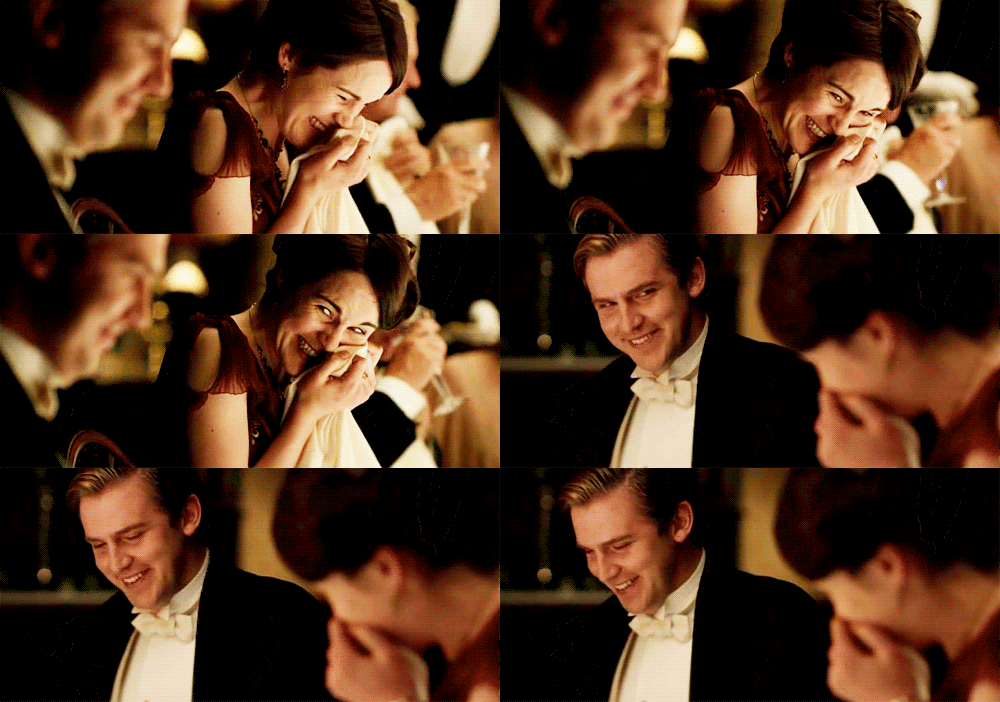
But it turned out to be:
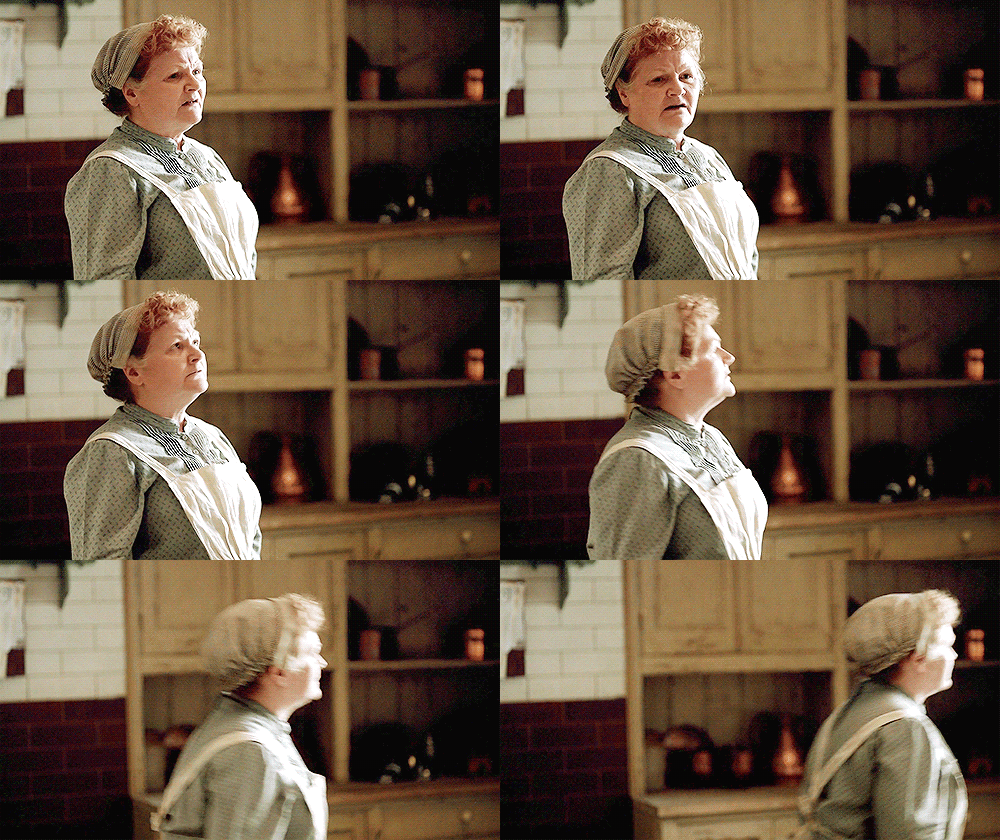
I thought it would be:
But it turned out to be:

January 15, 2023
Overall I enjoyed this and will no doubt read the other 2 books.
My 2 star deductions are because I found it quite hard to follow at times, it jumps between characters and takes a bit of getting used to.
The characters, save about 2 or 3 are too self- indulgent and not likeable. Every single twist is over so quickly and always seems to work out well ( apart from a couple of storylines) just gets a bit boring because you soon realise that no matter what happens, it gets resolved quickly and forgotten about.
My 2 star deductions are because I found it quite hard to follow at times, it jumps between characters and takes a bit of getting used to.
The characters, save about 2 or 3 are too self- indulgent and not likeable. Every single twist is over so quickly and always seems to work out well ( apart from a couple of storylines) just gets a bit boring because you soon realise that no matter what happens, it gets resolved quickly and forgotten about.

Read
July 6, 2023Trys didelės, DIDELĖS, knygos ir vienos šeimos istorija. Visos trys dalys turi apie 900 puslapių, tačiau manęs tai nė kiek negąsdino, o atvirkščiai – džiugino. Kažkodėl buvau įsitikinus, jog ši saga man labai patiks, o kokia gali būti geresnė dovana prisiekusiai skaitytojai nei labai ilga kelionė su pamiltais veikėjais? Jokia! O dar kai paskaičiau pirmos knygos pratarmę/autorės žodį, visai likau sužavėta, mat mano ir Penny mintys dubliavosi! Rašytoja kone „pasiteisino“, kodėl vietoj vienos knygos (tokia buvo pirma jos užmačia) parašė visas tris ir dar tokias „nekuklias“. Ji nenorėjo skirtis su sukurtais personažais, norėjo dar jais pasidžiaugti, stebėti jų gyvenimus ir prailgino draugytę iki visos šeimos sagos. Man tai tik vienas džiaugsmas dėl to. Juolab, kad ir pirma knyga labai labai patiko!
1904 metais, visoms merginoms buvo priimtina būti klusnioms, gražioms, susilaikančioms, nutylinčioms ir su viskuo sutinkančioms. Tik ne Selija. Ne, ji ne iš tų merginų. Nors jai tik aštuoniolika, ji visada gauna ko nori, nes siekia savo tikslų pamindama visas normas. O dabar ji nori Oliverio Litono. Jaunuoliai myli vienas kitą, tačiau Selijos tėvai mano, kad Oliveris jai per pratsas. Atsižvelgdama į situaciją, mergina randa tik vieną būdą tapti ponia Liton. Ji pastoja nuo Oliverio ir tėvai neturi ką daryti, o tik pritarti vedyboms. Jiedu susituokia ir Selija įsilieja ne tik į naują šeimą, bet ir į šeimos verslą – knygų leidybą. Litonų leidykla jau nuo seno leidžia gražias, vertingas ir reikalingas knygas, o Selija turi galybes idėjų kaip verslą būtų galima dar pagerinti! Tačiau Oliveris nenori žmonos pagalbos darbuose – jos darbas juk rūpintis juo, namais ir gimdyti vaikus. Tačiau mes žinom, kad Selija visad gauna ko nori. Ir ji gauna vėl: pamažu ji tampa leidyklai reikalinga. Ypač, į nugaras alsuojant karui ir galimybei prararsti dibančius vyrus.
Kaip jau supratote, centrinė romano veikėja yra Selija Liton. Tačiau jos gyvenimas toli gražu nėra vienintelė siužeto linija. Viskas prasideda nuo Selijos ir Oliverio santuokos ir šakojasi į didžiulį giminės medį, kuris šakomis virstą į nuostabias, įdomias ir labai skirtingas veikėjų istorijas. Susipažįstame su stipria, nesuvaržyta ir viską savo rankose norinčia turėti Oliverio Litono seserimi MM, kurią netikėtai užklumpa jausmai. Su pirmu Selijos sūneliu Džailsu ir priglausta, neturtinga mažyle Barte, plevėsa Oliverio broliu Džeku ir rimtuoliu Robertu, vedusiu daug vyresnę turtuolę. Dar man labai patiko (o ir širdžiai taip artima) knygų leidybos subtilybės ir tikrai detalus autorės įsigilinimas kaip ir kas tada vyko. Knygoje minimi ir žinomi laikmečio rašytojai, kurie pridavė autentiškumo, tikrumo jausmo. Neišvengiame čia ir Pirmo pasaulinio karo žiaurumo, dėl kurio visiškai susijaukė veikėjų gyvenimai, atsirado karčių patirčių ir dar daugiau dramos. O pastarosios čia tai jau tikrai netrūksta. Nuo moterų teisių, verslo reikalų iki meilės trikampių, pavydo ir išdavysčių. Skaitymas man priminė ilgo, kokybiško, gražiai pastatyto serialo žiūrėjimą. Penny Vincenzi neskubėjo, leido augti ir keistis kiekvienam personažui nepritempinėjant nei nereikalingų įvykių, nei kažkokių dirbtinų intrigų. Viskas (net ir tos pačios intrigos) ėjo taip darniai, buvo vietoje ir laiku: jaučiau, jog kūrinį rašytoja tikrai išgalvojo, išjautė ir juo gyveno. Žinoma, tai nėra istorinis romanas, prikeliantis žymius žmones, besigilinantis į laikmetį, socialines problemas ar super rimtai kalbantis rimtomis temomis. Tai gera, pramoginė, draminė šeimos saga, kuria mėgautis taip lengva ir malonu, kad visos tos krūvos puslapių tirpste ištirpo. Man labai labai patiko. Šiuo metu skaitau antrą sagos dalį „Nepaisant išbandymų“ ir lygiai taip pat džiaugiuosi ir mėgaujuosi.
1904 metais, visoms merginoms buvo priimtina būti klusnioms, gražioms, susilaikančioms, nutylinčioms ir su viskuo sutinkančioms. Tik ne Selija. Ne, ji ne iš tų merginų. Nors jai tik aštuoniolika, ji visada gauna ko nori, nes siekia savo tikslų pamindama visas normas. O dabar ji nori Oliverio Litono. Jaunuoliai myli vienas kitą, tačiau Selijos tėvai mano, kad Oliveris jai per pratsas. Atsižvelgdama į situaciją, mergina randa tik vieną būdą tapti ponia Liton. Ji pastoja nuo Oliverio ir tėvai neturi ką daryti, o tik pritarti vedyboms. Jiedu susituokia ir Selija įsilieja ne tik į naują šeimą, bet ir į šeimos verslą – knygų leidybą. Litonų leidykla jau nuo seno leidžia gražias, vertingas ir reikalingas knygas, o Selija turi galybes idėjų kaip verslą būtų galima dar pagerinti! Tačiau Oliveris nenori žmonos pagalbos darbuose – jos darbas juk rūpintis juo, namais ir gimdyti vaikus. Tačiau mes žinom, kad Selija visad gauna ko nori. Ir ji gauna vėl: pamažu ji tampa leidyklai reikalinga. Ypač, į nugaras alsuojant karui ir galimybei prararsti dibančius vyrus.
Kaip jau supratote, centrinė romano veikėja yra Selija Liton. Tačiau jos gyvenimas toli gražu nėra vienintelė siužeto linija. Viskas prasideda nuo Selijos ir Oliverio santuokos ir šakojasi į didžiulį giminės medį, kuris šakomis virstą į nuostabias, įdomias ir labai skirtingas veikėjų istorijas. Susipažįstame su stipria, nesuvaržyta ir viską savo rankose norinčia turėti Oliverio Litono seserimi MM, kurią netikėtai užklumpa jausmai. Su pirmu Selijos sūneliu Džailsu ir priglausta, neturtinga mažyle Barte, plevėsa Oliverio broliu Džeku ir rimtuoliu Robertu, vedusiu daug vyresnę turtuolę. Dar man labai patiko (o ir širdžiai taip artima) knygų leidybos subtilybės ir tikrai detalus autorės įsigilinimas kaip ir kas tada vyko. Knygoje minimi ir žinomi laikmečio rašytojai, kurie pridavė autentiškumo, tikrumo jausmo. Neišvengiame čia ir Pirmo pasaulinio karo žiaurumo, dėl kurio visiškai susijaukė veikėjų gyvenimai, atsirado karčių patirčių ir dar daugiau dramos. O pastarosios čia tai jau tikrai netrūksta. Nuo moterų teisių, verslo reikalų iki meilės trikampių, pavydo ir išdavysčių. Skaitymas man priminė ilgo, kokybiško, gražiai pastatyto serialo žiūrėjimą. Penny Vincenzi neskubėjo, leido augti ir keistis kiekvienam personažui nepritempinėjant nei nereikalingų įvykių, nei kažkokių dirbtinų intrigų. Viskas (net ir tos pačios intrigos) ėjo taip darniai, buvo vietoje ir laiku: jaučiau, jog kūrinį rašytoja tikrai išgalvojo, išjautė ir juo gyveno. Žinoma, tai nėra istorinis romanas, prikeliantis žymius žmones, besigilinantis į laikmetį, socialines problemas ar super rimtai kalbantis rimtomis temomis. Tai gera, pramoginė, draminė šeimos saga, kuria mėgautis taip lengva ir malonu, kad visos tos krūvos puslapių tirpste ištirpo. Man labai labai patiko. Šiuo metu skaitau antrą sagos dalį „Nepaisant išbandymų“ ir lygiai taip pat džiaugiuosi ir mėgaujuosi.

January 18, 2023
For my full review, visit me at https://mrsbrownsbooks.wordpress.com/...
I absolutely loved getting my teeth into this chunk of a novel. I haven’t read a lengthy book for a while and at just over 800 pages, this was one that had depth and breadth.
I absolutely loved getting my teeth into this chunk of a novel. I haven’t read a lengthy book for a while and at just over 800 pages, this was one that had depth and breadth.

April 9, 2008
Yes ... this was a silly book and yes, I thoroughly enjoyed it despite it being like a Sydney Sheldon book on steroids. Set it the UK and starting before WWI and ending several years after the war. About a family involved in the publishing business. Everything was hyper-dramatic in the book ... from the characters to the plot. Almost every woman has large beautiful eyes and gorgeous flowing hair. Almost every man is tall, dark and handsome. Every woman (and man) has rapturous, earth-ending sex (though not described in dirty detail, which is just fine).
What I liked about the book is that it was absolutely filled with characters, and there were a lot of stories to follow. I admit that I stayed up late last night to finish as I wanted to see what happened. The end of the book manages to bring several story lines together in a suspenseful way and at a good pace - though, again, with lots o' drama. Literary fiction this is not.
This book is total brain candy ... but the sweet kind that makes you happy you splurged, not the sticky kind that makes you regret it and kick yourself afterwards for going off your diet. I found it in the bargain section of B & N for a mere $5.00, which makes it less guilt-inducing. Bring it to the beach or by the pool this summer and enjoy!
What I liked about the book is that it was absolutely filled with characters, and there were a lot of stories to follow. I admit that I stayed up late last night to finish as I wanted to see what happened. The end of the book manages to bring several story lines together in a suspenseful way and at a good pace - though, again, with lots o' drama. Literary fiction this is not.
This book is total brain candy ... but the sweet kind that makes you happy you splurged, not the sticky kind that makes you regret it and kick yourself afterwards for going off your diet. I found it in the bargain section of B & N for a mere $5.00, which makes it less guilt-inducing. Bring it to the beach or by the pool this summer and enjoy!

January 2, 2015
I really enjoyed the first 60% of this family saga set just before and after the first world war. It's an enjoyable soap opera that captures the class divide, women's rights and the war and it's consequences.
But then something happens which completely spoilt it for me. It moved from a fairly intelligent read (for light reading) to a rather tiresome bore.
I had to speed read the end which was a shame.
Overall it was enjoyable and would have earnt 3-3.5 stars if not for THAT plot line and that it is sooooooo long.
But then something happens which completely spoilt it for me. It moved from a fairly intelligent read (for light reading) to a rather tiresome bore.
I had to speed read the end which was a shame.
Overall it was enjoyable and would have earnt 3-3.5 stars if not for THAT plot line and that it is sooooooo long.

January 24, 2025
Just what I like to get lost in- a historical family saga with characters to really dig deep getting to know, a plot that is interesting but not fast, and a few love stories along the way. All in all, a book I’ve been really needing and finally found. The only thing that’s slightly aggravating is the amount of infidelity in this book. Hated that. But I guess the title kind of gives it away.

January 25, 2024
Age-old themes with a plethora of wonderful characters make a very enjoyable story. Excellent narrating adds to it enormously. My favourite character is Celia's mother, an absolute character!

May 17, 2011
No Angel by Penny Vincenzi chronicles the lives of the Lyttons, a wealthy family who owns a publishing house in London around the first world war. At the center of the story is Lady Celia Beckenham, a strong-willed, blue-blooded beauty who forces her parents to bless her marriage to the lower-ranking Oliver Lytton, by getting pregnant. Motherhood is not quite as fulfilling as she or others would have hoped and eventually works her way into Lyttons, becoming an accomplished editor and asset to the publishing house. As WWI breaks out, Oliver feels it to be his duty to enlist and leaves Celia in charge while he is away. Along the way she makes a discovery both professionally and personally that effects her outlook on life.
No Angel is a a page turner and what I felt to be an accurate account of that time of history; with references to the woman's suffrage movement, medicine, social affairs and the after effects of war. There are very few cliff-hanger at the end of No Angel as most have been tied up, but not in a cutesy "It's A Wonderful Life" kind of way. If this had been a stand alone novel, which it quite possibly could be; I would be extremely depressed that it was over, but fortunately, it is the first in the Spoils of Time trilogy and therefore have two more books to read in this amazing series.
No Angel is a a page turner and what I felt to be an accurate account of that time of history; with references to the woman's suffrage movement, medicine, social affairs and the after effects of war. There are very few cliff-hanger at the end of No Angel as most have been tied up, but not in a cutesy "It's A Wonderful Life" kind of way. If this had been a stand alone novel, which it quite possibly could be; I would be extremely depressed that it was over, but fortunately, it is the first in the Spoils of Time trilogy and therefore have two more books to read in this amazing series.

November 20, 2011
I only read this because I was abroad and it was free. Probably unfair of me to say since so many people clearly really like the book but these type of bestsellers are the McDonalds of literature. Some people can't stand McDonalds and say it's 'cardboard food'. Vincenzi obviously tries to incorporate serious subjects such as war, suffragettes and poverty but it comes across like cardboard cut-outs and too obvious in intention. The book lacks depth and complexity. It's, however, not unreadable - Vincenzi has a pleasant enough if somewhat powdery writing style - and perhaps it just portrays a 'normal' or a fantasy world of largely rich, attractive and accomplished people.
Moreover, the book is way too long and labours over the same old things. I got tired and wanted the story to hurry up, to the point that I gave up deep into the book and am not going to finish it. Were I an editor, I would have cut chunks out of the book.
Moreover, the book is way too long and labours over the same old things. I got tired and wanted the story to hurry up, to the point that I gave up deep into the book and am not going to finish it. Were I an editor, I would have cut chunks out of the book.

October 1, 2014
What a brilliant introduction to the Lytton family! I was quickly absorbed in their saga -- so much drama, deception, delight, and devastation -- in London during the years, 1904-1920 (verrrry Downton Abbey-esque). I loved some characters, then despised them, then loved them again. I felt my heart pounding as I flipped through the pages during some of the more dramatic moments in the story (and there were many!). And, of course, I was completely smitten reading about the triumphs, trials, and tribulations dealing with the Lytton publishing house -- BOOKS! *swoon* I am excited to dive into the next book in The Spoils of Time trilogy and see how the Lytton clan are thriving.

March 19, 2020
▪️
“Seksas- <...>koks tai sudėtingas dalykas: fizinis pasitenkinimas, kiaurai persunktas jausmo ir intelekto, toks laikinas ir drauge toks tvarus, toks džiaugsmingas ir toks svarbus meilei.”
▪️
“Santuoja, šeima- štai laimės pamatas. Su tuo pamatu kartais elgiamasi šiurkščiai, neatsargiai. Jį spardo, mėgina, ar atlaikys. Bet jį sugriovus, sugrius visas namas. Ir sutraiškys tuos, kurie viduje.”
“Seksas- <...>koks tai sudėtingas dalykas: fizinis pasitenkinimas, kiaurai persunktas jausmo ir intelekto, toks laikinas ir drauge toks tvarus, toks džiaugsmingas ir toks svarbus meilei.”
▪️
“Santuoja, šeima- štai laimės pamatas. Su tuo pamatu kartais elgiamasi šiurkščiai, neatsargiai. Jį spardo, mėgina, ar atlaikys. Bet jį sugriovus, sugrius visas namas. Ir sutraiškys tuos, kurie viduje.”

April 25, 2021
Vis neapsisprendziu kiek zvaigzdziu duot🙂sakyciau 3.5⭐️ knyga idomi, skaitos gerai, nesunkiai, bet jau tieeeek istesmpta, kad vietomis ne tik eme miegas, bet ir uzmigau🙈tikrai, galima butu per puse patrumpinti ir butu pats tas.
Viskas prasideda, kai susitinka ir isimyli jaunute turtingu tevu dukra Selija ir Oliveris Litonas. Selija, moteriske, nuo pat jaunu dienu priedusi velniu. Viskas turi vykti ir vyksta pagal ja ir jos uzmacias. Gimsta vaikai, prasideda karas, nors vyras is jo gryzta, nezusta kaip dauguma, bet jie praranda jausmus vienas kitam, viskas atsala, atsiranda tretieji asmenys, bet negalima sakyti, kad jie viska sugriauna, gal kaiptik padeda isgyventi, kad du zmones vienas kita kazkda beprotiskai myleje gryztu i save ir i seima, kad dar karteli apgalvotu ir pasvertu visas gyvenimo vertybes.
Nors ir vietomis buvo tiek pilstoma is tuscio i kiaura, nors ir pasnaudziau skaitydama, bet knieti suzinoti kas ten vyko toliau, imus 2 dali🙂
Viskas prasideda, kai susitinka ir isimyli jaunute turtingu tevu dukra Selija ir Oliveris Litonas. Selija, moteriske, nuo pat jaunu dienu priedusi velniu. Viskas turi vykti ir vyksta pagal ja ir jos uzmacias. Gimsta vaikai, prasideda karas, nors vyras is jo gryzta, nezusta kaip dauguma, bet jie praranda jausmus vienas kitam, viskas atsala, atsiranda tretieji asmenys, bet negalima sakyti, kad jie viska sugriauna, gal kaiptik padeda isgyventi, kad du zmones vienas kita kazkda beprotiskai myleje gryztu i save ir i seima, kad dar karteli apgalvotu ir pasvertu visas gyvenimo vertybes.
Nors ir vietomis buvo tiek pilstoma is tuscio i kiaura, nors ir pasnaudziau skaitydama, bet knieti suzinoti kas ten vyko toliau, imus 2 dali🙂

March 28, 2011
April 2011 book club choice- loved it! Story of a prominent English family from 1904 to 1920ish. My favoite story lines revolved around the publishing house.
One thing I absolutely loved was the dialogue between the extremely entertaining characters; it is so realistic. (I hate it when books have ridiculous, sappy dialogue which is beyond unbelieveable...)
I was intrigued by all of the strong women characters. The Lady Celia Lytton character, who leaves something to be desired in the parenting catagory but I liked the way she nudged her way into the publishing business and wouldn't let go, is a handful as is her mother!
Also, the Barty dilemma is fasciniating. Like Celia, I probably wouldn't have realized that Barty was being exiled into a no man's land.
I highly recommend this to historical fiction readers (if you don't mind having to read about love affairs). I so enjoyed this book that I immediately started reading the second book of the trilogy, Something Dangerous, and was shocked right from the start. I didn't like it at all!
One thing I absolutely loved was the dialogue between the extremely entertaining characters; it is so realistic. (I hate it when books have ridiculous, sappy dialogue which is beyond unbelieveable...)
I was intrigued by all of the strong women characters. The Lady Celia Lytton character, who leaves something to be desired in the parenting catagory but I liked the way she nudged her way into the publishing business and wouldn't let go, is a handful as is her mother!
Also, the Barty dilemma is fasciniating. Like Celia, I probably wouldn't have realized that Barty was being exiled into a no man's land.
I highly recommend this to historical fiction readers (if you don't mind having to read about love affairs). I so enjoyed this book that I immediately started reading the second book of the trilogy, Something Dangerous, and was shocked right from the start. I didn't like it at all!
July 23, 2018
Although the book is set in the same time period as Downton Abbey and hits the same historical events, it is much more soap opera.
It was annoying that the story was to often unnaturally forced with squeezed in (too many) vital, crucial moments before a life-changing decision.
Everything was hyper-dramatic in the book - from the characters to the plot. Too much of obviousness, predictability and contradictions.
Nonetheless it is an OK read; easy read.
It was annoying that the story was to often unnaturally forced with squeezed in (too many) vital, crucial moments before a life-changing decision.
Everything was hyper-dramatic in the book - from the characters to the plot. Too much of obviousness, predictability and contradictions.
Nonetheless it is an OK read; easy read.
December 22, 2018
Wonderful book. This is the third time I’ve read this book, it’s the first in a trilogy and each time i read them it’s like I’m reading them for the first time. You can just lose yourself in the story. A really lovely read.

May 6, 2023
I got into Penny V and thought a really long trilogy about a wealthy family what else do I have to do ??
The star of this series is Lady Celia and having read some 2000+ pages about her I loathe her
UTTERLY!!!
She is narrow minded, selfish, petulant, spoiled and absurdly lucky every time I would think Ha Lady C is getting her comeuppance she would succeed
Throughout this series there is on constant she has the WORST judgment about men. Be they husbands, lovers, business associates, relatives, children, in laws it’s just dreadful
By the third book I wasn’t even surprised when she or one of her female relatives or hangers on just was so unbelievably stupid about a man, a boy or both
These are unlikeable people set in historic times and behaving abysmally
I wouldn’t recommend these books to anyone
The star of this series is Lady Celia and having read some 2000+ pages about her I loathe her
UTTERLY!!!
She is narrow minded, selfish, petulant, spoiled and absurdly lucky every time I would think Ha Lady C is getting her comeuppance she would succeed
Throughout this series there is on constant she has the WORST judgment about men. Be they husbands, lovers, business associates, relatives, children, in laws it’s just dreadful
By the third book I wasn’t even surprised when she or one of her female relatives or hangers on just was so unbelievably stupid about a man, a boy or both
These are unlikeable people set in historic times and behaving abysmally
I wouldn’t recommend these books to anyone
Displaying 1 - 30 of 757 reviews