Jump to ratings and reviews
Rate this book

Blind Girl Grunt: The Selected Blues Lyrics and Other Poems

Rate this book
*Finalist for Lambda Literary Award!

These poems are brilliant and dangerous. The opening poem, “Invisible Woman, Dancing,” is the best protest poem of the decade. The speaker attends a party full of casual, good-intentioned racists and ableists. The ending of the poem is explosive. Constance Merritt shows incredible range – erotic poems to a wayward lover; blues lyrics so rhythmic I can nearly hear the guitar; and devotional poems that offer “this, you know, is love, is all, the end.” Blind Girl Grunt is a major work by a major poet.
—Jillian Weise

Merritt’s latest collection is a back in bend—bend in love, bend in prayer, and bend in anger. A Blues infiltrates these lines and stanzas, ready to sing and stay (as any devoted lover) through the long haul. And the haul here is a woman, her myriad contents, in medias res.
—CM Burroughs

Beyond their shared—and dazzling—immunity to taboos, the poems in Constance Merritt’s fourth book are very different from each other. Different in form, from stern villanelles to get-drunk-on-them blues poems to wandering narratives. And they are different in their tones, with ruthless self-awareness next to sexy lullaby next to persuasive rage at being “unmoored and vanishing” beyond “the flag of whiteness.” Even within single poems, tone is protean. “The Less Than Greater Than Blues” is goofily playful and also as blunt as blunt gets about the roots of the suffering we cause each other. The penultimate poem “Advent” shifts between a longing that intends to wreck and a longing that intends to redeem. In fact the book as a whole shifts between these longings. As do we. Merritt implicates us gently but without hesitation, wrapping us into the “brilliant skin, the ruinous eyes,/ the body poised in transit” that opens the collection and that judges and blesses, throughout it. Blind Girl Grunt is supple, and rigorous, and so surprising. It is vital.
—Taije Silverman

76 pages, Paperback

First published January 1, 2017

147 people want to read

About the author

Constance Merritt

4 books11 followers
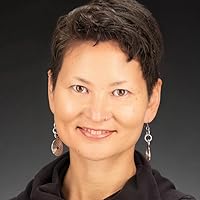
Born in Pine Bluff, Arkansas in 1966, and educated at the Arkansas School for the Blind in Little Rock, Constance Merritt is the author of three collections of poems: A Protocol for Touch (University of North Texas Press, 2000), winner of the Vassar Miller Prize in Poetry and a finalist for the William Carlos Williams Book Award, Blessings and Inclemencies (Louisiana State University Press, 2007), and Two Rooms (forthcoming from the Louisiana State University Press in 2009). In 2001 Merritt received a grant from the Rona Jaffe Writers' Foundation and a fellowship from the Radcliffe Institute for Advanced Study at Harvard University. From 2003 to 2005 Merritt served as the Margaret Banister Writer-in-Residence at Sweet Briar College. Currently, she lives in Louisville, Kentucky with her beloved and their two beautiful cats.

Ratings & Reviews

What do you think?
Rate this book

Friends & Following

Create a free account to discover what your friends think of this book!

Community Reviews

5 stars
2 (15%)
4 stars
8 (61%)
3 stars
3 (23%)
2 stars
0 (0%)
1 star
0 (0%)
Displaying 1 - 5 of 5 reviews
Profile Image for Jennifer.
Author 8 books80 followers
February 5, 2018
The poems that appealed to me most in this collection were the more overtly political ones in the section "On Civil Disobedience." In "What Gets Lost," Merritt riffs on Bishop's "One Art," moving beyond personal loss to the moral loss of perpetual war and oppression:
And if I lost door keys or houses, my mother's
watch, how would that compare? Faith gets lost. The
way gets lost. Daily we accept the toll of young lives
lost. We drink it down with morning coffee; we butter
our bread. We do not scream or go mad. Which means
our minds are already lost.
She also takes on war profiteers, the corporations that benefit from the green revolution, people who use religion to divide, and people who defend the proliferation of guns, no matter what the cost. Although her poems ask us to recognize these great wounds, to empathize with the suffering, she also acknowledges that it might be too much to ask us to "bleed with the bleeding, / die with the dying? // someone must survive, / praise instead of mourn." Merritt's poems do just as much praising as mourning, offering up love poems and prayer-songs that remind us just what it is that we live for.
1,336 reviews14 followers
August 24, 2022
I’m glad I read these poems. They bounced and giggle along through difficult topics and lyrical insight into life in this world. The author is playful and serious, smart and mocking. I liked this collection.
Profile Image for Mellissa.
22 reviews
December 23, 2017
I enjoyed this book and have to admit, I may have sang some of the poems aloud. They flowed like they were written to be sang. There were a few poems in here that touched my soul, and I loved it.
Profile Image for Matt.
521 reviews18 followers
May 21, 2020
Merritt has a real gift for language, the way her words comes together feels solid and intricate.
Displaying 1 - 5 of 5 reviews

Can't find what you're looking for?

Get help and learn more about the design.