

What do you think?

Peace Breaks Out
Pete is a sensitive, handsome young war hero. Wexford is a defiant, scheming troublemaker. Their lives collide in the uneasy days of peace after World War II as senior year at the Devon School changes from a time of friendships into a stunning drama of tragic betrayal.
With the unforgettable power and simplicity that made A Separate Peace into a modern classic, this masterful companion volume by John Knowles takes us once again on a warmly nostalgic journey through the poignancy of adolescence — and gives us another landmark portrayal of the dark side of the human heart.
With the unforgettable power and simplicity that made A Separate Peace into a modern classic, this masterful companion volume by John Knowles takes us once again on a warmly nostalgic journey through the poignancy of adolescence — and gives us another landmark portrayal of the dark side of the human heart.
178 pages, Mass Market Paperback
First published January 1, 1981
About the author
John Knowles
108 books419 followersJohn Knowles was an American novelist best known for A Separate Peace (1959).
Ratings & Reviews
Friends & Following
Create a free account to discover what your friends think of this book!
Community Reviews
Displaying 1 - 30 of 110 reviews

November 7, 2011
Wow, a lot of folks didn't like this one, did they? It differs quite a bit from A Separate Peace (post-war, told mostly from the perspective of a teacher rather than one of the boys at the school), but in my mind that's a good thing. Also I think maybe some folks were expecting this to be a direct sequel to A Separate Peace, but it's really more of a companion novel.
Anyway, the main idea is that the war has ended and here are all these boys who have spent the last five years assuming the war is their future, and now what will they do? Instead of feeling hopeful, they're experiencing a sense of loss and a sense of guilt that they won't be a part of it. And all that tension leads them into a war of their own, and with tragic consequences, thanks to the machinations of a young dictator-in-the-making.
I really like how Knowles wrote, that his books (at least those I've read so far) are concise, but...full. They make me think. So yeah, I liked this one just as much as I do A Separate Peace.
So there!
Anyway, the main idea is that the war has ended and here are all these boys who have spent the last five years assuming the war is their future, and now what will they do? Instead of feeling hopeful, they're experiencing a sense of loss and a sense of guilt that they won't be a part of it. And all that tension leads them into a war of their own, and with tragic consequences, thanks to the machinations of a young dictator-in-the-making.
I really like how Knowles wrote, that his books (at least those I've read so far) are concise, but...full. They make me think. So yeah, I liked this one just as much as I do A Separate Peace.
So there!

November 8, 2025
He’s an incipient monster, thought Pete, and I can’t prove it and I can’t stop him. For the last dozen years we’ve seen in the world how monsters can come to the top and just what horrors they can achieve.
And those monsters were once adolescents.
A Separate Peace was probably my favorite book as a teenager. I read it a few years ago and it still holds up. But even though I’ve owned a copy of Peace Breaks Out for most of my life, I’d never read John Knowles’ follow-up story … until now.
Peace Breaks Out is set at Devon in the 1945-46 school year—two years after the events in A Separate Peace. Pete graduated in the Class of 1937, and has returned as a teacher. He’s seen as a war hero, having fought in the infantry and escaped from a POW camp, but in truth he’s a bit broken, certainly dealing with PTSD, and hiding from the world. The student body is a typical mix of prep school boys, but with two key outliers: Wexford and Eric. Wexford is the editor of the student paper, not exactly popular, but driven and respected, who is obsessed with the idea that the war ended just before his class would have joined the fight, so what will his ‘just-missed’ generation do to contribute to the world? Eric, meanwhile, is a Nazi sympathizer (in the literal 1940s sense) who is determined to provoke his classmates into showing their own fascistic tendencies. Their friction throughout the school year set the stage for the drama to come.
A Separate Peace was written in 1959, and told a personal story about adolescent friendship and jealousy and lost innocence set against the backdrop of a world at war. Peace Breaks Out was written in 1981, and seems to have had a very different agenda. On the surface, it’s another story of schoolboys gone wrong. But the vibe is distinctly post-Watergate. The tragedy here is far more malevolent, and the villain—because there’s truly a villain—is much more of a cautionary tale about America and its leaders. It’s not a bad story, but it’s not a subtle one, and it lacks the emotional power of A Separate Peace.

August 2, 2018
What an abhorrent tragedy that this wonderful novel hasn't achieved a fraction of the praise and popularity that Knowles' earlier work A Separate Peace did. Upon reading the final page of Knowles' most well-known novel, I knew that I was hooked on his writing. Elation filled me when I discovered that he had authored another novel that took place at the same school, I had to read it.
Returning to Devon was a marvel of an experience. Knowles' prose cultivates such a vivid atmosphere that, at times, I thought I could felt the cozy, autumnal chill of New Hampshire make its way through the page.
This novel has become one of the immeasurable reasons that I'm elated to be studying literature. Knowles has, over the past few weeks, become one of my favorite authors and an inspiration as I row upstream toward my literary pursuits.
Returning to Devon was a marvel of an experience. Knowles' prose cultivates such a vivid atmosphere that, at times, I thought I could felt the cozy, autumnal chill of New Hampshire make its way through the page.
This novel has become one of the immeasurable reasons that I'm elated to be studying literature. Knowles has, over the past few weeks, become one of my favorite authors and an inspiration as I row upstream toward my literary pursuits.

December 30, 2021
This year my former school celebrated the 50th anniversary of admitting girls. Then and now I realized that was the best thing that ever happened to the place. Boys left to themselves are simply barbarians with not the least glimmer of consciousness of relationships. At least having girls around gets boys to bathe and use deodorants.
John Knowles published A Separate Peace in 1958 to much acclaim. When I read it a few years later as an undergraduate, I thought it pretentious and meretricious. Partly because it was taken as a satire on boarding school and I had quite liked my school and still do. But mainly I disliked it for the same reason as two other pseudo-classics of about the same period, Joseph Heller’s Catch-22 and Kurt Vonnegut’s Slaughterhouse Five, that they treated the Germans in the Second World War as the moral equivalent of the Allies, at least the Western Allies. But only recently did I discover that Knowles wrote a sequel to his classic whose publication in 1981 was scarcely noticed. In Peace Breaks out a former Devon schoolboy who served in the Italian campaign, was wounded and taken prisoner, and escaped, returns to his old school to teach American history. In 1946 Pete Hallam is obviously suffering from an acute case of PTSD (though that term wasn’t used then), is estranged from his wife, and like so many young prep school masters uses teaching as a hedge to avoid embarking on adult life.
As I well recall, at a boys’ school the athletes were the aristocrats (“captain of the football team and president of the senior class”) and Pete gathers a circle about him but is mostly a loner who eats by himself at a diner in town. There is a well-done set piece where Pete and his followers go on a weekend ski trip (in the days before chair lifts) and of course one of the athletes skis out of control and gets a concussion. But he also encounters two exceptional student misfits. Hochschwender is of Wisconsin German stock and very much admires Teutonic culture—not something one was supposed to do during and immediately after the Second World War. His archenemy is Wexford, scion of a wealthy Cape Cod family and the editor of the school newspaper. Wexford imagines himself an investigative journalist and is suspicious of a bad tendency at the school, which he associates with Hochschwender, though Wexford also has right-wing sympathies as well and future political ambitions. Wexford’s journalistic ambitions seemed wrong for the period but as this book was published soon after Watergate, they would fit the time of appearance. Wexford gets up a fund amongst parents and alumni for a Class of 1946 gift to the school of a window in the chapel memorializing those Devon students who fell in the war. And then someone vandalizes the memorial window. And the athletes feel they must avenge the dishonor by punishing the suspected culprit, with nasty and squalid result.
Personally, I was struck by how the Devon Chapel is mostly a site of school assemblies; there is no real worship or anything remotely resembling spirituality, which I suspect is true of a good many schools. So, after all these years, my original opinion of Knowles was reinforced, that there is no spiritual nourishment to be had from these books and probably from Devon School. It seems that evil is associated with war, but what most people think of as peace, the absence of armed conflict between states, is brief and illusory because most of us are not at peace with ourselves or those about us. Being at a boarding school where everyone is together almost 24/7 very quickly tests our ability to live together in community, something teenage males are poorly fitted to do. Which is why when reading and writing school stories, I find the engaging characters are girls.
John Knowles published A Separate Peace in 1958 to much acclaim. When I read it a few years later as an undergraduate, I thought it pretentious and meretricious. Partly because it was taken as a satire on boarding school and I had quite liked my school and still do. But mainly I disliked it for the same reason as two other pseudo-classics of about the same period, Joseph Heller’s Catch-22 and Kurt Vonnegut’s Slaughterhouse Five, that they treated the Germans in the Second World War as the moral equivalent of the Allies, at least the Western Allies. But only recently did I discover that Knowles wrote a sequel to his classic whose publication in 1981 was scarcely noticed. In Peace Breaks out a former Devon schoolboy who served in the Italian campaign, was wounded and taken prisoner, and escaped, returns to his old school to teach American history. In 1946 Pete Hallam is obviously suffering from an acute case of PTSD (though that term wasn’t used then), is estranged from his wife, and like so many young prep school masters uses teaching as a hedge to avoid embarking on adult life.
As I well recall, at a boys’ school the athletes were the aristocrats (“captain of the football team and president of the senior class”) and Pete gathers a circle about him but is mostly a loner who eats by himself at a diner in town. There is a well-done set piece where Pete and his followers go on a weekend ski trip (in the days before chair lifts) and of course one of the athletes skis out of control and gets a concussion. But he also encounters two exceptional student misfits. Hochschwender is of Wisconsin German stock and very much admires Teutonic culture—not something one was supposed to do during and immediately after the Second World War. His archenemy is Wexford, scion of a wealthy Cape Cod family and the editor of the school newspaper. Wexford imagines himself an investigative journalist and is suspicious of a bad tendency at the school, which he associates with Hochschwender, though Wexford also has right-wing sympathies as well and future political ambitions. Wexford’s journalistic ambitions seemed wrong for the period but as this book was published soon after Watergate, they would fit the time of appearance. Wexford gets up a fund amongst parents and alumni for a Class of 1946 gift to the school of a window in the chapel memorializing those Devon students who fell in the war. And then someone vandalizes the memorial window. And the athletes feel they must avenge the dishonor by punishing the suspected culprit, with nasty and squalid result.
Personally, I was struck by how the Devon Chapel is mostly a site of school assemblies; there is no real worship or anything remotely resembling spirituality, which I suspect is true of a good many schools. So, after all these years, my original opinion of Knowles was reinforced, that there is no spiritual nourishment to be had from these books and probably from Devon School. It seems that evil is associated with war, but what most people think of as peace, the absence of armed conflict between states, is brief and illusory because most of us are not at peace with ourselves or those about us. Being at a boarding school where everyone is together almost 24/7 very quickly tests our ability to live together in community, something teenage males are poorly fitted to do. Which is why when reading and writing school stories, I find the engaging characters are girls.

April 6, 2016
4.5
I really liked this. I liked it more than A Separate Peace, in fact. The characters were compelling (I particularly liked Pete) and the plot and idea of the boys who "missed out" on WW2 is a fascinating one that I had never considered before. I wish that it would have had one or two more chapters--there were some loose ends that I would have liked a little more closure.
Overall, this was a really good book that will stick with me for some time.
I really liked this. I liked it more than A Separate Peace, in fact. The characters were compelling (I particularly liked Pete) and the plot and idea of the boys who "missed out" on WW2 is a fascinating one that I had never considered before. I wish that it would have had one or two more chapters--there were some loose ends that I would have liked a little more closure.
Overall, this was a really good book that will stick with me for some time.

July 25, 2011
Overall, the novel is not nearly as compelling and the characters are not nearly as believable as Finny and Gene were from "A Separate Peace." However, I believe that the concepts that the author is asking his readers to consider are not only much overlooked and worth pondering, that the semi-weak backdrop of the novel excuses it. Of all the war novels, none I have ever read contends with the boys who were a year or two young to fight what had been indoctrinated to believe was the good fight. The remorse for the serendipity of their birth year emerges in Knowles' characters as relief, remorse, and anguish at their perception of being helpless in the greatest conflict of their lives. Knowles smartly contrasts their reactions with that of their teacher, Pete (both a veteran and alum of the same institution), whose inner monologue, physical wounds, and broken marriage serve as reality check for the pains that the boys escaped. Knowles uses the boys’ reactions to their perceived slight in life, as yet another way to illustrate the far reaching implications of war.

July 27, 2011
They make a reference to Finny in this book!
Not quite as powerful as A Separate Peace, but the ending haunted me. Good book for the summer.
Not quite as powerful as A Separate Peace, but the ending haunted me. Good book for the summer.

August 21, 2025
I read this in place of August's portion of 2025's banned books project since it's the companion piece to that month's book, A Separate Peace, and I've already read that one three times. Frankly, this is more worthy of being challenged than that one due to language and themes, but it doesn't seem to be in anyone's crosshairs.
4.5 stars rounded down to four? Or maybe a solid four. Hard to say. It was three stars until the penultimate chapter, and wow, what an ending. That almost brought this up to five stars, but I also considered one star because it pissed me off. I mean,
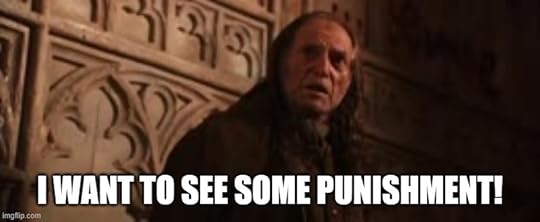
Well, you won't find it here, at least not for the one who deserves it most.
Shit. Well, the last couple of pages pointed out that life doesn't always work out the way we would like, and I was on board with that. I didn't like it because I was in the mood for a happier ending, but this was realistic, and the book was much better for that. I'm not sure why I thought I'd get a happy ending. A Separate Peace doesn't end with a ray of sunshine either, but it's not quite the pisser this thing is.
I was thrown off guard with this story, but once again it's my expectations that are to blame. ASP is a story about friendship, jealousy, codependency, and other adolescent, coming-of-age issues, and that's what I was looking for here. After thinking about it, I'm glad I didn't get that. It would've just been the same book but with different characters set two years later at the same school, and that probably would've been kind of dull. ASP is about a relationship while World War II goes on in the background. The immediate aftermath of WWII is more in the foreground here, and its affect on the students is the main story. The main theme in ASP could've been done in the 30s or 50s when there was no war going on. Hell, it could've been set in 2025 because going through teenage growing pains is timeless. The main theme in PBO needed to be set in a time just after some major upheaval for it to work, a period when everyone was hellbent on doing some major, self-righteous Monday morning quarterbacking. Reconstruction, or even 2022 when the world was trying to right itself from 2020 could've served.
John Knowles isn't a great writer, but he isn't a bad one either. This is just my opinion. The book made me think of Ray Bradbury's style. A lot of people love him, but the stuff of his I've read has left me underwhelmed and, if I may be frank, occasionally annoyed. It's personal preference, and I'm not even sure if the two styles are similar since it's been several years since I've read anything by Mr. B., but it crossed my mind. A lot of group conversations were rushed, didn't have any "he said, she said" in the mix, and I remember that kind of thing happening in The Halloween Tree.
The style may not have been one I can appreciate, but the story was great. I was quite conflicted about one character, Hochschwender, because he was so obnoxious. He was a fascist who went out of his way to piss everybody off using his inalienable right to free speech and was so blech that I wished someone would just kill his ass, but
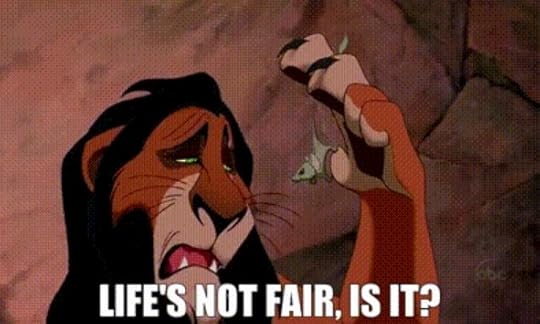
I'll say. As for the free speech thing, I support it.
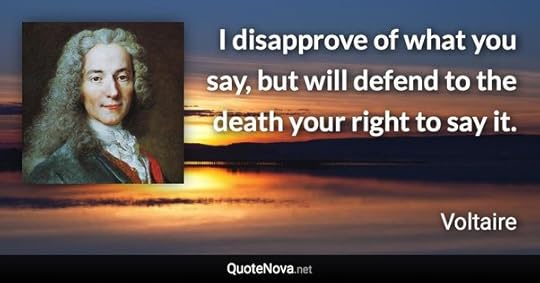
[1]
But just because someone has a privilege doesn't mean they should abuse it. And while one may be protected by the law, such behavior brings about its own punishment, , and I'm sure having the law on your side at that point is a great comfort...
It's like the guy who steps out into oncoming traffic without even bothering to look because he has the right of way. And they don't let you into heaven if you get killed like that.
"How'd you die?"
"I got run down stepping in front of a car even though I had the right of way."
"You go to hell."
People used to do this at Virginia Tech all the time. Fortunately for most of them, the people at Tech expect this and slow down or stop, but not always. A classmate of mine actually died that way. He was technically off campus in downtown Blacksburg proper, but that's still pretty much Tech and most motorists observe the same practice in both places... And now I hope I'm wrong about my Heaven/Hell pronouncement. It would be a shame if he ended up in Hades for that, because he was a pretty cool cat, and I enjoyed sitting next to him in the couple of classes we had together.
Anyway, what I mean to say is you shouldn't let your rights outrun common sense. If you're deliberately antagonizing someone you ought to be prepared for retaliation. Then just hope you're better in a fight than they are if it comes to that.
I enjoyed ASP more than this, but I believe this will get a reread one day. There's no reason to read them together since all they share is the setting, but I think I'll do it that way anyway.
[1]: This has been misattributed to Voltaire. According to a book written about him 150 years after a particular incident, he apparently expressed the sentiment but never said those actual words.
4.5 stars rounded down to four? Or maybe a solid four. Hard to say. It was three stars until the penultimate chapter, and wow, what an ending. That almost brought this up to five stars, but I also considered one star because it pissed me off. I mean,
Well, you won't find it here, at least not for the one who deserves it most.
Shit. Well, the last couple of pages pointed out that life doesn't always work out the way we would like, and I was on board with that. I didn't like it because I was in the mood for a happier ending, but this was realistic, and the book was much better for that. I'm not sure why I thought I'd get a happy ending. A Separate Peace doesn't end with a ray of sunshine either, but it's not quite the pisser this thing is.
I was thrown off guard with this story, but once again it's my expectations that are to blame. ASP is a story about friendship, jealousy, codependency, and other adolescent, coming-of-age issues, and that's what I was looking for here. After thinking about it, I'm glad I didn't get that. It would've just been the same book but with different characters set two years later at the same school, and that probably would've been kind of dull. ASP is about a relationship while World War II goes on in the background. The immediate aftermath of WWII is more in the foreground here, and its affect on the students is the main story. The main theme in ASP could've been done in the 30s or 50s when there was no war going on. Hell, it could've been set in 2025 because going through teenage growing pains is timeless. The main theme in PBO needed to be set in a time just after some major upheaval for it to work, a period when everyone was hellbent on doing some major, self-righteous Monday morning quarterbacking. Reconstruction, or even 2022 when the world was trying to right itself from 2020 could've served.
John Knowles isn't a great writer, but he isn't a bad one either. This is just my opinion. The book made me think of Ray Bradbury's style. A lot of people love him, but the stuff of his I've read has left me underwhelmed and, if I may be frank, occasionally annoyed. It's personal preference, and I'm not even sure if the two styles are similar since it's been several years since I've read anything by Mr. B., but it crossed my mind. A lot of group conversations were rushed, didn't have any "he said, she said" in the mix, and I remember that kind of thing happening in The Halloween Tree.
The style may not have been one I can appreciate, but the story was great. I was quite conflicted about one character, Hochschwender, because he was so obnoxious. He was a fascist who went out of his way to piss everybody off using his inalienable right to free speech and was so blech that I wished someone would just kill his ass, but
I'll say. As for the free speech thing, I support it.
[1]
But just because someone has a privilege doesn't mean they should abuse it. And while one may be protected by the law, such behavior brings about its own punishment, , and I'm sure having the law on your side at that point is a great comfort...
It's like the guy who steps out into oncoming traffic without even bothering to look because he has the right of way. And they don't let you into heaven if you get killed like that.
"How'd you die?"
"I got run down stepping in front of a car even though I had the right of way."
"You go to hell."
People used to do this at Virginia Tech all the time. Fortunately for most of them, the people at Tech expect this and slow down or stop, but not always. A classmate of mine actually died that way. He was technically off campus in downtown Blacksburg proper, but that's still pretty much Tech and most motorists observe the same practice in both places... And now I hope I'm wrong about my Heaven/Hell pronouncement. It would be a shame if he ended up in Hades for that, because he was a pretty cool cat, and I enjoyed sitting next to him in the couple of classes we had together.
Anyway, what I mean to say is you shouldn't let your rights outrun common sense. If you're deliberately antagonizing someone you ought to be prepared for retaliation. Then just hope you're better in a fight than they are if it comes to that.
I enjoyed ASP more than this, but I believe this will get a reread one day. There's no reason to read them together since all they share is the setting, but I think I'll do it that way anyway.
[1]: This has been misattributed to Voltaire. According to a book written about him 150 years after a particular incident, he apparently expressed the sentiment but never said those actual words.

August 11, 2020
I'm not a scholar of John Knowles, having only read 'A Separate Peace' many years ago. Since I've read no other reviews of this novel, I don't know if it is considered derivative of his earlier work or a very fresh approach. Regardless, I thoroughly enjoyed "Peace Breaks Out", With its theme about troubled male youth, this book fits in nicely with "Catcher in the Rye", "Lord of the Flies" and several John Irving novels. Like the other authors, Knowles excels at identifying the things that make young males tick. He knows that they are as complex and varied as adults; their emotions and motivations are not to be trivialized or reduced to stereotypes. He takes a deeper look at his young subjects and, in this case, recognizes that their perverse despair at being too young to fight in World War Two accounts for their aggressive, fatalistic and even self-detrimental behavior. So, while "Peace Breaks Out" almost reads as a mystery, its deeper themes are, in my view, brilliant from a sociological point of view. In the adept hands of a talent like Knowles, I found this short novel quite appealing and thought-provoking.
April 28, 2026
really interesting ideas about the social after-effects of war

June 5, 2026
Kinda pointless, at least it was short enough that it wasn’t terrible. A truly GREAT 2 star book, if there is such a thing :) Call it 2.4 stars. Nothing like the character depth or connection that you get in “A Separate Peace”.
A couple notable points—Knowles apparently loves to let otherwise decent characters commit manslaughter (direct or indirect) in his novels—two out of two.
Also, remind me NEVER to let the Devon School’s doctors near me or anyone I know—they let teenage boys die from the most trivial incidents! (Also two out of two in Knowles novels), LOL.
A couple notable points—Knowles apparently loves to let otherwise decent characters commit manslaughter (direct or indirect) in his novels—two out of two.
Also, remind me NEVER to let the Devon School’s doctors near me or anyone I know—they let teenage boys die from the most trivial incidents! (Also two out of two in Knowles novels), LOL.
July 9, 2017
A Powerful,interesting and beautiful book. Its low rating here on goodreads misrepresents it, and yet it is not as good as "A separate peace", which is one of my absolute favorites. These two novels show what a masterful writer John Knowles is.

Want to Read
October 25, 2009I didn't know there was a sequel to A Separate Peace (one of my favorite books from high school) so I'm happy to see this.

July 26, 2010
A Separate Peace by John Knowles is my favorite book, so it's hard to have his follow up match that. Still a good book.
August 12, 2023
Good enough that I named my single scull after Hochschwender.

February 16, 2023
A weird follow-up to A Separate Peace. It feels like it was written just to capitalize on the success of it´s predecessor. Still a decent read if you liked A Separate Peace, though.

September 21, 2023
I read this as a companion to A Separate Peace which I read many years ago.
I was pleasantly surprised. I found Peace Breaks Out to be better than the classic that I read in High School. I am glad that I finally had the chance to read this book.
I was pleasantly surprised. I found Peace Breaks Out to be better than the classic that I read in High School. I am glad that I finally had the chance to read this book.

October 5, 2017
This book should be titled "Cowards Do Their Thing." I was deeply disappointed with the ending. And I loved Knowles' A Separate Peace. I even loved a great quote from it about cowardice:
"It was only long after that I recognized sarcasm as the protest of people who are weak."
But the end of Peace Freaks Out...ok, spoiler tag time.
"It was only long after that I recognized sarcasm as the protest of people who are weak."
But the end of Peace Freaks Out...ok, spoiler tag time.
This entire review has been hidden because of spoilers.

February 9, 2018
I’m reading an Open Library scan again. Either superior software was used or someone took the time to edit the text.
Pete Hallam returns from war in 1945 to teach at the Devon School. As he unpacks old photos he mulls over his own wounds and friends and brother lost. His younger brother dead, team mates from hockey dead, injured in body and mind. Nothing dates a book more than a colleague’s wife addressed by her husband’s name rather than her own Christian Name.
Pete sounds like the kind of history teacher I wish I’d had in Grades 11&12 rather than the bore who had us underlining text while he droned on. Of course mine was no prep school and there were 40 students in the class. In a small discussion style class Pete is faced with two brilliant students who despise one another with an abiding hatred. As the author writes 700 teenage boys confined to a small-town campus, trouble is inevitable.
Pete Hallam returns from war in 1945 to teach at the Devon School. As he unpacks old photos he mulls over his own wounds and friends and brother lost. His younger brother dead, team mates from hockey dead, injured in body and mind. Nothing dates a book more than a colleague’s wife addressed by her husband’s name rather than her own Christian Name.
Pete sounds like the kind of history teacher I wish I’d had in Grades 11&12 rather than the bore who had us underlining text while he droned on. Of course mine was no prep school and there were 40 students in the class. In a small discussion style class Pete is faced with two brilliant students who despise one another with an abiding hatred. As the author writes 700 teenage boys confined to a small-town campus, trouble is inevitable.

January 9, 2020
"A Separate Peace" was a seminal book in my early 20s and this book takes place in the same school in the semester just after WW2 ended. Like its predecessor, it involves a conflict between a group of students. These boys are not as innocent as the ones in the earlier book, being hardened by the carnage around them and emotionally upset by not being able to participate in the victory. This novel is much more cynical and the ending lingers in the memory. It is a gripping read and even a great one if can accept what happens as I did.

October 22, 2022
Not bad, but not as good as A Separate Peace. I think would have liked this better had it been entirely focused on Pete, or at least if we’d seen everything through his lens rather than getting so much about the boys. Basically I think this could have been a great character study, but what we got was an only okay commentary on how WWII affected America.

February 13, 2015
The plot has some heft to it but the character development is not there. Some details thrown in and never handled well--like one character's sexuality. If there is a sub-text here, it's far too buried to be effective.
January 28, 2022
This book, like A Separate Peace, is just a couple hundred pages. But because Knowles is such a skillful and reflective writer, I found myself reading slowly and considering each word carefully, the same way I read poetry.
Knowles is good at telling his story. But he also reveals some deep truths that are among the most philosophical of anything I've ever found in a novel. The afterglow of that stayed with me after I finished reading, and I wanted to continue thinking about those big ideas before moving on to my next read.
One of those deep truths is about how good people (like Nick, Tug, and their friends) can get entangled into a mob mentality, even when (1) they're convinced that's the right action to take and (2) the person they're targeting (Hochschwender) may be deserving of some scorn. Once the mob takes action, it causes a tragedy that members of the mob can't undo and must carry with them for the rest of their lives. Even though they don't face criminal charges, their inner shame will follow them beyond graduation.
Meanwhile, Wexford, the devious creator of the entire series of events, slips away from any responsibility for the damage he caused, even though the other characters figure out he's the instigator, despite their inability to prove it absolutely. His scheming makes him a true villain, and he would be the detective's antagonist in a murder mystery. In this story, however, he is a tragic figure and his hurtful actions don't involve him being caught by justice in the end. He will go on to other awful things in his life, and Pete and the other characters can't stop it.
When I think about who changed over the course of the story's arc, the biggest change seems to be Tug and his friends. They became more self-aware of their own inner darkness and anger, and the question left unanswered is how they will use that awareness over the rest of their lives. No matter what they learn, however, they will have death on their conscience.
A Separate Peace sat on my bookshelf for many years (in three different residences) before I finally picked it up and was shattered by its story of friendship and regret. This book also probed deeply into my core, though in a way that made me aware of how anger and getting caught up in a mob mentality can be dangerous. I plan to read all the rest of Knowles's books. I will do it slowly, because his ideas deserve a deliberate approach. I feel lucky to have found such a pensive writer and won't be surprised if I learn more about myself and this world along the way.
Knowles is good at telling his story. But he also reveals some deep truths that are among the most philosophical of anything I've ever found in a novel. The afterglow of that stayed with me after I finished reading, and I wanted to continue thinking about those big ideas before moving on to my next read.
One of those deep truths is about how good people (like Nick, Tug, and their friends) can get entangled into a mob mentality, even when (1) they're convinced that's the right action to take and (2) the person they're targeting (Hochschwender) may be deserving of some scorn. Once the mob takes action, it causes a tragedy that members of the mob can't undo and must carry with them for the rest of their lives. Even though they don't face criminal charges, their inner shame will follow them beyond graduation.
Meanwhile, Wexford, the devious creator of the entire series of events, slips away from any responsibility for the damage he caused, even though the other characters figure out he's the instigator, despite their inability to prove it absolutely. His scheming makes him a true villain, and he would be the detective's antagonist in a murder mystery. In this story, however, he is a tragic figure and his hurtful actions don't involve him being caught by justice in the end. He will go on to other awful things in his life, and Pete and the other characters can't stop it.
When I think about who changed over the course of the story's arc, the biggest change seems to be Tug and his friends. They became more self-aware of their own inner darkness and anger, and the question left unanswered is how they will use that awareness over the rest of their lives. No matter what they learn, however, they will have death on their conscience.
A Separate Peace sat on my bookshelf for many years (in three different residences) before I finally picked it up and was shattered by its story of friendship and regret. This book also probed deeply into my core, though in a way that made me aware of how anger and getting caught up in a mob mentality can be dangerous. I plan to read all the rest of Knowles's books. I will do it slowly, because his ideas deserve a deliberate approach. I feel lucky to have found such a pensive writer and won't be surprised if I learn more about myself and this world along the way.
This entire review has been hidden because of spoilers.

July 21, 2026
What is the message of this book exactly?
Knowles is either revealing his own sense of moral confusion or declaiming society's; I'm not sure he knows which either.
The main character, a WW2 veteran, mistakenly conflates war with the sacrifices made by soldiers. The memorial window is meant to honor their sacrifice, not glorify war. No serious person is sitting around thinking war is a jolly old time. That's why we're grateful. The people who serve in our military do so to protect their friends and family from war—to spare them. Then this guy goes and blames the protected for being grateful to the protectors for the protection? Bizarre.
His next complaint is that the memorial service isn't "like" WW2. Hello? The memorial is not meant to be like the war. You want congregational singing under an artillery barrage, hand grenade explosions, and machine gun fire? You want the choir kneeling in mud and blood? Would you feel more honored by that? Give me a break, Knowles.
The ending is lame. It's like Knowles got bored with writing the first 9/10 of the book and wrote the last bit in an afternoon.
Beyond all those issues, this book held nothing of the intensity and force of A Separate Peace.
I recommend giving this one a miss. There are too many good books in the world to waste your time. Even my public library doesn't waste shelf space on this one.
Knowles is either revealing his own sense of moral confusion or declaiming society's; I'm not sure he knows which either.
The main character, a WW2 veteran, mistakenly conflates war with the sacrifices made by soldiers. The memorial window is meant to honor their sacrifice, not glorify war. No serious person is sitting around thinking war is a jolly old time. That's why we're grateful. The people who serve in our military do so to protect their friends and family from war—to spare them. Then this guy goes and blames the protected for being grateful to the protectors for the protection? Bizarre.
His next complaint is that the memorial service isn't "like" WW2. Hello? The memorial is not meant to be like the war. You want congregational singing under an artillery barrage, hand grenade explosions, and machine gun fire? You want the choir kneeling in mud and blood? Would you feel more honored by that? Give me a break, Knowles.
The ending is lame. It's like Knowles got bored with writing the first 9/10 of the book and wrote the last bit in an afternoon.
Beyond all those issues, this book held nothing of the intensity and force of A Separate Peace.
I recommend giving this one a miss. There are too many good books in the world to waste your time. Even my public library doesn't waste shelf space on this one.

September 27, 2025
Apparently contrary to popular opinion, my mom actually liked this one a little more than A Separate Peace, and I have to agree with her. For both of us, it was largely due to the addition of an adult perspective, a 26-year-old veteran and new American History teacher at the school, which in my opinion adds a much-needed stabilizing point.
In many ways this mirrors the beats of the original novel, despite exploring the very different social climate of a post-war setting, complete with a rivalry between two students (who provide the other perspectives). Except in this case, it's mutual animosity between a Nazi sympathizer of Wisconsin German background, hell bent on making them prove their willingness to defend America's right to free speech when they don't like what they're hearing, and a smug rich prick who is actually worse because he delights in being smarter and better than everyone, quietly obsessed with amassing power and control.
Given the similarities, I can't really tell you what makes this one so much more engaging, but it just felt more readable -- not only because I finished it in one sitting, but because there was never a point where I was groping for study guides and rereading lines to figure out what was happening. And it's not just that I've acclimated to the style, because I read the first book a year ago. It just flows better, I suppose.
And, again, the perspective of Pete really makes all the difference. I loved his mulling over war experiences, his attempting to take the measure of boys spoiling for a war they were prepared to but now will never fight, and especially the skiing trips.
Random notes:
* Shout-out to Dr. Stanpole making a reappearance
* Also liked the brief nod to the events of A Separate Peace as something that happened "a few years ago."
* I can safely say I didn't expect a 1946 setting (even if it was published in '81, which I completely forgot while reading) to include a random scene in which a married couple approach a teenage boy, even one pretending to be old enough to drink in a bar, to join them for a threesome. Or just a twosome with her husband, if he prefers.
In many ways this mirrors the beats of the original novel, despite exploring the very different social climate of a post-war setting, complete with a rivalry between two students (who provide the other perspectives). Except in this case, it's mutual animosity between a Nazi sympathizer of Wisconsin German background, hell bent on making them prove their willingness to defend America's right to free speech when they don't like what they're hearing, and a smug rich prick who is actually worse because he delights in being smarter and better than everyone, quietly obsessed with amassing power and control.
Given the similarities, I can't really tell you what makes this one so much more engaging, but it just felt more readable -- not only because I finished it in one sitting, but because there was never a point where I was groping for study guides and rereading lines to figure out what was happening. And it's not just that I've acclimated to the style, because I read the first book a year ago. It just flows better, I suppose.
And, again, the perspective of Pete really makes all the difference. I loved his mulling over war experiences, his attempting to take the measure of boys spoiling for a war they were prepared to but now will never fight, and especially the skiing trips.
Random notes:
* Shout-out to Dr. Stanpole making a reappearance
* Also liked the brief nod to the events of A Separate Peace as something that happened "a few years ago."
* I can safely say I didn't expect a 1946 setting (even if it was published in '81, which I completely forgot while reading) to include a random scene in which a married couple approach a teenage boy, even one pretending to be old enough to drink in a bar, to join them for a threesome. Or just a twosome with her husband, if he prefers.

July 23, 2026
A book you'll read in a day and remember for a lifetime. It's really good! Both the story and the style.
"...boys passing through this little village, growing up at this school, making here the perilous, unshielded crossing from boyhood to young manhood, the trickiest transition of their lives, childhood departing from them here forever, young manhood thrust upon them while they were virtually unaware of what was happening..."
Beautiful.
In other news: I'm curious, aren't there a couple of rather glaring mistakes/inconsistencies in this book? I'll list below, and if anyone out there in radio land can explain, please do. I'm not being picky, just legitimately curious:
1) About the middle of Chapter 2, Nick goes to the smoking room (the "Butt Room") to meet Wexford, and it says as he enters the room that it "was empty except for Wexford," but two sentences later he listens to the radio "over the hubbub of smoking and talking students." ...So how many people are in the room?
2) Near-ish the end of Chapter 8, Tug is discussing football injuries at the school and says, "Sometimes, you know what? Somebody gets hurt. Actually hurt. A sprained ankle maybe. Or, three years ago, a guy actually broke his leg." But earlier that same school year a kid had broken his leg at football practice (see near the end of Chapter 2). Certainly Tug would have been there at practice and known about it. Why reference an injury years ago when you have one this same year. Am I missing something? --This one seems all the more significant given the significance of a broken leg in the prequel, A Separate Peace. In fact, timing wise, Tug's reference to a kid "three years ago" might well be a reference to Finny, Tug just getting the cause of the injury wrong. (Not that any of this changes the mistake that I'm asking about here.)
"...boys passing through this little village, growing up at this school, making here the perilous, unshielded crossing from boyhood to young manhood, the trickiest transition of their lives, childhood departing from them here forever, young manhood thrust upon them while they were virtually unaware of what was happening..."
Beautiful.
In other news: I'm curious, aren't there a couple of rather glaring mistakes/inconsistencies in this book? I'll list below, and if anyone out there in radio land can explain, please do. I'm not being picky, just legitimately curious:
1) About the middle of Chapter 2, Nick goes to the smoking room (the "Butt Room") to meet Wexford, and it says as he enters the room that it "was empty except for Wexford," but two sentences later he listens to the radio "over the hubbub of smoking and talking students." ...So how many people are in the room?
2) Near-ish the end of Chapter 8, Tug is discussing football injuries at the school and says, "Sometimes, you know what? Somebody gets hurt. Actually hurt. A sprained ankle maybe. Or, three years ago, a guy actually broke his leg." But earlier that same school year a kid had broken his leg at football practice (see near the end of Chapter 2). Certainly Tug would have been there at practice and known about it. Why reference an injury years ago when you have one this same year. Am I missing something? --This one seems all the more significant given the significance of a broken leg in the prequel, A Separate Peace. In fact, timing wise, Tug's reference to a kid "three years ago" might well be a reference to Finny, Tug just getting the cause of the injury wrong. (Not that any of this changes the mistake that I'm asking about here.)

August 21, 2018
This novel is a clear example of an author at the peak of his powers; John Knowles' prose is precise and simple. The ideas in this novel are some that have not been explored in other novels focusing on post-war traumas that I have read. Knowles explores the feelings of the young men who just missed being involved in World War II and hold a deep sense of regret/anger at not having been able to help their country fight against fascism. The characters here are well fleshed out and fascinating. Wexford, Pete, and Hochschwender are great, unique characters that feel so much like real people. Wexford is the classic conniving, know-it-all that always has ulterior motives. Pete is an interesting look into a veteran POW that now has to "keep the peace" back home. Hochschwender is an outcast that people constantly assume things just because they don't know him well enough. In the end these assumptions lead to his downfall at the hands of "The Boys". This book follows the same outline as "A Separate Peace", but ultimately heads down a different,darker path. It may not be as classic as that book, but it certainly stands alone as a great, criminally overlooked novel in it's own right. It is a novel that isn't defined by a few huge moments, rather it is a novel that is filled with intricate, vital lines on each page. A small book that feels filled to the brim with thought provoking ideas; Knowles makes sure to not waste a page in this worthy follow up to his classic "A Separate Peace".
March 12, 2023
3.5
I'll preface this review by saying I did like the book and it is worth the read for anyone who loves A Separate Peace.
However, with that being said, I can't help but feel slightly disappointed. Knowles had an interesting premise—focusing on the lives of boys who managed to miss the war rather than boys who were gearing up for it—and the characters, particularly Wexford, had great potential.
However, Knowles stretched himself too thin. There were way too many characters and he spent too little time developing the major ones, Wexford and Peter. I felt like there was nowhere to "grasp on to" in this novel. I think it could have benefited from having alternating chapters between Wexford and Peter, rather than focusing randomly on the Pemlocke boys who, to be honest, were not that interesting. Overall felt like a lot of character development was sacrificed for the sake of the plot.
P.S. Also did not like the fact that the cover art spoiled the ending.
I'll preface this review by saying I did like the book and it is worth the read for anyone who loves A Separate Peace.
However, with that being said, I can't help but feel slightly disappointed. Knowles had an interesting premise—focusing on the lives of boys who managed to miss the war rather than boys who were gearing up for it—and the characters, particularly Wexford, had great potential.
However, Knowles stretched himself too thin. There were way too many characters and he spent too little time developing the major ones, Wexford and Peter. I felt like there was nowhere to "grasp on to" in this novel. I think it could have benefited from having alternating chapters between Wexford and Peter, rather than focusing randomly on the Pemlocke boys who, to be honest, were not that interesting. Overall felt like a lot of character development was sacrificed for the sake of the plot.
P.S. Also did not like the fact that the cover art spoiled the ending.

January 7, 2022
While the idea of exploring the thoughts of young men who “missed” the war that they had been indoctrinated to see as a just and certain part of their future, something seems missing here. This sequel of sorts lacks the believable and intimate characterizations of Finny and Gene from A Separate Peace, and the characters—teacher and students—mostly remain undeveloped beyond their political ideologies.
“His future was a blank, featureless wall. He had not, on some profound level, expected to have one”
“‘Destruction can be beautiful,’ he said, ‘to some people. Don't ask me why. It just is. And if they can't find anything else to destroy, then they just destroy themselves.’"
“His future was a blank, featureless wall. He had not, on some profound level, expected to have one”
“‘Destruction can be beautiful,’ he said, ‘to some people. Don't ask me why. It just is. And if they can't find anything else to destroy, then they just destroy themselves.’"

January 22, 2023
This almost felt like a perfect book. Maybe that's dramatic but it's how I'm feeling right now.
Every page was really enjoyable, same with A Separate Peace; the writing style was so immersive and delicate.
The ending made it all worth it, somehow. Although it was a story about boys growing up, it was moreso a story about the conception of a villian when the world was only thinking about heroes. (And only Pete could see that, which, in a way, makes it tragic. We are all left wondering what's gonna happen).
Forgive my pretentiousness I just enjoyed this book!
Every page was really enjoyable, same with A Separate Peace; the writing style was so immersive and delicate.
The ending made it all worth it, somehow. Although it was a story about boys growing up, it was moreso a story about the conception of a villian when the world was only thinking about heroes. (And only Pete could see that, which, in a way, makes it tragic. We are all left wondering what's gonna happen).
Forgive my pretentiousness I just enjoyed this book!
This entire review has been hidden because of spoilers.
Displaying 1 - 30 of 110 reviews