Jump to ratings and reviews
Rate this book

The Great Soul of Siberia: In Search of the Elusive Siberian Tiger

Rate this book
There are five races of tiger on our planet and all but one live in tropical regions: the Siberian Tiger Panthera tigris altaica is the exception. Mysterious and elusive, and with only 350 remaining in the wild, the Siberian tiger remains a complete enigma. One man has set out to change this.
Sooyong Park has spent twenty years tracking and observing these elusive tigers. Each year he spends six months braving sub-zero temperatures, buried in grave-like underground bunkers, fearlessly immersing himself in the lives of Siberian tigers. As he watches the brutal, day-to-day struggle to survive the harsh landscape, threatened by poachers and the disappearance of the pristine habitat, Park becomes emotionally and spiritually attached to these beautiful and deadly predators. No one has ever been this close: as he comes face-to-face with one tiger, Bloody Mary, her fierce determination to protect her cubs nearly results in his own bloody demise.

Poignant, poetic and fiercely compassionate, The Great Soul of Siberia is the incredible story of Park’s unique obsession with these compelling creatures on the very brink of extinction, and his dangerous quest to seek them out to observe and study them. Eloquently told in Park’s distinctive voice, it is a personal account of one of the most extraordinary wildlife studies ever undertaken.

288 pages, Paperback

First published November 10, 2015

38 people are currently reading
1040 people want to read

About the author

Sooyong Park

4 books5 followers

Ratings & Reviews

What do you think?
Rate this book

Friends & Following

Create a free account to discover what your friends think of this book!

Community Reviews

5 stars
315 (64%)
4 stars
127 (26%)
3 stars
38 (7%)
2 stars
3 (<1%)
1 star
3 (<1%)
Displaying 1 - 30 of 78 reviews
Profile Image for Olive Fellows (abookolive).
800 reviews6,403 followers
November 16, 2025
A hauntingly beautiful account of a wildlife filmmaker's experience searching for and observing Siberian tiger families in the wild. This was equal parts touching and heartbreaking, and reading it while snow was falling outside was an A+ experience.

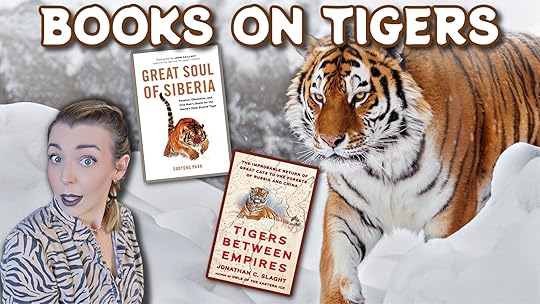
Click here to hear more of my thoughts on this book (and one other book on tigers) over on my Booktube channel, abookolive!

abookolive
Profile Image for Iain.
Author 9 books120 followers
July 28, 2023
A book that leaves you with complete admiration for the author, completely in awe of the majestic tiger, and completely in despair at the way humanity treats these animals, nature and our world. Hopefully we can be awakened before it's too late for the Siberian tiger and countless other species, including ourselves.
Profile Image for ....
418 reviews46 followers
May 31, 2021
A beautiful and poignant saga of a tiger family

The Great Soul of Siberia follows the lives of Ussuri tigers as observed, tracked, and filmed over the years by Sooyong Park. The tigers are individuals here, and their stories will stay with me for a long time, if not forever. But the culture of those who see the tiger as Amba, the spirit of the forest, may prove equally unforgettable.

The Great Soul of Siberia is beautiful in all the ways that nature writing can be, but it's also way more exciting than one would expect. It's also very personal, thoughtful, and poetic.

The Great Soul of Siberia 2: Further Insights into the Life of Siberian Tigers is coming in 2022, and I honestly cannot wait to read it.
Profile Image for James.
97 reviews9 followers
February 6, 2017
I absolutely ADORED this book! Beautifully and lovingly written this was a deeply moving and touching story. Also a fascinating account of the natural world of tigers and the ussuri region as a whole.

Will hopefully post a full review soon!
Profile Image for RKanimalkingdom.
526 reviews73 followers
March 19, 2024
Siberian tigers today are extremely cautious. They loathe interaction with humans and avoid all manmade structure and objects. Past records show that they haven’t always been this vigilant and circumspect. I wonder how much suffering the mighty tiger has been put through to become this way.


The real hook of this memoir was the introduction by John Villant where we learn Sooyong Park stayed in a tiny bunker for months in order to capture tigers in nature. We learn that due to extensive poaching and human actions, Siberian tigers have become extremely cautious about any disturbances to their territory. A slight noise, a slight change, anything, and they’re off. This is especially true for female tigers with cubs. It’s so easy to die in this fragile environment, it’s only natural tigers will do anything to protect their young. To respect the tiger’s private nature, Park decided to work with conservationists and spend months during the winter, hiding, filming, and capturing the lives of the last wild Siberian tigers and the lingering glimpse of their world.


We follow one tiger family. Matriarch, Bloody Mary, her offspring, and their offspring form the main tiger family. Three generations, 3 centuries of stories. With Bloody Mary, we learn about the precarious nature of Siberian tigers and the events that brought about this temperament. Siberian tigers have dwindling populations. Tigers have died from direct causes such as poaching, as well as indirect causes such as deforestation, land mines, and road collisions. The tigers that survived are the cautious secretive ones. The one who destroy all cameras. The ones who disable all traps. The ones who look both ways 3 times before crossing. The ones who hunt fast, eat faster, and leave. This is Bloody Mary. Recluse and Ruthless. Park explains that capturing Siberian tigers, especially Bloody Mary is difficult because they will destroy motion-sensor cameras. Researchers know it’s tigers who do this because the cameras all always destroyed from behind the lens, much akin to how tigers dismantle traps. Bloody Mary was notorious for doing this, and she taught these lessons to her three cubs (1 male and 2 females).

Review Continued Here
Profile Image for Jeff Bursey.
Author 13 books197 followers
June 29, 2022
Lyrical, informative, and humane, this work follows Park's dedication (six months at a time in a bunker with mice and almost no amenities) to the survival of the asiatic tiger in the ussuri jungle of siberia (near china and north korea). Sad, too, and necessarily so as he follows the lives of various tigers. Well worth reading.
Profile Image for Natalie (CuriousReader).
516 reviews483 followers
October 2, 2017
The Great Soul of Siberia is a natural history book written by Sooyong Park, who has studied the Siberian tigers for more than twenty years. Having filmed numerous documentaries of the Siberian tigers, this book follows a few seasons of his research and field observations through a set group of tigers. This book has many things going for it. First, it’s written by someone with infinite direct and personal knowledge of these animals; their nature, their history and their relationships with humans - hunters, poachers, and villagers. Another is the fact that Sooyong Park is an amazing writer, writing with an unusually artistic narrative style - and at several points letting the tigers speak, or rather, giving the tigers a voice. Part of the book also focuses closely on Sooyong Park’s own experiences going through his field work, his reactions and deep felt fascination and respect for the tigers, as well as his plea for a change in the current state of the Ussuri Forest.

The book mainly follows one family of tigers living in the Ussuri Forest, through three generations. The mother - Bloody Mary, is the star of the first section of the book. She was a grown female tiger known for her wits and her caution; in the village she was known as ‘Bloody Mary’ because of her tendency to ‘soiling the earth with blood whenever she took down a deer or boar’. Sooyong Park spent half of the year in different parts of the forest on ‘stake-outs’, measuring paw prints, studying Bloody Mary and the other tigers active in the area through field work. The other half of the year he spent in underground bunkers, waiting for tigers to come to him - to be able to record and study them from a close range. Because tigers are extremely cautious of humans, many people in the area had never seen a live tiger. During the stake-outs, this seemed to have been largely the case as well. It was only through the time in the bunkers that true glimpses of the animal could happen, in their natural state.

I can’t imagine the experience of Sooyong Park as he spent almost six months in a tight square of a bunker with no company, barely anything for entertainment or distraction, in cold weather and in darkness, with eating the same thing every single day and in barely moving because of the cramped space he was in - but I can say even just reading it made me feel incredibly claustrophobic. It’s increasingly made clear to you as a reader, the length he and his fellow researchers and workers within this field go to in order to study, and ultimately, help with conservation of, Siberian tigers. The parts of the book that follow his experiences through becoming ‘part of nature’, basically to erase himself from nature so that tigers would dare come close enough to be caught on film, are just as captivating as are the parts focused on tigers.

Bloody Mary isn’t just a tiger Sooyong Park studies, she becomes a protagonist in the way he tells her story. She eventually gives birth to tiger cubs of her own, and in so doing - the generation continues on to follow White Snow, White Moon, and White Sky as Park has so beautifully named them. Until Bloody Mary’s death, it is apparent she has become a strong force in Park’s life as he spends more time with her - indirectly and directly - than almost anyone else for a period of time. The narrative shifts to the second generation after her death - White Sky the male tiger of the bunch grows to be a fully grown and strong tiger in his own right, White Moon and White Snow each have their own cubs eventually as well which we also follow in the last part of the book.

I suppose I could go on forever about the tigers themselves, but truly - Park writes of the tigers like individuals with their own stories, he imagines their thought processes through the evidence in front of him and what he knows of their past. He paints a vivid picture of their lives through a strong narrative, mixed with his own observations of a more objective point of view, and his larger thoughts on human’s relationship with nature and the changing reality of nature through human actions. As I started off by saying, because Park has spent such a long time thinking about and studying these tigers, he really knows what he’s talking about and this book provides endless fascination in that respect. But as I also pointed out, he is also a fantastic writer. Here though, there’s a possibility of differing opinions. Sooyong Park allows for a more spiritual narrative to seep into the book, both through the locals own myths and legends of the forest gods, the tigers, etc. but also through the way he himself views nature. His writing too is of a rather poetic style, to the point that this book almost has a fictional sense to it. He never goes completely off to fictional territory, though. While he sometimes actually writes as the tigers (these parts are written in cursive) the things he writes of the tigers thoughts, plans, and feelings are all based on things he has actually witnessed and basically serve as his own logical conclusions through his knowledge and experience. While these parts can’t be taken to be unquestionable truth as to what the tigers are thinking or feeling, it’s also not presented as such - it’s more like a suggested interpretation of foot prints, blood, behavior, remains of hunted animals, and more.

One very important theme in the book is what I said to be his plea for a change in the way the Ussuri Forest is now. With poachers and others making a business out of systematically killing tigers, the Siberian tigers have almost gone extinct and even after hard work from conservationists the population is only about 350 tigers in total. The effects of the limited and constantly hunted population is shown through tragedies both in the way of brutal and painful deaths of tigers (caught in traps or hurt by gunshots), inbreeding and cannibalism. At times it was this reality of what humans have done to the forest and to the Siberian tigers as a whole species and the way is was portrayed with such clarity, that had me crying. Many of the tigers we follow through the book are killed through this human intervention so to speak, and it is both heartbreaking and infuriating to read.

It’s likely going to be a question of whether you like your nonfiction academic and detached in tone or are up for a stronger emotional and artistic narrative, as to whether you get on with this book or not. But the information on Siberian tigers, the nature of the climate they live in and the experiences of someone who have studied them for years, and most importantly the devastating effects humans have had on the species and natural life as a whole, is absolutely worth reading this book for. I think you’ll be glad you did.
Profile Image for Paul.
2,230 reviews
November 21, 2017
The true king of the jungle is the tiger; lions live out on the savannah. These magnificent creatures have carved a niche for themselves in the humid regions, but the largest and most elusive tiger shuns the warmth of the tropics, preferring icy cold wastelands. This is the Siberian Tiger. It is thought that there are only 350 or so remaining in the wild and so little is known about them and their habits that they are one of the most mysterious big cats.

As the spectre of climate change raises its ugly head, their pristine landscape becomes harder to eek a living from; coupled with the threat from poachers after them for medicines they are becoming rarer each day. For the past two decades, Sooyong Park has made it his life to track follow and study these shy creatures. He has built hides that offer a little shelter from the sub-zero temperatures that the region is famous for to be able to film and observe them. The local people see them as a spiritual element to their homeland and after watching them for this length of time he begins to understand why. This dedication to finding out about their lives results in a very close miss when they saw the camera protruding from the hide.

His dedication to following these magnificent felines is second to none, he is prepared to undertake quite challenging tasks by building elaborate hides to ensure that they are unaware of his presence. The information that he has collected on the tiger he has called Bloody Mary and her various litters of cubs has given us a greater understanding of the lives of these animals. His poignant prose shows just how passionate he is about these tigers and the lengths he is prepared to go, to observe them in the wild. Definitely a book to read on one the world’s most scarce big cats. 3.5 stars
348 reviews11 followers
September 2, 2017
We are used to hyperbole in the world of books, but this is a case where words 'passion' and 'obsession' are understatements. For year on end the author has spent Spring through Autumn surveying territories where tigers roam to check on the ecosystem of which they are a part. The remaining six months are spent in solitary confinement in a bunker approximately 2m square, in temperatures which reach -30 C, in the hope of seeing and filming tigers. And the miracle of the book is that it actually makes this all seem worth it.
Siberian tigers are the ultimate felines, and thus by extension the most beautiful creatures on earth. Their numbers are stable but low, and their continued existence in the wild cannot be taken for granted, in the face of poaching and the relentless destruction of habitat. This book tracks the extended family of a single female, the wonderfully impressive Bloody Mary (she is a messy eater). Its full of insight into tigers, into the forest ecology, and into the indigenous peoples whose fate is almost a mirror of the tigers. If you are interested in the natural world I'd recommend this book, but be warned it is heart breaking. Things happen which reduce the author to tears, and he is a pretty resilient man.
Profile Image for Kim.
1,125 reviews100 followers
January 2, 2023
3.5 Stars
This is a difficult book to rate. For the Tiger content and the dedication to capture Tiger behaviour, the rating should be off the scale. The writing is lovely, with lots of cultural information about the people that live near these Tigers in the Promorsky Krai region of the south-eastern corner of Siberia, just on the border of North Korea.
However, I found myself easily distracted and lulled to sleep, after only a few pages at a time. Perhaps it's a problem with the translation. More likely a problem with me, I suspect.
For anyone interested in Siberian Tigers this book would have to be a must read.
Profile Image for Dan O'Neill.
41 reviews20 followers
July 3, 2021
A great read. Sooyong Park is a wonderful writer and really brings you along for the journey watching these wonderful creatures. The challenges they face, the moments of happiness, and intense moments of sadness too.

As an aside... I never really thought about how those documentaries get the pictures and videos of tigers but this book really shows you what it takes to get essentially minutes worth of film.
763 reviews20 followers
May 13, 2022
Park describes his endeavours to observe and study Siberian Tigers in the Lazovsky Nature Reserve of southeast Russia where about ten wild tigers live in an area of 4700 square kilometers. Their range is great - 450 square kilometers for a female, as compared to about 50 for a female Bengal tiger which lives in more productive tropical forest. As a result, Siberian tigers are very wary of man and elusive.

The method used to observe the tigers is to spend the summer tracking the animals to understand their movements, pathways and hunting areas where prey are prevalent. He then spends weeks in hideouts at locations where tigers are expected to visit, waiting for the tigers to appear. His patience and ability to withstand isolation are amazing.

Park follows a mature female they have named Bloody Mary, and her offspring. Over the period of his observations, she has three cubs that grow to maturity: the male White Sky, and the females White Snow and White Moon. White Sky is killed by poachers. The two females each produce cubs.

Toward the end, White Snow kills a local dog which her cubs feed upon. Subsequently the male cub Kuchi Mapa kills he female, Mapa. The author sees this abnormal behaviour as being caused by a lack of food in the forest, in turn caused by human pressures including encroachment and poaching.

The dominant male controls an area that encompasses the ranges of a number of females, and is called the Great King. At the time of Park's visits, the Great King was Khajain. As male cubs mature, they become competition for the Great King and it is generally thought that the Great King will kill any males he finds in his range. Maturing male tigers are pushed to the edges of the nature reserve. Park documents an occasion where Khajain joins Bloody Mary and her cubs forming a companionable family group. He teaches the cubs, but it is a temporary arrangement.

Female tigers can come into heat at any time of the year. When they do, the males which are attracted fight over her, growling, roaring and whining. The indigenous people call it the "Night of the Beasts".

Park provides great descriptions of the forests of the District, the changing weather and the movements of the animals. His comments on tracking the tigers are very interesting as they make use of the tracks, claw marks, urine sprays and hunting remains. Tigers make stamps by digging to form a hill on which they deposit urine or excrement.


Profile Image for Nancy.
1,120 reviews423 followers
July 2, 2018
I feel a little blind sided by this book. I have an interest in tigers so I thought I would read just a bit and see how I liked this guy’s research. turns out that “this guy” immersed himself in the study of this nearly extinct tiger. By the time I was interrupted, I’d become captivated by Bloody Mary and her cubs and was terrorized by her destruction of Park’s bunker. I tried to explain the book to my husband but realized I knew too many details that were important and gave up trying to explain it to him.

With a mere 350 Siberian tigers in the world, Sooyong concentrated his research on one family and her progeny. The reality is that they are highly elusive and it is highly unlikely one will ever actually see the animal. To increase his chances, Park spent the summer studying the land, the trees with food for ungulates, watching for pug marks or tiger trails, measuring the pads and strides, then carefully constructing very small bunkers within the earth then staying very still, very solitary, and very dark and watched with his cameras going.

Tiger activity was few and far between but what he captured and experienced is far more than any other researcher. He found relationships, nurturing, independence, and personalities of the tigers. There is far too much to express about what I loved about this book but the narrative naturally led to poachers. It was heart breaking. The tigers are faced with the natural enemy of the unforgiving landscape but then the encroaching civilization takes up the territory they used to claim. Then poachers illegally hunt the magnificent animal which has brought it nearly to extinction.

I loved the book. I am in awe of the Siberian tiger and also what the author sacrificed to capture so much knowledge and footage to share.
Profile Image for Liz.
431 reviews
March 17, 2016
Wow, wow, wow. I absolutely loved this book. It took a few pages to grow on me - the descriptions of Ussuri geography right at the start were a bit of an obstacle as a North American totally unfamiliar with that part of the world - but man, am I glad I persevered!

I don't think there's been a book that's made me feel this way (i.e. thoroughly immersed in an epic adventure story that expands my imagination's horizons regarding what is possible or even knowable) since reading a battered copy of Kon-Tiki, purloined from a relative's bookshelf, as a child. Only this time it's not a raft across the Pacific, it's waiting out tigers in a tiny underground bunker.

I loved everything about Sooyong Park's account of his documentary filmmaking fieldwork, whether it was the writing style, the artful weaving of sociocultural information into the narrative, the empathy perfectly blended with factuality in his descriptions of tigers' everyday lives, or the fascinating insights into the methods involved in tiger tracking and research. I particularly identified with the last two points, as my professional life frequently sees me sitting still in a silent vehicle watching wildlife conduct its daily business (or capturing it on remote cameras), and I am often distracted in my outdoor ramblings by intense bouts of peering at the traces left by wildlife that has stopped by.

I would recommend this book to biologists, wildlife enthusiasts, anyone interested in conservation, or anyone who, like me, thinks the "making of" special features of nature documentaries are often just as compelling as the documentaries themselves.
Profile Image for Lauren Jenkins.
299 reviews9 followers
October 20, 2015
I appreciate learning something completely new from a book, and I have a fondness for interesting books on nature. This was both. I'll have to dig up some more of the author's work on tigers -- apparently, there is much more of it. His beautiful descriptions of the Siberian tiger's environment and his genuine admiration and fondness for the tigers run throughout the book and bring the scenes to life. His unbelievable dedication to researching the tiger's habits, patterns, personalities -it's so admirable. I mean, living in a 2 meter x 2 meter underground coffin-like structure at zero-degree temperatures for months? That's passion. I was flabbergasted to learn that tigers are intelligent enough to approach booby-trapped guns from the rear to dismantle them, a trick learned after seeing their family members approach from the front and die enough times to figure it out. Fascinating, heartbreaking, maddeningly sad.

Worth a read.
Profile Image for Heather Dune Macadam.
Author 15 books328 followers
October 25, 2015
To read this book is to fall in love with three generations of Siberian Tigers, whose cubs we come to care for as deeply as we care for our own children. With the kind of courage these great cats embody, Sooyong Parks endures the loneliness and cold of the Siberian winter in order to reveal the world of these secretive creatures and he delivers them to us with the lyric beauty of a modern-day Thoreau. The Great Soul of Siberia is a remarkable, and heart-rending story written by a poet whose own soul permeates each page.
Profile Image for Luke.
179 reviews
March 16, 2022
Amazing, Amazing read. Really well written and has given me an appreciation for the Siberian Tiger I never had before. Def rec
48 reviews
April 19, 2023
I loved this even though the ending was reallg sad 😔
This entire review has been hidden because of spoilers.
Profile Image for Frida Sofie.
10 reviews
April 21, 2025
Spennende bok! Artig å få et så nært innblikk i livet til sibirsk tiger. Et dyr eg ikke har tenkt så mye på gjennom livet egt. Veldig fin og veldig trist historie. Tusen takk for lånet AleKs
Profile Image for Zoe Crighton.
50 reviews
November 2, 2016
The Great Soul of Siberia is, if nothing, a strenuous exercise in the patience demanded by nature, of which Sooyong Park is an expert. "To wait for a tiger is to wait for yourself" Park writes, presumably in the midst of a six month stakeout from a cramped underground bunker with only mice for company; as a filmmaker, observer and enthusiast, his work in the field seems unparalleled and the choice to share such work and experiences in a book for all to relish and relive is a privilege for those who do so.

The writing has a poetic quality to it that echoes of an adventure story rather than a wildlife study, though the two are seamlessly woven together; the reader is dragged into that dank underground bunker with Park, and the endless months of isolation and loneliness that go with it.

The appearance of the tigers are rightfully rare, and occasionally harrowing - avoiding spoilers, a certain midnight encounter with the children of Bloody Mary would be, from the writer's perspective, unimaginably terrifying.

Park's deeply abiding love and respect for these majestic creatures spills off every page, and is intoxicating. As such, it makes the needless plight of these surprisingly intelligent, affectionate animals all the more heart-breaking. Rightfully so, the closing paragraphs of the book are an indisputable call to arms. The natural world would be an infinitely poorer place without Siberian tigers who, with a mere 540 (approx.) individuals remaining in the wild, are yet another victim of the illegal wildlife trade.

I'd hasten to add that this book is a must-read for the wildlife enthusiast/aspiring conservationist/natural history lover, but that would not entirely be true; in fact, I think it's a book for everyone to read. It's emotional, informative, unsentimental and uncompromisingly candid. Anybody with an invested interest in the wealth of the natural world (hopefully anyone that lives on this planet) would do well to recognise the surprisingly tender and complex nature of Siberian tigers that Park observes - there is so much more to this species than one can appreciate when seen in captivity (a sight so easily taken for granted).

On that note, I'd like to highlight two organisations doing invaluable work in the conservation of tigers, all subspecies of which are listed as "Endangered" or "Critically endangered" on the IUCN red list - www.panthera.org and www.21stcenturytiger.org. It's a terrifying but likely prospect that endeavours such as these are the only thing standing between tigers and their extinction in the wild - something that would be an unimaginable and unforgivable crime against nature indeed.
Profile Image for enricocioni.
303 reviews29 followers
April 17, 2016
A very, very good book. Sooyong Park sacrificed a significant portion of the last two decades to Siberian tigers, sitting for months at a time in tiny 2x2x2 m bunkers hoping for the occasional shot of the elusive creatures. This book has everything you'd expect from such a man: poetic descriptions of the tigers' habitat, high-adrenaline moments of terror when Park is spotted by the tigers, intimate descriptions of the animals relaxing or playing with their cubs when they think no one is watching, informative accounts of a tiger's behaviour, life cycle, hunting methods, and so on. But you also have delightful vignettes starring Siberia's smaller denizens, such as owls and raccoons, as well as chapters dedicated solely to the Ussuri forests' impoverished indigenous inhabitants, and ones showing both the tedium and the ingenuity that come with living in extremely cramped living conditions in remote locations for months at a time. And there are a number of fantastic scenes in which, elf-like, Park vividly reconstructs events in the tigers' daily lives, based entirely on tracks on snow and scratches on trees. All written in a very clear, straightforward style, which makes things very easy to visualise. One thing though that more sensitive readers may wish to be aware of: tigers are endangered animals, threatened by poaching and habitat loss, and Park does not shy away from describing a number of tragic incidents, usually involving the death of one of the animals.
27 reviews4 followers
June 26, 2016
This book about life and death and the tigers of Siberia is stunning. It is a closely observed account of the changing of the seasons in the Ussari forest of Siberia, and the comings and goings of the tigers. Each tiger is a fully realised personality and the tension as they play and hunt and die is immense. The tigers are a marvel, but then so is Sooyong Park, the author. He spends the long Siberian winters living alone in underground bunkers, 2 metres by 2 metres, minimising all traces of himself so that he can research and film the tigers as naturally as possible. It is a psychological challenge and he writes honestly of the struggle to stay sane and still in his self-confinement. In some ways it reminded me of Peter Matthiesson's Himalayan classic "The Snow Leopard" and also Annie Dillard's "Pilgrim at Tinker Creek". Park's book is finely observant of the cycles of nature, the impact of poachers, the lives of the local people, and his own mental state. I loved this and spent a whole windy weekend deeply absorbed.
18 reviews
June 1, 2023
This is one of my favorite books I've read over the past few years and a definite must-read for naturalists and nature enthusiasts. The author took us on a journey beautifully encompassing animal behavior and ecology, Russian environment and seasonality, native culture, and philosophical musings of life and death. The prose in this book is so gorgeous; it's like dancing poetry and the author has a true gift with language. It's very purposefully and thoughtfully written. The way in which the author brings you into the world of tigers is really eye-opening and moving. I felt the entire spectrum of emotions while reading this book and I would highly recommend this to anyone interested.
Profile Image for Tom Reeves.
158 reviews4 followers
September 12, 2020
I can't rate this book highly enough. A fascinating blend of science, nature and the soul. You can clearly see that Parks history of poetical literature has given him a unique perspective on the plight of the Siberian Tiger. I was deeply moved at several moments and feel that this book will influence me for some time. All the stars.
Profile Image for Terry Hinkley.
148 reviews
August 31, 2021
No where near as good as 'The Tiger' By John Vaillant. Too much detail on the process than actual observation. I trudged through the first half of the book and had to put it away. I was optimistic about this book with all the glowing reviews but his writing style is not good at all. Not sure if it was due to the translation, but I found it pedantic.
Profile Image for Heather Christensen.
23 reviews2 followers
Read
January 22, 2025
What an incredible story! I was deeply touched by this book and equally so by the narrative used. It is captivating, descriptive, interesting, real and everything that can be felt is able to be felt within these pages. I chanced upon this book and I'm glad that I did.
Profile Image for Scott Welch.
12 reviews
March 15, 2020
Really enjoyed this look into Siberian Tigers! But fair warning, this book is not only full of joy, but extreme sadness. Not only a great treatise on the importance of tigers ecologically and spiritually but the same about indigenous peoples and their cultures.
24 reviews
August 31, 2017
Good book. Probably the most dedication I've ever heard of when studying a species.
Profile Image for Kea.
45 reviews
August 26, 2020
A beautifully written book about nature, tigers and culture.
Profile Image for Pat Watt.
232 reviews
February 24, 2023
A beautiful and heart-rending book, beautifully written. Quite extraordinary. Leaves one breathless by the end. The read is worth every page, savoring each moment.
Displaying 1 - 30 of 78 reviews

Can't find what you're looking for?

Get help and learn more about the design.