

What do you think?
Reflections in Natural History #5
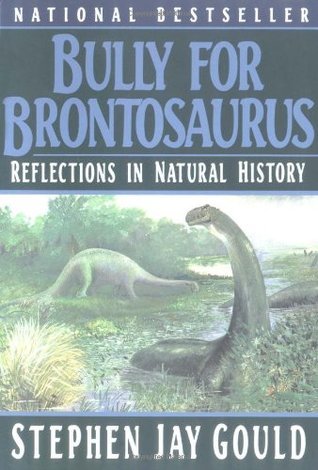
Bully for Brontosaurus: Reflections in Natural History
"Provocative and delightfully discursive essays on natural history. . . . Gould is the Stan Musial of essay writing. He can work himself into a corkscrew of ideas and improbable allusions paragraph after paragraph and then, uncoiling, hit it with such power that his fans know they are experiencing the game of essay writing at its best."--John Noble Wilford, New York Times Book Review
544 pages, Paperback
First published January 1, 1991
About the author
Stephen Jay Gould
167 books1,440 followersStephen Jay Gould was a prominent American paleontologist, evolutionary biologist, and historian of science. He was also one of the most influential and widely read writers of popular science of his generation. Gould spent most of his career teaching at Harvard University and working at the American Museum of Natural History in New York.
Most of Gould's empirical research was on land snails. Gould helped develop the theory of punctuated equilibrium, in which evolutionary stability is marked by instances of rapid change. He contributed to evolutionary developmental biology. In evolutionary theory, he opposed strict selectionism, sociobiology as applied to humans, and evolutionary psychology. He campaigned against creationism and proposed that science and religion should be considered two compatible, complementary fields, or "magisteria," whose authority does not overlap.
Many of Gould's essays were reprinted in collected volumes, such as Ever Since Darwin and The Panda's Thumb, while his popular treatises included books such as The Mismeasure of Man, Wonderful Life and Full House.
-Wikipedia
Most of Gould's empirical research was on land snails. Gould helped develop the theory of punctuated equilibrium, in which evolutionary stability is marked by instances of rapid change. He contributed to evolutionary developmental biology. In evolutionary theory, he opposed strict selectionism, sociobiology as applied to humans, and evolutionary psychology. He campaigned against creationism and proposed that science and religion should be considered two compatible, complementary fields, or "magisteria," whose authority does not overlap.
Many of Gould's essays were reprinted in collected volumes, such as Ever Since Darwin and The Panda's Thumb, while his popular treatises included books such as The Mismeasure of Man, Wonderful Life and Full House.
-Wikipedia
Ratings & Reviews
Friends & Following
Create a free account to discover what your friends think of this book!
Community Reviews
Displaying 1 - 30 of 112 reviews

March 25, 2011
Stephen Jay Gould was adept at reviewing scientific missteps and errors and building telling lessons from them. His essays are highly discursive, often taking twists and turns through little known bits of history and popular culture, as a means of explicating complex concepts. He was a brilliant man and one of those writers--like neurologist Oliver Sacks, say, or biologist E.O. Wilson--who could take abstruse subject matter and make it intelligible to the general reader. Though, it should be noted, no one's style was quite so freewheeling and idiosyncratic as Gould's.
A few favorite essays include:
"The Panda's Thumb of Technology" In which Gould illustrates the evolutionary principles of contingency and incumbency by way of a history of the QWERTY keyboard. This is certainly among the volume's quirkiest and most brilliant essays.
In "Male Nipples and Clitoral Ripples" he discusses how male nipples are homologues of female nipples and remnants of embryology, just as the female clitoris is a homologue of the male penis. Dr. Freud's absurd theory of vaginal orgasm and the unfortunate suffering it caused countless women during the mid-20th century is discussed.
"To Be A Platypus" reviews the immense puzzle this monotreme presented to 20th-century scientists because of its melange of seemingly contradictory characteristics: large brain and inner ear like mammals, egg laying like reptiles, duckbill like the eponymous wildfowl, etc. Because of its paradoxical nature, the platypus was viewed for a long time as a primitive outlier that had never really caught up with the high and mighty mammals. Gould shows not only why this isn't so, but why the creature is, as he puts it, "one honey of an adaptation."
The section titled Intellectual Biography I found especially interesting.
In "Kropotkin Was No Crackpot" Gould rehabilitates that fin de siècle Russian anarchist's much maligned reputation. Petr Kropotkin (see Mutual Aid) believed cooperation was more responsible for the perpetuation of species than violent struggle, a concept far more popular in the West. Many Russian evolutionists tended to agree. Why? Was it just their collectivist, socialist culture? In part, yes, but it also turns out that the concept of exploding populations, which Darwin learned in the teeming tropics (see Voyage of the Beagle), was conceptually almost impossible for Russians to grasp, living as they did in a harsh and underpopulated land. At the center of the essay is the question of cultural biases in science, an area in which Gould excelled as a writer and a teacher. Fascinating.
Feed your inner nerd . . . read this book.
A few favorite essays include:
"The Panda's Thumb of Technology" In which Gould illustrates the evolutionary principles of contingency and incumbency by way of a history of the QWERTY keyboard. This is certainly among the volume's quirkiest and most brilliant essays.
In "Male Nipples and Clitoral Ripples" he discusses how male nipples are homologues of female nipples and remnants of embryology, just as the female clitoris is a homologue of the male penis. Dr. Freud's absurd theory of vaginal orgasm and the unfortunate suffering it caused countless women during the mid-20th century is discussed.
"To Be A Platypus" reviews the immense puzzle this monotreme presented to 20th-century scientists because of its melange of seemingly contradictory characteristics: large brain and inner ear like mammals, egg laying like reptiles, duckbill like the eponymous wildfowl, etc. Because of its paradoxical nature, the platypus was viewed for a long time as a primitive outlier that had never really caught up with the high and mighty mammals. Gould shows not only why this isn't so, but why the creature is, as he puts it, "one honey of an adaptation."
The section titled Intellectual Biography I found especially interesting.
In "Kropotkin Was No Crackpot" Gould rehabilitates that fin de siècle Russian anarchist's much maligned reputation. Petr Kropotkin (see Mutual Aid) believed cooperation was more responsible for the perpetuation of species than violent struggle, a concept far more popular in the West. Many Russian evolutionists tended to agree. Why? Was it just their collectivist, socialist culture? In part, yes, but it also turns out that the concept of exploding populations, which Darwin learned in the teeming tropics (see Voyage of the Beagle), was conceptually almost impossible for Russians to grasp, living as they did in a harsh and underpopulated land. At the center of the essay is the question of cultural biases in science, an area in which Gould excelled as a writer and a teacher. Fascinating.
Feed your inner nerd . . . read this book.

May 12, 2019
De todas las recopilaciones de ensayos que llevo leídas del paleontologo Stephen Jay Gould, diría que esta es mi favorita, pero no sabría decir el porqué. No hay ensayo suyo que no haya disfrutado, incluso aquellos que van de temas que en la vida me han interesado, como el béisbol, deporte por el que este hombre sentía una verdadera pasión rayana en el fanatismo -neoyorkino tenía que ser. En la misma linea didáctica de Darwin, Gould es capaz de partir de la trivialidad más absoluta o la anécdota más oscura para explicarte principios científicos que harían sudar a más de un profesor si tuviera que repetirlos y adaptarlos a toda un aula.
De quedarme con alguno de estos ensayos, aunque insisto en que todos y cada uno de ellos son pequeñas joyas de la divulgación científica, sería con aquellos que versan sobre la ciencia y quienes la hacen, la clase de valores de que deben hacer gala los buenos científicos, por qué es importante que la ciencia siga siendo esa disciplina necesaria en constante reinvención, siempre intentando formular las preguntas más atrevidas para llegar a las respuestas más profundas.
Cualquier lector, científica o no, con un mínimo de interés por las ciencias naturales y por su evolución con el paso del tiempo y por quienes han sido sus grandes personajes, debería leer estos ensayos.
De quedarme con alguno de estos ensayos, aunque insisto en que todos y cada uno de ellos son pequeñas joyas de la divulgación científica, sería con aquellos que versan sobre la ciencia y quienes la hacen, la clase de valores de que deben hacer gala los buenos científicos, por qué es importante que la ciencia siga siendo esa disciplina necesaria en constante reinvención, siempre intentando formular las preguntas más atrevidas para llegar a las respuestas más profundas.
Cualquier lector, científica o no, con un mínimo de interés por las ciencias naturales y por su evolución con el paso del tiempo y por quienes han sido sus grandes personajes, debería leer estos ensayos.

January 5, 2020
Writing a review of an anthology like Stephen Jay Gould's Bully For Brontosaurus: Reflections in Natural History seems a thankless task because one could craft a review for each of Gould's individual essays & attempting to synthesize an entire book of them seems almost impossible. I have read the essays in this volume over many months, some of them more than once.

The anthology is nearly 30 years old but remains an interesting cornucopia of rather analytical stances on scientific questions & the people who were a party to them, but also many others, including Tolstoy, Captain Bligh, Kropotkin & the Brothers Grimm, folks who are quite beyond the normal framework of the world of science. It is Gould's wondrous power to form analogies that lifts this book far beyond the ordinary.
For starters, I realize every time I read one of the essays that the late Prof. Gould had a considerable gift for expression, for rendering fairly abstract & scientific topics so that they are within the realm of someone without a background in science. That said, Gould had a extreme fascination with words, some quite scientific, as befits a Harvard professor but also others, many of which are far from common usage.
Thus, some (many) of us will need to keep a dictionary at the ready. Among the rarely heard words is epigone, describing a "2nd rate imitator, or a follower, as of a philosopher", a word I have committed to memory & plan to use at some point in a G/R review, but not this one! The use of arcane words is a distraction, at least until one comes to grips with the author's heightened pleasure with the expansiveness of the English language & his often playful use of words.

Gould spends time debunking commonly held notions, such as in the essay "Knight Takes Bishop" with regard to the confrontation between Prof. Thomas Henry Huxley ("Darwin's bulldog") & a prominent cleric of the time just after Darwin's findings appeared in print, Samuel Wilberforce, the Bishop of Oxford. It turns out that there was no "debate", merely some opposing statements by the two after a much longer & now forgotten oration by a visiting American professor on the "Intellectual History of Europe."
The author also does a kind of postmortem to convey what actually occurred on that long-ago day in 1860 & tells us that there were no written accounts & that the event was embellished over time via the fog of memory & by some who were not even present when the 2 figures faced off against one another in an impromptu manner. Beyond that, it seems that the bishop was felt to have gotten the better of Prof. Huxley in the brief interchange between the two.
Here is where it becomes even more compelling, for in this & an ensuing essay, "Genesis & Geology", Gould explains:
The 2nd of the two linked essays, one involving political differences between Disraeli & Gladstone, begins with some humorous lines from Gilbert & Sullivan's Iolanthe and attempts to respond to the question: In what helpful ways may science & religion coexist? Gould finds that the lack of correlation in Genesis among the development of animal species is unimportant & "does not compromise the power & purpose of religion, or its relationship to the sciences, for Genesis is not a treatise on natural history." I for one find Prof. Gould's dialectic approach to almost everything rather formidable and even uplifting.
One of my favorite essays is "The Godfather of Disaster", which begins with a reference to Gulliver & Jonathan Swift's use of satire. There is a consideration of a man named William Whiston, someone who saw the world in purely theological vs. scientific terms & who succeeded Sir Isaac Newton at Cambridge, recommended in fact by Newton but whose 17th century lens was appropriate to a time when science as a separate subject did not really exist, when the world was viewed in terms of divine inspiration alone.
Yet, Gould is sympathetic to Whiston's quirky deductive scheme, which was Newtonian in format but not in outcome. While demonstrating how Prof. Whiston's findings were limited by his worldview, so that even while the man's methodology was not unlike Newton's, their conclusions differed greatly. This essay is just one example of how Prof. Gould looks compassionately on historical figures, while reexamining past circumstances, almost akin to performing an experiment in front of a class. The essays are always probing while employing different angles of investigation.
"Literary Bias on a Slippery Slope" examines how we craft stories to make scientific reality more palpable, finding that a distinguished scientist's statement detailing his own discoveries do not match his own journals, something Prof. Gould uncovered while examining the journals at the Smithsonian of Prof. Charles Doolittle Walcott (1850-1927), the world's leading expert on Cambrian rocks & fossils & once the most powerful scientific administrator in America. During his time at the Smithsonian examining the Walcott archives, Gould concludes that all the key points of the story of Walcott's main discovery are false. He indicates that "memory is a fascinating trickster, that words & images have enormous power that can easily displace actual experience over the years."

For, "so much of science proceeds by telling stories--and we are especially vulnerable to constraints of this medium because we rarely recognize what we are doing, with even the most distant & abstract subjects, like the formation of the universe or the principles of evolution, falling within the bounds of necessary & unreliable narrative."
Throughout Bully For Brontosaurus Gould displays a keen interest in history & a sardonic wit. Who else would title one essay, "To Be a Platypus", while another, "Male Nipples & Clitoral Ripples" & yet another, "George Canning's Left Buttock & the Origin of Species"? Always, in the midst of articulate statements of scientific purpose, Gould seems to insist that we must not devalue past notions simply because they are not in sync with current ideologies.
In essence, Gould's approach might be viewed a guide to living in a world full of dissension & conflict, a self-help book for humanity. The author encourages us to "rage against the dying of the light--and although Dylan Thomas spoke of bodily death in his famous line, we must also apply his words to the extinction of wonder in the mind, by pressures to conformity in an anti-intellectual culture."
In an essay entitled "The Dinosaur Rip-Off", Prof. Gould is impressed that in a New York Times article on science education in Korea, a 9 year old girl being interviewed states that Stephen Hawking is her personal hero, not some sports star or Hollywood figure & apparently in Korea science whizzes are class heroes. Gould comments that we live...
Thus, for Gould the tales of the Brothers Grimm are not mere fables but involve a linkage between genetics & language and "we must never doubt the power of names as Rumpelstiltskin learned to his horror." This may seem a leap but in reading the essays by Stephen Jay Gould, I see a resemblance to fables, or at least an assembling of stories with a scientific bent that holds a fabalistic touch.
By way of a caution, Bully for Brontosaurus has considerable density & is not a book to be read from cover to cover; rather, it is like a box of fine chocolates, to be savored individually over time. And, rereading the essays can yield greater clarity, an additional reward.
The anthology is nearly 30 years old but remains an interesting cornucopia of rather analytical stances on scientific questions & the people who were a party to them, but also many others, including Tolstoy, Captain Bligh, Kropotkin & the Brothers Grimm, folks who are quite beyond the normal framework of the world of science. It is Gould's wondrous power to form analogies that lifts this book far beyond the ordinary.
For starters, I realize every time I read one of the essays that the late Prof. Gould had a considerable gift for expression, for rendering fairly abstract & scientific topics so that they are within the realm of someone without a background in science. That said, Gould had a extreme fascination with words, some quite scientific, as befits a Harvard professor but also others, many of which are far from common usage.
Thus, some (many) of us will need to keep a dictionary at the ready. Among the rarely heard words is epigone, describing a "2nd rate imitator, or a follower, as of a philosopher", a word I have committed to memory & plan to use at some point in a G/R review, but not this one! The use of arcane words is a distraction, at least until one comes to grips with the author's heightened pleasure with the expansiveness of the English language & his often playful use of words.
Gould spends time debunking commonly held notions, such as in the essay "Knight Takes Bishop" with regard to the confrontation between Prof. Thomas Henry Huxley ("Darwin's bulldog") & a prominent cleric of the time just after Darwin's findings appeared in print, Samuel Wilberforce, the Bishop of Oxford. It turns out that there was no "debate", merely some opposing statements by the two after a much longer & now forgotten oration by a visiting American professor on the "Intellectual History of Europe."
The author also does a kind of postmortem to convey what actually occurred on that long-ago day in 1860 & tells us that there were no written accounts & that the event was embellished over time via the fog of memory & by some who were not even present when the 2 figures faced off against one another in an impromptu manner. Beyond that, it seems that the bishop was felt to have gotten the better of Prof. Huxley in the brief interchange between the two.
Here is where it becomes even more compelling, for in this & an ensuing essay, "Genesis & Geology", Gould explains:
But no battle exists between science & religion--the two most separate spheres of human need. A titanic struggle occurs, always has, always will, between questioning & authority, free inquiry & frozen dogma--but the institutions representing these poles are not science & religion. These struggles occur within each field, not primarily across disciplines.Gould then concludes the essay by suggesting that "the struggle for free inquiry against authority is so central, so pervasive that we need all the help we can get from either side and inquiring scientists must join hands with questioning theologians."
The general ethic of science leads to greater openness, but we have our fossils, often in positions of great power. Organized religion, as an arm of state power so frequently in history has tended to rigidity--but theologies have also spearheaded social revolution. Official religion has not opposed evolution as a monolith & many prominent evolutionists have been devout, while many churchmen have placed evolution at the center of their personal theologies.
The 2nd of the two linked essays, one involving political differences between Disraeli & Gladstone, begins with some humorous lines from Gilbert & Sullivan's Iolanthe and attempts to respond to the question: In what helpful ways may science & religion coexist? Gould finds that the lack of correlation in Genesis among the development of animal species is unimportant & "does not compromise the power & purpose of religion, or its relationship to the sciences, for Genesis is not a treatise on natural history." I for one find Prof. Gould's dialectic approach to almost everything rather formidable and even uplifting.
One of my favorite essays is "The Godfather of Disaster", which begins with a reference to Gulliver & Jonathan Swift's use of satire. There is a consideration of a man named William Whiston, someone who saw the world in purely theological vs. scientific terms & who succeeded Sir Isaac Newton at Cambridge, recommended in fact by Newton but whose 17th century lens was appropriate to a time when science as a separate subject did not really exist, when the world was viewed in terms of divine inspiration alone.
Yet, Gould is sympathetic to Whiston's quirky deductive scheme, which was Newtonian in format but not in outcome. While demonstrating how Prof. Whiston's findings were limited by his worldview, so that even while the man's methodology was not unlike Newton's, their conclusions differed greatly. This essay is just one example of how Prof. Gould looks compassionately on historical figures, while reexamining past circumstances, almost akin to performing an experiment in front of a class. The essays are always probing while employing different angles of investigation.
"Literary Bias on a Slippery Slope" examines how we craft stories to make scientific reality more palpable, finding that a distinguished scientist's statement detailing his own discoveries do not match his own journals, something Prof. Gould uncovered while examining the journals at the Smithsonian of Prof. Charles Doolittle Walcott (1850-1927), the world's leading expert on Cambrian rocks & fossils & once the most powerful scientific administrator in America. During his time at the Smithsonian examining the Walcott archives, Gould concludes that all the key points of the story of Walcott's main discovery are false. He indicates that "memory is a fascinating trickster, that words & images have enormous power that can easily displace actual experience over the years."
For, "so much of science proceeds by telling stories--and we are especially vulnerable to constraints of this medium because we rarely recognize what we are doing, with even the most distant & abstract subjects, like the formation of the universe or the principles of evolution, falling within the bounds of necessary & unreliable narrative."
Throughout Bully For Brontosaurus Gould displays a keen interest in history & a sardonic wit. Who else would title one essay, "To Be a Platypus", while another, "Male Nipples & Clitoral Ripples" & yet another, "George Canning's Left Buttock & the Origin of Species"? Always, in the midst of articulate statements of scientific purpose, Gould seems to insist that we must not devalue past notions simply because they are not in sync with current ideologies.
In essence, Gould's approach might be viewed a guide to living in a world full of dissension & conflict, a self-help book for humanity. The author encourages us to "rage against the dying of the light--and although Dylan Thomas spoke of bodily death in his famous line, we must also apply his words to the extinction of wonder in the mind, by pressures to conformity in an anti-intellectual culture."
In an essay entitled "The Dinosaur Rip-Off", Prof. Gould is impressed that in a New York Times article on science education in Korea, a 9 year old girl being interviewed states that Stephen Hawking is her personal hero, not some sports star or Hollywood figure & apparently in Korea science whizzes are class heroes. Gould comments that we live...
in a profoundly non-intellectual culture in America, made all the worse by a passive hedonism abetted by the spread of wealth & its dissipation into countless electronic devices that impart the latest entertainment in short & loud doses of easy listening. Can we not invoke dinosaur power to alleviate unspoken tragedies? Can't dinosaurs be the great levelers & integrators--the joint passion of the class rowdy & the class intellectual? I will know that we are on our way when the kid who names Chasmosaurus as his personal hero also earns the epithet of "Mr. Cool"Dinosaurs are to be seen as metaphors, as iconic images that can inspire & even provoke us. Moving on from that thought is Gould's belief that linguistic evolution must be taken seriously as well and he uses analogies to make his point, suggesting that the power these analogies convey is important & that we must search within language for clues to evolutionary development, well beyond analyzing DNA & fossils.
Thus, for Gould the tales of the Brothers Grimm are not mere fables but involve a linkage between genetics & language and "we must never doubt the power of names as Rumpelstiltskin learned to his horror." This may seem a leap but in reading the essays by Stephen Jay Gould, I see a resemblance to fables, or at least an assembling of stories with a scientific bent that holds a fabalistic touch.
By way of a caution, Bully for Brontosaurus has considerable density & is not a book to be read from cover to cover; rather, it is like a box of fine chocolates, to be savored individually over time. And, rereading the essays can yield greater clarity, an additional reward.

January 5, 2023
It’s been a while since I’ve revisited Stephen Jay Gould’s natural history essays, which were one of my big inspirations when I was a kid when it came to thinking of biology as a career. I’m always pleased to find how well they hold up! Not always in terms of the state-of-the-science – it would be weird if there HADN’T been updates in the last 30-40 years! – but in terms of Gould’s wit and his ability to make his readers think about an issue more expansively and from new angles. I found myself pausing to consider if I needed to re-think how I teach certain evolutionary concepts in my own college courses, especially when I got to essay 10, which talks about the way stuff gets copied from one textbook to the next without anyone questioning why it is there!
Gould’s thoughts on biology and society also hold up better than many. He had no patience for contemporaries who tried to over-extrapolate things, particularly if he thought that misapplication of science was actively harmful to real people! At the same time, in these essays Gould extends quite a lot of grace to people who have gone down in popular myth as crackpots or enemies of science. For instance, he shows that Willams Jennings Bryan’s attacks on the teaching of evolution (most famously via the Scopes ‘monkey’ trial) were not a deviation from his earlier progressivism, but rather him applying the same principles in a misguided way. Bryan was well aware of the dangers of ‘social Darwinism’ and the eugenics movement…he just didn’t understand the basics of evolutionary theory well enough to know that those are not actually part of it! Likewise, Gould talks about anarchist author and scientist Pyotr Kropotkin and his book ‘Mutual Aid’ in the context of Russian evolutionary thought, which more heavily emphasized cooperation in nature as a way to survive harsh environmental conditions.
These natural history essays also contain an amount of historical, artistic, and biographical material that might be surprising to those unfamiliar with Gould’s style. He clearly had a lot of interests beyond evolutionary biology, and he loved finding ways to tie it in. Some of these efforts might have some readers going “Jeez, where are the dinosaurs already?” but do eventually reach the science-related point he was going for, while others are likely to be delightful and engaging to most people right from the start.
Full review, with essay-by-essay comments and science updates (because this book is over 30 years old): https://ajungleoftales.blogspot.com/2...
Gould’s thoughts on biology and society also hold up better than many. He had no patience for contemporaries who tried to over-extrapolate things, particularly if he thought that misapplication of science was actively harmful to real people! At the same time, in these essays Gould extends quite a lot of grace to people who have gone down in popular myth as crackpots or enemies of science. For instance, he shows that Willams Jennings Bryan’s attacks on the teaching of evolution (most famously via the Scopes ‘monkey’ trial) were not a deviation from his earlier progressivism, but rather him applying the same principles in a misguided way. Bryan was well aware of the dangers of ‘social Darwinism’ and the eugenics movement…he just didn’t understand the basics of evolutionary theory well enough to know that those are not actually part of it! Likewise, Gould talks about anarchist author and scientist Pyotr Kropotkin and his book ‘Mutual Aid’ in the context of Russian evolutionary thought, which more heavily emphasized cooperation in nature as a way to survive harsh environmental conditions.
These natural history essays also contain an amount of historical, artistic, and biographical material that might be surprising to those unfamiliar with Gould’s style. He clearly had a lot of interests beyond evolutionary biology, and he loved finding ways to tie it in. Some of these efforts might have some readers going “Jeez, where are the dinosaurs already?” but do eventually reach the science-related point he was going for, while others are likely to be delightful and engaging to most people right from the start.
Full review, with essay-by-essay comments and science updates (because this book is over 30 years old): https://ajungleoftales.blogspot.com/2...

February 25, 2012
I read the first half of this book about 10 years ago, and went back a few days ago to read the rest. Why the break? It was a good read....I have no idea why I came to a halt.
Having finished the book I went back and looked at some of the earlier essays - Bully For Brontosaurus....a wonderful discussion about the rules governing how zoologists name animals. These rules are laid out in the 'International Code of Zoological Nomenclature' and the 1985 edition runs to 338 pages. That is a lot of regulation! Gould's discussion centred on issues around a set dinosaur stamps issued by the post office and people's objections to the name given to one of these critters, and what he felt the proper response ought to have been. The essay gave marvellous insights into the process and variables of naming, and what Gould felt ought to take priority.
I also couldn't resist re-reading The Panda's Thumb Of Technology - a wonderfully funny and interesting essay on how we ended up using the QWERTY keyboard. The story was as eccentric and fascinating as the keyboard itself. Besides being an academic giant, Gould was well linked to typewriters - his father was a court stenographer, his mother a typist, and Gould himself was still using a typewriter in 1991.
To be honest though I was less smitten with the later essays. I read like an outsider Gould's passion for planets in The Face of Miranda. This is undoubtedly my shortcoming, not his. I just can't get excited by astronomy.
Several other essays under the heading "Evolution and Creation" dealt with the arguments put up by people who have defended creationism, and the counter arguments. Again, not a subject that presses my buttons. It feels like arguing with people who say the world is flat, or the sky is going to fall down. Life is just too short..... Having said that, Wikipedia says that a Gallup poll in 2010 showed the 40% of Americans still believe in a strict interpretation of creationism! This suggests that many more arguments against creationism are needed, however much it may seem boring to me.
I enjoyed the three essays about numbers, statistics and probability though. I am extremely small brained in this area, but even I could sense the wonder and excitement of the ideas Gould was discussing, and his enthusiasm is a delight. He even managed to infuse me with wonder at Joe DiMaggio achievements in baseball in 1941.
So, for me a bit of a mixed bag, but Gould is a wonderful person for me to read. I am normally one of those shallow dilettantes that he is so critical of, and it does me the world of good to really immerse myself in ideas, and the background to ideas - in the way Gould makes one do so well in his essays.
Having finished the book I went back and looked at some of the earlier essays - Bully For Brontosaurus....a wonderful discussion about the rules governing how zoologists name animals. These rules are laid out in the 'International Code of Zoological Nomenclature' and the 1985 edition runs to 338 pages. That is a lot of regulation! Gould's discussion centred on issues around a set dinosaur stamps issued by the post office and people's objections to the name given to one of these critters, and what he felt the proper response ought to have been. The essay gave marvellous insights into the process and variables of naming, and what Gould felt ought to take priority.
I also couldn't resist re-reading The Panda's Thumb Of Technology - a wonderfully funny and interesting essay on how we ended up using the QWERTY keyboard. The story was as eccentric and fascinating as the keyboard itself. Besides being an academic giant, Gould was well linked to typewriters - his father was a court stenographer, his mother a typist, and Gould himself was still using a typewriter in 1991.
To be honest though I was less smitten with the later essays. I read like an outsider Gould's passion for planets in The Face of Miranda. This is undoubtedly my shortcoming, not his. I just can't get excited by astronomy.
Several other essays under the heading "Evolution and Creation" dealt with the arguments put up by people who have defended creationism, and the counter arguments. Again, not a subject that presses my buttons. It feels like arguing with people who say the world is flat, or the sky is going to fall down. Life is just too short..... Having said that, Wikipedia says that a Gallup poll in 2010 showed the 40% of Americans still believe in a strict interpretation of creationism! This suggests that many more arguments against creationism are needed, however much it may seem boring to me.
I enjoyed the three essays about numbers, statistics and probability though. I am extremely small brained in this area, but even I could sense the wonder and excitement of the ideas Gould was discussing, and his enthusiasm is a delight. He even managed to infuse me with wonder at Joe DiMaggio achievements in baseball in 1941.
So, for me a bit of a mixed bag, but Gould is a wonderful person for me to read. I am normally one of those shallow dilettantes that he is so critical of, and it does me the world of good to really immerse myself in ideas, and the background to ideas - in the way Gould makes one do so well in his essays.

May 5, 2019
Stephen Jay Gould, aka La Teoria Degli Equilibri Punteggiati Scusate Se È Poco, è l'autore di questo libro che racchiude 16 saggi incentrati sulla teoria dell'evoluzione e sulla storia naturale.
Se pensate di trovarvi di fronte a saggi scritti in gergo strettamente tecnico-scientifico, conditi con termini latini altisonanti ed interminabili calcoli di statistica, vi sbagliate di grosso. Gould, abituato alla divulgazione scientifica, usa un linguaggio semplice ed esplicativo, utilizzando esempi ed analogie per facilitare la comprensione dei concetti più ostici. Non si ha quindi la sgradevole sensazione di un professore borioso che sale in cattedra ad istruire la plebe ma sembra più un vecchio amico che, raccontandoci della nascita del baseball o della sua gioventù nel coro, condivide il suo sapere spronandoci alla riflessione.
Nonostante il mio percorso di studi comprendesse una buona base di geologia e di paleontologia, mi sono ritrovata ad intraprendere la lettura con un po' di timore e forse anche di soggezione (oh, la Teoria degli Equilibri Punteggiati proprio non mi entrava in testa). Sensazioni che si sono rivelate errare fin da subito. Il libro mi ha riportato alla memoria gli intensi anni universitari in cui si avevano tanti sogni ma purtroppo poche occasioni per realizzarli; ha risvegliato in me l'ardore (D'Annunzio lèvate!) sopito verso la ricerca sul campo, lo studio dei fossili, stratigrafie e linee evolutive.
Una parte di me ha invidiato Gould perché penso abbia condotto una vita accademica esemplare, l'altra parte lo ho invece ringraziato con tanto di lucciconi perché ha condiviso il suo vasto sapere con noi comuni mortali, lo ha reso accessibile e, da quel che si evince dalla maggior parte dei saggi, si è sempre battuto per il miglioramento del livello di istruzione in particolare nelle materie scientifiche.
La teoria dell'evoluzione è un argomento ampio e complesso, so perfettamente che non rientra tra i trend topic del momento e sono altresì consapevole che vi sono pregiudizi di natura sociale nei confronti di chi si interessa all'argomento (perché? Qualcuno mi illumini), ma vi assicuro che questo libro è una perla. Vi prego leggetelo, fatelo leggere ai vostri figli e ai figli dei vostri figli... Ok, magari alcuni temi saranno obsoleti ma l'insegnamento alla base di questo libro sarà sempre attuale: studiate, siate liberi da preconcetti, siate curiosi e a morte il creazionismo!
Se pensate di trovarvi di fronte a saggi scritti in gergo strettamente tecnico-scientifico, conditi con termini latini altisonanti ed interminabili calcoli di statistica, vi sbagliate di grosso. Gould, abituato alla divulgazione scientifica, usa un linguaggio semplice ed esplicativo, utilizzando esempi ed analogie per facilitare la comprensione dei concetti più ostici. Non si ha quindi la sgradevole sensazione di un professore borioso che sale in cattedra ad istruire la plebe ma sembra più un vecchio amico che, raccontandoci della nascita del baseball o della sua gioventù nel coro, condivide il suo sapere spronandoci alla riflessione.
Nonostante il mio percorso di studi comprendesse una buona base di geologia e di paleontologia, mi sono ritrovata ad intraprendere la lettura con un po' di timore e forse anche di soggezione (oh, la Teoria degli Equilibri Punteggiati proprio non mi entrava in testa). Sensazioni che si sono rivelate errare fin da subito. Il libro mi ha riportato alla memoria gli intensi anni universitari in cui si avevano tanti sogni ma purtroppo poche occasioni per realizzarli; ha risvegliato in me l'ardore (D'Annunzio lèvate!) sopito verso la ricerca sul campo, lo studio dei fossili, stratigrafie e linee evolutive.
Una parte di me ha invidiato Gould perché penso abbia condotto una vita accademica esemplare, l'altra parte lo ho invece ringraziato con tanto di lucciconi perché ha condiviso il suo vasto sapere con noi comuni mortali, lo ha reso accessibile e, da quel che si evince dalla maggior parte dei saggi, si è sempre battuto per il miglioramento del livello di istruzione in particolare nelle materie scientifiche.
La teoria dell'evoluzione è un argomento ampio e complesso, so perfettamente che non rientra tra i trend topic del momento e sono altresì consapevole che vi sono pregiudizi di natura sociale nei confronti di chi si interessa all'argomento (perché? Qualcuno mi illumini), ma vi assicuro che questo libro è una perla. Vi prego leggetelo, fatelo leggere ai vostri figli e ai figli dei vostri figli... Ok, magari alcuni temi saranno obsoleti ma l'insegnamento alla base di questo libro sarà sempre attuale: studiate, siate liberi da preconcetti, siate curiosi e a morte il creazionismo!

January 5, 2019
This meant a lot to me as a teen. Just one bit: the essay "Male Nipples and Clitoral Ripples" - with its shocking claim that only 30% of women orgasm from "PIV" intercourse - scandalised me. (He bases this on the notably shoddy work of Kinsey and Hite, but it may be worse than that.) The main point of that piece - using the pleasure-poor design of the two genitalia to attack a straw man view he calls "hyperadaptationism" - had less effect on me, luckily.
There are odd synopses of each essay here.
(I give general reasons to distrust Gould here.)
There are odd synopses of each essay here.
(I give general reasons to distrust Gould here.)

July 12, 2024
I definitely thought this was going to be all about dinosaurs so if it’s not that’s definitely my fault. Ok it’s definitely not about dinosaurs and now I’m less excited. This is so long. At least the writing is good but I’m just getting bored. Some of the chapters are good but they’re inconsistent in how much I like them. 3.3 stars, mostly because it’s not what I expected and that’s my fault

April 7, 2025
Bully for knowledge and wonder!

December 29, 2016
This review was written in September 1991, not long after the book's publication:
Stephen Jay Gould has been writing monthly essays for Natural History magazine for over eighteen years, and he has gotten pretty good at it by now. His newest collection is the best one so far. While Gould has always been able to impress with the depth and breadth of his scientific knowledge, this collection contains more personal insight, humor, and humility than some of his previous work.
Gould makes no secret of his intellectual passions: baseball, the French Revolution, geology, science and scientists of the 19th century, dinosaurs, classical music, and evolutionary theory. Not every one of his readers shares these passions, of course (I, for one, have always been bored by baseball), but he has a gift for making his subjects come alive regardless of what he writes about. For example, one essay, "The Chain of Reason versus the Chain of Thumbs" deals with animal magnetism, a craze in the late 1780s. The German physician Franz Mesmer believed that a "magnetic fluid" pervaded the universe, uniting everything. When “flow” was blocked in people, disease could result. Mesmer claimed to have performed many cures by locating the magnetic poles on a sufferer’s body, and re-establishing flow by touching knees and fingers, and staring into the person’s (usually a woman’s) eyes.
The essay describes how the Royal Commission of Louis XVI in 1784 went about evaluating Mesmer’s claims, and the story is funny and surprising. Gould creates a picture of the famous scientists on the commission, which included Benjamin Franklin and Anton Lavoisier, sitting around one of Mesmer’s big vats of magnetic fluid, joined by a rope, each holding an iron rod, and “making from time to time, the chain of thumbs.” Everyone reads about Franklin flying a kite in a thunderstorm, but his participation in the chain of thumbs is less well documented and at least as interesting. The essay also explains that Dr. Mesmer’s name is where the word “mesmerize” comes from.
The book is full of historical tidbits like this, such as why keyboards are laid out with QWERTY on top, or why glowworms are evenly spaced on the ceiling of a grotto. It is also full of explanations and sympathetic characterizations of obscure scientific figures, as well as little-known stories about more famous ones. He devotes an entire essay to William Jennings Bryan, who attacked the teaching of evolution in schools in the Scopes trial in 1925. Gould is an ardent anti-fundamentalist, anti-“creation science” evolutionary biologist, and he admits he thinks Bryan’s position was “yahoo nonsense,” yet he is able to draw a sympathetic picture of Bryan, who believed that the philosophy of “Darwinism” (as Bryan mistakenly understood it) played a role in the rise of German militarism and capitalist exploitation, and thus should be suppressed.
Finally, I would like to add as a personal note, that I enjoyed one essay, “Bligh’s Bounty,” in particular because it had a section on my own field: the mammalian visual system. However, in that section, Gould makes a statement containing a factual error which should be clear to anyone who has taken introductory neuroanatomy. It didn’t change the basic conclusion or overall integrity of his essay, but did show that, in spite of a great deal of evidence to the contrary, Gould doesn’t know *everything*.
Stephen Jay Gould has been writing monthly essays for Natural History magazine for over eighteen years, and he has gotten pretty good at it by now. His newest collection is the best one so far. While Gould has always been able to impress with the depth and breadth of his scientific knowledge, this collection contains more personal insight, humor, and humility than some of his previous work.
Gould makes no secret of his intellectual passions: baseball, the French Revolution, geology, science and scientists of the 19th century, dinosaurs, classical music, and evolutionary theory. Not every one of his readers shares these passions, of course (I, for one, have always been bored by baseball), but he has a gift for making his subjects come alive regardless of what he writes about. For example, one essay, "The Chain of Reason versus the Chain of Thumbs" deals with animal magnetism, a craze in the late 1780s. The German physician Franz Mesmer believed that a "magnetic fluid" pervaded the universe, uniting everything. When “flow” was blocked in people, disease could result. Mesmer claimed to have performed many cures by locating the magnetic poles on a sufferer’s body, and re-establishing flow by touching knees and fingers, and staring into the person’s (usually a woman’s) eyes.
The essay describes how the Royal Commission of Louis XVI in 1784 went about evaluating Mesmer’s claims, and the story is funny and surprising. Gould creates a picture of the famous scientists on the commission, which included Benjamin Franklin and Anton Lavoisier, sitting around one of Mesmer’s big vats of magnetic fluid, joined by a rope, each holding an iron rod, and “making from time to time, the chain of thumbs.” Everyone reads about Franklin flying a kite in a thunderstorm, but his participation in the chain of thumbs is less well documented and at least as interesting. The essay also explains that Dr. Mesmer’s name is where the word “mesmerize” comes from.
The book is full of historical tidbits like this, such as why keyboards are laid out with QWERTY on top, or why glowworms are evenly spaced on the ceiling of a grotto. It is also full of explanations and sympathetic characterizations of obscure scientific figures, as well as little-known stories about more famous ones. He devotes an entire essay to William Jennings Bryan, who attacked the teaching of evolution in schools in the Scopes trial in 1925. Gould is an ardent anti-fundamentalist, anti-“creation science” evolutionary biologist, and he admits he thinks Bryan’s position was “yahoo nonsense,” yet he is able to draw a sympathetic picture of Bryan, who believed that the philosophy of “Darwinism” (as Bryan mistakenly understood it) played a role in the rise of German militarism and capitalist exploitation, and thus should be suppressed.
Finally, I would like to add as a personal note, that I enjoyed one essay, “Bligh’s Bounty,” in particular because it had a section on my own field: the mammalian visual system. However, in that section, Gould makes a statement containing a factual error which should be clear to anyone who has taken introductory neuroanatomy. It didn’t change the basic conclusion or overall integrity of his essay, but did show that, in spite of a great deal of evidence to the contrary, Gould doesn’t know *everything*.

August 30, 2020
¿Cómo resumir un libro como este? Está compuesto por muchos ensayos "cortos", y cada uno de estos ensayos tiene la suficiente enjundia como para merecer su propio resumen (y no serían resúmenes cortos). Estamos ante una pequeña enciclopedia de historia natural condensada en un único volumen de 632 páginas.
Lo bueno es que a pesar de ser denso (denso en el sentido de contener mucha información por página, no es para nada difícil de leer), es muy entretenido y el autor mezcla sabiamente conceptos duros de paleontología con cuestiones curiosas pero inútiles, ligeras, agradecidas. Hay que reconocerle al maestro Gould el arte que despliega.
Los ensayos tratan de mil cosas dispares, como los pezones masculinos (¿para qué diablos están ahí?), los teclados qwerty y su relación con la evolución y los conceptos clave de contingencia e incumbencia (no sé si la traducción es buena), la maravillosa historia evolutiva del ornitorrinco (que parece hecho con los trozos que sobraron de crear a otros animales, pero no, señores, no), el cáncer y la manera de interpretar las estadísticas del cáncer (a Gould le detectaron mesotelioma y en un ensayo antológico analiza sus probabilidades mirando estadísticas de la enfermedad. Impresionante)... Ventanas a zonas del conocimiento que a veces ni sabíamos que estaban ahí. Viajes maravillosos. Este libro es imprescindible.
Lo bueno es que a pesar de ser denso (denso en el sentido de contener mucha información por página, no es para nada difícil de leer), es muy entretenido y el autor mezcla sabiamente conceptos duros de paleontología con cuestiones curiosas pero inútiles, ligeras, agradecidas. Hay que reconocerle al maestro Gould el arte que despliega.
Los ensayos tratan de mil cosas dispares, como los pezones masculinos (¿para qué diablos están ahí?), los teclados qwerty y su relación con la evolución y los conceptos clave de contingencia e incumbencia (no sé si la traducción es buena), la maravillosa historia evolutiva del ornitorrinco (que parece hecho con los trozos que sobraron de crear a otros animales, pero no, señores, no), el cáncer y la manera de interpretar las estadísticas del cáncer (a Gould le detectaron mesotelioma y en un ensayo antológico analiza sus probabilidades mirando estadísticas de la enfermedad. Impresionante)... Ventanas a zonas del conocimiento que a veces ni sabíamos que estaban ahí. Viajes maravillosos. Este libro es imprescindible.

May 18, 2011
Gould's essays on evolution and natural history inform the reader, for sure, but as importantly, they prompt the reader to question our conventional wisdom on not only biology, but a whole host of matters. He challenges the assumptions of his colleagues, he questions both the religious and the irreligious, he examines the ongoing conflicts between evolutionists and creationists -- all in an engaging, funny and personal manner. He talks about his experience with cancer (which sadly eventually got him) and his love of baseball, ties together disparate bits of human history to arrive at intriguing observations on causality, chance, and human knowledge. He never lets us forget that ideology can aid us as well as blind us, and that the tools of science are the best we have to learn about our world, so long as we don't mistake the map for the road.

August 11, 2013
Qui c'è la parte dell'originale raccolta di saggi divulgativi di S.J.Gould. La seconda è in "Risplendi Grande Lucciola". Ottima lettura sull'evoluzione, il caso e la selezione naturale della variabilità.

October 7, 2023
Short essays compiled into a comprehensive volume about topics related closely or tangentially to evolutionary science. The author’s wit, personal anecdotes, and openness toward the reader made it comprehensible for someone (like myself) outside of his field. I enjoyed it, but the material is understandably dense.

August 28, 2023
**3.5** - Loads of discursive type essays, bases around science. A number of these where way above my pay grade.

November 14, 2022
When Stephen Jay Gould died, I started hoarding the unread volumes on my shelf. I let that go on for too long, so it was time to take this one up, and next year I'll need to do the last one. Yes, some of the essays are now somewhat dated, as science finds new data, as probes visit new planets, and so forth.
Gould is one of the best science writers for keeping a perspective on what science could and could not do. He was also clear that some disciplines of science do not primarily test hypotheses, but instead try to assemble histories from insufficient data. He respected the life of the spirit, as long as it wasn't pretending to be science. He was equally hard on science pretending to be theology.
His whole work was a campaign against fuzzy thinking, and in favor of wonder.
He was willing to ask theoretical scientists whether -- if you cannot test a hypothesis -- their work is really science. We need rather more of that than we seem to have at present.
The second-to-last essay in this collection is notable, because Gould gleefully uses it to "withdraw" an earlier essay which is reprinted in The Panda's Thumb. In the earlier essay he had promoted the idea that the dominant input into planetary and lunar surface features would be size. (Earth-size planets stay warm, have atmospheres and erosion, and active tectonics, so the surfaces are young and rounded. Smaller bodies turn solid and just get riddled with craters, and have no tectonics.) This "rule" seemed to work for the data set we had at the time, which was Earth, Moon, Mercury, Mars (and its tiny moons). In the new essay he points out that Venus, once we got a look at the surface, didn't entirely meet expectations; that Io certainly didn't (though we could argue that it might be a rare, special case); but when we got to Miranda, it was time to throw in the towel. And Gould happily throws in the towel, because it gave him the opportunity to highlight an example of having to dump theories when the data says no.
There were many historical gems and insights in these pages. Yes, it made me buy the report to King Louis IV on Mesmerism, from a commission headed by Benjamin Franklin and Antoine Lavoisier (and Guillotine, it turns out). Yes, it added to my list of interesting historical and scientific items to follow up on. And yes, it explains how off-the-scale Joe DiMaggio's hitting streak really is (pace the Cornell pseudo-experiment).
A favorite paragraph, from "In a Jumbled Drawer":
Now let me tell you about awesome -- the real thing, when adults still held possession of the concept. I collected fossils all my youthful life, or at least on those rare occasions of departure from the asphalt of New York City. I had amassed, by the end of college, five cartonsful, all ordered and labeled -- and I was pretty proud of both quantity and quality. Then I got my present job as curator of fossil invertebrates at Harvard's Museum of Comparative Zoology. I came to Cambridge with my five cartons and discovered that my new stewardship extended to 15,000 drawers of fossils, including some of the world's finest and oldest specimens, brought from Europe by Louis Agassiz more than a century ago. I put the cartons in a back corner of my office twenty years ago this month. I have never opened them. Me with my five cartons facing those 15,000 drawers -- that is awe.
I also love his reimagining of Franklin and Lavoisier doing the animal magnetism experiments. I do so miss Stephen Jay Gould.
Gould is one of the best science writers for keeping a perspective on what science could and could not do. He was also clear that some disciplines of science do not primarily test hypotheses, but instead try to assemble histories from insufficient data. He respected the life of the spirit, as long as it wasn't pretending to be science. He was equally hard on science pretending to be theology.
His whole work was a campaign against fuzzy thinking, and in favor of wonder.
He was willing to ask theoretical scientists whether -- if you cannot test a hypothesis -- their work is really science. We need rather more of that than we seem to have at present.
The second-to-last essay in this collection is notable, because Gould gleefully uses it to "withdraw" an earlier essay which is reprinted in The Panda's Thumb. In the earlier essay he had promoted the idea that the dominant input into planetary and lunar surface features would be size. (Earth-size planets stay warm, have atmospheres and erosion, and active tectonics, so the surfaces are young and rounded. Smaller bodies turn solid and just get riddled with craters, and have no tectonics.) This "rule" seemed to work for the data set we had at the time, which was Earth, Moon, Mercury, Mars (and its tiny moons). In the new essay he points out that Venus, once we got a look at the surface, didn't entirely meet expectations; that Io certainly didn't (though we could argue that it might be a rare, special case); but when we got to Miranda, it was time to throw in the towel. And Gould happily throws in the towel, because it gave him the opportunity to highlight an example of having to dump theories when the data says no.
There were many historical gems and insights in these pages. Yes, it made me buy the report to King Louis IV on Mesmerism, from a commission headed by Benjamin Franklin and Antoine Lavoisier (and Guillotine, it turns out). Yes, it added to my list of interesting historical and scientific items to follow up on. And yes, it explains how off-the-scale Joe DiMaggio's hitting streak really is (pace the Cornell pseudo-experiment).
A favorite paragraph, from "In a Jumbled Drawer":
Now let me tell you about awesome -- the real thing, when adults still held possession of the concept. I collected fossils all my youthful life, or at least on those rare occasions of departure from the asphalt of New York City. I had amassed, by the end of college, five cartonsful, all ordered and labeled -- and I was pretty proud of both quantity and quality. Then I got my present job as curator of fossil invertebrates at Harvard's Museum of Comparative Zoology. I came to Cambridge with my five cartons and discovered that my new stewardship extended to 15,000 drawers of fossils, including some of the world's finest and oldest specimens, brought from Europe by Louis Agassiz more than a century ago. I put the cartons in a back corner of my office twenty years ago this month. I have never opened them. Me with my five cartons facing those 15,000 drawers -- that is awe.
I also love his reimagining of Franklin and Lavoisier doing the animal magnetism experiments. I do so miss Stephen Jay Gould.
July 1, 2020
Olá! Eu li recentemente o livro “Bully for Brontosaurus”, traduzido como “Viva o Brontossauro”, do falecido paleontólogo, biólogo evolutivo e ensaísta Stephen Jay Gould. Esse é mais uma coletânea de ensaios publicados na revista Natural History, contando com 35 ensaios ao todo.
Evidentemente que eu não poderia falar de todos os ensaios aqui, uma vez que para isso eu teria que me estender por pirulas e pirulas de duração, o que eu não sou capaz de fazer, nem tenho coragem para tanto! Sendo assim, vou mencionar muito rapidamente alguns ensaios e sobre o que eles tratam.
1 – Bully for Brontosaurus
Esse é o ensaio que dá nome ao livro.
Em 1989 os Correios dos Estados Unidos produziram selos de dinossauros, como Tyrannosaurus, Stegosaurus, Pteranodon (que não é um dinossauro) e Brontosaurus. De alguma forma se tornou notícia que Brontosaurus era um nome tecnicamente incorreto; teria de ser Apatosaurus, um nome praticamente desconhecido pelos leigos. Gould se pergunta: teria alguma discussão científica legítima levantada por essa confusão sobre um nome? Ele argumenta que não, pois apesar de incorreto tecnicamente, Brontosaurus foi oficialmente reconhecido como um substituto aceitável desde 1903. Gould aproveita esse ensaio pra falar sobre as regras de nomeação das espécies e como o processo evoluiu ao longo do tempo, e então conta a história da descoberta do Apatosaurus/Brontosaurus e a origem da confusão de identidades.
Essa é uma discussão que ocorre ainda hoje. Um trabalho de 2015 argumento que Brontosaurus seria sim um gênero válido, consideravelmente distinto de Apatosaurus e que, portanto, não poderiam ser sinonimizados. Mas há quem conteste o estudo. Segue o baile.
2 – The Dinosaur Rip-off
Na verdade, eu não vou falar muito sobre esse ensaio, pois eu já fiz um vídeo sobre ele. Vou deixar aí no card. Basicamente, o ensaio tenta responder a seguinte pergunta: porque os dinossauros são tão apelativos para as crianças ou as pessoas de um modo geral?
3 – Of Kiwi Eggs and the Liberty Bell
Gould trata dos exagerados ovos de Kiwi. Essa ave põe ovos que são enormes, desproporcionalmente grandes. Para uma ave do tamanho do Kiwi, o esperado seriam ovos bem menores do que o de fato se observa. O que explica isso? A hipótese adaptacionista é que esses ovos grandes devem oferecer uma vantagem individual para os Kiwis, já que é um fato que esses ovos com muito material nutritivo permitem que os Kiwis nasçam já bem maduros, emplumados, e fiquem dias sem necessitar se alimentar. Gould não nega isso. Contudo, ele alerta para uma falha de raciocínio que pode comprometer qualquer hipótese adaptacionista, que é: a utilidade ou função atual não implica necessariamente que a origem histórica de determinada característica está na seleção da função que apresenta hoje. Daí ele fala de uma hipótese alternativa, segundo a qual o ovo do Kiwi poderia ser desproporcionalmente grande não pq foi selecionado para ter esse tamanho, mas porque os Kiwis de hoje seriam resultado de nanismo. O corpo teria diminuído, não o ovo aumentado.
4 – The Chain of Reason versus the Chain of Thumbs
Esse ensaio é excelente. Aliás, ele me trouxe um sentimento de que eu estava lendo um capítulo de “O Mundo Assombrado Pelos Demônicos” (Sagan, 1996). Gould começa o ensaio com lamentos a respeito do irracionalismo na nossa sociedade moderna, o que aliás, é válido até hoje, em pleno 2020. Gould argumenta que, apesar de ser impossível eliminar o irracionalismo da nossa sociedade, é importante que nós, racionalistas, continuemos lutando. E como exemplo de que devemos continuar lutando, Gould conta o desfecho da mania de mesmerismo no século XVIII e como o ceticismo científico teve um papel importante da derrocada dessa aberração.
A ideia de Mesmer, o médico que deu origem ao mesmerismo, é que havia um tipo um único tipo de fluido que permeava o universo e que se manifestava de diferentes formas, como gravidade, eletricidade e, em alguns casos, o que Mesmer chamava de “magnetismo animal”. Mesmer acreditava que todas as doenças eram causadas pelo bloqueio ou restrição do fluxo desse fluido pelo corpo, e que, portanto, as doenças poderiam ser curadas com técnicas que reestabelecessem o fluxo. Mesmer pensava ser capaz de tal façanha usando imãs e substancia que ele “magnetizava”, incluindo cubas de água e até mesmo árvores.
Alguns dos efeitos que ele produziu foram certamente reais; em sua presença carismática, enquanto era "tratado", homens e mulheres começavam a tremer, debater-se, gritar e desmaiar - sintomas que eram conhecidos como "crise mesmérica". Ao acordar, a maioria afirmava estar se sentindo melhor; e em muitos casos, em poucos dias, eles foram curados da doença que os trouxera a ele.
Conforme Mesme se tornou mais popular, ele teve que passar a atender muitas pessoas, inclusive simultaneamente. Para fazer com que o “magnetismo” fluisse através de todas as pessoas na sala, ele pediria que os pacientes fizessem uma espécie de corrente humana por meio do contato entre os polegares uns dos outros, com a corrente eventualmente conectada ao tanque de água magnetizada. O sucesso e a popularidade de Mesmer ameaçaram vários grupos na sociedade estabelecida de Paris, desde médicos até a comunidade científica e partes do próprio governo. Em resposta, Luís XVI nomeou uma Comissão Real em 1784 para investigar o mesmerismo; o painel foi liderado por Antoine Lavoisier e ninguém menos que Benjamin Franklin, emissário e polímata dos incipientes Estados Unidos. Enquanto o comitê estava contra Mesmer, sua abordagem e metodologia eram rigorosas. A comissão não pôde estudar o próprio fluido magnético, já que (afirmavam seus defensores) não era diretamente observável de forma alguma.
E nesse ponto eu me lembrei bastante do “Dragão na Garagem” de Sagan. No relatório que a comissão produziu, tem uma crítica bastante pertinente à natureza irrefutável de alguns irracionalismos. Eles dizem:
Não demorou muito tempo para os Comissários reconhecerem que esse fluido escapa a todas as sensações. Não é de todo luminoso e visível como a eletricidade [a referência, é claro, é o relâmpago antes dos dias do fluxo "invisível" através dos fios modernos]. Sua ação não é claramente evidente, como a atração de um ímã. Não tem sabor, nem odor. Funciona sem som e o envolve ou penetra sem avisar sobre sua presença. Se existe em nós e ao nosso redor, o faz de uma maneira absolutamente insensível.
Eles também decidiram não usar "curas" como evidência, uma vez que havia muitas causas possíveis que poderiam levar a esses resultados - incluindo, observa Gould, evitando os médicos da época com suas poções e técnicas frequentemente tóxicas. A comissão realizou uma série do que hoje seria chamado de experimentos controlados para ver se esses efeitos eram físicos ou psicológicos e provou efetivamente os últimos. (O próprio Mesmer não cooperou, mas um de seus principais assistentes - convencido da validade do mesmerismo - o fez, com resultados devastadoramente negativos.) Perto do final do ensaio, depois de celebrar a demolição do mesmerismo pelas mãos do comitê racionalista, ele escreve sobre a necessidade contínua de tais batalhas: “Seja qual for o nosso poder de raciocínio abstrato, também somos prisioneiros de nossas esperanças. Enquanto a vida permanecer decepcionante e cruel para tantas pessoas, seremos vítimas de irracionalismos que prometem alívio.”
5 – Miscelânea
Essa é apenas uma pequena amostra. Há ainda muitos ensaios interessantíssimos, que versam sobre Geologia e a Bíblia, um ensaio que trata do homem de Nebraska e como os criacionista não aprendem nada mesmo, dois ensaios interessantíssimos sobre monotremados, um sobre o ornitorrinco e outro sobre a equidna, que explicam muito bem como nos temos preconceitos infundados a respeito de outras formas de vida. E há um ensaio muito legal sobre como o conhecimento técnico ajudou Gould na luta contra um câncer que ele teve. Vou fazer vídeo sobre isso.
Bom, é isso. Você pode encontrar resumos de todos os ensaios no link abaixo. Inclusive, me baseei bastante nele pra sumarizar os pontos aqui.
Referências:
GOULD, Stephen Jay. Bully for brontosaurus: Reflections in natural history. WW Norton & Company, 1992.
Um site sobre os ensaios de Gould: http://www.sjgouldessays.com/index.php
Link do site acima onde você pode encontrar os resumos dos ensaios de “Bully for Brontosaurus”:
http://www.sjgouldessays.com/content/...
Evidentemente que eu não poderia falar de todos os ensaios aqui, uma vez que para isso eu teria que me estender por pirulas e pirulas de duração, o que eu não sou capaz de fazer, nem tenho coragem para tanto! Sendo assim, vou mencionar muito rapidamente alguns ensaios e sobre o que eles tratam.
1 – Bully for Brontosaurus
Esse é o ensaio que dá nome ao livro.
Em 1989 os Correios dos Estados Unidos produziram selos de dinossauros, como Tyrannosaurus, Stegosaurus, Pteranodon (que não é um dinossauro) e Brontosaurus. De alguma forma se tornou notícia que Brontosaurus era um nome tecnicamente incorreto; teria de ser Apatosaurus, um nome praticamente desconhecido pelos leigos. Gould se pergunta: teria alguma discussão científica legítima levantada por essa confusão sobre um nome? Ele argumenta que não, pois apesar de incorreto tecnicamente, Brontosaurus foi oficialmente reconhecido como um substituto aceitável desde 1903. Gould aproveita esse ensaio pra falar sobre as regras de nomeação das espécies e como o processo evoluiu ao longo do tempo, e então conta a história da descoberta do Apatosaurus/Brontosaurus e a origem da confusão de identidades.
Essa é uma discussão que ocorre ainda hoje. Um trabalho de 2015 argumento que Brontosaurus seria sim um gênero válido, consideravelmente distinto de Apatosaurus e que, portanto, não poderiam ser sinonimizados. Mas há quem conteste o estudo. Segue o baile.
2 – The Dinosaur Rip-off
Na verdade, eu não vou falar muito sobre esse ensaio, pois eu já fiz um vídeo sobre ele. Vou deixar aí no card. Basicamente, o ensaio tenta responder a seguinte pergunta: porque os dinossauros são tão apelativos para as crianças ou as pessoas de um modo geral?
3 – Of Kiwi Eggs and the Liberty Bell
Gould trata dos exagerados ovos de Kiwi. Essa ave põe ovos que são enormes, desproporcionalmente grandes. Para uma ave do tamanho do Kiwi, o esperado seriam ovos bem menores do que o de fato se observa. O que explica isso? A hipótese adaptacionista é que esses ovos grandes devem oferecer uma vantagem individual para os Kiwis, já que é um fato que esses ovos com muito material nutritivo permitem que os Kiwis nasçam já bem maduros, emplumados, e fiquem dias sem necessitar se alimentar. Gould não nega isso. Contudo, ele alerta para uma falha de raciocínio que pode comprometer qualquer hipótese adaptacionista, que é: a utilidade ou função atual não implica necessariamente que a origem histórica de determinada característica está na seleção da função que apresenta hoje. Daí ele fala de uma hipótese alternativa, segundo a qual o ovo do Kiwi poderia ser desproporcionalmente grande não pq foi selecionado para ter esse tamanho, mas porque os Kiwis de hoje seriam resultado de nanismo. O corpo teria diminuído, não o ovo aumentado.
4 – The Chain of Reason versus the Chain of Thumbs
Esse ensaio é excelente. Aliás, ele me trouxe um sentimento de que eu estava lendo um capítulo de “O Mundo Assombrado Pelos Demônicos” (Sagan, 1996). Gould começa o ensaio com lamentos a respeito do irracionalismo na nossa sociedade moderna, o que aliás, é válido até hoje, em pleno 2020. Gould argumenta que, apesar de ser impossível eliminar o irracionalismo da nossa sociedade, é importante que nós, racionalistas, continuemos lutando. E como exemplo de que devemos continuar lutando, Gould conta o desfecho da mania de mesmerismo no século XVIII e como o ceticismo científico teve um papel importante da derrocada dessa aberração.
A ideia de Mesmer, o médico que deu origem ao mesmerismo, é que havia um tipo um único tipo de fluido que permeava o universo e que se manifestava de diferentes formas, como gravidade, eletricidade e, em alguns casos, o que Mesmer chamava de “magnetismo animal”. Mesmer acreditava que todas as doenças eram causadas pelo bloqueio ou restrição do fluxo desse fluido pelo corpo, e que, portanto, as doenças poderiam ser curadas com técnicas que reestabelecessem o fluxo. Mesmer pensava ser capaz de tal façanha usando imãs e substancia que ele “magnetizava”, incluindo cubas de água e até mesmo árvores.
Alguns dos efeitos que ele produziu foram certamente reais; em sua presença carismática, enquanto era "tratado", homens e mulheres começavam a tremer, debater-se, gritar e desmaiar - sintomas que eram conhecidos como "crise mesmérica". Ao acordar, a maioria afirmava estar se sentindo melhor; e em muitos casos, em poucos dias, eles foram curados da doença que os trouxera a ele.
Conforme Mesme se tornou mais popular, ele teve que passar a atender muitas pessoas, inclusive simultaneamente. Para fazer com que o “magnetismo” fluisse através de todas as pessoas na sala, ele pediria que os pacientes fizessem uma espécie de corrente humana por meio do contato entre os polegares uns dos outros, com a corrente eventualmente conectada ao tanque de água magnetizada. O sucesso e a popularidade de Mesmer ameaçaram vários grupos na sociedade estabelecida de Paris, desde médicos até a comunidade científica e partes do próprio governo. Em resposta, Luís XVI nomeou uma Comissão Real em 1784 para investigar o mesmerismo; o painel foi liderado por Antoine Lavoisier e ninguém menos que Benjamin Franklin, emissário e polímata dos incipientes Estados Unidos. Enquanto o comitê estava contra Mesmer, sua abordagem e metodologia eram rigorosas. A comissão não pôde estudar o próprio fluido magnético, já que (afirmavam seus defensores) não era diretamente observável de forma alguma.
E nesse ponto eu me lembrei bastante do “Dragão na Garagem” de Sagan. No relatório que a comissão produziu, tem uma crítica bastante pertinente à natureza irrefutável de alguns irracionalismos. Eles dizem:
Não demorou muito tempo para os Comissários reconhecerem que esse fluido escapa a todas as sensações. Não é de todo luminoso e visível como a eletricidade [a referência, é claro, é o relâmpago antes dos dias do fluxo "invisível" através dos fios modernos]. Sua ação não é claramente evidente, como a atração de um ímã. Não tem sabor, nem odor. Funciona sem som e o envolve ou penetra sem avisar sobre sua presença. Se existe em nós e ao nosso redor, o faz de uma maneira absolutamente insensível.
Eles também decidiram não usar "curas" como evidência, uma vez que havia muitas causas possíveis que poderiam levar a esses resultados - incluindo, observa Gould, evitando os médicos da época com suas poções e técnicas frequentemente tóxicas. A comissão realizou uma série do que hoje seria chamado de experimentos controlados para ver se esses efeitos eram físicos ou psicológicos e provou efetivamente os últimos. (O próprio Mesmer não cooperou, mas um de seus principais assistentes - convencido da validade do mesmerismo - o fez, com resultados devastadoramente negativos.) Perto do final do ensaio, depois de celebrar a demolição do mesmerismo pelas mãos do comitê racionalista, ele escreve sobre a necessidade contínua de tais batalhas: “Seja qual for o nosso poder de raciocínio abstrato, também somos prisioneiros de nossas esperanças. Enquanto a vida permanecer decepcionante e cruel para tantas pessoas, seremos vítimas de irracionalismos que prometem alívio.”
5 – Miscelânea
Essa é apenas uma pequena amostra. Há ainda muitos ensaios interessantíssimos, que versam sobre Geologia e a Bíblia, um ensaio que trata do homem de Nebraska e como os criacionista não aprendem nada mesmo, dois ensaios interessantíssimos sobre monotremados, um sobre o ornitorrinco e outro sobre a equidna, que explicam muito bem como nos temos preconceitos infundados a respeito de outras formas de vida. E há um ensaio muito legal sobre como o conhecimento técnico ajudou Gould na luta contra um câncer que ele teve. Vou fazer vídeo sobre isso.
Bom, é isso. Você pode encontrar resumos de todos os ensaios no link abaixo. Inclusive, me baseei bastante nele pra sumarizar os pontos aqui.
Referências:
GOULD, Stephen Jay. Bully for brontosaurus: Reflections in natural history. WW Norton & Company, 1992.
Um site sobre os ensaios de Gould: http://www.sjgouldessays.com/index.php
Link do site acima onde você pode encontrar os resumos dos ensaios de “Bully for Brontosaurus”:
http://www.sjgouldessays.com/content/...

May 15, 2014
Un interesante conjunto de ensayos científicos centrados en la comprensión y la defensa de la teoría de la evolución, que nos lleva desde para qué sirven los pezones masculinos (bueno, no sirven para nada, por eso la pregunta es por qué están ahí), hasta curiosidades sobre especies animales extrañas o costumbres de la sociedad norteamericana.
El autor suele partir de una anécdota, o de un debate científico del siglo pasado, para llegar a una reflexión y explicación sobre el punto de que se trate. Aunque sin duda nos hace percibir nuevos matices y aspectos sobre la evolución sumamente enriquecedores, quizá la única pega del libro es que llega a resultar un tanto previsible, por la repetición del planteamiento y del desenlace pro evolucionista.
Muchos de los juegos de palabras del autor (en ingles, por lo que no existen en español) son debidamente aclarados por el traductor en notas al pie, de modo que podemos disfrutar tanto del humor de Stephen Jay Gould como de sus profundos conocimientos y de su compleja labor de investigación y documentación.
El autor suele partir de una anécdota, o de un debate científico del siglo pasado, para llegar a una reflexión y explicación sobre el punto de que se trate. Aunque sin duda nos hace percibir nuevos matices y aspectos sobre la evolución sumamente enriquecedores, quizá la única pega del libro es que llega a resultar un tanto previsible, por la repetición del planteamiento y del desenlace pro evolucionista.
Muchos de los juegos de palabras del autor (en ingles, por lo que no existen en español) son debidamente aclarados por el traductor en notas al pie, de modo que podemos disfrutar tanto del humor de Stephen Jay Gould como de sus profundos conocimientos y de su compleja labor de investigación y documentación.
October 4, 2008
Definitely a favorite author. Great historical perspective on a wide variety of topics ranging from history of science (including current-ish science education) to more topical stories and ties them together seemlessly. The essays are good for people who have curious minds, not just of interest to scientists. And of course probably left over since childhood, topics dealing with dinosaurs that give information always entertain me.

March 13, 2023
that chapter on Lavoisier will prolly mark me for the rest of my life. "He said, It took them only an instant to cut off that head, but France may not produce another like it in a century."
Science in all its intelligence and wit. loved how quick each chapter is if you immerse yourself in it!!
Science in all its intelligence and wit. loved how quick each chapter is if you immerse yourself in it!!

November 30, 2007
With essays like Male Nipples and Clitoral Ripples, you can enjoy science while also being amused by his sense of humor. Great writing makes the natural world come alive. What fun.

May 31, 2018
como siempre, excelente, elocuente y muy interesante

May 19, 2024
Brontosaurus y la nalga del ministro es la quinta colección que recopila los ensayos que Gould publicaba mensualmente bajo el nombre de “This view of life” en la revista Natural History. Según Gould, los ensayos contenidos en este libro están centrados en evolución y en rarezas del mundo natural, pero siendo sinceros, decir eso de un libro de Gould es poco y deja de lado muchos de los temas que le apasionaban y que también están presentes en este libro como lo son la historia americana y el béisbol.
Llevaba mucho tiempo sin leer nada de Gould y la verdad no sé el motivo. Sus ensayos de evolución hicieron parte fundamental de mi formación, sobre todo cuando descubrí que el curso de evolución durante el pregrado no iba a ser suficiente para aprender todo lo que quería. En ese momento, Gould y las formas intrépidas que usa para enseñar ciencia fueron fundamentales para llenar los grandes huecos que dejaba el profesor mediocre de turno que iba al salón solo a pasar unas diapositivas mal hechas hacía al menos 20 años.
Los ensayos de Gould no son sencillos de leer. Y este libro, como todos los que llevan su nombre, está hecho para disfrutarse y detenerse cada tanto a pensar lo que se acaba de leer, e incluso a imaginar las situaciones que Gould propone. En todos, se evidencia un Gould agudo y mutidisciplinario que aprovecha su conocimiento para hilar de forma increíble historias, encontrar relaciones entre sucesos y personajes que de pasón no parecen tenerlo y que es capaz de hablar de tantos temas con un alto dominio.
Si bien los ensayos que vienen en Brontosaurus y la nalga del ministro no están hilados entre sí, en ellos sí hay temas recurrentes y que, pese al paso del tiempo, siguen estando vigentes en la sociedad. Es así como en varios de ellos Gould plasma su posición ante la importancia de la educación científica en todos los niveles, el peligro de defender una idea a cabalidad a pesar de las evidencias en contra y la seriedad con la que la evolución cultural debe abordarse.
Y no, acá no brillan los dinosaurios como uno esperaría. Si bien aparecen en algunos ensayos, no lo hacen en la forma usual, pues Gould los aprovecha para mostrarlos como una metáfora, como una imagen icónica que puede inspirarnos —incluso a leer este libro—. A partir de este pensamiento, Gould expresa algunas analogías con las que se permite explicar por qué la evolución lingüística debe ser tomada en serio y la manera en la que este nos podría a desentramar nuestro desarrollo evolutivo junto con el ADN y los fósiles.
Gould, en una muestra de lo variopinto que fue, se permite mostrarnos los cuentos de los hermanos Grimm —que me persiguen por estos días— son más que fábulas y que en ellos existe un vínculo entre la genética y el lenguaje y de que, en consonancia con Le Guin y Ecco, no debemos dudar del poder de los nombres. Sin duda, esto no es algo que uno espere ver en un libro de evolución, pero ¡Es Gould y de él todo se puede esperar!
Acá hay ensayos tan diversos y que pueden llamar la atención de un amplio público. Es así como nos encontramos por momentos hablando del por qué el teclado QWERTY es el más usado actualmente —mi favorito—, o del motivo por el cual las luciérnagas se distribuyen uniformemente sobre el techo de una caverna. Todo esto viene acompañado de otros ensayos que buscan dar luces sobre algunas figuras científicas un poco incomprendidas o malinterpretadas en su momento.
A veces, Gould da rodeos que son un poco innecesarios y que pueden aburrir un poco a alguien que quiera tener información rápida sobre un tema en especial. Y este es quizás el principal talón de Aquiles de su forma de escribir, pues no siempre el enganche que usa para hilar las historias sale de la mejor manera y puede volverse pesado, redundante e incluso fuera del foco del tema que se desea abordar.
De la edición en español vale la pena hacer una mención al traductor que demuestra su amplio conocimiento de los temas que aborda Gould y de su otra obra. Junto con esto trata de llevar siempre el hilo de los juegos de palabras que tanto usa Gould y que a veces se vuelven intraducibles.
Stephen Jay Gould tiene la cualidad de no solo informar al lector sobre evolución e historia natural, sino que también es capaz de incitarlo a cuestionarse sobre los saberes populares y la importancia de detenerse cada tanto a pensar en lo que nos rodea. Es ahí donde radica su belleza y genialidad.
Llevaba mucho tiempo sin leer nada de Gould y la verdad no sé el motivo. Sus ensayos de evolución hicieron parte fundamental de mi formación, sobre todo cuando descubrí que el curso de evolución durante el pregrado no iba a ser suficiente para aprender todo lo que quería. En ese momento, Gould y las formas intrépidas que usa para enseñar ciencia fueron fundamentales para llenar los grandes huecos que dejaba el profesor mediocre de turno que iba al salón solo a pasar unas diapositivas mal hechas hacía al menos 20 años.
Los ensayos de Gould no son sencillos de leer. Y este libro, como todos los que llevan su nombre, está hecho para disfrutarse y detenerse cada tanto a pensar lo que se acaba de leer, e incluso a imaginar las situaciones que Gould propone. En todos, se evidencia un Gould agudo y mutidisciplinario que aprovecha su conocimiento para hilar de forma increíble historias, encontrar relaciones entre sucesos y personajes que de pasón no parecen tenerlo y que es capaz de hablar de tantos temas con un alto dominio.
Si bien los ensayos que vienen en Brontosaurus y la nalga del ministro no están hilados entre sí, en ellos sí hay temas recurrentes y que, pese al paso del tiempo, siguen estando vigentes en la sociedad. Es así como en varios de ellos Gould plasma su posición ante la importancia de la educación científica en todos los niveles, el peligro de defender una idea a cabalidad a pesar de las evidencias en contra y la seriedad con la que la evolución cultural debe abordarse.
Y no, acá no brillan los dinosaurios como uno esperaría. Si bien aparecen en algunos ensayos, no lo hacen en la forma usual, pues Gould los aprovecha para mostrarlos como una metáfora, como una imagen icónica que puede inspirarnos —incluso a leer este libro—. A partir de este pensamiento, Gould expresa algunas analogías con las que se permite explicar por qué la evolución lingüística debe ser tomada en serio y la manera en la que este nos podría a desentramar nuestro desarrollo evolutivo junto con el ADN y los fósiles.
Gould, en una muestra de lo variopinto que fue, se permite mostrarnos los cuentos de los hermanos Grimm —que me persiguen por estos días— son más que fábulas y que en ellos existe un vínculo entre la genética y el lenguaje y de que, en consonancia con Le Guin y Ecco, no debemos dudar del poder de los nombres. Sin duda, esto no es algo que uno espere ver en un libro de evolución, pero ¡Es Gould y de él todo se puede esperar!
Acá hay ensayos tan diversos y que pueden llamar la atención de un amplio público. Es así como nos encontramos por momentos hablando del por qué el teclado QWERTY es el más usado actualmente —mi favorito—, o del motivo por el cual las luciérnagas se distribuyen uniformemente sobre el techo de una caverna. Todo esto viene acompañado de otros ensayos que buscan dar luces sobre algunas figuras científicas un poco incomprendidas o malinterpretadas en su momento.
A veces, Gould da rodeos que son un poco innecesarios y que pueden aburrir un poco a alguien que quiera tener información rápida sobre un tema en especial. Y este es quizás el principal talón de Aquiles de su forma de escribir, pues no siempre el enganche que usa para hilar las historias sale de la mejor manera y puede volverse pesado, redundante e incluso fuera del foco del tema que se desea abordar.
De la edición en español vale la pena hacer una mención al traductor que demuestra su amplio conocimiento de los temas que aborda Gould y de su otra obra. Junto con esto trata de llevar siempre el hilo de los juegos de palabras que tanto usa Gould y que a veces se vuelven intraducibles.
Stephen Jay Gould tiene la cualidad de no solo informar al lector sobre evolución e historia natural, sino que también es capaz de incitarlo a cuestionarse sobre los saberes populares y la importancia de detenerse cada tanto a pensar en lo que nos rodea. Es ahí donde radica su belleza y genialidad.
September 26, 2024
GOULD'S FIFTH BOOK OF ESSAYS FROM "NATURAL HISTORY MAGAZINE"
Stephen Jay Gould (1941-2002) wrote in the Prologue of this 1991 book, "I think that I have become a better writer by monthly practice (I sometimes wish that all copies of 'Ever Since Darwin' would self-destruct), and I have given myself more latitude of selection and choice in this volume. (The previous four volumes discarded only a turkey or two ... This volume, covering six years of writing, presents the best... thirty-five pieces from more than sixty choices.)" (Pg. 13-14)
He adds, "no political movement is more vital and timely than modern environmentalism... We hear so much talk about an environmental ethic... Yet I think that we need something far more grubby and practical. We need a version of the most useful and ancient moral principle of all---the precept developed in one form or another by nearly every culture... No one has ever improved upon the golden rule. If we execute such a compact with our planet, pledging to cherish the earth as we would wish to be treated ourselves, she may relent and allow us muddle through." (Pg. 18)
He states, "Darwin's world is full of 'terrible truths,' two in particular. First, when things do fit and make sense (good design of organisms, harmony of ecosystems), they did not arise because the laws of nature entail such order as a primary effect. They are, rather, epiphenomena, side consequences of the basic causal process at work in natural populations---the purely 'selfish' struggle among organisms for personal reproductive success. Second, the most complex and curious pathways of history guarantee that most organisms and ecosystems cannot be designed optimally. Indeed, to make an ever stronger statement, imperfections are the primary proofs that evolutionary theory has occurred, since optimal designs erase all signposts of history." (Pg. 61)
He suggests, "I propose a simple reason for labeling an automatic inference from current utility to historical origin as fallacious: Good function has an alternative interpretation. A structure now useful may have been built by natural selection for its current purpose (I do not deny that the inference often holds), but the structure may also have developed for another reason (or for no particular functional reason at all) and then been co-opted for its present use. The giraffe's neck either got long in order to feed on succulent leaves atop acacia trees or it elongated for a different reason (perhaps unrelated to any adaptation of feeding), and giraffes then discovered that, by virtue of their new height, they could reach some delicious morsels. The simple good fit of form to function... permits, in itself, no conclusion about why giraffes developed long necks." (Pg. 114)
He further argues, "Darwin appreciated the force, and potentially devastating extent of Mivart's critique ['On the Genesis of Species'] about incipient stages... Darwin then faced his dilemma and developed the interestingly paradoxical resolution that has been orthodox ever since... If complexity precludes sudden origin... then how can we ever get from here to there? Darwin replies that we must reject an unnecessary hidden assumption in this argument---the notion of functional continuity. We all freely grant that no creature can fly with 2 percent of a wing, but why must the incipient stages be used for flight?... This principle of functional change in structural continuity represents Darwin's elegant solution to the dilemma of incipient stages." (Pg. 142-143) He adds concerning feathered wings, "the most popular hypothesis identifies thermoregulation as the original function of incipient stages that later evolved into feathered wings. Feathers are modified reptilian scales, and they work very well as insulating devices. Moreover, if birds evolved from dinosaurs... they arose from a lineage particularly subject to problems with temperature control." (Pg. 145)
He continues, "incipient wings aid thermoregulation but provide no aerodynamic benefit---while larger wings provide no thermoregulatory oomph but initiate aerodynamic advantage and increase the benefits steadily thereafter." (Pg. 149)
He points out, "the most famous story in all the hagiography of evolution is, if not false outright, at least grossly distorted by biased reconstruction long after the fact. I speak of Thomas Henry Huxley's legendary encounter with the bishop of Oxford, 'Soapy Sam' Wilberforce... The story has an 'official version' codified by Darwin's son Francis... and expanded in Leonard Huxley's biography of his father. This reconstruction has become canonical." (Pg. 385-386) He admits, "Amazingly enough (for all its later fame), no one bothered to record the event in any detail at the time itself. No stenographer was present. The two men exchanged words to be sure, but no one knows what they actually said." (Pg. 388)
He adds, "When we turn to the few letters of eyewitnesses, we find... the official story further compromised... Huxley's words may have rung true, but his oratory was faulty. He was ill at ease... many in the audience did not hear what he said... for all the admitted success of Huxley's great moment, [Joseph] Hooker surely made the more effective rebuttal... we do not really know what either man said in the famous exchange about apes and ancestors. Huxley's retort is not in dispute... But what had Wilberforce said to incur Huxley's wrath?... we have nothing but a flurry of contradictory reports... it seems most unlikely that ... Wilberforce taunted Huxley by asking him pointedly whether he could trace his personal ancestry from grandparents back to apes... No contemporary account puts the taunt quite so baldly." (Pg. 392-395)
He further adds, "we may conclude that the heroic legend of the official version fails badly in two crucial points---our ignorance of Wilberforce's actual words and the near certainty that the forgotten Hooker made a better argument than Huxley... In particular, Wilberforce seemed not a bit embarrassed by the incident." (Pg. 397) He asks, "Why then, and how, did the official version so color this event as a primal victory for evolution? The answer largely lies with Huxley himself, who successfully promoted ... a version that suited his purposes..." (Pg. 398)
Of the infamous "Nebraska Man" claims, he acknowledges, "One can hardly blame modern creationists for making hay of this brief but interesting episode in paleontology. After all, they're only getting their fair licks at [Henry] Osborne, who used the original interpretation to ridicule and lambaste their erstwhile champion [William Jennings] Bryan... I write this essay to argue that Nebraska man tells a precisely opposite tale, one that should give creationists pause (though I do admit the purely rhetorical value of a proclaimed primate ancestor later exposed as a pig)." (Pg. 436-437) Of the famous reconstructed drawing of "Nebraska Man," he concedes, "The attempt to reconstruct an entire creature from a single tooth is absolute folly... I can hardly blame creationists for gloating over the propaganda value of this story." (Pg. 445-446) But he also adds, "If creationists really wanted to ape the procedures of science, they would ... hold up their most ballyhooed, and now most thoroughly discredited, empirical claim---the coexistence of dinosaur and human footprints in the Paluxy Creek beds ... and publicly announce their error and its welcome correction." (Pg. 447)
Besides being a highly creative evolutionary theorist, Gould was also a brilliant writer and an engaged "public intellectual." His presence is sorely missed on the scientific and literary scene.
Stephen Jay Gould (1941-2002) wrote in the Prologue of this 1991 book, "I think that I have become a better writer by monthly practice (I sometimes wish that all copies of 'Ever Since Darwin' would self-destruct), and I have given myself more latitude of selection and choice in this volume. (The previous four volumes discarded only a turkey or two ... This volume, covering six years of writing, presents the best... thirty-five pieces from more than sixty choices.)" (Pg. 13-14)
He adds, "no political movement is more vital and timely than modern environmentalism... We hear so much talk about an environmental ethic... Yet I think that we need something far more grubby and practical. We need a version of the most useful and ancient moral principle of all---the precept developed in one form or another by nearly every culture... No one has ever improved upon the golden rule. If we execute such a compact with our planet, pledging to cherish the earth as we would wish to be treated ourselves, she may relent and allow us muddle through." (Pg. 18)
He states, "Darwin's world is full of 'terrible truths,' two in particular. First, when things do fit and make sense (good design of organisms, harmony of ecosystems), they did not arise because the laws of nature entail such order as a primary effect. They are, rather, epiphenomena, side consequences of the basic causal process at work in natural populations---the purely 'selfish' struggle among organisms for personal reproductive success. Second, the most complex and curious pathways of history guarantee that most organisms and ecosystems cannot be designed optimally. Indeed, to make an ever stronger statement, imperfections are the primary proofs that evolutionary theory has occurred, since optimal designs erase all signposts of history." (Pg. 61)
He suggests, "I propose a simple reason for labeling an automatic inference from current utility to historical origin as fallacious: Good function has an alternative interpretation. A structure now useful may have been built by natural selection for its current purpose (I do not deny that the inference often holds), but the structure may also have developed for another reason (or for no particular functional reason at all) and then been co-opted for its present use. The giraffe's neck either got long in order to feed on succulent leaves atop acacia trees or it elongated for a different reason (perhaps unrelated to any adaptation of feeding), and giraffes then discovered that, by virtue of their new height, they could reach some delicious morsels. The simple good fit of form to function... permits, in itself, no conclusion about why giraffes developed long necks." (Pg. 114)
He further argues, "Darwin appreciated the force, and potentially devastating extent of Mivart's critique ['On the Genesis of Species'] about incipient stages... Darwin then faced his dilemma and developed the interestingly paradoxical resolution that has been orthodox ever since... If complexity precludes sudden origin... then how can we ever get from here to there? Darwin replies that we must reject an unnecessary hidden assumption in this argument---the notion of functional continuity. We all freely grant that no creature can fly with 2 percent of a wing, but why must the incipient stages be used for flight?... This principle of functional change in structural continuity represents Darwin's elegant solution to the dilemma of incipient stages." (Pg. 142-143) He adds concerning feathered wings, "the most popular hypothesis identifies thermoregulation as the original function of incipient stages that later evolved into feathered wings. Feathers are modified reptilian scales, and they work very well as insulating devices. Moreover, if birds evolved from dinosaurs... they arose from a lineage particularly subject to problems with temperature control." (Pg. 145)
He continues, "incipient wings aid thermoregulation but provide no aerodynamic benefit---while larger wings provide no thermoregulatory oomph but initiate aerodynamic advantage and increase the benefits steadily thereafter." (Pg. 149)
He points out, "the most famous story in all the hagiography of evolution is, if not false outright, at least grossly distorted by biased reconstruction long after the fact. I speak of Thomas Henry Huxley's legendary encounter with the bishop of Oxford, 'Soapy Sam' Wilberforce... The story has an 'official version' codified by Darwin's son Francis... and expanded in Leonard Huxley's biography of his father. This reconstruction has become canonical." (Pg. 385-386) He admits, "Amazingly enough (for all its later fame), no one bothered to record the event in any detail at the time itself. No stenographer was present. The two men exchanged words to be sure, but no one knows what they actually said." (Pg. 388)
He adds, "When we turn to the few letters of eyewitnesses, we find... the official story further compromised... Huxley's words may have rung true, but his oratory was faulty. He was ill at ease... many in the audience did not hear what he said... for all the admitted success of Huxley's great moment, [Joseph] Hooker surely made the more effective rebuttal... we do not really know what either man said in the famous exchange about apes and ancestors. Huxley's retort is not in dispute... But what had Wilberforce said to incur Huxley's wrath?... we have nothing but a flurry of contradictory reports... it seems most unlikely that ... Wilberforce taunted Huxley by asking him pointedly whether he could trace his personal ancestry from grandparents back to apes... No contemporary account puts the taunt quite so baldly." (Pg. 392-395)
He further adds, "we may conclude that the heroic legend of the official version fails badly in two crucial points---our ignorance of Wilberforce's actual words and the near certainty that the forgotten Hooker made a better argument than Huxley... In particular, Wilberforce seemed not a bit embarrassed by the incident." (Pg. 397) He asks, "Why then, and how, did the official version so color this event as a primal victory for evolution? The answer largely lies with Huxley himself, who successfully promoted ... a version that suited his purposes..." (Pg. 398)
Of the infamous "Nebraska Man" claims, he acknowledges, "One can hardly blame modern creationists for making hay of this brief but interesting episode in paleontology. After all, they're only getting their fair licks at [Henry] Osborne, who used the original interpretation to ridicule and lambaste their erstwhile champion [William Jennings] Bryan... I write this essay to argue that Nebraska man tells a precisely opposite tale, one that should give creationists pause (though I do admit the purely rhetorical value of a proclaimed primate ancestor later exposed as a pig)." (Pg. 436-437) Of the famous reconstructed drawing of "Nebraska Man," he concedes, "The attempt to reconstruct an entire creature from a single tooth is absolute folly... I can hardly blame creationists for gloating over the propaganda value of this story." (Pg. 445-446) But he also adds, "If creationists really wanted to ape the procedures of science, they would ... hold up their most ballyhooed, and now most thoroughly discredited, empirical claim---the coexistence of dinosaur and human footprints in the Paluxy Creek beds ... and publicly announce their error and its welcome correction." (Pg. 447)
Besides being a highly creative evolutionary theorist, Gould was also a brilliant writer and an engaged "public intellectual." His presence is sorely missed on the scientific and literary scene.

November 14, 2023
The fifth collection of Gould's essays, and the first I bought as a hardback: a very weighty tome printed on heavy paper. I found some of the contents a bit heavy going too, sadly.
I won't attempt to dissect the essays within, but a lot use historical misunderstandings or obsessions to illustrate points about the scientific method. Some of the more interesting included one on the tragedy of Antoine Lavoisier, executed during the French Revolution, or the author's new appreciation of Kropotkin and the basis for Russian philosophers and scientists rejecting what they saw as the 'nature red in tooth and claw' basis of Darwinism. They instead envisaged mutual aid as an evolutionary mechanism, an idea developed from the sparsely-populated Russian landscape as opposed to the teeming-with-life tropical environments in which Darwin and others developed their theories. One essay on the apocryphal tale of the discovery of the Burgess Shale and how it is not supported by the discoverer's own notebooks was already covered in detail in the author's "Wonderful Life" so I felt was treading old ground.
The title essay refers to the naming mechanism for organisms, which had changed in basis over the centuries since things began to be placed into taxonomies in the 18th century and had recently demanded, due to prior usage, that Apatosaurus be used instead of the more well-known Brontosaurus. This decision may have been reversed now to allow use of either. One on the development of wings did not seem aware that many dinosaurs developed feathers for warmth, which allowed those to be adapted to other usages, but it seems such discoveries came later than the book's early 1990s publication.
An article on Blogspot - https://ajungleoftales.blogspot.com/2023/01/re-read-review-bully-for-brontosaurus.html - provides a breakdown of the essays and how more recent discoveries have impacted individual ones.
I skipped most of the article on baseball, a subject which as a UK resident goes over my head. I found some of the others a bit turgid but did battle on to the end which winds up with a couple of astronomical articles about the flypast of Voyager 2: an event which was happening when these were written. I found those to be some of the more interesting articles. So on balance I would award this collection 3 stars.
I won't attempt to dissect the essays within, but a lot use historical misunderstandings or obsessions to illustrate points about the scientific method. Some of the more interesting included one on the tragedy of Antoine Lavoisier, executed during the French Revolution, or the author's new appreciation of Kropotkin and the basis for Russian philosophers and scientists rejecting what they saw as the 'nature red in tooth and claw' basis of Darwinism. They instead envisaged mutual aid as an evolutionary mechanism, an idea developed from the sparsely-populated Russian landscape as opposed to the teeming-with-life tropical environments in which Darwin and others developed their theories. One essay on the apocryphal tale of the discovery of the Burgess Shale and how it is not supported by the discoverer's own notebooks was already covered in detail in the author's "Wonderful Life" so I felt was treading old ground.
The title essay refers to the naming mechanism for organisms, which had changed in basis over the centuries since things began to be placed into taxonomies in the 18th century and had recently demanded, due to prior usage, that Apatosaurus be used instead of the more well-known Brontosaurus. This decision may have been reversed now to allow use of either. One on the development of wings did not seem aware that many dinosaurs developed feathers for warmth, which allowed those to be adapted to other usages, but it seems such discoveries came later than the book's early 1990s publication.
An article on Blogspot - https://ajungleoftales.blogspot.com/2023/01/re-read-review-bully-for-brontosaurus.html - provides a breakdown of the essays and how more recent discoveries have impacted individual ones.
I skipped most of the article on baseball, a subject which as a UK resident goes over my head. I found some of the others a bit turgid but did battle on to the end which winds up with a couple of astronomical articles about the flypast of Voyager 2: an event which was happening when these were written. I found those to be some of the more interesting articles. So on balance I would award this collection 3 stars.

April 18, 2024
Ayyyy so so good! The cure to my nature writing blues! My Friend Luc recommend this to me all the way back lockdown, and i was always slightly put off by the wonky title, but was a fool cuz I really i havent been so simultaneously excited and soothed by something in a while! Stephen Jay Gould is all about showing how evolution is so much more than just adaptations being “useful” and is generally excellent at helping u shake your human centric bias and see the natural world AS IT IS rather than in ways that would make the most sense to us.
But the result is actually MORE satisfying cuz you feel the world in all its crazy vastness!
very refreshing after a certain other nature book i read recently *cough* *Cough*
Anwway rather than having any sort of narrative this is just a bunch of 15 page essays about wonderful animals and human foibles. stuff like
Why kiwi’s lay eggs that are 45% as big as their own bodies!
How a guy came up with scientific explanations for all the crazy weather events in Genesis using just comets! Over and over! Like god was just throwing em at us one after the other!
how the hell flight evolved when evolution is so gradual and u would seemingly need two almost fully functioning wings for it to give you any advantage.
How in the scopes monkey trail, william jennings bryan was actually coming from a moral place in arguing against evolution cuz it was being used to justify all sorts of vicious things that were actively making the world worse social darwinism etc.
and….A bizarre frog that raises its eggs in its stomach and then gives birth out of its mouth!
A classic example is his essay on glow worms and how clumsy our human definitions of “adulthood” are for other life forms. for instance for a glowworm being a larvae is like 80% of its life. When it goes through metamorphosis and becomes sexually mature and therefore ‘adult” it literally loses its mouth and cant even eat! its just bangs a lot and then dies of starvation soon afterword. waaat? Maybe if you asked a Glow worm it would say being a larvae and eating food and hanging out is its “real life” and its “adulthood” is just a short unfortunate stage it has to go through before dying. Like old age! just saying!
My only gripe is the creationism section is sorta dated as that feels like a dead issue. Idk maybe I'm being naive but i skimmed those ones. (4.5)
But the result is actually MORE satisfying cuz you feel the world in all its crazy vastness!
very refreshing after a certain other nature book i read recently *cough* *Cough*
Anwway rather than having any sort of narrative this is just a bunch of 15 page essays about wonderful animals and human foibles. stuff like
Why kiwi’s lay eggs that are 45% as big as their own bodies!
How a guy came up with scientific explanations for all the crazy weather events in Genesis using just comets! Over and over! Like god was just throwing em at us one after the other!
how the hell flight evolved when evolution is so gradual and u would seemingly need two almost fully functioning wings for it to give you any advantage.
How in the scopes monkey trail, william jennings bryan was actually coming from a moral place in arguing against evolution cuz it was being used to justify all sorts of vicious things that were actively making the world worse social darwinism etc.
and….A bizarre frog that raises its eggs in its stomach and then gives birth out of its mouth!
A classic example is his essay on glow worms and how clumsy our human definitions of “adulthood” are for other life forms. for instance for a glowworm being a larvae is like 80% of its life. When it goes through metamorphosis and becomes sexually mature and therefore ‘adult” it literally loses its mouth and cant even eat! its just bangs a lot and then dies of starvation soon afterword. waaat? Maybe if you asked a Glow worm it would say being a larvae and eating food and hanging out is its “real life” and its “adulthood” is just a short unfortunate stage it has to go through before dying. Like old age! just saying!
My only gripe is the creationism section is sorta dated as that feels like a dead issue. Idk maybe I'm being naive but i skimmed those ones. (4.5)
January 4, 2017
I hadn't read such a large (511 pages large) collection of essays by a single author before; it proved to be a unique experience. Being a collection of 35 (mostly) independent essays makes it particularly good for brief reading sessions, where you get a complete fully-formed message in just 10-20 pages. Gould covers a surprisingly large gamut of topics, some familiar to me, others totally alien, but all with a consistent approach. Gould starts with some narrative, seemingly unrelated to the topic of the essay, and through a few acrobatic twists and turns he cleanly links it to the topic, develops his arguments and provides more details, before closing with an overview and quip or two. They don't all follow that precise formula, but by the time I got to the final few essays, I'd anticipated the structure. None of that is to say the essays are bad; I thoroughly enjoyed quite a few of them, and those that I didn't particularly like were short enough to not drag. I was most enthralled by the essays on nature of science, how it interacts with philosophy, history, and religion. As a professional scientist (though not working in natural history), I don't get to spend much time day-to-day considering these more lofty questions concern the fundamentals of science, so it was a particular pleasure following SJG on his explorations here.
I'll admit, for some reason I'd assumed that this was a very recent publication. It's only after getting through 90% of it that I realized it was published in 1991, and the author had died in 2002. I suppose that's excusable as the subject material of the vast majority of the essays is timeless. I'd recommend this book to scientists, students, as well as to casual lovers of natural history. If you'd prefer a small taste before diving in, many of SJG's essays are available online for those on the fence; this collection includes, at least by his judgement, the best of them.
I'll admit, for some reason I'd assumed that this was a very recent publication. It's only after getting through 90% of it that I realized it was published in 1991, and the author had died in 2002. I suppose that's excusable as the subject material of the vast majority of the essays is timeless. I'd recommend this book to scientists, students, as well as to casual lovers of natural history. If you'd prefer a small taste before diving in, many of SJG's essays are available online for those on the fence; this collection includes, at least by his judgement, the best of them.

August 26, 2025
Learning science is a lot more interesting from the perspective of the story of discovery rather than focusing primarily on just the physical phenomena, and the essays in this this book tell some of those stories. You can read this book for free on the internet archive if access is a problem. The title and table of contents can be very misleading though. It is largely NOT about dinosaurs but a mix of science history, trivia, common logical fallacies especially about evolution and science all grouped together roughly into the flow of thought that produced them. Unfortunately there are also a lot of dense a less valuable histories intermixed with them as well.
Here is the table of Contents of my favorite chapters with less misleading Descriptions:
1 Context for Drawin's ideas of Evolution Culture in the 1800s like Lincoln, slavery and Darwin's community and family
2 Evolution applied to Language- Using Grimm brothers as an example
3 False creation myths in more recent times
4 Technology evolution contrasted with natural evolution- using the keyboard as an example
10 History of Horse Evolution and limitations of evolution textbooks
12 Mesmer's false medicine is debunked by Ben Franklin and Antoine Lavoisier
14 Artist turned Biologist- Abott H Thayer and his shortcomings trying to overapply camouflage as a source of color and patterns in all animal skin and fur
15 Petrus Camper and the human skull shape as an accidental source of scientific racism
24 The life and causes of Death of Antoine Lavoisier and its loss to scientific progress
25 William Whiston disastrously tries to combine science and religion at Cambridge
32 How statistical terms can be misleading
Here is the table of Contents of my favorite chapters with less misleading Descriptions:
1 Context for Drawin's ideas of Evolution Culture in the 1800s like Lincoln, slavery and Darwin's community and family
2 Evolution applied to Language- Using Grimm brothers as an example
3 False creation myths in more recent times
4 Technology evolution contrasted with natural evolution- using the keyboard as an example
10 History of Horse Evolution and limitations of evolution textbooks
12 Mesmer's false medicine is debunked by Ben Franklin and Antoine Lavoisier
14 Artist turned Biologist- Abott H Thayer and his shortcomings trying to overapply camouflage as a source of color and patterns in all animal skin and fur
15 Petrus Camper and the human skull shape as an accidental source of scientific racism
24 The life and causes of Death of Antoine Lavoisier and its loss to scientific progress
25 William Whiston disastrously tries to combine science and religion at Cambridge
32 How statistical terms can be misleading

May 24, 2019
Rather than a book with a thesis sentence this is largely a collection of disconnected essays. Most of them are about biology, but the last chapter worth of them are about astronomy. He seems to take aim at current event issues, but then they are no longer current events by the time the book is published, and certainly not now, although one may still wonder how we have someone as incredibly stupid and uninformed as Scalia on the Supreme Court. There were a lot of essays about Victorian biologists I'd never heard of, and why they were wrong, or why they were accidentally right, or even, on occasion, why they were actually right - but those were few and far between. There were some interesting essays on platypuses and how they aren't really primitive even though biologists keep acting like they are. My main problem with this book is that I picked up a book called brontosaurus hoping for some information about dinosaurs, and specifically what happened to my childhood hero the brontosaurus. There were only 2 essays on dinosaurs in the entire 500 page book, and I was greatly disappointed (although I did learn yet another new theory of what happened in the brontosaurus/apatosaurus story. If I had a dollar for every different story I've heard about the two, I could make a car payment). I guess I will look again for a book about dinosaurs to read. Anyway Stephen Jay Gould is good at making science approachable by anyone in some essays, but in others he approaches topics that I can't imagine the average person actually cares about.

March 25, 2026
I've read some random essays by Stephen Jay Gould before, including the well-known one on Joe DiMaggio's hitting streak and maybe one or two others within this collection but any one of them could stand a reread anyway. He was a really great writer and better yet a communicator and his fairly early death was a real loss. Most of these 35 essays deal with his areas of expertise--paleontology and evolutionary biology but wander into other disciplines including linguistics, astronomy, and statistics. He was a proud New Yorker and clearly a big fan of baseball and Shakespeare, both worthy inclinations. Gould had a great fascination and respect for the history and people of science, both 'good' and 'bad' ones, or should I say right and wrong. Some of the stories in here about what actually happened at various key moments in the march of science were fascinating. I might need to pick up biographies of Antoine Lavosier, Darwin and perhaps Thomas Huxley in the wake of this read. Or maybe just more of Gould and there is fortunately a lot of it out there. I suppose some of these were a bit dated and like any collection of essays there was a range in terms of interest and quality. I enjoyed most of them. Overall 3.5 stars, rounded up.
Displaying 1 - 30 of 112 reviews