Jump to ratings and reviews
Rate this book

The People Are Going to Rise Like the Waters Upon Your Shore: A Story of American Rage

Rate this book
On June 14, 2016, Jared Yates Sexton reported from a Donald Trump rally in Greensboro, North Carolina. One of the first journalists to attend these rallies and give mainstream readers an idea of the raw anger that occurred there, Sexton found himself in the center of a maelstrom. Following a series of tweets that saw his observations viewed well over a million times, his reporting was soon featured in The Washington Post, NPR, Bloomberg, and Mother Jones, and he would go on to write two pieces for the New York Times. Sexton gained over eighteen thousand followers on Twitter in a matter of days, and received online harassments, campaigns to get him fired from his university professorship, and death threats that changed his life forever.

The People Are Going to Rise Like the Waters Upon Your Shore is a firsthand account of the events that shaped the 2016 Presidential Election and the cultural forces that powered Donald Trump into the White House. Featuring in-the-field reports as well as deep analysis, Sexton’s book is not just the story of the most unexpected and divisive election in modern political history. It is also a sobering chronicle of our democracy’s political polarization—a result of our self-constructed, technologically-assisted echo chambers.

Like the works of Hunter S. Thompson and Norman Mailer—books that have paved the way for important narratives that shape how we perceive not only the politics of our time but also our way of life—The People Are Going to Rise Like the Waters Upon Your Shore is an instant, essential classic, an authoritative depiction of a country struggling to make sense of itself.

302 pages, Hardcover

First published August 15, 2017

143 people are currently reading
2557 people want to read

About the author

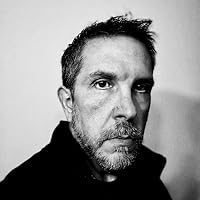
Jared Yates Sexton

15 books244 followers
Jared Yates Sexton is a born-and-bred Hoosier living and working in The South as an Assistant Professor of Creative Writing at Georgia Southern University. His work has appeared in publications around the world and his first short story collection, An End To All Things, is available from Atticus Books. His latest book, The Hook and The Haymaker, was released by Split Lip Press in January 2015. For more information and a select list of publications, please visit the author's website at www.jysexton.com. For more information on Split Lip Press, please visit www.splitlippress.com.

Ratings & Reviews

What do you think?
Rate this book

Friends & Following

Create a free account to discover what your friends think of this book!

Community Reviews

5 stars
325 (37%)
4 stars
372 (42%)
3 stars
143 (16%)
2 stars
28 (3%)
1 star
10 (1%)
Displaying 1 - 30 of 144 reviews
Profile Image for Bill Kerwin.
Author 2 books84.3k followers
July 17, 2020

If you only read one book about the 2016 campaign, I would advise you to pick this one, for Jared Yates Sexton, in the course of his journey across the country, saw with dark clarity the essence of the America voter today: full of rage, deaf to the opinions of others, lost in his own private world.

Sexton is well-equipped for such a task. He is no beltway journalist, but a writer of fiction (three books of short stories and a crime novel) whose day job is teaching Creative Writing at Georgia Southern University. He is no stranger to “Trump’s America,” since he grew up in the town Linton in southern Indiana (population 5,413 the last census) and attended Indiana State in Terra Haute and Southern Illinois University in Carbondale. Yet he has his liberal credentials too: he was an early opponent of the Iraq War, learning what it is like to be called a “traitor” at a family cookout before he turned twenty, and wept openly when Howard Dean dropped out of the presidential race in February of 2004.

So how did this book come about? Sexton, who was covering the campaign for the obscure journal “The Atticus Review,” decided, at a Trump rally at Greensboro in June of 2016, to sit among the North Carolina crowd. After all, he thought, he could easily pass for a Trump supporter, and it might be interesting to see how things looked from within the crowd. What he wasn’t prepared for was the vile nature of the taunts the crowd shouted, taunts that you never heard on television:
Before I went into the crowds and reported, there was very little in the way of eyewitness accounts as to just what was brewing among Trump supporters. This meant that for months, the gathered crowds were able to spout one bigoted thing after another without repercussion. Meaning they got comfortable and daring in their hate.
Sexton continued to tweet the worst of what he heard around him. It wasn’t long before he received a text from a friend: You’re trending nationally. Soon he was covering the campaign for The New Republic.

But it’s not just that Sexton was in the right place at the right time. He has a fiction writer’s eye for detail, and a poet’s sense of language, which makes this the best written book about the campaign that I have encountered so far. Besides, Sexton doesn’t just “out” the Trump crowd. He is an equal opportunity “outer,” who has harsh things to say about the Clinton staffers in Iowa (who treat every voter like a focus group), the “Bernie or Bust” crowd (who refuse to quit when Bernie does), and even the hapless Green Party National Convention:
...I was walking with Nelson and both of us were just stunned. It was a rinky-dink operation, for sure, but Nelson couldn’t figure out why it wasn’t more fun. “You’d think they’d have more of a sense of humor about themselves….

This was a convention for losers, never-would-bes, a place to complain about issues beyond their control and go home feeling good about their political stance. But in one of the closest elections in the history of American politics, the few liberals the Green Party were able to siphon off from the Democrats would certainly play a role in determining the outcome.
Profile Image for Michael Hicks.
Author 38 books506 followers
July 23, 2017
Probably like a lot of his followers, Jared Yates Sexton first came to my attention during the 2016 campaign when he began live-tweeting the racist, fascistic rhetoric that would soon become the staple of Donald Trump's bid for the presidency. In his novel, The People Are Going to Rise Like the Waters Upon Your Shore: A Story of American Rage, Sexton recounts this bleak, and somehow still fresh, nightmare.

Unfortunately, since this is a non-fiction political work, we know well in advance that there can be no happy ending. We haven't, as a nation, been trapped in an achingly real case of night terrors, and Sexton reminds us of an all-too real reality that we have been grappling with for only a short while, albeit one that feels eons longer. Toward the end of this book, the author recalls a cell phone conversation he overheard while traveling to cover Trump's inauguration, in which the caller explains to his listener that he finally understands the meaning of dog year's. Yup, I'm right there with you, bud.

Sexton's writing is strong and on-point, the tone of this work inescapably dark -- and rightfully so. Trump's ascendency marks what is easily one of the darkest moments of modern America, as his supporters strongly and vocally rejected morality, rationality, and progress in favor of cultish mentalities, stupid t-shirts demanding "Hang That Bitch" or pining for the murder of journalists, and attacking protestors (oftentimes with Trump's own encouragement). Given how much evangelical support Mr. Grab 'Em By The Pussy enjoyed, it should come as no surprise that his supporters, having already rejected morality and rationality, were easily swayed to join the Trump cult and drink all the Kool-Aid. [Side note: I even had a cousin tell me that Hillary was offensive to Christians. Take that for whatever it's worth.] Trump, himself endorsed by the Ku Klux Klan [a self-described Christian organization] and Neo-Nazis, helped to embolden his racist followers who have been primed by more than a decade of fake news conspiracy broadcasts from Fox News, InfoWars, and Rush Limbaugh in what became the political equivalent of a perfect storm.

While hatred and racism carried the day, that's only half the story. Sexton lays bare the flaws and missteps of the Hillary Clinton campaign, and although there are many fingers to point in this direction, her shortcomings are in no way equal to those of her rival, who was able to spin the media in any direction he chose with his constant slurs, lies, and general outlandishness. The Clinton campaign, though, tired so hard to make Hillary into a malleable Every Candidate for Every Voter character, to its detriment. Her events were so flashy, organized, and scripted, right down supporters photographs with cardboard displays of HRC and tweets upon tweets, that Sexton takes to calling the whole manufactured political theatre Clinton World. Hillary's inability to reach out to the forgotten midwestern voters was perhaps the biggest flaw of her campaign, particularly given that Trump should have been so very easily beaten, as every poll and media projection indicated. Sexton even breaks down all the various way the Clinton campaign could have, and should have, attacked Trump in an effort to win over middle America, but chose not to. Hopefully somebody from the DNC is paying attention to this list and makes use of it for the 2020 war for the heart and soul of this nation.

That Trump didn't lose, again, was a perfect storm, one that reached across the entirety of this country and straight on through to the Kremlin. Sexton touches on this latter element, of which more news regarding Russian involvement to help elect Trump and subvert our elections breaks on a near-daily basis (and recently confirmed by Trump Jr.!), but the book is heavily focused on the campaign itself and is as current as the protests of Inauguration Day. But, for an administration so besieged by malfeasance, criminal activity, political espionage, foreign agents, the destabilization of an entire nation, and a record number of golf outings, with the GOP complicit in all of it, the first seven months of Trump's rule certainly provide plenty of material for a follow-up account.

The People Are Going To Rise takes on an almost apocalyptic tone right from the outset, but I certainly cannot fault Sexton for that. I, too, am still mourning for the loss of an America, and the people, I thought I knew, the people and the country who turned its back on the world in order to embrace a racist, conniving, serial sex predator because they were sick of having a Black man in office and couldn't stand the idea of having a female president. I can hardly recount all the times since November 7, 2016, the day after election day, that one of my fervent Trump supporting relatives told me, "Hey, we had to put up with Obama for eight years, you can put up with Trump," as if the two men were somehow equal in intelligence and temperament while their Dear Leader fired off tweet after tweet attacking private citizens, private businesses, destabilizing stock markets in his favor, makes fist loads of cash by booking government engagements at his personal businesses, and commits treason like it's going out of style. And like Sexton, I grew up in a middle-class, midwestern home, with family constantly being indoctrinated by right-wing media, soaking up their hellish visions of this country like a sponge, until, one day, they elected to make that alternate reality the norm, embracing The End of the World As We Know It with arms wide open.

This book a dark, accurate take on a very dark subject. And what are we to do about it? as one college student asks Sexton. His reply: We fight.

We fight.

We resist.

[Note: I received an advanced copy of this title from the publisher via Edelweiss.]
Profile Image for Erin.
498 reviews126 followers
December 20, 2017
4.5 stars
Of all the postmortems of the 2016 US election I've read (and I've read a few), this is the one that is most blunt and realistic, and has the strongest point of view. Instead of a gossipy review of the more salacious aspects of the campaign, Yates reminds readers of the events that telegraphed the insane world we're currently living in. He pulls soundbites and provides context that have gotten lost or buried in our collective consciousness, since with Trump there's always some new controversy or scandal to be outraged over.

Ultimately, Mr. Sexton provides a clear and well-argued thesis about rage and identity politics as the crux of the election, as well as offering a disturbingly conceivable alternative narrative that, had the Clinton campaign employed, we might not be in the mess we're in right now.

4.5/5. Well worth the read!
Profile Image for Paul Hamilton.
Author 12 books50 followers
September 2, 2017
I first started following Jared Sexton a few years ago after we both had short stories appear in the same lit mag. But, I think, looking back, it was really only a matter of time before I became interested in his work in any case. During the wild election season of 2016, Mr Sexton bubbled to the top of my social media feeds as he started live-tweeting un-sympathetic dispatches from Donald Trump rallies. These boots-on-the-ground journalistic forays painted a fascinating (if disturbing) portrait of what was really happening in Trumpland.

I followed along, riveted, as the tone of these rallies grew uglier under Sexton's watchful eyes; I watched as his political pieces started getting picked up by increasingly prestigious outlets like The New Republic and The New York Times; I sat mesmerized as he struggled with a growing backlash from the emboldened right-wing online fringe (and its newly initiated non-fringe as well). I felt like we observed the whole train wreck together. Every unbelievable, exasperating, exhausting moment of it.

So, of course, when I saw that he was going to be putting out a book based on his earlier reporting and research, I was damn near first in line.

The main thing to make clear about The People Are Going to Rise is that Mr Sexton has a point of view. This is a less spectacle-based form of gonzo journalism than that popularized by the likes of Hunter S. Thompson, but no less compelling. Sexton is as much a character in the book as Hillary Clinton or Donald Trump. He tries different things, he gets deep into discussions with people he doesn't understand, and he injects himself into the narrative. He's not shy about pointing out where he stands, and that means some people who fundamentally disagree with Sexton's take that Trump is a boil on the ass of American politics (and America itself) will probably not be able to see past their "fake news" (oh, the irony) take on the book.

And that's to their detriment. Because this book is as critical of Bernie Sanders and Bernie Bros as it is of Trump and his bewildering supporters. It pulls no punches in analyzing Hillary Clinton. And, fundamentally, this is a book where the central theme is not "Trump is bad," but that Trump is just one symptom of a plague of rage and disenfranchisement. One stand-out moment in the book is where Sexton takes a staunch conservative stranger with him on a road trip to a Hillary Clinton rally. The person-to-person exchange characterizes the tone of what the book seems to be saying: what we have now isn't normal, but there is a normal that doesn't involve hatred and destruction and violence and death. To get there, Sexton seems to say, we need to close our mouths and open our ears.

This is a remarkable book. Its immediacy is breathtaking (I had no idea how much I was still stinging from the devastation of election night—less than a year ago!—until I read Sexton's eerily reminiscent account of it), but the scope feels like it bears the weight of history. Perhaps this comes from the care put into contextualizing events, at least those which are not still outstanding (like Trump's increasingly obvious ties to Russia, which is still breaking news regularly). Sexton's voice is clear and engaging, the writing strong and passionate without being dogmatic. I tore through this and even though every event it recounts is still fresh in my memory I never felt it was disposable; on the contrary it felt fresh and significant. Highly, highly recommended.
25 reviews20 followers
September 20, 2017
Incredibly depressing (subject matter) and curiously shallow (writing).

Nearly equally as depressing are the many atrocious mistakes in the text. "Towing" the line? The "tenants" of Christianity? "Nora" Jones? Survivalists "hording" supplies? Holy hell. If Jared Yates Sexton doesn't know better, an editor at Counterpoint certainly should have. FOR SHAME.
Profile Image for Zak.
409 reviews32 followers
February 5, 2018
Started off as very interesting coverage of the 2016 US presidential elections. The first half was good, then the author let his obvious distaste for Trump colour his writing. I don’t mind writers taking a stand on issues, but the second half resembled more of a personal rant. I think he still doesn’t get why Trump won.
Profile Image for Janelle Janson.
726 reviews531 followers
September 23, 2017
Thank you to Counterpoint Press and Kate Olson (theloudlibrarylady.com) for providing me this copy - all opinions are my own.

Sexton's reporting is from the grass-roots level during the 2016 Presidential election. His coverage showed the rawness and anger of the people at these rallies. Even though he has a point of view and political position, he is not afraid to cast blame on all sides, on Clinton, on Sanders, the media, and of course on Trump himself. Sexton employs a sort of gonzo journalism, reminiscent of Hunter S. Thompson, which I thoroughly enjoyed. And while given the unprecedented amount of coverage the election received, I was surprised that the story Sexton tells is one that is fresh, unexpected, and critically important for American politics moving forward.

Confession: I wasn't exactly in the right frame of mind to read a political book, however I'm glad I pushed myself to read it as it was very thought-provoking and insightful. I rate it a compelling 3.5 stars! I highly recommend it to anyone trying to make sense of this crazy election!
Profile Image for NancyL Luckey.
464 reviews17 followers
August 16, 2017
Maybe it was my timing. I read this book over the weekend of the tragic events in Charlottesville. Couldn't sleep and was absolutely sick to my stomach over how we ended up with this pitiful excuse for a human in the White House. And the book barely mentioned Russia. It not only sickens you, but it terrifies you. Saw a cartoon after I finished the book which summed it up: "It's not the statue, it's the base."
Profile Image for LindaJ^.
2,521 reviews6 followers
November 13, 2017
There was a program at the local independent bookstore this week with the author Jared Yates Sexton in conversation with a local minority community activist (who didn't think he was an activist). Sexton, an assistant professor of creative writing at Georgia Southern University, was well-spoken and in tune with the national political scene, and how mainstream and social media works. He has an experience worth sharing and does a decent job at doing that in his book, as well as at the program. He is somewhat left of center on the political scale and was disheartened by the election of Donald Trump. In the book, four of the subjects he explores in the book are (1) his experiences in connection with the various campaign events, the Democrat, Republican, and Green Parties conventions, and the inauguration; (2) what the Clinton campaign did wrong; (3) how the press (mainstream and non-mainstream) covered the primaries and the election; and (4) fake news.

Having attended none, I was particularly interested in is descriptions of the campaign events and the conventions he attended. He attended quite a few Trump events and reported what he was hearing as it took place. While this got him a campaign reporting gig with The New Republic, it also soon led to hate "mail" and death threats. He also attended at least two Saunders' and two Clinton campaign events and he compared and contrasted the difference between them - both between the events of the two candidates but also between the two events of each candidate. He also contrasted and compared the three conventions he attended and told what he experienced outside the centers where the conventions were being held.

After the election, he queried Clinton campaign staff in respect to what they did and did not do. While he thought the ad asking if you wanted Trump as a role model for your children was accurate and well-done, he thought it should have been used only in suburban communities and was a big mistake to use in blue collar land. He explained that his family was not well-educated, worked at factory or mine-type jobs, and the conversation around their dinner table was full of cursing, racism, and misogynistic statements and sounded a lot like Trump (and were big Trump supporters). He thought people like his family would have been more open to attacks that pointed out that Trump was a billionaire, liked to fire people, sent work to other countries, flew in a private jet and helicopter with his name on it, and similar things showing how Trump was not like them.

Sexton sharply criticizes the mainstream media for paying more attention to the bottom line than focusing on governance issues. He believes (and I don't disagree) that the right wing press (particularly FOX) had been feeding untruths for so long that when Trump started saying them, those who were FOX-only watchers had no reason to disbelieve them. He blames part of the problem on the FCC dropping the fairness doctrine in 1987, which permitted media outlets to be as one-sided on issues as they desired, and since most people listen only to what "confirms" their beliefs, most people never get more than one viewpoint.

I think the book has real value as a first hand account of what Sexton observed during the campaign. He thoughts about campaign strategy, the press, social media, and fake news were provoking and made me think. Many make sense but will require more information. I like to hear what others have concluded as I often hear things I had not considered. I think that the book would have benefited from a bit more separation between first hand experience and conclusions to be drawn. In some ways, this reads like a memoir of an experience. The author talks a lot about drinking beer to drown his sorrows over what he has just seen and heard. I did not think those recollections enhanced the points the author was trying to make. I do recommend the book for those who are trying to figure out why we ended up with Donald Trump as the US President. It is worth the time.

Profile Image for Avery.
Author 6 books105 followers
August 27, 2017
This book is a collection of essays on various topics related to the 2016 campaign, not necessarily in a single narrative. The author was hounded online and harassed for reporting on what he heard at a Trump rally. I found going over the old memories both cathartic and horrifying. But to me, the author got in the way, especially in the second half. The writing goes from being descriptive and objective, to editorializing in the worst way.

What I'm guessing happened is that these essays were written in real time as they happened, and that Saxton started out with an open mind to the people he was listening to, but following the attacks on him by angry Trump supporters, he retreated to the safety of his own politics. This could have been fixed with good editing, and the healing that comes from distance in time and place.

Alas, the book is not well edited, and Sexton's politics, as they are revealed to us, are fairly bad. One of his weirder passages is as follows:

“Social media have branded them [Bernie Sanders’ supporters] as children in need of a timeout, and maybe that isn’t far from the truth … They looked at the political circles you and I followed and felt disgusted by their shallowness and craven attitudes … To them, there was right and then there was wrong.” (pp.177-8)

It’s not clear who the “you” refers to in this paragraph. Apparently his ideal reader for this book is someone who doesn’t believe in right and wrong, or maybe someone who thinks that the progressive wing of the Democrats needs a time out. This sort of rhetoric becomes standard in the latter half of the book: Julian Assange is a “supervillain” with an “icy stare,” etc.

He doesn’t have much respect for views that lie outside the media establishment. For example, he believes that NAFTA "bolstered our economy and led to higher standards of living" (p.88), even though he has friends and family in Indiana whose standard of living decreased after NAFTA and who, unlike him, correctly identified its impact on their lives. He trusts the wonks over his own family.

You can also see the author’s mainstream media background reflected in his false belief that the Fairness Doctrine would have regulated cable (false), that Roger Stone was an influential member of the Nixon campaign (false), that Trump had an email server which was secretly “communicating with a Russian bank” (false). All of these falsehoods are things that circulate widely within the media establishment and not so much outside of it.

I enjoyed the first quarter of this book, but gave up on it midway through the third quarter.
Profile Image for Kevin Kelly.
101 reviews8 followers
October 10, 2017
I read this so you don't have to. It starts off as a promising, objective view of what took place in the last election before pulling the driver's wheel hard and steering the reader into a dense wood of emotions and rage from the author. But not before bouncing back on to the road of objectivity at the start of each chapter. This book is basically a case study for understanding why the left is losing ground at the moment, told thru the perspective of a whiny, white dude who talks about drinking a beer to calm his nerves every 8 pages.

There are some poignant quotes on the effect of modernity and social media on the electoral process and how political identity masks a politicians real focus. Two quotes to be exact. But they are overshadowed by so much b.s. written in liberal tears that it's hard to filter them out.

From the only 1 star amazon review:
"Almost comical after a few chapters, with non-stop hypocritical stereotyping and name calling. This exemplifies why the Anti-Hillary voters turned on the "Better-than-Thou" and put us where we are today. "

Here's an excellent review from a left-leaning, feminist editorial outlet: http://therumpus.net/2017/08/the-peop...

"Jared Yates Sexton’s book, like so many of our country’s problems, began with a tweet."

"Sexton goes to lengths to deny his lack of objectivity, noting that despite receiving death threats, he can ride in a car with a Trump supporter—a situation that is more exemplary of white male privilege than some sort of hope for political unity. His contempt for Trump supporters ultimately undermines his analysis. A writer cannot offer humanity and complexity on the page while simultaneously insulting and despising his subjects. How can Sexton identify with the people he is profiling and also dismiss them with classist language? It’s a contradiction that would have been worthy of examination; instead, it’s glossed over."
Profile Image for Jill Meyer.
1,188 reviews122 followers
June 21, 2018
I was looking for an Audible book to listen to in my car for a long, twice weekly commute. I chose "The People...Shore", written by Jared Yates Sexton and narrated by PJ Ochlan, my favorite narrator. The book, published in August, 2017, is a beautifully written look at the 2016 presidential race and election. But the subtitle of the book, "A Story of American Rage", is really the story Sexton tells like no other author I've read since the election.

Jared Sexton is in his mid-30's and is an assistant professor at a college in Georgia. Born and raised in Indiana, he's from a background that matches most of Donald Trump's supporters. In 2015 decided to write about the upcoming presidential campaign. He started attending both Democratic and Republican rallies all over the south and midwest and wrote on social media. After one particular report from a Trump rally gained traction in social media, he became famous and a target for Trump supporters. He received death threats both on-line and physically. But some larger, more mainstream media noticed Sexton's work and he began to report for those outlets.

Sexton's book does differ from those written by professional politicians and reporters, or campaign aides in that he looks at the election as an "outsider". He also writes about Trump's supporters with a sympathetic eye because he understands them. Clearly, he's not a Trump supporter but he understands their thoughts and hatred of Democrats, in general, and of Hillary Clinton, in particular. But if Sexton writes with understanding, he also writes with a dry humor I haven't seen in other books. His description of the Green Convention in Houston is almost laugh out loud funny. Jared Sexton ends his book feeling about the 2016 election as I and many others ended it - disconsolate. But his book is a superb "read" or, as in my case, a "listen".
Profile Image for Kressel Housman.
992 reviews263 followers
February 4, 2018
I listen to plenty of political podcasts, and I get many book recommendations from them. This book is a perfect example, but after having read and listened to so many different analyses of the Trump phenomenon since mid-2016, parts of it seemed pretty redundant and outdated. Still, all authors brings their own unique insights to the situation, and Jared Sexton's were as good as any of the other fine reporters I've absorbed this year. His specialty was describing the reactions of the crowd on the ground, whether the candidate was Bernie, Hillary, or Trump himself. His final prescription is that Hillary took the wrong tack in emphasizing Trump's lack of fitness for the office. His racism, sexism, and bullying may offend coastal "elites" like me, but to the rural white working class, that's perfectly normal. Sexton argues that she should have emphasized that he became a billionaire because of his inheritance, and that as a businessman, he stiffed plenty of average workers like them, even boasting about it. In other words, she should have emphasized his elitism.

This was a well-written book, but I'm afraid I read it at the wrong time. I no longer need an analysis of what happened in 2016. I need an analysis of the legal issues Robert Mueller is exploring. I want signs that Democrats are applying the lessons of 2016 to the 2018 midterms. But the one thing this book accomplished for me was to prompt me to do more activism. I stay tuned into the news all the time, but my "resistance" activism has waned in the last few months. If I get started again, this book will be part of the reason (or maybe it's just that I saw a few good meetings coming up). May G-d protect democracies everywhere.
Profile Image for R Z.
456 reviews20 followers
July 30, 2017
A really good ground report of the factors that brought Trump to victory in the election. A conglomeration of factors, and as partial as can be— considering the subject matter. He obviously has a bias, that the Trump administration and his core group of constituents are bigots (with my personal agreement,) but he talks about the factors leading up to the election in a manner that I sometimes disagreed with but was able to understand where he comes from.

This is a really great look at the 2016 election, and should be read especially if you still find yourself wondering just how the perfect storm of factors influenced the election.

Profile Image for Alexia Chantel.
Author 1 book39 followers
September 27, 2018
*received as a Goodreads giveaway

Interesting read, was hoping for more of an unbiased account of what took place.
Profile Image for Rebecca.
288 reviews
November 9, 2019
an impressionistic representation of the 2016 presidential campaign that includes a chapter on "Bernie or Bust" ppl at the Dem convention as well as a description of the Green Party convention. Some of his impressions really capture a mood or feeling well. As an overall portrait of the zeitgeist, it's good, and I'd recommend it for what it says about the general mood of the electorate. I was at the Disrupt J20 protests and had a very different experience from what he describes - and that is the flaw in reporting based so much on one person's perspective. I don't doubt his experience, but he chased reports of vandalism with other packs of reporters. It was also possible to spend an entire day on the streets of DC among protesters on the day of the inauguration without encountering any vandalism or violence, only to hear about it on the news later. The one thing he does get right about that day is how few Trump supporters were anywhere - they were very much outnumbered by protesters on the streets around the entrances to the mall, where vendors had such a hard time selling MAGA hats that one enterprising dude tried to get people to buy the hats so that they could burn them! The fact that Sexton often describes himself drinking makes me wonder whether he was trying to do a sort of Hunter Thompson treatment, but this book doesn't rise to that level of "gonzo."
Profile Image for Tracy.
2,802 reviews18 followers
June 13, 2020
We live in a country that is so angry and divided that it hurts my heart. This book covers the 2016 election and I felt that it did a fairly good job of staying objective. The political discourse in our country is no longer polite and this book definitely highlights that. I'm trying to read more to help me understand why we are so divided.
Profile Image for alex.
152 reviews34 followers
September 24, 2017
this is an interesting and successful narration/recap/analysis of the 2016 election cycle, in all its hostility and eldritch horror.

thoughts:
-sexton does a good job of explaining why so many people felt so spoken to and validated by trump's words and actions and brings into the argument his (sexton's) own experiences growing up in a working class, blue-collar worker family. personally, i had heard a lot of the "trump speaks to the 'forgotten people'" thing already, but what was new to me was the fact that many working class americans weren't horrified or unnerved by trump's racism/xenophobia/sexism/homophobia/etc, because all of it and worse had been thrown around in their homes and communities since they were kids. the podcast s-town also helped me understand this a little better back in april.

-the division of the democratic party between bernie supporters and hillary supporters is depicted well, and i'm glad sexton mentioned the bernie bros' tendency to say some of the same phrases about hillary that trump supporters did/do, because in my bernie phase i almost fell into that trap too until i realized it was some bullshit.

-after 8-12 months of increasing cynicism, few things about trump or politics truly shock me anymore, and i felt that way reading this book until i reached the section about the green party national convention. hoo boy. that is some unadulterated ridiculousness over there, and i salute anyone who took the time to report on it.

-maybe it would have been better for me to read this two or four or eight years from now. it feels almost too fresh, especially considering that i didn't feel overly shocked as i re-read trump's remarks on mexicans, muslims, and grabbing women by the pussy. that's part of the reason why i don't think i'll be reading hillary's book, "what happened," just yet. it's kind of eerie and not necessarily effective to read books that are too 'present day.'

-sexton's answer to "what do we do now?" the day after the election was simply, "we fight." it's a good answer, better than my own "i don't know." in november and december 2016, january 2017, i was into fighting and resisting. now, i still call my representatives, go to protests, y'know, the basics -- but ultimately? i don't know what to do, and things feel more futile than ever.

-fever metaphors: this book has a lot of 'em. at least seven times, sexton writes something to the effect of "and then we thought the [conservative/alt-right/bigoted] fever had finally broken." of course, it hadn't, it still hasn't. with respect, JYS, i don't think all the acetaminophen in the country would've helped.

a final note:
jared is an incredibly kind person, and one of many journalists who endure a ton of online harassment for daring to voice both the truth and their own opinions. this book took a lot of determination to research and write, and he did it of his own undertaking. i think that's worthy of congratulations whether you agree with him on all points or not.
Profile Image for Martin Ott.
Author 14 books128 followers
December 20, 2017
Loved this book and was also horrified by what Trump has stirred in our country. Highly recommend.
Profile Image for Ryan.
220 reviews
August 31, 2017
A gripping book, that's hard to stomach at times. It gives a depressing look into the underbelly of Trump's radical base, and does a good job exploring how America became so divided and polarized. Sexton, on the ground-floor of Trump's rallies as an independent journalist, gives a first-hand account of sexism, racism and general bigotry at Trump's rallies, and dissects how main-stream Republicans turned a blind eye to extremism to carry Trump to the white-house.

I want to give this book a perfect 5/5, because it was gripping and insightful, but there were a few loose strings that caused me to unravel the author's narrative a little bit. There's a moment where he reported the infamous line from Trump's campaign announcement speech as "they're rapists" (making it seem like Trump is calling Mexicans rapists) instead of the more contextually accurate "their rapists" (as in, "they're sending... their rapists"). It's a minor thing, but when the author is making serious claims about how Trump is counter-virtue signaling to racists, it's important to be as fair as possible and make the case air-tight. There's also a part in the book where the author hears someone in the audience of Trump's acceptance speech yell "hang Obama" on television, when I definitely heard it as "repeal Obama" when I watched it live, and re-watched it after reading Sexton's claims.

These aren't big things, but they're enough to create little cracks in the author's narrative, even for me, someone who generally agrees with the author and despises Trump and his supporters. If it's enough to make me take the author's narrative with a grain of salt, it'll certainly be a barrier to someone who preemptively looking to dismiss the author's claims.

Regardless, I would highly recommend the book! It's very well written, and generally does a great job dissecting the Trump movement.
Profile Image for Tim.
212 reviews12 followers
September 5, 2017
This book is a masterwork for understanding the current political climate we find ourselves in as a nation. Jared Yates Sexton recounts life on the road, going from Trump rally to Trump rally and to both political conventions. The overall uniting theme of it all- rage. Rage at Obama, rage at intellectuals, rage at the "establishment", rage at our multicultural/multiethnic/multireligious country - nothing but rage. And Donald Trump, with his blustery declarations, outright lies, aggression, bullshit, and Twitter wars fit the bill for so many who just wanted to be angry. So they rallied around him, knowing he was a bad candidate, knowing he's a bad politician, because he was aggressive and called out what they conceived as the liberal lies.

Our country is in a dark, dark place and it didn't come out of nowhere. It's been brewing in the shadows for the last several decades, behind closed doors and in the darkest corners of cyberspace. In the last eight years it has bubbled and boiled into public view and then exploded from channels like Fox News and Breitbart until it finally oozed out and took over everything. I only hope that we can continue to fight back without becoming overwhelmed.

Read this book. It is a must to not only figure out how we got here, but how to begin fighting back.
Profile Image for Susan.
115 reviews99 followers
September 3, 2017
I won this book via goodreads, and am glad I did, even though I had a few issues with it. I liked the writing and the book moved quickly. I did have to put it down for a week, but that was because I was just overloaded with Trump; it was all just too much. One odd bit about the writing was the references to how much the author drank. I didn't think it really served a purpose, and seemed more like a device. There were also some typos that stood out.

The detail around the rallies was great -- I could hear Bernie. One of the Clinton rallies echoed my experience. I gained insight from his experiences with Trump supporters. I like that the author doesn't insist that Trump's rise wasn't due to one thing or the other, but a combination. And I appreciate him reconciling his mistakes and admitting how he was wrong. I was one of the but-he-has-no-ground-game people, so I appreciated reading about why that didn't matter.

But his conclusions of what could have changed the outcome seem muddy to me. He wrote, "there is at least one thing [the working poor] are exceptionally talented at: detecting bullshit when a rich person is trying to manipulate them." Yet later on the same page: "Clinton's strategy drove them further into Trump's camp, and, with the aid of Steven Bannon's populist rhetoric, he positioned himself as the voice of the common man. He was lying and, I suspect, deep down in their guts, his supporters knew as much. If only they'd been given half a reason, the portion of Trump's working class base that gave him the presidency would've evaporated and all the lies, exaggerations internet manipulations, and cognitive dissonance in the world wouldn't have saved his candidacy." So are they good at detecting bullshit or not? If this is their strength, why would they need to be given a reason? He spoke like them so they let themselves be manipulated? Perhaps I'm just pissed because I still believe people were given every reason in the world.
Profile Image for Meredith.
177 reviews4 followers
December 9, 2017
I appreciate Mr. Sexton’s unabashedly liberal worldview, and his full acknowledgement of it and how it could affect his reporting. His retelling is the 2016 campaign brought back all of the feelings of horror, surprise, dumbfoundedness; “surely THIS will be the misstep that derails Trump’s campaign!”

The reason I had to knock off a star is that I’m SO tired of the “working poor” trope. The median salary of Trump voters is $70,000/year, NOT working poor or poor whites. That particular demographic may have abandoned Clinton, but they didn’t flock to Trump in the droves that reporters still seem insistent to shove down our throats.

I also found Sexton’s characterization of working class households to be way too generalized. I also grew up with a working class father, and my parents certainly did not talk the way the author insists, and I reject the idea that the entire demographic is racist, misogynistic homophobes. Yes, there certainly is a nasty underbelly of those types in America, but I am much more inclined to believe that each demographic has their fair share of those types, not that they are concentrated in the working class.
Profile Image for Nancy.
276 reviews
September 1, 2017
Jarod Yates Sexton is a journalist who during the 2016 Presidential campaign witnessed the passion at the Feel the Bern rallies, the demonstrations outside of the RNC and DNC conventions, the debates, and the Trump rallies where he gained national attention when he started live-tweeting, describing raw anger and vitriol like he had never seen before. Along with the exposure came daily death threats and intimidation. This is a fascinating political read about a campaign that crossed many ethical lines and hit new political lows with the results flabbergasting almost all the political watchers and commentators.
Profile Image for Patricia.
203 reviews11 followers
November 8, 2017
So many thoughts I’ve had about what went wrong during the 2016 election are discussed here, with the best insight and first-hand reporting I’ve read. Best of all, Sexton gives all the details from both sides and the middle; a welcome detail. Learned much, and anxiously anticipate his talk this evening at my local independent bookstore. Should be a fascinating discussion. Highly recommend this gripping read.
Profile Image for Pan Ellington.
Author 2 books12 followers
May 12, 2019
love that sexton connects his writing to his blue collar roots, something i relate to very much. insightful take on 2016/dump truck donnie told in intelligent, accessible language with just a little bit of edge.

read it.
Profile Image for Beth.
453 reviews9 followers
August 31, 2017
One of clearest accounts of the 2016 election I've read yet...Sexton writes evocatively. I consider this a must read if you want to try to understand what happened last year and how we got here.
Profile Image for Jessica Scott.
Author 34 books1,285 followers
September 30, 2017
Thought provoking book and fascinating perspective about the 2016 election cycle. Biggest takeaway is that we are not nearly as divided as the media makes us out to be. A very important book.
Displaying 1 - 30 of 144 reviews

Join the discussion

Can't find what you're looking for?

Get help and learn more about the design.