The “silent spring” that Rachel Carson anticipated in her 1962 classic of environmentalist literature became a lived reality in the spring of 2020, when people around the world sheltered in their homes and a busy world turned eerily quiet. It may not have been exactly the kind of “silent spring” that Carson predicted, but it is one that should get all people everywhere thinking very carefully about the way we treat our world. As prescient now as it was half a century ago, Rachel Carson’s Silent Spring is one of the most important works of environmental literature ever written.
Carson’s life provides an inspiring example of a woman forging success in a male-dominated field – in this case, science writing – through talent and hard work. Originally from the Western Pennsylvania farm community of Springdale, Carson attended the Pennsylvania College for Women (now Chatham University) and continued her studies of zoology at Johns Hopkins University, where she earned a master’s degree. Writing for the U.S. Bureau of Fisheries, Carson demonstrated literary talent that attracted the attention of prestigious publishers like the Atlantic Monthly magazine and the Simon & Schuster publishing house.
Early Carson works like The Sea Around Us (1951) and The Edge of the Sea (1955) did a brilliant job of making scientific subject matter accessible to, and interesting for, a lay audience, and by the early 1960’s Carson had in mind a work that would combine exposition with advocacy. She saw the harm that powerful pesticides were inflicting on the natural environment, while the big chemical manufacturers provided bland assurances that their products were safe. Consequently, Carson made the courageous decision to take on the chemical industry and denounce its deadly products.
Carson begins Silent Spring with an unforgettable, profoundly disturbing first chapter that is titled “A Fable for Tomorrow.” In that chapter, she asks the reader to imagine “a town in the heart of America” – a town, perhaps, much like Carson’s hometown of Springdale, Pennsylvania – where “a strange blight crept over the area”, sickening livestock, rendering fruit trees infertile, driving away songbirds, killing the fish of local waterways, and finally bringing sickness and death to the people of the town themselves. “No witchcraft, no enemy action, had silenced the rebirth of new life in this stricken world,” Carson writes grimly. “The people had done it themselves” (pp. 1-2).
Having asked the rhetorical question “What has already silenced the voices of spring in countless towns in America?”, Carson answers by writing that “The most alarming of all man’s assaults upon the environment is the contamination of air, earth, rivers, and sea with dangerous and lethal materials” (pp. 4-5) – chiefly, as she clarifies, the chemicals manufactured to destroy animals and plants that are deemed to be “pests.”
Carson, for all of the often poetic quality of her prose, is a tough-minded scientist, and she is merciless in demolishing the arguments that the big chemical companies had developed to defend the sale and use of powerful pesticides like dichlorophenyltrichloroethane – a chemical that you may know better by its standard abbreviation of DDT – in passages like this one:
The old legend that “a pound of DDT to the acre is harmless” means nothing if spraying is repeated. Potato soils have been found to contain up to 15 pounds of DDT per acre, corn soils up to 19. A cranberry bog under study contained 34.5 pounds to the acre. Soils from apple orchards seem to reach the peak of contamination, with DDT accumulating at a rate that almost keeps pace with its rate of annual application. Even in a single season, with orchards sprayed four or more times, DDT residues may build up to peaks of 30 to 50 pounds. With repeated spraying over the years, the range between trees is from 26 to 60 pounds to the acre; under trees, up to 113 pounds. (p. 57)
In connection with phenomena like anti-insect sprayings that kill birds, or anti-weed sprayings that kill farm produce and wildflowers, Carson sets forth a core theme of the book: “The question is whether any civilization can wage relentless war on life without destroying itself, and without losing the right to be called civilized” (p. 98).
Carson also gets the reader thinking about the way in which the American public’s thinking about poisons has itself changed:
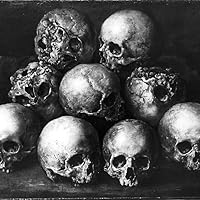
Our attitude toward poisons has undergone a subtle change. Once they were kept in containers marked with skull and crossbones; the infrequent occasions of their use were marked with utmost care that they should come in contact with the target and with nothing else. With the development of the new organic insecticides and the abundance of surplus planes after the Second World War, all this was forgotten. Although today’s poisons are more dangerous than any known before, they have amazingly become something to be showered down indiscriminately from the skies. Not only the target insect or plant, but anything – human or non-human – within range of the chemical fallout may know the sinister touch of the poison. Not only forests and cultivated fields are sprayed, but towns and cities as well. (pp. 155-56)
Part of what gives Silent Spring its power is the sheer joy with which Carson writes about science. She makes the magic and the symmetry and the beauty of science come alive, even for the non-science-savvy reader. I liked, for instance, the appealing, audience-friendly manner in which Carson explained oxidation as “The transformation of matter into energy in the cell…an ever-flowing process, one of nature’s cycles of renewal, like a wheel endlessly turning” (p. 200).
Having thus advanced the reader’s understanding of how “This process by which the cell functions as a chemical factory is one of the wonders of the living world” (p. 200), Carson then makes the reader care about how modern pesticides can wreck the machinery of that cellular-level “chemical factory”:
DDT, methoxychlor, malathion, phenothiazine, and various dinitro compounds are among the numerous pesticides that have been found to inhibit one or more of the enzymes concerned in the cycle of oxidation. They thus appear as agents potentially capable of blocking the whole process of energy production and depriving the cells of usable oxygen. This is an injury with most disastrous consequences… (p. 204)
When she wrote Silent Spring, Carson had to know that the chemical industry would attack her without mercy. Linda Lear’s foreword to this edition of Carson’s classic text makes clear just how bitter and personal the industry’s attacks upon the book and its author were:
In 1962…the multimillion-dollar industrial chemical industry was not about to allow…a female scientist without a Ph.D. or an institutional affiliation…to undermine public confidence in its products or to question its integrity. It was clear to the industry that Rachel Carson was a hysterical woman whose alarming view of the future could be ignored or, if necessary, suppressed. She was a “bird and bunny lover,” a woman who kept cats and was therefore clearly suspect. She was a romantic “spinster” who was simply overwrought about genetics. In short, Carson was a woman out of control. She had overstepped the bounds of her gender and her science.
And the chemical industry’s futile efforts to discredit Carson – efforts on which they spent the then-princely sum of $250,000 – did not represent the last time that wealthy and powerful people felt threatened by this elegant little book. A 2007 U.S. Senate resolution to honor Carson – the sort of thing that usually sails through the Senate without difficulty – was blocked by an Oklahoma senator who accused Carson of using “junk science” and unfairly maligning DDT.
Really, Senator? Really? I would assume that your American patriotism includes an appreciation for the bald eagle – a bird that was officially listed as an endangered species from 1973 to 1995, and stayed on the “Threatened” list until 2007. Pesticides like DDT, indiscriminately applied, weakened the shells of raptors like the bald eagle, to the point that the national symbol of the United States of America almost became extinct throughout the U.S.A. And DDT was banned across the country in 1972, and the recovery of the bald eagle population commenced almost immediately. But perhaps, for the Senator from Oklahoma, these facts would be inconvenient truths.
In a chapter titled “Nature Strikes Back,” Carson evokes a concern that might have been new to her readers in her time but is only too familiar to us now – the idea that the indiscriminate use of pesticides can actually, in the long run, make pests stronger. In this model, those members of a species that survive the application of pesticide give birth to offspring that can even more successfully resist the pesticide, in a manner reminiscent of Darwin’s theory of natural selection.
“With the passage of time,” Carson writes, “we may expect progressively more serious outbreaks of insects, both disease-carrying and crop-destroying species, in excess of anything we have ever known.” And to anticipate and refute the ideas of those readers who might claim that this is a problem of the future, not of the present, Carson mercilessly notes that “it is happening, here and now. Scientific journals had already recorded some 50 species involved in violent dislocations of nature’s balance by 1958. More examples are being found every year” (p.251).
Nature Strikes Back, indeed. Did a virus jump from a bat to a pangolin to humankind – or did it jump straight from bat to humankind – or did it generate in some other way? However the coronavirus/COVID-19 outbreak came about, that spring of 2020 was indeed a silent spring – though not the kind that Rachel Carson warned of. It was not a silence caused by the absence of birdsong, but rather a silence brought about by the absence of human noise.
As people around the world sheltered in place, in response to the coronavirus/COVID-19 outbreak, there were fewer cars on the roads, and fewer airplanes in the now-cleaner skies. Water pollution receded to the point that fish swam in the suddenly-clear canals of Venice. Wildlife could be seen in the downtown streets of communities around the world: elk in England, civet cats in India, coyotes and black bears in California, monkeys in Thailand, wild goats in Wales, kangaroos in Australia, penguins in South Africa.
In short, nature was sending us a signal, in much the manner that Carson suggested might happen. This beautiful planet that we have taken so much for granted could one day shrug us off, like a dog shaking off fleas, and could carry on quite well without us. Like any truly great book, like any classic of its genre, Silent Spring transcends the concerns of the time in which it was written, and speaks to each new generation of readers in fresh and new ways.