Jump to ratings and reviews
Rate this book

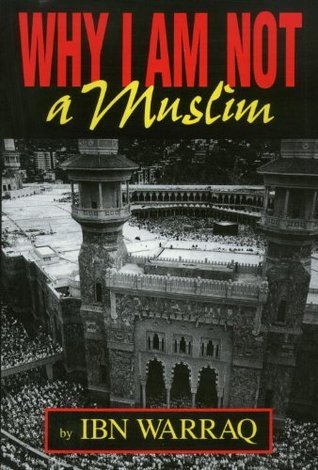
Why I am Not a Muslim

Rate this book
Those who practice the Muslim faith have resisted examinations of their religion. They are extremely guarded about their religion, and what they consider blasphemous acts by skeptical Muslims and non-Muslims alike has only served to pique the world's curiosity. This critical examination reveals an unflattering picture of the faith and its practitioners. Nevertheless, it is the truth, something that has either been deliberately concealed by modern scholars or buried in obscure journals accessible only to a select few.

428 pages, Paperback

First published May 1, 1995

106 people are currently reading
3926 people want to read

About the author

Ibn Warraq

21 books113 followers
Ibn Warraq is the pen name of an anonymous author critical of Islam. He is the founder of the Institute for the Secularisation of Islamic Society and used to be a senior research fellow at the Center for Inquiry, focusing on Quranic criticism. Warraq is the vice-president of the World Encounter Institute.
Warraq has written historiographies of the early centuries of the Islamic timeline and has published works which question mainstream conceptions of the period. The pen name Ibn Warraq (Arabic: ابن وراق, most literally "son of a papermaker") is used due to his concerns for his personal safety; Warraq stated, "I was afraid of becoming the second Salman Rushdie." It is a name that has been adopted by dissident authors throughout the history of Islam. The name refers to the 9th-century skeptical scholar Abu Isa al-Warraq. Warraq adopted the pseudonym in 1995 when he completed his first book, entitled Why I Am Not a Muslim.
He is the editor of several books, also including The Origins of the Koran (1998), The Quest for the Historical Muhammad (2000), What the Koran Really Says (2002) and the writer/editor Leaving Islam (2003). He is a controverisal figure among his contemporaries as many academic specialists in Islamic history consider him to be polemical, overly revisionist and lacking in expertise.

Ratings & Reviews

What do you think?
Rate this book

Friends & Following

Create a free account to discover what your friends think of this book!

Community Reviews

5 stars
358 (34%)
4 stars
368 (35%)
3 stars
193 (18%)
2 stars
72 (6%)
1 star
46 (4%)
Displaying 1 - 30 of 96 reviews
62 reviews49 followers
January 13, 2015
Muslims are the first victims of Islam. Many times I have observed in my travels in the Orient, that fanaticism comes from a small number of dangerous men who maintain the others in the practice of religion by terror. To liberate the Muslim from his religion is the best service that one can render him. —E. Renan.


On the internet, and in real life, you will find Muslims who will confidently avow how impeccable their holy book is. You will also find them announcing that Islam is a religion of peace by citing certain verses from the Quran. I used to be one of them also. However, doing this will only show your lack of knowledge of pre-Islamic Arabia, the intolerance of Islam and the absurd laws of Islam that are incompatible with our modern day life.

Ibn Warraq touches upon every possible aspect of Islam that I can think about and that should be scrutinized. The book is extremely well-researched. The author says in the beginning of the book that he is not a scholar; in this book, he just collected various scholars' work and commented on them. His commentary is however, meticulously executed and the abundance of sources make his arguments even stronger. Chapters are devoted to some of the most important issues regarding Islam: the origin of Islam; Muhammad and his message; Structure, grammar and errors of the Quran; Nature of Islam; Islam, democracy and human rights; Women in Islam's view and etc. As the author makes some strong cases against Islam through the book, it makes one think how can any Islamic apologist, for example Hamza Tzortzis (or substitute another apologist's name), speak of Islam as being divine and peaceful? I wonder if they are indeed ignorant about Islam to this extent. Or if they do know the truth about Islam but repackage it as divine to sell to the general customers who are unaware of this side of Islam. Apparently, ignorance is bliss.

My favorite was The Origins of Islam. It was fascinating. The chapter analyzes the influences of Judeo-christian, Zoroastrian, Pre-Islamic Arabia, other middle eastern and Greek legends on the Quran and therefore on Islam. Various stories in the Quran are copied from Zoroastrian religion. For example: Muhammad going to heaven on a winged donkey and meeting previous prophets and etc. was a Zoroastrian story, which had different characters and setting. Now, of course, many—if not all—Muslims will say, "But Muhammad (pbuh) was illiterate! How could he have copied the stories, he didn't even know how to read!" Well, of course, the Quran shows that Muhammad was illiterate. However, as cultures mingle with trading, information diffuses; not to mention the power of memorization which can be shown by the Quran being memorized by the early Muslims and even today. In this chapter, you can see the evolution of religions.

It is also heartbreaking to hear about how many Muslim women and children suffer from the atrocities of Islam in different parts of the world. He cites multiple cases, which show how backward and irrational Sharia law is. I will mention two of them here and I am confident that only two will suffice to support my argument of Shari'a law being idiotic:

A thirteen-year-old girl was kidnapped and raped by a "family friend." When her father brought a case against the rapist, it was the girl who was put in prison charged with "zina," illegal sexual intercourse. The father managed to secure the child's release by bribing the police. The traumatized child was then severely beaten for disgracing the family honor.

A fifty-year-old widow, Ahmedi Begum, decided to let some rooms in her house in the city of Lahore to two young veiled women. As she was about to show them the rooms, the police burst into the courtyard of the house and arrested the two girls and Ahmedi Begum's nephew who had simply been standing there. Later that afternoon, Ahmedi Begum went to the police station with her son-in-law to inquire about her nephew and the two girls. The police told Ahmedi they were arresting her too. They confiscated her jewelry and pushed her into another room. While she was waiting, the police officers shoved the two girls, naked and bleeding, into the room and then proceeded to rape them again in front of the widow. When Ahmedi covered her eyes, the police forced her to watch by pulling her arms to her sides. After suffering various sexual humiliations, Ahmedi herself was stripped and raped by one officer after another. They dragged her outside where she was again beaten. One of the officers forced a policeman's truncheon, covered with chili paste, into her rectum, rupturing it. Ahmedi screamed in horrible agony and fainted, only to wake up in prison, charged with zina. Her case was taken up by a human rights lawyer. She was released on bail after three months in prison, but was not acquitted until three years later. In the meantime, her son-in-law divorced her daughter because of his shame.


It makes you wonder why some parts of the world have advanced, at least comparing ourselves to 1400 years ago, and why some parts of the world are still living in the seventh century Arabia. Now of course, apologists will say, "They aren't following the real Islam." However, they are getting these rules from the same book that the apologists follow. Also this is just a "no true Scotsman" fallacy.

You could easily spot any Religion of Peace. Its extremist members would be extremely peaceful.—Ricky Gervais


This book should be read by everyone who says that Islam is a religion of peace. The peaceful Muslims are just the result of their "scriptural ignorance and secular knowledge," as Sam Harris put it when describing religious moderates. Most importantly, it should be read by every Muslim in this world. But as one reviewer put it: This is an important work, though probably few will read it who should.

Mulla, if your prayer has power
Let me see you shake the mosque !
If not, take a couple of pegs of liquor
And see how the mosque shakes on its own.
Profile Image for عماد العتيلي.
Author 16 books651 followers
September 27, 2015
description

بدأت بقراءة هذا الكتاب على التوازي مع كتاب الفيلسوف الكبير راسل.
طبعا لا يخفى على أحد أن عنوان وفكرة هذا الكتاب مستوحاة من راسل.

description

اقتحمت الكتاب وفي نيتي أن أقتنع! وأنا أعني ما أقول.
ولكنني وجدت أن الحجج الموجودة في الكتاب في غالبيتها الساحقة مبنية على ممارسات المسلمين وفقهائهم الخاطئة، لا على الإسلام القرآني الجامع. وعلى نظريات "أظن .. يبدو أن .. أحس ..." لا تسمن ولا تغني من جوع.

هذا الخلل أوضح لي أن الكاتب الذي يدعي أنه كان مسلما .. لم يكن يفهم شيئا حقيقيا عميقا عن الاسلام الحق!
هو كان مثل غالبية المسلمين اليوم متشبعاً بالروح الداعشية الاستعمارية!! فخروجه عن الاسلام مبرر تماما عندي.

الذي يقرأ الكتاب يعلم أن الكاتب حانق وغاضب .. وما في كتابه إلا مجرد تنفيس وتفريغ لغضبه. فموقفه المتعصب هذا يؤكد لي النظرية التي أكاد أكون مقتنعا تماما بها، وهي أن عدم الإيمان هو موقف نفسي أكثر منه عقلي!!

كما أن العديد من المستشرقين والنقاد أوضحوا أن كتابه متحامل على الاسلام بشكل غير مبرر وغير منطقي وأن حججه ضحلة وركيكة. وهذا الشيء كان واضحا تماما بالنسبة لي. فهذا الكتاب لا يرقى بأي شكل من الأشكال لمستوى كتاب برتراند راسل! وأعتقد أن محاكاة الكاتب لعنوان كتاب راسل هي محاولة غير ناجحة لركوب موجة كتاب فكري محترم إلى حد.

description

الفرق الأساسي الذي أحسست به اثناء قراءتي للكتابين ..
هو انني مع راسل شعرت بالإنصاف وبالحب وبرغبة في البحث رغم اختلافي مع الكاتب في بعض النقاط.
أما مع هذا الكاتب فقد شعرت بالخلاف والردح وبرغبة في تمزيق الثياب وبدء مناحة! أحسست بالكره وبرغبة في التقيؤ!

ملحوظة: الكاتب متأثر جدا بأستاذه المستشرق مونتغمري وايت. وهذا واضح في الكتاب.
كما أن أكثر من نصف الكتاب هو عبارة عن اقتباسات كُتَّاب آخرين .. وآراء كُتَّاب آخرين.

لكن رغم ذلك .. أشكر الكاتب.
بالتأكيد استفدت من كتابه. استفدت أن الحقيقة لا تحتاج أن نردح أو نزور الوقائع حتى ننصرها!
بالعكس، الحقيقة تحتاج أن نبحث عنها بشكل متواصل ومنصِف .. وهي ستتكفل بإظهار نفسها :)
Profile Image for Tiemu.
104 reviews7 followers
January 29, 2012
Ibn Warraq still receives death threats for writing this book. Why?

Powerful. Shocking. Outrageous at times. This is a definitive sceptic's book on Islam for the layperson. It is written in beautiful scholarly language, though there is a Hitchens-like style and ferocity in its handling of matters on politics, human rights and islamofascism.

Ibn Warraq draws on an overabundance of historical sources, most being from the classical Islamic writers themselves, with the big names of ibn Ishaq, ibn Kathir, and Imam Bukhari, together with obscure Islamic scholars, commentators and observers. This book also draws on the world's leading objective and controversial scholars of Islam, most of them Western non-Muslims, such as Wansborough, Crone, Cook, Goldziher, Jeffreys, and many more. It is an invaluable introduction to the leading quranic orientalists of our time.

This is not a scholarly work in itself, as the original research is all out there. It is not a simple opinion piece either. It lies somewhere deliciously in between.

Ibn Warraq is not a blind bigot, though bigots will like that this book confirms their conclusions, but for the wrong reasons. He is not anti-Muslim, because his family itself is Muslim.

There are still many question marks surrounding the quran, Muhammad, and Islam in general. One feels the excitement of 19th century German philologists who began critically studying the Christian bible with the scientific method, unleashing a floodgate of ideas that Christianity has never recovered from. Humanity is far from even approaching that stage with Islam, because the door to free inquiry remains most definitely shut, locked, and the key has been thrown away. The reason is obvious: the believer may fear that such inquiry could be correct; the unbeliever fears the real risk of physical violence. For this reason Ibn Warraq is the author's pen name. He is a murtad (apostate) of Indian/Pakistani origin, revealed in a later book of his.

The title is a play on Bertrand Russell's 'Why I Am Not a Christian', but the similarities end there. Russell's was a short book of 10 fairly simple themes. This book is very heavy reading, and could change a believer's life if it sparks a seed of doubt. Non-Muslims will gain a deep understanding of the real issues of the Islamic ideology from this single book, and those who utterly disagree with this book will at least appreciate that the author has applied research and reason to arrive at his conclusions.
Profile Image for Tariq Mahmood.
Author 2 books1,064 followers
July 12, 2013
I guess the the main reason for reading works by Ibn Warraq is best summarized by the following statement by E.Renan.

Muslims are the first victims of Islam. Many times I have observed in my travels in the orient, that fanaticism comes from a small number of dangerous men who maintain the others in the practice of religion by terror. To liberate the Muslim from his religion is the best service that one can render.

I couldn't agree more with the astutue observation made above. Time and again I have seen the overwhelming effect of Islam on its subjects. Religion for me should be a matter of personal choice, not imposed by the society or culture in any way. Unfortunately it is the exact opposite in most Islamic majority cultures I have lived in. Ibn Warraq's work is a welcome distraction of the alternate narrative. The truth for me should lie somewhere down the middle of the two, Islamic propaganda and anti-Islamic counter propoganda. Ibn Warraq is presents the vanguard of the anti-Islamic propoganda initiative. The main issue with Islam is the all prevailing back-to-the-basics narrative, employed freely by most Islamic apologists repeatedly in arguments with reformists or rationalists within Islam. This is mainly because that Islam has not undergone Reformation like Christianity yet, which leaves the reformists a huge obstacle to overcome. The reformist, rationalist or freethinkers movement within Islam is still very small in numbers, and I fear the only way it will gain strength is in reaction to the rise of fundamentalism within Islam, which may force the silent majority to take sides.

Ibn Warraq has openly challenged notions widely accepted like 'Islam was born in the clear light of history', its greater tolerence, its greater rationality, its snese of brotherhood, its greater spirituality, and the myth that Muhammad was a wise and tolerant lawgiver, providing detailed references quoted from within the Islamic history.

The author suggests that the earlier perception of Islam and Muslims was portrayed as noble by a large section of Westeren intellectuals with strong affliations to relegion themselves.

For me, people like Ibn Warraq prove that there is at the least a hint of skepticim alive and well within Islam, which is very encourouging, for this proves that critical thinking is not completley dead in Islam yet.

The book is very difficult to read as much of the evidence is repeating, it lacks proper a editorial job thus becomes pretty similar to the authors take on a 'confusing Koran'. It is nowhere close to Betrand Russell's great work of 'Why I am not a Christian' though.
Profile Image for NJ Wong.
183 reviews3 followers
March 7, 2016
Islam is not a religion like Christianity, Buddhism, Hinduism. Islam is an ideology, like Communism and Fascism. One major factor: the punishment for apostasy - i.e. leaving Islam to join another religion - or no religion - is the penalty of death. It is also why Muslims all over the world rise up to demand death for non-Muslims who criticise the barbarism of Islamic practices, but do not protest when Muslim terrorists slaughter innocents in the name of Islam.

This is a powerful book, written by an ex-Muslim, on why Islam is the way it is today. If you want to know why Islam is the most dangerous religion in the world in the 21st century, you must read this book.
Profile Image for Jc.
1,060 reviews
January 24, 2009

This is an important work, though probably few will read it who should. Borrowing the title from Bertrand Russell's polemic on christianity, Warraq gives a unique learned-insider-turned-skeptic-turned-unbeliever viewpoint. The book would be difficult to read without some good background in religious history and without some knowledge of Islam in particular as the book focuses on persuading an audience of educated believers. However, even without that background the book works well to educate an outsider regarding the history and belief systems that constitute modern day Islam. Ibn Warraq takes aim at both the Moslem believer and at the Western "liberal," two groups who he feels are both ignorant about the true nature of the religion.

Profile Image for Hussain Elius.
127 reviews106 followers
July 19, 2012
Wow.

This was a long read, but not an uninteresting one, and that suits me just fine. It's one of the better books on skepticism I have read after Sceptical Essays, much less philosophical and much more scholarly. Most atheist books nowadays bash either faith in general or Christianity. Only a few books I know of, such as this, speaks against Islam in a comprehensive manner.

Ibn Warraq argues what's wrong with Islam itself, and not just the Islamists, quoting hundreds of verses in Quran and Hadith (I looked them up to understand the context that most people use as a defense, a reason for which it took me a long time to finish), and citing hundreds of other, established, authors in the process to consolidate his arguments. I had to look up all the references myself because I just couldn't trust someone with such an obvious anti-Islam bias. But this guy checks out.

The book at first appeared a little boring as it seemed a little too scholarly for my taste, but then as it goes on, the authors passion about the subject goes up to 11, where he rips apart almost every argument I have ever heard FOR Islam and paints it as not just bigoted, but downright dangerous.

It's not a easy read as Why I Am Not a Christian was, from where it derives it's name from. It's long and tedious at times, and I am guilty of skipping a few pages. But this is definitely worth it in the end.

[On a related note: I have been reading the Quran, and it's hard to believe in a merciful God if he goes Off with their heads! like the Queen of Hearts every few pages]
Profile Image for Ahmar.
35 reviews12 followers
October 24, 2010
Courageous book. Superb, rational critique of Islam. Raises Islam to a level of criticism and debate that has been historically stifled. What's at times even more impressive is how Ibn Warraq takes on European and Muslim apologists.

If the chapter on women in Islam isn't physically revolting, check your pulse.
Profile Image for Vlad.
Author 6 books18 followers
July 31, 2014
The chapter on Women in Islam alone should make you cringe.
This is the best book on Islam I have read. Although it's a scholarly text it's packed with references and does not sugarcoat the early history of Islam.
Mohammad was a genocidal maniac and a political opportunist. He did not leave peace after him and his worst contribution was claiming that the Koran was inspired by God.
Profile Image for heidi.
972 reviews11 followers
January 29, 2013
I like this book because the author presents his case in a logical and informative way. The short chapters are arranged in sequence and further divided into sub-chapters. It makes reading easy and you get to go back and forth between chapters much faster - especially on Kindle.

As for the content, the author eloquently lists the major ills that Islam has brought into the world, which are pretty much consistent with just about every other organized religion that has ever established itself into a state authority.

I agree with the author's statement on Islam being mixed with Arab imperialism, thus committing cultural genocide in all countries that have embraced Islam in all sense. I observe this in my own country, Malaysia, when our rich cultural heritage such as menora and wayang kulit are being slowly choked by religious intolerance. Some cultural practices are being banned by theocratic state governments as haram ergo unlawful thereby impoverishing future Malaysian generations and the world of precious historical treasures (in the forms of artistic expression, traditional dances, old songs, epics or folklore imbued by mysticism, etc.).

Yet despite the author's insistence of Islamic fundamentalists threatening to destroy the liberal Western civilization with cries of jihad and dakwah, there are chapters that hint of the author's own battle cry to destroy Islam. He calls for legislators to come down hard on Muslim immigrants in Britain, for example. Or his condemnation of pluralism and moral relativism (principles which I for one absolutely believe in). I understand that perhaps the author himself came from a stifling Islamic background which led to renunciation of his Muslim faith but he seems to have failed to understand the whole point of Islam altogether. In short, has he fallen victim to his own harsh Islamic upbringing? The Islam that I grew up with, the one that my parents instilled in me is one of love, peace, freedom, knowledge, joy, compassion and mercy. Yes there are conservatives in my country that try to turn any religion they could into instruments of power (via moral policing, book banning, thought control, suppression of scientific study, etc) but it is up to liberals to fight this.

The thoughts in the chapter above came to me as I read the author's criticism of Islam's pervasive power in a Muslim's life. He asserts that in Islam everything is controlled. Religious law is state law, religion is politics, even how one conducts one's life is dictated in detail. But he forgets that daily acts are categorized into different classes. Halal (permitted), haram (forbidden), harus (optional and in most cases encouraged), sunat (optional and encouraged), makruh (optional and best to abstain from), etc. In a nutshell: it is up to the thinking Muslim to use his intellect to decide how best to conduct his life.

However as per the nutshell I gave above, religion is up to the individual and not to the state. I wouldn't trust politicians to make the right decisions concerning which books I can or cannot read, much less on issues that concern my eternal soul.

Secular state FTW!
1 review
March 20, 2018
I wanted to like this book. Why? I will be honest, I have been trying to find sources to educate myself on Islam. I read two great books by Nabeel Qureshi, also a Muslim that fell away from his faith but fell into Christianity. So, I wanted another perspective, someone who fell away but into atheism. There is no comparison here when it comes to intellectual honesty. Most people would assume the person moving to atheism would hold the intellectual honesty far better. It simply is not the case in this example. Compared to Qureshi, there is poor research with many sources. The one that stands out to me is in relation to the authors reference to Martin Luther (1483-1546). This is in context of a rebuttal to the tenant of the virgin birth where Muslims somewhat hold to this but not with the same theological impact of a Christian (another discussion). The author claims that Luther denied the virgin birth and then strengthens his position on this by stating that Christian Biblical Scholars agree with the argument. Most certainly they do not. The reference that Ibn Warraq uses is to a German philosopher, Feuerbach, who lived some 300 years after Luther. The problem is Feuerbach's claim is not true. Luther himself was well aware of this claim upon himself but Luther responded outright, calling it a lie, that he never said this. This now makes me question all the references this author has used. Feuerbach has a possible excuse in that in the 1800's it would not be as easy to research a claimed reference as it is now. This appears to be cherry picked references by Warraq. It is easy to build an argument in one's favour by choosing references that strengthen your position, in this case, in the guise of an apparent reference from a theist (ie Luther). However, as pointed out, the claim to truth here, ie, that a theist confirms the author's argument is flawed and therefore disingenuous at best, completely devoid of intellectual honesty at worse. I now have suspicion on all the author's references and quite possibly, many of them may be valid, which is now unfortunate. This is a shame as now it takes away credibility. We are all human, we all have our bias, we all are challenged to test our world view and none of us can be completely objective, but this is an example that shows no incline to actually at least try to search for intellectual honesty. I have to say, it appears to be overwhelmed with no integrity.
Profile Image for Gary Patton.
Author 4 books13 followers
January 28, 2016
Ibn Warraq, a convert from fundamentalist Islam, explains passionately and vividly why Islam, not just Islamists, needs to be feared by Muslims and non-Muslims alike.

He helps his readers to understand using documentation of unarguable facts why Islam is not the benevolent, peaceable and non-violent religion the media, plus Islamic Imams, scholars and every School of Jurisprudence tells us it is.

Mr. Warraq outlines clearly from the Qur'an and Hadith, Muslims' key Holy Books, what Allah, their Deity and Muhammad, their Prophet, tell them they must believe and practise. In doing so, he makes clear that the true R-E-A-L "face of Islam" is Radical-Enervating-Abysmal-Loathsome.

"There are moderate Muslims", this ex-Muslim says, "but no such thing as moderate Islam!"

The only question Mr. Warraq does not answer in this book is the one posed in its title. But, he does explain clearly why he ran from Islam once he learned the truth in his YouTube talk at http://is.gd/fy3mG1 .

This knowledgeable Pakistani is the author of 6 other books besides "Why I Am Not a Muslim" (1995). These are: "The Origins of the Koran" (1998), "The Quest for the Historical Muhammad" (2000), "What the Koran Really Says: Language, Text and Commentary" (2002) and "Defending the West: A Critique of Edward Said's Orientalism" (2007).

Blessings & Shalom all …until next time,
Gary@PattonAssociates.ca
Profile Image for Wawan.
69 reviews6 followers
March 3, 2010
Inilah, kayaknya akhir-akhir ini saya harus membaca buku-buku yang kontroversial begini. Banyak orang "takut" mendekati buku-buku begini dengan alasan imannya belum kuat lah, atau apa lah... Tapi kalau dipikir, kalau memang punya keimanan (sebagaimana pun jenisnya), baca apapun atau ketemu siapapun gak akan ada masalah. Lagian, kalau benar kita nanti ketemu Dajjal, nggak ada gunanya kita sekarang menghindari baca buku kayak gini, kalau sekarang takut terbujuk, ya berarti nanti bakal terbujuk mungkin :D. Jadi ya, dilandasi dengan semangat membaca hasil olah otak, yang adalah karunia Tuhan, marilah kita baca buku-buku begini.

Lagian, kalau benar Muslim, kan mestinya hanya boleh takut kepada Tuhan. :)
Profile Image for Mohit Sharma.
27 reviews46 followers
June 10, 2015
Balanced and polemical.

There were a lot of redundancies when same things were described or proclaimed over and over again.

Also I didn't understand the point of the chapter on homosexuality. If Islam as a culture was unofficially tolerant of homosexuality, what point does it make in context of this book?

11 reviews
July 3, 2009
Warraq explains the history of Islam and the true nature of the religion. Comprehensive.
Profile Image for Alba.
111 reviews41 followers
May 4, 2018
Este libro no es un trabajo original, si por esto entendemos una tesis novedosa fuertemente sustentada en fuentes primarias, pero sí que es una extraordinaria labor de síntesis de grandes obras -sí de investigación- sobre el Islam. El autor, apóstata musulmán, religión que mamó desde su venida al mundo, explica de una manera clara y concisa todo lo básico que hay que saber sobre el Islam, fijándose en lo que pone en el Corán y demás escrituras sagradas, en lo que deben creer los musulmanes (es decir, cómo los umma han dicho que hay que interpretar los textos) y qué es lo que realmente hacen las personas musulmanas. Obviamente, Ibn Warraq (pseudónimo) no esconde sus intenciones ni la conclusión final, pues ésta ya se explicita en el mismo título del libro; pero todo lo que aquí dice está ampliamente justificado. La exposición rigurosa de cada uno de los elementos de esta religión va acompañada de las correspondientes críticas que el autor considera oportunas, críticas lanzadas desde una postura atea y racionalista, por lo que muchas de ellas salpican -y no poco- también al Dios cristiano y judío o incluso demás dioses de religiones más minoritarias. Esto no quiere decir que Ibn Warraq coloque a todos las religiones en el mismo plano. Hacia el final del libro, dice algo así como (cito de memoria): A pesar de no ser devoto de ninguno en particular, Bertrand Russell en su crítica al Cristianismo [tiene un libro que se llama "Por qué no soy cristiano"] el crimen más cruel que le puede imputar a Jesús es que hizo que una hoguera se marchitara sin necesidad. Los musulmanes, en cambio, tienen que hacer malabares para justificar, e incluso alabar, los crímenes de Mahoma, al mismo tiempo que lo definen como un hombre de paz. Este tipo de actitud conciliadora de imposibles que intentan adoptar algunos musulmanes es duramente criticada por Ibn Warraq. Aunque mantiene un leve optimismo, pone mucho énfasis en que los intentos de los musulmanes progresistas de modernizar el Islam están marcados por la deshonestidad intelectual; si los textos sagrados son obra de Dios, son inmutables a lo largo del tiempo, y los seres humanos no tienen derecho a modificar su palabra. Por cada sura que los musulmanes progresistas muestren para justificar que el Islam predica paz, amor, respeto, tolerancia, etc., los musulmanes integristas mostrarán diez que lo contradigan. El autor, además, defiende la tesis de los dos Mahomas, el de La Meca y el de Medina, y cita aquellos versos que dan la solución a la contradicción entre ellos: cuando dos versos se contradicen, prevalece el que se escribió después; es decir, que suelen "ganar" los versos escritos en la etapa profética de Medina, la más violenta e intolerante. ¿Cuál es la solución que da Ibn Warraq ante este escenario tan desolador? A estas alturas no es un secreto. Al principio del libro pone una cita de Ernst Renan que termina así: "Lo mejor que podemos hacer por los musulmanes es librarles de su religión".
106 reviews1 follower
March 22, 2009
I had a little trouble getting started with this book. I didn't find Warraq's writing style particularly engaging or very well organized. However, I read on and eventually enjoyed the book. I learned a lot about Islam and Muhammed and certainly gained a new perspective on the religion and it's relationship to world history and politics. Ultimately, Warraq's arguments against belief in Islam and for the strict separation of church and state are quite convincing.
Profile Image for Lukap.
10 reviews
September 15, 2011
As author himself admits, this book is composed mainly of excerpts from various sources, with the author taking the role of their presenter while discussing different subjects concerning Islam. I would reccomend it (although it is my first book on this subject) as a kind of introductory work and a source of further reading material to everyone interested in learning more about Islam from a critical standpoint.
Profile Image for Akshat Upadhyay.
83 reviews29 followers
December 28, 2019
An eyeopener. This book has the credentials, the necessary references and bibliographies to make it the best ( so far) critique of Islam. The books starts a bit heavy and full of facts and comparisons between Islam and Christianity and Judaism but its only when it delves into interpretations of specific passages of the Koran and the devious methods of the Prophet that it becomes more readable and interesting. And the end chapter on the pitfalls of multiculturalism is really good.
102 reviews
March 11, 2010
Although extemely thorough and insightful, the author's basic premise is often skewed because of his own anti-Islam bias and impatience with the simple idea of faith. Regardless, the material was very edifying and I found the latter chapters on Al-Ma'arri and Women in Islam riveting. Even bought myself a copy for future reference.
Profile Image for Daniel Jafari.
71 reviews4 followers
April 11, 2011
a compelling book for all Muslim-born and Muslim skeptics.
Profile Image for كيكه الوزير.
245 reviews14 followers
April 1, 2019
"Perhaps one of the greatest obstacles in Islam to progress toward liberal democracy is its emphasis that it is the final word of God, the ultimate code of conduct: Islam never allows the possibility of alternatives."

There is a lot that can be said about a book like this and I found myself wanting to comment on the text repeatedly, but I found that ultimately unhelpful. Warraq has collected a very impressive anthology of texts that are critical of Islam. I usually find quoting other people weakens ones own argument, if you aren't able to formulate their ideas and theories into your own words, you probably don't understand their ideas and theories all that well. And if you can't show a demonstration of their ideas and theories, they don't have much weight to begin with.

I don't see this book so much as to why Islam is "false" or why someone should not want to be a Muslim. Rather, it is a book that presents perfectly valid grievances to the ummah and should encourage improvement, critical thinking, and reform in the religion. Not necessarily abandonment... At no point does he mention his person reasons for apostasy.

There is a certain anger that is carried throughout the text, an anger I've encountered before among atheists engaged in religious debate. Obviously leaving Islam was a very personal and disruptive experience for the writer. While that is understandable, I wish I could encounter critical texts on Islam that didn't ring with such an obvious bias. Islam is one of those unfortunate topics which only manages to divide people into opposing positions, you either love it or hate it, and I find that to be pretty intellectually dishonest. Through his apparent anger, he looses himself in arguments that are pointless. The entire chapter 15 is a perfect example of this.

Ultimately, the major downfalls of this book are the most apparent. Much of the book could simply be tossed out, it needed to be thoroughly edited (a great deal of references are incorrectly cited), there isn't a lot real substance here or critical examination of anything. While a few chapters do shine, even they suffer from a lack of real substance. Basically the whole book follows this method: thing that appears to be bad in Islam, "quotes of people who agree this is a bad thing talking about said thing" and then a few comments from the writer himself, usually dismissing apologetic and followers of the faith without ever providing their arguments and rationality. He also misses entire topics that in my opinion are more grievous than what he does include (for example: adoption, the rape of slaves, obsession with virginal women, the condemnation of LGBTQ, the absurdities of heaven and hell, and his women's chapter lacked significantly to name a few things).

I think the real strength here, and the winning argument: Is Islam Incompatible With Secular Society? The answer has to be yes. Islam, much like it's ancestor Judaism, is a civil and legalistic religion. It aims to control not only the personal lives of believers, not only the public lives of believers, but the lives of non-believers as well. It completely diminishes the status of all non-Muslims. In terms of government control, Islam cannot ever be compatible with a secular progressive society so long as reformations are not made. Consider the fact that there is no Muslim majority country on earth that allows, without restrictions or hardships, the conversion of a Muslim to another religion. Consider the treatment of Christians in Egypt, which have the largest population of Christians of any Islamic country. Islam as a form of government can never be compatible with secularism in it's current form.

But, the question to end all questions, is Islam false? I don't know if Warraq answers that for me. Problems within a religion, such as violence or oppression, do not negate the possibility of truth within it. And certainly, these negative facets do not demolish the idea of God by any means. His arguments could be leveled against Christianity, Hinduism and even Shinto if you really wanted, among rest of the worlds religions. Violence might be intolerable but it doesn't forfeit the religion of the people. What would really disprove a religion? In my opinion, when Mark Hofmann was able to con the LDS (Mormon) church, he was able to prove the church a lie. When Ron Hubbarb openly made up a religion based on his fantasy novels, he demonstrated without any hesitation that Scientology is false. There is, unfortunately, no easy "get out of jail" free card for religions that came to pass before better communication existed. What comes close, for me, is contradictions and philosophical arguments. An easy simple one, would a merciful all good God allow the rape of slaves? Because the Quran (and the Torah) permit it. That line of thought and analysis would have been more convincing to me.

This book will be read, unfortunately, by those who seek to confirm their biases. And those that actually may actually benefit from the text will most likely never desire to be caught dead with a book that appears to be so antagonistic. I would have given it 5/5 if it had approached the subject more critically, with more evidence and more throughout examination. As it is, it is a jumbled up ramble of qualms against Islam that resound hatefully and with a burden of bias. If you don't want to sit through the whole thing, I would focus on The Origins of Islam, The Arab Conquests and the Position of Non-Muslim Subjects, Women and Islam ("I wish I had been born when the Arabs buried their daughters alive. Even that would have been better than this torture.") these chapters highlight the most convincing points the author has to say.
Profile Image for Steve Kohn.
85 reviews1 follower
February 8, 2018
On page 353:
"An imam, a prayer leader of Muslims, in [a western European city], dismissed [the host country] as 'a sick and divided nation,' and only the imposition of Islam can heal it. For him, 'The implementation of Islam as a complete code of life cannot be limited to the home and to personal relationships. It is to be sought and achieved in society as a whole.' The government must be brought into line with what is appropriate for an Islamic, not a secular state. Every Muslim must ‘extend the sphere of Islamic influence in the world.'

“We notice the double standards inherent in all such Muslim demands. While the Muslims feel free to insult Christianity, they themselves go into paroxysms of rage and violence at the slightest hint of criticism of Islam, which must be 'accepted uncritically as divine revelation by non-Muslims as well as by Muslims, and that this must be reflected in the structure and conduct of the state and of society.' "

The book was published in 1995. Had anyone then read it?

Its Introduction begins “It is well to bear in mind while reading this book the distinction between theory and practice; the distinction between what Muslims ought to do and what they in fact do; what they should have believed and done as opposed to what they actually believed and did.”

This isn’t a book for the faint-hearted. So many massacres, executions, slavers, genocides. Dismay that brainwashing can be so effective. Sadness at the weakness of human minds and the costs to our lives and happiness.

This is a book for those apparently intelligent Muslims, especially converts like Kareem Abdul-Jabbar, to read and contemplate.

It's not as effective, though, for those like me who could have used a less scholarly approach, who found too many pages that seemed to be irrelevant.

Some chapters are required reading: "The Totalitarian Nature of Islam” ... "The Arab Conquests and the Position of Non-Muslim Subjects” ... "Women and Islam."

But some chapters could have been deleted entirely: "Sufism or Islamic Mysticism” or "Taboos: Wine, Pigs and Homosexuality.” And more.

This is a book that would be more effective if it were half as long. It has not a single map or illustration. It appears to have been printed (an act of courage by the company) without any editorial oversight.

And that’s why I bet you, like me, had never heard of it.

It’s a book that cries out for a rewrite – actually, for an entirely new book -- considering how much has happened since 1995. Still, until that rewrite is made or that book is written, “Why I Am Not a Muslim” is there to restore some balance, some sanity, to the world, and for which the author should be thanked and admired.
Profile Image for Andrew.
42 reviews3 followers
March 31, 2013
It's difficult to live up to Russell, but Ibn Warraq makes a good go of it. One pitfall (and this is undoubtedly unavoidable, when discussing this topic) is that it's impossible to pin down exactly what we're talking about when we talk about "Islam" (or Christianity, or Judaism, or any other religious tradition). Islam is amorphous, internally inconsistent (with reference to the Qur'an and Hadith), and subject to a great number of interpretations. Yet, it isn't an *infinitely* elastic subject: it must, in principle, be possible to delineate a set of specifically Islamic doctrines, beliefs and practices, if we are to have any hope of speaking of it at all. In my opinion, Warraq makes a good argument that many non-controversially Islamic ideas are (at the very least) incompatible with many modern ideas about politics, morality, and epistemology.

Also fascinating was his citation of sundry historical apostates, doubters, and critics from within the Islamic tradition. It's a shame that so few of these thinkers are available in English translation. Their work would undoubtedly help us to achieve a more well-informed and historically nuanced view of Islam, that we might escape both blind acceptance and blind condemnation of an endlessly complex and interesting religion.
Profile Image for Mark.
5 reviews
July 8, 2012
The title is a derivation of Bertrand Russell's "Why I Am Not A Christian" and Ibn Warraq essentially layout an apologia for leaving fundamentalist Islam and offers insight into why the religious-political movement is dangerous.

Anyone curious about Islam would do well to read the book. It details the development of both the Koran and the haidaitha and how that relates to the founder of the religious-political movement. He also details the intellectual West's strange attraction in historical terms. There is a wealth of information on how Salafists and other extremists aren't perverting a peaceful religion, but rather staying true to its roots. It also details why unlike the other two Abrahamic faiths, Islam has such difficulty adapting as well as the differences in the view of God that the Koran presents.

With the current conflict between the West and the Salafist dominated Islamic nations, this is a crucial book for understanding why the conflict is occurring and developing a proper response.
Profile Image for Amni Yusoff.
146 reviews3 followers
August 10, 2018
Every Muslim should read this book.
Have you ever wondered what non-muslim scholars have to say about Islam, the Qur’an and Prophet Muhammad? This book will answer your question. Besides that, it also tells us what historians have to say about the history of Islam, and what they, in their erudition and analysis, think actually happened.
But it must be said, however brief, that this book is totally lacking in style, and it contains a lot of parts that are redundant. It could have been a hundred pages shorter. But I think Ibn Warraq purposely gave every small detail about every subtopic, as any serious student of Islam would want to know.
Even if you are reluctant to go through this book as a whole, I recommend you read just the chapters on Skepticism, the Qur’an, and the Prophet. All Muslims deserve to know about them.
Profile Image for Rogier.
Author 5 books27 followers
October 13, 2008
This book is an interesting window on Islam, and really calls into question its viability in the modern world, despite the appearances of vigorous growth. This phenomon seems to be not much different from the growing trend towards Christian fundamentalism, which seems to be happening also against a backdrop of increasing doubt about many if not all of the major tenets of the religion.

What the book does not do at all is to pay attention to the many worthwhile teachings in the Sufi tradition, which seem to have existed almost on a parallel track, and have flowered at various times with teachings that are of the ages, and substantially exceed the narrow confines of Islam per se, providing teachings of universal experience of truth.

Profile Image for Adrian Hart.
30 reviews86 followers
March 24, 2013
Although this book is an enlightening read on some of the more unsavoury aspects of Islamic culture, I have to say I'm not a fan of the author's writing style. His writing has a dry textbook-like quality to it that completely lacks any life or humour. I had to push myself to get through this one. It took me a week and a half to read it, and it felt like the longest week and a half of my life. I also would have liked to see a chapter on Qutbism and its influence on modern Islamist ideology (even though this book came out before 9/11, Islamist anti-Westernism as espoused by Sayyid Qutb was around long before 9/11 happened) but Qutb isn't even mentioned once in this book
Profile Image for Nathan.
87 reviews7 followers
October 22, 2015
"Why I am Not a Muslim" is probably one of the highlights of religion criticism. It is very analytical and larded with secondary literature, but the author achieves his goal: to fully dissect Islam (and some bits of Christianity and Judaism). Its relevance today cannot be ignored and some sections are disturbing indeed (namely the real implication of jihad and how an Islamic state views itself and the other part of the world). Although chapters 10 & 11 appear somewhat tedious, others (like on Arab imperialism and the position of women) make up for that, and the book as a whole never fails in holding one's interest.
Displaying 1 - 30 of 96 reviews

Can't find what you're looking for?

Get help and learn more about the design.