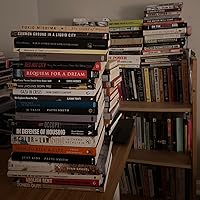
In the fall of 2011, a small protest camp in downtown Manhattan exploded into a global uprising, sparked in part by the violent overreactions of the police. An unofficial record of this movement, Occupy! combines adrenalin-fueled first-hand accounts of the early days and weeks of Occupy Wall Street with contentious debates and thoughtful reflections, featuring the editors and writers of the celebrated n+1, as well as some of the world's leading radical thinkers, such as Slavoj Zizek, Angela Davis, and Rebecca Solnit.The book conveys the intense excitement of those present at the birth of a counterculture, while providing the movement with a serious platform for debating goals, demands, and tactics. Articles address the history of the "horizontalist" structure at OWS; how to keep a live-in going when there is a giant mountain of laundry building up; how very rich the very rich have become; the messages and meaning of the "We are the 99%" tumblr website; occupations in Oakland, Boston, Atlanta, and elsewhere; what happens next; and much more.
One of the first books I read on a digital device. One of my friends showed me how to download books for free on the Google and such, and it's true that this might have hampered my ability to enjoy this book.
Admittedly, I did not finish it, nor did I read these essays in order. My problem with this book might primarily reflect my problem with the Occupy movement as a whole. If there are no demands, if we propose no clear way forward, if we render ourselves impotent for fear that we might make a mistake, what are we doing in the first place? The more polemic essays (Judith Butler's is a shining example) fall flat because they refuse to say anything, because there is nothing to say. Do we want the government to fall? Do we want communism? If we're hell-bent on an inclusive, democratic process, how do we reconcile that with our hostility towards the 1 Percent?
I did enjoy Keith Gessen's "Laundry Day" essay (perhaps because he seemed most willing to criticize the movement, or at least highlight its failures), but a lot of the others read like the authors typed up their notes and published them. They're merely observations, and they draw no clear conclusions. Nevertheless, the majority of the material within this book has a self-congratulatory tone, as if something was accomplished, as if the government hasn't just made massive cuts to SNAP, as if TANF wasn't badly in need of funds, as if our president hasn't failed to raise taxes on the wealthy. The American left would do well to either learn from Occupy's mistakes or forget it entirely, but this book, for the most part, encourages readers to do neither.
The arrival of a small group of people in a downtown New York City park in September 2011 didn’t really look like much more than a bunch of malcontents grizzling about the kinds of things lefties can be relied on to grizzle about. That is, things such as economic, gender and ethnic/racial inequality and the like, environmental despoliation and so forth. It turns out this Occupy Wall Street call to tent pitching (I first saw it in Adbusters – www.adbusters.com) seemed to click with the zeitgeist. People, lots of people, and not just the conventional lefty malcontents turned out and stayed, much to the chagrin of the city’s powers that be. What’s more, others in other places also set out to occupy – across the US, in the UK, Canada, Japan, India, Brazil, South Africa and plenty more – or had already occupied, los indigados across Spain and their kindred spirits in Portugal, Italy, Greece and elsewhere in the EU where the crisis was hitting hard and with dismal force.
Not surprisingly, these occupations were well documented – and this collection is evidence of one small part of the documentation, in this case by the good people at n+1 (http://nplusonemag.com/), one of the sharper new critical magazines coming out of NYC. What we get here is views from near the bottom – I don’t doubt that many of the contributors were actively involved but for the most part we get an insight into the ordinary – the problems of laundry, the challenges of daily police harassment, the difficulties of keeping on good relations with generally supportive neighbours (and unsupportive local businesses), the tensions of a group that involves diverse groups. This is mixed in with short contributions from celebrity lefties (including Žižek, Judith Butler, Jodi Dean) and slightly longer pieces/essays unpacking many of the key issues – I particularly liked Rebecca Solnit’s on whose tools to use to build a house that isn’t the Masters and Manissa Maharawal’s on the problems of ethnic diversity that does not include local Asian communities and people, as well as Marina Sitrin’s fabulous ‘One No, Many Yeses’ about diversity of politics within a broad umbrella and Marco Roth’s excellent piece about on-line interventions through emails to CEOs and other leaders of major corporations, ‘Letters of Resignation from the American Dream’, not so much for the essay but for the beauty, elegance and pathos of the letters.
I am reading this from across the Atlantic and expect those closer to the land that is Zucotti Park will have a lot to grumble about – what is not here, what is poorly explored, why is this subtitled ‘Scenes from Occupy America’ when it is overwhelmingly about NYC? These complaints will be (and are legitimate), but this is also a useful record of on part of the emerging movement, a record of a moment of struggle – so read this, soak it up, be inspired, be stimulated by the great ideas here, but don’t stop at that. Read other collections. I quite like Claire Solomon and Tania Palmieri’s collection Springtime about the student protests in Europe and elsewhere in late 212 and early 2011 – inspiring activism and ideas. Also, read these things, get inspired and get out there to Occupy your local coffee chain store, open a day care centre in your local bank, demand that the super rich (people and corporations) pay their share of the tax or whatever gets your goat and focuses demands and pressure in your locality.
This is a good collection of its time, but its topicality means there is much else to look at to even begin to get a feel for the movement.
I’ve been thinking a lot about financial capital and neoliberalism and Occupy Wall Street and encampments and demands and property damage and and lots of stuff lately, so I picked up this book at Lost City Books in DC a couple weeks ago. Wasn’t expecting it to be one of my favorite reads of the year, but it was. I really like what Astra Taylor and Keith Gessen did with “Scenes from an Occupation” sprinkled between short and long essays and speeches. I liked many of the essays, but thought that some of the pieces, especially by celebrity leftists, were unnecessary. Judith Butler and Angela Davis’s pieces added little. Žižek’s, I thought, did add some substance. Solnit’s, I thought, was wonderful.
In addition to showing us what direct democracy looks like — general assemblies, working groups and resolutions, consensus — the collection also shows us how an encampment and a movement survive, and the many, many ways they can die.
The pieces I particularly enjoyed were: - Marco Roth, “Letters of Resignation from the American Dream” - Mark Greif, “Drumming in Circles” - Nikil Saval, “Labor, Again” - Mark Greif, “Occupy the Boardroom” - Sunaura Taylor, “Scenes from Occupied Oakland” - Rebecca Solnit, “Throwing Out the Master’s Tools and Building a Better House” - Nikil Saval, “Scenes from Occupied Philadelphia” - Christopher Herring & Zoltan Glück, “The Homeless Question” - Keith Gessen, “Laundry Day”
I read this book at this moment because I was seeking answers to a lot of questions about protests, encampments, the many roles within movements, etc. as I return to campus 3 months after the violent repression of student protests across the country. Reading this gave me some clarity, gave me some more writers and movements to read into, and solidified my faith in unified, strong social movements.
Good look into the ‘Occupy Wall Street’ movement. Wasn’t at all surprised by the predominant group of people involved in the occupation, wish they called that out more.
Some good stuff, but over all pretty scattered and doesn't give you a cohesive hold of the movement as a whole, perhaps that's the point/idea, like astra taylor's and sarah resnick's commentaries the most along with Rebbeca's critque of petty violence by white kid black blockers in Oakland that was damaging to others as they all ran away and left others who couldn't or didn't participate to be attacked by police
2.5. I enjoyed some of this book but after the first 100 pages it felt quite repetitive and just more of the same. One chapter was dedicated to just slagging off anarchists, claiming everyone who does black bloc tactics are either rich white kids who just want to destroy things or undercover cops. Another chapter followed a white woman's journey from hating the phrase "fuck the police" to still not liking it but not getting angry at it being chanted, after POC explained to her that the police are bad. Worth reading to get a feel for what Occupy was like from people there, my takeaway is that if I was there I would have hated most if the crowd.
got this is a free ebook release verso did of organizing and books about palestine a few months ago, i believe around the time of the student encampments. enjoyed it-- a kinda different non-fiction that i found enjoyable and interesting as an attender and supporter of protests. also reading the perspectives of participants in OWS from 2011 was cool since i was too young at the time to really know anything about it while it was happening
I mostly enjoyed these essays, it’s a really fascinating account of a movement in real time. The only one I had an issue with was the second to last essay, wherein the author seems to claim (in a very blasé manner, btw) that social movements have moved past racial division, which is just obviously not true. Aside from that, though, it’s a really interesting read :)
This is an account of the "Occupy Wall Street" movement, told from different perspectives It is a fascinating read, especially the musings on the General Assembly mode of consensus building, as opposed to voting on a something. It left me with a lot of ponder over, and I know I am going to try to apply a lot of what I read in the book to what I see around me.
Pretty good book. I enjoyed some of the writings more than others but that's only normal. The narrative was cohesively edited together and reading the entries from the then-present was really enlightening. This is not a book for theory but to listen to experiences which it does well.
Several photographs of what the occupy movement was like at its start. As someone who has been working with Occupy since the beginning, there was definitely a nostalgic sense that welled up inside me, longing for those days where so many were awake, aware, and willing help one another. However, given the fact the book only includes stuff that happened over the first couple months, the real sense of what has happened with so many occupations, the tribulations they've had to face, and so forth, is lost. An in-depth study this is not. What's worse, there are names in here opining on occupations they know nothing about, and certainly never came to visit for long (if at all). Working with Occupy Atlanta, there is a rather patronizing account in the book of OA, and the history of struggle in Atlanta (in about 3 pages, which is obviously not well detailed at all and certainly doesn't do it justice). It's written by Kung Li, a person who certainly didn't actually contribute work to OA on the ground (I've never heard the name before, and I was working there every day). I wish the editors had made attempts to seriously investigate the movement, what people wanted, their hangups, cultural assumptions that must've been overcome....as it stands, in the telling of some of these stories from different occupations, you get a sense of that, but it's without direction. And so much has happened since where the book ends, it really feels like the story has barely even begun to be told. I'd check out probably another book on Occupy, perhaps written in late 2012. Or wait still until more of the story can be unfurled.
I had mixed feelings about this collection of essays from the Occupy Gazette, published by the editors of N + 1. It's hard not to love this book, because its publication represents such a noble endeavor. And N + 1 is such a smart magazine. Slowly, over the past year or so, I've fallen in love with it. But many of the entries, which consist of eyewitness accounts of the Zicotti Park encampment, seemed extremely well written but kind of slight. Like a witness describing events without being able to draw them into a larger context. Maybe that was the point. That said, however, this book is worth purchasing solely for the reprint of the speech Slavoj Zizek gave at the park, "Writing in Red Ink," in which he argues that the reason the Occupy Movement didn't have a slogan or talking points is simply that we haven't yet developed a language for the revolution we all so urgently need and want. That's the best and clearest answer I've heard as to why the Occupy movement lacked a message, and the best and clearest explanation of why, ultimately, it needs to develop one.
Know what to expect, and I don't think you'll be disappointed. Scenes from Occupied America is a series of diary reports, mostly from NYC, interlaced with theoretical or historical reflections and the odd speech (Zizek & Judith Butler). It was published not too long after the start of OWS, so doesn't cover the later development of the movement at all.
Much of what's in the book could be familiar ground for people who have followed the movement closely, but I haven't.
Where the book is strongest is probably in documenting the changing feelings and experiences of those on the ground. And it certainly doesn't shy away from worry about the future - the book starts with the authors surprised by their optimism, and ends with problems with laundry and the daily issues of simply maintaining the camp as winter closes in.
Hardly an 18th Brumaire, but Occupy was no July Revolution, probably for the better. Valuable for the few pieces that break from the kind of stereotypical well-educated, cultural-capitaled, New-York-or-San-Franciscan, guilty-feeling n+1 perspective--Audrea Lim's piece on Chinatown and its relationship to Occupy, Angela Davis' short piece on the historical connotations of occupying, the sections on Occupy Atlanta. And for the occasional salient details that give life to what occupying in this way was/is like (the drum-circle crisis!). Shouldn't be a last (or even first) word on the movement--"scenes," as the title promises, is an apt word for what it gives, but its "America" is a rather limited one.
Possibly my favourite book of the year, which is a massive compliment considering some of the books I've read this year. Crammed full of stories of those in a movement that they are not sure where it's leading or what it actually is. But this book is refreshing and inspirational because of the honest relation of ambivalence and insecurity that is at the core of the imprecision of any political process, inherent to any attempt to cooperate with others whilst trying to avoid a relation of domination
OCCUPY! is such an interesting book - an on-the-ground account of Occupy Wall Street (with a few scenes from Philly and Oakland) that obviously lacks the historical perspective we'll someday have about this movement but captures the zeitgeist beautifully. I was embarrassed to realize how little I really understood about what was going on, and disappointed that the mainstream media wasn't recording these accounts too. An important book.
Dieses Buch war mir bei meiner Seminararbeit (Vergleich der 68er-Bewegung mit der Occupy-Bewegung in der Gegenwart) im letzten Jahr eine riesige Hilfe. Ich würde sogar so weit gehen, es als das beste Buch, das ich dabei benutzt habe, zu bezeichnen. Die erste Hälfte des Buches beschreibt den Ablauf der Occupy-Bewegung, jeweils aus der Sicht verschiedener Beteiligter, während der zweite Teil aus weiterführenden Gedanken und Lösungsideen in Form von Aufsätzen besteht.
• This book finished, I was left present to a mood that might be a piece of an actually being-at-OWS experience. That's what loosely anecdotal first-person writing is supposed to do…leave one with a slice-of-life… •
• This book finished, I was left present to a mood that might be a piece of an actually being-at-OWS experience. That's what loosely anecdotal first-person writing is supposed to do…leave one with a slice-of-life… •
Really enjoyed the oral-history-mixed-with-essays format of this book, and overall found the on-the-ground telling of the Occupy Wall Street movement rather interesting compared to even popular Leftist interpretations of the uprising.
There are some great essays as well as just generally interesting and insightful anecdotes here. It's a good glimpse into the actual human side of Occupy. Often, we forget the people in the midst of such movements. It's good to remember and connect, even in this small way.