How did the Honorable Miss E. St. Leger become a Freemason? Did Lord Byron meet a hippopotamus, or was it only a tapir? Whence the popular prejudice against redheads? These were among the topics discussed in the pages of Notes and Queries, a weekly magazine founded in London in 1849 as a medium of inter-communication for literary men, artists, antiquaries, genealogists, etc. Its motto was When found, make a note of a saying of Captain Cuttle, the hook-handed old salt of Dickens s Dombey and Son. Some subscribers to Notes and Queries contributed brief notes on curious facts they had uncovered; other sent in arcane queries to be answered. The result was rather like an erudite Internet discussion board, complete with its flame wars and trolls.
This book anthologizes the most interesting exchanges from the First Series of Notes and Queries (1849 55). Here, ordered by subject with judicious footnotes, of course are delightfully pedantic remarks on the daily life and amusements of olden times, the doings of faeries, revolting folk remedies, poetry good and bad, and oddities of natural history, among many other things. Also included is a selection of advertisements from the magazine, for such products as Grosjean s Celebrated Trowsers, Rimmel s Toilet Vinegar (good for several purposes), and the Rev. Edmund Saul Dixon s treatise on Ornamental and Domestic Poultry: Their History and Management.
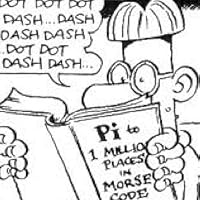
Original drawings add an extra touch of humor throughout, and a lively introduction describes the history and workings of Notes and Queries. Full of useless information and Victorian fustiness, Captain Cuttle s Mailbag will fascinate trivia buffs and time travelers alike."
The ideal trivia book combines fun facts with great writing, which probably limits the field to Cecil Adams' The Straight Dope and its sequels. The people who wrote in to Notes and Queries were Victorians and wrote like it, so the important question is: Do I care about the subjects they discussed? Sadly, the historic use of church porches as places of refuge, minor rural Leicestershire superstitions, and children's rhymes about snails do not make the cut.
A few other topics, including the British love of swearing that supposedly led Joan of Arc to call them "goddams" (instead of "rosbifs," I guess); the question of whether Lord Liverpool, prime minister from 1812 to 1827, looked more like a tapir or a hippopotamus; and why 19th-century novelists so often made their romantic leads cousins, "despite the consequences of such marriages," are more what I was after. (That last question was asked but, alas, not answered.) I was especially pleased to learn about John Searson, a Philadelphian of the late 1700s whose verse could pass for the work of the English-speaking world's favorite bad poet, William McGonagall. And a discussion of people employed through the ages to keep dogs out of churches brings up a case in York, dating to "the times of Popery," in which the Host "was snatched up suddenly and swallowed by a dog that lay under the table." Dogs eating Hosts was apparently a constant fear of Irish clergymen in the Middle Ages, as set out memorably in Medieval Handbooks of Penance. I had no idea it was an English problem, too. A worthy subject for historians of religion, if they don't mind a little advice.
This is a humorous selection of short queries from the Victorian Notes and Queries, before it became more academic. It is a celebration of the eccentric autodidacts who investigated local British history. Definitely for the Anglophile.