Jump to ratings and reviews
Rate this book

The Classics of Western Spirituality

The Mirror of Simple Souls

Rate this book
This translation from the French original includes an introductory interpretive essay by Edmund Colledge, O.S.A., Judith Grant, and J. C. Marler, and a foreword by Kent Emery, Jr. The translators of this Modern English version rely primarily on the original French manuscript, yet also take medieval translations into account. As a result, this edition offers a reading of The Mirror of Simple Souls that solves a number of difficulties found in the French. The valuable introduction by the translators narrates the archival history of the book, for which Margaret Porette was burned alive in Paris in 1310.

Kindle Edition

First published January 1, 1300

142 people are currently reading
2172 people want to read

About the author

Marguerite Porete

6 books27 followers
Marguerite Porete (parfois nommée Marguerite Porrette, Marguerite Porette ou la Porette) est une béguine et femme de lettres mystique, née vers 1250, brûlée en place de Grève (à Paris, France) le 1er juin 1310 avec son livre Le Miroir des âmes simples.

Marguerite Porete (died 1310) was a French beguine, mystic and the author of The Mirror of Simple Souls, a work of Christian spirituality dealing with the workings of Divine Love. She was burnt at the stake for heresy in Paris in 1310.

(Sources:Wikipedia, Encyclopaedia Britannica)

Ratings & Reviews

What do you think?
Rate this book

Friends & Following

Create a free account to discover what your friends think of this book!

Community Reviews

5 stars
143 (44%)
4 stars
85 (26%)
3 stars
76 (23%)
2 stars
16 (4%)
1 star
5 (1%)
Displaying 1 - 30 of 43 reviews
Profile Image for Alan (on December semi-hiatus) Teder.
2,700 reviews249 followers
December 14, 2025
Not So Simple
Review of the Echo Point Books & Media, LLC Kindle eBook (December 19, 2022) of the original English language hardcover (1927) of a 15th Century English language manuscript as translated by the anonymous N.M. from the French language original Le miroir des âmes simples et anéanties : Et qui seulement demeurent en vouloir et désir d'Amour (The Mirror of the Simple Souls Who Are Annihilated and Remain Only in Will and Desire of Love) (c. 1306).
Jesu, pray for us.
Sigh and sorrow deeply:
Mourn and weep inwardly:
Pray and think devoutly:
Love and long continually.


Let me say right at the start here that the 2-star rating applies only to the original 1927 edition and any of its later reprints/reissues. That edition was prepared on the basis of the discovery of one of the 15th century English translation manuscripts found in the British Library in 1911. At that time, it was thought that the 14th Century French language original was lost and also that it was written by a man. It was not until 1946 that the writer was identified as Marguerite Porete (c. 13th Century - 1310). Porete had been condemned as a heretic by the Church and was burned at the stake in Paris in 1310 and her book was banned.


A print of a Beguine mystic as Marguerite Porete is assumed to have been. Image sourced from the Wikipedia article on Porete (as linked above).

The 1927 edition provides some minimal notes although much of it will be confusing to a non-informed in Christian mysticism reader such as myself. The archaic English is confusing and often repetitive. The commentary by the 15th Century translator known only by the initials N.M. does not help at all, it is a sort of Ignotum per ignotius, where the explanation is even more confusing than the thing it is meant to explain.

I recommend getting any of the later translations which were made after the discovery of a copy of the original French language manuscript. The description synopsis of the University of Notre Dame edition The Mirror of Simple Souls (1999) makes it sound quite authoritative.

Soundtrack, Trivia and Links
I read this edition of The Mirror of Simple Souls due to its being cheaply and easily available. I should have done more research before choosing it. I sought it out after coming home from a performance by Canadian modern dance icon Louise Lecavalier of her recent work Stations. Lecavalier discussed in the post-show Q&A how part of her dance work had been inspired by her reading of Marguerite Porete.

Louise Lecavalier at a post-show Q&A at the Toronto Harbourfront Fleck Dance Theatre in November 2023.
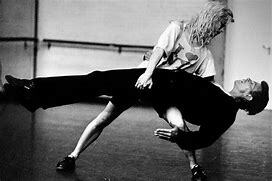

Louise Lecavalier in rehearsal with David Bowie in the late 1980s. Screengrab from YouTube.

I don't know how well known Lecavalier is internationally, but in the late 1980s she did several videos and live performances with David Bowie, some of which are collaged in this Heroes 3-Language Megamix. It includes her trademark 360° full-body barrel-roll jump which is seen repeated several times.

Further Soundtrack
Another one of the works used in Lecavalier's "Stations" (one is heard in the teaser video above) was "Nerissimo" performed by Teho Teardo and Blixa Bargeld (of Einstürzende Neubauten) which you can listen to here.

I think another work used was by SUUNS & Jerusalem In My Heart titled "In Touch" which you can listen to here.

There were also some unidentified works by saxophonist Colin Stetson.
Profile Image for Erika.
69 reviews17 followers
February 7, 2012
I didn't think I would "like" this book, and thats really not why I read it. I read it because of one line in "World Without End" which referenced it. And yes, I am so neurotic, I had to read it just to "get" that one reference. Its translated to English, which doesn't mean I understood it. Not at all. Sometimes I wondered if I wasn't "spiritual" enough to understand it. Sometimes I wondered if I didn't understand it because it was SO CRAZY. Sometimes I wondered if a different translation would make more sense to me, but again, it was written in English, so... Anywho, I am really glad I read it. The content, in the historical context, is off the hook. I'm glad I have this reference tucked away in my brain. I'm going to hold on to it, and maybe do a re-read one of these years. Its already really informed my understanding of another book, "The Shack" and my mind is blown that I would read these two books consecutively. Cue "Twilight Zone" music...
Profile Image for Chad Lynch.
19 reviews
December 25, 2017
Not for those new to mysticism

A bewildering, magical book, that is definitely not for those new to mysticism—if I had read this book a few years ago, I would not have been ready for it, and even now I’m certain much of its riches lay undiscovered to my current spiritual level.

A book that neatly removes any and all middlemen, it is unsurprising that the Church found her and her message to be such a threat to institutional religion.
11 reviews2 followers
June 3, 2008
It's kind of a cheat to add this book to my list, but since it's the topic of my dissertation, I thought it would be a good thing to have on my site.

This is a wonderful translation of a difficult late-13th century French text, written by a woman who was later put to death for it. The book was translated into English, Latin, Italian, and perhaps German within a century or two of the author's demise. It is difficult in the sense that it deals with becoming one with God, directly and during one's life. Unlike many spiritual texts of the time, it discusses how one gets started through the Church and Christ, but then rockets past at least the Church in the fifth and sixth stages to work directly with God.

I am interested in this text because of the mystery surrounding its transmission into other languages. The English edition was translated by someone who left us only a set of initials to work with: M.N. But I am also interested in the spiritual notions of the 12th and 13th century expressed both in literature and in devotional texts such as the Mirror. It seems that this was a time of spiritual exploration that has been mostly lost to the modern world. And the Mirror is a marvelous example of a woman coming to terms with the difficult world around her despite the failings of her Church and political leadership. It may be a very useful text to the people of today.
Profile Image for Brian Wilcox.
Author 2 books530 followers
May 27, 2018
So impressed by this read over a decade ago, will read again, now in Classics of Western Spirituality edition. This book is work to read, but worth the effort. And not a book for persons unready to fall over the precipice from dogmatic constraints, or possibly very good selection for those needing a push to let go and discover another so-called heretic that simply lived too intimate with truth for the hierarchy to consider how she was a light of hope, not a darkness threatening the present and future of the Catholic church.

Porete's message is liberating, as she speaks of the primal priority of love above virtue. She details for us how this way of Love unfolds to union with Love.

She, like other truth-tellers, are often not at-home among their own, those they offer their gift to not to hurt, but bless. Yet her treatise of truth-telling lyrics lives on many centuries after the burning of her body, at the injunction of Catholic church heirarchy. This fate and this treatise may remind us that sometimes the fear of falsehood easily blinds one to the truth.
Profile Image for Holly.
260 reviews13 followers
January 3, 2014
A mix of my not-favorites things...heresy and court poetry. While Porete is certainly an interesting historical figure my interest in her does not extend to her interpretation of the Free Spirit heresy. What I am interested in however is how this woman submitted her book to church authorities in Paris just about the same time they were winding down with the Templar Knight heresies. Less than a month after fifty four Templar Knights were burned to death in a field outside Paris, this woman too met the same end in the same way. Her behavior during this time is interesting; she refused to testify or even defend herself, so her inquisitor was forced to build a case based off of her book, which had already been condemned and burned before her eyes a few years earlier. Marguerite, though, felt her book was not heretical and wanted to redeem herself by going to Paris for endorsement. That unfortunate step is the one that killed her when she was charged as a relapsed heretic (by the same inquisitor that tried the Templar's) and burned before a stricken crowd who sadly watched this woman meet her end with courage and bravery. Kind of a long sad story that isn't found in this book.
*****

After completing a research project about Porete I have modified my views concerning her work. My research entailed examining Marguerite's actions between her first heresy charge and her execution. Placing these events within their historical context was illuminating and I found I judged her based not only on my modern standards but also the hasty judgments she was subject to in her day. What she did here, in writing this book, is actually a pretty clever idea. With that said, clever ideas, especially constructed in poetic form, can get lost on a reader. There are several warnings contained in this book, even by Marguerite herself upon her own later additions that take possible misunderstandings into consideration...it really must be approached in the sense Marguerite does not spell out. I can only explain it as art, rather than instruction. Because it is deeply poetic, it is therefore subject to many interpretations-some dangerous. It is that element that causes the work to misinform or mislead a reader dangerously. For that reason alone, the book is probably not recommended to many readers pursuing spiritual instruction without an appropriate introduction.
Profile Image for Greg.
654 reviews98 followers
April 5, 2018
I found this edition of the Classics of Western Spirituality pretty difficult. Porete was a beguine who was denounced and burned as a heretic in 1310. The text is a running dialogue intended to describe the relationship between the individual and God, especially the relationship between the Soul and Divine Love. Porete’s spirituality is unique, especially with respect to Divine Love. She refers to five stages in which divine love makes a transition to act directly on the soul. The first stage involves grace working on the soul, removing sin, and commanding acts to love God. The second stage involves the abandonment of self, and the third stage involves love of works to perfect and multiply those works. In the fourth stage, the soul becomes consumed by the ecstasy of God’s love, and in the fifth stage the soul comes into mystical and existential union with God. These stages involve three kinds of “death” along the way, in similarly difficult language and concept. For those very serious students of ecclesiastical history and medieval mysticism I think there is much to study in this work. For me though, I must confess, most went straight over my head.

See my other reviews here!
Profile Image for Steph.
55 reviews1 follower
December 18, 2024
I spent so much time with this book it feels appropriate to put it on here. Love Marguerite and all of her crazy ideas.
Profile Image for Emma.
61 reviews104 followers
September 10, 2024
at times incomprehensible, at others strikingly illuminating.

porete's framing of her argument and procession towards mystic nothingness and coming to god as "néant" as a courtly dialogue between soul, reason and love is certainly clever.
some paragraphs went completely over my head, while others ring in my head in a post-reading haze. porete's language is poetic, yes, but equally obscure, repetitive, and rife with contradictions and paradox. but this is religion, and spirituality, and mysticism, along with all its internal conflicts and resplendent ideas and imagery.
Profile Image for Andy Oram.
619 reviews30 followers
August 2, 2023
A beautiful piece of writing, and certainly an important historic document that is solidly in the medieval mystical tradition. (It reminds me a bit of Dark Night of the Soul, and uses the same phrase.) It's important to know that the author was a woman because that helps us appreciate all her feminine metaphors. One of the modern translators added notes that are included in this edition. I found those notes useful sometimes, although I didn't always agree with them.
19 reviews
September 1, 2008
Women look too far to find the real stories of spiritual women. Marguerite Porete is a wonderful spiritual leader whose writings come from this 13th C mystic. Translated by Ellen Babinsky this becomes a beautiful teaching.
We listen to 'modern' women theologians or tv preachers and miss the wholeness of this Mystics thoughts.
Come and drink at the well.

Profile Image for Holly Raymond.
321 reviews41 followers
May 5, 2012
Porete is astonishing and strange. She's also a lot less like Schreber than I initially thought. I read this, slowly and in awe, for a paper from which I wound up cutting all Beghard thought. Oh well.
1,633 reviews19 followers
April 5, 2021
Fans say it’s about ridding yourself of yourself. Critics say the woman basically called herself God, or at the very least stressed self- love too heavily.
188 reviews17 followers
December 21, 2021
I’m sure this book is historically important but, like many other spiritual treaties of a similar date, it is exceptionally tedious to read. Perhaps that’s an unfair criticism- I’m sure I’m not the intended audience of the book, and yet I think it worth saying anyway. The lengthy narrative/dialogic format used to express what are conceptually quite simple ideas is frustrating- I don’t know enough about the period to understand why this was considered useful. More importantly, the obviously contrived nature of this format interferes with the message itself: purportedly the result of ecstatic religious experience, the credibility thereof is somewhat belied by the laboured and intricate literary form in which it is presented. There is a kind of gap between the two in which the personality of the author, purportedly subsumed into the divine will, is actually present and active. The terse, allusive assertions of John’s prologue or the Dao De Jing or the intoxicated exuberance of Rumi seem somehow more authentic than this overly stylised, one might even say pedantic, genre.
Profile Image for Sharon Elletson.
304 reviews1 follower
April 26, 2023
Margaurite Porete writes that everyone has the ability to achieve spiritual perfection, but I don't know many who would make it through the small but dense text by this thirteenth century mystic. Keep in mind she was burned at the stake for her radical beliefs on Agape (Devine Love) and her writing .

The book emphasizes the importance of inner poverty by which I think she means to surrender one's own will to God's will.

I listened on Audible and it took me awhile to realize that Soul, Love, and Reason represent different aspects of the spiritual journey. Soul seems to represent an individual's spiritual essence. Love is the advisor and teacher, and Reason is the human intellect always trying to analyze what is beyond human comprehension.

She, along with Meister Eckhart, have influenced many modern new age mystics.
Profile Image for Adam Thomas.
839 reviews10 followers
October 22, 2022
At the beginning, the author writes:

“You who would read this book,
If you indeed wish to grasp it,
Think about what you say,
For it is very difficult to comprehend.”

This seems like a fair summary. A historically important work, but not so profitable for such simple souls as me.
Profile Image for teresa.
29 reviews2 followers
Read
March 8, 2024
Laborious to understand sometimes, but this is a hidden gem for anyone who enjoys reading mystical literature. Considering this was condemned as heretical work, it's a miracle it has made it to our days.
Profile Image for lara!.
19 reviews2 followers
November 2, 2024
some interesting ideas and love the heretical context, but my god did she need an editor i think she said the same 5 ideas a hundred times. as always middle english is a pain in my ass, but always down to critique the church
Profile Image for Mariana Montoya.
22 reviews1 follower
November 24, 2024
An obscure, mystical book about self anihilation and sacrifice one's free will so that the will of God (or the divine) takes its place. It has interesting ideas and beautiful passages but it's a very dense and hard read.
Profile Image for Bernard Delcourt.
31 reviews3 followers
December 29, 2024
Repetitive, abstruse, eltitist and paradoxical. I had expected a more approachable and insightful book.

It is a tragedy that Marguerite Porete had to be burned at the stake for standing by what she had written. I admire her faithfulness to her vision.
Profile Image for Fabio.
54 reviews
February 5, 2020
Indicado pela querida amiga Paula Trabulsi.
O título em portugês é "O Espelho das Almas Simples".
7 reviews1 follower
January 27, 2021
Repetitive resonating transformative - over and over and over again. Love
18 reviews
October 27, 2021
This book is difficult to read. The last few chapters are much easier, and help explain the beginning. Stick with it and you'll figure it out
Profile Image for P H.
18 reviews1 follower
September 18, 2023
It’s not the easiest to read, but it’s an amazing piece of work for a lay religious woman of the High Middle Ages. Well worth the read!
2 reviews
January 4, 2024
This book is due to be revisited by modern translators to update the language. There is value in it but the archic language used needs to be put into modern terms.
Displaying 1 - 30 of 43 reviews

Can't find what you're looking for?

Get help and learn more about the design.