This is my first look at Artemisia Gentileschi, her paintings are magnificent, I was amazed that she was a woman, not that she had talent but those times, she was allowed to paint as a true artist, not just a passing fancy. It was truly sad what she had to endure Tassi. I loved the colors and details in her paintings.
"Artemisia Gentileschi was born on 8 July 1593 in Rome in her parents’ home on Via Ripetta, near S. Giacomo degli Incurabili. She was the first born child of the artist Orazio Gentileschi, aged thirty, and Prudentia, aged eighteen. Orazio Gentileschi (1563–1639) had begun his career in Rome, painting in a Mannerist style, with much of his work consisting of figures painted in the decorative schemes of other artists. After 1600, he came under the influence of the more naturalistic style of Caravaggio. Artemisia was baptised on 10 July at S. Lorenzo in Lucina."
"In 1611, Gentileschi’s father Orazio was working with the painter Agostino Tassi to decorate the vaults of Casino della Rose inside the Palazzo Pallavicini-Rospigliosi in Rome. Orazio decided to hire Tassi to tutor his daughter privately. During this tutelage, Tassi raped Artemisia. After the initial rape, Artemisia continued to have a sexual relationship with Tassi, with the understanding that they were going to be married and that her dignity would be therefore restored. However, Tassi reneged on his promise to marry Artemisia. Nine months after the rape, when he learnt that Artemisia and Tassi were not going to be married, Orazio pressed charges against Tassi. Orazio also claimed that Tassi stole a painting of Judith from the Gentileschi household. The major issue of this trial was the fact that Tassi had taken Artemisia’s virginity. During the ensuing seven-month trial, it was discovered that Tassi had planned to murder his wife, while committing adultery with his sister-in-law. Artemisia was subjected to a gynaecological examination during the trial and torture using thumbscrews to verify her testimony. By the end of the process, Tassi was given the choice of five years hard labour or exile from Rome. He chose the latter, but he was back in Rome within four months, most likely due to his influence in high places."
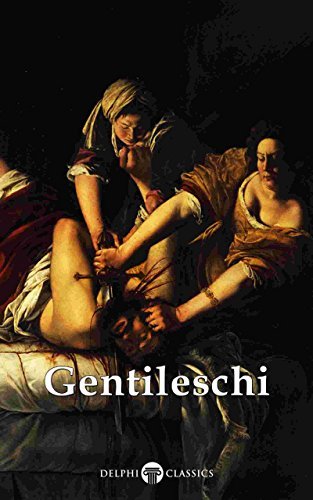
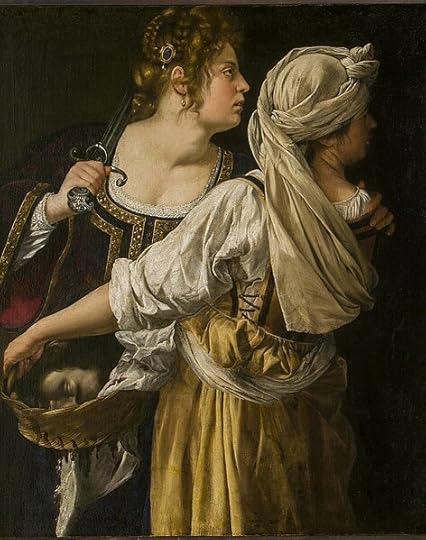
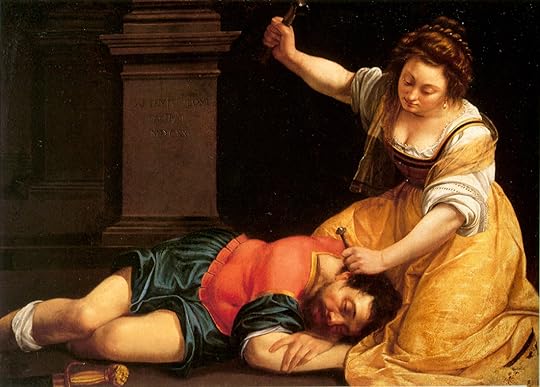
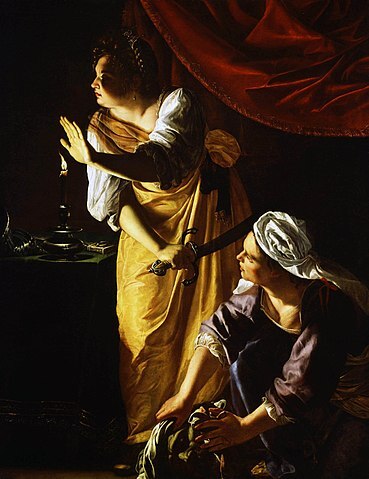
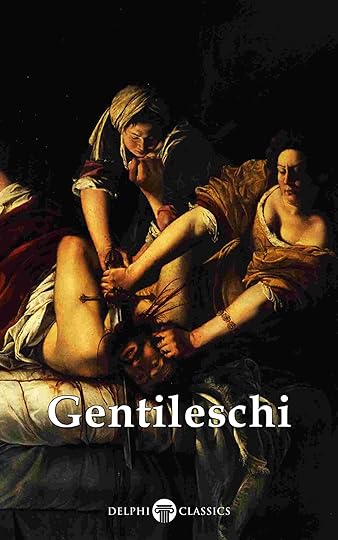
"It is likely Gentileschi painted the scene during or just after the rape trial, which was a painful public humiliation for the young artist and a transcript of the court case still survives. Unlike in Caravaggio’s painting, Judith appears much stronger and more resolved to the difficult task she must complete."
"It is likely Gentileschi painted the scene during or just after the rape trial, which was a painful public humiliation for the young artist and a transcript of the court case still survives. Unlike in Caravaggio’s painting, Judith appears much stronger and more resolved to the difficult task she must complete."
"It is likely Gentileschi painted the scene during or just after the rape trial, which was a painful public humiliation for the young artist and a transcript of the court case still survives. Unlike in Caravaggio’s painting, Judith appears much stronger and more resolved to the difficult task she must complete."