

What do you think?

The Poetry of Impermanence, Mindfulness, and Joy
Over 125 poetic companions, from Basho to Billy Collins, Saigyo to Shakespeare.The Poetry of Impermanence, Mindfulness, and Joy received the Spirituality & Practice Book Award for 50 Best Spiritual Books in 2017 by Spirituality and Practice Website. The poems expertly gathered here offer all that one might hope for in spiritual wisdom, compassion, peacefulness, good humor, and the ability to both absorb and express the deepest human emotions of grief and joy. The book includes a short essay on “Mindful Reading” and a meditation on sound from editor John Brehm—helping readers approach the poems from an experiential, non-analytical perspective and enter into the mindful reading of poetry as a kind of meditation. The Poetry of Impermanence, Mindfulness, and Joy offers a wide-ranging collection of 129 ancient and modern poems unlike any other anthology on bookshelves today. It uniquely places Buddhist poets like Han Shan, Tu Fu, Saigyo, Ryokan, Basho, Issa, and others alongside modern Western poets one would not expect to find in such a collection—poets like Wallace Stevens, Robert Frost, Elizabeth Bishop, William Stafford, Denise Levertov, Jack Gilbert, Ellen Bass, Billy Collins, and more. What these poems have in common, no matter whether they are explicitly Buddhist, is that all reflect the essential truths the Buddha articulated 2,500 years ago. The book provides an important poetic complement to the many prose books on mindfulness practice—the poems here both reflect and embody the dharma in ways that can’t be matched by other modes of writing. It’s unique features include an introduction that discusses the themes of impermanence, mindfulness, and joy and explores the relationship between them. Biographical notes place the poets in historical context and offer quotes and anecdotes to help readers learn about the poets’ lives.
246 pages, Kindle Edition
Published June 6, 2017
Ratings & Reviews
Friends & Following
Create a free account to discover what your friends think of this book!
Community Reviews
Displaying 1 - 30 of 101 reviews

August 20, 2019
Don’t say my hut has nothing to offer:
come and I will share with you
the cool breeze that fills my window.
(Ryōkan)
In this collection East meets West. Ancient poets like Chuang-Tzu, Tu Fu, Han Shan and Li Po meet their modern- counterparts in Fernando Pessoa, Yannis Ritsos, Szymborska, Anna Swir, Philip Larkin, Ellen Bass, William Carlos Williams, James Wright and many others. Chinese and Japanese poems ranging from the 4th century BCE to the 19th century (like three of the four haiku masters) are placed alongside contemporaneous European and American poetry, of Buddhist and non-Buddhist inspiration, finding each other in the unifying premise that mindfulness of impermanence leads to joy. Joy can be found in the present moment. According to the editor of this anthology, the poet John Brehm, living in the full knowledge that everything changes changes everything and so we can see the world as what it truly is: a source of amazement and delight.
Rooted gently in the earth, the now and in inner silence, the poems enchant and captivate by the charming or philosophical way of capturing the moment or emotion. Suffused with humour, playfulness, energy as well as wisdom and contemplation, the poets formulate their lyrical observations of the everyday with clarity and precision. Sparkling, dashing, melancholic, witty or inventive, their insightful perceptions take on a variety of tones and hues.
And suddenly
a memory of birds
that sank into the unknown.
(Yannis Ritsos (1909-1990))

In all its dazzling variety in tones, colours, lengths, forms (from haiku to free verse), moods and atmospheres, the three interconnected themes around which the selected poems are organised bring an marvellous unity to this anthology. Whether it is impermanence, mindfulness or joy one is looking for, one can open the section which feels in tune with one’s own mood, or in contrast with it plunge into the lake of a complementary state of mind. In a concluding essay on ‘mindful reading’ John Brehm invites the reader to feel into the mood of the poem and let it colour the reader’s own inner state, as a form of meditation.
Silence
flows into me and out of me
washing my past away.
I am pure already, waiting for you. Bring me
your silence.
They will doze off
nestled in each other’s arms,
our two silences.
(Anna Swir (1909-1984))

For readers who might be slightly uncomfortable with the concepts of mindfulness or meditation or who tend to scepticism when coming across musings on Dharma I would recommend to skip the thoughtful and inspiring introduction and get to the poems first. From the appendices comes the intriguing and beneficial suggestion not to focus on rational analysis and interpretations of the significance of words or images when reading a poem, but to experiencing it, to understand it through the senses, following Keats’s advice.
The moon is a house
In which the mind is master.
Look very closely:
only impermanence lasts.
The floating world, too, will pass.
(Ikkyū Sojun)
The collection closes with a short biographical note on every poet, small pieces which I found enlightening and very much worthwhile reading, as they often quote a striking or insightful observation of on the poet’s poetica, or an amusing anecdote illustrating the poet’s attitude to life, like on the Iconoclast zen monk Ikkyū Sojun (1394-1481) holding unconventional views on enlightenment, to be deepened by visiting brothels, considering sex a religious rite (‘The autumn breeze of a single night of love is better than a hundred thousand years of sitting meditation’). Or take the anecdote on Ryōkan (1758-1831): ’When a famous scholar, Kamela Hosai, visited him, they spent the day talking poetry and Zen. Ryōkan decided to go to the village to get sake so they might continue their discussion into the evening. Hosai waited and waited, but Ryōkan did not return. Finally, Hosai set out to find the poet and discovered him sitting under a pine tree, enraptured by the full moon. Hosai shouted, “Ryōkan! Where have you been? I’ve been waiting for more than three hours! I thought something terrible had happened to you!” Ryōkan replied, “Hosai-san! You have come just in time. Isn’t the moon splendid?’
Of many a poet, the losses and troubles he or she suffered in life are pointed at (Robert Frost, Yannis Ritsos, Kobayashi Issa, Elisabeth Bishop, Kenneth Rexroth, Ruth Stone, Tu Fu) which seems to shed further light on the often serene way the poets handle transience, death and grief in their poetry.
The quickest
way
to change
the
world is
to
like it
the
way it
is.
(A.R. Ammons (1926-2002))
Some poems spoke more to me than others, but as a whole I thought this an inspiring, vibrant and illuminating treasure trove of a collection, which I enjoyed reading from cover to cover first (afterwards reading in the introduction it was Brehms’s intention to group the poems by affinity and resonance, each poem connected to and coloured by the poems surrounding it, which added flavour and significance to the poems) and returning to some poems in the months following.
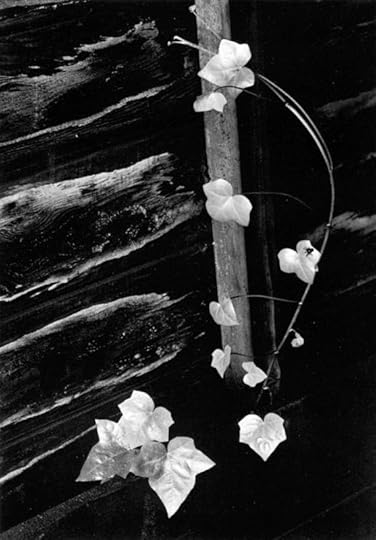
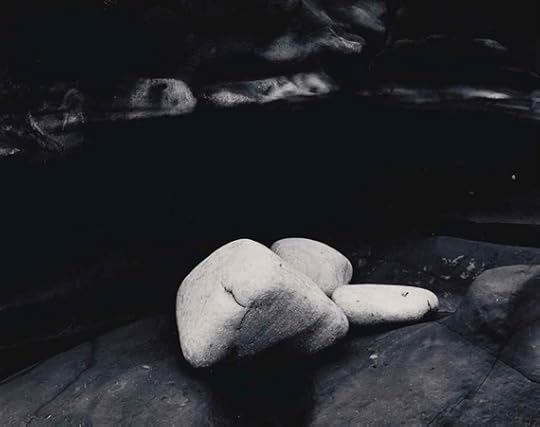
My special thanks to Tearsline for bringing this wonderful collection to my attention and to Miriam for making me aware of the photographic art of Minor White. The bird photographs of Finnish photographer Pentti Sammallahti I discovered after reading an essay on him written by John Berger (in Why Look at Animals?).
If you are looking for a full and profound appreciation of the excellence of this distinctive and refined collection, I'd recommend reading Joseph’s review.
come and I will share with you
the cool breeze that fills my window.
(Ryōkan)
In this collection East meets West. Ancient poets like Chuang-Tzu, Tu Fu, Han Shan and Li Po meet their modern- counterparts in Fernando Pessoa, Yannis Ritsos, Szymborska, Anna Swir, Philip Larkin, Ellen Bass, William Carlos Williams, James Wright and many others. Chinese and Japanese poems ranging from the 4th century BCE to the 19th century (like three of the four haiku masters) are placed alongside contemporaneous European and American poetry, of Buddhist and non-Buddhist inspiration, finding each other in the unifying premise that mindfulness of impermanence leads to joy. Joy can be found in the present moment. According to the editor of this anthology, the poet John Brehm, living in the full knowledge that everything changes changes everything and so we can see the world as what it truly is: a source of amazement and delight.
Rooted gently in the earth, the now and in inner silence, the poems enchant and captivate by the charming or philosophical way of capturing the moment or emotion. Suffused with humour, playfulness, energy as well as wisdom and contemplation, the poets formulate their lyrical observations of the everyday with clarity and precision. Sparkling, dashing, melancholic, witty or inventive, their insightful perceptions take on a variety of tones and hues.
And suddenly
a memory of birds
that sank into the unknown.
(Yannis Ritsos (1909-1990))
In all its dazzling variety in tones, colours, lengths, forms (from haiku to free verse), moods and atmospheres, the three interconnected themes around which the selected poems are organised bring an marvellous unity to this anthology. Whether it is impermanence, mindfulness or joy one is looking for, one can open the section which feels in tune with one’s own mood, or in contrast with it plunge into the lake of a complementary state of mind. In a concluding essay on ‘mindful reading’ John Brehm invites the reader to feel into the mood of the poem and let it colour the reader’s own inner state, as a form of meditation.
Silence
flows into me and out of me
washing my past away.
I am pure already, waiting for you. Bring me
your silence.
They will doze off
nestled in each other’s arms,
our two silences.
(Anna Swir (1909-1984))
For readers who might be slightly uncomfortable with the concepts of mindfulness or meditation or who tend to scepticism when coming across musings on Dharma I would recommend to skip the thoughtful and inspiring introduction and get to the poems first. From the appendices comes the intriguing and beneficial suggestion not to focus on rational analysis and interpretations of the significance of words or images when reading a poem, but to experiencing it, to understand it through the senses, following Keats’s advice.
The moon is a house
In which the mind is master.
Look very closely:
only impermanence lasts.
The floating world, too, will pass.
(Ikkyū Sojun)
The collection closes with a short biographical note on every poet, small pieces which I found enlightening and very much worthwhile reading, as they often quote a striking or insightful observation of on the poet’s poetica, or an amusing anecdote illustrating the poet’s attitude to life, like on the Iconoclast zen monk Ikkyū Sojun (1394-1481) holding unconventional views on enlightenment, to be deepened by visiting brothels, considering sex a religious rite (‘The autumn breeze of a single night of love is better than a hundred thousand years of sitting meditation’). Or take the anecdote on Ryōkan (1758-1831): ’When a famous scholar, Kamela Hosai, visited him, they spent the day talking poetry and Zen. Ryōkan decided to go to the village to get sake so they might continue their discussion into the evening. Hosai waited and waited, but Ryōkan did not return. Finally, Hosai set out to find the poet and discovered him sitting under a pine tree, enraptured by the full moon. Hosai shouted, “Ryōkan! Where have you been? I’ve been waiting for more than three hours! I thought something terrible had happened to you!” Ryōkan replied, “Hosai-san! You have come just in time. Isn’t the moon splendid?’
Of many a poet, the losses and troubles he or she suffered in life are pointed at (Robert Frost, Yannis Ritsos, Kobayashi Issa, Elisabeth Bishop, Kenneth Rexroth, Ruth Stone, Tu Fu) which seems to shed further light on the often serene way the poets handle transience, death and grief in their poetry.
The quickest
way
to change
the
world is
to
like it
the
way it
is.
(A.R. Ammons (1926-2002))
Some poems spoke more to me than others, but as a whole I thought this an inspiring, vibrant and illuminating treasure trove of a collection, which I enjoyed reading from cover to cover first (afterwards reading in the introduction it was Brehms’s intention to group the poems by affinity and resonance, each poem connected to and coloured by the poems surrounding it, which added flavour and significance to the poems) and returning to some poems in the months following.
My special thanks to Tearsline for bringing this wonderful collection to my attention and to Miriam for making me aware of the photographic art of Minor White. The bird photographs of Finnish photographer Pentti Sammallahti I discovered after reading an essay on him written by John Berger (in Why Look at Animals?).
If you are looking for a full and profound appreciation of the excellence of this distinctive and refined collection, I'd recommend reading Joseph’s review.
May 1, 2020
What a fitting collection of poetry to read during this period of my life, when everything occurs indoors, and mostly, within myself.
Poems about the impermanent nature of things, about the joy of living in the moment and basking in the small miracles that happen daily around us, unnoticed, almost reluctantly, until we have the chance to pay attention and be mindful of them.
Poetry and meditation have much in common. The musicality of repeated sounds and silences, the power of words intimately muttered for oneself only, the relaxing effect of art, mysticism and wisdom recited like mantras.
Gathering poets from all over the world, spanning centuries and currents, John Brehm brings together an exquisite selection of poems that speak to each other in equal terms, regardless of time, culture or language. And so, Szymborska’s realism blends with Wallace Stevens’ imagination in a world disinhabited by God; while Shakespeare’s playfulness calls out to Saigyô’s mastery of the waka form in effortless harmony.
It’s almost a wonder, the way each poem blends with the next and invites the reader to enter a pure, undisturbed space in his mind, where every noise, inner or outer, is welcome and perfectly integrated in the reading experience.
We are mere passersby, meant to be here for only a brief moment, but it’s the impermanence of our existence that should allow us to appreciate the here and now, to be joyful and grateful for it, and to marvel at the magic that surrounds us everywhere; the kicking of an unborn baby in my belly, the miracle of life within myself, the feeling of my body blooming with new life.
If that is not eternity, I don’t know what it can be.
Poems about the impermanent nature of things, about the joy of living in the moment and basking in the small miracles that happen daily around us, unnoticed, almost reluctantly, until we have the chance to pay attention and be mindful of them.
Poetry and meditation have much in common. The musicality of repeated sounds and silences, the power of words intimately muttered for oneself only, the relaxing effect of art, mysticism and wisdom recited like mantras.
Gathering poets from all over the world, spanning centuries and currents, John Brehm brings together an exquisite selection of poems that speak to each other in equal terms, regardless of time, culture or language. And so, Szymborska’s realism blends with Wallace Stevens’ imagination in a world disinhabited by God; while Shakespeare’s playfulness calls out to Saigyô’s mastery of the waka form in effortless harmony.
It’s almost a wonder, the way each poem blends with the next and invites the reader to enter a pure, undisturbed space in his mind, where every noise, inner or outer, is welcome and perfectly integrated in the reading experience.
We are mere passersby, meant to be here for only a brief moment, but it’s the impermanence of our existence that should allow us to appreciate the here and now, to be joyful and grateful for it, and to marvel at the magic that surrounds us everywhere; the kicking of an unborn baby in my belly, the miracle of life within myself, the feeling of my body blooming with new life.
If that is not eternity, I don’t know what it can be.

August 22, 2019
The moon is a house
In which the mind is master.
Look very closely:
only impermanence lasts.
The floating world, too, will pass.
—Ikkyū Sojun
This is a beautiful collection of poems arranged by their affinity with
Impermanence:
Saigyō
1118–1190
“Detached” observer
of blossoms finds himself in time
intimate with them —
so, when they separate from the branch,
it’s he who falls . . . deeply into grief.
Translated from the Japanese by William LeFleur.
Mindfulness:
Yosa Buson
1716–1784
Coolness —
the sound of the bell
as it leaves the bell.
Translated from the Japanese by Robert Hass.
Joy:
Su Tung-P’o
1037–1101
With Mao and Fang, Visiting Bright Insight Monastery
It’s enough on this twisting mountain road to simply stop.
Clear water cascades thin down rock, startling admiration,
white cloud swells of itself across ridgelines east and west,
and who knows if the lake’s bright moon is above or below?
It’s the season black and yellow millet both begin to ripen,
oranges red and green, halfway into such lovely sweetness.
All this joy in our lives — what is it but heaven’s great gift?
Why confuse the children with all our fine explanations?
Translated from the Chinese by David Hinton.
As you may infer from this review, I enjoyed the ancient poems—layered, timeless and elegantly written—so much more than those by contemporary poets.

The appendix section delves deeper into the connection between mindfulness and reading.
When we sit in meditation, we shift from thinking about our life to experiencing whatever arises in the present moment: bodily sensations, sounds, feelings, the breath. Thoughts will happen, too, but we learn not to indulge or chase after them. We simply notice them as one more strand in the intricate texture of the present moment.
But what happens when we read a poem? Here the analytical mind wants to take charge, wants to turn the poem into a problem to be solved, a code to be cracked, a secret to be revealed. For whatever reason — trauma suffered in high school English class, intimidation before a sometimes strange and difficult art, the anxiety of not getting it right — we too often bypass the pleasures of experiencing the poem and go straight to the work of interpreting it, hoping to figure out “what it means.” But as John Keats wrote in a letter to Fanny Braun,A poem needs understanding through the senses. The point of diving in a lake is not immediately to swim to the shore; it’s to be in the lake, to luxuriate in the sensation of water. You do not work the lake out. It is an experience beyond thought. Poetry soothes and emboldens the soul to accept mystery.
That sounds lovely. Do I know how to do that? Not quite.
I often read the poem aloud, which allows me to meditate on the sound of each word, on the tone of each line as I
solve the problem
crack the code
reveal the secret.
Only then, I can say I’m in the present moment, experiencing sounds and sensations, atmospheres and the many emotions that may surface. Simultaneously or minutes apart, through unveiling the mystery, the analytical mind gives way to its more sensitive counterpart. Mystery as a concept is thrilling; once it gets dull, in the real world, knowledge is preferable.
March 1, 21
* Credit: Photo
** Later on my blog.

July 22, 2021
Lovely. Calm, meditative poems with a range of selections from very old Chinese and Japanese poets, Wordsworth, Robert Frost, Philip Larkin, Gary Snyder, A.R. Ammons, Anna Swir and many more. They're all focused on, and divided into, the three themes in the title. These poems are simple and straightforward, soothing.
This is not one of the best poetry compilations to be found but in its focus can be found relaxation. As poems in all anthologies do, these speak to one another in succession and across the three sections. It's well curated and for me provides a tiny time out, anytime, for gentle contemplation and to elicit feelings of peace, gratitude and happiness. In that, it succeeds very well.
I'm grateful to Ilse for recommending it and know I will continue, as I have, to turn to it often.
from IMPERMANENCE
William Butler Yeats
The Wild Swans at Coole
The trees are in their autumn beauty,
The woodland paths are dry,
Under the October twilight the water
Mirrors a still sky;
Upon the brimming water among the stones
are nine and fifty swans.
The nineteenth Autumn has come upon me
Since I first made my count;
I saw, before I had well finished,
All suddenly mount
And scatter wheeling in great broken rings
Upon their clamorous wings.
I have looked upon those brilliant creatures,
And now my heart is sore.
All's changed since I, hearing at twilight,
The first time on this shore,
The bell-beat of their wings above my head,
Trod with a lighter tread.
Unwearied still, lover by lover,
They paddle in the cold,
Companionable streams or climb the air;
Their hearts have not grown old;
Passion or conquest, wander where they will,
Attend upon them still.
But now they drift on the still water,
Mysterious, beautiful;
Among what rushes will they build,
By what lake's edge or pool
Delight men's eyes, when I awake some day
To find they have flown away?
🎈
MINDFULNESS
Watching a White Falcon Set Loose
Li Po
High in September's frontier winds, white
brocade feathers, the Mongol falcon flies
alone, a flake of snow, a hundred miles
some fleeting speck of autumn in its eyes.
translated from the Chinese by David Hinton
🎈
JOY
Wrinkly Lady Dancer
Alicia Ostriker
Going to be an old wrinkly lady
Going to be one of those frail rag people
Going to have withered hands and be
Puzzled to tears crossing the street
Hobble cautiously onto buses
Like a withery fruit
And quite silently sitting in this lurching bus
The avenues coming by
Some other passengers gaze at me
Clutching my cane and my newspaper
Seemingly protectively, but I will really be thinking about
The afternoon I danced naked with you
The afternoon I danced naked with you
The afternoon! I danced! Naked with you!
This is not one of the best poetry compilations to be found but in its focus can be found relaxation. As poems in all anthologies do, these speak to one another in succession and across the three sections. It's well curated and for me provides a tiny time out, anytime, for gentle contemplation and to elicit feelings of peace, gratitude and happiness. In that, it succeeds very well.
I'm grateful to Ilse for recommending it and know I will continue, as I have, to turn to it often.
from IMPERMANENCE
William Butler Yeats
The Wild Swans at Coole
The trees are in their autumn beauty,
The woodland paths are dry,
Under the October twilight the water
Mirrors a still sky;
Upon the brimming water among the stones
are nine and fifty swans.
The nineteenth Autumn has come upon me
Since I first made my count;
I saw, before I had well finished,
All suddenly mount
And scatter wheeling in great broken rings
Upon their clamorous wings.
I have looked upon those brilliant creatures,
And now my heart is sore.
All's changed since I, hearing at twilight,
The first time on this shore,
The bell-beat of their wings above my head,
Trod with a lighter tread.
Unwearied still, lover by lover,
They paddle in the cold,
Companionable streams or climb the air;
Their hearts have not grown old;
Passion or conquest, wander where they will,
Attend upon them still.
But now they drift on the still water,
Mysterious, beautiful;
Among what rushes will they build,
By what lake's edge or pool
Delight men's eyes, when I awake some day
To find they have flown away?
🎈
MINDFULNESS
Watching a White Falcon Set Loose
Li Po
High in September's frontier winds, white
brocade feathers, the Mongol falcon flies
alone, a flake of snow, a hundred miles
some fleeting speck of autumn in its eyes.
translated from the Chinese by David Hinton
🎈
JOY
Wrinkly Lady Dancer
Alicia Ostriker
Going to be an old wrinkly lady
Going to be one of those frail rag people
Going to have withered hands and be
Puzzled to tears crossing the street
Hobble cautiously onto buses
Like a withery fruit
And quite silently sitting in this lurching bus
The avenues coming by
Some other passengers gaze at me
Clutching my cane and my newspaper
Seemingly protectively, but I will really be thinking about
The afternoon I danced naked with you
The afternoon I danced naked with you
The afternoon! I danced! Naked with you!

April 15, 2019
Introduction
‘No poem can last for long unless it speaks, even if obliquely, to some essential human concern. Tu Fu’s poem about the pathos of ruins at Jade Flower Palace, which opens this anthology, has lasted more than thirteen centuries, reminding us that impermanence is one of poetry’s oldest themes, perhaps the oldest. Of the prince who ruled there long ago, Tu Fu writes:
‘His dancing girls are yellow dust.
Their painted cheeks have crumbled
Away. His gold chariots
and courtiers are gone. Only
A stone horse is left of his
Glory.’
.....
The Poetry of Impermanence, Mindfulness, and Joy is not intended to be definitive. These are simply the poems I’ve found most powerful on these three themes. Many of them have been friends for years, poems that I have returned to again and again, taken comfort in and been astonished by — poems that have deepened my spiritual practice and helped me feel alive to the wonder and strangeness and sadness of the world.
....
My wish is that these poems may become spiritual companions on your path, deepen your practice, whatever it might be, and offer a taste of that eternally transient delight that is always disappearing and always present.‘
Reflective- by A. R. Ammons
‘I found a
weed
that had a
mirror in it
and that
mirror
looked in at
a mirror
in
me that
had a
weed in it‘
Here by P. Larkin
‘....
Loneliness clarifies. Here silence stands
Like heat. Here leaves unnoticed thicken,
Hidden weeds flower, neglected waters quicken,
Luminously-peopled air ascends;
And past the poppies bluish neutral distance
Ends the land suddenly beyond a beach
Of shapes and shingle. Here is unfenced existence:
Facing the sun, untalkative, out of reach.‘
‘No poem can last for long unless it speaks, even if obliquely, to some essential human concern. Tu Fu’s poem about the pathos of ruins at Jade Flower Palace, which opens this anthology, has lasted more than thirteen centuries, reminding us that impermanence is one of poetry’s oldest themes, perhaps the oldest. Of the prince who ruled there long ago, Tu Fu writes:
‘His dancing girls are yellow dust.
Their painted cheeks have crumbled
Away. His gold chariots
and courtiers are gone. Only
A stone horse is left of his
Glory.’
.....
The Poetry of Impermanence, Mindfulness, and Joy is not intended to be definitive. These are simply the poems I’ve found most powerful on these three themes. Many of them have been friends for years, poems that I have returned to again and again, taken comfort in and been astonished by — poems that have deepened my spiritual practice and helped me feel alive to the wonder and strangeness and sadness of the world.
....
My wish is that these poems may become spiritual companions on your path, deepen your practice, whatever it might be, and offer a taste of that eternally transient delight that is always disappearing and always present.‘
Reflective- by A. R. Ammons
‘I found a
weed
that had a
mirror in it
and that
mirror
looked in at
a mirror
in
me that
had a
weed in it‘
Here by P. Larkin
‘....
Loneliness clarifies. Here silence stands
Like heat. Here leaves unnoticed thicken,
Hidden weeds flower, neglected waters quicken,
Luminously-peopled air ascends;
And past the poppies bluish neutral distance
Ends the land suddenly beyond a beach
Of shapes and shingle. Here is unfenced existence:
Facing the sun, untalkative, out of reach.‘

April 29, 2018
How did I even run across this book? I wandered across it at B&N at our school's book fair held there last spring and I've been reading on it ever since.
What kinds of poems are in this book? Lots you already know, if you've read much poetry of impermanence, mindfulness, and joy, like Basho and Ryokan and Robert Frost's "Nothing Gold Can Stay" and Issa and Frank O'Hara and, of course, Ron Padgett and Billy Collins. I liked impermanence, but I loved mindfulness and joy.
It's a keeper.
What kinds of poems are in this book? Lots you already know, if you've read much poetry of impermanence, mindfulness, and joy, like Basho and Ryokan and Robert Frost's "Nothing Gold Can Stay" and Issa and Frank O'Hara and, of course, Ron Padgett and Billy Collins. I liked impermanence, but I loved mindfulness and joy.
It's a keeper.

December 26, 2018
I've read this book from cover to cover over a number of days, from the introduction through the thoughtfully curated poems to the last poet's bio. It sits on the side table next to the radio in the living room, where I drink coffee in the morning. Before beginning each day I would read a bit more.
And now that I've finished reading The Poetry of Impermanence, Mindfulness, and Joy I will continue to keep it next to the radio in the living room. Continue to read it with my coffee. Finding something different with every reading. A small meditation before every new start. A lingering smile in every morning.
And now that I've finished reading The Poetry of Impermanence, Mindfulness, and Joy I will continue to keep it next to the radio in the living room. Continue to read it with my coffee. Finding something different with every reading. A small meditation before every new start. A lingering smile in every morning.

March 8, 2021
This wonderfully varied collection ends with valuable advice on mindful reading:
"The longer you can just sit with a poem, the more it will reveal. But it doesn't really require effort --
just presence, alertness, patience, care."
I enjoyed taking my time with these poems and with trying to read more mindfully in general.
Thank you, Ilse, for the eloquent review that brought this book to my attention.

July 24, 2024
A beautiful collection of poetry!

October 8, 2020
The Poetry of Impermanence, Mindfulness, and Joy edited by John Brehm is a collection of Eastern and Western poets. Brehm was educated at the University of Nebraska and Cornell University. He is the author of Sea of Faith, which won the 2004 Brittingham Prize, and Help Is on the Way (2012), winner of the Four Lakes Prize from the University of Wisconsin Press.
What seems to be a simple book of poetry is really profound in its purpose. The idea of mindful reading is explained in the appendix acts as a guide to get deeper into the poetry. The poetry presented in each of the three sections, Impermanence, Mindfulness, and Joy, are from a wide range of poets and styles. Poems from ancient Chinese and Japanese poets are present as well as modern poets from Poland, England, and the United States. A reader may be surprised to find two poems from Philip Larkin, a poet who seems very out of place with his glum outlook.
Impermanence poems look at the world and ourselves and how eventually everything degrades. Ryokan seeks a timeless truth and discovers "the flower's glory is just another form of dust." Our lives also degrade and end and explained in Larkin's Ambulances. Anna Kamienska examines life and how life flies by us:
and closed with a word
like a lake with ice
winter passed snows melted
the suns appeared and saw
after the winter
that scar on the earth
your grave.
Mindfulness tells of the world around us that we often miss or the beauty of the most mundane things. Yosa Buson contributes:
Coolness --
the sound of the bell
as it leaves the bell
These are poems intended to make the reader aware of the things and life around him that he rarely sees or notices. Frank O'Hara in a "Step Away from Them" is a recording of his experience during a lunch time walk. There are things that we pay no mind to like the Coke in a construction worker's hands, stray cats, and people and posters on the street. This is perhaps the most enlightening section of the collection. We are so caught up in our own life, or now our phones, we do not notice what is right in front of us.
Joy is self-explanatory. There is the joy in watching children imitate cranes or sitting beneath a tree or under the moon. Whitman tells of a lecture by a learned astronomer who talks with columns of figures and diagrams. Whitman, discouraged by this, walks out and takes in the night sky in all its visual wonder and enjoys it in silence. Fernando Pessoa writes:
On those for whom happiness
Is the sun, night will fall.
But those who hope for nothing
Are glad for whatever comes.
The Poetry of Impermanence is a thought-provoking collection designed to make the reader think and in many instances simplify and slow down. The appendix also includes short biographies of all the poets along with a source guide for all the poems used in the collection. The collection uses many sources to show that the Buddhist truths, like many things, are all around us if we take the time to notice. A well-done selection with poems from many different sources converging on three simple points.
What seems to be a simple book of poetry is really profound in its purpose. The idea of mindful reading is explained in the appendix acts as a guide to get deeper into the poetry. The poetry presented in each of the three sections, Impermanence, Mindfulness, and Joy, are from a wide range of poets and styles. Poems from ancient Chinese and Japanese poets are present as well as modern poets from Poland, England, and the United States. A reader may be surprised to find two poems from Philip Larkin, a poet who seems very out of place with his glum outlook.
Impermanence poems look at the world and ourselves and how eventually everything degrades. Ryokan seeks a timeless truth and discovers "the flower's glory is just another form of dust." Our lives also degrade and end and explained in Larkin's Ambulances. Anna Kamienska examines life and how life flies by us:
and closed with a word
like a lake with ice
winter passed snows melted
the suns appeared and saw
after the winter
that scar on the earth
your grave.
Mindfulness tells of the world around us that we often miss or the beauty of the most mundane things. Yosa Buson contributes:
Coolness --
the sound of the bell
as it leaves the bell
These are poems intended to make the reader aware of the things and life around him that he rarely sees or notices. Frank O'Hara in a "Step Away from Them" is a recording of his experience during a lunch time walk. There are things that we pay no mind to like the Coke in a construction worker's hands, stray cats, and people and posters on the street. This is perhaps the most enlightening section of the collection. We are so caught up in our own life, or now our phones, we do not notice what is right in front of us.
Joy is self-explanatory. There is the joy in watching children imitate cranes or sitting beneath a tree or under the moon. Whitman tells of a lecture by a learned astronomer who talks with columns of figures and diagrams. Whitman, discouraged by this, walks out and takes in the night sky in all its visual wonder and enjoys it in silence. Fernando Pessoa writes:
On those for whom happiness
Is the sun, night will fall.
But those who hope for nothing
Are glad for whatever comes.
The Poetry of Impermanence is a thought-provoking collection designed to make the reader think and in many instances simplify and slow down. The appendix also includes short biographies of all the poets along with a source guide for all the poems used in the collection. The collection uses many sources to show that the Buddhist truths, like many things, are all around us if we take the time to notice. A well-done selection with poems from many different sources converging on three simple points.

June 2, 2019
An excellent collection of Eastern and Western poets, some well-known and others obscure. It regards, essentially, poetry that can fill blank spaces in the mind or spaces occupied by thoughts that are not in the moment. The poems are mostly short ones and are not difficult. The Eastern poems get right to the point.
Poetry anthologies can be problematic; the yearly "Best of" editions are merely poems favored by that year's editor rather than what is "best." Avoid those anthologies and stick to ones that offer a unifying theme that tie the poems together. That has been achieved by this collection and thus easily merits five stars.
Poetry anthologies can be problematic; the yearly "Best of" editions are merely poems favored by that year's editor rather than what is "best." Avoid those anthologies and stick to ones that offer a unifying theme that tie the poems together. That has been achieved by this collection and thus easily merits five stars.

June 24, 2024
1000000 stars. An incredible, awe-inspiring, brilliant, and beautifully-selected anthology. I deeply adored almost every single poem in this collection and cannot recommend this compilation enough.

January 26, 2026
This was a Christmas gift, and it was a perfect collection to kick off 2026. There's an emphasis on internal reflection, the ways in which impermanence, mindfulness, and joy can beautifully shape our lives if we let them. I particularly appreciated the blend of Eastern and Western poets.
July 11, 2024
absolutely lovely. will return to and return to and share and share these poems. impermanence mindfulness joy.

July 8, 2026
A delightful collection of poems. Perfect when you want a little poetic something in your day. It's a book to return to over and over. I loverthe. cover, too!
December 26, 2024
Wide range of topics by fantastic poets

April 26, 2017
'The Poetry of Impermanence, Mindfulness and Joy' edited by John Brehm
4 stars/ 8 out of 10
I have always been interested in poetry, so was interested in reading this themed anthology.
The book opens with an interesting introduction by John Brehm, and then leads into three sections of poetry, arranged by the themes outlined in the title.
I enjoyed the wide selection of poetry in this volume. There were authors I already knew such as Elizabeth Bishop and Pablo Neruda, and also many that were new to me. I liked the fact that so many of the poems were in translation (primarily from Japanese, Chinese and Polish).
My favourite poems were 'The Day Lady Died' by Frank O'Hara and 'Aware' by Denise Levertov. I was very pleased that there were poems by Wisława Szymborska. There were several poets whose work I will now follow up.
The book ends with an appendix regarding Mindful Reading, followed by very interesting and detailed biographical notes about each of the poets whose work appears in this anthology.
Thank you to Wisdom Publications and to NetGalley for an ARC.
4 stars/ 8 out of 10
I have always been interested in poetry, so was interested in reading this themed anthology.
The book opens with an interesting introduction by John Brehm, and then leads into three sections of poetry, arranged by the themes outlined in the title.
I enjoyed the wide selection of poetry in this volume. There were authors I already knew such as Elizabeth Bishop and Pablo Neruda, and also many that were new to me. I liked the fact that so many of the poems were in translation (primarily from Japanese, Chinese and Polish).
My favourite poems were 'The Day Lady Died' by Frank O'Hara and 'Aware' by Denise Levertov. I was very pleased that there were poems by Wisława Szymborska. There were several poets whose work I will now follow up.
The book ends with an appendix regarding Mindful Reading, followed by very interesting and detailed biographical notes about each of the poets whose work appears in this anthology.
Thank you to Wisdom Publications and to NetGalley for an ARC.

April 30, 2017
This collection of poetry could be enjoyed by poetry lovers who like themes or people who have a practice or goal of mindfulness. It is probably best dipped into from time to time, so of course I read it cover to cover. Ah well.
I loved that contemporary poets were included in the mix along with translations of 9th century cheeky Chinese poets. There is a wide variety of perspectives and styles.
Some favorites:
"I never longed for the wilder side of life.
Rivers and mountains were my friends...."
(-Ryokan, [Untitled])
"...our home which defines
us is elsewhere but not
so far away we have
forgotten it;
this is just a place."
(-A.R. Ammons, "In Memoriam Mae Noblitt")
"...Release, release..."
(-Ruth Stone, "Train Ride")
"I Don't Know How a Day Flew By Us" by Anna Kamienska
"Coolness-
the sound of the bell
as it leaves the bell."
(-Yosa Buson)
"...Loneliness clarifies. Here silence stands
Like heat...."
(-Philip Larkin, "Here")
"Horses" by Pablo Neruda
"...And then
I would like to know how to live with nothing.
Not memory. Nor the taste of the words
I have willed you whisper into my mouth."
(-Tracy K. Smith, "Credulity")
"...But those who hope for nothing
Are glad for whatever comes."
(-Fernando Pessoa)
"Don't say my hut has nothing to offer:
come and I will share with you
the cool breeze that fills my window."
(-Ryokan)
Thanks to the publisher for providing an early copy through NetGalley
I loved that contemporary poets were included in the mix along with translations of 9th century cheeky Chinese poets. There is a wide variety of perspectives and styles.
Some favorites:
"I never longed for the wilder side of life.
Rivers and mountains were my friends...."
(-Ryokan, [Untitled])
"...our home which defines
us is elsewhere but not
so far away we have
forgotten it;
this is just a place."
(-A.R. Ammons, "In Memoriam Mae Noblitt")
"...Release, release..."
(-Ruth Stone, "Train Ride")
"I Don't Know How a Day Flew By Us" by Anna Kamienska
"Coolness-
the sound of the bell
as it leaves the bell."
(-Yosa Buson)
"...Loneliness clarifies. Here silence stands
Like heat...."
(-Philip Larkin, "Here")
"Horses" by Pablo Neruda
"...And then
I would like to know how to live with nothing.
Not memory. Nor the taste of the words
I have willed you whisper into my mouth."
(-Tracy K. Smith, "Credulity")
"...But those who hope for nothing
Are glad for whatever comes."
(-Fernando Pessoa)
"Don't say my hut has nothing to offer:
come and I will share with you
the cool breeze that fills my window."
(-Ryokan)
Thanks to the publisher for providing an early copy through NetGalley

September 21, 2017
I’m starting my journey towards finding new life in poetry after reading Matthew Zapruder’s Why Poetry; the first on my list was this collection of poems that resonate with another habit I’m trying to cultivate, mindfulness. I tried to read each poem with the idea of not trying to wring the “meaning” out from it, but just enjoy it.
Well, I had mixed success, but there were a few poems that struck me as absolutely amazing. Anything by Ryokan, William Carlos Williams, A.R. Ammons, Pablo Neruda, Ron Padgett, and Wislawa Szymborska left me rereading the poem at least thrice. They were all very, very good. There were some others that stuck out to me as well, but those six are the authors that I’m going to look around for their own works. There were a few poems that I thought were especially captivating:
Ryokan’s I never longed for the wilder side of life and First Days of Spring – The Sky
William Carlos Williams’ The Widow’s Lament in Springtime
A. R. Ammons’ In Memoriam Mae Noblitt, Reflective, and Stills
Pablo Neruda’s Ode to a Dead Carob Tree
Rod Padgett’s Dog
Wislawa Szymbnorska’s Not Title Required and Miracle Fair
And that’s just to name a few! In the Appendices, the book also goes into detail about what it means to Brehm to read poetry mindfully, and he breaks down some sound meditation techniques as well.
Well, I had mixed success, but there were a few poems that struck me as absolutely amazing. Anything by Ryokan, William Carlos Williams, A.R. Ammons, Pablo Neruda, Ron Padgett, and Wislawa Szymborska left me rereading the poem at least thrice. They were all very, very good. There were some others that stuck out to me as well, but those six are the authors that I’m going to look around for their own works. There were a few poems that I thought were especially captivating:
Ryokan’s I never longed for the wilder side of life and First Days of Spring – The Sky
William Carlos Williams’ The Widow’s Lament in Springtime
A. R. Ammons’ In Memoriam Mae Noblitt, Reflective, and Stills
Pablo Neruda’s Ode to a Dead Carob Tree
Rod Padgett’s Dog
Wislawa Szymbnorska’s Not Title Required and Miracle Fair
And that’s just to name a few! In the Appendices, the book also goes into detail about what it means to Brehm to read poetry mindfully, and he breaks down some sound meditation techniques as well.

March 18, 2019
I had to mark it as read, although one never truly "finishes" this book. What a wonderful collection of poems! I have been returning to it repeatedly whenever I need a moment to ground myself. Several poets are new to me, and I appreciate the introduction via the editor's choice of work. Well curated work and marvellous to read.

May 26, 2021
This is going to my top three anthologies. It is one of the most beautifully edited I have ever read. Gorgeous. Just gorgeous!
February 27, 2024
What a lovely collection, for all time
August 13, 2025
Absolutely great collection of poems from renowned poets/authors. Personally, I struggled a few times to grasp the content and I had to reread, but this collection of poems is definitely small reminders to be more mindful, enjoy the little things, and lastly, remind yourself that you will die. Tough. My favorite poem was "A Brief for the Defense, by Jack Gilbert."
"Sorrow everywhere. Slaughter everywhere. If babies
are not starving someplace, they are starving
somewhere else. With flies in their nostrils.
But we enjoy our lives because that's what God wants.
Otherwise the mornings before summer dawn would not
be made so fine. The Bengal tiger would not
be fashioned so miraculously well. The poor women
at the fountain are laughing together between
the suffering they have known and the awfulness
in their future, smiling and laughing while somebody
in the village is very sick. There is laughter
every day in the terrible streets of Calcutta,
and the women laugh in the cages of Bombay.
If we deny our happiness, resist our satisfaction,
we lessen the importance of their deprivation.
We must risk delight. We can do without pleasure,
but not delight. Not enjoyment. We must have
the stubbornness to accept our gladness in the ruthless
furnace of this world. To make injustice the only
measure of our attention is to praise the Devil.
If the locomotive of the Lord runs us down,
we should give thanks that the end had magnitude.
We must admit there will be music despite everything.
We stand at the prow again of a small ship
anchored late at night in the tiny port
looking over to the sleeping island: the waterfront
is three shuttered cafés and one naked light burning.
To hear the faint sound of oars in the silence as a rowboat
comes slowly out and then goes back is truly worth
all the years of sorrow that are to come."
Breathtaking, timeless and profound poem.
"Sorrow everywhere. Slaughter everywhere. If babies
are not starving someplace, they are starving
somewhere else. With flies in their nostrils.
But we enjoy our lives because that's what God wants.
Otherwise the mornings before summer dawn would not
be made so fine. The Bengal tiger would not
be fashioned so miraculously well. The poor women
at the fountain are laughing together between
the suffering they have known and the awfulness
in their future, smiling and laughing while somebody
in the village is very sick. There is laughter
every day in the terrible streets of Calcutta,
and the women laugh in the cages of Bombay.
If we deny our happiness, resist our satisfaction,
we lessen the importance of their deprivation.
We must risk delight. We can do without pleasure,
but not delight. Not enjoyment. We must have
the stubbornness to accept our gladness in the ruthless
furnace of this world. To make injustice the only
measure of our attention is to praise the Devil.
If the locomotive of the Lord runs us down,
we should give thanks that the end had magnitude.
We must admit there will be music despite everything.
We stand at the prow again of a small ship
anchored late at night in the tiny port
looking over to the sleeping island: the waterfront
is three shuttered cafés and one naked light burning.
To hear the faint sound of oars in the silence as a rowboat
comes slowly out and then goes back is truly worth
all the years of sorrow that are to come."
Breathtaking, timeless and profound poem.

July 5, 2022
I wanted to be thrilled with more of them. But isn't that always the case with poetry books? We read them for the little thrill we get here and there?
Some of my favorites:
Impermanence--
p. 29 If You Knew (Ellen Bass)
p. 43 Train Ride (Ruth Stone)
p. 55 Days (Philip Larkin)
Mindfulness--
p. 69 Shoveling Snow with Buddha (Billy Collins)
p. 78 Listening (William Stafford)
p. 80 The White Horse (D. H. Lawrence)
p. 82 Aware (Denise Levertov)
p. 83 Our Two Silences (Anna Swir)
p. 91 Tree at My Window (Robert Frost)
p. 95 A Leaf ( Bronislaw Maj)
p. 99 Lighthouse (Jane Hirshfield)
p. 117 Filling Station (Elizabeth Bishop)
p. 122 Miracle Fair (Wislawa Szymborska)
Joy--
p. 129 First Days of Spring - the Sky (Ryokan)
p. 133 Ryokan
p. 136 Han Shan
p. 145 Horses at Midnight Without a Moon (Jack Gilbert)
p. 147 Face to Face (Tomas Transtromer)
p. 151 It's All Right (William Stafford)
p. 161 Inaction of Shoes (Ron Padgett)
p. 168 Aimless Love (Billy Collins)
p. 170 A Brief for the Defense (Jack Gilbert)
p. 180 Words from the Front (Ron Padgett)
p. 183 Ryokan
Some of my favorites:
Impermanence--
p. 29 If You Knew (Ellen Bass)
p. 43 Train Ride (Ruth Stone)
p. 55 Days (Philip Larkin)
Mindfulness--
p. 69 Shoveling Snow with Buddha (Billy Collins)
p. 78 Listening (William Stafford)
p. 80 The White Horse (D. H. Lawrence)
p. 82 Aware (Denise Levertov)
p. 83 Our Two Silences (Anna Swir)
p. 91 Tree at My Window (Robert Frost)
p. 95 A Leaf ( Bronislaw Maj)
p. 99 Lighthouse (Jane Hirshfield)
p. 117 Filling Station (Elizabeth Bishop)
p. 122 Miracle Fair (Wislawa Szymborska)
Joy--
p. 129 First Days of Spring - the Sky (Ryokan)
p. 133 Ryokan
p. 136 Han Shan
p. 145 Horses at Midnight Without a Moon (Jack Gilbert)
p. 147 Face to Face (Tomas Transtromer)
p. 151 It's All Right (William Stafford)
p. 161 Inaction of Shoes (Ron Padgett)
p. 168 Aimless Love (Billy Collins)
p. 170 A Brief for the Defense (Jack Gilbert)
p. 180 Words from the Front (Ron Padgett)
p. 183 Ryokan

November 19, 2023
Awareness of the fleeting nature of things may well have sparked the first poetic utterance.
This is an anthology to wade through, and wade through I did, reading one poem a day before my morning meditation. Most of the poems are old chestnuts that we are asked to reconsider under three main foci: Impermanence, Mindfulness, and Joy. Yet many of the poems, particularly from the East, ask you to travel inwards afresh, such as this one by Kobayashi Issa (1763-1828):
Under cherry trees
there are
no strangers
Editor John Brehm's essays in the appendix on "Mindful Reading" and "Meditation on Sounds" belong at the beginning of the anthology, not the back. But I understand that he wants the reader to plunge into the deep waters of each poem, then relish each cool dip.
I'll leave you with this jewel from the always rippling pen of Li Po (701-762):
The birds have vanished down the sky.
Now the last cloud drains away.
We sit together, the mountain and me,
until only the mountain remains.
This is an anthology to wade through, and wade through I did, reading one poem a day before my morning meditation. Most of the poems are old chestnuts that we are asked to reconsider under three main foci: Impermanence, Mindfulness, and Joy. Yet many of the poems, particularly from the East, ask you to travel inwards afresh, such as this one by Kobayashi Issa (1763-1828):
Under cherry trees
there are
no strangers
Editor John Brehm's essays in the appendix on "Mindful Reading" and "Meditation on Sounds" belong at the beginning of the anthology, not the back. But I understand that he wants the reader to plunge into the deep waters of each poem, then relish each cool dip.
I'll leave you with this jewel from the always rippling pen of Li Po (701-762):
The birds have vanished down the sky.
Now the last cloud drains away.
We sit together, the mountain and me,
until only the mountain remains.

Read
January 28, 2024“Yet for me, this glass is already broken. When the wind knocks it over or my elbow knocks it off the shelf and it falls to the ground and shatters, I say, “Of course.” But when I understand that this glass is already broken, every minute with it is precious.” -pg. xvi
“Indeed, Ryokan’s ‘just this!’ is Zen in a nutshell—just this moment, nothing added, pure consciousness stripped clean of all our self-centered stories and desires.” -pg. xix
“Last evening
from the table we saw
the owl, huge in the dusk,
circling the field
on owl-silent wings.
The first one ever seen
here: now it’s gone,
A dream you just remember.”
-pg 10
“The New York streets look nude and stupid
With Ted and Edwin no longer here
To light them up with their particularity
Of loving them and with intelligence”
pg. 38
“He has thrown himself into shoveling snow
as if it were the purpose of existence,
as if the sign of a perfect life were a clear driveway”
-pg 70
“Once you realize this floating life is the perfect
mirage of change,
it’s breathtaking—this wild joy at wandering
boundless and free.”
-pg. 136
“Indeed, Ryokan’s ‘just this!’ is Zen in a nutshell—just this moment, nothing added, pure consciousness stripped clean of all our self-centered stories and desires.” -pg. xix
“Last evening
from the table we saw
the owl, huge in the dusk,
circling the field
on owl-silent wings.
The first one ever seen
here: now it’s gone,
A dream you just remember.”
-pg 10
“The New York streets look nude and stupid
With Ted and Edwin no longer here
To light them up with their particularity
Of loving them and with intelligence”
pg. 38
“He has thrown himself into shoveling snow
as if it were the purpose of existence,
as if the sign of a perfect life were a clear driveway”
-pg 70
“Once you realize this floating life is the perfect
mirage of change,
it’s breathtaking—this wild joy at wandering
boundless and free.”
-pg. 136

June 20, 2023
My copy of this poetry collection is full of bookmarks. I enjoyed reading and re-reading a lot of these poems, I think they are a good fit for the topics selected.
There is a short essay after the poems about mindfulness and reading mindfully that I found useful and well written to condense some new-age ideas that so many people try to define & master.
Also at the end of the book there is a rather long part of the biography of the poets included in the collection. I found that a bit unnecessary for me, but perhaps it is another window into paying more attention to the world of poetry.
I would totally give this as a gift to any friend, the poems are not hard to grasp and invite for reading with attention and intention, while not needing some literary commentary (which I tend to avoid).
There is a short essay after the poems about mindfulness and reading mindfully that I found useful and well written to condense some new-age ideas that so many people try to define & master.
Also at the end of the book there is a rather long part of the biography of the poets included in the collection. I found that a bit unnecessary for me, but perhaps it is another window into paying more attention to the world of poetry.
I would totally give this as a gift to any friend, the poems are not hard to grasp and invite for reading with attention and intention, while not needing some literary commentary (which I tend to avoid).

January 29, 2018
After having read volume after volume of books by single poets, I'm finding it to be a refreshing change to mix it up with a couple of anthologies like this one. Here we have a wonderful collection of poems that the editor has arranged according to the three themes of the title, poems that originate across thousands of miles and even thousands of years. I found the section focused on mindfulness to be the strongest of the three sections. However, overall I did not think that this anthology was quite as strong as another anthology I read recently, Poetry of Presence: An Anthology of Mindfulness Poems. I'd recommend reading both of these volumes if the concept of mindfulness being articulated through poetry appeals to you.

July 28, 2025
I didn’t fully appreciate this book the first time I opened it, life was hectic, and my mind wasn’t in the right space. When I came back to it later, calmer and more present, it completely unfolded its magic for me.
The Poetry of Impermanence, Mindfulness, and Joy is a first-class collection of poems that speak to the deepest parts of the human experience. It weaves together ancient and contemporary voices with such care, offering wisdom, compassion, and comfort on every page.
I’ve already shared several of these poems with friends and colleagues, and I can see myself returning to this book again and again. It’s beautifully designed, portable enough to carry with you, and makes a perfect gift for anyone who loves poetry, or simply needs a gentle reminder of what matters most.
The Poetry of Impermanence, Mindfulness, and Joy is a first-class collection of poems that speak to the deepest parts of the human experience. It weaves together ancient and contemporary voices with such care, offering wisdom, compassion, and comfort on every page.
I’ve already shared several of these poems with friends and colleagues, and I can see myself returning to this book again and again. It’s beautifully designed, portable enough to carry with you, and makes a perfect gift for anyone who loves poetry, or simply needs a gentle reminder of what matters most.

October 23, 2019
I still don't quite know how to enjoy a book of poetry. I read a few poems a day over the course of months, trying to really sit with each poem and not just race through in order to mark this book read on my Goodreads list.
Some of the poems I enjoyed, some of them I did not. I am familiar with the Chinese poets Tu Fu and Li Po from my Tang Poetry class in college, but they lose so much in translation I had trouble appreciating them here. I suspect that many other of the translated poems have the same issue.
I wish I had read the essay at the end on "mindful reading" first, so that I could have been applying it as I made my way through the book.
Some of the poems I enjoyed, some of them I did not. I am familiar with the Chinese poets Tu Fu and Li Po from my Tang Poetry class in college, but they lose so much in translation I had trouble appreciating them here. I suspect that many other of the translated poems have the same issue.
I wish I had read the essay at the end on "mindful reading" first, so that I could have been applying it as I made my way through the book.
Displaying 1 - 30 of 101 reviews