

What do you think?

The Dream Police: Selected Poems, 1969-1993
With each new novel, Dennis Cooper's reputation as the most daring and distinctive writer working in America today is cemented. To anyone familiar with this writer -- whom the New York Times calls "taut, chillingly ironic," the Washington Post Book World terms "brilliant," and the Village Voice deems capable of "religious intensity" -- it will come as no surprise that before he achieved success as a novelist, Dennis Cooper was best known as a poet. The Dream Police collects the best poems from five of his previous books and also includes a selection of new works. From his darkly erotic early verse to the more refined, post-punk poems that led critics to dub him "the spokesman for the Blank Generation," to his later experimental pieces, Cooper's evolving study of the distances and dangers in romantic relationships has made him a singular voice in American poetry. The Dream Police is a vital addition to Dennis Cooper's riveting and disarming vision of life, love, obsession, and the depths of human need. "There can be no doubt about the power and originality of Cooper's writing." -- The Washington Post Book World; "Cooper's vision is at first intense, nearly minimal, then suddenly it ascends into vision." -- Kathy Acker; "In another country or another era, Dennis Cooper's books would be circulated in secret, explosive samizdat editions that friends and fans would pass around and savor like forbidden absinthe. He would risk his life for them, or maybe he'd just be sent to a mental asylum, like the Marquis de Sade, to whom he has been compared. This is high risk literature. It takes enormous courage for a writer to explore, as Mr. Cooper does, the extreme boundaries of human behavior and amorality, right to the abyss where desire and lust topple to death." -- Catherine Texier, The New York Times Book Review.
144 pages, Paperback
First published April 1, 1995
About the author
Dennis Cooper
107 books1,979 followersDennis Cooper was born on January 10, 1953. He grew up in the Southern California cities of Covina and Arcadia.
He wrote stories and poems from early age but got serious about writing at 15 after reading Arthur Rimbaud and The Marquis de Sade. He attended LA county public schools until the 8th grade when he transferred to a private school, Flintridge Preparatory School for Boys in La Canada, California, from which he was expelled in the 11th grade.
While at Flintridge, he met his friend George Miles, who would become his muse and the subject of much of his future writing. He attended Pasadena City College for two years, attending poetry writing workshops taught by the poets Ronald Koertge and Jerene Hewitt. He then attended one year of university at Pitzer College in Claremont, California, where he studied with the poet Bert Meyers.
In 1976, he founded Little Caesar Magazine and Press, which he ran until 1982. From 1980 to 1983 he was Director of Programming for the Beyond Baroque Literary/Art Center in Venice, California. From 1983 to 1985, he lived in New York City.
In 1985, he moved to Amsterdam for two and a half years, where he began his ten year long project, The George Miles Cycle, an interconnected sequence of five novels that includes Closer, Frisk, Try, Guide, and Period.
His post-George Miles Cycle novels include My Loose Thread, The Sluts and God, Jr.
Other works include the short-story collections Wrong and Ugly Man, poetry collections The Dream Police and The Weaklings, as well as the recent Smothered in Hugs: Essays, Interviews, Feedback, and Obituaries.
Dennis Cooper currently spends his time between Los Angeles and Paris.
He wrote stories and poems from early age but got serious about writing at 15 after reading Arthur Rimbaud and The Marquis de Sade. He attended LA county public schools until the 8th grade when he transferred to a private school, Flintridge Preparatory School for Boys in La Canada, California, from which he was expelled in the 11th grade.
While at Flintridge, he met his friend George Miles, who would become his muse and the subject of much of his future writing. He attended Pasadena City College for two years, attending poetry writing workshops taught by the poets Ronald Koertge and Jerene Hewitt. He then attended one year of university at Pitzer College in Claremont, California, where he studied with the poet Bert Meyers.
In 1976, he founded Little Caesar Magazine and Press, which he ran until 1982. From 1980 to 1983 he was Director of Programming for the Beyond Baroque Literary/Art Center in Venice, California. From 1983 to 1985, he lived in New York City.
In 1985, he moved to Amsterdam for two and a half years, where he began his ten year long project, The George Miles Cycle, an interconnected sequence of five novels that includes Closer, Frisk, Try, Guide, and Period.
His post-George Miles Cycle novels include My Loose Thread, The Sluts and God, Jr.
Other works include the short-story collections Wrong and Ugly Man, poetry collections The Dream Police and The Weaklings, as well as the recent Smothered in Hugs: Essays, Interviews, Feedback, and Obituaries.
Dennis Cooper currently spends his time between Los Angeles and Paris.
Ratings & Reviews
Friends & Following
Create a free account to discover what your friends think of this book!
Community Reviews
Displaying 1 - 30 of 44 reviews

August 28, 2014
I think this collections speaks of a dying experience of the gay man so rarely found in the mainstream media today, which presents all gay men as just wanting marriage or acceptance from the school bullies. These boys sure as hell aren’t the boys from Modern Family or Glee. These are the boys who don’t even believe true love possible, the boys who believe that even if it does exist the only grace and possible attainment of it is in the almost unreachable hookup sex, the one night stands, or buried deep behind the abuse of a bad relationship. It’s the boys who watch their crushes from afar at school and who must wait eight years for their grace, which only comes as a lonely blowjob after meeting again in a seedy bar. The boys who are bored by love, don’t believe in its saving power, and wish to annihilate it.
Dennis Cooper scares me with his sexual abuse, rape, necrophilia, cannibalism, pederasty, and murder, but there is no denying that his work portrays all the stuff that gay men feel that people are too afraid to touch--the dirty side of longing, the feelings men get when any feeling of love and self-worth is prohibited, it’s dream love (even in dreams restricted, policed), it’s lust, it’s self-hatred. It’s the loneliest poetry in the world.
Dennis Cooper scares me with his sexual abuse, rape, necrophilia, cannibalism, pederasty, and murder, but there is no denying that his work portrays all the stuff that gay men feel that people are too afraid to touch--the dirty side of longing, the feelings men get when any feeling of love and self-worth is prohibited, it’s dream love (even in dreams restricted, policed), it’s lust, it’s self-hatred. It’s the loneliest poetry in the world.

July 21, 2008
I stand with the guys I resemble.
Jerry, Tom, Dick, Sam, Julian, Max, Timmy.
Guess which of those names is perfect.
We dream of a casual million.
We light our cigarettes gently.
I take what the night has to offer.
I roll a ripe peach from one wrist to another.
I can’t speak I’m so fucking stupid.
Our bodies are simply stupendous.
When we breathe, it takes us apart.
You know. You’re inside us.
from “Hustlers”
Jerry, Tom, Dick, Sam, Julian, Max, Timmy.
Guess which of those names is perfect.
We dream of a casual million.
We light our cigarettes gently.
I take what the night has to offer.
I roll a ripe peach from one wrist to another.
I can’t speak I’m so fucking stupid.
Our bodies are simply stupendous.
When we breathe, it takes us apart.
You know. You’re inside us.
from “Hustlers”
July 1, 2023
I am a very infrequent reader of poetry and have no critical training or judgement beyond my own taste and although I have only begun reading, and will be reading this collection slowly, I am very impressed with what I am reading. I have a feeling this is going to be one of my favourite books.
I posted the above remarks when I started reading this collection - I adore Cooper as a novelist - I was deeply impressed and moved by many of his poems. Whether they give an accurate insight to his own obsessions is hard to know - his poems on JFK junior are sexy, funny and poignant - but I never had hard on for any of the Kennedy princelings (I never had one for UK or European princes either - my tastes, though not exactly rough trade were too into reality) - I find Cooper's poems, like his novels, full of incredibly honesty as well as deep felt emotion. Not that he descends to the obvious - if you care, if you love, how can you use words that are so debased by our culture of consumerism. What does brave mean when it is applied to a reality show star undergoing a bogus challenge? How greater is the problem of love?
I like Cooper's poems, I will reread them, I have already started.
I posted the above remarks when I started reading this collection - I adore Cooper as a novelist - I was deeply impressed and moved by many of his poems. Whether they give an accurate insight to his own obsessions is hard to know - his poems on JFK junior are sexy, funny and poignant - but I never had hard on for any of the Kennedy princelings (I never had one for UK or European princes either - my tastes, though not exactly rough trade were too into reality) - I find Cooper's poems, like his novels, full of incredibly honesty as well as deep felt emotion. Not that he descends to the obvious - if you care, if you love, how can you use words that are so debased by our culture of consumerism. What does brave mean when it is applied to a reality show star undergoing a bogus challenge? How greater is the problem of love?
I like Cooper's poems, I will reread them, I have already started.
April 19, 2023
this might be the book i would recommend to my friends or anyone who want to get into cooper. here, his writing is classic cooper, but incredibly accessible, expanding on the likes of rimbaud while doing his own thing, as cooper always does. great collection.
July 29, 2017
G.I. Joe fucks C.G. Jung to death.

November 17, 2023
Had to recheck JFK Jr's date of death after reading this. Imagine my surprise when it turned out to have been 4 years after this book was published. Oh Dennis, you sure have a type.
June 9, 2018
I read an interview with Dennis Cooper last month and was very taken with it. He talked about exploring and confronting his fears through his work. Lately I’ve been on a similar exploration through my band. I knew I had to read him.
——
After School, Street Football, Eighth Grade
Their jeans sparkled, cut off
way above the knee, and my
friends and I would watch them
from my porch, books of poems
lost in our laps, eyes wide as
tropical fish behind our glasses.
Their football flashed from hand
to hand, tennis shoes gripped
the asphalt, sweat's spotlight on
their strong backs. We would
dream of hugging them, and crouch
later in weird rooms, and come.
Once their ball fell our way
so two of them came over, hands
on their hips, asking us to
throw it to them, which Arthur did,
badly, and they chased it back.
One turned to yell, “Thanks”
and we dreamed of his long
teeth in our necks. We
wanted them to wander over,
place deep wet underarms to
our lips, and then their white
asses, then those loud mouths.
One day one guy was very tired,
didn't move fast enough,
so a car hit him and he sprawled
fifty feet away, sexy, but he was
dead, blood like lipstick, then
those great boys stood together
on the sidewalk and we joined them,
mixing in like one big friendship
to the cops, who asked if we were,
and those boys were too sad to counter.
We'd known his name, Tim, and how
he'd turned to thank us nicely
but now he was under a sheet
anonymous as God, the big boys crying,
spitting words, and we stunned
like intellectuals get, our high
voices soft as the tinkling of a
chandelier on a ceiling too high to see.
——
After School, Street Football, Eighth Grade
Their jeans sparkled, cut off
way above the knee, and my
friends and I would watch them
from my porch, books of poems
lost in our laps, eyes wide as
tropical fish behind our glasses.
Their football flashed from hand
to hand, tennis shoes gripped
the asphalt, sweat's spotlight on
their strong backs. We would
dream of hugging them, and crouch
later in weird rooms, and come.
Once their ball fell our way
so two of them came over, hands
on their hips, asking us to
throw it to them, which Arthur did,
badly, and they chased it back.
One turned to yell, “Thanks”
and we dreamed of his long
teeth in our necks. We
wanted them to wander over,
place deep wet underarms to
our lips, and then their white
asses, then those loud mouths.
One day one guy was very tired,
didn't move fast enough,
so a car hit him and he sprawled
fifty feet away, sexy, but he was
dead, blood like lipstick, then
those great boys stood together
on the sidewalk and we joined them,
mixing in like one big friendship
to the cops, who asked if we were,
and those boys were too sad to counter.
We'd known his name, Tim, and how
he'd turned to thank us nicely
but now he was under a sheet
anonymous as God, the big boys crying,
spitting words, and we stunned
like intellectuals get, our high
voices soft as the tinkling of a
chandelier on a ceiling too high to see.
April 13, 2021
A welcome overview of Cooper's poetic output over the course of several decades as many of his collections are out of print and not easily come by. As transgressive, experimental, darkly surreal and strangely erotic as his more well known work in fiction these poems aren't for everyone. For myself and others who like their poetry coming from the unexpected and more visceral point of view than the usual cookie cutter, hallmark card shit polluting the bestseller lists this collection is an absolute treat.
Read
April 9, 2025— "...I'm ly / -ing in state, a variable left / undecided, attracted by love / in the abstract, but flat on / my back in a daze that won't, / can't be deciphered, the picked / skeleton of a once younger / person whose values can be / written off. Its mouth's open, / lost to what's happening to it."

May 4, 2024
Cooper en estado puro

January 7, 2025
"I'm not looking at you, though it might seem that I am. I'm looking back through my life, and my friend's death is what's important to me. It changed me, gave me this slightly defensive expression which only a few people see through. If you hold the pages of my journal up to the light you'll see contrasting, inter-relating images dealing with him. If you hold this one up you'll find my head is full of the words of another writer. I'll say anything, I suppose, that keeps me out of the jail of my own heart, where I might run into my thoughts about him, like the white lies I told nurses so I could stand by his deathbed for ten seconds way back when. I learned my lesson. I just can't see him as dead. All I can see is what's great about him, though that's all caked up in artifice now, and cloaked in recent history's scariest light. His eyes were circled, deep brown, neither friendly nor wary of anyone. Mine are bright blue and possibly evil in their search through the recesses of friends' private parts while they sleep forever."

Read
April 27, 2022Like, I really don't know quite how to or think I'm capable of expressing what Cooper's work makes me feel. I was in love with a straight boy when I was 15 and the repercussions of that situation continue to effect and haunt my life to this day. Dennis helps me remember that Colin is an just an idol like Rock or Cain, unknowable to me, and that which can be known would be only more disappointing when it's real and fleshy. This doesn't do justice to how I feel, it's only a droplet of what must pour.

August 11, 2021
A far more tender and beautiful collection of words than fans of Cooper's novels might be expecting. Not an easy read at times even then.

Read
February 21, 2026Putting the poems in chronological order was a somewhat vulnerable move that I think is very rewarding for the reader. The earliest poems included would’ve been written when Cooper was 15 or 16 and are probably some of the most interesting. His interests haven’t changed much if at all throughout his life/writing career, but the poems written during his teen years are a lot more tender and kind of emotionally slippery, in the best way possible. The one where Dennis/our narrator kind of… breaks down and has a moment where he doesn’t understand why he can’t write a story about the Flintstones without Bamm Bamm being sexually assaulted and he finds it cheap and sorry and whatnot… is sad. And the thing is, I know that I’m not Dennis coopers ideal reader. I met him briefly somewhat recently and shook his hand and like, spent 30 seconds maintaining strong eye contact, completely and disgustingly earnestly telling him that his work means a lot to me. He was so gracious (“wow, okay, wow”) but seemed mildly confused, probably wondering what the fuck is mentally wrong with this weirdly intense woman with a strong valley girl accent and pigtails. I’m not his ideal reader, but I always feel for him when he talks about people approaching him who say that they’ve never read one of his books but they know he’s a fucked up craaaazy guy or write reviews like “disappointed it wasn’t more VILE.” Dennis Cooper, like so many queer artists of his generation who loved the shit out of Rimbaud, had his heart set on a career and life full of poetry. The poems speak for themselves and they’re really quite good.

June 9, 2025
This was part of my June Pride reading list, as well as my attempt to make my way through my personal library collection of poetry.
I am a fan of Dennis Cooper, although I think I'm more of a fan of his cult persona, than his writing as a whole. And that is more the case when it comes to his poetry. I have an original printing of his collection "Idols", which is full of homoeroticism, and shows Cooper's early leanings toward violent, dream-fueled writing, the stuff he's become famous for.
This collection spans his entire career, including many pieces from "Idols". Is it poetry? Some of it, sure. I love the poems of his fantasies of JFK, Jr. Who didn't fantasize about him? Those poems carry a different feeling now that John-John's been dead for nearly 30 years (WTF?)
There are several inclusions in this collection that I'm sure some would call 'prose poems' (a form I have issues with). These are much less like poetry, and more like fragments of ideas for stories or novels. They are usually fever dreams that go nowhere (like fragment).
If you removed the 'fragments' and kept the more traditional poetry (in form, anyway), this would have been a 4-star review.
I will continue to work my way through Cooper's canon, though.
I am a fan of Dennis Cooper, although I think I'm more of a fan of his cult persona, than his writing as a whole. And that is more the case when it comes to his poetry. I have an original printing of his collection "Idols", which is full of homoeroticism, and shows Cooper's early leanings toward violent, dream-fueled writing, the stuff he's become famous for.
This collection spans his entire career, including many pieces from "Idols". Is it poetry? Some of it, sure. I love the poems of his fantasies of JFK, Jr. Who didn't fantasize about him? Those poems carry a different feeling now that John-John's been dead for nearly 30 years (WTF?)
There are several inclusions in this collection that I'm sure some would call 'prose poems' (a form I have issues with). These are much less like poetry, and more like fragments of ideas for stories or novels. They are usually fever dreams that go nowhere (like fragment).
If you removed the 'fragments' and kept the more traditional poetry (in form, anyway), this would have been a 4-star review.
I will continue to work my way through Cooper's canon, though.

February 14, 2026
Brilliant pinpricks of metaphor or/and phrase. Lots of poems powerful in whole. So wildly varied. Who would have guessed at the bizarre Flintstones fanfic/postmodern nonsense poem. And why’s it become awesome?
Just totally illuminating, honest, moving, sometimes upsetting stuff
Not as disturbing as his novels. At least not as consistently
Love the poems that imagine the internal life of a young jfk (seriously theres so much going on in this collection)
Read in one nearly hallucinatory, tired, mostly mesmerized sitting
(Decided on this book because i have wanted go deeper into the authors who always hit for me. I used to feel quite intimidated by certain books.. because of their length.. their unpredictability.. because i thought reasonably that i’d love them (for some reason) and lately ive been brave. Im less intimidated. I can sit with a book. And so i listed the top 10 authors that have brought me the most reading-joy. Cheated the number to be higher than 10 by including multiple authors on two spaces. Random number generated Dennis Cooper. Counted the books of his that I own and haven’t read. 6. Random number generated this poetry collection. Felt intimidated. Sat down. Finished. Loved. Glad i did it.)
Just totally illuminating, honest, moving, sometimes upsetting stuff
Not as disturbing as his novels. At least not as consistently
Love the poems that imagine the internal life of a young jfk (seriously theres so much going on in this collection)
Read in one nearly hallucinatory, tired, mostly mesmerized sitting
(Decided on this book because i have wanted go deeper into the authors who always hit for me. I used to feel quite intimidated by certain books.. because of their length.. their unpredictability.. because i thought reasonably that i’d love them (for some reason) and lately ive been brave. Im less intimidated. I can sit with a book. And so i listed the top 10 authors that have brought me the most reading-joy. Cheated the number to be higher than 10 by including multiple authors on two spaces. Random number generated Dennis Cooper. Counted the books of his that I own and haven’t read. 6. Random number generated this poetry collection. Felt intimidated. Sat down. Finished. Loved. Glad i did it.)

July 25, 2025
“I was the first of millions, he said ... Cocks didn’t matter then. / It was ass we dreamed of, smooth as our ideas.”
“Friends, see how pale / his skin was … I’d fold my hands before / a nonsense God, asking / for his words and kisses. / I’d sob and spit his name / and live on an ounce of sleep. // I can’t explain the ways he moved in me, emptied and / filled me. I was crazy / and young, / and more / in love than I’ll ever be.”
“His toys and he are tied. / He rises, they move with him … An odd mood / draws him to the unexplored / cave, forces him to strip at // knife point, kisses him / in a rushing river. ‘Fuck!’ / A great word needs to be / yelled. Running down the hill / his breath leaves his body / naked. The sun moves inside / like tea and he smiles… wet like the sheets where / he lies with a friend, cool butt / in his face. All he is worth.”
“Friends, see how pale / his skin was … I’d fold my hands before / a nonsense God, asking / for his words and kisses. / I’d sob and spit his name / and live on an ounce of sleep. // I can’t explain the ways he moved in me, emptied and / filled me. I was crazy / and young, / and more / in love than I’ll ever be.”
“His toys and he are tied. / He rises, they move with him … An odd mood / draws him to the unexplored / cave, forces him to strip at // knife point, kisses him / in a rushing river. ‘Fuck!’ / A great word needs to be / yelled. Running down the hill / his breath leaves his body / naked. The sun moves inside / like tea and he smiles… wet like the sheets where / he lies with a friend, cool butt / in his face. All he is worth.”

January 17, 2019
i think this is the last dennis cooper book i read. i’m just tired of the cheap tricks and miserable depictions of depraved young boys. I’m glad gay literature has new stars doing work that goes beyond provocation. there are some gems in this collection which is sad because there are lines and whole poems that are so well done but just lost in coopers over used antics.

July 4, 2025
The connective tissue to Cooper's later prose is found in the refinement of his poetry and his terse style of gay apathy as it develops the search for love and death into recurring fascinations. Some of the prose poems capture the intensity of his short stories while the focus on rhythm in pieces like "ABBA" demonstrate more than a switch in framing his transgressive tales.

April 17, 2016
¡Me encanta como escribe! ... Lástima que sólo escribe sobre sus eyaculaciones y los culitos de sus amantes... Me gustaría que abarcara más temas; pareciera que pensó: ¡que buena idea publicar mi diario sexual! ... Meh.
July 24, 2024
Satt på tåget och behövde bita mig i läppen för att inte gråta till George Miles dikten. Senare blev jag påmind av ’Hitting Bedrocks’ briljans! Dennis fucking Cooper min hjälte. Det ska bli läskigt men sinnesjukt kul att träffa dig på onsdag…

July 20, 2025
Very much what I expected. Gratuitous gay sex and violence with a few nice turns of phrase. I read about 90 pages and stopped when it started to feel repetitive. I imagine 90 pages of poetry by any one poet would start to circle back on the same themes!

March 22, 2012
“We cannot, like the French, live so strongly that we’re constantly putting out fires on our arms.”

November 15, 2023
Cooper’s poetry is just as beautifully unsettling as his fiction.
Read
August 13, 2025faves: first sex, there, dreamt up, after school street football, no future, drunkenness for..., for mark stephens
Also, what is with the JFK obsession?! although I liked those poems too.
Also, what is with the JFK obsession?! although I liked those poems too.

August 7, 2024
4.5 stars
This selection was the first foray into Cooper's poetry I have made, and now I find I genuinely need to read every individual collection he's published. Coming from his novels, I had a grasp on his themes, his styling and influences, but was completely blown away by how stripped and concisely they appear in his poetry. The true feeling of whatever it is Cooper discusses is dressed in so many layers of abstraction in his novels and then presented in deceptively vernacular language, which, admittedly, serves multiple purposes in terms of craft but ultimately and paradoxically is another obscurer. In this collection, surely helped in part by the fact that the poems were written over the course of nearly 25 years beginning when Cooper was still in high school, his feelings are more visibly available to his reader. Not to say this collection isn't close to the chest; his writing always is. In fiction, in poetry, in fictional prose poetry, he's never not confessing something. But here, availability comes across as close trust, thoughts - not abstractions, even at its most abstract - written in confidence.
The poems are personal in extremis, tracking Cooper's philosophy, his wants, his needs, his relationship to culture, from the point of nigh childhood until he hit forty. Watching his theory of consumptive pop culture and the Western obsession with youth set in over time, reading through years and watching him lose and gain and lose and gain and lose belief in love, is fucking heartbreaking. The Dream Police is incredibly self-aware, and self-critical. Cooper's fixation on youth is broken down and traced back to the basest human question: why am I here and why am I as I am? He has no answer for this question but the answer to his asking of it is simply that we cannot in any way confront the future. It would be like trying to square up and fight with fog. All we know with absolute certainty is the past, and even that we edit subconsciously as we transmute experience to memory, lose memory to natural degradation. We have to look back to draw any conclusion because looking forward is impossible. And that leads us to want what we no longer and can never again have. Cooper reaches the absolute end point of the concept of glory days; it's gutting. Perhaps the worst thing is the context of our current world, the fact that the Cooper Theory of American Culture Sickness has become more and more accurate in the thirty years since this collection was published.
Modernism held the twenties to the fifties, post-modernism burst out in the sixties, and then there is where we sit now. We're more modern than the modern. We're less observant and free than the post-modern. These schools no longer speak fully to our world. We are completely held captive by pop culture, we're impotent in the swaying of our own elected representatives, we live more in our heads and in non-physical spaces than we do in our breathing life. Cooper works in ubermodernism. Incredibly bleak content fashioned and presented in an utterly numb way. He captures in voice alone the desensitization of everything in the minds and eyes of modern youth. His themes range from late-stage capitalism to the fetishisation of youth, from pop culture to pop violence, from intrinsic over-sexualisation to intrinsic isolation. No matter when he's writing from - proved a thousand times over by this collection - he writes for the 21st century. Stranger times there have never been, stranger times there always were.
This selection was the first foray into Cooper's poetry I have made, and now I find I genuinely need to read every individual collection he's published. Coming from his novels, I had a grasp on his themes, his styling and influences, but was completely blown away by how stripped and concisely they appear in his poetry. The true feeling of whatever it is Cooper discusses is dressed in so many layers of abstraction in his novels and then presented in deceptively vernacular language, which, admittedly, serves multiple purposes in terms of craft but ultimately and paradoxically is another obscurer. In this collection, surely helped in part by the fact that the poems were written over the course of nearly 25 years beginning when Cooper was still in high school, his feelings are more visibly available to his reader. Not to say this collection isn't close to the chest; his writing always is. In fiction, in poetry, in fictional prose poetry, he's never not confessing something. But here, availability comes across as close trust, thoughts - not abstractions, even at its most abstract - written in confidence.
The poems are personal in extremis, tracking Cooper's philosophy, his wants, his needs, his relationship to culture, from the point of nigh childhood until he hit forty. Watching his theory of consumptive pop culture and the Western obsession with youth set in over time, reading through years and watching him lose and gain and lose and gain and lose belief in love, is fucking heartbreaking. The Dream Police is incredibly self-aware, and self-critical. Cooper's fixation on youth is broken down and traced back to the basest human question: why am I here and why am I as I am? He has no answer for this question but the answer to his asking of it is simply that we cannot in any way confront the future. It would be like trying to square up and fight with fog. All we know with absolute certainty is the past, and even that we edit subconsciously as we transmute experience to memory, lose memory to natural degradation. We have to look back to draw any conclusion because looking forward is impossible. And that leads us to want what we no longer and can never again have. Cooper reaches the absolute end point of the concept of glory days; it's gutting. Perhaps the worst thing is the context of our current world, the fact that the Cooper Theory of American Culture Sickness has become more and more accurate in the thirty years since this collection was published.
Modernism held the twenties to the fifties, post-modernism burst out in the sixties, and then there is where we sit now. We're more modern than the modern. We're less observant and free than the post-modern. These schools no longer speak fully to our world. We are completely held captive by pop culture, we're impotent in the swaying of our own elected representatives, we live more in our heads and in non-physical spaces than we do in our breathing life. Cooper works in ubermodernism. Incredibly bleak content fashioned and presented in an utterly numb way. He captures in voice alone the desensitization of everything in the minds and eyes of modern youth. His themes range from late-stage capitalism to the fetishisation of youth, from pop culture to pop violence, from intrinsic over-sexualisation to intrinsic isolation. No matter when he's writing from - proved a thousand times over by this collection - he writes for the 21st century. Stranger times there have never been, stranger times there always were.

Read
July 2, 2026Stuck under the skin, i thought i could pinpoint it and find it if i used enough artsy words and formatted my thinking into poetry, but the idea remained stuck in the distance like looking @ a picture and trying 2 imagine the emotions that could have been found inside of it, failing coz its been too long and the memories are all fuzzy and worn out with time and age and lack of care, where uve been moulding them and playing with them in your head until they begin 2 resemble something else, and the original version becomes completely inaccessible like it didnt exist, a shadow, plopped in the river and allowed 2 float down and bloat and change, i guess its stupid and arrogant when i talk about other people this way, since being an artist is selfish and making all this crap about my life and the people that meet me with the serial numbers filed off is invasive, which means basically that it is perfectly acceptable 4 people 2 hate me, but i still do it because its the only way i know 2 make sense of my own feelings, which in the end inevitably negates their power and creates a void of emotion due to complete and utter compartmentalization, words and words and words, it doesnt make sense and it doesnt convey the things i need 2 convey, poetry is useless and the only poetry that really exists is bodies in motion and contact with eachother. Hey, what if Fred Flintstone killed baby whats her name and Thelma? Wouldnt that be crazy!!! Very good and tender book of poetry which is weird 2 say abt Dennis Cooper, but maybe not, since his writing equally buries slash repels feeling and tenderness and yet has a gross beating heart of it underneath that can only occasionally be glimpsed, sort of like the endless drugged out twinks that populate his novels, its wat makes them so enticing… U want 2 get past the layer of artifice. XXXcept the artifice here is pretty thin, and wat remains feels more like bleeding open wounds as words. Its very nice! I laffed at the Fred Flintstone poem. I dont really know wat makes a poem a poem, since some of these have essentially the same format and length as stories that would be found in Ugly Man. Maybe its just the act of calling it a poem, like calling a video a short film makes it a film. Stupid labelling… Lots of poems about John Kennedy Jr! Its strange that all of them were written b4 he died, which lends them retrospective weight they didnt have when they were published. I mean, they had weight, but not the kind that surrounds accidental death. Reminds me of that Madonna interview where she said JFK Jr was the best lay shes ever had. I am the type of gay that thinks about Madonna a lot, even though Dennis Cooper probably doesnt. I should really read a Bret Easton Ellis book, i feel like ppl compare him to Dennis Cooper a lot but ive never actually read anything hes written! Or i could watch that miniseries he made that cast a bunch of vine stars. Or i could do both! Its a wide and wonderful world. I wonder what the Dennis Cooper equivalent of casting vine stars would be. Casting people from Sniffies? Or whatever site he sources his twink escort blog posts from, i guess. I really dont know where he gets those. Sometimes i think he sources them from the aether.
This entire review has been hidden because of spoilers.
June 13, 2024
“I used to say I'd give
my life for his,
wrote it in poems of shit worth.
As I jot this down now
I know it was true.”
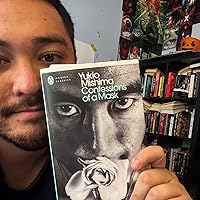
Dennis Cooper is the king of transgressive queer literature, and I knew I wanted to read his poetry to see if I resonated with his words as much as I did with his novels. Cooper’s works are a landscape of queer transgressive darkness filled with cannibalism, murder, rape, drugs, necrophilia and isolation. Another reviewer on Goodreads called his works “the dark side of longing” and I think that fits so perfectly to what Cooper constantly explores in his writing. I’ve always said that transgressive literature always expresses something true amidst all the obsession and violence, because beneath that depravity is a kind of honesty, and I also found that here in Cooper’s poetry. These are not images of the gay men represented in modern mainstream media but men who have never fit in any sort of box and have found comfort in the darker side of life and lust; the kind of men who find comfort in depravity just so they can feel alive. This collection holds together Cooper’s selected poetry with similar prose and themes, but other than that this collection didn’t feel connected in the way collections do when written to be intentionally presented together. While I still loved the ideas and themes presented here, I think I personally prefer Cooper’s novels over his poetry.
my life for his,
wrote it in poems of shit worth.
As I jot this down now
I know it was true.”
Dennis Cooper is the king of transgressive queer literature, and I knew I wanted to read his poetry to see if I resonated with his words as much as I did with his novels. Cooper’s works are a landscape of queer transgressive darkness filled with cannibalism, murder, rape, drugs, necrophilia and isolation. Another reviewer on Goodreads called his works “the dark side of longing” and I think that fits so perfectly to what Cooper constantly explores in his writing. I’ve always said that transgressive literature always expresses something true amidst all the obsession and violence, because beneath that depravity is a kind of honesty, and I also found that here in Cooper’s poetry. These are not images of the gay men represented in modern mainstream media but men who have never fit in any sort of box and have found comfort in the darker side of life and lust; the kind of men who find comfort in depravity just so they can feel alive. This collection holds together Cooper’s selected poetry with similar prose and themes, but other than that this collection didn’t feel connected in the way collections do when written to be intentionally presented together. While I still loved the ideas and themes presented here, I think I personally prefer Cooper’s novels over his poetry.

December 26, 2020
This was an interesting poetry collection to say the least, but I’m not sure if I really enjoyed it. Cooper’s poetry is sexual and violent, often to a shocking and disturbing degree. I’m just not sure the payoff was great enough for such repeated graphic violence.
November 7, 2023
When the poems hit, they HIT. Some were lost on me, and I guess that is to be expected. Sometimes I could see the crisp, horny, perverted portal to Dennis’s world, and at times I was left fumbling around in a dark room, confused as how I got there or what I was meant to do.
Displaying 1 - 30 of 44 reviews