

What do you think?

Fighting Hislam: Women, Faith and Sexism
"The Muslim community that is portrayed to the West is a misogynist’s playground; within the Muslim community, feminism is often regarded with sneering hostility.
Yet between those two views there is a group of Muslim women many do not believe a diverse bunch who fight sexism from within, as committed to the fight as they are to their faith. Hemmed in by Islamophobia and sexism, they fight against sexism with their minds, words and bodies. Often, their biggest weapon is their religion.
Here, Carland talks with Muslim women about how they are making a stand for their sex, while holding fast to their faith.
At a time when the media trumpets scandalous revelations about life for women from Saudi Arabia to Indonesia, Muslim women are always spoken about and over, never with. In Fighting Hislam, that ends."
Yet between those two views there is a group of Muslim women many do not believe a diverse bunch who fight sexism from within, as committed to the fight as they are to their faith. Hemmed in by Islamophobia and sexism, they fight against sexism with their minds, words and bodies. Often, their biggest weapon is their religion.
Here, Carland talks with Muslim women about how they are making a stand for their sex, while holding fast to their faith.
At a time when the media trumpets scandalous revelations about life for women from Saudi Arabia to Indonesia, Muslim women are always spoken about and over, never with. In Fighting Hislam, that ends."
211 pages, Kindle Edition
Published May 1, 2017
Ratings & Reviews
Friends & Following
Create a free account to discover what your friends think of this book!
Community Reviews
Displaying 1 - 30 of 55 reviews

June 3, 2017
4.5★
Muslim feminism. An oxymoron? Many people would assume so, because the prevailing view of non-Muslims seems to be that Islam classifies women as something less than men. Well, no. In fact, many of the world’s great religious texts have appeared to favour men, but probably because they’ve been translated and interpreted by—you guessed it—men.
I think the male is usually the default position in language. Things have changed, changed to the point that when I once said something about “A farmer, when he . . . ” and my son interrupted and said “or SHE” I realised that his teachers were bringing their students up to date with the real world, and I was the one lagging behind. The irony is, that my husband and I were farming together, and we both identified as farmers. Then again, my father called all dogs “he” and all cats “she” although language was his field. Maybe his field should have been like our literal fields and included animals. 😊 But I digress.
So when a religious text says that “a man may not . . . ”, it doesn’t get translated or interpreted as “a person may not . . .”. That’s a failing of history and language, but it’s gradually (grudgingly) being corrected. As for the religious side of the argument, Carland knows her stuff.
“Classical Islamic law affords women the same right and obligation to an education as it does to a male, the right to financial independence (in both earning and spending, including owning property, entering contractual agreements and initiating enterprise), the right to keep her name after marriage, the right to sexual satisfaction from her spouse, the option to use contraception if she desires, the right to divorce, the right to initiate and refuse marriage, the right to be a religious authority equivalent to men, the right to social and political participation, and the right to financial maintenance from her husband, as well as viewing her as a spiritual equal to men. It even states that a woman is not required to serve her husband food or clean his house.
Despite the rights and status that Islam confers upon women, many in the West have associated Islam with the oppression of women since a least the eighteenth century.”
Raised in a Baptist Christian family, Susan Carland was a reasonably typical Aussie kid who converted to Islam in her teens. She’s a well-known public speaker and commentator in Australia, often sought to represent Muslim issues. She’s also married to a very high-profile political commentator, Waleed Aly, who is a popular television presenter. So she’s neither a typical Aussie nor a typical Muslim.
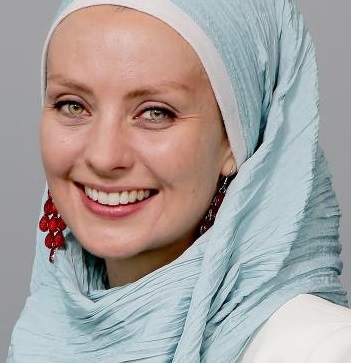
Dr Susan Carland
What she is, however, is bright and well-spoken. She decided to write her doctoral thesis on this subject and has expanded it into a book. She interviewed many Muslim women, some converts, some born into Muslim families, in the United States and Australia, collecting material and opinions, and she presents her results here. It still reads like an academic paper, and I won’t pretend to have read and absorbed all the facts and figures.
But I am interested in the basic premise, which is, I believe, that sexism is not part of the Muslim religion but part of an old-fashioned culture. It may be tradition that men are given all the power, but that’s not what’s taught in the Qur'an (also known as the Koran). That goes back to what I said earlier about translations and interpretations.
“I’ve had similar exchanges—too many to count—with non-Muslims over the course of my research. Commonplace is the firm conviction that sexism against Muslim women is rife, most often coupled with the utter disbelief that women who challenge sexism could exist, let alone that there are many of them, that they are not a new phenomenon, and that Muslim men often support them in their efforts.”
Muslim women are caught in a double bind when fighting sexism, because they’re basically damned if they do and damned if they don’t. If they do fight it, they are criticised by both people who think that they’re going against their religion (they aren’t) and outsiders who think they are confirming that Islam is a sexist religion (it isn’t).
But if they don’t fight it, then they are not only seeming to confirm the mistaken views about Islam in their own communities, their silence is also confirming those views to outsiders.
There are many Muslim women who have been combating sexism in their communities with the support of men. “Actually, many of the women listed their husbands, or another Muslim man like their father or imam, as their greatest supporters.”
Carland points out that the term “feminism” is usually considered to be a Western influence, and Muslim women don’t want to or need to think of their striving for equality as anything to do with another culture. This is their issue, their struggle, and it’s been going on for generations.
“In addition to being perceived as inherently Western and colonialist, feminism is also seen in much of the Muslim world as closely tied to secularism—generally understood to mean anti-religion—and thus Western feminists are viewed with a deep sense of wariness.”
Most recently (1 June 2017), The Conversation published an article called “Indonesian Muslim Women Engage with Feminism”.
https://theconversation.com/indonesia...
This is an excellent introduction to what is becoming a mainstream topic, and I thank NetGalley and Melbourne University Publishing for providing a copy for review.
I will leave you with a few more excerpts from (now Dr!) Susan Carland’s work.
**“Nahida told me about the permanent sense of unease she experienced over what she was taught about Islam and women, on the one hand, and what she felt to be true, on the other. And that this created an unbearable tension. ‘The male-centric Islamic studies I had been taught since I was very young were constantly at conflict with what I recognised as the truth that provided foundation for my values,’ she told me. ‘In order to reconcile and find answers I ventured into exegesis and discovered to my amazement that the extracted interpretations that had disturbed me with their sexism were completely un-Islamic and unfounded.’”
**“ . . . verse 4:34, which is sometimes understood to mean a husband can beat his wife. Of tackling this verse, in particular, Laleh called it ‘a remarkable period of research’, and went on to discuss how her studies into the Arabic lexicon and other uses of the term daraba (the key term in the verse) in Arabic, plus investigation into the sunnah (the way of the Prophet Muhammad) led her to truly believe the correct understanding of that term was ‘go away from’, and not ‘beat’, as had previously been understood.”
**“ Laleh explained this belief using a religious motivation: ‘There’s a very famous tradition of the Prophet that says “whatever my community has consensus on, cannot be wrong”. So for 1400 years they [men] have been saying how there’s consensus on this and consensus on that, but they have not taken half the population into account. Where is the woman’s voice? That’s why Muslim women need to be active so they can challenge things like this.’”
Muslim feminism. An oxymoron? Many people would assume so, because the prevailing view of non-Muslims seems to be that Islam classifies women as something less than men. Well, no. In fact, many of the world’s great religious texts have appeared to favour men, but probably because they’ve been translated and interpreted by—you guessed it—men.
I think the male is usually the default position in language. Things have changed, changed to the point that when I once said something about “A farmer, when he . . . ” and my son interrupted and said “or SHE” I realised that his teachers were bringing their students up to date with the real world, and I was the one lagging behind. The irony is, that my husband and I were farming together, and we both identified as farmers. Then again, my father called all dogs “he” and all cats “she” although language was his field. Maybe his field should have been like our literal fields and included animals. 😊 But I digress.
So when a religious text says that “a man may not . . . ”, it doesn’t get translated or interpreted as “a person may not . . .”. That’s a failing of history and language, but it’s gradually (grudgingly) being corrected. As for the religious side of the argument, Carland knows her stuff.
“Classical Islamic law affords women the same right and obligation to an education as it does to a male, the right to financial independence (in both earning and spending, including owning property, entering contractual agreements and initiating enterprise), the right to keep her name after marriage, the right to sexual satisfaction from her spouse, the option to use contraception if she desires, the right to divorce, the right to initiate and refuse marriage, the right to be a religious authority equivalent to men, the right to social and political participation, and the right to financial maintenance from her husband, as well as viewing her as a spiritual equal to men. It even states that a woman is not required to serve her husband food or clean his house.
Despite the rights and status that Islam confers upon women, many in the West have associated Islam with the oppression of women since a least the eighteenth century.”
Raised in a Baptist Christian family, Susan Carland was a reasonably typical Aussie kid who converted to Islam in her teens. She’s a well-known public speaker and commentator in Australia, often sought to represent Muslim issues. She’s also married to a very high-profile political commentator, Waleed Aly, who is a popular television presenter. So she’s neither a typical Aussie nor a typical Muslim.

Dr Susan Carland
What she is, however, is bright and well-spoken. She decided to write her doctoral thesis on this subject and has expanded it into a book. She interviewed many Muslim women, some converts, some born into Muslim families, in the United States and Australia, collecting material and opinions, and she presents her results here. It still reads like an academic paper, and I won’t pretend to have read and absorbed all the facts and figures.
But I am interested in the basic premise, which is, I believe, that sexism is not part of the Muslim religion but part of an old-fashioned culture. It may be tradition that men are given all the power, but that’s not what’s taught in the Qur'an (also known as the Koran). That goes back to what I said earlier about translations and interpretations.
“I’ve had similar exchanges—too many to count—with non-Muslims over the course of my research. Commonplace is the firm conviction that sexism against Muslim women is rife, most often coupled with the utter disbelief that women who challenge sexism could exist, let alone that there are many of them, that they are not a new phenomenon, and that Muslim men often support them in their efforts.”
Muslim women are caught in a double bind when fighting sexism, because they’re basically damned if they do and damned if they don’t. If they do fight it, they are criticised by both people who think that they’re going against their religion (they aren’t) and outsiders who think they are confirming that Islam is a sexist religion (it isn’t).
But if they don’t fight it, then they are not only seeming to confirm the mistaken views about Islam in their own communities, their silence is also confirming those views to outsiders.
There are many Muslim women who have been combating sexism in their communities with the support of men. “Actually, many of the women listed their husbands, or another Muslim man like their father or imam, as their greatest supporters.”
Carland points out that the term “feminism” is usually considered to be a Western influence, and Muslim women don’t want to or need to think of their striving for equality as anything to do with another culture. This is their issue, their struggle, and it’s been going on for generations.
“In addition to being perceived as inherently Western and colonialist, feminism is also seen in much of the Muslim world as closely tied to secularism—generally understood to mean anti-religion—and thus Western feminists are viewed with a deep sense of wariness.”
Most recently (1 June 2017), The Conversation published an article called “Indonesian Muslim Women Engage with Feminism”.
https://theconversation.com/indonesia...
This is an excellent introduction to what is becoming a mainstream topic, and I thank NetGalley and Melbourne University Publishing for providing a copy for review.
I will leave you with a few more excerpts from (now Dr!) Susan Carland’s work.
**“Nahida told me about the permanent sense of unease she experienced over what she was taught about Islam and women, on the one hand, and what she felt to be true, on the other. And that this created an unbearable tension. ‘The male-centric Islamic studies I had been taught since I was very young were constantly at conflict with what I recognised as the truth that provided foundation for my values,’ she told me. ‘In order to reconcile and find answers I ventured into exegesis and discovered to my amazement that the extracted interpretations that had disturbed me with their sexism were completely un-Islamic and unfounded.’”
**“ . . . verse 4:34, which is sometimes understood to mean a husband can beat his wife. Of tackling this verse, in particular, Laleh called it ‘a remarkable period of research’, and went on to discuss how her studies into the Arabic lexicon and other uses of the term daraba (the key term in the verse) in Arabic, plus investigation into the sunnah (the way of the Prophet Muhammad) led her to truly believe the correct understanding of that term was ‘go away from’, and not ‘beat’, as had previously been understood.”
**“ Laleh explained this belief using a religious motivation: ‘There’s a very famous tradition of the Prophet that says “whatever my community has consensus on, cannot be wrong”. So for 1400 years they [men] have been saying how there’s consensus on this and consensus on that, but they have not taken half the population into account. Where is the woman’s voice? That’s why Muslim women need to be active so they can challenge things like this.’”

May 19, 2017
‘The wider community thinks the Muslim community is a monolith… ‘
I was intrigued by the title of this book, interested to read what Susan Carland has to say about sexism and faith. But first, a little about Dr Susan Carland. Susan converted to Islam when she was aged 19. She had explored other religions, but felt an intellectual connection to the Islamic faith. Dr Susan Carland is a sociologist and lecturer at Monash University in Melbourne, and ‘Fighting Hislam’ began life as her PhD thesis. Susan Carland married Waleed Aly in 2002: they are arguably the most recognised Muslim couple in Australia.
In this book, Dr Carland draws together the experiences of twenty-three Muslim women, of their individual fights against sexism. Sixteen of the twenty-three women involved are from North America, the other seven are from Australia. While these are well-educated, articulate women, their experiences are different as are their approaches to dealing with sexism. Two of the women involved have since died.
What I found most interesting about this book is the diversity of the views expressed. While none of the Muslim women I know personally are either oppressed or part of a harem, the clichés persist. Muslim women are often identifiable by the way they dress (as were, I recall, Catholic nuns in the 1960s and earlier). And I’m old enough to remember when most Christian women covered their heads in church. The point of my digression? Simply that we ‘other’ people based on assumptions we make which are often based on clichés or partial information. Many assume that no woman would choose to cover her hair and, if she does, it is because she is forced to. And this assumption becomes for many of us the basis of our ‘knowledge’ that (all) Muslim women are oppressed.
‘There is a saying among Muslims: you don’t read the Qur’an, the Qur’an reads you.’
This saying goes a long way towards explaining the different ways in which the Qur’an can be interpreted by individuals as diverse as the Persian poet Rumi, and the leader of the Islamic State. These different interpretations also a part of the reason why Muslim women need to fight against sexism. The important point Dr Carland makes is that the sexism arises from different interpretations of Islam, that sexism is not an inherent part of the religion.
Dr Carland describes the different boundaries that Muslim women need to negotiate when trying to address sexism: if they speak out, do they give the Islamophobes more fuel against Islam? How will they be viewed within their own communities where, frequently, feminism is seen as a western influence (and therefore probably suspect)? Is faith enough?
I finished this book wondering about the future. Some of the fight against sexism in Islam is similar to battles fought (and still being fought) in the community more broadly. Equality may have been achieved in some societies in relation to some aspects of life, but the battle continues. And the answer? Alas, there is no single answer: the community is too diverse for a single, simple answer. But I can hope that the conversation continues. This is a book to read and reflect on, to discuss with others. For my own part, I saw many similarities between the roles of Muslim women and the roles of women more generally over the past four or five decades. Far more similarities than differences.
Note: My thanks to Melbourne University Publishing and NetGalley for providing me with a free electronic copy of this book for review purposes.
Jennifer Cameron-Smith
I was intrigued by the title of this book, interested to read what Susan Carland has to say about sexism and faith. But first, a little about Dr Susan Carland. Susan converted to Islam when she was aged 19. She had explored other religions, but felt an intellectual connection to the Islamic faith. Dr Susan Carland is a sociologist and lecturer at Monash University in Melbourne, and ‘Fighting Hislam’ began life as her PhD thesis. Susan Carland married Waleed Aly in 2002: they are arguably the most recognised Muslim couple in Australia.
In this book, Dr Carland draws together the experiences of twenty-three Muslim women, of their individual fights against sexism. Sixteen of the twenty-three women involved are from North America, the other seven are from Australia. While these are well-educated, articulate women, their experiences are different as are their approaches to dealing with sexism. Two of the women involved have since died.
What I found most interesting about this book is the diversity of the views expressed. While none of the Muslim women I know personally are either oppressed or part of a harem, the clichés persist. Muslim women are often identifiable by the way they dress (as were, I recall, Catholic nuns in the 1960s and earlier). And I’m old enough to remember when most Christian women covered their heads in church. The point of my digression? Simply that we ‘other’ people based on assumptions we make which are often based on clichés or partial information. Many assume that no woman would choose to cover her hair and, if she does, it is because she is forced to. And this assumption becomes for many of us the basis of our ‘knowledge’ that (all) Muslim women are oppressed.
‘There is a saying among Muslims: you don’t read the Qur’an, the Qur’an reads you.’
This saying goes a long way towards explaining the different ways in which the Qur’an can be interpreted by individuals as diverse as the Persian poet Rumi, and the leader of the Islamic State. These different interpretations also a part of the reason why Muslim women need to fight against sexism. The important point Dr Carland makes is that the sexism arises from different interpretations of Islam, that sexism is not an inherent part of the religion.
Dr Carland describes the different boundaries that Muslim women need to negotiate when trying to address sexism: if they speak out, do they give the Islamophobes more fuel against Islam? How will they be viewed within their own communities where, frequently, feminism is seen as a western influence (and therefore probably suspect)? Is faith enough?
I finished this book wondering about the future. Some of the fight against sexism in Islam is similar to battles fought (and still being fought) in the community more broadly. Equality may have been achieved in some societies in relation to some aspects of life, but the battle continues. And the answer? Alas, there is no single answer: the community is too diverse for a single, simple answer. But I can hope that the conversation continues. This is a book to read and reflect on, to discuss with others. For my own part, I saw many similarities between the roles of Muslim women and the roles of women more generally over the past four or five decades. Far more similarities than differences.
Note: My thanks to Melbourne University Publishing and NetGalley for providing me with a free electronic copy of this book for review purposes.
Jennifer Cameron-Smith

March 24, 2018
This reads a bit too academically for me. It is basically an extension of her PHD as she interviews 27 Muslim women who are fighting sexism within their religion.
As someone who is not religious I really did struggle to relate as I don't understand why you would remain in, or choose, a religion where you have to fight misogyny like this. Carland is trying to shine a light on the fact that not all men who are Muslim are sexist, and not all women who are Muslim accept sexism, and perhaps that will give some aspiration to other women.
As someone who is not religious I really did struggle to relate as I don't understand why you would remain in, or choose, a religion where you have to fight misogyny like this. Carland is trying to shine a light on the fact that not all men who are Muslim are sexist, and not all women who are Muslim accept sexism, and perhaps that will give some aspiration to other women.

June 30, 2017
This short book is an extension to the author's PhD. It reads a bit like a formal dissertation which is a pity as the topic needs to be understood.
The more examples the book provided of sexism in Islamic communities, the more common the problem seems of men misusing their religion, power, position to get a world in which they can control.
An important emphasis in the book is to show the historical and continuing work conducted by Islamic women in addressing sexism, inequality and domestic violence.
The more examples the book provided of sexism in Islamic communities, the more common the problem seems of men misusing their religion, power, position to get a world in which they can control.
An important emphasis in the book is to show the historical and continuing work conducted by Islamic women in addressing sexism, inequality and domestic violence.

May 18, 2017
An interesting read about the way Muslim women are fighting for gender equality within their faith and communities. The book dispels many misconceptions about Muslim women and shares their stories. Many of the battles being fought for women's rights within Islamic communities are similar to those being fought within other faiths and the secular community too. The book is written in an academic style, which I didn't love, but the author has expertise on her side. A thought-provoking read.

June 21, 2017
Reading this, I almost felt not quite smart enough to fully grasp it, somehow, but it was still a really fascinating and, I think, really important.
One of the MOST important parts of the entire book was, to me, this:
There is a saying among Muslims: you don't read the Qur'an, the Qur'an reads you. This means that holy texts have a way of drawing out from people what already dwells in their heart and holding up a mirror to them. This is not to say that there aren't valid and invalid interpretations of the Qur'an - classical Muslim scholars have spent generations discussing and debating where legitimate boundaries of interpretations lie, and there are most certainly readings that are classified as taking people outside the fold of Islam. However, if you have ever wondered how the Persian poet Rumi and the leader of the Islamic State can belong to the same religion and claim to follow the same scripture, this is a significant part of the reason.
I'm guessing many people have wondered that - and I really appreciated Carland's explanation of how this can be. This work really clarified a lot of what the Islamic faith involves - and I do love that there's a real push from within the faith to redress the gender balance that exists. I hope that in the future, they make even greater progress towards achieving their aims.
One of the MOST important parts of the entire book was, to me, this:
There is a saying among Muslims: you don't read the Qur'an, the Qur'an reads you. This means that holy texts have a way of drawing out from people what already dwells in their heart and holding up a mirror to them. This is not to say that there aren't valid and invalid interpretations of the Qur'an - classical Muslim scholars have spent generations discussing and debating where legitimate boundaries of interpretations lie, and there are most certainly readings that are classified as taking people outside the fold of Islam. However, if you have ever wondered how the Persian poet Rumi and the leader of the Islamic State can belong to the same religion and claim to follow the same scripture, this is a significant part of the reason.
I'm guessing many people have wondered that - and I really appreciated Carland's explanation of how this can be. This work really clarified a lot of what the Islamic faith involves - and I do love that there's a real push from within the faith to redress the gender balance that exists. I hope that in the future, they make even greater progress towards achieving their aims.

January 28, 2018
This book opened my eyes to the egalitarian interpretation of Islam, the experiences of muslim women within their own and western communities, and how they use their understanding of their religion to fight against sexist interpretations of their text. I feel like this book helped me understand what Yassmin Abdel-Magied meant when she said Islam was the most feminist religion on Q&A.

October 29, 2018
This book was based on Susan Carland's PhD and it definitely read as a very academic piece. The first 40-50 or so pages in particular were a struggle to get through, explaining the methodology and reasoning behind both the research and interviews. In my opinion, this section was not very engaging for the regular everyday reader. There was also a noticable amount of repetition throughout the book. For example, one entire paragraph essentially said that (and I am obviously paraphrasing here to make a point) 'Some women wanted their names to be left public while others wanted their identity to be protected... so I offered anonymity...not everyone accepted this offer... some women wanted their names to be left public while others wanted their identity to be protected.' Of course, reinforcing key information is not a bad thing, but it reached a level I personally found irritating.
That aside, the latter half of the book discussing the interviews was interesting. It provided perspectives that are not so well publicised in mainstream media, being that of Muslim women who fight for equality within their own communities (from a faith based position). The strength, resilience and hope showed by these women, despite the resistance and obstacles they face/faced, is impressive. While it still left me with some doubts regarding Islam and feminismim, I think this book was valuable in helping me broaden my understanding on these issues and how they are viewed by some of the women affected by them.
Overall, I enjoyed this book. However I think the readability somewhat hinders its accessibility for the average reader, which is a shame, as its information is important to consider within discussions on Islam and women's rights. I give Fighting Hislam a 3/5.
That aside, the latter half of the book discussing the interviews was interesting. It provided perspectives that are not so well publicised in mainstream media, being that of Muslim women who fight for equality within their own communities (from a faith based position). The strength, resilience and hope showed by these women, despite the resistance and obstacles they face/faced, is impressive. While it still left me with some doubts regarding Islam and feminismim, I think this book was valuable in helping me broaden my understanding on these issues and how they are viewed by some of the women affected by them.
Overall, I enjoyed this book. However I think the readability somewhat hinders its accessibility for the average reader, which is a shame, as its information is important to consider within discussions on Islam and women's rights. I give Fighting Hislam a 3/5.

January 4, 2026
Most important thing to know - this is a book that is the summary of her PhD thesis. If you are not aware of that, that would be annoying. This is what happens when a publisher says, I think your PhD thesis would have popular appeal, you should turn your 100 000 word academic paper into something we can sell to the masses in lay man's speak.
It is interesting. What is the modern experience of Muslim women around the world in Islam and with feminism? How are they impacting Islamic feminism? Can Muslim women even be feminists? How? I really enjoyed these questions and the answers. And how varied they are. I will admit I picked this up due to Carland's media profile, but it is a subject that really resonates with me.
I have an Arts degree in Sociology, which is Carland's discipline. I appreciate the social structures she is exploring and the conflicts they have with each other, but also the synergies - religion, ethnicity, gender, class, family structure, etc. But you can learn from listening to these womens' stories without the academic context as these are all things we experience every day, even if we don't have these terms to label them. They are experience, which is important.
If we had halfers, it would be a 3.5
It is interesting. What is the modern experience of Muslim women around the world in Islam and with feminism? How are they impacting Islamic feminism? Can Muslim women even be feminists? How? I really enjoyed these questions and the answers. And how varied they are. I will admit I picked this up due to Carland's media profile, but it is a subject that really resonates with me.
I have an Arts degree in Sociology, which is Carland's discipline. I appreciate the social structures she is exploring and the conflicts they have with each other, but also the synergies - religion, ethnicity, gender, class, family structure, etc. But you can learn from listening to these womens' stories without the academic context as these are all things we experience every day, even if we don't have these terms to label them. They are experience, which is important.
If we had halfers, it would be a 3.5

June 3, 2017
This book fills a sizable hole in the genres of feminist- and Islamic-related literature by covering ground which has been neglected by other authors in these fields. Where other authors have tackled "women's issues" within Islam from a non- or ex-Muslim perspective, Carland addresses the issue of sexism experienced by Muslim women in a way which gives agency to Muslim women themselves, with respect to both their gender and their religion. This unique way of framing the debate tackles one of my biggest pet peeves; namely that religion (Islam in particular) and socially progressive ideas and movements are mutually exclusive. It also highlights the importance of hearing Muslim women's voices in their own right, while also not ignoring the entire issue as "not my problem" (an attitude which is prevalent within current mainstream feminism).
As this was first a PhD dissertation, the language is quite academic and the beginning of the book waded through a portion of typical statistical necessities required by academic study. Overall, this was an informative and enlightening read.
Thanks to Melbourne University Press and NetGalley for providing me with a copy of this book in exchange for an honest review.
As this was first a PhD dissertation, the language is quite academic and the beginning of the book waded through a portion of typical statistical necessities required by academic study. Overall, this was an informative and enlightening read.
Thanks to Melbourne University Press and NetGalley for providing me with a copy of this book in exchange for an honest review.

February 4, 2021
*Fighting Hislam: Women, Faith and Sexism* is an honourable effort of activism by Susan Carland who gathered interviews from a variety of Muslim women who are on the frontlines of fighting against sexism within the Muslim community.
Many of the women Carland mentions throughout the book are prominent members of the Islamic feminist movement. It is a minority within a minority movement, and that in itself lends much thought and consideration for nuance. Carland handles the controversy of ‘fighting hislam’ – that is, fighting the patriarchal practice, reading, and theology of Islam and the Muslim community, with careful consideration. Throughout the book, Carland makes the reader keenly aware of just how difficult it is to maintain balance and not fall off the precipice of this contentious subject. The barbed wire tightrope is crucially felt by Muslim women readers such as myself. Many times, with every subject and conversation Carland, hosted within the chapters both inspired and saddened. To be aware and many times have experience of the ‘double bind’ struggle for Muslim women activists who strive hard, as a result of their deep conviction in their faith, hits deeply. The accusations of not being a credible Muslim, of being rejected by the community or lauded and fetishised as part of a deeply problematic and hurtful Oriental othering are often the given and expected responses. And yet, Carland’s research was illuminating. For example, Muslim men are the second group of three that are most likely to support Muslim women and women’s rights. In another study, Muslim women were more likely to identify as feminist or to recognise the egalitarianism of their faith compared to their Christian counterparts. To strive for Muslim women’s equal footing in the community and to face the backlash from both their community and the worry of leaning into Western secular criticism of Islam is not easy, and Carland navigates the interviews she had with the women and spends a considerable part of the book weighing up the different opinions of these women. The women themselves are inspiring, and their activism would make any Muslim proud regardless of whether you agree with their approaches. In lieu of resisting stereotypes, each woman brought her differing opinion to the table and from what I can recall there was no unanimous answer to any of the topics Carland brought up.
While I expected the interviews themselves instead of the long summaries that Carland organised them in, I was happy to read such a lovingly put together work that is not only insightful but is from an insider in the Muslim community – not someone who has renounced it (although, it is easy to see the acute frustrations one would have with the patriarchal culture of the practices) but someone who goes the extra mile to consider how to navigate such a contentious but needed conversation with a group of women who differ in age, ethnicity, even country – given only that they are from the West, Muslim, and a woman – and most apparently in their ways of activism and their perspectives. While I initially started the book with the intention of finding some relief from the patriarchal suffering Muslim women go through, I came out of this book with a stronger sense of the conversations we need to keep on having and just how careful and considerate we can be with one another.
Many of the women Carland mentions throughout the book are prominent members of the Islamic feminist movement. It is a minority within a minority movement, and that in itself lends much thought and consideration for nuance. Carland handles the controversy of ‘fighting hislam’ – that is, fighting the patriarchal practice, reading, and theology of Islam and the Muslim community, with careful consideration. Throughout the book, Carland makes the reader keenly aware of just how difficult it is to maintain balance and not fall off the precipice of this contentious subject. The barbed wire tightrope is crucially felt by Muslim women readers such as myself. Many times, with every subject and conversation Carland, hosted within the chapters both inspired and saddened. To be aware and many times have experience of the ‘double bind’ struggle for Muslim women activists who strive hard, as a result of their deep conviction in their faith, hits deeply. The accusations of not being a credible Muslim, of being rejected by the community or lauded and fetishised as part of a deeply problematic and hurtful Oriental othering are often the given and expected responses. And yet, Carland’s research was illuminating. For example, Muslim men are the second group of three that are most likely to support Muslim women and women’s rights. In another study, Muslim women were more likely to identify as feminist or to recognise the egalitarianism of their faith compared to their Christian counterparts. To strive for Muslim women’s equal footing in the community and to face the backlash from both their community and the worry of leaning into Western secular criticism of Islam is not easy, and Carland navigates the interviews she had with the women and spends a considerable part of the book weighing up the different opinions of these women. The women themselves are inspiring, and their activism would make any Muslim proud regardless of whether you agree with their approaches. In lieu of resisting stereotypes, each woman brought her differing opinion to the table and from what I can recall there was no unanimous answer to any of the topics Carland brought up.
While I expected the interviews themselves instead of the long summaries that Carland organised them in, I was happy to read such a lovingly put together work that is not only insightful but is from an insider in the Muslim community – not someone who has renounced it (although, it is easy to see the acute frustrations one would have with the patriarchal culture of the practices) but someone who goes the extra mile to consider how to navigate such a contentious but needed conversation with a group of women who differ in age, ethnicity, even country – given only that they are from the West, Muslim, and a woman – and most apparently in their ways of activism and their perspectives. While I initially started the book with the intention of finding some relief from the patriarchal suffering Muslim women go through, I came out of this book with a stronger sense of the conversations we need to keep on having and just how careful and considerate we can be with one another.
June 5, 2017
This book opens an important discussion about women in Islam. While the value of the discussion can't be questioned, the way it is discussed here could be.
For my full review watch on my Youtube channel: https://www.youtube.com/watch?v=QpbK4...
For my full review watch on my Youtube channel: https://www.youtube.com/watch?v=QpbK4...
July 3, 2017
This is one of those rarities, a PhD thesis edited and rewritten for general reading outside the specialised confines of academia. If you think this is just another feminist complaining about the misogynist males running the mosque you are wrong. That is a small part. What Susan focuses on is 23 Muslim women who in various ways cope with both the seemingly inherent misogyny within Islam and the toxic Islamophobia that besieges it. This is not a book about feminists. In fact most of the women believe that term is far too loaded with undesirable baggage to use as a descriptor for them.
Susan's main source material comes from interviews with the women some of whom chose to remain anonymous. These women range from partnered to single including a single mother. The term "partnered" is used because one of them is in a lesbian relationship. They cover a range of relugiosity and life experiences but all are firm in their defence of Islam while at the same time recognising problems with its dominantly patriarchal interpretation. This is what they struggle with. They all recognise that Islam came with a message of liberation and freedom for early Muslim women and they are trying to reclaim that in various ways. Either through rereading the Qura'n with a view to its language directed to and about women or reclaiming the forgotten scholarship of their female predecessors through to direct activism such as producing glossy women's magazines specifically directed to a female Muslim audience or reclaiming prayer space by holding "pray-ins in the space normally occupied by men.
The accounts are sometimes deeply painful particularly where the women have to deal with the double bind of community expectations and the simultaneous assault of Islamophobia masked as concerns to "liberate" women from the perceived oppression of Islam and the hijab. This is no exercise in man-hating in fact many of the women including Susan acknowledge the support of their significant "others". This includes discussion of the problem of the external crusader wanting to "rescue" Muslim women from their male "oppressors" and the damage it causes and contrasts it with the process of internal negotiation women use which respects cultural and community sensitivities.
You don't achieve a PhD without rigorous well written research with cogent arguments. This shines through in this book. Good source material for anyone interested in contemporary issues surrounding Muslim women and their place in Islam.
Susan's main source material comes from interviews with the women some of whom chose to remain anonymous. These women range from partnered to single including a single mother. The term "partnered" is used because one of them is in a lesbian relationship. They cover a range of relugiosity and life experiences but all are firm in their defence of Islam while at the same time recognising problems with its dominantly patriarchal interpretation. This is what they struggle with. They all recognise that Islam came with a message of liberation and freedom for early Muslim women and they are trying to reclaim that in various ways. Either through rereading the Qura'n with a view to its language directed to and about women or reclaiming the forgotten scholarship of their female predecessors through to direct activism such as producing glossy women's magazines specifically directed to a female Muslim audience or reclaiming prayer space by holding "pray-ins in the space normally occupied by men.
The accounts are sometimes deeply painful particularly where the women have to deal with the double bind of community expectations and the simultaneous assault of Islamophobia masked as concerns to "liberate" women from the perceived oppression of Islam and the hijab. This is no exercise in man-hating in fact many of the women including Susan acknowledge the support of their significant "others". This includes discussion of the problem of the external crusader wanting to "rescue" Muslim women from their male "oppressors" and the damage it causes and contrasts it with the process of internal negotiation women use which respects cultural and community sensitivities.
You don't achieve a PhD without rigorous well written research with cogent arguments. This shines through in this book. Good source material for anyone interested in contemporary issues surrounding Muslim women and their place in Islam.

March 25, 2022
Susan Carland, a white Australian woman who converted to Islam in her teens, addresses sexism within Islamic culture and jurisprudence, arguing along with a number of other Muslim feminist activists that Islam itself is not the problem, but a vital part of the solution, as for too long male scholars have misinterpreted or even purposely distorted Qur'anic teaching in order to justify male supremacy.
This book is likely to ruffle some feathers in that Muslim community but, admirably, Carland and the vast majority of the woman she interviews make it clear that they are not against Islam or even, in any true sense, anti-male. Many of them reject the very term feminist, because of its secular, Western underpinnings, and the book champions a very pro-faith approach to fighting sexism and empowering Muslim women all over the word. At the same time, a strong case is made against the widespread myth that most Muslim women are oppressed, ill-treated and subjugated by their husbands.
Fighting Hislam is very pro-feminist, and very critical of certain misogynistic elements with Muslimin communities around the World, but at the same time it is unflinchingly pro-Islam and pro-religion in general.
This book is likely to ruffle some feathers in that Muslim community but, admirably, Carland and the vast majority of the woman she interviews make it clear that they are not against Islam or even, in any true sense, anti-male. Many of them reject the very term feminist, because of its secular, Western underpinnings, and the book champions a very pro-faith approach to fighting sexism and empowering Muslim women all over the word. At the same time, a strong case is made against the widespread myth that most Muslim women are oppressed, ill-treated and subjugated by their husbands.
Fighting Hislam is very pro-feminist, and very critical of certain misogynistic elements with Muslimin communities around the World, but at the same time it is unflinchingly pro-Islam and pro-religion in general.

April 11, 2020
This was an eye-opener.
Women, Islam, feminisim ... conflict, faith, self-worth.
Typically our views on Muslem's are based on the minority, and the media's view of what life is like for women living within this religion.
The reality is different.
Women, Islam, feminisim ... conflict, faith, self-worth.
Typically our views on Muslem's are based on the minority, and the media's view of what life is like for women living within this religion.
The reality is different.
December 22, 2020
I heard Susan Cartland speak at a conference in 2017 and was given a copy of this book. She was a fantastic speaker and definitely stood out as being able to engage with an audience. Her book was the same. It did read like an academic text, how could it not, it’s a summary of her PhD thesis but she managed to bring an engaging aspect to it. I didn’t engage in the first few chapters but once I got past those the story was more interesting and it should be, we need to engage more in topics like this. As a growing ‘feminist’ myself I wanted to understand more. She claims that misogyny and patriarchy are not inherently Muslim as part of their faith and teachings but have been interpreted that way and thus practised that way as ‘men’ interpret the Koran! How apt! She interviewed 23 women in western society who are feminists and are trying to fight against sexism within Islam. It was fascinating stuff. I feel for these women who acknowledge they live in a very though place for women but are optimistic they can change how things are done, and one way is to interpret and translate the Koran from a women’s perspective. As traditionally the Koran is not sexist it’s just been translated that way, by men. Women have had no voice. Sexism is now an ingrained part of their culture - but it shouldn’t be. Islam is not necessarily to blame. This is the same through many religions and cultures but Islam gets a bad press. The Islamic culture has personified sexism. It’s a short book and pretty intense and i don’t proclaim to have understood everything but it’s a good start into looking at other cultures and understanding a little about what has to change as we fight for equality.
December 15, 2017
“Classical Islamic law affords women the same right and obligation to an education as it does to a male, the right to financial independence (including owning property), the right to keep her name after marriage, the right to sexual satisfaction from her spouse, the option to use contraception, the right to divorce, the right to initiate and refuse marriage, the right to be a religious authority equivalent to men, the right to social and political participation, and the right to financial maintenance from her husband, as well as viewing her as a spiritual equal to men. It even states that a woman is not required to serve her husband food or clean his house. Despite the rights and status that Islam confers upon women, many in the West have associated Islam with the oppression of women...”
Fighting Hislam is a book version of Carland’s PhD thesis on Muslim women’s fight against sexism, particularly from a faith-based perspective. She interviews 23 Muslim women in Australia & North America and, through their accounts and voices, attempts to dispel the myth of Muslim women’s “passiveness” and Islam’s “oppressiveness” by showing how they actively use the Islamic faith to counter sexism and patriarchy. Better yet, many quoted Muslim men to be among their staunch supporters and allies.
In many ways, the book reads more as a report, and I personally think it would benefit from a better narration and more external research. It’s still very insightful though, and is worth a read, especially for those interested in the topic and are less familiar with Islam. 3.5/5.
Fighting Hislam is a book version of Carland’s PhD thesis on Muslim women’s fight against sexism, particularly from a faith-based perspective. She interviews 23 Muslim women in Australia & North America and, through their accounts and voices, attempts to dispel the myth of Muslim women’s “passiveness” and Islam’s “oppressiveness” by showing how they actively use the Islamic faith to counter sexism and patriarchy. Better yet, many quoted Muslim men to be among their staunch supporters and allies.
In many ways, the book reads more as a report, and I personally think it would benefit from a better narration and more external research. It’s still very insightful though, and is worth a read, especially for those interested in the topic and are less familiar with Islam. 3.5/5.

December 13, 2024
Did I believe before reading this book that some women within Islam are trying to fight discrimination within the religion? Of course I did, so this was no revelation to me. I set out to read this book, discovering the women in this book are privileged women living in western countries. Not women locked away in Afghanistan who can do nothing to fight discrimination. The mere fact that the Koran has a section on women, and not one on men that I can find; only singling out women for comment, shows how women are considered in the religion. It speaks in terms of ye and them, your women. Ye being men and them being women. It speaks to men.
Surah IV 15. 'As for your women who are guilty of lewdness, call to witness four of you against them. And if they testify (to the truth of the allegation) then confine them until death take them...'
YOUR, four of YOU (men), THEY
Surah IV 34: 'Men are in charge of woman, because Allah made the one of them to excel the other...'
The author of this book is arguing against the interpretation of the religion. How can she argue against that.
About half way through the book I gave up. Two many distracting thoughts as I read; that these are privileged women; the words that the Koran uses which the author is writing about interpretation, when those words seen clear enough.
Similar to Christianity, Islam is a religion made for men by men. And many men like control, and religions like this suit men.
Surah IV 15. 'As for your women who are guilty of lewdness, call to witness four of you against them. And if they testify (to the truth of the allegation) then confine them until death take them...'
YOUR, four of YOU (men), THEY
Surah IV 34: 'Men are in charge of woman, because Allah made the one of them to excel the other...'
The author of this book is arguing against the interpretation of the religion. How can she argue against that.
About half way through the book I gave up. Two many distracting thoughts as I read; that these are privileged women; the words that the Koran uses which the author is writing about interpretation, when those words seen clear enough.
Similar to Christianity, Islam is a religion made for men by men. And many men like control, and religions like this suit men.

October 6, 2017
I heard Susan Carland speak at the Byron Bay writers festival, and I was once again impressed with her positivity, intelligence and insight, and her strong drive to make a difference in the world.
I bought her book to gain some insight into what it means to be a Muslim, a Muslim woman, a Muslim woman in Australia, and a Muslim opposing sexism.
Using evidence from her PhD, Carland argues for a nuanced view of Muslim women. The key seems to be to go back to the ancient texts from which Islam is derived, to find, e.g., that Classical Islamic law supports education for females as well as males, along with the right for women to have financial independence, to be a religious authority, and to be the spiritual equal of men.
With a strong and empathetic voice, Carland challenges stereotypes of Islamic women. Her evidence illustrates that not all women approach and view women's issues in the same way - either from within Islamic communities, or across cultural and faith-based divides.
While the women interviewed for this book are from Australia and North America, Carland points out that they come from hugely diverse communities, with different cultural and ideological backgrounds. Muslims in Australia come from 180 countries, for example.
Carland's book is well worth reading and a refreshing voice on modern Islam and the role of women.
I bought her book to gain some insight into what it means to be a Muslim, a Muslim woman, a Muslim woman in Australia, and a Muslim opposing sexism.
Using evidence from her PhD, Carland argues for a nuanced view of Muslim women. The key seems to be to go back to the ancient texts from which Islam is derived, to find, e.g., that Classical Islamic law supports education for females as well as males, along with the right for women to have financial independence, to be a religious authority, and to be the spiritual equal of men.
With a strong and empathetic voice, Carland challenges stereotypes of Islamic women. Her evidence illustrates that not all women approach and view women's issues in the same way - either from within Islamic communities, or across cultural and faith-based divides.
While the women interviewed for this book are from Australia and North America, Carland points out that they come from hugely diverse communities, with different cultural and ideological backgrounds. Muslims in Australia come from 180 countries, for example.
Carland's book is well worth reading and a refreshing voice on modern Islam and the role of women.
August 19, 2017
I bought the book after listening to Susan Carland discussing Women, Faith and Sexism, at my local library last week. She was very engaging and informative. The book is based on her PHD study, and therefore it is more like an academic read. Not a long book, only 147 pages, but you need to read it slowly. Twenty-three Muslim women were interviewed so there are numerous comments attributed to different people, and at times I had difficulty in remembering who was who. Susan Carland concentrates mainly on sexism within the Muslim community, and the fight against it by Muslim women here in Australia and North America. Some of these women are seen as 'pro feminists', (labels, Muslim women don't like), and are therefore not faithful to Muslim beliefs. They are questioning the patriarchal interpretation of the Qur'an, and dishonouring Islam. They are women fighting for equal rights and utitlizing their faith as a powerful tool. Yet, not all Muslim women are adopting this stance as they acknowledge that not all problems are Islamic. The book also touches on how Westerners perceive Muslim women and the Islamic faith. Hopefully, this book and the third-wave feminism will develop more to dispel racial biases.
June 5, 2017
This is such an important feminist book and I am so happy that it has been written. Susan Carland de-bunks some misconceptions about Muslim women and Islam. The key insights were that it's not that the Islamic religion is sexist but rather that the reading and interpretations of the ancient texts/scriptures have been done by men adopting a patriarchal, sexist lens. In fact the sacred texts have within them the ability to free Muslim women from oppression Carland argues, this is why Muslim women have been using them in a pro-faith or Islamic feminist approach. Carland tells the stories of numerous Muslim women fighting sexism in their communities through an Islamic, faith-based approach. Muslim women, shows Carland are active fighters of inequality, not victims of it. Another key point was how white mainstream feminism has silenced Muslim women in their fight for justice in their communities. The novel adopts an academic style which I found refreshing as most third wave feminism is written in the personal story tripe. The only criticism I have of the novel is that it doesn't offer many ideas, and therefore is repetitive but those offered are insightful

July 11, 2017
An interesting but frustrating read for me (an atheist, middle class white woman). The author was examining the issue of sexism in Islam from a pro-faith, pro-feminist perspective, but acknowledged how difficult it is for these two views to overlap easily. I learnt feminism is kind of a dirty word (or should I say, Western concept) for many Muslims. Also, the fact that Carland's interviewees were such a tiny group, and all educated, American/Australian living ... very different lives from the majority of uneducated girls growing up in the more hard-line/traditional/patriarchal societies like Pakistan, Afghanistan etc.
What I would like to read now is a 'feminist' or at least 'against sexism in Islam' book written by some liberal male Muslims! Carland's book kept stating that these women often felt supported in their endeavours by male counterparts ... well, let's hear those voices rising up to challenge the status quo, move away from patriarchal norms, and reinterpret the truth that is (apparently) in the Qur'an.
Overall though, I welcome your voice being heard. Thank you.
What I would like to read now is a 'feminist' or at least 'against sexism in Islam' book written by some liberal male Muslims! Carland's book kept stating that these women often felt supported in their endeavours by male counterparts ... well, let's hear those voices rising up to challenge the status quo, move away from patriarchal norms, and reinterpret the truth that is (apparently) in the Qur'an.
Overall though, I welcome your voice being heard. Thank you.

February 23, 2018
This book was absolutely inspiring - a life-changing read for me. As a Muslim feminist living in a non-Muslim society I found I could identify personally with many of the issues Carland explored - the belief that women's rights are inherent to Islam, the concerns with exposing rampant sexism within Muslim communities, experiencing this sexism as males use Islam to justify it, experiencing the pitying attitude of non-Muslims who see Muslim women as oppressed victims.
It's an area that I'm grossly under-read in so I found this book to be a perfect launch pad for me into a host of brilliant female theologians and scholars, who are now on my To Read list. This is the only reason I dropped one star for the rating though - I felt Fighting Hislam could have presented a little more substance and content rather than simply being a 'meta' work that looks more at the work of others. Not to say there is no substance here, I just wanted more!
It's an area that I'm grossly under-read in so I found this book to be a perfect launch pad for me into a host of brilliant female theologians and scholars, who are now on my To Read list. This is the only reason I dropped one star for the rating though - I felt Fighting Hislam could have presented a little more substance and content rather than simply being a 'meta' work that looks more at the work of others. Not to say there is no substance here, I just wanted more!

January 3, 2019
Dispelling beliefs about Muslim women as hapless and powerless victims of a misogynistic religion, Dr. Susan Carland delves into what it means to be a Muslim woman fighting against sexism on her own faith-centered terms. Through interviews with several Muslim women from North America and Australia, Carland explores stories of activism and the use of theology and media to push for gender reform within Muslim communities.
This is a well-written book which blends the personal experiences of the women Carland has interviewed with thorough research into the history of Muslim women's activism and the shape of feminism within Islamic communities in the twenty-first century. As it is adapted from her PhD dissertation the writing is academic and this may make it less accessible to some readers, but for those interested in Muslim women's fight against sexism within their communities (and against the misconceptions of non-Muslims, who often victimize them), it's well worth a read.
This is a well-written book which blends the personal experiences of the women Carland has interviewed with thorough research into the history of Muslim women's activism and the shape of feminism within Islamic communities in the twenty-first century. As it is adapted from her PhD dissertation the writing is academic and this may make it less accessible to some readers, but for those interested in Muslim women's fight against sexism within their communities (and against the misconceptions of non-Muslims, who often victimize them), it's well worth a read.

July 23, 2019
This is a bold and courageous book that aims to amplify the much-trampled voices of the many Muslim women who are fighting sexism within their religious and cultural communities. Too often, the narrative from secular Western feminist movement strongly condemns the inherent misogyny within Islam while on the other hand, Muslims openly criticises the feminist movement for being incompatible with the values of Islam. This book shows us a third way of seeing the issue: that it is possible to be both a de facto feminist and a pious Muslim practitioner. While there are parts of the book that felt quite repetitive, the book provides an eye-opening take on the fight against sexism inside the Muslim communities through the combined voices of a number of determined women.
January 6, 2019
I really enjoyed reading this book and it struck the right cord for me. I love the fact that the women who were interviewed were from 4 different categories, from theologians, writers, bloggers and activists. I feel like they truly represented the full spectrum of Muslim women, from born Muslims to reverts and non-feminists etc. Their stories are fantastic and so inspiring - I even wished I could learn more about them.
I was already familiar with the works of Laleh Bakthiar who translated the Quran from a feminine perspective and scholar Dr Ingrid Mattson, so I was really interested in knowing what they had to say.
Thank you Susan Carland for this wonderful research!
I was already familiar with the works of Laleh Bakthiar who translated the Quran from a feminine perspective and scholar Dr Ingrid Mattson, so I was really interested in knowing what they had to say.
Thank you Susan Carland for this wonderful research!

September 5, 2017
This is a very readable, thought provoking book on what seems on the surface to be an incompatible pairing - Islam and Feminism. As Carland outlines, in fact there are similarities and parallels between the two. Several times I stopped and gave thought to the contentions - some things I had not given thought to in my thinking on either issue. There is much to think about and possibly shift ones thinking on within this book. Highly recommend.

September 17, 2017
Exploring the interplay between Islam, feminism, fighting sexism, Islamophobia and rejection from within the respective Muslim communities of its protagonists, the author analyses the main obstacles, from the outside and from within, that these courageous women are facing in their activism. It tackles multiples facets of Muslim feminism, as well as the issue of constant stereotyping on Muslim women in Western media, in academia etc.

October 4, 2017
Interesting insight into how a group of Muslim women negotiate their 'feminist' identities within their own religious group as well as to broader society. Good to see a mention of bell hooks, second and third wave feminism and the Monash University old guard (Peter Lentini, Gary Bouma etc) still plugging away at the School of Political and Social Inquiry. Chapters of this may probably be required reading in some subject or other, and will be referenced in some presentation or student essay.

January 10, 2018
I really appreciate the perspective this book has to offer. There was definitely quite a bit of new information for me in this one and I enjoyed the opportunity to expand the scope of my understanding of feminism. The main thing I disliked about this book was the way the writing made the experience of reading this book very boring. I can't quite pin down what I didn't like about the style of writing, but it made reading this book un-engaging and slower than it needed to be.
Displaying 1 - 30 of 55 reviews