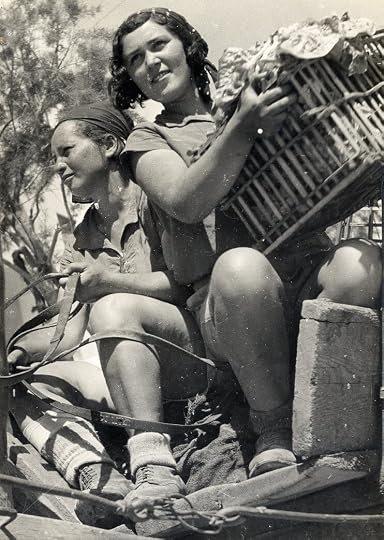
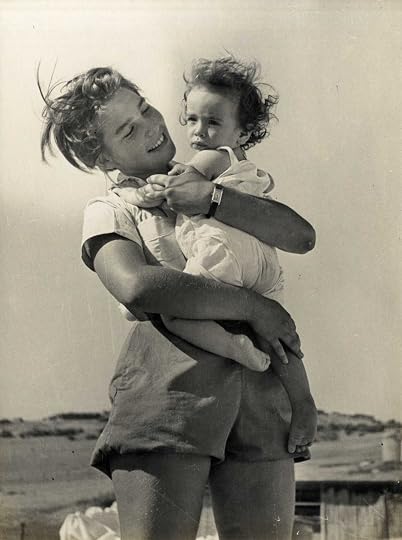
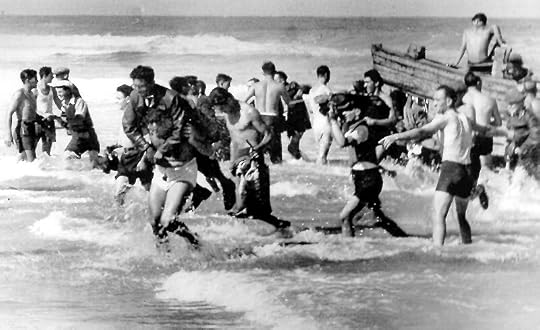
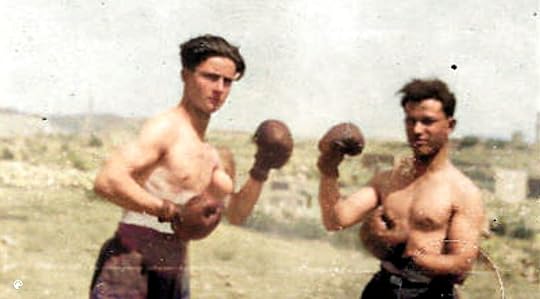
Fra il 1937 e il 1939 decine di migliaia di ebrei, esuli dall'Europa per sfuggire alle persecuzioni razziali, cominciarono ad affluire in Palestina decisi a crearsi una nuova patria. Ladri nella notte rappresenta una delle più drammatiche documentazioni di quel periodo, delle origini dello stato di Israele, delle lotte e delle avventure di uomini decisi a tutto pur di raggiungere il loro scopo. La vicenda è ambientata in una fattoria collettiva che nasce e si sviluppa tra insidie continue, e i personaggi con i loro amori, le gioie e gli sconforti, delineano un mondo concitato e sofferto
Arthur Koestler CBE [*Kösztler Artúr] was a prolific writer of essays, novels and autobiographies.
He was born into a Hungarian Jewish family in Budapest but, apart from his early school years, was educated in Austria. His early career was in journalism. In 1931 he joined the Communist Party of Germany but, disillusioned, he resigned from it in 1938 and in 1940 published a devastating anti-Communist novel, Darkness at Noon, which propelled him to instant international fame.
Over the next forty-three years he espoused many causes, wrote novels and biographies, and numerous essays. In 1968 he was awarded the prestigious and valuable Sonning Prize "For outstanding contribution to European culture", and in 1972 he was made a "Commander of the British Empire" (CBE).
In 1976 he was diagnosed with Parkinson's disease and three years later with leukaemia in its terminal stages. He committed suicide in 1983 in London.
Arthur Koestler’s Thieves in the Night remains one of the most blistering, tragic, and unsparing examinations of the Zionist enterprise ever committed to paper. Written in 1946 in the immediate aftermath of the Holocaust and amidst the chaos of the British Mandate, the novel charts the transformation of pre-World War II Jewish pioneers who arrived with the intention to build, farm, and live quietly. Desperate to reclaim their historic homeland, they sought to turn barren sand and stone into productive communal settlements.
Yet, from day one, they were denied the peace required for such constructive idealism. Confronted by immediate, violent resistance from local Arab factions who rejected their presence, and squeezed by the British administration’s 1939 White Paper—which slammed the gates of Eretz Israel to refugees fleeing certain destruction in Europe—the settlers faced a stark reality: staying passive meant active complicity in their own annihilation. Defying British laws shifted from a criminal act to a moral obligation. Koestler builds a formidable narrative argument that global sympathy would never save the Jewish people; with European borders closed, British gates locked, and local forces hostile, turning to militant self-defense was not a choice, but the sole remaining path to survival. For centuries, Jewish history had been defined by displacement and vulnerability, but Koestler captures the precise historical pivot where the "New Jew" resolved to stop begging foreign empires for mercy and instead take up arms to secure their historic homeland as a supreme act of self-preservation and justice.
To ground this massive geopolitical shift, Koestler narrows his focus to a single, fragile Kibbutz: Ezra's Tower. The narrative follows an eclectic group of settlers who arrive under the cover of darkness to rapidly erect a wooden watchtower, install a searchlight, and string barbed wire before dawn. At the center of this effort is Joseph, a half-English intellectual whose internal diary acts as the psychological lens of the novel. Surrounding him are pioneers driven by utopian, socialist dreams of reviving the Hebrew language and farming collectively. Yet, nestled among these idealistic builders are the deeply scarred refugees of European atrocities, for whom the settlement is not merely a cultural renaissance, but a literal fortress against death.
At the emotional and ideological heart of this struggle lies the brutal murder of one such survivor: Dina. Before her death, Dina represents both the horrific trauma of European anti-Semitism and the fragile hope of rebirth in the homeland. A survivor of Nazi Germany who endured severe physical and psychological torture, her trauma left her unable to bear human touch—making her a walking scar of the European collapse and the failure of Western emancipation. By placing this traumatized woman in the fields of Ezra’s Tower, Koestler directly links the tragedy of European Jewry to the struggle for Eretz Israel. The settlement was meant to be her sanctuary, a physical wall against her persecutors. When she is killed by Arab attackers while walking outside the perimeter, Koestler drives home a grim thesis: the slaughter of Europe has followed them to the Middle East. Her death proves that there is no safe haven through passivity alone, shattering any illusion that peaceful farming can protect the community without absolute physical security and sovereign power.
Her murder becomes the central psychological turning point of the novel, transforming abstract political theory into raw, emotional necessity. It signals that the era of Jewish powerlessness and quiet mourning is officially over, marking the psychological shift from Havlagah—the policy of self-restraint—to active retaliation. For Joseph and the surrounding community, Dina’s blood binds them past the point of no return. The settlers conclude that if the law cannot protect a traumatized survivor, the law itself possesses no moral authority and must be broken.
This tragic catalyst accelerates the internal ideological rift within the Zionist movement. For the mainstream kibbutz leadership, Dina’s death is a devastating blow, yet they initially preach restraint, fearing that uncontrolled vengeance will erode the moral foundation of their cause and alienate international support. For the Revisionists, however, her blood is the ultimate validation of their worldview. They view the moderates' restraint as old, passive ghetto behavior wrapped in socialist slogans, using the tragedy to recruit members like Joseph and launch immediate counter-operations to project Jewish power. Meanwhile, the cold, bureaucratic indifference of the British administration outrages all factions, proving to even the moderates that the mandatory government is no longer a neutral protector, but a barrier to their survival.
Throughout this escalating crisis, Koestler’s portrayal of the Arab characters remains a complex, tragic reflection of two irreconcilable relationships to the same soil. The local villagers of Kfar Taneh possess a static bond with the land, living in harmony with it but leaving it uncultivated by modern standards. In contrast, the pioneers view the soil dynamically as a canvas requiring intense labor and modern technology to bloom. While Ezra’s Tower brings rapid modernization and medical care to the region, the local Arab population sees this progress not as a gift, but as a foreign intrusion threatening their traditional culture and dominance. Koestler frames this not as mindless malice, but as an inevitable, tragic collision: the Arabs fight to preserve their status quo, while the Jews fight a battle for sheer survival, leaving no room for peaceful compromise.
It is within this cauldron of conflict that the Revisionist concept of Hadar—borrowed from the philosophy of Zeev Jabotinsky—becomes the psychological and moral fuel for the underground. Hadar represents the absolute rejection of the historical diaspora mindset that relied on passivity, keeping one's head down, and enduring persecution. It demands that the New Jew walk with an upright posture, self-respect, and absolute confidence, refusing to beg for safety or show fear to an enemy. Hadar manifests as a sharp, confident irony—an attitude of "learning to laugh" in the face of danger. It transforms underground warfare from desperate crimes into noble deeds of national liberation, dictating that a proud nation cannot allow its people to be slaughtered without a response, and reframing armed retaliation as the mandatory restoration of dignity and sovereignty.
This ideological crucible is documented intimately through Joseph’s personal diary, which serves as a private laboratory where he processes his dark evolution from an intellectual observer to a militant actor. Initially detached, analytical, and viewing the project with English skepticism, Joseph’s entries lose their intellectual balance after Dina’s murder, shifting to a tone of cold, clinical rage. Recognizing that his former English moderation was a luxury of the safe and unthreatened, his pen explicitly signs away his pacifism to join the armed underground. In his final entries, Joseph wrestles with a stark philosophy of death and nationalism. Stripping death of traditional religious or romantic sentiment, he views it through a cold, biological lens: land is not truly owned through a legal deed, but bought with blood, where the bodies of falling pioneers literally fertilize the soil to anchor the roots of the future state.
In Europe, Jewish death had been industrialized and passive; in Eretz Israel, dying with a rifle in hand while defending one's home becomes a chosen, active death that reclaims human dignity. To numb his own grief, Joseph submerges his individual life into the eternal collective, shedding his fear of mortality. Nationalism in the novel is thus portrayed not as a fixed, happy sentiment, but as a "necessary disease"—a protective armor and a fever the body must develop to fight off a deadly infection. When Ezra’s Tower is surrounded by hostile forces and cut off from the world, complex political theories fall away. In the heat of a midnight siege, a settler does not fight for a right-wing or left-wing manifesto; they fight because the person next to them is being shot at. Strip away the political romance, and nationalism devolves into the rawest biological reality: the refusal to be exterminated.
As the novel closes, the chaotic political debates condense into a cold, steady resolve. Joseph sits in his room at Ezra’s Tower, listening to the ticking clock and the quiet sounds of the Kibbutz, before stepping out into the dark night to join a mobile underground unit. The novel ends not with a grand victory parade, but with an acceptance of a long, twilight struggle—a symbolic merger with the historic destiny of his people.
When read in today’s global environment, marked by a sharp rise in anti-Semitism, anti-Zionism, and immense pressure on Jewish communities worldwide, Koestler’s 1946 masterpiece takes on a chillingly contemporary resonance. The profound isolation felt by the pioneers when international systems and local authorities failed them mirrors the sense of abandonment felt today across university campuses and urban centers. The novel’s foundational lesson—Ein Bereira, the realization that the Jewish people ultimately have no one to rely on but themselves—resonates deeply in an era where modern institutions offer little protection against existential threats. Where the settlers were forced to build fortifications and learn to fight, modern readers are reminded why that uncompromising defense was forged in the first place.
The novel proves that when the people of Israel face annihilation from surrounding hostile forces—including Hamas, Hezbollah, the Houthis, Iraqi militias, and the Islamic regime of Iran—abstract moral purity becomes a luxury those under siege cannot afford. The concept of Hadar endures as an emotional shield today, encouraging individuals to meet hostility not with fear or concealment, but with proud self-confidence.
Moreover, Koestler’s scathing critique of Western liberalism remains eerily prescient: he demonstrates how well-meaning liberal frameworks, operating under the naive assumption that all parties are rational actors seeking peace, become structurally blind to eliminationist hatred and effectively act as accomplices to destruction through their insistence on neutral moderation. Ultimately, reading Thieves in the Night today highlights a painful, enduring truth: relying purely on the moral conscience or liberal institutions of the Western world is a dangerous illusion, and true safety, survival, and dignity must always be generated from within the community's own strength and unyielding self-reliance.
Koestler plants a watchtower on a bare Galilean hill before sunrise, so an old custom, the ploughed furrow claiming land before the law objects, gets there ahead of the lawyers. Joseph, half Englishman, half accidental Zionist, throws in with the commune that grows around it, falls for a woman flinching from his touch, and ends the book trading his diary for a rifle. A convoy creeps toward the next hill in the dark, and the title finally collects on its promise. Everybody in this valley fights for something, land, arms, a nation, a night's sleep, and Koestler keeps every claim equally open. The British administrator files a curtain-hook complaint from Bethlehem with the same weary gravity he gives a massacre, and both come away logged with identical care, a polite talent for cruel sorrow.
The commune chapters are the real find. He turns socialism into a ledger, Work Days tallied against olives, illness, rain, and a children's house, until utopia comes out looking like an earnest household budget with the profit motive removed on principle. A secondhand cello nearly bankrupts the whole enterprise and nearly starts a civil war at the next General Meeting. Koestler trusts the numbers to embarrass the ideology. Statistics, it turns out, make excellent satirists. The Arabs get dignity and grievance in equal measure. The Jewish farmers get idealism and blood on their hands in equal measure. The British end up the only characters looking worse the more fairly Koestler handles them. Readers fond of politics left unresolved will find plenty to chew on. Readers hoping for a tidy moral will find their favorite conclusion mugged around page two hundred, an ending that feels almost like the point, given the subject.
Arthur Koestler published Thieves in the Night in 1946. It is a novel, not a history book, but it was written by a man who had lived on a kibbutz himself in the 1920s and who set his story squarely inside real, datable events: British-ruled Palestine between 1937 and 1939, in the years just before the Second World War. To judge how wonderful it is, it helps to first understand what the book is actually depicting, since most readers today have no first-hand sense of this period at all. After the First World War, the League of Nations gave Britain administrative control over Palestine Eretz Israel, a territory whose population was a mix of Arab Muslims, Arab Christians, and a growing population of Jews, some of which were refugees fleeing persecution from Arab lands and Europe. Britain had made contradictory promises to both communities: to Arabs, assurances of self-rule; to Jews, via the 1917 Balfour Declaration, a "national home" in Palestine Eretz Israel. By the late 1930s these contradictions had exploded into open conflict, with Arab genocidal attacks upon the Jews, lynchings, lootings, and other unspeakable horrors, as well as Jewish underground militias, and a British administration trying, and largely failing, to hold the situation together. Koestler's novel is set right in the middle of this decade, following a fictional Jewish settlement called Ezra's Tower as it is built, defended, and drawn into the era's violence.
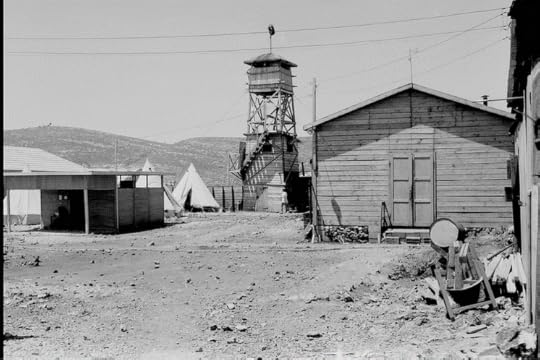
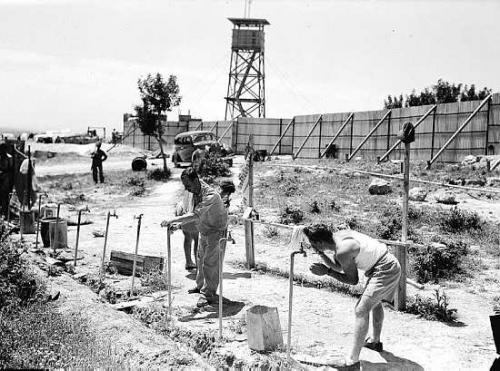
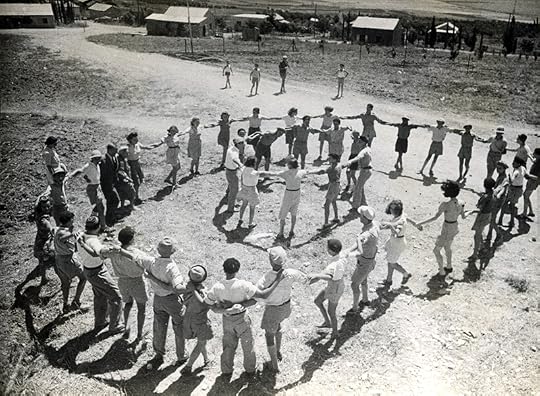
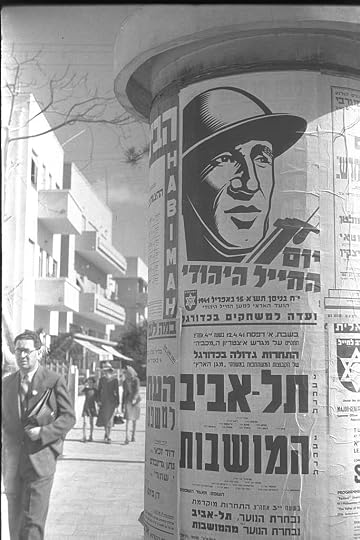
Early in the novel, a group of Jewish communal farmers arrives on a bare hilltop before dawn and, working through the night, erects a fence, a wooden watchtower, and the first huts of a new kibbutz, all before the sun is fully up. This is not a novelist's invention. It describes a real and well-documented tactic of the period known as Homa u-Migdal ,חומה ומגדל, Hebrew for "Tower and Stockade." [image error] Ottoman-era land law, which the British Mandate had inherited, made it much harder to legally demolish or evict a place that had both these structures and a population than one still under construction. Jewish organizations followed this law by prefabricating watchtowers and building materials off-site, then assembling entire fortified outposts in a single night on land they had legally purchased, so that by morning there was a fait accompli for the authorities to deal with.
Around fifty-odd settlements were built this way between 1936 and 1939. Even the small detail in the book of a plough drawing a symbolic furrow around the site, marking the boundary of the new settlement according to custom, matches accounts of how these overnight builds were actually staged. [image error] Late in the novel, a young Arab intellectual character delivers a speech complaining that Britain's new policy is unjust because Arab states elsewhere have already won independence, while Syrian Arabs are told to wait ten more years, and because it still permits some continued Jewish immigration rather than none at all.
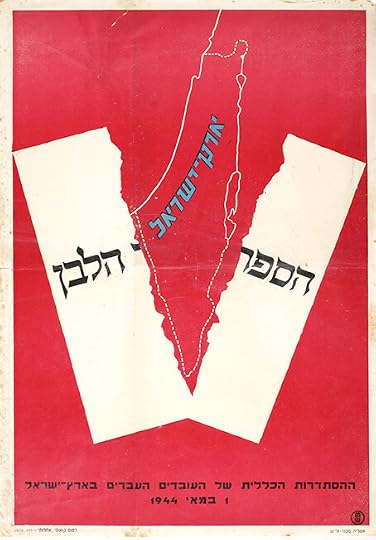
This scene is dramatizing a real document: the British White Paper of May 1939. After years of unrest and the recommendations of two official inquiries, the Peel Commission of 1937 and the Woodhead Commission of 1938, Britain issued a policy that capped Jewish immigration to Palestine Eretz Israel at 75,000 people over five years, and stated that afterward, further immigration would require Arab consent. It also envisioned Arab independence in Jordan within ten years. The White Paper satisfied neither side. Many Arab leaders felt it did not go far enough, while Jewish leaders saw it, correctly, as a near-total closing of the door to Israel at the exact moment European Jews most needed somewhere to go. The novel's timeline, opening in 1937 and running through 1939, tracks this real sequence of commissions and policy shifts closely. A recurring plot thread in the novel involves a ship called the Assimi, carrying refugees who are trying to reach Eretz Israel without official immigration permits, and who are refused permission to land. A related courtroom scene shows a refugee named Brodetsky standing trial for having swum ashore after jumping from a similar vessel. This reflects a real, organized effort known as Aliyah Bet ("Immigration B"), in which Jewish organizations chartered old, often unsafe ships to smuggle refugees into Eretz Israel after legal immigration quotas were exhausted. British patrol boats regularly intercepted these vessels; some were turned back, some were seized, and passengers caught trying to swim ashore or land secretly were tried under real legislation, the Immigration Ordinance of 1933.
The Assimi in the novel is not a real, named ship, but it stands in for several actual vessels of the period, such as the Parita, which ran aground off Tel Aviv in 1939 carrying hundreds of refugees. A character named Bauman leads an armed underground group that Joseph, the novel's central character, gradually becomes drawn into. Koestler has one of his characters directly name two real historical figures as the group's leadership: Raziel and Stern. These are not fictional. David Raziel commanded the Irgun, a militant Jewish underground organization that broke from the mainstream Jewish defense force over tactics, favoring retaliatory and offensive operations. Avraham Stern was a senior Irgun figure who later split off to found an even more radical splinter group, popularly known as the Stern Gang. The novel's account of this group's arms supply is also grounded in fact. The Polish government of the late 1930s, which wanted to reduce its own Jewish population and saw an opportunity to inconvenience Britain, did supply the Irgun with weapons and military training in 1938 and 1939.
A character named Simeon, recovering in a hospital bed, shows the novel's protagonist a stack of newspaper clippings describing country after country closing its doors to Jewish refugees, New Zealand, South Africa, Uruguay, and elsewhere, alongside an early report of mass pogroms in Germany.
This section mirrors a real and well-known diplomatic failure. The Évian Conference of July 1938, convened at the urging of President Franklin Roosevelt specifically to address the growing refugee crisis in Europe. Representatives from thirty-two countries attended; almost none agreed to loosen their immigration quotas for Jewish refugees. The conference is now widely remembered as a moment when the international community, confronted directly with the scale of the antisemitic Nazi persecution, chose to do very little.
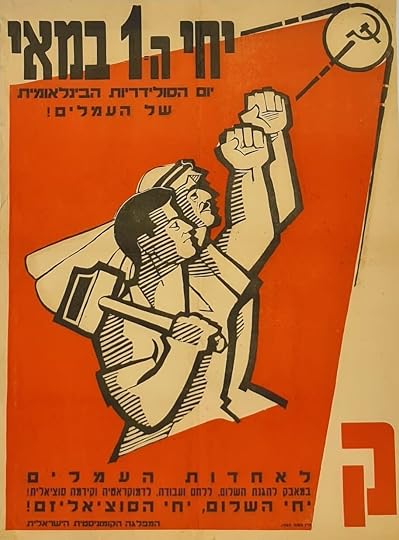
Much of the novel's texture, its detailed accounting of "Work Days" spent on farming versus cooking versus childcare, its rationing of soap and cigarettes at a weekly communal store, its arguments between rival socialist factions over the Soviet Union, reflects genuine kibbutz movement culture and internal politics of the era, including a real historical split between different kibbutz federations over ideology and their relationship to Communism. Koestler could render this convincingly because he had lived it. He spent time on a kibbutz called Heftziba in the 1920s, years before writing this book.
The settlement of Ezra's Tower, its founders, and most named characters are inventions, composites built from the kinds of people and places Koestler had encountered, not reportage about specific real individuals. More importantly, the novel is not a neutral document. Koestler had himself been a committed Zionist involved with the Revisionist movement, the political current that produced groups like the Irgun, and by the time he wrote this book in 1946 he had grown sympathetic to the argument that armed resistance, rather than restraint, was the only realistic response to the events of the 1930s.
Historians studying the novel have generally credited Koestler with giving his Arab characters real interior lives and legitimate grievances, unusual for popular fiction of this period. At the same time, the novel's overall arc, following its protagonist from pacifist idealism toward armed action, mirrors Koestler's own personal and political journey.
Long before The State of Israel existed, the Jewish community of Mandate Palestine Eretz Israel, known in Hebrew as the Yishuv, was running one of the more unusual social experiments of the twentieth century. In a region governed largely by colonial administrations, monarchies, and traditional patriarchal structures, a community of idealists built functioning democratic institutions, extended the vote to women years before several Western countries did the same, ran a continent-spanning socialist welfare system without a state to enforce it, and imported some of the most advanced currents in architecture, philosophy, and science of their day. The claim that this was a genuinely radical, forward-looking society for its time and place is not exaggeration. In 1920, the Yishuv established the Assefat HaNivcharim, an elected assembly, and the Vaad Leumi, its executive council, functioning as a self-governing body years before there was any Jewish state to govern. Multiple political parties competed for seats under proportional representation. A free Hebrew-language press flourished, arguing openly and often bitterly with itself, as the excerpts of newspaper debate and communal meetings in Koestler's own novel about this period capture. This was happening in a region where the surrounding states were mostly monarchies or colonial protectorates with no comparable tradition of contested elections.
The fight for women's suffrage inside this system is a case study in itself. Ada Fishman (later Maimon) and other leaders of the Moetzet HaPoalot, the Women Workers' Council, spent years campaigning against religious and traditionalist factions inside the Yishuv who wanted women excluded from the vote. They won. By 1926, women had full and equal voting rights in Yishuv elections, a right some Western democracies, including France, did not extend to women until nearly two decades later.
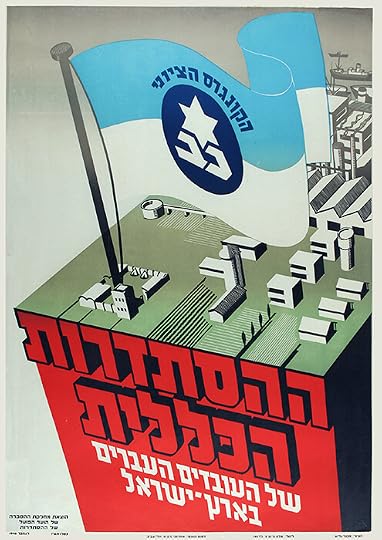
The Histadrut, the General Organization of Workers, founded in 1920, is easy to underestimate today because the word "union" undersells what it actually built. It ran its own healthcare system, Kupat Holim, providing medical care to members decades before most Western countries had anything resembling national health coverage. It built schools, housing cooperatives, and a network of industrial and agricultural enterprises, effectively constructing the scaffolding of a welfare state from the ground up, entirely through voluntary collective organization. The kibbutz movement, the collective farming communities that Koestler's novel dramatizes, took this further still. Kibbutzim abolished private property and money within their gates, collectivized childcare so that women were not solely responsible for domestic labor, and ran on direct democracy, with major decisions made by a General Meeting of the entire membership. Manya Shochat, one of the movement's earliest and most significant organizers, helped found some of the first collective settlements and also helped establish HaShomer, an early Jewish self-defense organization, at a time when it was unusual for a woman to hold that kind of leadership role in either a farming cooperative or an armed group. The Hebrew University of Jerusalem opened in 1925, founded with the direct involvement of Albert Einstein and Chaim Weizmann, who later became Israel's first president. It was conceived, from the outset, as a serious research university, not a religious seminary, open to producing scholarship in the sciences and humanities on equal footing with European institutions.
Martin Buber, one of the most significant philosophers of the twentieth century and author of I and Thou, emigrated to Jerusalem in 1938 and taught social philosophy at the Hebrew University. His work on dialogue and relation between self and other shaped existentialist and religious thought well beyond Jewish circles, and he continued to write and teach from Jerusalem for the rest of his career, making the city a real node in twentieth-century philosophy. When German-Jewish architects trained at the Bauhaus fled Nazi Germany in the 1930s, many of them settled in Tel Aviv and built the city largely in the International Style, clean lines, flat roofs, ribbon windows, designed for light and airflow in a Mediterranean climate. The result is now known as the White City, and UNESCO has recognized it as the largest concentration of Bauhaus and International Style buildings anywhere in the world. A style born in Weimar Germany and suppressed by the Nazis found its fullest surviving expression not in Europe but on the Mediterranean coast of Mandate Eretz Israel. The Bezalel Academy of Arts and Design, founded in Jerusalem in 1906 by the sculptor Boris Schatz, trained a generation of Jewish artists working to build a new visual language that was neither European nor purely traditional. Painters like Reuven Rubin and Nahum Gutman produced work capturing the landscape and daily life of the Yishuv in styles that drew on European modernism while trying to root themselves in a specifically local light and geography. Aaron Aaronsohn, a botanist and agronomist, discovered wild emmer wheat, an ancestor of cultivated wheat, near Rosh Pinna in 1906, a find of real significance to the study of crop genetics. He founded an agricultural research station at Atlit to study dryland farming and desert agriculture, laying groundwork that later Israeli agricultural science built on directly. Aaronsohn's sister Sarah helped run NILI, an intelligence network that fed information to the British against the Ottoman Empire during the First World War, at real and eventually fatal personal risk. Their work sits at an intersection of hard science and political commitment that is easy to lose sight of when Zionism is discussed only in the abstract.
It is worth pausing on the fact that Hebrew, the language this entire society ran on, had not been a spoken vernacular for close to two thousand years before Eliezer Ben-Yehuda and others revived it as a living, modern language in the late nineteenth and early twentieth centuries. New words had to be invented for telephone, newspaper, and train. Children had to be raised as its first native speakers in centuries. That this project succeeded, and succeeded well enough to become the working language of universities, parliaments, and courts, is one of the more remarkable acts of linguistic and cultural engineering of the modern era. Contemporary progressive movements have lost touch with this history. An indigenous Jewish national movement built on unions, cooperative farms, universal suffrage, public healthcare, and modernist art gets remembered today, if it is remembered at all, only through the lens of the conflict that followed statehood in 1948, rather than through what it actually built in the decades before.
A left-wing tradition that once had genuine kinship with Labor Zionism's unions, cooperatives, and welfare institutions has betrayed it and is now treating that same movement's descendants as a symbol of the thing it was built to resist. This book lets you relive these momentous times and fill in the antisemitic caricatures with actual depth, color and clarity. I'd like to thank the incredible GR Mahtab Safdari for suggesting this fascinating buddy read, her friendship and her brilliant mind 👏
A big thanks to Menachem Rath for adding the Hebrew edition to GR 🪬 ❤️ 🇮🇱
This book tells of life and conflict in pre-World War II Palestine, at time when the Jews were undergoing murderous persecution in Europe by the Nazis, when Britain was blocking Jews from entering Palestine, and when Arab terror was being stepped up in the Holy Land, incited and actively aided by the British. The book depicts all of these things, as well as life on a Kibbutz and it's complicated and interesting people there. It depicts well the interactions of the players, life on a kibbutz, life in the Holy Land, and insights into psychology, Zionism, socialism, war and peace, life and death and sexuality. A very good novel by a dislikeable and disturbed man.
Ein Buch über das Leben in einem Kibbuz kurz vor Ausbruch des 2. Weltkriegs. Geschrieben von einem meiner Lieblingsschriftsteller, der selbst in Palästina gelebt hat, so dass man annehmen kann, dass das Buch autobiographische Züge enthält.
Der Held, Joseph, ist allerdings Halbjude (und Halbengländer, wenn es so etwas gibt). Natürlich erfährt man eine Menge über das Leben und die Auseinandersetzungen mit den arabischen Einwohnern. Ein sozialistisches Experiment, das sogar zu funktionieren schien.
Leider hat der Roman einen großen Nachtteil, er ist total langweilig.
Zwischendurch gibt es Aufregung, weil Joseph genötigt wird, seine Geliebte, mit der er ein eheähnliches Verhältnis führt, zu heiraten. Sie leben nicht zusammen, und Joseph möchte es dabei belassen, lieber teilt er seinen Raum mit einem Mann. Weil er seine Ruhe haben möchte. Ob er sie denn dadurch nicht erniedrige, dass er Sex mit ihr habe ohne sie heiraten zu wollen. Ob er den Mann, mit dem er Tennis spiele erniedrige, wenn er nicht mit ihm Schach spiele.
Und dann wird die eigentlich Liebe Josephs von den Arabern ermordet. Daraufhin lässt die Gemeinschaft den Dorfvorsitzenden und Vater des Mörders umbringen. Rache muss sein.
Am Ende gibt es einen hübschen Vergleich von Joseph, die Araber seien Fische, die zufrieden im Meer schwimmen, die Juden dagegen klettern an Land, um sich zu Amphibien entwickeln zu können, um eines Tages in der Sonne liegen zu können.
Und auch gut. Ein Hund geniesst sein Fressen, aber nicht mit Bewusstsein, sonst würde er nicht so schlingen und sich die besten Stücke für den Schluss aufbewahren.
Koestler, a Hungarian-British writer and journalist, more famously wrote Darkness at Noon, a critique of Communism and totalitarianism.
Thieves in the Night, written later, is a gently powerful story. Koestler recounts the travails and limited joys of only a few of the “milliohnim” who sought a promised land. His characters are Jews, creating new settlements on purchased Arab land in the Holy Land, prior to World War II.
Men and women who create settlements live a tough life. A reader like me learns almost too much about the vagaries and drudgery of deliberately, fully conscious communal life on Ezra's Tower, an isolated hilltop in Galilee. First, establish the security perimeter, then erect the watchtower, build the children's dorm, construct the cowshed, set up the showers…in that order. The dining hall, the sleeping huts for the men and women, and the lavatories are to be built later.
The Mukhtar and his clan in the nearby Arab village do not welcome the Hebrew newcomers. Soon, the leader of the village delegation gives morbid advice to the settlers: "You young fools and children of death, you don't know what may happen to you." Bauman responds, curtly: "We are prepared." The Jewish settlement at Ezra's Tower is not a resort.
The story of the settlers' life at Ezra's Tower is drab. Koestler's exploration of their mindset, their politics, their philosophy, and their religion all swirled together is stunning. Their aspirations and their misgivings, and their palpable legacy of homelessness and their transforming experiences, are irresistible.
Thieves in the Night is an adventure for the open and inquiring mind. Occasional sympathetic despair is a perfectly understandable reaction.
After you read this novel, look around you and ask yourself if you see things a bit differently. Ask yourself if you like your new conception of "a thief in the night."
I really wanted to like this book, but it just isn't good. It is set in Mandate Palestine around the time of the Arab Revolt and provides an account of the split of the Irgun (or Stern Gang) from the Haganah. The book isn't without its redeeming features; the scene set before the British magistrate where an old Jewish man- rendered half deaf by Nazi violence- is sentenced to confinement and deportation for having illegally immigrated to Palestine was exceptional. The book may also be helpful to anyone who has wondered why the Stern Gang would have splintered off from the Haganah, or was unaware of how the British White Paper, among other policies, exacerbated the plight of the Jews who fled Nazi persecution and were turned away from the U.S. and then Palestine. These aspects of the story really, really made me want to like this book.
Despite its fascinating historical setting and the importance of many of the events it relates, the book is a failure. The characters are flat and dull, that is when they're not mere off-the-shelf character types. The narrative is disjointed, and it becomes tedious about two-thirds of the way through. Casual, and sometimes not so casual, racism pervades the book, some of which clearly attributable to the characters but at other times inherent to the narrative itself. Specifically, not only do its characters harbor anti-Semitic and anti-Arab sentiments and prejudices, as real persons did and continue to do, Koestler himself takes to the narrative many of the same prejudices. Examples abound; to name just one: an Arab wife is supposed to be available for purchase 5 pounds, because, you know, they're Arabs or something.
Another must-read for anyone interested in the history and present of the region. Beautifully written, with a non-trivial mix of narrative momentum and inner reflection. Far from being an unbiased reportage, it does a great job at showing the cultural frictions between Arabs, Jews, and the British. Then it zooms in, dissecting the various kinds of Jews and portraying the lives of ordinary Arabs in detail, making it possible to really step into their shoes. Characterization is vivid, sometimes extreme, but does it bring us closer to the truth? Yes.
Key point: - For the Jews living in Palestine at that point there was no real alternative. Once you descend into the complexity of individual stories, it becomes clear: they had no choice but to fight for their right to be there. This holds true for the idealists, the refugees, those rooted in the land, and those forced there by pogroms or discrimination elsewhere. The anti-Zionist narrative that paints them as spoiled imperialists landing on a whim to grab fertile land just doesn’t hold.
Another essential lens the book offers: zoom out and follow the timeline. - Jews were already there. Jerusalem had a Jewish majority before 1948. - Many more arrived across a long span, 30 or 40 years before 1948, not as part of some sudden invasion. - They bought a lot of land, often paying inflated prices, dealing with tricks, bribes, legal hurdles, and eventually outright bans. - The British were the colonizers. They held the power, made the rules, failed to manage the violence, and eventually betrayed their own mandate by siding with the Arabs. - So even the pro-Israel claim that “the Arabs started the war in 1948” is wrong. The conflict began well before. And the controversial Zionist decisions must be read in the context of a long, existential struggle, not only with the Arabs, but with the British, who actively prevented Jews from defending themselves.
The real core of the book is this multi-front conflict, where the British come off as the most cynical and disgraceful players. A framing I give full credit to is: Power = responsibility. A far more intelligent lens than the oppressor/victim narrative. If you hold the power, you carry the weight of accountability. And Jews didn’t just show up with cash and guns to kick, burn, and conquer. The British were in control. They were the ones blocking refugees from entering the very land they were mandated to (partly) hand over.
Ladri nella Notte was written in 1947, yet it contains everything you need to make sense of what followed.
“… Papers,” Weinstein repeated. “We are all carrying papers. Perhaps we should be carrying revolvers.”
Koestler, Arthur. Thieves in the Night (p. 275). Bloomsbury Publishing. Kindle Edition.
"It was curious, Joseph reflected as he continued his walk towards Zion Circus, now dark and deserted, it was strange indeed that political imaginativeness was nowadays only to be found among extremist movements of the tyrannical type."
Koestler, Arthur. Thieves in the Night (p. 383). Bloomsbury Publishing. Kindle Edition.
“What do you think of all this?” he asked. The boy lifted his shoulders. “Do I know?” he said. “It is written: A wolf in a sheep’s skin is a great danger, but a sheep in a wolf’s skin is an object of laughter.”
Koestler, Arthur. Thieves in the Night (p. 386). Bloomsbury Publishing. Kindle Edition.
Drives home the point of how remarkable and unlikely the founding of the state of Israel was, and what an extraordinary cast of characters was involved in its founding, and their utopian motivations.
My teacher carried his praying-scarf in a velvet bag to the synagogue: Even so carry I my sacred gun to the Temple That its voice may pray for us. --poem of Yair Stern, quoted on p. 280
If a friend of mine hadn’t gifted this book to me, I probably wouldn’t have read it. The fact that the author was a survivor of a concentration camp piqued my interest. Moreover, the yellow pages enticed me to plunge into them. When an ardent reader parts with something so precious, you, as an equally immersive bookworm, respect her by reading it at the first available opportunity.
Plot
A group of settlers arrives in Gan Tamar. They are to erect a settlement overlooking a village of Arabs. With this premise, the novel sets in motion a series of conflicts between Arabs and Jews in British-ruled Palestine.
Review
I have not read a single Arthur Koestler book so far. As a result, I do not have a benchmark to measure Thieves in the Night against. However, the story begins on an interesting note. With dreams of rebuilding Galilee, Joseph and his friends, Simeon and Dina, arrive in the dead of night to establish Ezra’s Tower. The novel not only traces their lives but also that of the Arabs, especially Mukhtar and his son Issa.
Koestler describes how fascism and moderation have always been at loggerheads. Instances of young recruits indoctrinated with lofty ideals make for a gut-wrenching experience. Similarly, the Mukhtar’s hatred for Hebrew women because they roam around in shorts is equally repulsive. But the novel is not just about prejudices or hatred. It tells a tale of struggle, violence, and vengeance. The cycle is never-ending. As the novel reaches its end, readers encounter a sense of déjà vu. An experienced Joseph looks on as a group of young settlers talk nonchalantly about sacrifices and the need for their own country.
The novel is written in the third-person point of view. Occasionally, the author references the chronicles of Joseph to draw our attention to his inner turmoil and his observations on the conflict.
The characters as such were not likeable to me. However, I felt the eerie presence of the summery land hovering over the novel – like a khamsin. The description of the dry wind blowing from the Arabian desert is a precursor for a graphic crime against Dina and sets in motion the wheel of vengeance.
Talking about the White Paper of 1939, Koestler writes, “A document with no legal validity became the legal guide of Government, Law Courts and Police; lawlessness reigned as the supreme law in the Holy Land.”
Thieves in the Night is not meant to be an unputdownable book where readers gush about the edge-of-the-seat narrative. It should make you ponder. Goodness and evil exist across humanity. But once humanity gets blinded by hatred or religion, the only path that remains will lead it downhill.
Overall, it was a thought-provoking read. If you are up for it, grab it.
This is essentially historical fiction. It is written in such a way as to provide perspective from the point of view of numerous parties concerned, whether it be the Jews, the Arabs or the British, and/or others and Köstler casts his critical eye over all concerned. This gives the book an unbiased, impartial, objective feeling even though Köstler himself was Jewish. He also spent a short time with a Kibbutz in Israel, but he probably was not cut out for this lifestyle and was either asked to leave or left by his own accord. He writes - `the warmth of a fraternity where every boy and girl had been tested, was liked and approved`. The early years of such a kibbutz forms some of the narrative here and follows a group of youngsters as they build a new settlement on purchased land. The book may be semi-autobiographical and the character of Joseph closely aligned with that of the author. All in all, a really good book from a great writer.
Eindrucksvoll beschreibt der Roman die unmittelbare Vorgeschichte des Staates Israels, die Flucht von Juden vor Hass und Vertreibung in den 1930ern nach Palästina und die Gründung der Kibbuzim am Beispiel von "Esras Turm" und dem jungen Joseph, der sich der Spirale der Gewalt zwischen Arabarn und Juden letztendlich nicht entziehen kann. Ein Meisterwerk, um die Wurzeln des Nahostkonflikts zu verstehen und zu entdecken. Ich las den Roman, während ich durch Israel reiste, was ihn nur umso wirkmächtiger machte.
Livre incroyable. Une immersion dans la période d'occupation britannique en Palestine ; dans le même élan, la période pré-coloniale sioniste. Arthur Koestler ne m'a jamais déçu et il frappe fort avec ce livre ! Étant lui-même, dans ses jeunes temps, un sioniste socialiste et révisionniste ayant vécu en Palestine dans une commune, il apporte vraiment des propos nuancés sur la question nationale de ce coin du monde. À lire avec le sourcil froncé, parce qu'on y voit les fondations d'un régime qui, aujourd'hui, opprime, détruit et invisibilise des millions de voix. À lire !
C'est un romain ambientée dans l'époque de premiers colons israeliens (~1939). Malgré le biais assez évident de l'auteur, le texte est bien écrit et il sert à comprendre le psyche des colons en Palestine.
Ottimo libro. Non ha scalfito particolarmente i miei preconcetti sulla cosiddetta questione palestinese ma mi ha comunque fornito anche l'altra campana. Ad esempio non avevo idea che i terreni sui cui sono sorti i primi kibbutz fossero stati legalmente acquistati, per dire. Sempre di più mi rendo conto che bisogna davvero "camminare nelle scarpe dell'altro" per capirci qualcosa o comunque per avere idee che non siano alla fine altro che preconcetti e pregiudizi. Queasto non toglie che se qualcuno si compra legalmente il campo vicino a casa mia e dichiara lo stato di Topolinia e si metta a costruire muri io sia contenta, eh. Il libro è scritto molto bene, bello asciutto e dritto al punto, senza troppe divagazioni. L'autore, che ha davvero vissuto in un kibbutz, fornisce una interessante descrizione non solo della vita di comunità, con limiti e cose positive, ma soprattutto il resoconto del funzionamento reale e pratico di una "società" piccola ma autosufficiente (più o meno, anzi quasi, in realtà vivono di prestiti ^_^). Mi piace che le donne avessero gli stessi diritti e doveri degli uomini, che fossero libere di scegliere amanti e compagni e di avere figli e che questi fossero considerati "della comunità". Meno che se poi uno non le voleva sposare gli potessero di fatto forzare la mano proprio portando la questione di fronte alla comunità, come a dire che siano i genitori, siano gli altri tutti si impicciano dei fatti tuoi. Meno interessante, almeno per me, la descrizione dell'arruolamento nei gruppi combattenti di giovani e meno giovani e la parte più "avventurosa" che mi hanno un poco annoiato. Bello l'ultimo capitolo, che di fatto chiude il cerchio: un altro viaggio in camion nella notte verso un futuro incerto. Ma meglio la speranza, anche se porta a correre rischi, no?
A travers ce témoignage, c'est toute l'histoire de la naissance de l'Etat d'Israël et d'un peuple qui retrouve enfin sa patrie perdue après une errance de deux mille ans que nous retrace Arthur Koestler (1905 - 1983).
La communauté socialiste d'Ezra s'est établie sur une colline aride et désertique.
Il faut lutter sans cesse pour conserver cette parcelle de terre "symbole", contre les intempéries, la maladie, la solitude, enfin, le découragement.
Il faut survivre pour montrer aux autres nations qu'un Etat nouveau peut resurgir de ce désert.
Koestler n'était pas seulement un incomparable analyste du monde concentrationnaire.
Romancier vigoureux de la taille d'un Malraux, témoin lucide de son temps, essayiste, ce fils de famille juive hongroise était aussi un prophète
Surprisingly readable despite its age, this reads like an epic drama but also a history lesson about early Israel from someone who was there.
Not always pretty--the characters are blunt about themselves and others (so, Jews say awful things about themselves and Arabs, Arabs say awful things about Jews, and no one much likes the British) but it smacks of authenticity, and despite the sometimes very unsympathetic portraits of whole groups and individuals, there's usually some very humane or sympathetic thread or thought spared for almost all.
Worth a read especially for those interested in Israel, Mandate Palestine, Zionism, and kibbutz life.
Apparently based on the author's own experiences in a kibbutz, it sets up a stage to describe the historical roots of the conflict between Arabs and Jewish settlers in the British ruled Palestine. The descriptions of life in the commune are convincing and the the changes brought about by the experiment are fascinating.
The Israeli experience of the kibbutz would appear to be as close as mankind has got to pure communism. A radical alternative to capitalism, with everything owned in common, and the absence of all the ills that beset the democratic process.
Realy interesting novel about the day to day experience of early emigrants to Israel and the kibbutz movement based, in part, on Koestler's own experiences. I was both moved by the details and put off by the politics - I've never read anything quite like it.