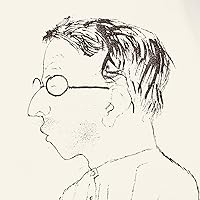
1965, trade paperback edition, Dimension Books, PA. 125 pages. A beautifully printed title with very nice, colorful images. This author was a man of ideas and had much to say about philosophy and the basis of things that we live with each day. He was ordained in the Catholic priesthood. Much of his writings were couched in poetic language.
Pierre Teilhard de Chardin was a French Jesuit priest, paleontologist, philosopher, mystic, and teacher whose life bridged science and spirituality in a unique synthesis that continues to inspire and provoke debate. Born into an intellectually and culturally rich family, with a father passionate about natural science and a mother whose lineage traced back to Voltaire, he was the fourth of eleven children and demonstrated early curiosity for geology, biology, and the natural world. He entered the Jesuit novitiate in 1899, studied literature and theology, and combined his religious vocation with an insatiable scientific drive, ultimately earning degrees in geology, zoology, and botany from the University of Paris. His early academic career included teaching physics and chemistry in Cairo and developing a strong foundation in paleontology, which later led him to China, where he collaborated with Émile Licent and others in geological surveys and excavations, most notably participating in the discovery of the Peking Man fossils at Zhoukoudian, which became a cornerstone of his reputation. Throughout his scientific work, Teilhard maintained a commitment to integrating evolutionary theory with Christian thought, producing essays and books that articulated a vision of the cosmos as a process of increasing complexity and consciousness, culminating in what he termed the Omega Point, a future unification of humanity and divinity. He served as a stretcher-bearer during World War I, receiving the Médaille militaire and the Legion of Honor, experiences that deepened both his spiritual reflections and his appreciation for human resilience. Despite repeated censorship and opposition from the Catholic Church, including prohibitions against publishing certain works and teaching assignments, he persisted in writing, producing influential works such as The Phenomenon of Man and The Divine Milieu, which attempted to reconcile scientific understanding, evolution, and the unfolding of divine purpose, offering a cosmic theology in which Christ is the unifying principle guiding the development of matter, life, and consciousness. His ideas on the noosphere, human evolution, and spiritual convergence provoked both admiration and criticism, drawing praise from thinkers such as Julian Huxley and Theodosius Dobzhansky for his visionary approach, while others, including Peter Medawar and Richard Dawkins, challenged the scientific rigor of his philosophical synthesis. Teilhard traveled extensively, conducting research across China, Central Asia, India, and Java, collaborating with leading paleontologists and geologists, and contributing to the broader understanding of human prehistory, archaeology, and geology. His writings emphasized the interdependence of material and spiritual evolution, positing that human consciousness and social cooperation are critical for continued development, and that evolution is inherently teleological, moving toward greater unity and complexity. Though controversies surrounding his work persisted during and after his lifetime, including debates over his involvement in the Piltdown Man discovery, thorough historical review and correspondence have largely vindicated him, demonstrating his integrity as a scientist and a thinker. Teilhard de Chardin’s legacy is that of a bridge between disciplines, a thinker whose vision of a spiritually and scientifically coherent universe continues to inspire theologians, scientists, and readers seeking to understand the interplay of faith, reason, and the unfolding story of humanity. He died in New York City in 1955, leaving behind a body of work that remains widely read and influential, reflecting a life devoted to exploring the convergence of human, cosmic, and divine evolution in a single, unified vision.
Spiritualized Energy is the flower of Cosmic Energy. To dominate and canalize the powers of the air and the sea is all very well. But what is this triumph, compared with the world-wide mastery of human thought and love? In truth, no more magnificent opportunity than this has ever been presented to the hopes and efforts of the earth. We are very ready to boast of living in a century of enlightenment and science. And yet the truth is quite the reverse; we are still lingering among rudimentary and infantile forms of intellectual conquest.
At present most men still merely understand strength, the key and symbol of violence in its most primitive and savage form of war.
Pierre Teilhard de Chardin talks about the 'evolution' that all forms of government have to go through in order to truly serve the people. This book was written in 1965; I am sure that many young men and women were influenced by the vision Chardin hoped would come to fruition. Solutions are looked at from the perspective of transparency and cooperation.
A beautiful book, so full of hope and optimism, it expresses some of Teilhard's ideas on the spiritual evolution of the universe and how greater consciousness and greater love will enable us to grow toward unity in the world.
This 1965 edition was a translation of Chardin's "Construire la Terre". Max Bégouën, a French prehistorian and author, says in the introduction: "A luminous scientific mind and a great heart, both of them big enough to encompass the world, gave Teilhard de Chardin the vision and the power, as long ago as 1937, to discern the rising tide of destructive forces which threaten our planet. And they led him to call on all mankind to unite in building the earth -- in making the world a home for all peoples..."
That well summarizes this work of five sections. If Chardin wrote it in 1937, 86 years have passed. The remarkable thing is that his message is still, perhaps more, relevant than ever. Chardin was far ahead of his time.
As I was looking to see when this was published I saw that the edition I read (the first American edition) was designed and illustrated by sisters from my college (Saint Mary’s College in Notre Dame. Indiana), so that's fun. As Chardin was born in 1881 and references concerns of the 19th century, it is interesting there is still fundamental truths in this work that are true today. Imagine if we united together to develop a better world. To move away from our small spaces, away from political parties or thinking of ourselves and to work on a common task of the future for all.
“To be super spiritualized in God, must not mankind first be born and grow in conformity with the whole system of what we call evolution? The sense of earth opening and flowering upwards in the sense of God, and the sense of God rooted and nourished from below in the sense of earth. The transcendent personal God and the universe in evolution, no longer forming two antagonistic poles of attraction, but entering into a hierarchic conjunction to uplift the human mass in a single tide.”
This is my fault for not properly preparing for this book. I was tipped off that it was a good read by watching a YouTube video reviewing bags (nod to Chase Reeves) and found myself on a short trip about human evolution, spirituality and the universe. I'll need a re-read to swallow this bolus.
The best thing about this book is its buoyant optimism. De Chardin moves through various topics in the book, ranging from political concerns about fascism to a love for Mother Earth, then ultimately to a variety of expressions of love for God.
Had some compelling arguments for human progress linked with social order. Wasn't urged one way or another. (A third of this book was an intro written about him)
This very short book lays out an important idea - evolution has been going on since the universe was born and it is still ongoing. The end will be a point of universal convergence he called the Omega Point or the noosphere. It does matter what your politics or faith are. Any of them can add to this evolutionary process or impede it. The book also includes a biographical essay.