The fortunes of a beautiful Elizabethan house called Merravay, built in Suffolk for a queen to sleep in, then loved and hated through four centuries. Told in eight episodic narratives by a fascinating pageant of characters including—a pirate, witch, bawd, rake, recluse, and lovers, all of whom play a vital part in the house's history.
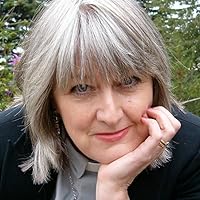
Norah Ethel Robinson Lofts Jorisch (27 August 1904–10 September 1983) was a 20th century best-selling British author. She wrote over fifty books specialising in historical fiction, but she also wrote non-fiction and short stories. Many of her novels, including her Suffolk Trilogy, follow the history of a specific house and the residents that lived in it.
Lofts was born in Shipdham, Norfolk in England. She also published using the pseudonyms Juliet Astley and Peter Curtis. Norah Lofts chose to release her murder-mystery novels under the pen name Peter Curtis because she did not want the readers of her historic fiction to pick up a murder-mystery novel and expect classic Norah Lofts historical fiction. However, the murders still show characteristic Norah Lofts elements. Most of her historical novels fall into two general categories: biographical novels about queens, among them Anne Boleyn, Isabella of Castile, and Catherine of Aragon; and novels set in East Anglia centered around the fictitious town of Baildon (patterned largely on Bury St. Edmunds). Her creation of this fictitious area of England is reminiscent of Thomas Hardy's creation of "Wessex"; and her use of recurring characters such that the protagonist of one novel appears as a secondary character in others is even more reminiscent of William Faulkner's work set in "Yoknapatawpha County," Mississippi. Norah Lofts' work set in East Anglia in the 1930s and 1940s shows great concern with the very poor in society and their inability to change their conditions. Her approach suggests an interest in the social reformism that became a feature of British post-war society.
Several of her novels were turned into films. Jassy was filmed as Jassy (1947) starring Margaret Lockwood and Dennis Price. You're Best Alone was filmed as Guilt is My Shadow (1950). The Devil's Own (also known as The Little Wax Doll and Catch As Catch Can) was filmed as The Witches (1966). The film 7 Women was directed by John Ford and based on the story Chinese Finale by Norah Lofts.
There are some truly special things about this book. It is one of the most uniquely structured novels I have ever read. In one sense it is a series of linked short stories with a common theme of the home and the related individuals who inhabit it over many generations and hundreds of years. There are interesting pieces of history that surface to connect the various inhabitants. Each section changes in perspective and tone depending on the character that is at the forefront. One of the best chapters for me was The Matriarch where Loft utilizes the language, speech pattern and attitude of the main character to amazing effect. She is so real and alive and colorful. The variety is delightful. Featured characters that alternate through the spotlight are a journeyman, a witch, a peasant business woman...
The attributes that make this book so interesting and unique were also a bit of a frustration for me. Just when I was getting to know and care about the characters the story moves on to another generation and we meet another slew of characters. I often had to think twice to remember how they were connected to those prior. It is a long family saga that is hyper condensed.
I will say that Loft should get an award for the best use of classic English language in her novels. Her writing is so elegant and descriptive. I am not sure if her style is unusual for the time period she wrote in (1950s) but it feels like something from a bygone era - in a very good way.
When you want to read something classically and artistically told in brash world of modern books turn to Nora Lofts. Another author I intend to read completely.
4.5 stars rounded up because she had the skill to embed you into each era and character within this house. Starting in the times of Queen Elizabeth I until the post WWII period in Suffolk.
Merravay, it was so excellent to visit with you again after decades.
And Lady Alice! Bewitching IS what you did, regardless how you, yourself, defined it.
This has made me put all and every Norah Lofts' house book, that I can put my hands on, back on my to read lists. Reread for most, that's true, but definitely worth it. Lovely and oh how she could put the "eyes" exactly within their own time's sensibilities!
And culture. And manners. Amidst each nuance of class and physical reality for all the processes of their lives.
A vintage title I have always loved which gives you a four hundred year history of a beautiful manor in England and the cast of characters who inhabit the house and their stories.
This is one of my favourite Norah Lofts historical novels. She tells the history of a house - or the people who built it and lived in it. As far as time scale is concerned it spans several centuries and is full of interesting and intriguing characters.
I have a fascination with old buildings, in particular old homes, so this story of a house in England and it's history of owners and their stories was a very nice read for me. I quite enjoyed it and would highly recommend it to anyone.
This is more of a story of family and people intertwined with special place than that of an hold house. It's told from the perspectives of several people involved with a house - from its "birth" to present day (as to when the book was written). Some loved the house, others hated it, and others were indifferent. At times it's a bit hard to follow how who is connected to who, but that's part of the story: the characters aren't privy to everything that the reader is. Lofts also leaves some things unanswered, which readers imagination then fills in. Overall an engaging book with interesting characters.
Hmm. An interesting structure - the history of a house through vignettes about inhabitants at different historical times, with a slight overarching plot thread that generally makes sense although sometimes relies a bit too much on supernatural abilities and sometimes on melodrama. The earlier historical times (Elizabethan on up) are more interesting and better drawn than the later. I tried Lofts based on a review on a GR Group and I think I'll give another one a try. Poldarkish but not quite as (pardon pun) dark as that.
I am very surprised that I haven't reviewed this book here yet, because it is one of my top 3 all-time -favorites! In this book, we follow the building of and then the fortunes of an Elizabethan mansion (Merravay) built in Suffolk, in the year 1577. The episodic style of the narrative works very well in order to cover the 400-year span between the reigns of the two Elizabeths (1577-1952.) This particular time-frame was chosen to commemorate both the Golden Elizabethan era as well as to anticipate the modern era of Queen Elizabeth II. I feel sure that at the time it was written no one would have foreseen a) that Queen Elizabeth II's reign would last more than 67 years, or b) that England (and the whole world,) would have changed almost out of recognition from the post WWII rubble! It is therefore, much more of a historical record than it was even meant to be as we have moved so far away from the last scenes and concerns of the book. The reasons I love this work so much are many, but I will only mention a few. First and foremost is the mesmerizing storytelling! Norah Lofts could imbue the dullest report with enough human interest to make readers realize they know exactly how characters feel, think and act, because they are so relatable! Secondly, I am intrigued by the vignettes of lives we are given here. They are just enough to advance the story of the house, yet still tantalizing because we come in on them part way through their lives and then leave them (mostly) before they die. So each life (chapter) plays its own small part and together they weave the tapestry of this lovely, lonely, languishing place, deep in the peace of the country. Thirdly, and it really only registered with me this time around, it even references California and The Sacramento Valley, my home for 42 years! This is a book for the ages! It holds up under countless readings and social changes. It takes you far away, it shows you how difficult life used to be and how unfair it still seems, it examines uncomfortable subjects, but it never makes you feel guilty and it never condescends. It lifts you up and in the end, it is triumphant!
I love this book, and have read it 3 or 4 times since I was a teenager! It is about a house Merravey built by Thomas Rowhedge in the Elizabethan times, a successful sailor who caught the eye of the queen and was granted the land for his good deeds! The story is about all the various people that pass through the house in it 300 years. Told in the first person each story makes an impact on the house, and the reader! Fiction, not a real house, but I loved the feel of the story and every one of the characters.
I love this book. I love how it weaves together many story lines from many time periods. I've read it several times, and am completely engrossed every time. There is a sense of mystery, a sense of foreboding in every line.
I love this book, it is my comfort book I read every few years that feels like coming home. It is a beautiful saga of 500 years of the history of a house, through rich, poor, love, hate, pain, happiness, war and everything in between.
I think I liked the characters in this book just as much as those from the The Suffolk House Trilogy! One of the things that I’ve paid attention to in Ms. Lofts’ novels is the food - mainly the lack of it. It doesn’t seem like there was enough food for the very poorest even in the 20th century. Before that, all the way back to the 14th Century, food and something safe to drink was the main concern over and above anything else.
I found this historical fiction, read the title, and I felt all warm and at home already. lol I love the title, especially since I believe in blessings and not luck. There was a great deal of history of this old English home and the people who were somehow a part of it and its history. I thought it was told in a unique way and that drew me in. Usually in a book like this we might get 20 or 30 years, but this one stretches over a period of centuries. The author (in my opinion) wisely chose to write the POV in first person, which is usually my favorite POV and it worked well in this book. And although the house is only fictional, I was hard-pressed not to keep thinking it was real.
c1954. I knew that this book was more a collection of stories about an Elizabethan house but what I didn't expect was some of the endings to the stories. Has not dated a bit and a thoroughly enjoyable read. "Time passed. The confidence which I awaited from Isabella never came, and beneath all the increasingly gay social life which was begining to enliven Merravay - for Rawley was convivial and popular - there was just a trace of discontent and anxiety; there was, each month, a day or two when Isabella was gloomy and downcast, and I would think, Poor isabella, disappointed again!"
I didn't read this version - the new one that's available on Amazon now. http://www.amazon.co.uk/Bless-This-Ho... It's got an awesome cover with a brooding male that took my fancy.
It's another of Norah Lofts' 'House' stories going through generations. Really good stuff and lovely to see how she weaves in the characters from her other books too.
I've read this at least twice and, although I seldom re-read books now as I have relatively few years of reading left, I'd be tempted to read it again. Lofts wrote quite a few historical novels, and several of them followed this format of looking at a house and the people who inhabited it over several centuries. Recommended.
I found the story line a little disjointed but how could it be otherwise since the chapters deal with different families consecutively occupying the house. I like the idea of following the occupants of a house through the centuries and the author does an excellent job of representing each era.
This book is about: it is like a resume of the 'house' trilogy. I liked: how Norah Lofts depicts an era and how stories and rumors about people get passed down from generation to generation. I didn't like: because stories are so short, the main character doesn't develop in the story. However this is compensated when he/she appears as a secondary character in a next chapter.
Norah's strong suit is writing about a place, a house, and vignettes about the people pass through that house or village. She captures that feeling of time slipping through your fingers, of nothing is new under the sun, and no matter what happens life marches on.
I read this book because it was from my grandmother. It's still readable 60 years after it was first published, which is pretty impressive (although being historical fiction might make that easier). 3.5 stars.
I did enjoy this - it's very nicely put-together, as a series of stories linked by a house, through three centuries. It's just that only some of the stories were very interesting. I'll try something else by the same author. I enjoyed the narration very much.
The stories in this saga of the various owners of a northern England country house didn't keep my attention. I'd recommend Anya Seton's historical fiction, (particularly Katherine, instead.
I really like this book. It is the whole history of a house in England. Historical and interesting that way - but not a sappy and happy history of the house. I re-read it every few years.