Jump to ratings and reviews
Rate this book

Poems and Prose

Rate this book
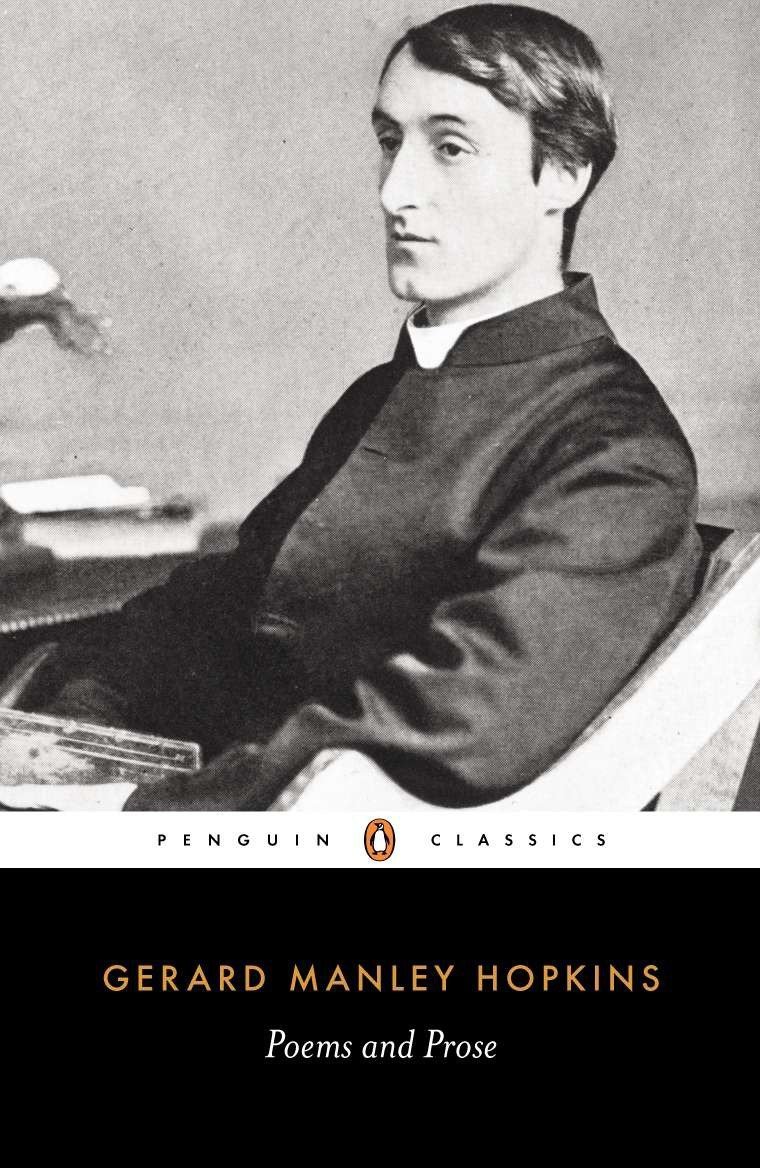
Closer to Dylan Thomas than Matthew Arnold in his 'creative violence' and insistence on the sound of poetry, Gerard Manley Hopkins was no staid, conventional Victorian. On entering the Society of Jesus at the age of 24, he burnt all his poetry and 'resolved to write no more, as not belonging to my profession, unless by the wish of my superiors.' The poems, letters, and journal entries selected for this edition were written in the following twenty years of his life and published posthumously in 1918.

His verse is wrought from the creative tensions and paradoxes of a poet-priest who wanted to evoke the spiritual essence of nature sensuously, and to communicate this revelation in natural language and speech-rhythms while using condensed, innovative diction and all the skills of poetic artifice. Intense, vital, and individual, his writing is the 'terrible crystal' through which the soul--the inscape, the nature of things--may be illuminated.

260 pages, Paperback

First published January 1, 1953

128 people are currently reading
3377 people want to read

About the author

Gerard Manley Hopkins

225 books239 followers
Gerard Manley Hopkins (1844-1889) was an English poet, Roman Catholic convert, and Jesuit priest, whose 20th-century fame established him posthumously among the leading Victorian poets. His experimental explorations in prosody (especially sprung rhythm) and his use of imagery established him as a daring innovator in a period of largely traditional verse.

Ratings & Reviews

What do you think?
Rate this book

Friends & Following

Create a free account to discover what your friends think of this book!

Community Reviews

5 stars
1,757 (50%)
4 stars
1,015 (29%)
3 stars
526 (15%)
2 stars
128 (3%)
1 star
45 (1%)
Displaying 1 - 30 of 124 reviews
Profile Image for Violet wells.
433 reviews4,459 followers
May 18, 2020
Hopkins' poems, especially when read aloud, are often astounding feats of musicality. Like the written equivalent of beads of light flickering to nature's pulse on the gossamer strands of a spiderweb. Apparently he pioneered a technique known as sprung rhythm and in his best poems every word does exactly that - springs rhythm, creating a kind of hypnotic ring of enchantment around his subject. Mostly he writes about nature and God. His nature poems had my full attention; his God poems rather less so.

Hopkins' prose bored me silly. Firstly, we get extracts from a journal and almost immediately I got a sense of a man hiding from himself. He appears to have no inner life. Or as if it's something he's concreted over. There's a lot of sensibility responding to nature but it's kind of hollow when there's so little personality attached to the voice. The letters that follow are even more bereft of inspiration or life. He comes across as a varnished surface. Talks complacently about Empire as if it's a rose garden that has to be maintained with diligence. The most emotional he ever gets is when he becomes mildly indignant at a kindly vicar who unprompted, sends one of Hopkins' poems to a local newspaper.

Hopkins became a Catholic priest and destroyed all his early poems. The Catholic church, in his imagination at least, then functioned as a kind of censor on what he wrote. At the end of the day, you're either a poet or poetry is a hobby of yours. Hopkins seems caught up in this dilemma and perhaps it eventually caused him to be less of a poet than he should have been. A natural gift he has in abundance. One wishes he forged for himself a much more interesting and courageous life. Instead he chose to pinch and squeeze himself into the embodiment of Victorian starch, formality and repression. Shelley or Byron he is not.
Profile Image for Fergus, Weaver of Autistic Webs.
1,270 reviews18.3k followers
May 11, 2025
Gerard Hopkins Rocks BIG TIME! Swifties must adore him. Taylor's Version of the otherwise prim 'n proper Nineteenth Century's Lyrics FLY with Joy:

I saw this morning Morning's Minion -
High there as it rode the wimpling wind...

Who can beat that? Such poetic license in a poor Jesuit Priest! Such outright loving irreverence for the paltry nonpoetic but practical Anglo Saxon tongue!

I love him. In his short life, only a sine qua non superstar poet to fellow minor poet Robert Bridges. And because of Bridges his rivetingly extraordinary words are now commonplace.

But, oh, how they now Bore the fractious Woke.

A priest's poems good only for the dung pile?

Doubt it! He's a supernova in the Literary Firmament. Holy model for Aspie and Poet alike.

My Freshman English prof, Norman Mackenzie, was official editor for the Oxford Collected Poems. With freshman profs like that is it any WONDER I elected English as my Major?

Not.

Mackenzie was a frail old gent when he taught me.

But he's one teacher I'll never forget -

In my own Meetings with Remarkable Men.

And I'll never forget his friend Manley Hopkins, either!

Never.

He gave my Paltry Words WINGS.
Profile Image for Rose Rosetree.
Author 15 books468 followers
July 17, 2023
Loving God -- that shines through every page written by Gerard Manley Hopkins. He's my favorite poet for that very reason.

Of course it helps that he was one of the great synaesthetes in all of literature. Famous, in some circles, for his "sprung rhythm"... to me this represented more than a metrical scheme for poetics. In my view, theorizing about sprung rhythm created a permission structure: how Hopkins dared to present his spiritually powerful poetic language of onomatopoeia.

Among my favorites from Hopkins is "The Leaden Echo and the Golden Echo." Every word here resonates for me. Goodreaders and God lovers, here's a very small enticement to read the entire poem:

Yes I can tell such a key, I do know such a place,
Where whatever’s prized and passes of us, everything that’s
fresh and fast flying of us, seems to us sweet of us and
swiftly away with, done away with, undone,
Undone, done with, soon done with, and yet dearly and
dangerously sweet
Of us, the wimpled-water-dimpled, not-by-morning-matchèd face,
The flower of beauty, fleece of beauty, too too apt to, ah! to fleet,
Never fleets more, fastened with the tenderest truth
To its own best being and its loveliness of youth: it is an ever-
lastingness of, O it is an all youth!


Ever-fresh appreciation of our amazing world, and God's presence within it:

Nobody I've encountered yet has given such a voice to this essential fact of life for those of us who feel it and hear it, and couldn't bear human life without it.
Profile Image for Jonathan.
1,008 reviews1,224 followers
November 23, 2020
Helpful for a grumpy old atheist like me to square the circle a little with GMH and emphasise the whole God = Nature side, though to go too far down that route would be to do him a disservice.
Regardless, some of the most extraordinary use of the English language ever put to paper. Read and re-read many many times since a teenager, and never getting old.

Out of curiosity I did a little googling and was unsurprised to find William Gass and Alexander Theroux, to give but two examples, expressing their love of his work.

33. Inversnaid


THIS darksome burn, horseback brown,
His rollrock highroad roaring down,
In coop and in comb the fleece of his foam
Flutes and low to the lake falls home.

A windpuff-bonnet of fáwn-fróth
Turns and twindles over the broth
Of a pool so pitchblack, féll-frówning,
It rounds and rounds Despair to drowning.

Degged with dew, dappled with dew
Are the groins of the braes that the brook treads through,
Wiry heathpacks, flitches of fern,
And the beadbonny ash that sits over the burn.

What would the world be, once bereft
Of wet and of wildness? Let them be left,
O let them be left, wildness and wet;
Long live the weeds and the wilderness yet.


13. Pied Beauty


GLORY be to God for dappled things—
For skies of couple-colour as a brinded cow;
For rose-moles all in stipple upon trout that swim;
Fresh-firecoal chestnut-falls; finches’ wings;
Landscape plotted and pieced—fold, fallow, and plough;
And áll trádes, their gear and tackle and trim.

All things counter, original, spare, strange;
Whatever is fickle, freckled (who knows how?)
With swift, slow; sweet, sour; adazzle, dim;
He fathers-forth whose beauty is past change:
Praise him.


11. The Sea and the Skylark


ON ear and ear two noises too old to end
Trench—right, the tide that ramps against the shore;
With a flood or a fall, low lull-off or all roar,
Frequenting there while moon shall wear and wend.

Left hand, off land, I hear the lark ascend,
His rash-fresh re-winded new-skeinèd score
In crisps of curl off wild winch whirl, and pour
And pelt music, till none ’s to spill nor spend.

How these two shame this shallow and frail town!
How ring right out our sordid turbid time,
Being pure! We, life’s pride and cared-for crown,

Have lost that cheer and charm of earth’s past prime:
Our make and making break, are breaking, down
To man’s last dust, drain fast towards man’s first slime.

12. The Windhover


To Christ our Lord


I CAUGHT this morning morning’s minion, king-
dom of daylight’s dauphin, dapple-dawn-drawn Falcon, in his riding
Of the rolling level underneath him steady air, and striding
High there, how he rung upon the rein of a wimpling wing
In his ecstasy! then off, off forth on swing,
As a skate’s heel sweeps smooth on a bow-bend: the hurl and gliding
Rebuffed the big wind. My heart in hiding
Stirred for a bird,—the achieve of; the mastery of the thing!

Brute beauty and valour and act, oh, air, pride, plume, here
Buckle! AND the fire that breaks from thee then, a billion
Times told lovelier, more dangerous, O my chevalier!

No wonder of it: shéer plód makes plough down sillion
Shine, and blue-bleak embers, ah my dear,
Fall, gall themselves, and gash gold-vermillion.


(I agree with him that the Windhover is probably the best thing he ever did. )
Profile Image for David.
865 reviews1,661 followers
February 18, 2008
Gerard Manley Hopkins was a lugubrious Victorian Jesuit who wrote some of the most amazing poetry you will ever read in your life. And the only conceivable way I can persuade you that statement is true is to include some of that poetry here:

That Nature Is A Heraclitean Fire And Of The Comfort Of The Resurrection

Cloud-puffball, torn tufts, tossed pillows flaunt forth, then chevy on an air-built thoroughfare: heaven-roysterers, in gay-gangs they throng; they glitter in marches.
Down roughcast, down dazzling whitewash, wherever an elm arches,
Shivelights and shadowtackle in long lashes lace, lance, and pair.
Delightfully the bright wind boisterous ropes, wrestles, beats earth bare
Of yestertempest's creases; in pool and rut peel parches
Squandering ooze to squeezed dough, crust, dust; stanches, starches
Squadroned masks and manmarks treadmire toil there
Footfretted in it. Million-fuelèd, nature's bonfire burns on.
But quench her bonniest, dearest to her, her clearest-selvèd spark
Man, how fast his firedint, his mark on mind, is gone!
Both are in an unfathomable, all is in an enormous dark
Drowned. O pity and indignation! Manshape, that shone
Sheer off, disseveral, a star, death blots black out; nor mark
Is any of him at all so stark
But vastness blurs and time beats level. Enough! the Resurrection,
A heart's-clarion! Away grief's gasping, joyless days, dejection.
Across my foundering deck shone
A beacon, an eternal beam. Flesh fade, and mortal trash
Fall to the residuary worm; world's wildfire, leave but ash:
In a flash, at a trumpet crash,
I am all at once what Christ is, since he was what I am, and
This Jack, joke, poor potsherd, patch, matchwood, immortal diamond,
Is immortal diamond.


So, here's the thing. As a distinctly lapsed Catholic, I can't say that I share Father Hopkins's faith in the comfort of the resurrection. Not on doctrinal grounds anyway. But that poem is so insanely beautiful that I start to think that anyone who can write like that might be on to something ...

And he keeps doing it: "Inversnaid", "Pied Beauty", "God's Grandeur", and - probably his most well-known poem - "The Windhover". Extraordinary poems - about half a century ahead of their time.

Poetry so beautiful it will send chills up your spine. If it doesn't, maybe you're dead inside.
Profile Image for Anika.
15 reviews19 followers
January 2, 2010
Gerard Manley Hopkins is my second favorite poet of all time. This collection is small and contains the poem, "I wake and feel the fell of dark not day" which I have been trying to memorize for years, but can't seem to do it. Even when I take this book around with me for a month, practicing in every spare moment - it must be his writing. Beyond me. I love it so much.
Profile Image for J.
178 reviews
July 23, 2022
In the snow flat-topped hillocks and shoulders outlined with wavy edges, ridge below ridge, very like the grain of wood in line and in projection like relief maps. These the wind makes I think and of course drifts, which are in fact snow waves. The sharp nape of a drift is sometimes broken by slant flutes or channels. I think this must be when the wind after shaping the drift first has changed and cast waves in the body of the wave itself. All the world is full of inscape and chance left free to act falls into an order as well as purpose: looking out of my window I caught it in the random clods and broken heaps of snow made by the cast of a broom. The same of the path trenched by footsteps in ankledeep snow across the fields leading to Hodder wood through which we went to see the river. The sun was bright, the broken brambles and all boughs and banks limed and cloyed with white, the brook down the clough pulling its way by drops and by bubbles in turn under a shell of ice

I looked at the pigeons down in the kitchen yard and so on. They look like little gay jugs by shape when they walk, strutting and jod-jodding with their heads. The two young ones are all white and the pins of the folded wings, quill pleated over quill, are like crisp and shapely cuttleshells found on the shore. The others are dull thundercolour or black-grape-colour except in the white pieings, the quills and tail, and in the shot of the neck. I saw one up on the eaves of the roof: as it moved its head a crush of satin green came and went, a wet or soft flaming of the light

Very hot, though the wind, which was south, dappled very sweetly on one’s face and when I came out I seemed to put it on like a gown as a man puts on the shadow he walks into and hoods or hats himself with the shelter of a roof, a penthouse, or a copse of trees, I mean it rippled and fluttered like light linen, one could feel the folds and braids of it – and indeed a floating flag is like wind visible and what weeds are in a current; it gives it thew and fires it and bloods it in.


Mealy clouds with a not brilliant moon. Blunt buds of the ash. Pencil buds of the beech. Lobes of the trees. Cups of the eyes, Gathering back the lightly hinged eyelids. Bows of the eyelids. Pencil of eyelashes. Juices of the eyeball. Eyelids like leaves, petals, caps, tufted hats, handkerchiefs, sleeves, gloves. Also of the bones sleeved in flesh. Juices of the sunrise.

In the Park in the afternoon the wind was driving little clouds of snow-dust which caught the sun as they rose and delightfully took the eyes: flying up the slopes they looked like breaks of sunlight fallen through ravelled cloud upon the hills and again like deep flossy velvet blown to the root by breath which passed all along, Nearer at hand along the road it was gliding over the ground in white wisps that between trailing and flying shifted and wimpled like so many silvery worms to and from one another.


*

Profile Image for R.L.S.D.
128 reviews4 followers
April 18, 2024
Hopkins was the first to introduce me to the glory of English. Although I do not consider his notion of "inscape" to be beyond critique, his best poems recreate language so stupendously, that they seem to belong to the final eschatalogical state.

The prose content of this collection includes such varied elements as a technical defense of sprung rhythm, a discussion of why Hopkins is Walt Whitman's poetic foil, and his discovery of the Irish phrase "I wouldn't put it past you."
Profile Image for Ben Davis.
128 reviews4 followers
March 27, 2024
At his best, Hopkins speaks with thrilling freshness that opens to the reader the world anew. To use his taxonomy, Hopkins' "Poetry" is magnificent and vivid, while his "Parnassian" is at times a precocious and self-indulgent plod.
Profile Image for Eric.
52 reviews5 followers
May 10, 2009
How to speak of Hopkins?

We live in an era and a civilization in which the cultivated appreciation of all the arts has been besmirched with snobbery and identified with wealth and privilege. For all but the few born to wealth and privelege, then, cultivated taste automatically becomes a kind of treason against class. The only exceptions are things like Celtic music, which have clear ties to currently popular forms.
Appreciation of Hopkins’ poetry requires cultivation not only of vocabulary, but of a stock of referents in literature and awareness of the ancestry of words. Being a language nerd is a start, but only a start. You need to be able to walk outside urbanized areas and know and appreciate what you’re looking at: birds, rocks, trees, plants, sky. How many people do that nowadays, even those who claim to love “Nature” ?

After all that, you’re ready for Wordsworth, Shelley, and all those guys they give you in literature appreciation. Hopkins, though, is going to ask you to appreciate something he calls “sprung rhythm”, which substitutes the meter of living language for the strict duh-dah, duh-dah, duh-dah, duh-dah, duh-dah we’re all used to. Then, he turns around and asks us to accept some highly irregular word order and word coinages to make his resurrection of Anglo-Saxon alliterative verse work. Well, it’s also about making the sounds of words and underlying meanings come out stronger. He’s heavy, but he’s great.

Since I read “Spring And Fall: to a young girl” at the age of sixteen, I’ve felt with Hopkins a connection deeper than anything conveyed by the word “kinship”. I thrill to the identification with a soaring bird each time I read “To a Windhover”, and to the ultimate love and beauty that underlie all Manifestation, when I read “God’s Grandeur” — although the word and concept “God” has always seemed to me an unnecessary complication and, ultimately, an obscuration and distraction from that grand apprehension. I want to shout at Hopkins “Stop calling it ‘God’! Let yourself be open to the pure experience and wisdom! Let go of all those rules, all that verbiage, ideation, and dogma!” I totally understand his original attraction to Roman Catholicism, with its declaration of the Mystery and its recognition of grandeur. However, I’m mystified by his obsessive clinging to the tangled, and necrophilic apparatus of orthodoxy — but part of me understands it. Much as I’d rather not, I completely understand the sonnet that begins “No worst, there is none.” Though my Buddhist self eschews it, I am not yet totally removed from the self-hatred at the core of Christianity, in which as English-speakers, “Westerners”, we are all steeped.

“I wake and feel the fell of dark, not day.” cries from the depth of this self-hatred, but then goes further — to acceptance of its justice. Having already come to love and identify with Hopkins, I raged at this in! I got a “C” on a final exam at the U. Of Chicago that had this sonnet as an essay prompt — I couldn’t put together a coherent critique of it, nor leave it and get on with the rest of the exam.

Like thousands before me, I’ve felt closer to this really odd, truly sick, yet beautiful and brilliant mind than so many I’d be more comfortable with. I’ve wanted to jump into a time machine, sneak into his chamber and remonstrate with him about this acceptance of the notions of Original Sin and of a God who, after allowing the original event, then imposed the Supreme Sacrifice on his Only Begotten Son and — on top of all that — maintains the category of “the lost”, referred to in the penultimate line of “I wake . . .” What could such a being have to do with the glory of Manifestation? What sense is there in speaking of such an entity as “loving”, let alone “perfect”?

But, I have no time machine and I can easily envision great difficulty in reaching Hopkins, even had I one.

I love, embrace, and accept him as he is.
Profile Image for Anne.
Author 13 books13 followers
December 15, 2009
I love this man's poetry, and when I discovered his journal entries, I was moved and delighted. He notices so much in nature; I love how he writes about the particular sunset of each day in his entries, and the birds he has seen.
Profile Image for Chava.
24 reviews
August 24, 2012
The poet feels nature, life, so deeply he is overwhelmed. He sometimes invents words and grammar to express his ecstasy. I just love Hopkins for this, for his passion.

Two of my favorite poems:


Pied Beauty

Glory be to G-d for dappled things-
For skies of couple-colour as a brinded cow;
For rose-moles all in the stipple upon trout that swim;
Fresh-firecoal chestnet-falls; finches' wings;
Landscape plotted and pieced - fold, fallow and plough;
And all trades, their gear and tackle and trim.

All thing counter, original, spare, strange;
Whatever is fickle, freckled (who knows how?)
With swift, slow; sweet, sour; adazzle, dim;
He fathers-forth whose beauty is past change:
Praise him.

---GMH

The Windhover

I caught this morning morning's minion, king-
dom of daylight's dauphin, dapple-dawn-drawn
Falcon, in his riding
Of the rolling level underneath him steady air,
and striding
High there, how he rung upon the rein of a wimpling wing
In his ecstasy! then off, off forth on swing,
As a skate's heel sweeps smooth on a bow-bend:
the hurl and gliding
Rebuffed the big wind. My heart in hiding
Stirred for a bird, - the achieve of, the mastery
of the thing!

Brute beauty and valour and act, oh, air, pride, plume, here
Buckle! AND the fire that breaks from thee then, a billion
Times told lovelier, more dangerous, O my chevalier!

No wonder of it: sheer plod makes plough down
sillion
Shine, and blue-bleak embers, ah my dear,
Fall, gall themselves, the gash gold-vermilion.

GMH
13 reviews5 followers
July 14, 2012
I always enjoy the arrangements from the Pocket Poets series. They're perfect for carrying around on trips and I carried this one in my trip to India.

Unlike many of the Pocket Poets volumes, this one contains both poetry and prose by Hopkins. My favorite poems were:

The Lantern out of Doors
Morning, Midday, and Evening Sacrifice

In the prose section, the letters contained some valuable explanations of his view of poetry and the extracts from his notebooks reveal that even Hopkin's journal entries were full of poetic wonder at the glory of God's creation. One particular gem (for teachers at least) this:

"It is a happy thing that there is no royal road to poetry. The world should know by this time that one cannot reach Parnassus except by flying thither. Yet from time to time more men go up and either perish in its gullies fluttering /excelsior/ flags or else come down again with full folios and blank countenances. Yet the old fallacy keeps its ground. Every age has its false alarms."

Finally, the best part of the prose section is the section at the end called "The Principle or Foundation." This contains a philosophical treatment of glorifying God and of the nature of the self. How much better things would be if more poets were philosophers and more philosophers were poets!

"Man was made to give, and mean to give, glory to God."
4 reviews1 follower
May 29, 2008
I don't know if this is a different publication of the edition that I have, but in any case, Hopkins' poetry is the most powerfully audible poetry that I know. His mastery of sound transforms rhyming, alliteration, and assonance from the hallmarks of juvenile doggerl into a truly poetic symphony of language. For this reason, even though his poetry may be difficult to understand, it is always a delight to hear.
Profile Image for D. Ryan.
192 reviews23 followers
June 21, 2009
There's just nothing better. He may be dark and introspective, but in the end Hopkins always looks out and looks out with hope towards Christ.
"Christ minds; Christ's interests, what to avow or amend
There; eyes them, heart wants, care haunts, foot follows kind,
Their ransome, their rescue, and first, fast, last friend."
~Lantern Out of Doors

I hope I remembered those lines correctly.
Profile Image for John.
645 reviews41 followers
July 26, 2019
Some very beautiful stuff. Many of the poems give glory to creation and to the creator. Hopkins is a Catholic Jesuit priest. His writing looks ultimately to God. Some of these are absolutely breathtaking. Some I can't understand. I'm sure that's my fault.

I keep coming back to this. So beautiful. Uplifting. Inspiring. I don’t have words to do these poems justice.
Profile Image for Marvin Brauer.
Author 9 books11 followers
February 16, 2025
For many a year I considered Hopkins amidst the foremost poets of the ages, but I’ve come to realize that really I have always only truly loved three or maybe four of his poems. So his star is dimming at least in my view. Although yes, Pied Beauty still remains one of my all time favorites. Well there it is.
Profile Image for Ernie.
28 reviews57 followers
May 15, 2007
All of Hopkins' poetry is amazing, but the "Windhover" in particular is one of the most impressive lyrics I've every read. Hopkins' explosion of the sonnet form and embrace of the notion of oral poetry makes him one of the most powerful voices in modern poetry.
Profile Image for Greg.
654 reviews98 followers
September 17, 2017
Before this book, I had not been exposed to the poetry of Gerard Manley Hopkins. I will say very little on the collection of prose that makes up this book. That collection is largely made up of letters, and while interesting to anyone interested in learning more about the great poet, Hopkins, the letters in and of themselves are, in my opinion, rather forgettable on their own merit.

The poetry, however, is absolutely amazing. Hopkins was a Victorian poet, but one who experimented widely throughout his poems. They are marked by his use of sprung rhythm, perhaps the greatest use of alliteration I can imagine amongst any poet, and incredible imagery. He was an Englishmen who because a Catholic, and the poems also reflect his intense religiosity.

I did not expect to find myself so stunned by these poems. They are wholly original and exciting. My favorite sections are the following:

“The Windhover”

To Christ our Lord


I CAUGHT this morning morning’s minion, king-
dom of daylight’s dauphin, dapple-dawn-drawn Falcon, in his riding
Of the rolling level underneath him steady air, and striding
High there, how he rung upon the rein of a wimpling wing
In his ecstasy! then off, off forth on swing,
As a skate’s heel sweeps smooth on a bow-bend: the hurl and gliding
Rebuffed the big wind. My heart in hiding
Stirred for a bird,—the achieve of; the mastery of the thing!

Brute beauty and valour and act, oh, air, pride, plume, here
Buckle! AND the fire that breaks from thee then, a billion
Times told lovelier, more dangerous, O my chevalier!

No wonder of it: shéer plód makes plough down sillion
Shine, and blue-bleak embers, ah my dear,
Fall, gall themselves, and gash gold-vermillion.


From “Spring”

Nothing is so beautiful as Spring-
When weeds, in wheels, shoot long and lovely and lush;
Thrush's eggs look little low heavens, and thrush
Through the echoing timber does so rinse and wring
The ear, it strikes like lightnings to hear him sing;
The glassy peartree leaves and blooms, they brush
The descending blue; that blue is all in a rush
With richness; the racing lambs too have fair their fling.


From “The Wreck of the Deutschland, Part the First”

Thou mastering me
God! Giver of breath and bread;
World’s strand, sway of the sea;
Lord of living and dead;
Thou hast bound bones and veins in me, fastend me flesh,
And after it almost unmade, what with dread,
Thy doing: and dost thou touch me afresh?
Over again I feel thy finger and find thee.


From “The Wreck of the Deutschland, Part the Second”

Into the snows she sweeps,
Hurling the haven behind,
The Deutschland, on Sunday; and so the sky keeps,
For the infinite air is unkind,
And the sea flint-flake, black-backed in the regular blow,
Sitting Eastnortheast, in cursed quarter, the wind;
Wiry and white-fiery and whirlwind-swivelled snow
Spins to the wido-making unchilding unfathering deeps.



See my other reviews here!
Profile Image for Daniel.
409 reviews18 followers
October 6, 2024
This has been my “take with me to the rocky beach while I watch the sunset” book for over a year now, and I finally finished it (actually, my second copy since the first fell apart halfway through the read). I decided to skip the section of his letters, since I plan to explore them in another book. Hopkins is a genius, exploring his work is a gift, and I keep forgetting he was VICTORIAN NOT MODERNIST, so ahead of his time!
Profile Image for Garrett Moore.
93 reviews5 followers
May 10, 2025
Hopkins’ poetry is like nothing else I have read, and this book is a great introduction to him.

It is a pleasure to experience poems like God’s Grandeur, The Windhover, and As kingfishers catch fire. His poems have such a unique, sensuous texture when read aloud.

Beyond those poems that were already somewhat familiar to me, I found quite a few other ones that I’ve enjoyed reading and rereading: Heaven-Haven, The Sea and the Skylark, Inversnaid, and No worst, there is none to name a few. I was not initially interested in reading the prose (mostly journal entries and letters), but its inclusion reveals the poet and his personality, spiritual development, intellectual life, and friendships. Even the introduction by editor W.H. Gardner was helpful in explaining various influences on Hopkins—Herbert, Duns Scotus, Ignatius Loyola’s Spiritual Exercises—and the editor’s endnotes provide even more context for the poems and prose. In short, this is a great way for anyone to explore Hopkins’ poetry for the first time.

From his journal: “I do not think I have ever seen anything more beautiful than the bluebell I have been looking at. I know the beauty of our Lord by it.” (120)

From an included sermon: “This is a comforting thought: we need not wait in fear till death; any day, any minute we bless God for our being or for anything, for food, for sunlight, we do and are what we were meant for, made for - things that give and mean to give God glory. This is a thing to live for. Then make haste so to live.” (143)
Profile Image for Jeffrey Bumiller.
647 reviews29 followers
October 20, 2024
From Peace, my favorite of this collection (page 42):

When, when, Peace, will you, Peace? I'll not play hypocrite
to own my heart: I yield you do come sometimes; but
that piecemeal peace is poor peace. What pure peace allows
alarm of wars, the daunting wars, the death of it?
Profile Image for atito.
708 reviews13 followers
June 27, 2022
i am sorry but hopkins is one of my favorite poets writing in english & "moonrise" is one of the best poems in history... "parted me leaf and leaf, divided me, eyelid and eyelid of slumber" are you seeing this shit nicki minaj
Profile Image for Caspar "moved to storygraph" Bryant.
874 reviews55 followers
August 23, 2022
He's the best !

It's known GMH is unspeakably brilliant you don't need me for that it's so warm, reassuring to read these and rediscover where others have pinched lines. Contemporary highlight is the first stanza of The Lantern out of Doors -
Sometimes a lantern moves along the night,
That interests our eyes. And who goes there?
I think; where from and bound, I wonder, where,
With, all down darkness wide, his wading light?


which gives the title for the wonderful Seán Hewitt's just-released memoir, All Down Darkness Wide. I don't think it's too much a stretch to call Gerard a progenitor of queer aesthetics in poetry & I think one has only to look at what we're cautiously calling something like a Scottish revival at the moment to recognise the Hopkins in queer joy, in the unavoidably queer aesthetics of complexity, eruption, exuberance. This reread really rekindled the Deutschland for me which I Liked before but Oh my I am falling for it Heavy now what a masterpiece

Blue-beating and hoary-glow height; or night, still higher,
With belled fire and the moth-soft Milky way,
What by your measure is the heaven of desire,
The treasure never eyesight got, nor was ever guessed what for the hearing?


Also the Heraclitean Fire poem is,,,, so desirable

O I suppose I'd also say I read the prose here the journal is quite sweet quite Wordsworthian in a way though GMH would dislike that comparison. There's an odd Socratic dialogue among Oxonians about What is Beauty which nearly worked though I was mostly going hmmm homoeroticism. I was surprised by his letters to John Henry Newman which to my shame I didn't know existed! they're curious!

He's endless he's here to stay and Thank the Lord for that
He fathers-forth whose beauty is past change:
Praise Him.
Profile Image for Jessen.
37 reviews
June 11, 2023
Update: still a full 5 stars! His poems are undeniably rich and beautiful, certainly worthy of reading again and again.


Original review: I just finished this collection, and I've already started the book over to read through his poetry again. Needless to say, I have definitely found my new favorite poet. His writing is so vivid, beautiful, and unexpected that his meaning and the emotion his poetry elicits are even more effective, since you've had to ponder his words. I know the same could (should) be said for a lot of poetry, but his is distinctive in a way I haven't put my finger on yet- and it's refreshing. Hopkins himself said in a letter to his friend, "why, sometimes one enjoys and admires the very lines one cannot understand… " His poetry is full of awe at the created world, and often of sorrow, which to me is a marker of his personal experience of human nature and of God. His poetry reads like an excess of emotion which just bubbled out of him- his imagery is almost startlingly beautiful- so it was interesting at the end to read his notes on how precise he was with his sprung rhythm and the technical correctness of his poetry. It reads as though it was effortless. I absolutely recommend!
76 reviews
July 7, 2020
Hopkin's prose regarding prosody is, outside of Eliot, the best I've ever read.

You often hear 'this poet must be read aloud to understand him/her/they!' about all manner of poets.

Hopkins is the only poet I've encountered where this is actually true. There is something about the inner voice of a reader that is simply inexact; you must read his poems aloud, even if muttered; even if whispered.

He understood the tongue in a way primal way unlike all other poets in English.*

(*Which makes ladies sad that he probably wasn't into them.)
Displaying 1 - 30 of 124 reviews

Can't find what you're looking for?

Get help and learn more about the design.