

What do you think?
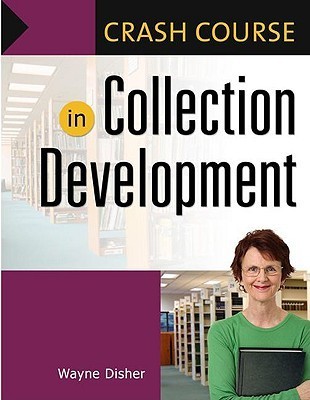
Crash Course in Collection Development
Created for those with little formal LIS training working in small, rural libraries, this guide will also be useful for librarians who are new to this area of service or need to brush up on their skills. In a volume covering everything from community analysis through developing collection policies, librarians will learn how to use reviews to acquire materials as well as to help weed the collection, and get hints for simple repair or rebinding items. Attention is given to marketing the collection to patrons, and to handling censorship issues when collections are challenged. This new entry in the Crash Course Series explaining collection development was created for those with little formal LIS training working in small, rural libraries. The guide will also be useful for librarians who are new to this area of service or need to brush up on their skills. In a volume covering everything from community analysis through developing collection policies, librarians will learn how to use reviews to acquire materials as well as to help weed the collection, how to market the collection to patrons, and how to handle censorship issues when collections are challenged.
179 pages, Paperback
First published September 1, 2007
Ratings & Reviews
Friends & Following
Create a free account to discover what your friends think of this book!
Community Reviews
Displaying 1 - 12 of 12 reviews
July 2, 2022
The reason why I picked up this book was because it was the required textbook for my graduate course called Collection Management. I found this textbook to be fascinating, course 101 is on how to manage a collection’s database
A run-down on what the textbook is about? It’s basically about the way that the collection developer selects the books, DVDs, and other kinds of media for the library, essentially creating the books that are available for the library patrons
It’s perfect for those who are just starting to understand what collection management is
A run-down on what the textbook is about? It’s basically about the way that the collection developer selects the books, DVDs, and other kinds of media for the library, essentially creating the books that are available for the library patrons
It’s perfect for those who are just starting to understand what collection management is

December 13, 2017
Pretty helpful for a basic idea of reference services
May 16, 2018
Clearly written and useful information.

February 26, 2023
Good intro to collection management.
March 16, 2024
For a class

Read
May 13, 2025Required reading for school

March 27, 2026
This book was super helpful for my library degree. However, the amount of grammatical errors took away some of the book's ethos for me.


July 7, 2015
Ok, I will admit up front that the author was my professor for Collection Development. I will now admit that I read every word of this excellent book and will take all of it into consideration in my future library career. Disher's writing style is fresh and for the real folks of the trenches of the library world. I'm still new in my library science program, but I'm already sick of the uppity texts written by library science gurus who probably haven't come out of their lofty upper offices since Reagan was President. To be honest, I stopped reading the Evans text (also required for my class) and stuck with Disher's text probably about four weeks into the term. Disher "spoke" to me more than the stuffy guy did. If your course calls for this book, read this one for sure!

February 12, 2009
Disher's cheerful and clear writing style makes this an easy read. The book is very basic; he assumes no prior knowledge. Disher provides good suggestions for ways that librarians can get to know their communities, both statistically and anecdotally. He also gives lists of useful on-line and print selection resources. On pages 129 - 134 her offers a concise overview of key considerations when weeding each of the 10 Dewey categories which is very handy.
July 23, 2014
Very helpful basic introduction to collection development written in clear and concise language without going overboard on details. It would definitely be a useful work to the small or rural librarian, but could also be useful as a refresher course for anyone working within a library setting. I found the section on mapping and analyzing the collection to be especially helpful.

December 14, 2015
Highly readable which made every reading assignment better.
Displaying 1 - 12 of 12 reviews