

What do you think?

Morgan's Run
In a story of breathtaking scope, Colleen McCullough returns to the magnificent setting of her international bestseller The Thorn Birds.
Following the disappearance of his only son and the death of his beloved wife, Richard Morgan is falsely imprisoned and exiled to the penal colonies of eighteenth-century Australia. His life is shattered but Morgan refuses to surrender, overcoming all obstacles to find unexpected contentment and happiness in the harsh early days of Australia's settlement.
From England's shores to Botany Bay and the rugged frontier of a hostile new world, Morgan's Run is the epic tale of love lost and found, and the man whose strength and character helped settle a country and define its future.
Cover Artist: Tom Hallman
Following the disappearance of his only son and the death of his beloved wife, Richard Morgan is falsely imprisoned and exiled to the penal colonies of eighteenth-century Australia. His life is shattered but Morgan refuses to surrender, overcoming all obstacles to find unexpected contentment and happiness in the harsh early days of Australia's settlement.
From England's shores to Botany Bay and the rugged frontier of a hostile new world, Morgan's Run is the epic tale of love lost and found, and the man whose strength and character helped settle a country and define its future.
Cover Artist: Tom Hallman
832 pages, Mass Market Paperback
First published January 1, 2000
About the author
Colleen McCullough
133 books3,327 followersColleen Margaretta McCullough was an Australian author known for her novels, her most well-known being The Thorn Birds and Tim.
Raised by her mother in Wellington and then Sydney, McCullough began writing stories at age 5. She flourished at Catholic schools and earned a physiology degree from the University of New South Wales in 1963. Planning become a doctor, she found that she had a violent allergy to hospital soap and turned instead to neurophysiology – the study of the nervous system's functions. She found jobs first in London and then at Yale University in New Haven, Connecticut.
After her beloved younger brother Carl died in 1965 at age 25 while rescuing two drowning women in the waters off Crete, a shattered McCullough quit writing. She finally returned to her craft in 1974 with Tim, a critically acclaimed novel about the romance between a female executive and a younger, mentally disabled gardener. As always, the author proved her toughest critic: "Actually," she said, "it was an icky book, saccharine sweet."
A year later, while on a paltry $10,000 annual salary as a Yale researcher, McCullough – just "Col" to her friends – began work on the sprawling The Thorn Birds, about the lives and loves of three generations of an Australian family. Many of its details were drawn from her mother's family's experience as migrant workers, and one character, Dane, was based on brother Carl.
Though some reviews were scathing, millions of readers worldwide got caught up in her tales of doomed love and other natural calamities. The paperback rights sold for an astonishing $1.9 million.
In all, McCullough wrote 11 novels.
Source: http://www.people.com/article/colleen...
Raised by her mother in Wellington and then Sydney, McCullough began writing stories at age 5. She flourished at Catholic schools and earned a physiology degree from the University of New South Wales in 1963. Planning become a doctor, she found that she had a violent allergy to hospital soap and turned instead to neurophysiology – the study of the nervous system's functions. She found jobs first in London and then at Yale University in New Haven, Connecticut.
After her beloved younger brother Carl died in 1965 at age 25 while rescuing two drowning women in the waters off Crete, a shattered McCullough quit writing. She finally returned to her craft in 1974 with Tim, a critically acclaimed novel about the romance between a female executive and a younger, mentally disabled gardener. As always, the author proved her toughest critic: "Actually," she said, "it was an icky book, saccharine sweet."
A year later, while on a paltry $10,000 annual salary as a Yale researcher, McCullough – just "Col" to her friends – began work on the sprawling The Thorn Birds, about the lives and loves of three generations of an Australian family. Many of its details were drawn from her mother's family's experience as migrant workers, and one character, Dane, was based on brother Carl.
Though some reviews were scathing, millions of readers worldwide got caught up in her tales of doomed love and other natural calamities. The paperback rights sold for an astonishing $1.9 million.
In all, McCullough wrote 11 novels.
Source: http://www.people.com/article/colleen...
Ratings & Reviews
Friends & Following
Create a free account to discover what your friends think of this book!
Community Reviews
Displaying 1 - 30 of 388 reviews

January 10, 2023
Bulgarian review first, followed by the English translation below
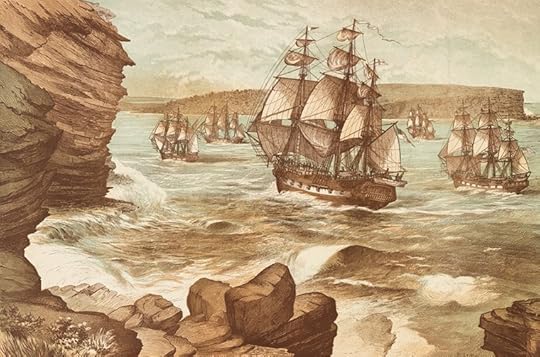
През 1788 г. Нов Южен Уелс (днешна Австралия) посреща флота от 11 британски кораба. Това не е изследователска експедиция, а затворнически експеримент на Короната. След като тринайсетте американски колонии обявяват независимост, Англия остава без място, където да изселва многобройните си осъдени престъпници. Всъщност, поради факта, че съдебната английска система е една от най-жестоките за времето си, седемгодишни присъди с изселване се раздават щедро за откраднато парче плат или за половин хляб. Експериментът със затворниците едва не се проваля поради лошата подготовка, корупцията и жестокостта, както и физическите мъки на едногодишното презокеанско пътуване и предизвикателствата на непознатия нов свят.
Колийн Маккълоу е създала епична сага с плътни, бавни и най-разнообразни детайли от епохата. Читателят плавно проследява пътя на Ричард Морган, сръчен оръжейник, син на почтен ханджия, баща на две деца, от достопочтения морски град Бристъл, през ужасите на затворите Нюгейт и Глостър, плаващите кораби-затвори по Темза, ужасяващите роботърговски кораби за каторжници на път към Австралия до напълно непознатите земи в южното полукълбо. Сюжетът не бърза, опитвайки се да обхване възможно най-мащабно платното на епохата. Ричард, от кротък глава на семейство и образцов гражданин, се пробужда за скритите в него сили и дарби, които разрухата, несправедливостта и препятствията изкарват на бял свят. Заселникът Ричард в края е на светлинни години разстояние от благия, но инертен майстор Ричард в началото.
Портретът на това първо заселване на Австралия с европейци ми беше крайно въздействащ. В старанието си да обхване максимум детайли и действащи лица, Маккълоу не винаги успява да развие пълния потенциал на образите. Също така късметът на Ричард на моменти е почти чудодеен, макар винаги да има рационално обяснение. Ужасна е съдбата на жените в тези събития, и Маккълоу често не отделя нужното внимание на героините си. Но възклицанията на някои читателки, че погледът бил антифеминистки, е чиста проба глупост и невежество. В обстоятелства, в които няма абсолютно никакви гаранции за физическо оцеляване, феминизмът не е онова, което разглезените гражданки на 21-ви век си представят. До 21-ви век има да изтече още много, много вода.
В новите заглавия ми липсва точно този сериозен подход към история и епоха, както и задълбочеността, без да се прилагат наготово и мързеливо готови клишета и кухи “тълкувания” от съвсем различни обстоятелства и периоди. Подход, основан на здрав труд на автора и опит за дълбочинно осмисляне и анализ, с мост към съвременността, защото - в крайна сметка - хората винаги са си едни и същи. Но резултатите от тяхното групиране варират.
4,5⭐️
▶️ Цитати:
“Като оцеляваме, ние побеждаваме.”
“Ветровете са важни, но понякога по-важни са теченията.”
“развратът си е част от опознаването.”

In 1788, New South Wales (modern-day Australia) welcomed a fleet of 11 British ships. This was not an exploratory expedition, but a penal experiment by the Crown. After the thirteen American colonies declared independence, England was left without a place to exile its numerous convicted criminals. In fact, due to the British judicial system being one of the cruelest of its time, seven-year sentences of transportation were generously handed out for a stolen piece of cloth or half a loaf of bread. The experiment with the prisoners nearly failed due to poor preparation, corruption, and brutality, as well as the physical torment of the year-long transoceanic voyage and the challenges of an unfamiliar new world.
Colleen McCullough has created an epic saga with dense, slow, and highly diverse details of the era. The reader steadily follows the journey of Richard Morgan—a skilled gunsmith, son of a respectable innkeeper, and father of two—from the dignified seaside town of Bristol, through the horrors of Newgate and Gloucester prisons, the floating prison hulks on the Thames, and the terrifying slave-like convict ships bound for Australia, to the completely unknown lands of the southern hemisphere. The plot does not rush, attempting to capture the canvas of the era on the grandest possible scale. Richard, from a quiet head of a family and a model citizen, awakens to hidden strengths and talents within him, which ruin, injustice, and obstacles bring to light. The settler Richard at the end is light-years away from the gentle but inert master Richard at the beginning.
The portrait of this first European settlement of Australia was deeply moving to me. In her effort to cover a maximum of details and characters, McCullough does not always manage to develop the full potential of every persona. Additionally, Richard's luck is at times almost miraculous, though there is always a rational explanation provided. The fate of women in these events is horrific, and McCullough often does not devote sufficient attention to her female characters. However, the exclamations of some female readers that the perspective is "anti-feminist" is pure nonsense and ignorance. In circumstances where there are absolutely no guarantees of physical survival, feminism is not what pampered 21st-century citizens imagine it to be. A lot of water will have to flow under the bridge before we reach the 21st century.
In newer titles, I miss precisely this serious approach to history and the era, as well as the depth, without the lazy application of ready-made clichés and hollow "interpretations" from completely different circumstances and periods. An approach based on the author's hard work and an attempt at deep reflection and analysis, with a bridge to the present—because, ultimately, people have always been the same. But the results of their grouping vary.
4.5⭐️
През 1788 г. Нов Южен Уелс (днешна Австралия) посреща флота от 11 британски кораба. Това не е изследователска експедиция, а затворнически експеримент на Короната. След като тринайсетте американски колонии обявяват независимост, Англия остава без място, където да изселва многобройните си осъдени престъпници. Всъщност, поради факта, че съдебната английска система е една от най-жестоките за времето си, седемгодишни присъди с изселване се раздават щедро за откраднато парче плат или за половин хляб. Експериментът със затворниците едва не се проваля поради лошата подготовка, корупцията и жестокостта, както и физическите мъки на едногодишното презокеанско пътуване и предизвикателствата на непознатия нов свят.
Колийн Маккълоу е създала епична сага с плътни, бавни и най-разнообразни детайли от епохата. Читателят плавно проследява пътя на Ричард Морган, сръчен оръжейник, син на почтен ханджия, баща на две деца, от достопочтения морски град Бристъл, през ужасите на затворите Нюгейт и Глостър, плаващите кораби-затвори по Темза, ужасяващите роботърговски кораби за каторжници на път към Австралия до напълно непознатите земи в южното полукълбо. Сюжетът не бърза, опитвайки се да обхване възможно най-мащабно платното на епохата. Ричард, от кротък глава на семейство и образцов гражданин, се пробужда за скритите в него сили и дарби, които разрухата, несправедливостта и препятствията изкарват на бял свят. Заселникът Ричард в края е на светлинни години разстояние от благия, но инертен майстор Ричард в началото.
Портретът на това първо заселване на Австралия с европейци ми беше крайно въздействащ. В старанието си да обхване максимум детайли и действащи лица, Маккълоу не винаги успява да развие пълния потенциал на образите. Също така късметът на Ричард на моменти е почти чудодеен, макар винаги да има рационално обяснение. Ужасна е съдбата на жените в тези събития, и Маккълоу често не отделя нужното внимание на героините си. Но възклицанията на някои читателки, че погледът бил антифеминистки, е чиста проба глупост и невежество. В обстоятелства, в които няма абсолютно никакви гаранции за физическо оцеляване, феминизмът не е онова, което разглезените гражданки на 21-ви век си представят. До 21-ви век има да изтече още много, много вода.
В новите заглавия ми липсва точно този сериозен подход към история и епоха, както и задълбочеността, без да се прилагат наготово и мързеливо готови клишета и кухи “тълкувания” от съвсем различни обстоятелства и периоди. Подход, основан на здрав труд на автора и опит за дълбочинно осмисляне и анализ, с мост към съвременността, защото - в крайна сметка - хората винаги са си едни и същи. Но резултатите от тяхното групиране варират.
4,5⭐️
▶️ Цитати:
“Като оцеляваме, ние побеждаваме.”
“Ветровете са важни, но понякога по-важни са теченията.”
“развратът си е част от опознаването.”
In 1788, New South Wales (modern-day Australia) welcomed a fleet of 11 British ships. This was not an exploratory expedition, but a penal experiment by the Crown. After the thirteen American colonies declared independence, England was left without a place to exile its numerous convicted criminals. In fact, due to the British judicial system being one of the cruelest of its time, seven-year sentences of transportation were generously handed out for a stolen piece of cloth or half a loaf of bread. The experiment with the prisoners nearly failed due to poor preparation, corruption, and brutality, as well as the physical torment of the year-long transoceanic voyage and the challenges of an unfamiliar new world.
Colleen McCullough has created an epic saga with dense, slow, and highly diverse details of the era. The reader steadily follows the journey of Richard Morgan—a skilled gunsmith, son of a respectable innkeeper, and father of two—from the dignified seaside town of Bristol, through the horrors of Newgate and Gloucester prisons, the floating prison hulks on the Thames, and the terrifying slave-like convict ships bound for Australia, to the completely unknown lands of the southern hemisphere. The plot does not rush, attempting to capture the canvas of the era on the grandest possible scale. Richard, from a quiet head of a family and a model citizen, awakens to hidden strengths and talents within him, which ruin, injustice, and obstacles bring to light. The settler Richard at the end is light-years away from the gentle but inert master Richard at the beginning.
The portrait of this first European settlement of Australia was deeply moving to me. In her effort to cover a maximum of details and characters, McCullough does not always manage to develop the full potential of every persona. Additionally, Richard's luck is at times almost miraculous, though there is always a rational explanation provided. The fate of women in these events is horrific, and McCullough often does not devote sufficient attention to her female characters. However, the exclamations of some female readers that the perspective is "anti-feminist" is pure nonsense and ignorance. In circumstances where there are absolutely no guarantees of physical survival, feminism is not what pampered 21st-century citizens imagine it to be. A lot of water will have to flow under the bridge before we reach the 21st century.
In newer titles, I miss precisely this serious approach to history and the era, as well as the depth, without the lazy application of ready-made clichés and hollow "interpretations" from completely different circumstances and periods. An approach based on the author's hard work and an attempt at deep reflection and analysis, with a bridge to the present—because, ultimately, people have always been the same. But the results of their grouping vary.
4.5⭐️

October 2, 2010
As an emerging writer, deep into learning the skills of the craft, I read a lot of professionals' advice. Most experts suggest that a novel be developed with a plot full of action. Not surprisingly, then, I find that most books - regardless of genre - follow this model. Not so with Colleen McCullough's Morgan's Run.
This historical novel, based on the founding of The Botany Bay colony, centers on the life of one man, Richard Morgan. Begun in the mid-1700s, the story tells of the ricochet effect on British citizens as the American Colonies gained their independence from England.
Times may be difficult for many in our world, but this book makes a case for calling the past anything except "the good ole' days."
I highly reccommend Morgan's Run for those who want to read a compelling story told in a unique voice.
This historical novel, based on the founding of The Botany Bay colony, centers on the life of one man, Richard Morgan. Begun in the mid-1700s, the story tells of the ricochet effect on British citizens as the American Colonies gained their independence from England.
Times may be difficult for many in our world, but this book makes a case for calling the past anything except "the good ole' days."
I highly reccommend Morgan's Run for those who want to read a compelling story told in a unique voice.

April 15, 2008
One's reading life is too abbreviated to waste on books that are long on page length and short on information. As evidenced by her otherwise excellent Masters of Rome series and this bit of over-researched fluff, McCullough desperately needs an editor. Morgan's Run (aka "life," as in, "I had a good run" as well as the name of a government-sanction rum distillery on Norfolk Island) is a biography of Richard Morgan, freeman of Bristol transported by a typical late 18th century British miscarriage of justice to Norfolk Island (a First Fleet colony of convict-settled Australia). The book begins with the announcement of the War of Independence in 1776 (albeit from a typical Bristol tavern point-of-view) though Richard's transporting aboard the Alexander doesn't take place until 1788. This represents 236 mind-numbing pages into the book with arrival in Botany Bay awaiting the turn of yet another 100 pages, meaning that more than half of the book's 600 pages are dull and irrelevant prologue in which Richard Morgan is more acted upon than actor.
Things pick up a bit as Morgan is taken from Plymouth for a year's sail to arrive in Botany Bay. Through revealed competence and an apparent encyclopedic memory, Morgan becomes head man among his small set of convicts. Unfortunately, most of the conflict is fleeting and quickly resolved (or abandoned), and the laconic Morgan makes for such poor company that even McCullough appears glad for opportunities to abandon him as the focus of her narrative (chiefly toward the end when she introduces a new character from off the Lady Juliana of the Second Fleet). As always, McCullough captures the tenor of the times and dialogue well, but she appears overwhelmed by ephemera: descriptions of daily weather, Morgan's random accounting of the Norfolk Island sawpit intake for a given week, what Morgan plans to have for dinner of an evening based on current garden inventory, the sequential moves in a game of chess, the distribution list of the latest litter of terrier puppies, and so forth. (And her afterword suggests she hoped to write a follow-up?!) The book was as substantial as styrofoam, cumbersome, bulky, and in need of compression. More worth a skim than a full read.
Things pick up a bit as Morgan is taken from Plymouth for a year's sail to arrive in Botany Bay. Through revealed competence and an apparent encyclopedic memory, Morgan becomes head man among his small set of convicts. Unfortunately, most of the conflict is fleeting and quickly resolved (or abandoned), and the laconic Morgan makes for such poor company that even McCullough appears glad for opportunities to abandon him as the focus of her narrative (chiefly toward the end when she introduces a new character from off the Lady Juliana of the Second Fleet). As always, McCullough captures the tenor of the times and dialogue well, but she appears overwhelmed by ephemera: descriptions of daily weather, Morgan's random accounting of the Norfolk Island sawpit intake for a given week, what Morgan plans to have for dinner of an evening based on current garden inventory, the sequential moves in a game of chess, the distribution list of the latest litter of terrier puppies, and so forth. (And her afterword suggests she hoped to write a follow-up?!) The book was as substantial as styrofoam, cumbersome, bulky, and in need of compression. More worth a skim than a full read.

January 9, 2011
This is the story of Richard Morgan, a convict who spent twelve months on the seas and how this kind of people were used in order to populate an unknown continent. With the advent of the American Revolution has closed the New World to England’s prisoners.
The author thus describes the 18th century England’s colonization of Australia with the foundation of a new prison colony of
Botany Bay - the same place where Captain Cook landed in 1770.

The ships disembarked in Port Jackson, which will become later the Sydney Harbour.
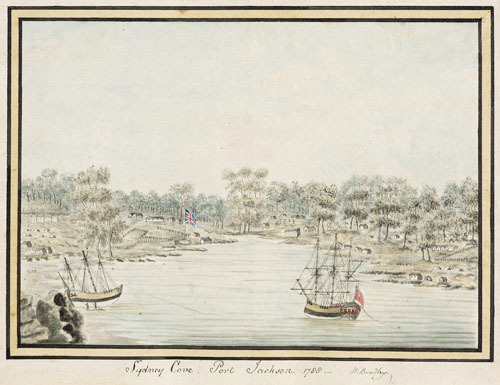
Morgan moves then to the Norfolk Island in the South Pacific.
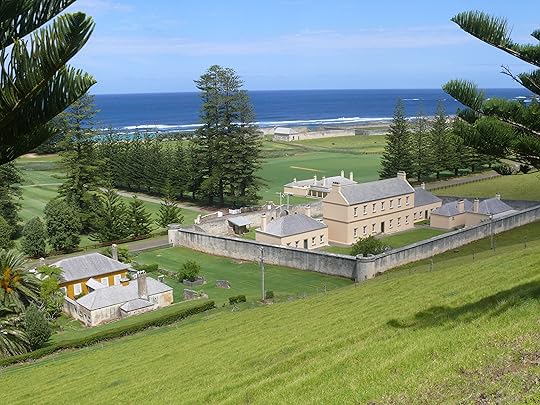
Since I’ve been to Australia quite recently, I wanted to learn a little more about the colonization of this relative young country.
This book was supposed to be the first one of a trilogy but as far as I know, the author never finished it.
4* Tim
4* An Indecent Obsession
4* Thorn Birds
3* A Creed for the Third Millennium
3* The ladies of Missalonghi
3* Morgan’s Run
TBR The First Man in Rome
TBR The Song of Troy
TBR Bittersweeet
The author thus describes the 18th century England’s colonization of Australia with the foundation of a new prison colony of
Botany Bay - the same place where Captain Cook landed in 1770.
The ships disembarked in Port Jackson, which will become later the Sydney Harbour.
Morgan moves then to the Norfolk Island in the South Pacific.
Since I’ve been to Australia quite recently, I wanted to learn a little more about the colonization of this relative young country.
This book was supposed to be the first one of a trilogy but as far as I know, the author never finished it.
4* Tim
4* An Indecent Obsession
4* Thorn Birds
3* A Creed for the Third Millennium
3* The ladies of Missalonghi
3* Morgan’s Run
TBR The First Man in Rome
TBR The Song of Troy
TBR Bittersweeet

January 9, 2021
8-oji "Garsiausios XX a. pabaigos knygos" serijos knyga.
Žinomą australų rašytoją C. McCullough pažįstu iš kitų knygų - "Erškėčių paukščiai", "Giesmė apie Troją" ir "Prisilietimas". Nors ši knyga pasakoja apie įdomų istorinį įvykį, kaip Anglija XVIII a. kolonizavo Australiją, tačiau šį kartą tai nebuvo toks stiprus romanas kaip anksčiau minėti. Idėja gera - tvirta valia, darbštumas, padori elgsena leidžia išlikti žmogumi net labiausiai gniuždančiomis aplinkybėmis, tačiau antraeilių veikėjų, kurių vardai vienodi, ištemptas pasakojimas su skrupulingai pateiktomis detalėmis(pvz. išpjautų lentų ilgis, galandamo pjūklo dantų nuokrypis) šiek tiek vargino ir lėmė, kad tiesiog kai kuriais puslapiais nuslydau paviršiumi.
Žinomą australų rašytoją C. McCullough pažįstu iš kitų knygų - "Erškėčių paukščiai", "Giesmė apie Troją" ir "Prisilietimas". Nors ši knyga pasakoja apie įdomų istorinį įvykį, kaip Anglija XVIII a. kolonizavo Australiją, tačiau šį kartą tai nebuvo toks stiprus romanas kaip anksčiau minėti. Idėja gera - tvirta valia, darbštumas, padori elgsena leidžia išlikti žmogumi net labiausiai gniuždančiomis aplinkybėmis, tačiau antraeilių veikėjų, kurių vardai vienodi, ištemptas pasakojimas su skrupulingai pateiktomis detalėmis(pvz. išpjautų lentų ilgis, galandamo pjūklo dantų nuokrypis) šiek tiek vargino ir lėmė, kad tiesiog kai kuriais puslapiais nuslydau paviršiumi.
September 9, 2010
This was a challenging read. The author does SO MUCH historical research, and includes lots of period language, descriptions of items that I'm not familiar with, etc. This makes it slow going, but the story was SO good. The main character, Richard Morgan, was a real person sent from England as a convict to colonize Australia. Fascinating historical fiction.

May 18, 2012
This novel is based on the true story of Richard Morgan who is the real life 4 times-great, grandfather of Coleen McCullough's husband. The novel took me on an adventure that I had never even dreamed of in this riveting, bigger than life novel. Richard Morgan led a somewhat average life in England in the late 1700s but his unjust conviction of a crime that he didn't commit and his exile first by ship, under the most deplorable conditions that one could imagine, sent him on journey that gave him more strength than he had ever known. A year later the ship, Alexandria, with of some of England's prisoners landed in New Holland (later named Australia), in the newly formed English penal colony which was established to rid England of their "undesirables". It is through these adventures and disasters that he led the first of the penal colony exiles to create new lives in Botany Bay, Australia and Norfolk Island which lies between Australia and New Zealand
At first I was disappointed that it was not exactly the novel that I expected because it was a slow starter and only a fourth of the novel takes place in Australia. However, I did find that the travel on the ship and McCullough's mesmerizing descriptions of the experience of the sea and ports of Africa and Brazil to be breathtaking, as she was able to create in my mind, the experience of these of places I have never been. Her characters, while not always likable, came alive for me and I don't think I will ever forget them. It is apparent that she historically researched every page that she wrote and all of it is very believable.
I recommend this wonderful novel to any one who loves history and (to coin a phrase) likes to travel by armchair.
At first I was disappointed that it was not exactly the novel that I expected because it was a slow starter and only a fourth of the novel takes place in Australia. However, I did find that the travel on the ship and McCullough's mesmerizing descriptions of the experience of the sea and ports of Africa and Brazil to be breathtaking, as she was able to create in my mind, the experience of these of places I have never been. Her characters, while not always likable, came alive for me and I don't think I will ever forget them. It is apparent that she historically researched every page that she wrote and all of it is very believable.
I recommend this wonderful novel to any one who loves history and (to coin a phrase) likes to travel by armchair.

December 14, 2013
Added 12/13/13
2/4/14 - I am still trying to get through this book (in between other books). I'm on p.291 out of 832 pages in this paperback edition. Don't know if I'll stick with this book. Some of the GR reviewers say the last part of the book is better that the first part. Guess I'll stick with it and do a lot of skimming.
2/13/14 - I've decided to give up on this book. I read to page 388 and still wasn't enjoying it. Among other things, there were too many names without any real character development. The plot was very slow with too many uninteresting details.
The following comments in reviews by GR readers seem to be true about this book:
================================
"...this bit of over-researched fluff, McCullough desperately needs an editor."
"I have tried to read her books before and found them ponderous and excessive in description to make up for plot."
"Far far too long winded and still the characters remain two dimensional. Good story but could have been cut by two thirds"
"it's just too long, and with too many details."
"excessive information"
"McCullough often gets bogged down in period trivia"
"The first 2/3 - 3/4 of this book are kind of a grind to get through; the last bit is very readable."
" As always, McCullough captures the tenor of the times and dialogue well, but she appears overwhelmed by ephemera ... The book was as substantial as styrofoam, cumbersome, bulky, and in need of compression. More worth a skim than a full read."
Another said: "Well I finally finished the book. I took it up at the Australia part and really enjoyed it. I don't think that skipping the entire middle made any difference. Great Ending...just what I was hoping for."
=================================
2/4/14 - I am still trying to get through this book (in between other books). I'm on p.291 out of 832 pages in this paperback edition. Don't know if I'll stick with this book. Some of the GR reviewers say the last part of the book is better that the first part. Guess I'll stick with it and do a lot of skimming.
2/13/14 - I've decided to give up on this book. I read to page 388 and still wasn't enjoying it. Among other things, there were too many names without any real character development. The plot was very slow with too many uninteresting details.
The following comments in reviews by GR readers seem to be true about this book:
================================
"...this bit of over-researched fluff, McCullough desperately needs an editor."
"I have tried to read her books before and found them ponderous and excessive in description to make up for plot."
"Far far too long winded and still the characters remain two dimensional. Good story but could have been cut by two thirds"
"it's just too long, and with too many details."
"excessive information"
"McCullough often gets bogged down in period trivia"
"The first 2/3 - 3/4 of this book are kind of a grind to get through; the last bit is very readable."
" As always, McCullough captures the tenor of the times and dialogue well, but she appears overwhelmed by ephemera ... The book was as substantial as styrofoam, cumbersome, bulky, and in need of compression. More worth a skim than a full read."
Another said: "Well I finally finished the book. I took it up at the Australia part and really enjoyed it. I don't think that skipping the entire middle made any difference. Great Ending...just what I was hoping for."
=================================

May 10, 2010
I wanted to throw this book out of the window at least 5 times while reading it. Yet somehow I struggled to the bitter (horrible) ending. I have two main complaints:
1. Richard Morgan is seriously annoying. No real human is that perfect all the time. He has the perfect body, perfect mind, perfect manners, perfect skills for every situation and perfect ability to control himself no matter what happens. During hundreds of pages the man never does anything wrong and everyone adores him. Personally I couldn't care less what happens to him, which is already a bad sign in a book that revolves so heavily around one person.
2. The women in this book are either non-existent or completely unrealistic. There is not a single believable female in this story. The women in England are hysterical caretakers, who can't control their feelings. The female prisoners are sad victims who, if they are smart and understand their place, are being sexually abused by the men (not Mr. Morgan of course, he has no sexual desires...). The women who came to Botany Bay with the officers are only mentioned as providing sexual services to each other's husbands. At the end of the book we meet one woman who is described in more detail. Her main characteristic? Being hopelessly dependant on Richard Morgan. I find it hard to believe that this would be the whole truth about women in the 18th century. Without wanting to exaggerate, I would describe this book as anti-feminist.
In conclusion, I would have much rather read an honestly historical account about this journey.
1. Richard Morgan is seriously annoying. No real human is that perfect all the time. He has the perfect body, perfect mind, perfect manners, perfect skills for every situation and perfect ability to control himself no matter what happens. During hundreds of pages the man never does anything wrong and everyone adores him. Personally I couldn't care less what happens to him, which is already a bad sign in a book that revolves so heavily around one person.
2. The women in this book are either non-existent or completely unrealistic. There is not a single believable female in this story. The women in England are hysterical caretakers, who can't control their feelings. The female prisoners are sad victims who, if they are smart and understand their place, are being sexually abused by the men (not Mr. Morgan of course, he has no sexual desires...). The women who came to Botany Bay with the officers are only mentioned as providing sexual services to each other's husbands. At the end of the book we meet one woman who is described in more detail. Her main characteristic? Being hopelessly dependant on Richard Morgan. I find it hard to believe that this would be the whole truth about women in the 18th century. Without wanting to exaggerate, I would describe this book as anti-feminist.
In conclusion, I would have much rather read an honestly historical account about this journey.

February 24, 2025
Viena įdomiausių ir begalo įstrigusių knygų gyvenime apie tai, kaip susikūrė Australija. Negaliu po šios knygos ją matyti taip kaip visi :) Knyga parmeta istoriniais faktais.

January 18, 2016
2.5 Kantrybės pareikalavęs istorinis grožinis romanas. 800 puslapių - ryškiai per daug, pilnai būtų užtekę ir pusės tiek. Veiksmas rutuliojosi lėtai, nuobodžiai ir be intrigos, o perdėto, sauso detalizavimo (pvz. transportinio laivo grandininio siurblio veikimo principo aprašymas) gausa varė į neviltį. Nors ir be entuziazmo, romaną vis dėlto įveikiau. Autorė tikrai atliko didelį darbą parašiusi tokią knygą, o ir aš praturtėjau žiniomis apie Australijos kolonizavimą. Pagarba mums abiem :)
July 1, 2021
Aš vis dar stebiuosi, kaip galima parašyti 800 puslapių kūrinį, kad skaitytojas būtų įsitraukęs iki paskutinių puslapių... Talentas!
Aišku, man asmeniškai Erškėčių paukščiai buvo geresnė knyga, įtraukusi nuo pirmų puslapių, bet Morgano kelias padėjo geriau pažinti kitas sritis - įdomu buvo įsivaizduoti kaip senais laivais buvo plukdomi katorgininkai iš Anglijos iki Australijos, kaip jiems sekėsi ten kurtis, koks gyvenimas jiems susiklostė. Morganas labai įdomus vyras, o dar įdomesnis jo gyvenimas ir kaip jis priima gyvenimo iššūkius...
Knyga patiks tiems, kam patinka ilgos istorijos, kas nori ilgiau pagyventi su vienu personažu :)
Aišku, man asmeniškai Erškėčių paukščiai buvo geresnė knyga, įtraukusi nuo pirmų puslapių, bet Morgano kelias padėjo geriau pažinti kitas sritis - įdomu buvo įsivaizduoti kaip senais laivais buvo plukdomi katorgininkai iš Anglijos iki Australijos, kaip jiems sekėsi ten kurtis, koks gyvenimas jiems susiklostė. Morganas labai įdomus vyras, o dar įdomesnis jo gyvenimas ir kaip jis priima gyvenimo iššūkius...
Knyga patiks tiems, kam patinka ilgos istorijos, kas nori ilgiau pagyventi su vienu personažu :)
August 4, 2024
Un livre que j'ai lu adolescente, après mon père, après ma mère.
J'ai adoré ce roman, des années après j'en garde un excellent souvenir. C'est très bien écrit, ça se lit tout seul, vraiment vraiment très chouette !!!
J'ai adoré ce roman, des années après j'en garde un excellent souvenir. C'est très bien écrit, ça se lit tout seul, vraiment vraiment très chouette !!!

June 26, 2020
Dit is het verhaal van Richard Morgan, een man uit Bristol. Hij is getrouwd en heeft twee kinderen. Helaas sterft zijn dochtertje Mary aan de pokken als ze drie jaar is, en een paar jaar later krijgt zijn vrouw een beroerte en overlijdt onmiddellijk. Nog een tijd later verdwijnt zijn tienjarig zoontje William Henry, waarschijnlijk verdronken, maar zijn lichaam wordt nooit teruggevonden.
Vooral deze laatste wond heelt niet bij Richard. Hij begint steeds meer te drinken, en dan ontmoet hij een vrouw waarop hij verliefd wordt. Maar deze zit in een complot om Richard aan de grond te brengen. Richard wordt gearresteerd en na een jarenlange gevangenisstraf, naar Botany Bay gestuurd. De reis is vol verschrikkingen en duurt erg lang. Ook de eerste tijd op Botany Bay en later Norfolk Island is er een vol ontberingen en harde arbeid. Maar Richard geeft niet op, en uiteindelijk slaagt hij erin om op Norfolk Island een nieuw leven op te bouwen met een vrouw waar hij van houdt en waarmee hij een gezinnetje sticht.
Prachtig boek, met heel levendige beschrijvingen van de omstandigheden in de gevangenis, op het schip en op het eiland. Dikwijls zijn de wreedheden, zowel opgelegd door de oversten, als door de natuur, erg hard om te lezen, maar ze komen waarheidsgetrouw over.
De volharding van Richard is zonder meer prijzenswaardig, weinigen deden het hem na.
Ik had het boek al enkele jaren, maar eens ik er in begon te lezen, kon ik niet meer stoppen!
Een dikke pluim!
Vooral deze laatste wond heelt niet bij Richard. Hij begint steeds meer te drinken, en dan ontmoet hij een vrouw waarop hij verliefd wordt. Maar deze zit in een complot om Richard aan de grond te brengen. Richard wordt gearresteerd en na een jarenlange gevangenisstraf, naar Botany Bay gestuurd. De reis is vol verschrikkingen en duurt erg lang. Ook de eerste tijd op Botany Bay en later Norfolk Island is er een vol ontberingen en harde arbeid. Maar Richard geeft niet op, en uiteindelijk slaagt hij erin om op Norfolk Island een nieuw leven op te bouwen met een vrouw waar hij van houdt en waarmee hij een gezinnetje sticht.
Prachtig boek, met heel levendige beschrijvingen van de omstandigheden in de gevangenis, op het schip en op het eiland. Dikwijls zijn de wreedheden, zowel opgelegd door de oversten, als door de natuur, erg hard om te lezen, maar ze komen waarheidsgetrouw over.
De volharding van Richard is zonder meer prijzenswaardig, weinigen deden het hem na.
Ik had het boek al enkele jaren, maar eens ik er in begon te lezen, kon ik niet meer stoppen!
Een dikke pluim!
November 10, 2008
Actually, I never finished it.... as much as I love The Thornbirds, this one was so boring that I finally put it down.

December 28, 2010
This has been the shelf for years and I finally got around to reading it. The story takes place in the late 1700s after the American Revolution, in Bristol, England, on a slaver/convict transport vessel, and eventually in Norfolk Island by way of Botany Bay, Australia. Colleen McCullough does amazing research to provide incredible details about life in whatever period she is writing, using language which is not too modern and describing things as they might be perceived by the character who knows nothing of what we know today. Not only does it help the reader to feel a part of the time and place, but this serves to feel that you're going deeper into that time period to understand the regular person's experience of those history stories that we superficially learn about in school.
In particular, by reading this novel, not only did I learn a bit more about the settlement of Australia by British convicts (the obvious history lesson here), but the state of the lives of the working class English really gave me an insight about American culture and its revolt against government taxation, which continues until this day. For example, the British pervasiveness of licensing every aspect of commerce in England was insane. Unlike in America, where licensing (more or less) serves the purpose of ensuring safety and compliance with social norms, in England it served only to raise revenue for the government. (Yes, I realize that regulation in America also provides a revenue stream, but I don't wish to have that argument here.)
As to the particulars of the story, Morgan is Richard Morgan, a real-life historical figure in Norfolk Island history (Norfolk Island is in the middle of the Tasman Sea between Australia and New Zealand, and a part of the Commonwealth of Australia). He was convicted of larceny in England and eventually sentenced to 7 years' transportation to Botany Bay. The story tells the epic of his life and how his steady character, work eithic, insight, and luck allowed him to make a new life for himself on Norfolk Island.
The author lives in Norfolk Island, and as a result I'm sure her basic familiarity with the story of the island and Richard Morgan is more than most folks have, particularly non-Australians. I don't know much about it, so I can't attest to how much liberty has been taken with the history. Having read this, I do want to read more about Australian history, in general, realizing that I really know very little about it beyond the basic concept that it was settled primarily by convicts who were resettled there.
If I had one complaint about the story it would be that Richard Morgan dosen't seem to have any fatal flaws. Granted, things happened which led to the conviction (right or wrong) which were certainly influenced by his character, but ultimately things seemed to have worked out better for him as a result. This story certainly glorifies him. I suppose that is the liberty of historical fiction.
Aside from the somewhat greater appreciation of the circustances leading to the American Revolution and Australian settlement that I now I have, I also really liked the handling of the character of Stephan Donovan (fictionalized, although there was a Stephen Donovan, Midshipman, in the First Fleet). In Morgan's Run, he is an openly gay "Miss Molly" who is Morgan's best friend. All very interestingly written.
In particular, by reading this novel, not only did I learn a bit more about the settlement of Australia by British convicts (the obvious history lesson here), but the state of the lives of the working class English really gave me an insight about American culture and its revolt against government taxation, which continues until this day. For example, the British pervasiveness of licensing every aspect of commerce in England was insane. Unlike in America, where licensing (more or less) serves the purpose of ensuring safety and compliance with social norms, in England it served only to raise revenue for the government. (Yes, I realize that regulation in America also provides a revenue stream, but I don't wish to have that argument here.)
As to the particulars of the story, Morgan is Richard Morgan, a real-life historical figure in Norfolk Island history (Norfolk Island is in the middle of the Tasman Sea between Australia and New Zealand, and a part of the Commonwealth of Australia). He was convicted of larceny in England and eventually sentenced to 7 years' transportation to Botany Bay. The story tells the epic of his life and how his steady character, work eithic, insight, and luck allowed him to make a new life for himself on Norfolk Island.
The author lives in Norfolk Island, and as a result I'm sure her basic familiarity with the story of the island and Richard Morgan is more than most folks have, particularly non-Australians. I don't know much about it, so I can't attest to how much liberty has been taken with the history. Having read this, I do want to read more about Australian history, in general, realizing that I really know very little about it beyond the basic concept that it was settled primarily by convicts who were resettled there.
If I had one complaint about the story it would be that Richard Morgan dosen't seem to have any fatal flaws. Granted, things happened which led to the conviction (right or wrong) which were certainly influenced by his character, but ultimately things seemed to have worked out better for him as a result. This story certainly glorifies him. I suppose that is the liberty of historical fiction.
Aside from the somewhat greater appreciation of the circustances leading to the American Revolution and Australian settlement that I now I have, I also really liked the handling of the character of Stephan Donovan (fictionalized, although there was a Stephen Donovan, Midshipman, in the First Fleet). In Morgan's Run, he is an openly gay "Miss Molly" who is Morgan's best friend. All very interestingly written.
September 27, 2024
Rašau atsiliepimą įpusėjusi knygą. Puikiai parašyta baisiai man neįdomi knyga. Aš ją toliau skaitau dėl to, kad (1) retai nebaigiu skaityti knygų, (2) ji nėra bloga per se, (3) dėmesingumo (mindfulness) praktikai, nes, skirtingai nuo dažnos šiuolaikinės literatūros, čia gausu tiesiog buvimo čia, aplinkos, veiksmų aprašymų, bet ne pačio veiksmo.
O neįdomi ji man tikriausiai dėl to, jog aš visai nepatikėjau pagrindiniu veikėju - Ričardu Morganu. Aš negaliu patikėti, kad gali egzistuoti toks su gyvenimo negandomis susitaikantis žmogus.
O gal aš tai vadinu susitikymu, nes knyga parašyta taip, kaip mes žiūrime filmą - matome tik judesį, bet nematome išgyvenimų ir kas verda galvoje. Nes kas verda Ričardo galvoje ir širdyje perteikta labai paviršutiniškai, o tai kas perteikta manęs visai neįtikina. Aš dėl prisvilusios vakarienės daugiau pergyvenu, nei kad Ričardas dėl savo gyvenimo duobių.
O dabar atsiliepimas praėjus kiek laiko po šios knygos užvertimo. Kaip sunkiai ji man skaitės (ją beskaitydama perskaičiau dar 3 knygas pailsėjimui nuo Morgano kelio), tačiau nesigailiu, kad ji pateko man į rankas. Morgano pradine versija niekaip netikiu ir dabar, kažkaip keistai neįtikinamai autorė jį perteikė jo kelio pradžioje. Tačiau istorinis knygos aspektas buvo labai įdomus. Sunkiai įsivaizduojamas iš šių laikų perspektyvos.
Smulkmena, tačiau užstrigo vieta, kuri šiems laikams vargiai suvokiama: kai Morgano paklausė, ar nenorėtum nusiųsti laiško artimiesiems, nes tuo išplauks laivas, jis atsakė "ne šį kartą". Kitas kartas pasitaikys gal po pusmečio ar po metų, artimieji laišką gaus dar po metų. Mums, elektroninių laiškų kasdienybėje, toks tempas ir toks laiko vertinimas - nesuprantamas.
O neįdomi ji man tikriausiai dėl to, jog aš visai nepatikėjau pagrindiniu veikėju - Ričardu Morganu. Aš negaliu patikėti, kad gali egzistuoti toks su gyvenimo negandomis susitaikantis žmogus.
O gal aš tai vadinu susitikymu, nes knyga parašyta taip, kaip mes žiūrime filmą - matome tik judesį, bet nematome išgyvenimų ir kas verda galvoje. Nes kas verda Ričardo galvoje ir širdyje perteikta labai paviršutiniškai, o tai kas perteikta manęs visai neįtikina. Aš dėl prisvilusios vakarienės daugiau pergyvenu, nei kad Ričardas dėl savo gyvenimo duobių.
O dabar atsiliepimas praėjus kiek laiko po šios knygos užvertimo. Kaip sunkiai ji man skaitės (ją beskaitydama perskaičiau dar 3 knygas pailsėjimui nuo Morgano kelio), tačiau nesigailiu, kad ji pateko man į rankas. Morgano pradine versija niekaip netikiu ir dabar, kažkaip keistai neįtikinamai autorė jį perteikė jo kelio pradžioje. Tačiau istorinis knygos aspektas buvo labai įdomus. Sunkiai įsivaizduojamas iš šių laikų perspektyvos.
Smulkmena, tačiau užstrigo vieta, kuri šiems laikams vargiai suvokiama: kai Morgano paklausė, ar nenorėtum nusiųsti laiško artimiesiems, nes tuo išplauks laivas, jis atsakė "ne šį kartą". Kitas kartas pasitaikys gal po pusmečio ar po metų, artimieji laišką gaus dar po metų. Mums, elektroninių laiškų kasdienybėje, toks tempas ir toks laiko vertinimas - nesuprantamas.

March 16, 2019
Iš aprašymo nusiteikiau, kad ši knyga turės visko - istorijos, nuotykių, jausmų, tad ir puslapių skaičius rodėsi tinkamas. O istorija tikrai ilga, virš septynių šimtų puslapių.
Pradžia skaitėsi sunkiai, įvykiai prieš veikėjui tampant katorgininku einasi labai lėtai. Daug politikos, šalutinių veikėjų, labai nepatiko Morgano žmonos paveikslas ir apskritai jų santykiai kažkokie netikroviški, be menkiausios šypsenos, tarsi tie gimstantys ar ne vaikai, būtų vienintelis juos dominęs dalykas.
Apie vidurį knyga daug geresnė. Pasakojama apie laivus, kuriais plukdomi katorgininkai, jūroje netrūksta nuotykių, atskleidžiamas žmonių šiurkštumas, smurtas, socialinė atskirtis, gerai nupasakotos mirtys.
Pasiekus tikslą knyga vėl smunka žemyn. Morganas kaip veikėjas man kažkoks minkštas, visada tvarkingas, pareigingas, sąžiningas... Per tobulas. Tiek, kad jau rodosi nevyriškas. Visi aplink geria, smurtauja, linksminasi su moterimis - jis niekada. Veda nėščią pažįstamą iš gailesčio. Tada vėl atstumia, nes, matai, jį pasivijo praeities šmėklos. Katytės (veikėja moteris) ir jo jausmai taip pat neįtikėtini, sunku įsivaizduoti tokius santykius, nors dramos aišku netrūksta.
Apibendrinant - jei patinka knygos ties kuriomis reikia susikaupti, kuriose viskas įsibėgėja labai lėtai ir traukia istoriniai nuotykių romanai - gal patiks. Tačiau jei tikitės istorinio meilės romano kaip P.Gregory istorijos ar Žiulio Verno tipo nuotykių tipo knygos apie keliautojus, tai čia nieko panašaus.
Pradžia skaitėsi sunkiai, įvykiai prieš veikėjui tampant katorgininku einasi labai lėtai. Daug politikos, šalutinių veikėjų, labai nepatiko Morgano žmonos paveikslas ir apskritai jų santykiai kažkokie netikroviški, be menkiausios šypsenos, tarsi tie gimstantys ar ne vaikai, būtų vienintelis juos dominęs dalykas.
Apie vidurį knyga daug geresnė. Pasakojama apie laivus, kuriais plukdomi katorgininkai, jūroje netrūksta nuotykių, atskleidžiamas žmonių šiurkštumas, smurtas, socialinė atskirtis, gerai nupasakotos mirtys.
Pasiekus tikslą knyga vėl smunka žemyn. Morganas kaip veikėjas man kažkoks minkštas, visada tvarkingas, pareigingas, sąžiningas... Per tobulas. Tiek, kad jau rodosi nevyriškas. Visi aplink geria, smurtauja, linksminasi su moterimis - jis niekada. Veda nėščią pažįstamą iš gailesčio. Tada vėl atstumia, nes, matai, jį pasivijo praeities šmėklos. Katytės (veikėja moteris) ir jo jausmai taip pat neįtikėtini, sunku įsivaizduoti tokius santykius, nors dramos aišku netrūksta.
Apibendrinant - jei patinka knygos ties kuriomis reikia susikaupti, kuriose viskas įsibėgėja labai lėtai ir traukia istoriniai nuotykių romanai - gal patiks. Tačiau jei tikitės istorinio meilės romano kaip P.Gregory istorijos ar Žiulio Verno tipo nuotykių tipo knygos apie keliautojus, tai čia nieko panašaus.

November 29, 2009
Listened first to the abridged audio read by Tim Curry- excellent. It was then selected by my f2f discussion group so I read the book as well. Always like stories set in days of Australian penal colony and this one was good. The parts on the ship were quite graphic in describing the hardships but I liked the cleverness of the main character in his preparations for survival in the prison ship. Also like the way the main character built his homestead in Australia. Great adventure. Wish it would have a sequel.

February 8, 2016
I thoroughly enjoyed this novel by one of my favourite authors. he has her own voice for whatever she writes and this is no different; her voice was unique to this novel and not like her voice for the Masters of Rome series. The differences in voice - or maybe I should say style - between books/series' is very unusual I think

June 19, 2019
The problem with this book is that the details overwhelm the story-telling. McCullough is so invested in painting the world exactly as it was that the pace of the story suffers greatly. Morgan's Run would have made for a more enjoyable reading experience at 600 pages than it does at its monster 830 pages.

December 30, 2012
Gripping history of the birth of a nation and it's people. Even though it is super long, this one is worth investing the time to read.

December 12, 2012
A week ago, it wasn't looking at all likely that I would finish this book in time to write this review. I felt as if I was reading the book in real time, as if by the time Morgan had been in gaol for a year, I had done my time as well So when he was condemned to seven years transportation, my heart sank, and I thought I might not finish the book until 2010.
Still, Christmas is a time for miracles, and the additional leisure time afforded by my Christmas break helped me to struggle through to the end. I'm afraid struggle is the right word because, despite the book addressing a subject in which I have a real interest (transportation to Australia), I found the level of detail tedious in the extreme.
Colleen McCullough's research for this book was, no doubt, impressive, but I think it led her into the trap of being unable to discard any of the fascinating (to her) information she had found out, whether or not it contributed to the story. There was lots of stuff I felt could have been left out and a bit of rigorous editing might have given the story a bit more pace. As it was, the story progressed by a series of frozen tableaux or lectures on 18th century life. The impression that the writer wanted to be writing not just any old story but hi-story was reinforced by footnotes explaining things that added nothing, such as the difference between Imperial and American measures. I'm not convinced people ever said things like "I am of a mind to see what is afoot", but even if they did, they don't now and I found the archaic words and constructions (vouchsafe, espouse, athwart etc) faintly embarrassing. I prefer my history to be historical rather than counterfeit contemporary fly-on-the-wall. The Fatal Shore by Robert Hughes would be (and is) my sort of book for enlightenment on the subject of transportation to Australia.
If I have to read 800+ pages about someone's life, someone like Richard Morgan would be very low on the list of lives worth the effort. Quite frankly, despite all the dramatic things that happened to him, he bored me. He bored me in the first few pages, when he dandled his son William Henry on his knee in the tavern, he bored me when he wrote his philosophical letter to Jem Thistlethwaite at the end and he bored me all the time in between. There was something horribly passive about him. Good family man who loved his wife, worshipped his children and was no doubt respectful to his elders. Yawn. Solid craftsman for whom happiness was a warm gun. Yawn. Honest citizen blowing the whistle on fraud. Yawn. Duped sap of the first sexy piece to cross his path. Yawn. I had a strong sense that Colleen McCullough made this guy up as she went along and he became what he needed to be at each part of the story. An example: I recall no mention of books in the first part of the story, yet in a later part books suddenly became the air that he breathed. There was no REAL development of Morgan as a character, he merely acquired qualities he needed just when he needed them, and these qualities were reported by others rather than derived from what went before. I reckon he was percolated through one of his own dripstones (yawn) and as lacking in charisma as filtered water is lacking in taste. I thought Morgan a very dull hero. It's people's weaknesses that make them interesting, not their strengths. I guess McCullough tried to make him more interesting by repetitive mentions of how "handsome" and by giving him rippling muscles? I wonder who will play him in the TV adaptation? I'd die of boredom with a Richard Morgan and was horrified to see from the author's afterword that she still has more to say about him. Enough! More is less. Let him rest in peace.
My biggest quarrel with the book is that it is so sanitised and romanticised. It reminded me of Swiss Family Robinson, Coral Island, Swallows and Amazons, Lost in Space. McCullough did try a bit of gritty realism, but it always looked superimposed. Whenever Morgan was getting a bit too saccharine with his polished walls, fresh vegetables or porcelain tea cups, she had someone flogged or something in an attempt to balance the books. But there is so much that seems to be missing. Despite the curious inverted snobbery that now makes it fashionable to have a convict ancestor, these were not all honest peasants who stole trifles when they were drunk or starving. There were real criminals too, who I think must have had much more of an influence on McCullough's brave new world. Apart from Kitty right at the end, no-one seemed too bothered about leaving England, no one was homesick. I'm sure that wasn't so, from what I know (a rather limited sample of one, I admit) the parting from family and friends was almost unbearable and dreams were dreamed of pardon, or of return home when a sentence was served. Funnily enough, I think there would have also been more humour, because it is one of the things that helps us to survive. The only humour here was the long-running sheep shagging joke, which wore very thin.
You will have gathered by now that I was not exactly enchanted by McCullough's tale. I thought it at least twice too long. For me, her hero was dull as ditchwater. The story was clumsily constructed, you could see the joins. No one bothered closing the curtains when the scene shifters came and went. But I must give her some credit. Her research seems to have been thorough and her writing seems competent. I expect those who enjoy this type of fiction will enjoy this very much. Unfortunately, I am not one of those and reading the book was something of a chore. The greatest impression left me by the book was relief that the reading of it was behind me and not ahead of me. Had it not been about transportation to Australia, I doubt I would have finished it at all.
* * * * *
Reviewer's Afterword
There really was a Richard Morgan on board the Alexander when the First Fleet sailed. He was tried at Gloucester, Gloucestershire on 23 March 1785 for assault and stealing a metal watch with a value of 163 shillings. He was sentenced to transportation for 7 years and left England on the Alexander aged about 25 at that time (May 1787). He had no occupation recorded. He died in 1837. He married Elizabeth Lock on 30 March 1788 though he was probably married in England and when he was sent to Norfolk Island in 1790 he lived with another woman. (I actually feel a bit more well disposed towards McCullough for weaving a complex story around these few facts.
Still, Christmas is a time for miracles, and the additional leisure time afforded by my Christmas break helped me to struggle through to the end. I'm afraid struggle is the right word because, despite the book addressing a subject in which I have a real interest (transportation to Australia), I found the level of detail tedious in the extreme.
Colleen McCullough's research for this book was, no doubt, impressive, but I think it led her into the trap of being unable to discard any of the fascinating (to her) information she had found out, whether or not it contributed to the story. There was lots of stuff I felt could have been left out and a bit of rigorous editing might have given the story a bit more pace. As it was, the story progressed by a series of frozen tableaux or lectures on 18th century life. The impression that the writer wanted to be writing not just any old story but hi-story was reinforced by footnotes explaining things that added nothing, such as the difference between Imperial and American measures. I'm not convinced people ever said things like "I am of a mind to see what is afoot", but even if they did, they don't now and I found the archaic words and constructions (vouchsafe, espouse, athwart etc) faintly embarrassing. I prefer my history to be historical rather than counterfeit contemporary fly-on-the-wall. The Fatal Shore by Robert Hughes would be (and is) my sort of book for enlightenment on the subject of transportation to Australia.
If I have to read 800+ pages about someone's life, someone like Richard Morgan would be very low on the list of lives worth the effort. Quite frankly, despite all the dramatic things that happened to him, he bored me. He bored me in the first few pages, when he dandled his son William Henry on his knee in the tavern, he bored me when he wrote his philosophical letter to Jem Thistlethwaite at the end and he bored me all the time in between. There was something horribly passive about him. Good family man who loved his wife, worshipped his children and was no doubt respectful to his elders. Yawn. Solid craftsman for whom happiness was a warm gun. Yawn. Honest citizen blowing the whistle on fraud. Yawn. Duped sap of the first sexy piece to cross his path. Yawn. I had a strong sense that Colleen McCullough made this guy up as she went along and he became what he needed to be at each part of the story. An example: I recall no mention of books in the first part of the story, yet in a later part books suddenly became the air that he breathed. There was no REAL development of Morgan as a character, he merely acquired qualities he needed just when he needed them, and these qualities were reported by others rather than derived from what went before. I reckon he was percolated through one of his own dripstones (yawn) and as lacking in charisma as filtered water is lacking in taste. I thought Morgan a very dull hero. It's people's weaknesses that make them interesting, not their strengths. I guess McCullough tried to make him more interesting by repetitive mentions of how "handsome" and by giving him rippling muscles? I wonder who will play him in the TV adaptation? I'd die of boredom with a Richard Morgan and was horrified to see from the author's afterword that she still has more to say about him. Enough! More is less. Let him rest in peace.
My biggest quarrel with the book is that it is so sanitised and romanticised. It reminded me of Swiss Family Robinson, Coral Island, Swallows and Amazons, Lost in Space. McCullough did try a bit of gritty realism, but it always looked superimposed. Whenever Morgan was getting a bit too saccharine with his polished walls, fresh vegetables or porcelain tea cups, she had someone flogged or something in an attempt to balance the books. But there is so much that seems to be missing. Despite the curious inverted snobbery that now makes it fashionable to have a convict ancestor, these were not all honest peasants who stole trifles when they were drunk or starving. There were real criminals too, who I think must have had much more of an influence on McCullough's brave new world. Apart from Kitty right at the end, no-one seemed too bothered about leaving England, no one was homesick. I'm sure that wasn't so, from what I know (a rather limited sample of one, I admit) the parting from family and friends was almost unbearable and dreams were dreamed of pardon, or of return home when a sentence was served. Funnily enough, I think there would have also been more humour, because it is one of the things that helps us to survive. The only humour here was the long-running sheep shagging joke, which wore very thin.
You will have gathered by now that I was not exactly enchanted by McCullough's tale. I thought it at least twice too long. For me, her hero was dull as ditchwater. The story was clumsily constructed, you could see the joins. No one bothered closing the curtains when the scene shifters came and went. But I must give her some credit. Her research seems to have been thorough and her writing seems competent. I expect those who enjoy this type of fiction will enjoy this very much. Unfortunately, I am not one of those and reading the book was something of a chore. The greatest impression left me by the book was relief that the reading of it was behind me and not ahead of me. Had it not been about transportation to Australia, I doubt I would have finished it at all.
* * * * *
Reviewer's Afterword
There really was a Richard Morgan on board the Alexander when the First Fleet sailed. He was tried at Gloucester, Gloucestershire on 23 March 1785 for assault and stealing a metal watch with a value of 163 shillings. He was sentenced to transportation for 7 years and left England on the Alexander aged about 25 at that time (May 1787). He had no occupation recorded. He died in 1837. He married Elizabeth Lock on 30 March 1788 though he was probably married in England and when he was sent to Norfolk Island in 1790 he lived with another woman. (I actually feel a bit more well disposed towards McCullough for weaving a complex story around these few facts.

December 31, 2021
Setting: Bristol, Gloucester & London, UK; Port Jackson & Norfolk Island, Australia. This is a lengthy historical saga which tells the story of Richard Morgan, a skilled craftsman living in Bristol who suffers several personal tragedies before becoming the victim of a vindictive aristocrat and a warped justice system which prevents him from presenting any defence to the charges against him. Sentenced to transportation at a time when the opportunity to ship convicts off to America is stopped due to the American Revolution, Richard finds himself part of the first convoy of convicted felons to be sent to New South Wales to set up a new colony. On the long voyage to Australia - over 12 months - Richard uses his skills and develops leadership abilities to protect his new friends from the worst vagaries and hardships of the journey and the initial problems on arrival at the new site for settlement. Eventually moved to Norfolk Island to set up a system of timber-cutting to provide the raw materials needed for building shelters, Richard thrives and finally comes to terms with the horrors of his past....
This was a good read and I learned much about the early days of Australian settlement, particularly the horrors of the lengthy sea journey to reach there, and also about the colonisation of Norfolk Island - based as it was on the life of the real Richard Morgan. However, I thought there was a bit too much detail at times and perhaps less drama involving the main character than I would have expected from a work of fiction so only rated this as 3 stars overall - 6.5/10.
This was a good read and I learned much about the early days of Australian settlement, particularly the horrors of the lengthy sea journey to reach there, and also about the colonisation of Norfolk Island - based as it was on the life of the real Richard Morgan. However, I thought there was a bit too much detail at times and perhaps less drama involving the main character than I would have expected from a work of fiction so only rated this as 3 stars overall - 6.5/10.

September 9, 2013
This historical novel was a gripping read from beginning to end. I am not normally a fan of the historical fiction genre but I am a fan of Colleen McCulloch, and this book explains why. McCulloch manages to interweave fact with intimate story details in a way that makes history fascinating and gives the reader a profound sense of what life in the penal colonies must have been like in the eighteenth century.
The character of Richard Morgan is brilliantly depicted. He is a serious man with immense potential for leadership, although his qualities were mostly hidden while he was living as an ordinary citizen in England. Only when he is put to the test, wrongfully arrested and imprisoned in awful surroundings, transported to Australia in appalling conditions and made to suffer near-starvation as a convict in Port Jackson and Norfolk Island does he rise to the challenge and express his inner resilience and moral authority. He has his flaws, being a man haunted by grief and unable to let go of past loves, yet he has the tenderness of a father, which eventually reopens the way to his heart. Strong, handsome and determined to turn his life around, he inspires admiration and affection.
Morgan is surrounded by a cast of other equally interesting characters. From the aristocrat who engineered his wrongful arrest to the inimitable Lizzy Lock; the engaging Steven Donavan and the innocent Kitty, they move the story forward in a wholly credible and absorbing way. Even though the book is long and covers many chapters in Richard Morgan's life, the drama of the various relationships keeps the reader wanting to know more. I found it immensely satisfying in this respect.
What I particularly loved about the book was the frequent philosophical pondering of the characters on key events in the narrative. This added an extra layer of meaning to the book. Questions like, "What makes one person love another?" stand out in the text, giving insight into the author's own questions about life and her reasons for writing the story in the first place. From my perspective as a fiction author, this was intriguing. I felt that I came to know Colleen McCulloch better as a person through this aspect of the book, since it was here that her thoughtfulness and amazement at life's random connections came through.
An impressive book, well researched and beautifully narrated. Well worth the read.
The character of Richard Morgan is brilliantly depicted. He is a serious man with immense potential for leadership, although his qualities were mostly hidden while he was living as an ordinary citizen in England. Only when he is put to the test, wrongfully arrested and imprisoned in awful surroundings, transported to Australia in appalling conditions and made to suffer near-starvation as a convict in Port Jackson and Norfolk Island does he rise to the challenge and express his inner resilience and moral authority. He has his flaws, being a man haunted by grief and unable to let go of past loves, yet he has the tenderness of a father, which eventually reopens the way to his heart. Strong, handsome and determined to turn his life around, he inspires admiration and affection.
Morgan is surrounded by a cast of other equally interesting characters. From the aristocrat who engineered his wrongful arrest to the inimitable Lizzy Lock; the engaging Steven Donavan and the innocent Kitty, they move the story forward in a wholly credible and absorbing way. Even though the book is long and covers many chapters in Richard Morgan's life, the drama of the various relationships keeps the reader wanting to know more. I found it immensely satisfying in this respect.
What I particularly loved about the book was the frequent philosophical pondering of the characters on key events in the narrative. This added an extra layer of meaning to the book. Questions like, "What makes one person love another?" stand out in the text, giving insight into the author's own questions about life and her reasons for writing the story in the first place. From my perspective as a fiction author, this was intriguing. I felt that I came to know Colleen McCulloch better as a person through this aspect of the book, since it was here that her thoughtfulness and amazement at life's random connections came through.
An impressive book, well researched and beautifully narrated. Well worth the read.

October 10, 2020
I read Morgan's Run during my sabbatical leave in New South Wales (Terrigal Beach) in early 2001, shortly after its publication in 2000. I had read Colleen McCullough's Thorn Birds (cheapo romance, IMO) and Tim, a very touching book with echoes of Algernon to me. I was amazed that it had so many details about an ancestor of McCullough's husband, the British convict Richard Morgan, his life as a free man in a good family, his imprisonment and then "transportation" on a ship in the First Fleet of settlers in Australia, and ending with the beginning of his life working his way to freedom there.
I say I read it--I listened to the audio CD version. I think I bought it at a bookstore on the Rocks in Sydney but I may have bought it at the ABC (Australia Broadcasting Company) store in a mall near Terrigal. I had a fairly long drive each day to the Central Coast campus of the University of Newcastle where I was helping set up a center for early childhood research and thus I listened to a number of Australian novels and biographies. I focused a lot at the beginning on the original settlers, both convict and freeborn people.
(Later, I focused on the Aboriginal history and also on current day novels. The Aboriginal histories included books by men and women of aboriginal heritage who had been "stolen" and given to non-aboriginal families. This was long before the movie Rabbitproof Fence but it was the kind of background for the movie.)
I have listened to it at least one more time after I returned to my home in Ann Arbor, Michigan, and now I am reading it in print. The focus for this reading was a new book by Kline, The Exiles, a Novel, which was set in 1840 and was about young women who were transported from England to Tasmania (Van Dieman's land at the time). Both books described their characters traveling in converted slave ships. The Kline book's description of the conditions in the slave ship were a bit better than Morgan's descriptions from the 1786-1787 period and "google" said that indeed the slave ships were improved by that more recent time period. However, there was one ship of women in the First Fleet but McCullough does not describe their conditions.
While my initiative was to compare the conditions aboard the slave ships, I have found I am reading for more about social conditions across the different settings, about British laws and courts, and male-female/LGBT relationships. I am definitely glad I decided to read Morgan's Run once again.
I say I read it--I listened to the audio CD version. I think I bought it at a bookstore on the Rocks in Sydney but I may have bought it at the ABC (Australia Broadcasting Company) store in a mall near Terrigal. I had a fairly long drive each day to the Central Coast campus of the University of Newcastle where I was helping set up a center for early childhood research and thus I listened to a number of Australian novels and biographies. I focused a lot at the beginning on the original settlers, both convict and freeborn people.
(Later, I focused on the Aboriginal history and also on current day novels. The Aboriginal histories included books by men and women of aboriginal heritage who had been "stolen" and given to non-aboriginal families. This was long before the movie Rabbitproof Fence but it was the kind of background for the movie.)
I have listened to it at least one more time after I returned to my home in Ann Arbor, Michigan, and now I am reading it in print. The focus for this reading was a new book by Kline, The Exiles, a Novel, which was set in 1840 and was about young women who were transported from England to Tasmania (Van Dieman's land at the time). Both books described their characters traveling in converted slave ships. The Kline book's description of the conditions in the slave ship were a bit better than Morgan's descriptions from the 1786-1787 period and "google" said that indeed the slave ships were improved by that more recent time period. However, there was one ship of women in the First Fleet but McCullough does not describe their conditions.
While my initiative was to compare the conditions aboard the slave ships, I have found I am reading for more about social conditions across the different settings, about British laws and courts, and male-female/LGBT relationships. I am definitely glad I decided to read Morgan's Run once again.

August 16, 2014
I have read McCullough's work before and had high expectations - they were quickly dashed. This book took years off my life.
Morgans Run was SO much longer than it needed to be. I love historical fiction but sometimes brevity helps a story, for instance I did not need to know the actual workings of the transport ship, i.e how to make and use a chain pump. It did not add to the story but did wonders for my boredom. Quite frequently I skimmed large portions of this book without missing any of the plot. If I wasn’t so stubborn I would have thrown in the towel. On the plus side, when McCullough got into the actual storyline it was quite interesting and well written - you just had to slog to get there.
The novel tells the story of the convict groups that first settled Australia. You follow Richard Morgan through his life, which, at least for the first half, sucks pretty hard. My heart broke for him a few times because he just could not escape bad circumstances. The second half of the book was more interesting and I found myself rooting for Morgan. Over all, once you manage dig the plot out of the extraneous information it's quite good but it takes patience and a lot more work than I typically like to put into a unwinding-at-the-end-of-the-day book
You experience the whole novel through Richard Morgan. He is not unlikable but also wasn’t easy for me to bond with. In the beginning he is really flat - like his character is waiting to wake up. After he is convicted he starts to be moulded into a more admirable character but he is so withdrawn and private that I felt as shut out by him as the other characters did. Still it was an improvement from the beginning and I was curious to see how things would progress.
I would not jump to recommend this book - it would be a hard sell and might lose me some friends. I am glad I experienced it but am in no rush to do so again.
Morgans Run was SO much longer than it needed to be. I love historical fiction but sometimes brevity helps a story, for instance I did not need to know the actual workings of the transport ship, i.e how to make and use a chain pump. It did not add to the story but did wonders for my boredom. Quite frequently I skimmed large portions of this book without missing any of the plot. If I wasn’t so stubborn I would have thrown in the towel. On the plus side, when McCullough got into the actual storyline it was quite interesting and well written - you just had to slog to get there.
The novel tells the story of the convict groups that first settled Australia. You follow Richard Morgan through his life, which, at least for the first half, sucks pretty hard. My heart broke for him a few times because he just could not escape bad circumstances. The second half of the book was more interesting and I found myself rooting for Morgan. Over all, once you manage dig the plot out of the extraneous information it's quite good but it takes patience and a lot more work than I typically like to put into a unwinding-at-the-end-of-the-day book
You experience the whole novel through Richard Morgan. He is not unlikable but also wasn’t easy for me to bond with. In the beginning he is really flat - like his character is waiting to wake up. After he is convicted he starts to be moulded into a more admirable character but he is so withdrawn and private that I felt as shut out by him as the other characters did. Still it was an improvement from the beginning and I was curious to see how things would progress.
I would not jump to recommend this book - it would be a hard sell and might lose me some friends. I am glad I experienced it but am in no rush to do so again.
This entire review has been hidden because of spoilers.

December 30, 2012
Do not read this if you have even a very basic knowledge of Australian history.
I cannot call this a historical novel because this author thought by throwing in some names and events she could make history out of fiction, it doesn't work that way. I have tried to read her books before and found them ponderous and excessive in description to make up for plot. Decided to give it another go and fight my way to the end. Mistake.
What I find interesting about the readers who wrote reviews, they either hated or loved this book. I found more to agree with the one, rather than five star reviews.
Part one: Richard the saint, Part two: Richard as Job, Part three: Richard the innocent, Part four: Richard the miracle worker (he kept his group clean! shaved! and happy all on a slave ship) Parts left: He was perfect, could do anything, everyone including gays, straight, superiors, inferiors, loved him. Build a house, plant a field, fell a tree, organize men, make a still, made a Garden of Eden with a totally sustainable economy and food production on Norfolk Island, he could do it all. I should put an exclamation point here.
Aborigines two sentences, legal system of England, several paragraphs, rape and sexual abuse of boys, none, of girls, none, of women, several sentences, felling trees, paragraphs beyond counting, torture zero, flogging several sentences, absolutely fairy tale.
I could write an entire book on the misconceptions of this one, enough.
I wanted to like this book, there were moments that I had hope, but alas, back the author dropped into never-never-land. Now I know why even the Australians have a misconception about their own history.
I cannot call this a historical novel because this author thought by throwing in some names and events she could make history out of fiction, it doesn't work that way. I have tried to read her books before and found them ponderous and excessive in description to make up for plot. Decided to give it another go and fight my way to the end. Mistake.
What I find interesting about the readers who wrote reviews, they either hated or loved this book. I found more to agree with the one, rather than five star reviews.
Part one: Richard the saint, Part two: Richard as Job, Part three: Richard the innocent, Part four: Richard the miracle worker (he kept his group clean! shaved! and happy all on a slave ship) Parts left: He was perfect, could do anything, everyone including gays, straight, superiors, inferiors, loved him. Build a house, plant a field, fell a tree, organize men, make a still, made a Garden of Eden with a totally sustainable economy and food production on Norfolk Island, he could do it all. I should put an exclamation point here.
Aborigines two sentences, legal system of England, several paragraphs, rape and sexual abuse of boys, none, of girls, none, of women, several sentences, felling trees, paragraphs beyond counting, torture zero, flogging several sentences, absolutely fairy tale.
I could write an entire book on the misconceptions of this one, enough.
I wanted to like this book, there were moments that I had hope, but alas, back the author dropped into never-never-land. Now I know why even the Australians have a misconception about their own history.

August 21, 2011
I started this a couple of years ago, but it didn't grab me, so I went onto something else. Desperate for a book recently, I picked it up again, and started it again (taking quite a while to realise I had actually read the start before!). Again, I didn't really like the start of the book, but got through it this time, and it was worth it. Once Richard is convicted and sent on board ship in London to await transportation, the story really starts to become interesting. I enjoyed reading about life on the transport ships, and the settlements at Botany Bay and Norfolk Island - incredibly difficult to imagine life in this time, but this book described it well. A great record of the terrible things people in power could do to those less fortunate, but also a great testiment to the power of the human spirit.
October 7, 2009
I had to put this book down for awhile. I was having problems going with the flow of the authors words and sentences and paragraphs. You know how it is when you first pick up a book and are on page 16 before you know it, sometimes while you're still standing in the store? Well this didn't work for me, plus the fact that I'm not ready right now to devote myself to a large epic. I'm saving it for another time. I like the idea of the main character helping to define the future of Australia...it just seemed like I wasn't going to get to that part for quite awhile."
Well I finally finished the book. I took it up at the Auntralia part and really enjoyed it. I don't think that skipping the entire middle made any difference. Great Ending...just what I was hoping for.
Well I finally finished the book. I took it up at the Auntralia part and really enjoyed it. I don't think that skipping the entire middle made any difference. Great Ending...just what I was hoping for.
Displaying 1 - 30 of 388 reviews