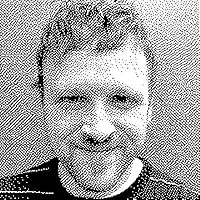
Gene Wolfe was an American science fiction and fantasy writer. He was noted for his dense, allusive prose as well as the strong influence of his Catholic faith, to which he converted after marrying a Catholic. He was a prolific short story writer and a novelist, and has won many awards in the field.
While attending Texas A&M University Wolfe published his first speculative fiction in The Commentator, a student literary journal. Wolfe dropped out during his junior year, and was drafted to fight in the Korean War. After returning to the United States he earned a degree from the University of Houston and became an industrial engineer. He edited the journal Plant Engineering for many years before retiring to write full-time, but his most famous professional engineering achievement was a contribution to the machine used to make Pringles potato crisps. He lived in Barrington, Illinois, a suburb of Chicago.
A frequent Hugo nominee without a win, Wolfe nevertheless picked up several Nebula and Locus Awards, among others, including the World Fantasy Award for Life Achievement and the 2012 Damon Knight Memorial Grand Master Award. He was also a member of the Science Fiction Hall of Fame.
This book reads like a very minor work of Wolfe's. He cannot resist being charming, even wearing the mask of a teenage, upper-class mid-American girl of his first-person narrator. A simple mystery lies at the heart of the book, and it does not plumb very deep or suggest vast troves of hidden meaning. There are fewer puzzle pieces than your average Wolfe read, and plenty of quirky quips, small-town goofy slang, and subtle shades of atmosphere. The veil of mythology is rather thin in this one, as opposed to many of his other beguiling standalone novels.
I would not call this book a raging success, more like a light read, something Wolfe wrote to blow off steam. Like one of Jack Vance's pseudonymous mysteries almost no one reads these days. Ellery Queen, Twin Peaks and other quintessentially American niche mysteries come to mind. The novel is not bad, just very atypical of this author's style, characters, plot and setting.
Just so you know going in: See the magic-sparkly looking things coming out of the mysterious chest? And the title, an obvious reference to Pandora's mythical box? Those things are not in this book. This is a straight mystery with no fantasy elements. Maybe the cover illustrator just saw Pandora + Gene Wolfe and assumed fantasy. Or maybe Wolfe told him to make it deceptive. I really feel that the author included a lot of hints that the story was going to at least have fantasy elements, such as individuals mysterious knowing or sensing things. When Aladdin Blue was introduced I thought he was a Loki-type character who was going to be the catalyst for the story transitioning in a more supernatural direction, as he seemed to somehow know Holly and have engineered their meeting in a way that seems pretty impossible to arrange. Plus who is really named Aladdin Blue?
The choice of writing from a teen girl perspective was an interesting one, and Wolfe did the chatty voice better than I expected, although it's still obvious at points that it's really a man writing. Even if Holly were a lesbian, which she doesn't seem to be, I don't believe she'd pay attention to her mother's breasts, much less call them "creamy big ones". She thinks a lot of things about her and other women's bodies that I don't think girls would think, especially when distracted by dramatic and traumatic life events. She also seemed too clever and self-possessed, the way young people would like to be but generally aren't when they've actually been injured and are being questioned by the police. Also, it's fine to have a well-read character, but you can't just assert that because you as the author want to be able to make literary allusions and use big words; when does Holly do all this reading, exactly? We see her horseback riding, taking karate, shopping, volunteering, visiting her friends, sneaking out of the house... when does she have time to read?
Short review: Like the other books of Wolfe's I've read this was unusual and had interesting ideas, but was ultimately disappointing and ending with a fizzle.
Οι αναγνώσεις είναι μια απρόβλεπτη διαδικασία: άλλοτε παράγουν συναφή μόνο ερεθίσματα και αντιδράσεις και άλλοτε μπορεί να οδηγήσουν σε αναπάντεχους συνειρμούς. Μαθαίνουμε τον εαυτό μας μέσα από τα βιβλία; Τους γύρω μας; Είναι τα βιβλία μια πόρτα για άλλος κόσμους; Πολλά κι άλλα τέτοια μυστήρια ανακάλυψα καθώς διάβαζα τούτο το βιβλίο του Γουλφ.
Φερειπείν, σκέφτηκα πως αν υπάρχουν αυτές οι άλλες παράλληλες πραγματικότητες που εικάζουν κάποιες θεωρίες της σύγχρονης φυσικής, θα υπάρχει κάποια στην οποία ο Γουλφ χαίρει άκρατης δημοφιλίας. Θα είναι μια πραγματικότητα, όπου κάπου διακλαδιστήκαμε, ξεφύγαμε από τον εύκολο εντυπωσιασμό και τη σαχλαμάρα και ξέρουμε να εκτιμούμε πράγματα τα οποία, μπορεί να είναι λίγο πιο απαιτητικά, αλλά τελικά είναι τόσο μα τόσο θρεπτικά και απολαυστικά μαζί.
Ο Γουλφ προσεγγίζει τις διηγήσεις του με έναν τρόπου που τον κάνει κρυπτικό σε μια πρώτη επαφή. Ωστόσο, αν κάποιος προσέξει την γραφή του, υπάρχει μια εκπληκτική συνέπεια. Το δράμα ξετυλίγεται ως κουβάρι νήμα, προϊόν άτεγκτου ορθολογισμού. Ο επιφανειακός αναγνώστης θα τα βρει μπαστούνια, όμως. Ο Γουλφ επιλέγει μια δραματουργική προσέγγιση στην αφήγησή του, παραπλανάει τον απαίδευτο θιασώτη πολυχρησιμοποιημένων μυθοπλαστικών μοτίβων, τοποθετώντας τεράστιο μέρος της δράσης στους διαλόγους, οι οποίοι σπάνια συνοδεύονται από επεξηγηματικές παραγράφους. Όλα είναι στην ευχέρεια του αναγνώστη, ο οποίος δεν θα πρέπει να παραπονιέται, γιατί η γραφή του Γουλφ, από το πως τοποθετεί τους χαρακτήρες στις σκηνές, μέχρι όλες του τις εμμονές (δεν θα τις απαριθμήσω εδώ ξανά), είναι ένα απόσταγμα υψηλοτάτου λογοτεχνικού επιπέδου.
Τούτο το βιβλίο είναι από τα πιο απλά που έχει γράψει. Θα το χαρακτήριζα ένα μυθιστόρημα μυστηρίου, αλλά με αυτή την παράξενη νότα στην οποία μοιάζει να συντονίζονται χαρακτηριστικά οι ιστορίες του Γουλφ. Τίποτα άλλο, κανείς συγγραφέας και βιβλίο, δεν θυμίζει τον Γουλφ, και τούτο εδώ είναι ένα ακόμα απότοκο της φαντασίας του, και το αγαπάω όπως ό,τι άλλο έχει γράψει. Δηλώνω πιστός ακόλουθός του, πλήρως υποταγμένος και συντονισμένος στην δημιουργικότητά του. Και χαίρομαι που, αν και έχω καλύψει μεγάλο μέρος της εργογραφίας του, ακόμα μένουν μερικά ακόμα αδιάβαστα.
Με τον καιρό καταλαβαίνω ποιος είμαι μέσα από αυτά που μ’ αρέσουν, αλλά κι αυτά που δεν μ’ αρέσουν: άνθρωποι, τρόπος ζωής, μουσική και βιβλία. Δίνω 5 αστέρια στον Γουλφ όχι γιατί είναι το καλύτερό του βιβλίο, αλλά επειδή έτυχε τούτο να με κάνει να καταλάβω μερικά πράματα παραπάνω. Ακόμα περισσότερο, με έκανε να πεισθώ λίγο παραπάνω πως γλυτωμό δεν έχω από τον εαυτό μου και πως ό,τι με χαρακτηρίζει μπορεί πολλές φορές να βρει ένα μικρό κομματάκι της ταυτότητάς του μέσα σ’ ένα βιβλίο γραμμένο πριν δεκαετίες, από έναν άνθρωπο που δεν έχω δει ποτέ.
Wolfe in his most straight forward. Fun mystery novel constructed with logical puzzles. Not a major Wolfe work and I guess is mainly for the completist. Even though Pandora seems as one of Wolfe's simplest narratives we can not overlook the possibility that Holly (our narrator) could be unreliable, thus her narration being a fabrication, and the ever present mythic allusions in Wolfe's work. Those mythic references that are implied by Wolfe will help the reader to see through and beyond the text but the reader must know where to look and be familiar with the myth. Here we have the Pandora's box myth implemented into the story and possibly Andrew Lang's blue fairy book with the story of Aladdin. One the main protagonists of the book is a "private eye" named Aladdin Blue and the Pandora's box is in the story. Also Aladdin Blue goes in great detail informing the reader about the importance of the myth and how the myth is something eternal and ever occurring in a circular manner.
This is Gene Wolfe's most accessible work to date (except for maybe a couple of his short stories), but that doesn't mean this is watered down or mundane. The narration is rich and flows beautifully (Holly Hollander is an exceptionally fun voice!), and there seems to be an honest effort to have made this novel a pastiche of the mystery genre. Compelling, well-written, fun, and ease of access make this a good read, if brief. (Pretty sure there's stuff hidden between the lines and names and dialogue, too.)
A sly little mystery that is more about voice and perception than about neat answers.
Gene Wolfe gives us "Pandora by Holly Hollander," a brash, chatty teenage narrator who claims authorship of the manuscript before you even get to the first sentence. The novel reads like a confidant’s scrapbook; part true-crime hobby, part coming-of-age monologue, part deliberate literary performance; and it’s the performance that holds you. Holly’s self-assurance, her wry asides, and the way she constantly reminds you she’s writing a story all make reading Pandora feel like eavesdropping on someone polishing an identity as much as solving a puzzle. Wolfe does an admirable job of writing like a teenage girl though Holly in the prologue acknowledges than a "real writer" rewrote a lot it - which is an fun little dodge/excuse for any obvious gendered anachronisms.
Wolfe’s pleasures here are modest and precise. The prose is economical and sly rather than florid; character comes from diction and omission more than from exposition. The book rewards close attention to voice: Holly tells, glosses, misremembers, and edits herself in ways that force the reader to do detective work of a very different sort. The mystery at the center (the arrival of the box marked PANDORA and the disruptions that follow) propels the plot, but the real engine is unease about what Holly omits and why she chooses the details she chooses. If you delight in parsing motive from phrasing, or in catching a narrator mid-swear-and-smile, this book is a small feast.
Pandora is compact and deceptive. It’s easy to read quickly because Holly’s voice is so propulsive, and equally easy to read again because so much is left between the lines. The novel’s framing of a submitted manuscript, editorial touches, and the sense that you’re reading the work of a teen who is learning how to narrate herself gives the whole thing a metafictional hum that Wolfe uses to his advantage. This is not one of his vast, world‑building epics; it’s a tight experiment in perspective, privilege, and the ethics of storytelling.
If there's a criticism, it's that the central mystery of the novel is not terribly rewarding or interesting (I'm not a huge fan of mysteries or detective novels). So if you come to Wolfe expecting labyrinthine cosmology and monolithic puzzles, you may find Pandora deceptively small. That being said, if you come expecting to be charmed, provoked, and occasionally unsettled by a brilliant writer playing at the edges of genre, you’ll be pleased. Read it once for Holly’s voice, read it twice to see what she didn’t tell you, and read it a third time if you want to enjoy the quiet cruelty of Wolfe’s smallest tricks. Highly recommended for readers who love unreliable narrators and the slow, pleasurable work of reappraisal.
This is a real oddity - in my quest to re-read my Gene Wolfe collection and review the books I hadn't covered so far, I'd mentally pigeonholed this 1990 book as urban fantasy, but it's actually a murder mystery. Being Wolfe, things aren't as straightforward as you might imagine, though. The book is allegedly written by the seventeen-year-old Holly, just edited and smartened up by Wolfe.
It's set in the 1980s, but the feel of the place (and this teen's viewpoint) is very much not post-punk - it's more like something from the Mad Men era. Trivial example: Holly and her friends never cuss (as she would probably put it). Like Castleview this is a slice of small town American life, but here seen through the eyes of a young would-be author.
The Pandora reference is to a mysterious box, to be opened at the town fair, with a prize if anyone guesses what's in it. At this point there's a sudden transition to murder mystery, with Holly both injured and acting as amateur sleuth, assisted by her new friend, the unlikely-named Aladdin Blue a twenty-something who styles himself a criminologist as (having been to jail) he can't be a private eye.
Although some of Holly's writing is cringe-making, she can be refreshingly blunt and bitchy, for example describing the sister-in-law of her best friend as follows: 'Basically what she had was one of those thin poor-li'l-me hillbilly faces, with lots of yellow hair as puffy as cotton candy (and sticky, too, I'd bet) piled up on top, and a shape like a sack of grapefruit.'
The mystery is suitably convoluted in what's probably best described as a long novella, and though Aladdin Blue is a little too capable, the indirect approach of making this Holly's book works pretty well, if you bear in mind she may not always be an entirely accurate witness.
This is not a "minor" work of Wolfe's except by pagecount; it's actually a rather brilliant work combining (a) perfect realization of the tone and style of Nancy Drew-type books with (b) some very Wolfean, elliptical meditations on good, evil, integrity, character, and more. I'm not sure if it's a "good introduction to Wolfe" due to its face simplicity and length, though - I think it can be enjoyed as a very competent mystery novel, but I suspect a reader new to Wolfe may not realize just how weird (and therefore wonderful) the book and Wolfe really are.
Written between weightier works (the 5 books of the New Sun and the 4 books of the Long Sun), Wolfe gave his fangs the day off in this Father Brown meets Nancy Drew mystery yarn.
It's not that simple of course. The metafictional title alone gives that away, as does the framing device of the foreward, an additional palimpsest that Wolfe simply cannot resist, even when writing a comparative ditty.
For fans of Nero Wolfe every bit as much as Gene Wolfe.
Almost exclusively those dry Wolfe scenes featuring a long conversation relaying information inefficiently. Pretty insufferable narrator. Very few intriguing little paths (which abound eg in Peace). Among his most misogynist, and there are little reactionary tidbits like the school prayer thing. Genuinely not an interesting mystery, at least on the surface level. I tried to find an interesting alternative read, unreliable/guilty narrator or something. Nada, contra some guy’s essay linked to on WolfeWiki. There’s just not much here; I gather he wrote it as a break from his more involved series.
In high school I bought this used and lent it to a friend who took it with him to Alaska and let it rot in the back of his car in the Sitka humidity.
Not Gene Wolfe's best standalone, but I'm struck by how many of the reviews of this book missed the point. As the title and the narrative establishes, this isn't an objective recounting of events, instead it's a purposefully manipulated recounting of events courtesy of the narrator Holly Hollander. While it's impossible to say for sure, as is true with any book written with a first-person perspective, Considering that an unreliable narrator is a staple literary device for Wolfe, I don't think my conclusion is much of a stretch. If I'm right, and I'm pretty sure that I am, the truth of it elevates what most people write off as a Nancy Drew homage and makes Pandora By Holly Hollander significantly more interesting. Worth a read for people who pay attention and like to try to solve the puzzles that Wolfe embeds in his books, but if you're a more passive reader then you might not get much out of this one.
The debut novel from teenage author/sleuth Holly Hollander is a delightful mystery where she recounts how she helped solve a murder mystery (with the help of local super-detective Aladdin Blue). Think Agatha Christie for young adults and you've got the idea.
Except this is really a Gene Wolfe novel and Holly might not be as reliable a narrator as she appears. Did she actually solve the mystery or was she tricked along with us, her readers? Or is she actually the true murderer? Wolfe might have left some clues for us if we pay careful attention.
This is a fun Gene Wolfe book. The voice is delightful and the lightness is a pleasant surprise. It's no less mysterious and obscure than most of his work ... but because it's a mystery, Wolfe explains everything at the end. I wish he'd written more in this genre!
How far can you trust Gene Wolfe? Pandora by Holly Hollander appears to be a straightforward read: the tale of a girl who becomes in one murder mystery, or, at any rate, one mystery involving more than one murder.
Holly herself writes the tale, doing so in a breezy, comic style more or less appropriate for a teenage girl (Wolfe, rarely at his best when writing women, has her reference her mother’s “creamy big ones”).
Everything gets wrapped up by the end…maybe. Perhaps there are deeper mysteries here. Or perhaps Wolfe, our subtlest writer, has taught us to look for them so often that we feel their draw even when they aren’t there.
Bizarre entry for Wolfe in that it’s incredibly normal and just sort of competently written. Not incredible. Not a waste of time. Just a very meat and potatoes ass book. Between this (snooty rich teenage girl) and wizard knight it’s pretty incredible that Wolfe can write a protagonist so different from him so well. If I hadn’t known it was a Wolfe joint, the only sign would have been the inserts of military history and the fact that the entire plot hinges around a bizarre mechanical system that he goes into too much detail about.
I immediately hated Holly. This character is so unlikable I struggled to read until the last 2 chapters when the mystery is solved. Felt like ready a high school mean girl's diary. The actual story is great and original, but this girl just irks me. She describes everyone with very mean spirited thoughts and I could not get on her side.
It's rare when I can understand a Wolfe story on the first read. Actually, this has never happened. Now that I type this, I'm certain I missed something. Something in the world of words...
Recommended for those who remove all practicality from life until all that's left are the un-popped kernels at the bottom of the grease bag.
Second-tier Wolfe. Somehow I like it, even though it lacks the broader scope and deeper wells of ambiguity of his more celebrated works, but I primarily enjoy it was the gentle detective story it presents itself as being - and might genuinely be, publisher blurbs be damned. Full review: https://fakegeekboy.wordpress.com/202...
Really deserves its reputation as Wolfe's worst book. Stilted and needlessly twisty, and not in the way his other works are labyrinthine and fascinating. Also Elaine is possibly Wolfe's most sexist creation, which is saying something. Unless you're a Wolfe completist, skip it, and maybe even then.
Wolfe writes a murder mystery set in the outskirts of Chicago, infused with myth, social commentary, and the Vietnam War. It mostly worked! Really interesting as a companion piece to "Castleview". Holly herself was a fun narrator.
PANDORA, BY HOLLY HOLLANDER is perhaps Gene Wolfe's most mainstream novel. A murder mystery set in a small town in Illinois, the novel contains little of the fantastic elements of his other works, such as his acclaimed masterwork The Book of the New Sun. The book also lacks the puzzles for which Wolfe is notorious, so that the reader gets pretty much everything on the first time through.
The narrator of PANDORA is Holly Hollander, a 17-year old girl who, though plainly immature, is no ditz. She has a thing for mystery novels and can think quite logically. The plot of PANDORA is that Holly's mother buys an locked box marked "Pandora" to be the star attraction of the annual town fair. Tickets are sold, and whoever wins the raffle gets whatever is in the box. I can't say too much to spoil the plot, but the box unleashes death and Holly is determined to find the culprit.She meets a criminologist, Alladin Blue, who seems to know more than he should about the people of her small town.
PANDORA was the third of Gene Wolfe's turn-of-the-90's trilogy of books with contemporary settings. It is perhaps the least substantial, both THERE ARE DOORS and CASTLEVIEW better reward repeat reading with their numerous riddles. Nonetheless, PANDORA is entertaining, and I'd recommend it to any fan of Gene Wolfe. Nonetheless, for people who haven't read anything by Wolfe, I'd suggest starting with the Book of the New Sun, his acclaimed four-volume work.
If you've read Wolfe's work before, please note that this is an unusual one. For one thing, it's a mystery novel.
Recounted by the title Holly Hollander, who's a teen-aged girl -- it even opens with a note about how she got it published. She tells that her father was almost killed twice by an artillery shell, once during World War II, and once during the course of the book. And she fills us in on her family ("my father" and "Elaine" -- even though Elaine is her mother), and on the Fair, where her mother had to arrange the special event. She found an old chest, locked, marked "Pandora," and they would raffle it off and bring in a locksmith to open it up.
Though before they get to the fair, Holly discovers she has an uncle, and that he's locked up in an very expensive institution, and he's not expected to live long, whereupon she flits off to visit him. And meets a strange man, Aladdin Blue, on the way. Later, at the fair, Blue appears, talking about Pandora and the dangers of opening her box when it's time for the raffle, and the box is opened. To explosive effect, killing two at the spot and wounding many.
And the rest of the book, Holly recounts her involving in the unraveling of who did it, and why. She's not actually the detective, but she's deeply involved in the events. Which include another murder, roses, a ramshackle old farm house, a Nazi dagger, and a false claim of responsibility.
This one for me was an incredibly quick and easy read. It was fun, and not nearly as dense as most of Wolfe's other works. It dealt with a story written by Holly Hollander, a younger woman who is caught up in some strange events when her mother brings home a strange box labelled "Pandora" which she auctions off the right to open and keep the contents during a fund raiser. As one would guess, opening up pandora's box is not exactly the wisest decision and events lead towards multiple deaths, including at least one murder and the eventual revelation of 'who done it'.
This entire review has been hidden because of spoilers.
Gene Wolfe wrote a YA mystery novel. I loved a lot about this. The narrator voice (quirky teen girl writer wannabe) is very well done. I enjoyed the ride, but I'm not sure I bought the ending which is kind of important for a mystery.