Alex Pilcher’s A Queer Little History of Art is a beautiful book that illustrates the wide variety of queer art from around the world exploring bodies and identity, love and desire, and prejudice and protest through drawing, painting, photography, sculpture, and installation.
Over the last century, many artists have made works that challenge dominant models of gender and sexuality. The results can be sexy or serious, satirical or tender, discreetly coded or defiantly outspoken. Seventy outstanding works from 1900 to the present reveal how queer experiences have differed across time and place, and how art has been part of a story of changing attitudes and emerging identities.
Featuring works by, among others, Egon Schiele, Duncan Grant, Claude Cahun, Hannah Höch, Frida Kahlo, David Hockney, Glenn Ligon, Zanele Muholi, Allyson Mitchell, and Tomoko Kashiki, all of whom subverted the norms of their day via bold, new forms of expression, A Queer Little History of Art is a celebration of more than 100 years of queer creativity.
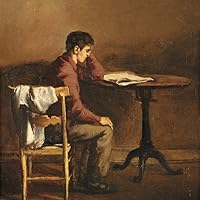
Egon Schiele gets a look in, even though he was never inclined towards a gay sensibility, because he knew another artist who was gay, and this (apparently) resulted in a queering of Schiele's perspective.
In a similar vein, Boakye who has never identified herself as part of the LGBT+ spectrum, is admitted into the queer hall of fame because she painted a picture of two Black males in underpants. Where does the subversion lie? In a female artist looking at underpants? Or the two Black males, in underpants, pulling on their socks, and being together?
The bizzarest entry is on Barthe and the Harlem Renaissance. Barthe was gay. But he is included because his sculpture The Fallen Aviator was commissioned by a Black male for his dead friend. Of course, these two men must have been gay because they sought out a gay sculptor! And this demonstrates that the sculpture therefore possesses a queer aesthetic? There is nothing unusual whatsoever about Barthe's sculpture, in fact, it is a standard,classical male nude - a sort of angel with wings.
The book shows how far the word "Queer" can be spread ... to the point of having little meaning. Everyone could be a queer artist according to this book from The Tate (no less).
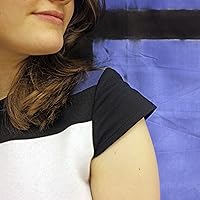
This queer history of art also manages to leave out artists who were certainly queer. Bacon is included, but Vaughan, Minton, Haring and Jarman are omitted. Brooks joins the canon, but not Gluck, or Carrington, or Hambling. Moss is included, as woman who dressed as a man, and this crossing of gender leads to speculation as to whether or not abstracts, which are not gendered, can become queer. Is there such a thing as a queer line that challenges normative identities? Well, there is a subject for a Tate exhibition of the future.
Speaking for myself, I was equal parts fascinated, educated, and delighted. This book is neatly organized and presented with precision, but the narrator refrains from being condescending when explaining how queerness manifests in each piece.
I'm not studied in art or art history, so I can't say how well this will take with those who are, but I would recommend most anyone to check this out. As the introduction states, it isn't a comprehensive collection, but it is a great primer on queer art history and focuses on highlighting more implied and lesser-known queer artists around the world alongside some of the most famous artists.
mostly pretty interesting selections and not awful commentary but by the end I get aggravated by the particular style of writing, which is very common in the art world, and the inclusion of a few deeply uninteresting pieces (a pink cube. wow so queer) and a few where the "artist" did nothing but take from others
I'll been making my way through this since seeing the exhibition Queer British Art at the Tate last year. I've studied quite a bit of LGBT art now from a variety of books (Catherine Lord, Richard Meyer, Reina Lewes, Harmony Hammond...) but this is a well written tiny encyclopaedia of various artists and select artworks from around the world as an accompaniment to the exhibition. It's unlike any of the other books I have (including Clare Barlow's book about the works in the exhibition itself which I'm still reading) and the selection of artwork is really well curated. I started marking the artists and works I found particularly interesting but had to give up halfway through because the book became a sea of orange plastic tabs. This will be a great resource in the future for other research projects I undertake, I'm sure.
This is a lovely little book that provides a wide variety of queer artistic expression from a number of LGBTQ+ artists from all over the world. My only beef was that there was no Tom of Finland. I get that he's erotic art, and pronography, but if we can find room for Mapplethorpe's penises, I meant flowers, then surely we can make room for Kake and his leather-clad clones?
A not too serious but still insightful little book. As someone with very little art background, it strikes the perfect balance of pointing out what I might want to take note of, and letting me fill in the blanks with my own interpretation
Anytime I see the word “little” included in a title, I don’t expect anything comprehensive. But the works included here (as well as those excluded) is a bit confusing. Alex Pilcher, who works for the Tate London, not surprisingly includes a number of British artists, and it’s good to see them included. But the book is remarkably lacking the many American artists who contributed to queer art in the 20th century. Charles Demuth, Marsden Hartley, George Platt Lynes, Paul Cadmus, Jasper Johns, Ray Johnson, Keith Haring, well, I could keep going. And while I applaud the inclusion of African and Asian artists, I miss seeing Sunil Gupta here. Slightly more puzzling is the inclusion of artists who were notably heterosexual in orientation (i.e. Egan Schiele). Does that mean any artist who favored male nudes can be considered queer? If Pilcher wanted an Austrian, he should have looked to Anton Kolig instead: although married, with children, Kolig painted and drew male nudes almost obsessively. So while I’m grateful for encountering the work of younger queer artists I didn’t know, I’m a bit annoyed by the omissions and mis-attributions. Heterosexual artists get enough mileage on their own, without being wedged into accounts of “queer artists” as well.
I could write a million topics on this book, there are so many wonderful explorations and thoughts showcased here and you know that if the introduction is already this brilliant than the rest will surely be too.
In the interduction we firstly explore queerness in art with a specific example. It then moves forward to an exploration and explanation of the different usages of the word queer, the author positioning themselves and being completely self-aware of that position, to forms of queer expression and the importance of the internet for queer identities.
The book is incredibly well structured, it is an inclusive selection, the pictures in high quality, the descriptions short and to a point, yet powerful and informative. The language is exquisitely modern, sharp and excessible.
A wonderful introduction to queer art but also a wonderful place to dwell for those already familiar.
Чтобы получить удовольствие и пользу от этой книги, по-моему, нужно:
- понимать, что это не обычный нарративный нон-фикшн, а альбом-энциклопедия с намеренно скромным количеством страниц;
- внимательно прочитать вступление и особенно часть про три толкования слова "квир", чтобы потом не удивляться, что здесь делает Эгон Шиле;
- запастись терпением, чтобы гуглить другие работы всех понравившихся авторов и авторок (мне особенно пригодился сайт галереи Тейт).
P. S. Всю книгу не покидало смутное ощущение, что переводчица не квир-человек или, по крайней мере, не привыкла переводить квир-лексику, потому что тут у нас и вездесущий "гомосексуализм", и "дайки", о которых говорится в мужском роде, и некоторые другие досадные шероховатости.
Not being a huge fan of identity politics (especially when it tries to pose as some kind of aesthetic experience) I was surprised at how many of the examples in this book I enjoyed reading about. I think it's largely to do with the unpretentious, witty and light touch the writer employs when describing the works.
I can understand why this broader understanding of "queer" isn't everyone's bag, but the introduction defines the parameters (admittedly by pointing out that they're by definition hard to define. And frankly, defining "art" isn't easier) well, each piece's inclusion is explained, and the book never claims to be a comprehensive overview. Loved it, discovered some really great artworks, suddenly far more inclined to properly check out Andy Warhol.
This book is a fairly short book, but is full of a lot of Art pieces and information. Some of these artists and pieces I knew a bit about after studying them in art, and others I hadn't seen at all.
I really enjoyed this book and I took my time reading it and rereading certain pages because it was really interesting
É un libro pequeniño publicado pola Tate que fun lendo aos poucos desde que o merquei en agosto na Queer Britain de Londres. Aprendín tanto e descubrín a tanta xente queer interesante que ainda o estou asimilando. Penso que só está dispoñible en inglés.
This book displayed a vast and diverse collection of queer works. Many forms of art from traditional art to modern art and mixed media. I highly recommend this to anyone interested in learning about queer artists of the past.
Ik ben benieuwd naar een boek waarbij queerness meer verbeeld wordt en de achtergrond van de kunstenaar/tekst een toevoeging is in plaats van een must om de queerness te kunnen zien....
finished this so long ago but loves it nice to see my favourite lady tee corinne get the love she deserves, would love more lesbian representation doe 🤞