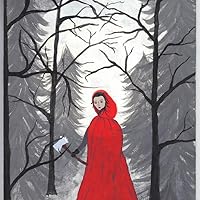
The author of Dr Potter's Medicine Show conjures up another marvellous mixture of fantasy and the spirits of the Old West
1916, Butte, Montana: City of the Copper Kings. Solomon Parker is old, broken and in debt to very bad people. He's always managed to stay one step ahead of his last bad decision, but more than anything, he wishes life had turned out differently. Little does he know that for him and his young protege, Billy Morgan, that wish is about to come true. The Above Ones, the gods of the People, are bored. Their servant, Marked Face is coming, and he's bringing his dice...
Eric Scott Fischl writes novels of speculative historical fiction and the supernatural. He lives in Montana's Bitterroot mountains and writes his author bios in the third person.
The Trials of Solomon Parker is a difficult novel to define, other than awesome! Set in Butte, Montana in the early 1900's, it features Native Americans, deep ugly coal mines, mob bosses, boxing, lots and lots of drinking and, oh yeah, second chances.
Solomon Parker is a hard working man who has fallen on some hard times. His wife seems to be suffering from postpartum depression, his infant son is colicky and never stops crying, and Sol just wants to gamble and drink it all away. Add to that a fire in the coal mine and an ugly scene between mine owners and union organizers, and things only get worse. Then, Sol meets Marked Face and has the opportunity to gamble for a second chance. Will he do it, and more importantly, will he win? You'll have to read this to find out.
I requested this book from NetGalley, solely based on the description and the cover. I ended up seriously impressed-most especially with the quality of writing. There were scenes during that mine fire where I felt like I had trouble breathing-they were so smoky, claustrophobic and scary. I felt like I was there.
Interspersed with the main narrative was a bit of Native American back story. This wasn't tribe specific, but it did involve a number of traditional stories that rang true to me, (and really weren't all that different than stories from other religions and belief systems.) The skill with which this was all woven together was admirable, easy to follow, and hard to break away from.
Thinking about this story overnight, I raised my rating a little. This book captured and kept my imagination. It brought Butte, Montana to life, and showed real prowess depicting what the day to day was like for people back then. And that's before all the really cool stuff is taken into account!
So however one wants to label this book, be it historical fiction, a western, a native American fable, or a story about second chances and fate, you can be sure to label it DAMN ENTERTAINING and unique. I highly recommend it!
*Thanks to the publisher and NetGalley for the free e-ARC of this novel in exchange for my honest review. This is it.*
Why can’t a publishing company named Angry Robot make a book about angry robots? Or calm robots, for that matter. I would have much preferred that. This book had no robots, but that wasn’t the reason I didn’t like it. In fact, there was nothing wrong with this book per se, it just didn’t work for. One of those book/reader chemistry incompatibility. Genre wise it’s fantasy, technically, though steeped in grim darkness of reality. It takes place mostly in 1916/1917 in Butte, Montana, a place that was once really something due to its wealth of natural resources and now it’s just another bleak wild west territory. In fact, that’s one of the main reasons it didn’t work for me, it had all the appeal of a dusty dirty slow drawling western, which is to say none at all. Against this grim scenery Solomon Parker and his younger friend/protégé Billy Morgan try to change their fates by rolling dice with The Above Ones. The Above Ones, of course, don’t care about the people below them, they are just looking for some entertainment, but to Sol and Billy there are life changing games and the men get to do things over, though the results of these efforts are mixed at best. So that’s the basic story, it’s slow, sad, and steeped in Native American mythology, made deliberately vague and anonymized by the author as he brings to life his very own take on the Book of Job. So the cosmological framework for the story is interesting as are the characters, the plot is theoretically compelling and yet, something about the writing and the pacing just really didn’t work for me. Again, definitely a thing of personal preferences, but this was just a dragged on indifference rendered in digital ink. Glad I was able to speed read, otherwise at nearly 400 pages it would have been a real doozy. The thing of real interest here was the fact that Butte was the second place in the world to have electricity. Oh how money makes the world go round.
It is an old story. Mortals being made the playthings of the gods and forced to live lives not their own. Here the story is moved to the early 2oth century American West and the growing city of Butte, Montana. The gods, if that is what they are, are one or perhaps two very old, possibly ancient, Native Americans and they are playing games with the lives of the white people around them. Their main target is Solomon Parker, a man with a teenage son and a wife recently confined to long term care in a mental hospital.
The plot begins underground in the tunnels of a copper mine. A fire breaks out in one of the levels above that in which Parker and his son are working. The scene of their desperate attempt to escape brings to mind Germinal with its sense of panic and claustrophobia. Everyone gets out apart from Parker's son Owen. No one knows what happened to him other than his body was left underground. What follows is Parker's attempts to recover from a loss for which he blames himself, his relationship with a young Native American boy called Billy, and a series of disconcerting time jumping chapters brought on by old Marked Face playing a dice gambling game with Parker. The penalty for losing is to live through an alternative life story and possible alternative future.
It is very nearly an excellent piece of storytelling which combines tragedy, history, magic and folklore. Its only shortcomings were the difficulty of controlling the time jumps backward and forward and making it into one continuous narrative, deciding whether the overall story is Sol Parker's or Billy's, and working out where the ending came and was there a happy ever after for anyone. While I enjoyed it I was left wondering if anything had been resolved.
Solomon Parker is down on his luck. Thanks to his penchant for gambling, Sol’s wracked up a considerable debt to the town’s crime boss. When disaster strikes the mine where he works, Sol leads his crew to safety, all but the one man he most wanted to save. Enter Marked Face, a mystical medicine man with a proposition for Sol – toss the dice and win a chance to change the past. In his second novel, The Trials of Solomon Parker, Eric Scott Fischl throws luck, magic, and bad decisions into the literary pot and gives it a vigorous stir. A perfect mix of macabre and magic, heartbreak and hope, Fischl has mastered the recipe for dark speculative fiction. Read my interview with Eric Scott Fischl on BCB here: https://bookclubbabble.com/fate-and-m...
The Trials of Solomon Parker by Eric Scott Fischl is a "What would happen if you could go back and fix your mistakes?" book which succeeds when it breaks away from the expected pattern for such a book.
We have something very new and strange here, I think.
While The Trials of Solomon Parker shares something with Fiscal's previous book, Dr Potter's Medicine Show - a Western setting, magic - there are also clear difference. This is a very political book, taking in, as it does, nascent Union organisation in the deadly mines of Butte, Montana ("Butte brings to mind nothing more than a rotting carcass, the hill burrowed out underneath, hollowed like a dead thing swarmed with carrion beetles, the stink of decay rising up"), the position of Native Americans, and collusion between organised crime and the company bosses.
There's also religion and philosophy.
It's a dizzying mix.
David Solomon Parker, the titular character, is at the centre of the vortex. A miner when we meet him, he has a troubled past with a marriage gone tragically wrong. His wife Elizabeth - who we see first, her story opens the book - suffers from what I think would now be called post-natal depression, and this leads to terrible events. Years later, Parker is underground, emerging only to sleep, drink and gamble away his pay. It's almost as though he is hiding from daylight.
There is - as the quote at the front hints - more than an element of the trials of Job here. Job, that upright man whom the Almighty and Satan toy with to see if he'll break. The man who loses everything, through no fault of his own. This theme - of divinities playing with mortals' lives - plays out through the book, the powers - the Above Ones - being vaguely identified as Native American gods, mediated with by an old sorcerer. He has plans for Sol, but also for Sol's best friend, "Billy", a Native man who was taken into a Government school that made him a "brown-skinned White man".
Perhaps the idea is that Billy will recover his heritage? It's not actually very clear. Wreathed about with myths and legends of the brothers Maatakssi and Siinatssi, a sort of Cain and Abel, and their dealings with the Above Ones, the story takes a kind of quantum jump to follow different alternatives. Again and again Solomon is presented with an opportunity to mend what's been broken, but that means overcoming his own failings - his drinking, his gambling - and also finding a way to live a moral life in the boomtown of Butte.
There are, it seems, many ways to live immorally in Butte...
Reminding me somewhat of Kate Atkinson's Life After Life, this story holds together the perspectives of the struggling miners - an important side plot is their attempt to improve safety standards in the mines - the crime boss and, of course, the Native Americans - two brothers and nephew/ son. Almost daunting in depictions of suffering and cruelty, it's nevertheless clear that these are not, quite, the point. Rather the book is - I think - a challenge to the idea of a happy ending, of achieving one state that resolves everyone's problems. Time and time again characters aim for such a state - Billy, in working at the mental hospital, doing what good he can, Sol, over and over again, even the union organiser Frank Little ("Thought it would be different, this time") - and of course Maatakssi and Siinatssi in the recounted legends. It's all about dicing with the gods, winning over them or cheating them, extracting a favour, a promise, a blessing.
It never quite seems to work, though. The House never loses. There are always loose ends which trip everyone up. Billy loses his friend. Sol encounters, or causes, tragedy after tragedy. Little himself is led to a lonely Calvary (he's a real person, it did happen). And in the myths, Maatakssi's attempt to redeem his tribe leads, in the end, to a catastrophe for them.
That leaves in doubt the outcome to the dramatic finale of the book - one wants to believe there has been some eucatastrophe, some healing, that things have finally gone right: but the real setting of the book in a specific time and place suggests it hasn't, at least not for Billy and his kin.
It's a visceral book, filled with the sights and sounds and, above all, smells of the squalid boomtown. Especially the smells. Everywhere there is smoke. Smoke drifting over from Idaho making Elizabeth's laundry stink even when it's washed. Smoke drifting through the mines, warning of ruinous fire. Sulphurous smoke from the works blanketing Butte. Smoke from cheap tobacco in the taverns and dives, smoke from expensive cigars in the crime boss's lair. Smoke from the sorcerer's fire, smoke from the burning house. Fischl makes it all very, very real, even as he's playing games with consequences, keeping us guessing about who is alive and who's dead. The book is a dream to read, and worth reading slowly, taking in the nuances and spotting the recurring themes: a prizefight, a scene replayed from a different perspective, an outcome the same, despite a changed starting point.
To summarise: I'd strongly recommend this book. It's deeper, darker and scarier than Dr Potter's Medicine Show - which was already deep, dark and scary.
Wow, I will read anything by this writer. The trials of Solomon Parker is an excellent novel that really kept me entranced until the very end. So why the 4 stars instead of 5? That is because the ending was slightly abrupt and didn't really have the pay off I was expecting, or lead to expect. The author does the "they knew what to do" thing, but I as the reader was given no clue. The final "solution," if that is what we can call it, seemed like one of many many options. I feel like this a book I will read again in a few years, and maybe I missed some clues. Either way, the ending is not at all bad, just a bit anticlimactic, and I definitely recommend this book, highly.
I'll be frank, this wasn't awful. But it wasn't quite meh either.
I'll admit, I'm not a historical fiction fan. From the beginning, it had a great start. I was really invested. The prologue had me hooked. It started with a woman, already showing some internal conflict. She wanted to stay in the family but felt neglected and felt understated by the baby and her husband. Although all this added up to me being quite empathetic for her. I was quite shocked when the lantern appeared and was released from her hands. I didn't expect there to be a potential death at the beginning, it really hooked me. However, it started to get worse.
The fire in the mines was surprisingly decent and immersive. I felt that the book handled the themes of guilt and gambling well, it took it to a really understandable place that really helped me understand the mental and physical strains of gambling addiction and grief.
Although, most of the book was decent (Which pushed it higher into my rankings), the rest of it was me reading in confusion. Most of the plot was spent with me being confused and lost. I found that it was VERY jumpy and hard to keep up with. I'm a very visual person and need a consistent plot to keep up with. Most of the time, I could get some idea of what was happening in the chapter but the next chapter would either be another time period or be another set of drama unravelling. I also found some characters hard to understand. Eventually, I got to understand Billy and Sol.
Sol was meant to be someone I understood more, but I actually didn't really resonate with him. Billy wasn't exactly someone I understood either. Part of me wishes that I could've understood Marked Face more as I was genuinely curious as to who he was, I understood the basics but couldn't quite wrap my head around the gambling game they played with the bones and the legend it was born from.
I did go looking for a Wikipedia page for a plot layout or overview but I never found a good one. I had to just rely on notes I'd made which made me feel like I'd slowed down almost completely. After a while, I switched to Ebook which made it easier to take everywhere.
I really wanted to like this book and fall in love with historical fiction, but I just couldn't do it. I've never been a fan and I won't pretend to be. I will probably recommend this to some of my friends and family who like historical fiction but it's not to my taste.
This entire review has been hidden because of spoilers.
I honestly don't know how to review this book!!! During the week that I was reading it, many times I said to myself, "Stop reading it and start again. You do not understand anything, maybe the second time you will." I tried to reread some passages to make it easier to understand, however 😅 even now that I have finished it, I still don't understand.
Maybe this is the meaning behind this novel, that as many times you try to change yourself and your perception of how things should be and adapt yourself to that perception, you will still lose some meaning of 'Would it still take place like that, if I hadn't changed myself and my perception? Would things/life be the same? Would I end up in the same situation with the same choices to choose from?'
This entire review has been hidden because of spoilers.
Yet again, Fischl has used his excellent scene setting to create a visceral reading experience. The claustrophobic burden of working deep underground, the fear and frustration of the Butte miners' lives, the confusion and sadness of mental illness... it all gives the reader a deep understanding of broken and broken down Solomon Parker and th abused and abandoned Billy Morgan and their incredible and terrible paths through their lives and to their possible redemption.
Once in a while you come across a book that you can tell you should like - it's well written, it touches subjects that appeal to you, characters that are strong - but for whatever reason you just can't connect with it. The Trials of Solomon Parker by Eric Scott Fischl is just such a book for me.
We're in 1916 Butte, Montana. Solomon Parker is a broken-down old man who has always managed to stay a step ahead of his debts, but time is running out as his debts to some pretty nasty people are increasing. But ... deus ex machina ... the "Above Ones" - the gods of The People, in the form of a man known as Marked Face - are looking for a little excitement and offer Solomon a chance to gamble his way out of debt.
There is a fair amount of Native American back story that takes place here, and I do enjoy Native American history (and literature), but it's clear in the writing that this isn't tribe specific and Fischl tells us in his notes at the end that this was done on purpose - to give us the touch of Native American sensibility without giving us a tribe to relate to. I understand and appreciate Fischl's sentiment that he's not Native and these aren't his stories to tell, but combining Native stories and making them into one 'generic' Native tribe isn't 'not telling' a Native story. None the less, it was actually my favorite part of the story.
There is a scene early in the book which I highlighted and wrote "What is the point of this vile bit?" Suffice it to say that it's a moment with a couple of guys talking crudely about the things a woman could do with her private parts. I saw no purpose for this at the time and still don't feel it was necessary.
But overall I never connected with this book. I didn't care enough about Solomon Parker to care whatever happened to him. And since the story revolves around Parker, if he doesn't connect with the reader, then it just isn't going to work.
The Native American aspects to the story kept me interested, but it wasn't strong enough to make up for what I was missing with Parker.
Looking for a good book? The Trials of Solomon Parker by Eric Scott Fiscl is a unique fantasy set in the American west in the early 20th century, but the main character doesn't hold interest. I received a digital copy of this book from the publisher, through Netgalley, in exchange for an honest review.
This was quite the book. It took a little for me to get into it, and there were some parts that, squeamish me, had troubles with, but it was a good read. Fischl had his work cut out for him when he started changing up the timelines, but he was able to pull it off. At no point did I lose track of the story or the characters. I did have a little trouble getting into the world, but that's my own misconceptions about when the transition from wagons to trucks happened.
I really felt for the characters in this book. Even when they were in their worst timeline, you knew that this was the magic of the different timeline. All it takes is for one thing to have changed in the past. I did appreciate that the characters kept meeting up, kept finding themselves in Butte. The author, in his notes, compared Sol to Job, but for the duration of this book, I see him as Sisyphus. At least three times we see Sol, aging as he climbs the mined out mountain, only to have to do it again. Trying a different route or a different starting point. Each time, he gets another chance to try to do things right.
Mixed in with Sol's stories are those of Billy (Sagiistoo), a Native American trying to come to terms with his abusive heritage and the abusive Christian school he went to, and the brothers Maatakssi and Siinatssi whose tragedies led to the downfall of The People. Keep in mind, Maatakssi and Siinatssi is not an actual Native legend, Fischl told it in the style of a Native legend, but felt it wasn't his place to tell a true one. The combination of these stories make for an engaging tale about human frailty and the quest for redemption, the need to make things right.
The book isn't for everyone. There's a lot of abuse, death and cruelty. But there's also the good aspects of humanity. The camaraderie of the miners, standing up to the company so they can work in safer conditions. The love of a father for the child of his blood and the child he adopts. The sacrifices people will make to do the right thing.
In case you can't tell, I really liked this book. I'm not usually one for historical fiction, but Fischl's books have shown to be worth making an exception. If you're okay with reading a darker book and are interested in trying the historical fiction genre, I highly recommend The Trials of Solomon Parker.
After his well-received debut novel, Dr. Potter's Medicine show Fischl has returned to the world he created. Set in Butte Montana in the early part of the 20th century the reader is introduced to Solomon Parker, a miner. Parker is a wreck of a man. Deep in debt to the vicious Sean Harrity and plagued by memories of dead mining comrades he moves through life as if in a daze. Every decision that he makes in order to better his status in life ends up doing the opposite, and those around him inevitably pay the price. But there is something waiting for Parker around the corner. Something that he did not expect and it might just change the trajectory of his miserable life. Similar to his debut novel Eric Scott Fischl invites the reader to follow the lives of some very broken people. It was what endeared that book to the public. It is the strength of the follow up as well. Solomon Parker is the perennial down on his luck character. Like so many others in the book he mostly has himself to blame. Part the victim of circumstance, but also his own vices. The other figures the reader is introduced to suffer in most the same way, only that they react in different fashion. Fischl is a master at weaved a tangled web of misery and alienation in a cold and unforgiving world. It feels as colorless and gray as the cover of the book. Like Dr. Potter this story comes with a dose of the supernatural, this time represented by gods and their servant Marked Face.The tale is told from multiple perspectives, not only Parker's own. The reader gets to hear the voice of several cast members and that is nice. Fischl moves effortlessly between them, giving each of them a distinct voice and worldview. It adds to the already monochrome and bleak world that they are placed in. Happiness seems to be just out of reach for them.With The Trials of Solomon Parker Fischl firmly cements himself as the premier writer of the Gothic Western, equal parts Lovecraft and Cooper.
This book was a total surprise to me. The blurb doesn’t quite give this story justice. It is deeper, darker, and more twisty than I expected and I loved every second of it. From the first mad run through the mine (and oh my gosh this stayed with me – best action scene I have read in a while) to the myths and magic that keep Sol and Billy returning to their past in the foolish hope they can rewrite history, this story is gripping and tragic and sad and hopeless and hopeful and full of emotional heartache. It’s the best of science fiction in a historic setting.
What would YOU do if you could change the past… and would you do it? What if it made things worse?
There is so much in this story. The native mythology lends a depth to the heartache that is just painful to read. The time period is fully engrossing, dark, dingy and death seems to wait through every doorway. The mine scenes are beautifully written, as are the gangster scenes and the hospital scenes. This is a book of tragedy and leaves you thinking long after you finish reading.
And one wonders if the magic really happened to Sol and Billy? Is it madness, only in their heads, made strangely real, or did they really go back into their own timelines? Does the magic punish Sol and Billy for the hurts caused by ancestors long long past – yet fully alive in the present – even as they fight to make things better in the future? It’s a bitter truth to learn. Nothing is as it seems and choices do make a difference, don’t they? That is the beauty of this story.
Its also a time travel story. One of the best I’ve read. The story resets are easy to follow and I found the timeline did not trip me up or become confusing. It is several stories but they same one, with the one message throughout. Does a choice, a wish, a chance to fix what has broken in ones life, really make a difference? I really enjoyed this book. It was well written and deeply thought provoking.
If you read Dr. Potter's Medicine Show, you'll remember Sol Parker and Elizabeth. And if you wondered what happened to them after that story, you'll need to read this amazing, visceral, and heartbreaking tale.
One of the things that has remained consistent from that first story, to this, is that the main character is not really likable (although Billy is a main character and I liked him quite a lot). But again, there is that spark that you keep hoping Sol will nurse into something brighter and better. You keep waiting for that moment where he firmly grasps the best of himself and holds it tightly and makes it the light that he follows through his twisted life.
Second chances are sometimes just an opportunity to make a bigger mistake than the last time around. Sol and Billy are learning that the hard way in this novel, and it can be difficult to watch them struggle. I loved the Native aspects of the novel, the way the story of the People is woven into this tale, and how Sol and Billy are caught up in a cyclone of events that keeps bringing them back, somehow, to the same time and the same place but in slightly different circumstances. It's all familiar and new at the same time.
This novel is so very, very REAL. There are so many different locales to discover, and Mr. Fischl has drawn each of them in minute detail. I not only saw what was going on, but smelled it, touched it, breathed it, and occasionally even wanted to wash it off (at some of the more gruesome points of the novel). This author has a way with words like nobody else I've read. Some of the language is quite salty, but the story... it's just so amazingly solid. Eric Fischl has done it AGAIN. I can't wait to see what he comes up with next.
I enjoyed the story and quite liked the blunt language used to reflect the rough nature of the characters but was disappointed with the ending. It just felt rushed and neglected to give the characters a clear ending. I didn’t really understand what the author was trying to get across.
The Book of Job via a western, as the title character is sent back to relive his life's mistakes by trickster magic. Each story is well told, and the characters shine through, but there's no real underlying message or intent behind the constant retellings, so that the climax seems more merely another run-through than a moralist note of ending.
We’d like to think that, if we had the chance to do something over again, we’d do better the second time. This is what reincarnation is about, after all. But in Eric Scott Fischl’s The Trials of Solomon Parker, we see a pair of men who have the chance to take back their biggest mistakes only to see their lives go wrong in new directions...
Read the rest of my review at A Bookish Type. I received a free copy of this book from the publisher via NetGalley for review consideration.