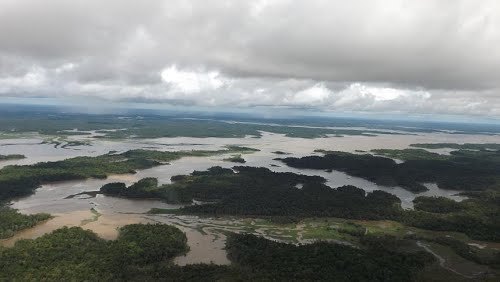
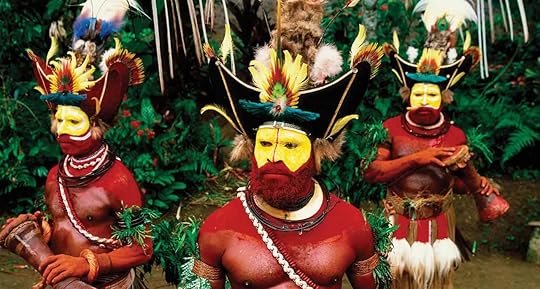
Following the route taken by British explorer Ivan Champion in 1927, and amid breathtaking landscapes and wildlife, Salak traveled across this remote Pacific island-often called the last frontier of adventure travel-by dugout canoe and on foot. Along the way, she stayed in a village where cannibals m was still practiced behind the backs of the missionaries, met the leader of the OPM-the separatist guerrilla movement opposing the Indonesian occupation of Western New Guinea-and undertook an epic trek through the jungle.
Kira Salak won the PEN Award for journalism for her reporting on the war in Congo, and she has appeared five times in Best American Travel Writing. A National Geographic Emerging Explorer and contributing editor for National Geographic Adventure magazine, she was the first woman to traverse Papua New Guinea and the first person to kayak solo 600 miles to Timbuktu. She is the author of three books—the critically acclaimed work of fiction, The White Mary, and two works of nonfiction: Four Corners: A Journey into the Heart of Papua New Guinea (a New York Times Notable Travel Book) and The Cruelest Journey: Six Hundred Miles to Timbuktu. She has a Ph.D. in English, her fiction appearing in Best New American Voices and other anthologies. Her nonfiction has been published in National Geographic, National Geographic Adventure, Washington Post, New York Times Magazine, Travel & Leisure, The Week, Best Women's Travel Writing, The Guardian, and elsewhere. She lives with her husband and daughter in Germany.
Part of me regrets giving this book only two stars because at times I really enjoyed the glimpses into the life and culture of Papua New Guinea. I learned some things about its history, geography, and tribalism, but Salak never stays put in one village or town long enough to really immerse herself in a distinct tribal culture or establish lasting relationships with people she meets. This is on purpose--she doesn't actually WANT to stay put, but rather wants to visit as many towns and regions of the country as possible before she runs out of money or her health forces a return home.
More often than not Salak only skims the surface of everywhere she goes, stopping for a meal and supplies and a night of sleep but leaving again promptly before she really engages. It's only when her travel plans are delayed that she stays anywhere long enough to have real conversations with the people, such as the Indonesian refugees in Pastor Carl's camp. That segment of the book particularly irritated me because it seemed that the challenge for Salak is to see if she can actually get to the camp alive, not whether she can help or bring attention to the refugees. It struck me as thinly veiled narcissism masquerading as altruism. I guess the reader is supposed to be impressed that she continually puts herself in dangerous situations and narrowly escapes for no clear purpose---I'm not impressed.
More generally, I struggled with this book because there is almost NO part of me that can connect with Salak's choices, her attitude about relationships, and her stubborn, reckless treatment of her own life. She says to readers many times that she cannot figure out why she's on this trip, but she also repeatedly states that she went on the trip to be changed. Changed how? She doesn't know. To me it seems obvious that she thrives on doing what others says she can't do, and callously disregards her health and life in the pursuit of those goals. She's shocked at the end of her trip when she hasn't been transformed. I want to yell at her that she isn't transformed because all she did on the trip is do what she has always done--run away from relationships, stubbornly try to prove herself to some undefined person or entity, talk the talk of looking inward and making thoughtful change and then do what she's always done and make no change. The most aggravating part, perhaps, is a cheesy epilogue that jettisons her earlier comments saying the trip hadn't changed her in the way she wanted. She claims to have been changed in the end, but having spent 400 pages watching her refuse to change her ways AT ALL, it reads very disingenuously.
This is the first book I'm reading along with the World's Literature Group here in Goodreads, as we explore Oceania and Southeast Asia in 2015. I was happy to start with Papua New Guinea, the site of one of my roads not traveled.
Papua New Guinea is a fascinating place, where the language can change every 50 miles along a river.
Kira Salak is a unique being, pushing herself to physical and emotional limits in her travels. She discusses the anomaly that she embodied as a woman traveling alone, and why this is so unfortunate, that women are taught to be afraid. At the same time, she gives clear evidence that it is different for a woman traveling alone. It is a hard idea to reconcile, for me and for her.
Salak adventured through parts of Papua New Guinea starting in 1994, so twenty years ago. She saw first-hand the violence of the cities and escaped quickly into the jungle at first opportunity. Arranging transportation was always a source of tension and conflict, and expensive.
I liked that she talks about her own personal journey, using the writing to explore why she travels, why she isn't like other people, why she can't stay in one place. I liked seeing glimpses of parts of PNG I had never heard of before, parts that are changing rapidly because of mission work or commercial industry. I learned more about Indonesia's violence against people groups in West Papua (officially called Irian Jaya at the time), and Salak travels deep into the country at great personal risk, eager to meet the minister heading up the OPM guerilla resistance movement.
This is not an ethnography. It does not focus on understanding a specific community, tribe, or even country. It details the author's own journey through the places she sees, the difficulties she encounters, and some of the people she meets. I wish the book included photos, but while they exist you can see them on the author's website.
At the age of 24, the author set out with a map and a backpack and no advanced planning to traverse Papua New Guinea. She was a veteran of travels in remote or dangerous places relying only on her wits. This is her account of that trip. Her adventures and the people she met is interspersed with personal reflections on the scars from her dysfunctional family, the lingering trauma of being abducted and nearly gang raped on an earlier trip, the perils of being a single woman in a strange place. I enjoyed learning about a place and people of which I knew little. She certainly has pluck. I was less impressed by her introspective passages. Despite a horrific experience on an earlier trip that nearly got her and some locals killed when she refused to accept numerous warnings, she repeatedly rejects advice creating danger for self and others. With no plan for lodging or transportation, she counts on the hospitality and generosity of total strangers. Helicopters and airplanes make special trips to rescue her from remote villages for free. Natives make harrowing trips by foot or canoe to bring her to her next destination for a pittance. Since the only English speaking people in many villages are Christian missionaries, she expects that they will house, feed, and attend to her wounds. In payment she treats them to arrogant, self-righteous, critical tirades in print. She feels it necessary to remind the reader of her gender on every other page. I am glad that this young woman is pursuing her passion for travel and is willing to bring the reader to remote destinations. I am sorry that her upbringing left her feeling a need to prove herself. But I also found her immature, irresponsible, and self-righteous.
"Four Corners" follows the journey of author Kira Salak, a then 24-year-old graduate student through Papua New Guinea. Salak has an impulsive urge to put herself in extreme situations and travel to distant places around the world to prove to herself, what she can handle and that she can survive. For instance, she rides on buses through tribal war-faring territories. She hikes through the jungle from one village to another, because she doesn't have the patience to wait for decent transportation. She canoes with another traveler on the Sepik River, despite the warnings of locals that it is very dangerous. At the end of her journey, she learns "self-acceptance."
I picked this book up, because I'm very curious about Papua New Guinea. It is a country that boasts over 700 different tribes and languages. The highland regions of Papua New Guinea were unexplored until 1930, when Australian explorers in search of gold, stumbled upon fertile valleys and a million people that lived completely disconnected from the rest of the world! Also, I wanted to read about the Papua New Guinean perspective on the West Papua Independence Movement.
It was hard to relate to the author. At the time, she had a lot of unresolved issues with her family (her parents favored her brother, she was raised roughly like a boy) and she just broke up with her boyfriend, because she was scared of being loved. On top of that, what annoyed me the most, was her detailed description of every man she meets in Papua New Guinea and their flirtations. It was incredibly tedious for me to read, when all I wanted was more of Papua New Guinean culture, people and every day life. Unfortunately, there isn't a lot of Papua New Guinean literature out there. Nonetheless this is still a very difficult book to recommend.
This book is one of the better solo traveler stories with its variety of landscapes and its ever-changing cast of characters. First, there's the scope of Salak's travels across the breadth and height of Papua New Guinea's terrain. Leaving from Cairns, Australia, then Port Moresby, PNG, she navigates and hikes through and flies over the lowlands of kilometers of swampy jungle and steep mountains, navigating her course down uncertain, remote waterways and tributaries, first the Fly and May Rivers then the Sepik River. Ascending to the 15,000 foot highlands, she boards the PMV passenger vans on roads obstructed by hooliganism (rascals on payday) and by intertribal warfare. A solitary white woman (wait meri) she carries luck with her along with a machete bush knife and with a magical blessing from an Apowasi bigman (Chief). Second, the author combines fact with some obvious exaggeration. Can someone sleep soundly with the astronomical numbers of roaches inside her mosquito netting? Perhaps, they are preferred companions to the river guide. Are the people encountered objectively described or as they fit her needs and wishes? Finally, the story is a physical and spiritual voyage for Kira Salak, who hopes to transform herself into someone better, being compelled to move on continually to the next places to find contentment in paradise. Without revealing the ending, the trip is successful in that it brings her a revelation at journey's end. Apparently low on the list of touristy destinations when the book was written, PNG tells a lot about the autonomous country even while the author enjoys some authorial freedom. Her solo travel to PNG at twenty-four years old marked an important spiritual transition in her life.
This story both captivated and appalled me. I was simultaneously entranced by the original and thoughtful depictions of Papua New Guinean life seen through the eyes of a traveler, and disgusted at her motivations (spoiler: she had none other than to prove to herself she could do something difficult). If I could imagine this as a work of fiction, I would have rated it higher because the narration and interest the story piques is undeniably addicting. However, the fact that this is a real story containing her real thoughts disturbs me beyond belief. Perhaps she went on to do better and brighter things but the way this travelogue plays out is the epitome of white privilege.
Kira decides to travel through the PNG mainland to overcome past traumas (admittedly self-inflicted due to a penchant for putting herself in difficult situations), yes becoming the first white woman to do so - but in perhaps the most modernly colonial way possible. Her unrealized privilege oozes through the pages. She mistrusts many of the locals she encounters and complains that they ask her for too much money. Helicopters make special trips to rescue her out of difficult situations. She pushes hard to see Indonesian refugees at the Blackwater camp, without any purpose other than "getting into the camp and talking to the people. I’m not a journalist, of course, but if I can meet with them, maybe I can write about them. Help them. I think people should know what’s going on." like some sort of disaster tourist. She notes at the end that she still continues to exchange letters with the people she met living there, having not succeeded in writing about them or publicized the story as she had promised in any way. Her tale treats several of the other white people she meets with reverence - it seems the highlight is when she meets a German and an Australian male duo, who accompany her on a trip to see a remote witch doctor. All this time she is pushing on to find paradise as an "untouched" place, spending one or two nights or a meal in each village and hurriedly passing through as she states her disappointment at the locals wearing t-shirts.
Perhaps the most appalling part of all comes at the end - when she, visibly feverish, decides to push into the apparently "untouched" village of Tari to finally find a place where locals still live and dress traditionally, unmolested by globalization. I mean, I know this was written at a different time, but surely even in the 90s people had awareness that when you are so sick you can't see: perhaps putting off your trip to an untouched small tribe would be the most responsible course of action? If she had had the flu, she could have killed everyone. The selfishness stings. She nonetheless pushes on to stay a total of one afternoon in this village, so sick she can't stand, where she finally sees people wearing traditional clothing gathering around her but is bitterly disappointed when a world newspaper is pushed on to her lap (a sign they are not untouched after all! Damn!) She states "My experience in Tari reminds me that there are no other, “better” worlds to be found beyond the one I’m already in."
The reader finds it difficult to sympathize with someone who just flits through a place in one day and makes any claims to know the characteristics of it. While some part of me appreciates her brutal honesty and self-appraisal in the book, I am still disturbed at this idea that travel should be seen as a challenge to overcome for self-healing. What about the people you encounter along the way? Travel should be seen as a two-way cultural exchange opportunity, most of all a privilege - not you pushing your traumas and burdens onto locals to bear. I end this book with no desire to explore any of her other work.
This is less a travel book than the memoir of the author’s emotional journey. Kira Salak seems to be a professional adventurer, which is pretty cool, and she’s also a compelling storyteller, bringing to life her experience traveling around New Guinea’s swamps, rainforests, mountains, crime-ridden cities, and even a rebel refugee camp, in 1995. What she does not do quite so well is illuminate the lives of the people she meets; she’s in New Guinea to discover herself.
And I get the sense she’s spent a lot of time analyzing herself, and no wonder, having received more than her share of dysfunction being raised by evangelical Objectivist parents, and feeling compelled to go off on life-threatening journeys to prove herself. But she was 24 when she took this trip and only a few years older when she wrote about it, and some of the ways she describes her emotional experiences seem a little simplistic. I also couldn’t help but shake my head at her idea that she was going to recover from the trauma of a previous kidnapping (also on a dangerous trip) by traveling through another dangerous place where, unfamiliar with the environment, she would be at the mercy of strangers. It’s no wonder this doesn’t really work for her… or it doesn’t seem to, until the epilogue, which wraps everything up rather too neatly; insisting, for instance, that she wasn’t taught to fear like other girls, when she spent most of the preceding 400 pages preoccupied with danger and fear. Her threshold for what she’s willing to do anyway is certainly higher than most women’s, but she rarely feels safe enough on this trip to enjoy herself.
That said, Salak does write well about the places she experienced: the grueling hikes through swamps and mountains; the wonder of a helicopter ride over the jungle; the tragedy of the refugees from the western portion of New Guinea, victims of genocide from Indonesia; the hubris of missionaries trying to drag locals into a modern way of life. When she does write about locals, it’s really quite good; I loved reading about the calm swamp village where tiny children learned to paddle in tiny canoes, and she was taken in by a man who had no plates or silverware because his wife took them all when she left and moved across the road. And for that matter, about the truck drivers in Mozambique, where Salak’s early attempt at adventure got her in well over her head. But she rarely stays in one place long, and I was left wanting to learn more about these people: for instance, about the women living away from their families at the YWCA in Port Moresby, despite rampant crime there.
Overall, this was enjoyable reading; it seems a bit long for what it is, but Salak has such an intense and varied journey that I’m not sure what could be cut. I think this book is worth reading, though if your primary interest in it is learning about New Guinea, you may come away frustrated.
I found this to be a perplexing tale. While I admire her achievement, the book had a number of error of fact (such as stating Port Moresby had not been bomb in WWII, and her short discussion of Australia's involvement in Vietnam was more full of errors than fact). She did highlight the dreadful things going on in West Papua, OK Tedi mines and the impact of the missionaries. Salak said she wanted to be immersed in the various tribes and people of PNG but she seemed to move onto the next place before she knew she had arrived. And there were many pages of conversations and exploits she shared with the many and various unusual ex-pats, Missionaries and the occasional tourist. I admire her guts and determination but if you want to find out about the people of PNG then this book provides slim pickings.
Four Corners is a fascinating travel memoir about Papua New Guinea, written by a young woman on a journey to find herself in a faraway land. There is also a healthy dose of history and anthropology thrown in.
It was interesting to read about her attempts to trek across the interior and her encounters with locals, many of whom had not yet met a white woman traveling solo before. I was also fascinated by the fact that her accounts of the jungle and village life were virtually identical to travel diaries of explorers who had trekked through the area in the 1930s, 40s, and 50s. Time seems to have stood still in many of these villages, isolated from the political and cultural influences of the ‘Western world’. However the changes which have occurred on the Indonesian side of the island were quite distressing to read about.
What I appreciated most about this book is the author’s honesty. As she points out, many travelers are charmed by the ‘primitive nature’ of the villager’s lifestyle and see it as an ‘ideal society’ Westerns should strive to reach. In reality, it is not a choice to grow and kill all of your own food and make your clothes from grass and tree barks, it is a reaction to their isolated location. Many of these villages have no clothing stores, hospitals or grocery shops. Anything that can’t be grown has to be brought in by helicopter or canoe and transportation is not reliable thanks to the extreme weather conditions.
I have enormous respect for the villagers yet, like the author, I do not envy their situation. I identified strongly with this author and her perspectives on traveling, ‘finding yourself’ and the people she met. It was a pleasure to read about her adventures, her desire to challenge herself and see more of the world while doing it.
I highly recommend this book to adventure seekers and those interested in learning more about Papua New Guinea, as well as lovers of travel memoirs and travelogues.
Reading this book, I was absolutely impressed by the feats of Kira Salak and all that she went through during her journey. Her story is also absolutely riveting and I couldn’t wait to see what would happen to her and what would be her next adventure. But even though her (mis-)adventures in New Guinea were fascinating, I think that this book is much more the story of her internal journey than her journey through Papua New Guinea.
And I must admit that even though it was really interesting to be in her mind during this trip, I couldn’t help being really annoyed at her at times. Her selfishness and self-centeredness felt absolutely conceited seeing some of the places she went through. She could have avoid most of the difficult situations she was in with a little bit more common sense (although let’s be honest, the story wouldn’t have been as interesting to read). I also found it was a pity that because of her personal issues, it felt like she only skimmed over the fantastic places she has been to and never properly paid attention to them.
I am myself a woman traveler who travels regularly alone, be it for my own pleasure and for work. I admit that I never went to any places as dangerous as her, and that I would never consider it. But I don’t think it has anything to do with being a woman, just avoiding war torn places and hot spots. Like her, being a woman never stopped me going anywhere, but contrary to her, I never really stopped to ponder the question. And I don’t believe it’s more dangerous to be a woman in some remote parts of the world than in our western countries, when it seemed to be an important issue to her. But I have never been in trouble because of being a woman, it was difficult for me to relate to her on some of her fears. Maybe a woman would risk more than a man in a dangerous situation, but I don’t feel like I have more (as in a bigger number of) risky situations than a man would have. But again, I have never been what she went through in Mozambic.
Another thing that chaffed a little during this read was that I couldn’t help wondering how much literary license she took with the truth. Some points seemed a little too surreal, too perfect story wise to feel truly real. But that’s maybe because I am only putting my own expectations on this book.
All in all, it was a very enjoyable read and a book hard to put down, even though it was sometime hard for me to approve of some of her thoughts, choices and actions.
Ik heb enorm veel van dit boek genoten. Dit is een geweldige adventuur van een jonge vrouw die al wijzer dan haar 24 jaar is. Zij durft haar dromen te volgen en ook haar fouten toe te geven. Echt een aanrader.
Ik heb het boek in het Nederlands gelezen maar toch een langere recensie in het Engels geschreven; voornamelijk omdat het boek oorspronkelijk in het Engels werd uitgebracht. En ook omdat Nederlandse blijft mijn tweede taal. :)
Four Corners is a fascinating travel memoir about Papua New Guinea, written by a young woman on a journey to find herself in a faraway land. There is also a healthy dose of history and anthropology thrown in. It was interesting to read about her attempts to trek across the interior and her encounters with locals, many of whom had not yet met a white woman traveling solo before. I was also fascinated by the fact that her accounts of the jungle and village life were virtually identical to travel diaries of explorers who had trekked through the area in the 1930s, 40s, and 50s. Time seems to have stood still in many of these villages, isolated from the political and cultural influences of the ‘Western world’. However the changes which have occurred on the Indonesian side of the island were quite distressing to read about. What I appreciated most about this book is the author’s honesty. As she points out, many travelers are charmed by the ‘primitive nature’ of the villager’s lifestyle and see it as an ‘ideal society’ Westerns should strive to reach. In reality, it is not a choice to grow and kill all of your own food and make your clothes from grass and tree barks, it is a reaction to their isolated location. Many of these villages have no clothing stores, hospitals or grocery shops. Anything that can’t be grown has to be brought in by helicopter or canoe and transportation is not reliable thanks to the extreme weather conditions. I have enormous respect for the villagers yet, like the author, I do not envy their situation. I identified strongly with this author and her perspectives on traveling, ‘finding yourself’ and the people she met. It was a pleasure to read about her adventures, her desire to challenge herself and see more of the world while doing it. I highly recommend this book to adventure seekers and those interested in learning more about Papua New Guinea, as well as lovers of travel memoirs and travelogues.
There seems to be two kinds of travel memoirs: those written by stable, wealthy people who travel around and talk to the locals, retelling their stories as well as giving some historical data on the place; and those written by people who are searching for something and put themselves on the edge physically and emotionally. I, by far, prefer the latter. This book is one of those. The author narrates her travels to Papua New Guinea. She is 24, traveling alone into the jungles where few non-locals go. She carries a knife for protection and repeatedly puts herself in dangerous situations. At times I felt upset with her thinking "Why are you taking such risks; are you crazy?" Which the author also searches herself for answers and shares honestly with the reader. I appreciate people willing to take such extreme adventures, as I know I never will; but through them I get an understanding of foreign people and their lives. My only complaint about this book is I would have liked more sex and romance. Otherwise it was an awesome read.
There was something really irritating about this. I can't really put my finger on this, I just found myself very frustrated with her. I guess that makes this a really interesting book though -- she's so honest about herself and the things she did/thought that I ended up hating her. I really admire that level of honesty.
A dramatic, adventurous read but I have some reservations about this title, I find the author immature, self absorbed and reckless. Overall the discussion of PNG and West Papua seems superficial.
This was an incredible read about a single woman traveling on her own into the wilds of Papua New Guinea. It amazes me how she was able to travel through such a dangerous country by herself without dying, or becoming deathly ill. The adventures she has and the interesting people she meets along the way while having no itinerary were just crazy! She was young, fiercely independent yet troubled, and using travel as a complete escape from her competitive world and disapproving parents. I liked how she wrote about her feelings and her growth as time went on through her different experiences.
Amazing and crazy tale recounting the Western, female perspective of travels through Papua New Guinea. Having travelled there myself, I found the book culturally insightful and accurate. A well-written, engaging read.
Once upon a time, the very first time, in fact, that I visited Australia’s tropical north east coast, it occurred to me that it would be very easy to catch a flight to Port Moresby, capital of Papua New Guinea (PNG) from here. There were advertisements in the tourism and local press and on television. It was close and it was inexpensive.
Because my dad had been stationed in Moresby for a time during the Second World War, I felt the desire to visit where he had been and to see it for him in light of the 21st century.
I never made the journey, but the appeal remained, making Kira Salak’s book of her adventures into PNG one that I had long wanted to read. I knew her writing and her apparent fearless nature and adventurous spirit from her more recent work, specifically the story of her canoe trip to Timbuktu, which had totally captivated me.
Not that I have anything like Kira’s ‘endure anything’ tenacity, nor the desire to travel in her footsteps. Rather I would love to see some of the places she has seen firsthand, but in considerably more comfort and with a lot less physical pain and emotional angst.
For Kira’s adventures, and particularly her experiences in PNG, represent a journey into her own personal heart of darkness.
Not content to stay long in the civilised, yet still often unsafe, capital, she manages to ride, bribe or hitch rides into the interior on trucks, boats, planes and helicopters, and finally traverses jungles and climbs mountains on foot hefting a substantial back pack.
But it is what she encounters in the remote villages and missions of the highlands, particularly those close to the border of West Papua (Irian Jaya) that leads to the most dramatic revelations, and causes her to question the very nature of what she is doing and what she hopes to find on her travels.
It is so easy for us to sit back in our comfortable lives and dip into the drama of the less fortunate through the harrowing reports of human rights atrocities, some of which are sanctioned by governments who are more concerned for financially rewarding diplomatic relationships.
It’s a situation that exists in many places in the world, and one we can feel powerless to change. This is the sort of thing Kira faces in encountering exiles from West Papua. For the thoughtful reader, it prompts self examination of our own attitudes and behaviour in terms of human rights abuses, and questions of what exactly we can, and more importantly will, do about it.
All this introspection and self-examination from a travel narrative? Yes, but Four Corners is much more than that; it is a very intelligent, very honest account by a remarkable woman, one that will hopefully change forever the way the reader views the world and the sufferings of some less fortunate than us who share the planet with us.
What can we do about it? That is the question we each must answer, and hopefully act on, to the very best of our individual capabilities.
Review by Kerry Hennigan March 31, 2012 (Earth Hour Day)
This book is written with a considerable amount of craft by a youthful author who seems to have accomplished one of the more ludicrously difficult expeditions of the last 200 years. One wonders could it all be possible. To follow the path of a 1927 expedition, even in an approximate fashion and with a certain amount of mechanical assistance not available in the twenties, across New Guinea, travelling up the Fly River on one side and down the Sepik River on the other, is not something that the average modern adventurer would even contemplate. The difficulties are far too many and this applies as much now as it did ten years ago when Salak made her journey. Yet the account is believable and certainly you will want to believe her, even as you get mad that she puts herself in such dangerous situations time and time again. Of course, that is part of the craft, to maintain dramatic tension and Ms. Salak does it very well; even if it is overdone at times, we forgive her, as she has somehow earned the right to exaggerate if she likes. I mean, how could she have done this, really. At the risk of repeating myself, it is an amazing accomplishment.
Beyond a certain natural inclination to think that the book is made up (to some extent), the text nevertheless rings true throughout and in fact, the observant reader will probably agree with me that you couldn't make this up if you tried! So if you just read the book at face value, you are in for a terrific ride but watch out, it gets scary on more than one occasion. Along the way, Ms. Salak visits the "off-limits" refugee camp in which West Papuan survivors of Indonesian massacres and atrocities are living near the border with Irian Jaya. As she remarks towards the end of the book, although she tried to draw attention to the plight of these people and their cause upon her return to the States, it is just one more pathetic refugee story that few people have time for.
Very fast-paced and undeniably entertaining, this book is also unique in that it paints a solid picture of parts of this unknown land, Papua New Guinea, where some of the most remarkable tribal people in the world are still living in communities sufficiently isolated that traditional lifestyles are still being followed. So take a deep breath and plunge right in with this modern-day Freya Stark. Comment
If you’re looking for a travelogue in the style of “Lonely Planet” then you’ve got the wrong book. This is more than a trip across Papua New Guinea(PNG), it is a voyage of personal discovery. In 1994 Kira Salak set-off to fulfil a childhood dream of following in the footsteps of explorers of the 1930s and cross PNG from south to north by way of two rivers (the Fly and the Sepik). In between she would cross over the central mountains that are like a spine of the island and there she hoped she would meet some of the still remaining ‘stone age’ tribes.
But that is not what the book is about. It is about finding your way in the world by first finding out who “you” are. Salak grew up in a hold where she was taught that you are responsible for yourself. Her parents were followers of Ayn Rand and her upbringing was truly “self” directed. She wasn’t brought up to be a ‘girl’ who would have survival skills but ‘person’ who could take on any challenge.
Salak (who began travelling the world at 19, and always alone) begins the book by describing her travel across civil war torn Mozambique. He capture by Rebels and her near miss of being raped and murdered and escaping her captors. This did not dissuade her from travelling around East Africa (Kenya, Uganda, etc) , Bhutan and Nepal and other out of the way places.
What makes this book different isn’t that it’s more of a diary than a journal, but that it’s an honest try at putting down on paper not just descriptions but of emotions. All through the book, Salak questions her reasons for being in PNG and how and what in her life has brought her to this place in the time. Her perspectives on the difference between men traveling alone and the perception of other to her being a young woman traveling alone are the reason there is for reading this book.
At the end of “The Wizard of Oz” when Dorothy is back in Kansas, Dorothy says: Home! And this is my room -- and you're all here!...And -- Oh, Auntie Em -- there's no place like home!
Salak is looking for her raison d’etre. What she finds, as most of those who go looking for themselves in out of the way adventures is that ‘no matter where you go, YOU are always with you’. This is a story worth reading.
This was my first book by this author, and I found this book hard to put down. Kira Salak is an adventurer that opts for solo travel and is usually putting herself in challenging/dangerous situations. As a young girl she always had thoughts of travel to places she had seen in magazines (National Geographic) and books. Papua New Guinea (PNG) was one place that she always wanted to go to see thinking of it as one of the last places where she could encounter a society that was still fairly untouched by present day. She leaves, graduate school, a boyfriend and takes off on this adventure, some of it wonderful, some quite harrowing. She meets some wonderful people and some very despicable ones as well. When presented with a dangerous situation she will not back down, even if fearful and always seems to challenge herself. I will let you discover her journey. As she states about her life: __I spent most of my life thinking that elusive self acceptance was something that could be won. Yet in the end, it only came when I was willing to stop and look within.__ __ The irony was that I didn't need to go anywhere in the first place to find it.__ She also states that: __In the end, I see that there are many kinds of journeys, and one isn't necessarily better than another__just different__ __Travel itself will always seem suspect to me; it is, after all one of the most obvious forms of escapism. The need for something more.__ This I could relate to in my own little way, as I would always move or travel, thinking the next place would be __the right place__ but I always found that I brought myself along, and that is where the introspection comes in. I am a work in progress. :-}. Although I loved to travel, I could never put myself in the situations she has. I have bought 2 of her other books one a novel and another about a solo trip in Africa, down the Niger River to Timbuktu. I really look forward to more of her stories.
I found this to be an excellent book in which the author, Kira Salak, retraces the journey across Papua New Guinea that explorer Ivan Champion took in 1927. This book provides amazing descriptions of Papua New Guinea. It takes you to all parts of PNG, from the cities to the inner jungles, and introduces you to the PNG native tribes and their spiritual and religious beliefs. Salak also meets with the rebel leader of a guerrilla movement fighting in Western New Guinea through a series of adventures that are reminiscent of a scene in a James Bond movie. Throughout the book, Salak discovers ways out of nearly impossible situations. What makes the book so readable and interesting is the vivid and powerful narrative that describes the journey from Salak's own perspective. This allows us to easily join Salak in this incredible trek across PNG as we read her story. The book begins with the events in the author's life that led to her taking this journey. Without this introduction, I think I would have spent the entire book wondering what would lead a person to take such a journey. I consider this introduction an essential part of the book, giving a unique insight into what leads someone to take a dangerous journey into the unknown. In this book you will find a rare glimpse into the hidden world of PNG as Salak works out her demons through this difficult journey. This makes for a book that cannot be put down. "Four Corners" is an inspiring real life journey into the unknown, and a story of survival and personal triumph. I highly recommend this book.
I found a copy of this book in an outlet store while I was trying to kill an idle summer afternoon. I had no idea what to expect, but an idle scan of the first few pages turned into a devouring of the first couple of chapters while standing in an aisle. There's nothing quite like a book that can grab your attention so thoroughly. Ms. Salak is an author who is an unflinching adventurer. She doesn't hesitate to lay it all out for the reader - painful incidents from her past, mistakes made in the thrall of ego on the road, and just plain bad decisions find their place among lush descriptions of the places and people she encounters on her journey. She gives you enough history to help you understand a custom or place, but she doesn't bog you down in it.
Every so often I buy a couple of copies of this book to pass to friends I know will appreciate it as much as I do. They never fail to love it.
Reading about Ms. Salak's solo adventure into such a wild place as Papua New Guinea was an experience I have already returned to savor several times.
Growing up, Kira Salak was an excellent competitive runner. There was talk of her being good enough for the Olympics. However she decided that it was not for her and gave running up. Her family didn't support her decision, and it seems that she never really felt understood or appreciated by them again. Searching for her place in the world, she become an ardent traveller. This book opens with a prologue in which she has hitched a ride across war-torn Mozambique. It is exceedingly dangerous and she narrowly escapes from a very sticky situation. Some years later (although still only in her twenties) she decides to journey alone across Papua New Guinea, trying to find that last "untouched" world. The relevance of the Mozambique experience is that it still affects her responses to the situations in which she finds herself. I knew nothing about PNG before reading this book, but the bravery (some might say foolhardiness) of this young woman makes a very entertaining introduction.
Kira Salak travels completely solo in some of the remotest jungle in the world. Four Corners comes from an odd angle. While Salak is a writer, she is not a journalist. She travels into dangerous territory and seeks out stories not as writing fodder but as a way to prove to herself that she can. Repeatedly she gets herself into narrow scrapes, often risking her life in hopes of having some epiphany on her life and feelings of worthlessness. Beyond the strange emotional waves that Salak rides, the book is an honest narrative on the joys, fears and dangers of a single woman traveling in third world countries. Her adventures are often ill-advised to the point to stupidity, but they are nonetheless fascinating. Traveling through Papua New Guinea is an adventure of great daring for anyone. Kudos to Kira for doing it, whatever her motives.
This coming-of-age tale, told against the backdrop of a journey through Papua New Guinea (PNG), is at times engrossing and baffling. Ms. Salak is 24 years old at the time, and sets out to cross the country. She does so by several means. Along the way, she encounters locals and foreigners, and often puts her life at risk. Her descriptions and impressions of PNG are at times humorous and heartbreaking, especially her time spent at a refugee camp. The journey encompasses her search for...something. Even she's not certain what. This is as much a psychological trek as a discovery of a place so different than what much of us know. Kudos to Salak for having the courage to share her tale.
Interesting perspective on the far reaches of Papua New Guinea, but here's my take: if you get/decide to go on adventures, do crazy things, and put yourself in vulnerable situations at the mercy of who you meet, then you also get to live with the consequences and not complain about it. That was what I struggled with most about this book, the incessant complaining. Make your choices and accept the consequences, period.
Wow! One of the most exciting adventures I've ever read. What a woman! It's also a very personal journey for the author which left me with even greater admiration for her.